

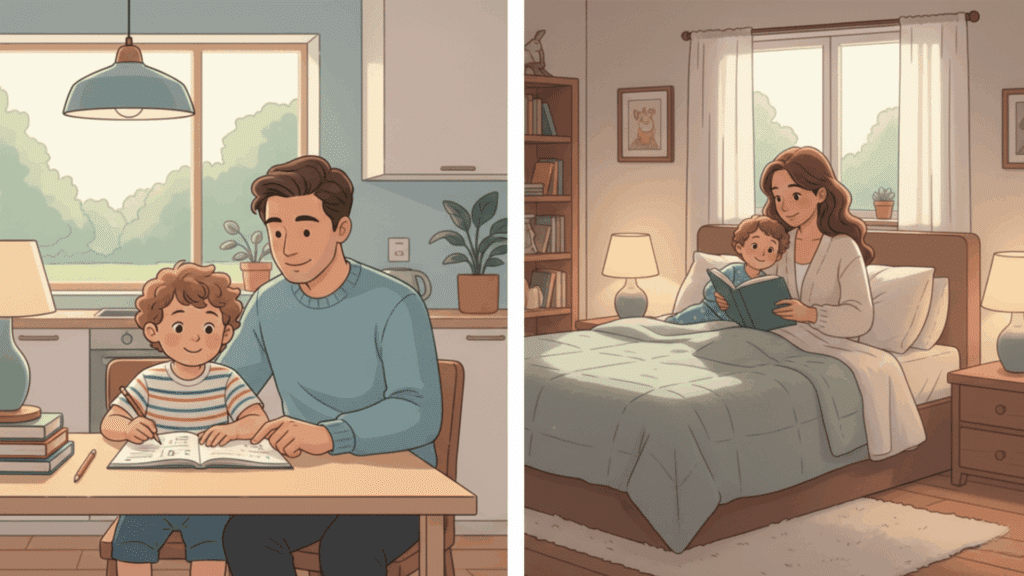
Separation is hard enough. Add constant fighting with your ex, and your kids end up stuck in the crossfire.
Every phone call turns into an argument. Every decision becomes a battle. You try to work together for the sake of the children, but it only makes things worse. What if there was a better way?
Parallel parenting lets you raise your kids without the drama. No more heated exchanges. No more forcing cooperation that does not exist.
This article explains what parallel parenting is, how it works in real life, and why it might be exactly what your family needs right now to find peace.
What Is Parallel Parenting?
Parallel parenting is a structured approach where separated or divorced parents limit direct contact and parent independently in their own homes.
The main goal is to reduce conflict while keeping children out of adult disputes. This differs from cooperative parenting, where parents work together closely, share decisions, and communicate frequently.
Parallel parenting accepts that teamwork is not realistic in high-conflict situations. Instead, it protects children by creating clear boundaries between parents.
When parents cannot get along, children benefit more from two peaceful but separate homes than from ongoing tension.
Core Principles of Parallel Parenting
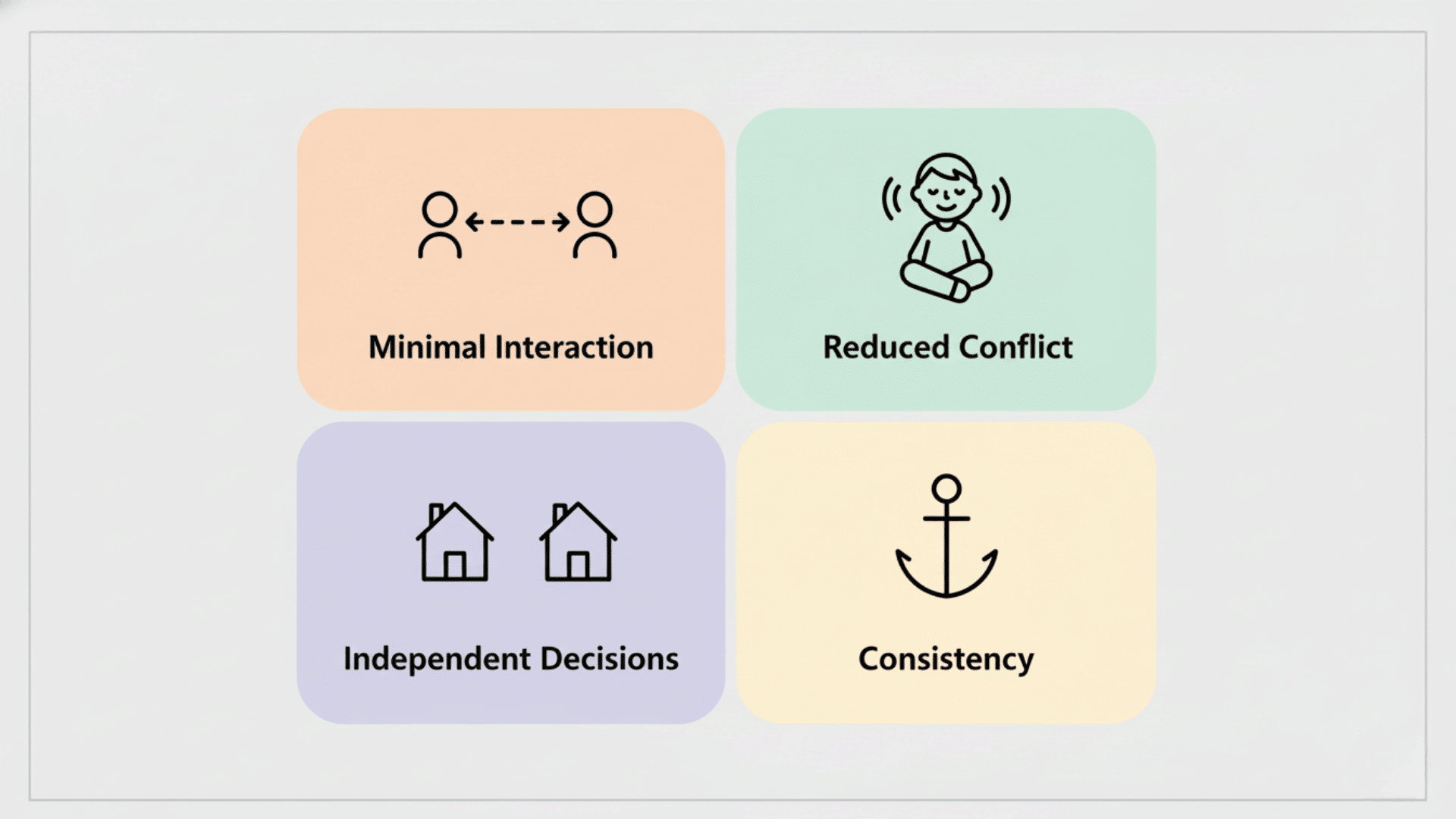
Understanding what parallel parenting is helps, but knowing the principles behind it makes all the difference. These core ideas shape how this approach works and why it succeeds in high-conflict situations.
- Minimizing direct interaction between parents: Parents communicate only when necessary, using written methods like email or apps instead of meeting or calling each other.
- Reducing conflict exposure for children: Children are kept away from parental arguments, tension, and disagreements by limiting contact between the adults.
- Independent decision-making within each household: Each parent handles daily choices, rules, and routines in their own home without needing approval from the other.
- Child-focused structure and consistency: Both homes maintain stable schedules and clear expectations so children feel secure and know what to expect.
How Parallel Parenting Works in Practice?
In parallel parenting, each parent handles day-to-day responsibilities independently during their time with the children.
For major decisions like school or healthcare, parents follow their written agreement about who decides what. Communication stays brief and business-like through email or parenting apps only.
Child exchanges happen at neutral locations like school to avoid direct contact. Schedules are set in advance and followed strictly to prevent conflicts.
Difference Between Parallel Parenting vs Co-Parenting
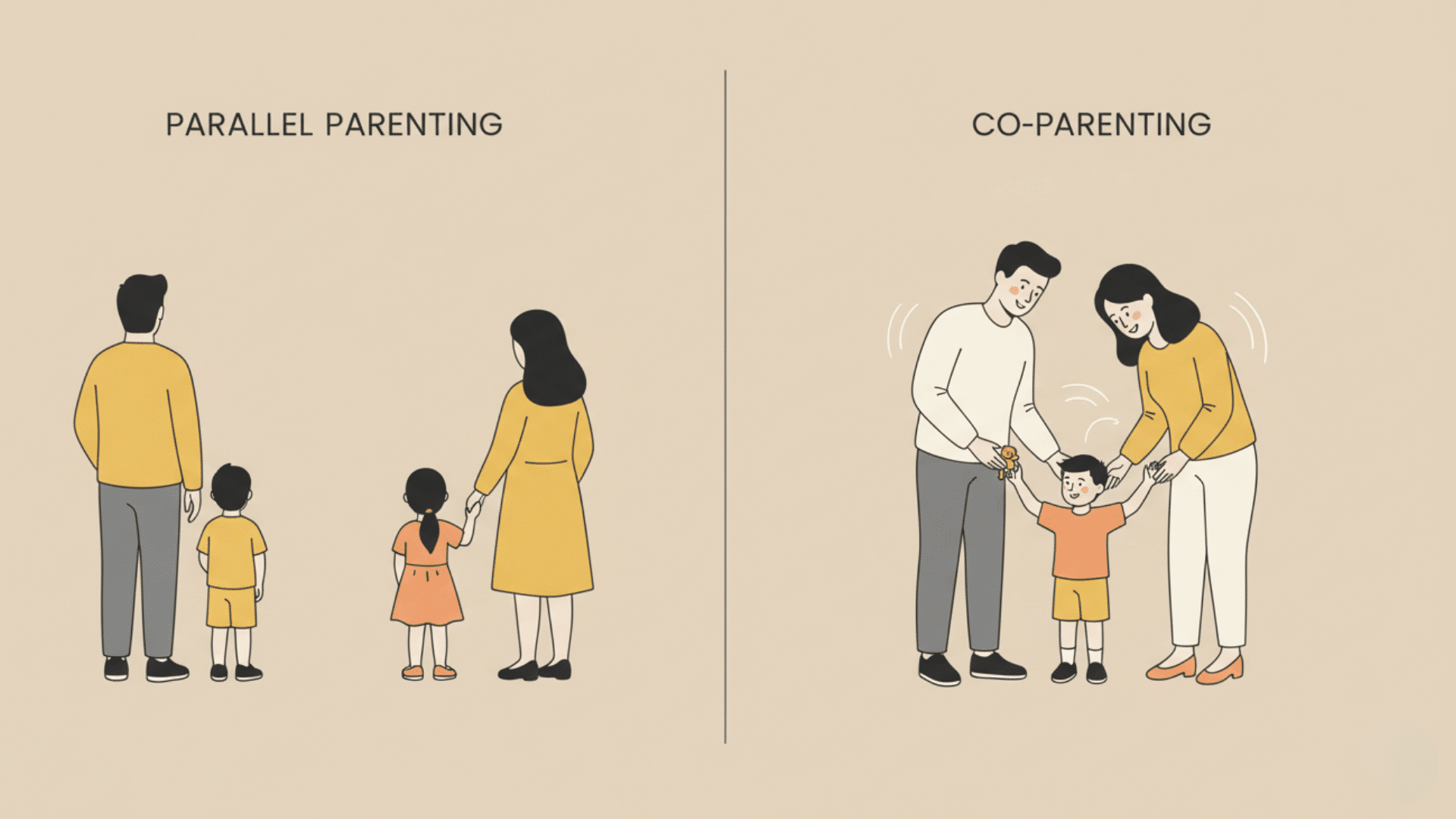
Many people confuse parallel parenting with traditional co-parenting, but they work very differently. Here’s a clear breakdown of how these two approaches compare across key areas.
| Aspect | Parallel Parenting | Co-Parenting |
|---|---|---|
| Communication expectations | Minimal, written only, business-like | Frequent, open, multiple channels |
| Decision-making authority | Independent in each home | Joint decisions made together |
| Level of coordination required | Low, separate routines | High, aligned rules and schedules |
| Flexibility versus structure | Strict structure, fixed schedules | Flexible adjustments by agreement |
| Which approach fits which situations | High conflict, trust issues | Good communication, mutual respect |
Benefits and Challenges of Parallel Parenting
Parallel parenting offers real advantages for families dealing with high-conflict situations, but it also comes with certain limitations. Understanding both sides helps parents decide if this approach fits their needs.
Benefits
- Lower emotional stress for children: Kids experience less anxiety and tension when they are not caught between arguing parents.
- Fewer parental conflicts: Limited contact means fewer opportunities for disagreements, fights, or heated exchanges.
- Clear boundaries and expectations: Both parents know precisely what their responsibilities are, reducing confusion and disputes.
- Greater predictability across households: Children know what to expect in each home, creating a sense of stability and routine.
Challenges and Limitations
- Limited collaboration between parents: Parents cannot easily coordinate or make joint decisions when cooperation is needed.
- Differences in household rules and routines: Children may face different expectations in each home, which can feel confusing at times.
- Emotional adjustment for parents and children: Both adults and kids need time to adapt to this more separated parenting style.
- Need for detailed planning: Every scenario must be planned and written down in advance to avoid future conflicts.
How to Create a Parallel Parenting Plan
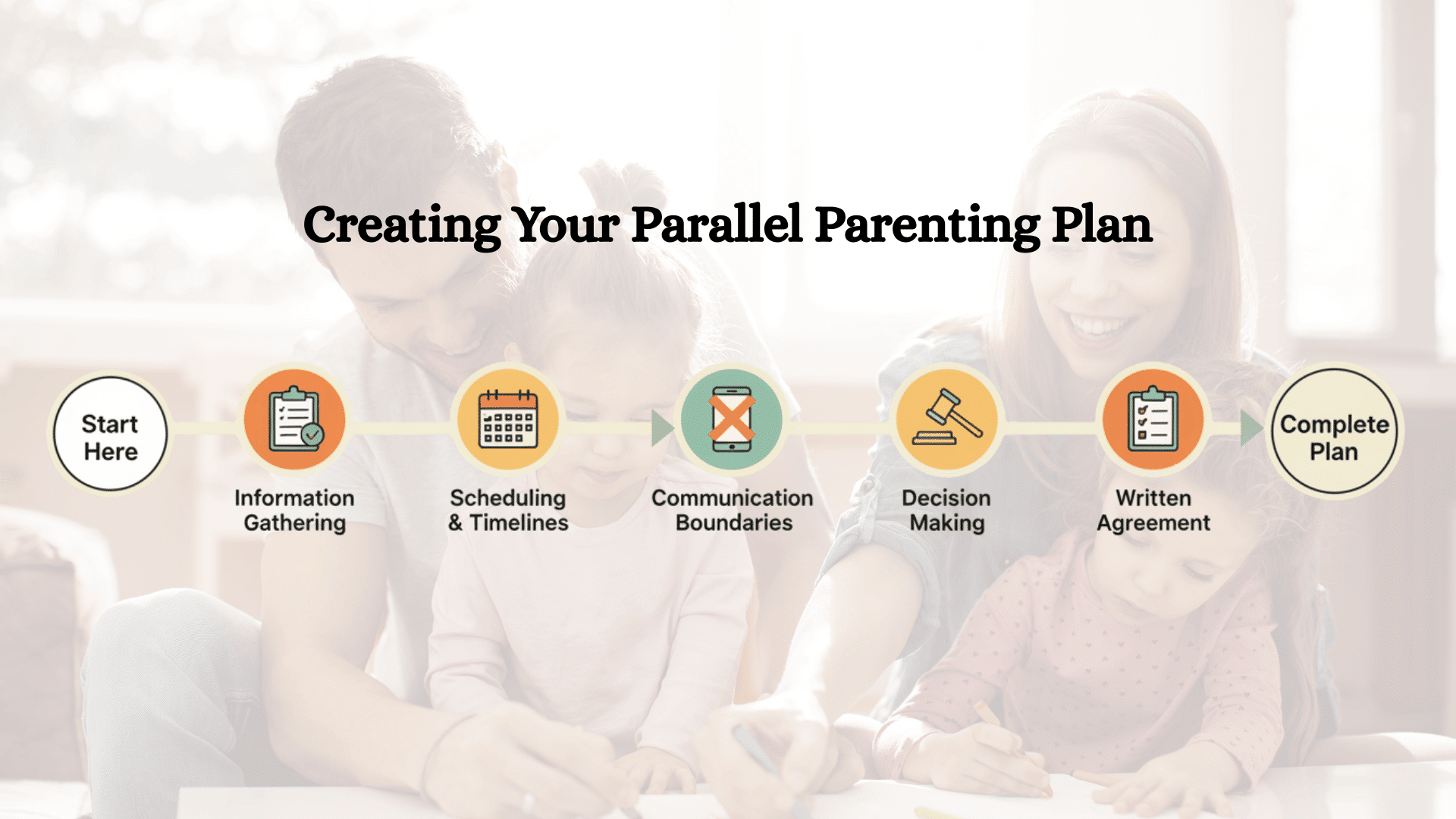
Knowing what parallel parenting is matters, but putting it into action requires a solid plan. A detailed written agreement prevents confusion and keeps both parents on the same page without constant contact.
1. Why a Written Plan Is Essential
A written plan removes guesswork and prevents future arguments about responsibilities or schedules.
Without clear documentation, parents may remember agreements differently, leading to more conflict. A detailed written plan protects both parents and keeps children’s needs at the center.
2. Defining Parenting Time and Exchanges
The plan should specify exactly when each parent has the children, including weekdays, weekends, holidays, and school breaks.
Exchange times and locations must be clearly stated to avoid confusion or last-minute changes. Neutral pickup spots, like a school or a public place, work best to minimize direct contact.
3. Setting Rules for Communication
The plan outlines how parents will communicate, usually through email or a parenting app only.
It sets response time expectations, like replying within 24 hours for routine matters or immediately for emergencies. Personal topics, blame, or emotional discussions are kept out of all messages.
4. Allocating Decision-Making Responsibilities
The plan divides major decisions between parents, such as who handles medical care, education, or religious upbringing.
Daily decisions like meals, bedtime, or discipline stay with whichever parent has the child at that time. This split prevents constant back and forth and gives each parent apparent authority in their area.
5. Planning for Disagreements without Direct Contact
The plan includes steps for resolving disputes without face-to-face meetings or arguments. Options include using a mediator, parenting coordinator, or referring back to the written agreement for clarity.
If needed, legal channels can settle disagreements instead of confrontation between parents.
How Parallel Parenting Affects Children?
The real test of any parenting approach is how it impacts the kids. Understanding how children respond to parallel parenting helps parents feel confident about choosing this path.
- Emotional safety and stability: Children feel safer and more secure when they are not exposed to parental arguments or tension.
- Adjustment across different age groups: Younger children adapt more easily to separate household rules, while teens may question the differences between homes.
- Long-term outcomes when conflict is reduced: Children raised in low-conflict environments show better emotional health, stronger relationships, and improved academic performance over time.
Common Misconceptions About Parallel Parenting

People often misunderstand what parallel parenting really means, leading to unfair judgments or hesitation to try it. Let’s clear up the most common myths about this approach.
| Misconception | Reality |
|---|---|
| It is not disengaged parenting | Both parents stay fully involved in their children’s lives, just with less direct contact between adults |
| It does not mean a lack of structure | Parallel parenting requires detailed planning and clear structure through written agreements |
| It is not harmful when implemented correctly | Children benefit from reduced conflict, which supports their emotional health and development |
| It means parents do not care about cooperation | Parents prioritize their children’s well-being over forcing cooperation that leads to more fighting |
| It is only a temporary solution. | Many families use parallel parenting long-term successfully when high conflict continues |
Can Parallel Parenting Change Over Time?
Parallel parenting can shift to more cooperative parenting when both parents show real improvement in communication and trust.
Signs include respectful exchanges, fewer arguments, and a willingness to compromise on minor issues.
Transitions happen slowly as parents test changes like brief phone calls or attending school events together. However, not all situations improve, and that is okay.
When past attempts at cooperation end in fights, continuing parallel parenting remains healthier. The goal is not to force cooperation but to protect children from conflict.
If strict boundaries work better than coordinating, parents should stick with what keeps the peace.
To Sum It Up
Parallel parenting is not about giving up on cooperation. It is about choosing what works best for your children when high conflict makes teamwork impossible.
By limiting direct contact and creating clear boundaries, you protect your kids from ongoing tension while staying fully involved in their lives.
This approach gives children the stability they need without exposing them to adult disputes.
If constant fighting defines your relationship with your ex, parallel parenting offers a practical solution that puts your children first. Ready to create your own plan?
Start by documenting schedules and responsibilities in writing. Have questions or experiences to share? Drop a comment below and let us know how parallel parenting is working for your family.