

Your baby’s chest is moving in and out more than usual. The skin between the ribs looks like it’s sinking. Is this normal, or should you rush to the hospital?
Most new parents panic the first time they see their baby breathing differently. Some changes are completely fine. Others need quick attention. The problem is knowing which is which.
Babies breathe differently from adults, and understanding what’s normal can help you stay calm when it matters. But spotting real warning signs early can also save your baby’s life.
In this guide, you’ll learn what healthy infant breathing looks like, how to spot retractions, when to worry, and what steps to take at home. Let’s break it down.
What is Normal Baby Breathing?
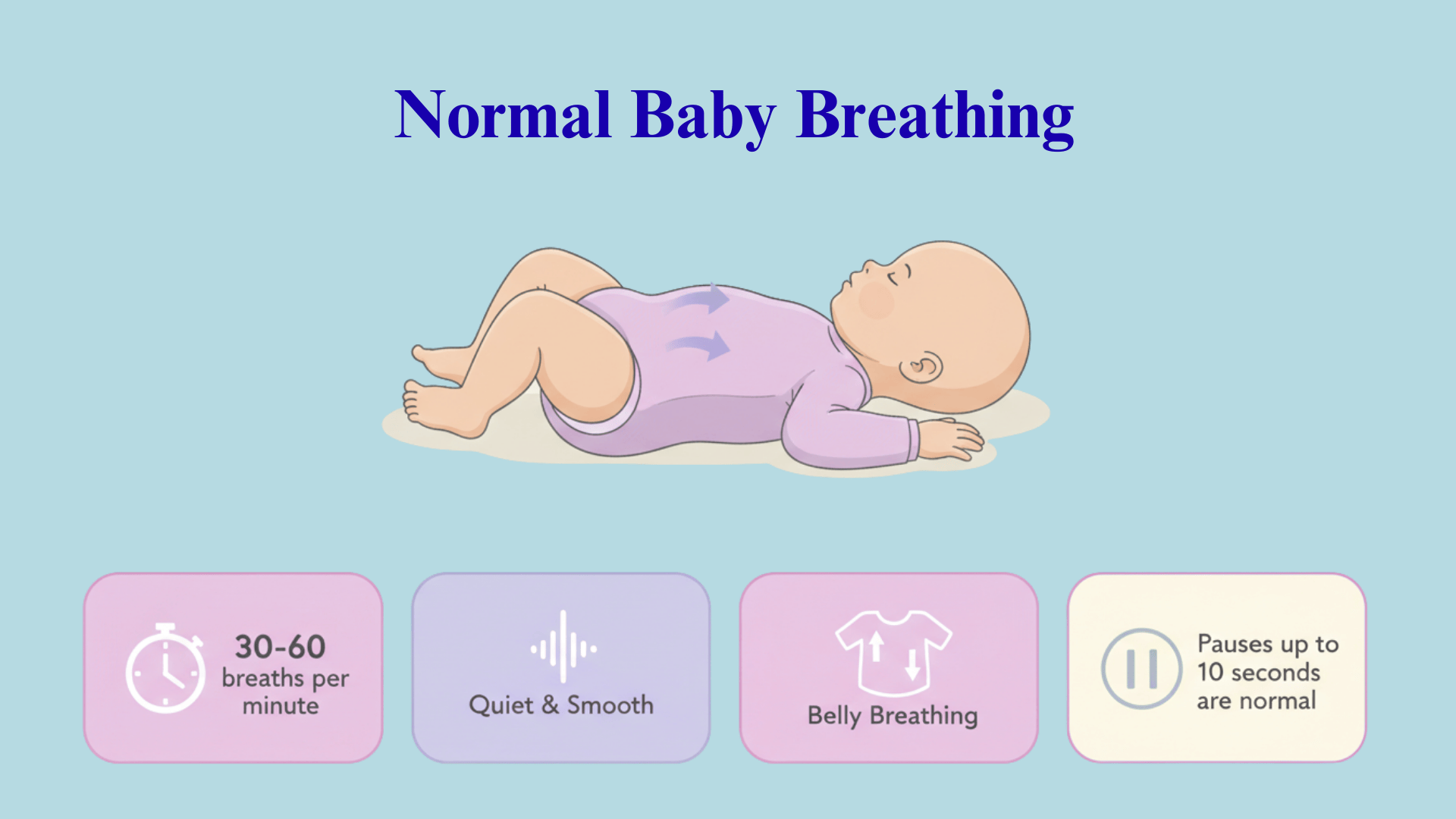
Normal baby breathing looks different from adult breathing patterns. Newborns and infants use their diaphragm to breathe, which makes their belly rise and fall with each breath.
This is called belly breathing. When your baby is calm, they typically take 30 to 60 breaths per minute. This rate is much faster than adults, but it is perfectly normal for infants.
Healthy breathing in babies should be quiet, smooth, and easy. You should not hear wheezing, grunting, or other unusual sounds.
Key Characteristics of Normal Baby Breathing:
- Breathing is quiet with no extra sounds
- Chest and belly move smoothly together
- No visible effort or strain while breathing
- Skin color remains pink and healthy
- Baby feeds and sleeps without trouble
Periodic Breathing in Babies:
| Aspect | What to Expect |
|---|---|
| What it is | Short pauses in breathing during sleep |
| Duration | Up to 10 seconds per pause |
| When it happens | Most common during sleep |
| Is it normal? | Yes, completely normal in healthy babies |
| When to worry | Only if pauses last longer than 20 seconds |
What Are Retractions?
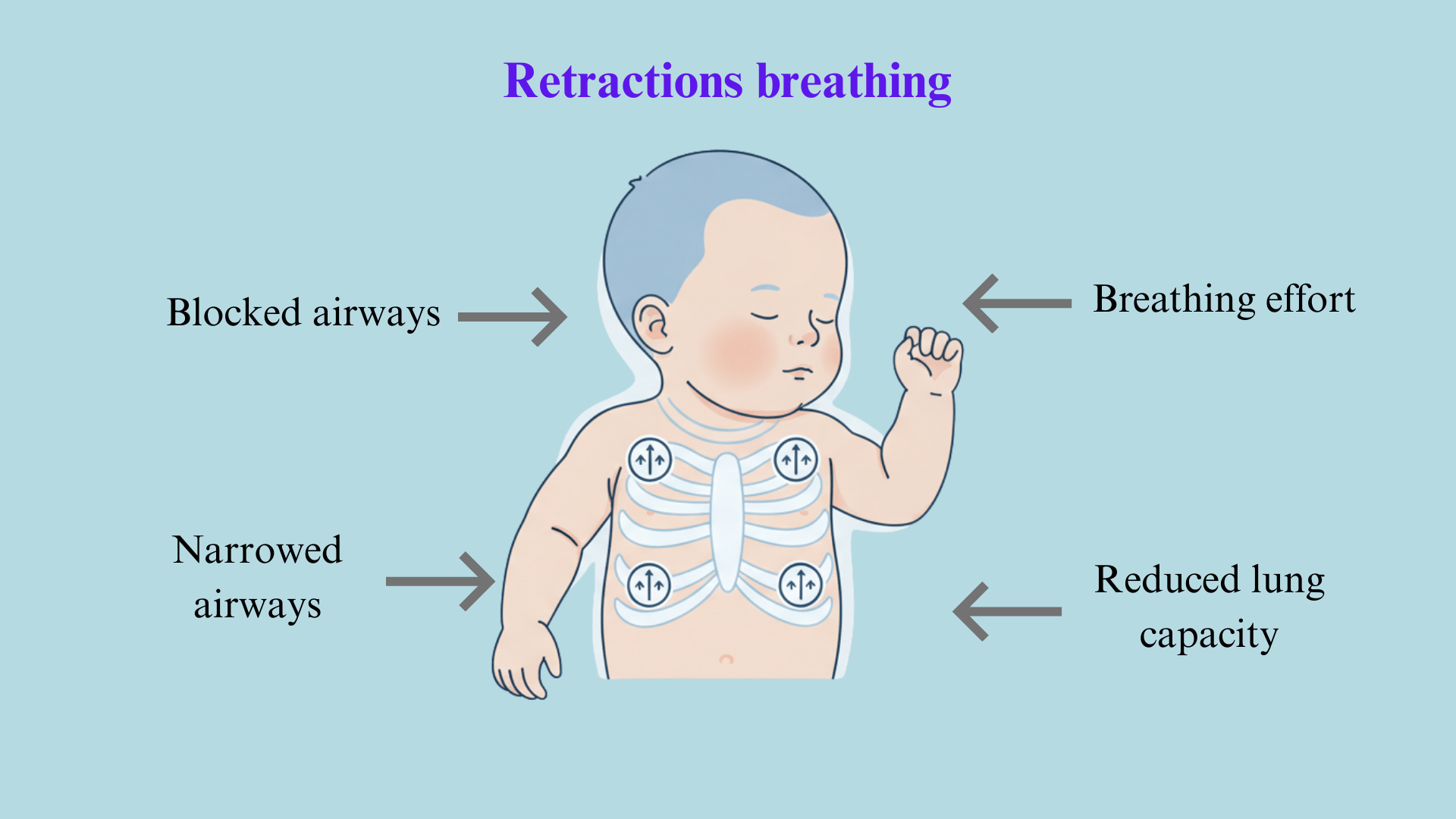
Retractions happen when the skin pulls inward between the ribs, around the breastbone, or above the collarbones during breathing.
This pulling motion occurs because your baby is working much harder than normal to get air into their lungs. You can see these movements clearly when you watch your baby breathe.
Retractions are not normal and signal that something is making it difficult for your baby to breathe properly.
The skin sinks in because the breathing muscles are working overtime to pull air through airways that may be blocked, narrowed, or not functioning well.
Why Retractions Happen:
- Blocked airways: Mucus, swelling, or objects block the air passages
- Narrowed airways: Conditions like asthma or bronchiolitis make the airways smaller
- Reduced lung capacity: Lungs cannot expand fully due to infection or fluid buildup
- Breathing effort: Baby must use extra muscles to pull air into struggling lungs
How to Identify Retractions in Babies?
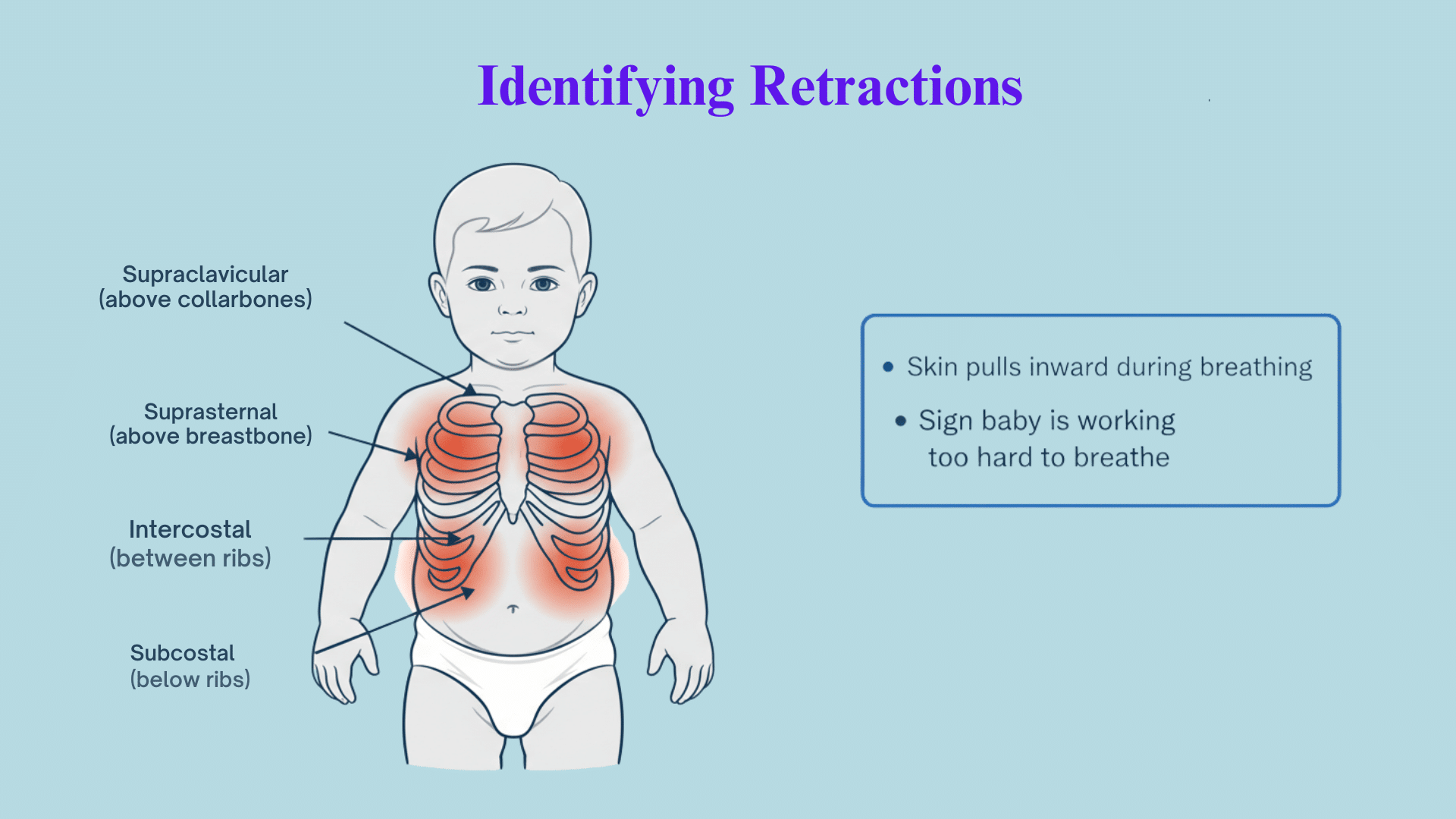
Knowing where to look makes spotting retractions much easier. Here are the four main areas where you’ll see skin pulling inward when your baby struggles to breathe.
1. Subcostal Retractions (Under the Ribs)
Subcostal retractions appear just below your baby’s rib cage. When your baby breathes in, you will see the skin and soft tissue pull inward beneath the ribs. This happens on one or both sides of the chest.
The pulling becomes more obvious when your baby is breathing fast or working hard to get air. Watch the area right under the bottom rib when your baby inhales.
2. Intercostal Retractions (Between the Ribs)
Intercostal retractions occur in the spaces between each rib. The skin sinks into these gaps every time your baby takes a breath.
You can count the individual ribs more easily because the spaces become deeper and more visible. This type of retraction shows that your baby is using extra effort to fill the lungs with air.
Look at the side of your baby’s chest to spot this sign.
3. Suprasternal Retractions (Above the Sternum)
Suprasternal retractions appear at the base of the neck, right above the breastbone. The small hollow area at the bottom of your baby’s neck pulls inward with each breath.
This dip becomes very noticeable when breathing becomes labored. You will see this spot sink in and out repeatedly. Check this area by looking at the front of your baby’s neck where it meets the chest.
4. Supraclavicular Retractions (Above the Collarbones)
Supraclavicular retractions happen in the hollow spaces above the collarbones. These areas become more pronounced and sink deeper when your baby struggles to breathe.
The skin pulls in on both sides of the neck near the shoulders. This type of retraction often appears alongside other breathing problems. Gently look at the area above your baby’s collarbones to check for this sign.
Other Related Symptoms to Watch For
5. Nasal Flaring: Your baby’s nostrils open wider with each breath. The nose spreads out as your baby tries to pull in more air. This flaring happens automatically when breathing becomes difficult. You will notice the sides of the nose moving outward repeatedly.
6. Grunting: Your baby makes a grunting sound at the end of each breath. This noise comes from the vocal cords closing to keep air in the lungs longer. Grunting helps maintain pressure in the airways. The sound may be soft or loud, depending on how hard your baby is working to breathe.
7. Cyanosis (Blueish Skin): The skin around your baby’s lips, face, or fingertips turns blue or gray. This color change means your baby is not getting enough oxygen in the blood. Cyanosis is a serious sign that needs immediate medical attention. Normal pink skin color should return once oxygen levels improve.
Visual Guide
Watch This Video from a Norton Children’s Pediatrician Explaining how To Recognize Normal Newborn Breathing Patterns and When Retractions or Other Signs Mean you Should Contact Your Doctor.
Common Causes of Retractions in Infants
Retractions Do Not Happen without a Reason. When you See Your Baby’s Chest Pulling inwards, It Means Something Is Making Breathing Harder than It Should Be. Many Different Conditions Can Cause This Problem. Some Are Mild and Clear up Quickly with Treatment. Others Need Immediate Medical Care.
Common Causes:
- Viral Infections (bronchiolitis): small Airways in the Lungs Become Swollen and filled with Mucus Due to Viruses Like RSV, Making It Hard for Air to Pass Through.
- Viral Infections (croup): The Upper Airway Near the Voice Box Swells and Narrows, Creating a Barking Cough and Noisy Breathing that Requires Extra Effort.
- Pneumonia: an infection that causes the Air Sacs in the Lungs to fill with Fluid or Pus, reducing the Space Available for Oxygen Exchange.
- Lung Issues (pleural Effusion): fluid builds up around the Lungs in the Chest Cavity, Pressing Against the Lungs and Preventing Them from Expanding Fully.
- Asthma: airways Become Inflamed and Narrow, Sometimes Triggered by Allergies, Colds, or Irritants in the Air.
- Foreign Body Aspiration: A Small Object, Like a Toy Part, Food Piece, or Coin, Gets Stuck in the Airway and Blocks Air from Flowing Normally.
- Congenital Heart Defects: Some Babies Are Born with Heart Problems that Affect Blood Flow and Oxygen Levels, Making Breathing More Difficult.
- Tracheomalacia: The Windpipe Is Softer than Normal and Collapses Partially when the Baby Breathes, Especially During Crying or Feeding.
- Laryngomalacia: The Tissue Above the Vocal Cords Is Floppy and Falls Into the Airway During Breathing, Creating Noise and Effort.
- Congenital Diaphragmatic Hernia: A Hole in the Diaphragm Allows Organs to Move Into the Chest, Leaving Less Room for the Lungs to Expand.
Knowing the Common Causes Helps you Understand What Might Be Happening. It Also Helps you Decide when To Call the Doctor. Most Causes Involve Infections or Blockages in the Airways. Less Commonly, Structural Problems in the Lungs or Airways May Be Responsible.
Comparison of Normal Baby Breathing vs Retractions
Understanding the Difference Between Normal Breathing and Retractions Can Help You Act Quickly when Something Is Wrong. Here Is a Clear Comparison of What Healthy Breathing Looks Like versus Signs of Breathing Trouble.
| Feature | Normal Breathing | Breathing with Retractions |
|---|---|---|
| Effort | Breathing Is Effortless and Quiet with No Visible Strain | Breathing Is Labored with Visible Inward Movement of Skin Around Ribs and Chest |
| Respiratory Rate | 30 to 60 Breaths per Minute when the Baby Is Calm and Resting | Often Faster than 60 Breaths per Minute, Indicating Distress |
| Sound | Soft and Even Breathing with No Extra Noises | Wheezing, Grunting, or High-Pitched Stridors Accompany Breathing |
| Skin Movement | Only the Belly Rises and Falls Gently with Each Breath | Skin Pulls Inward Around Ribs, Chest, Neck, and Collarbones |
| Skin Color | Pink and Healthy Color in the Face, Lips, and Fingertips | Bluish or Grayish Color (cyanosis) Appears Around the Lips and Face in Severe Cases |
| Baby’s Response | Calm, Comfortable, Feeding and Sleeping Normally | Anxious, Fussy, Struggling to Breathe, and Having Difficulty Feeding or Sleeping |
When Should You Be Concerned?
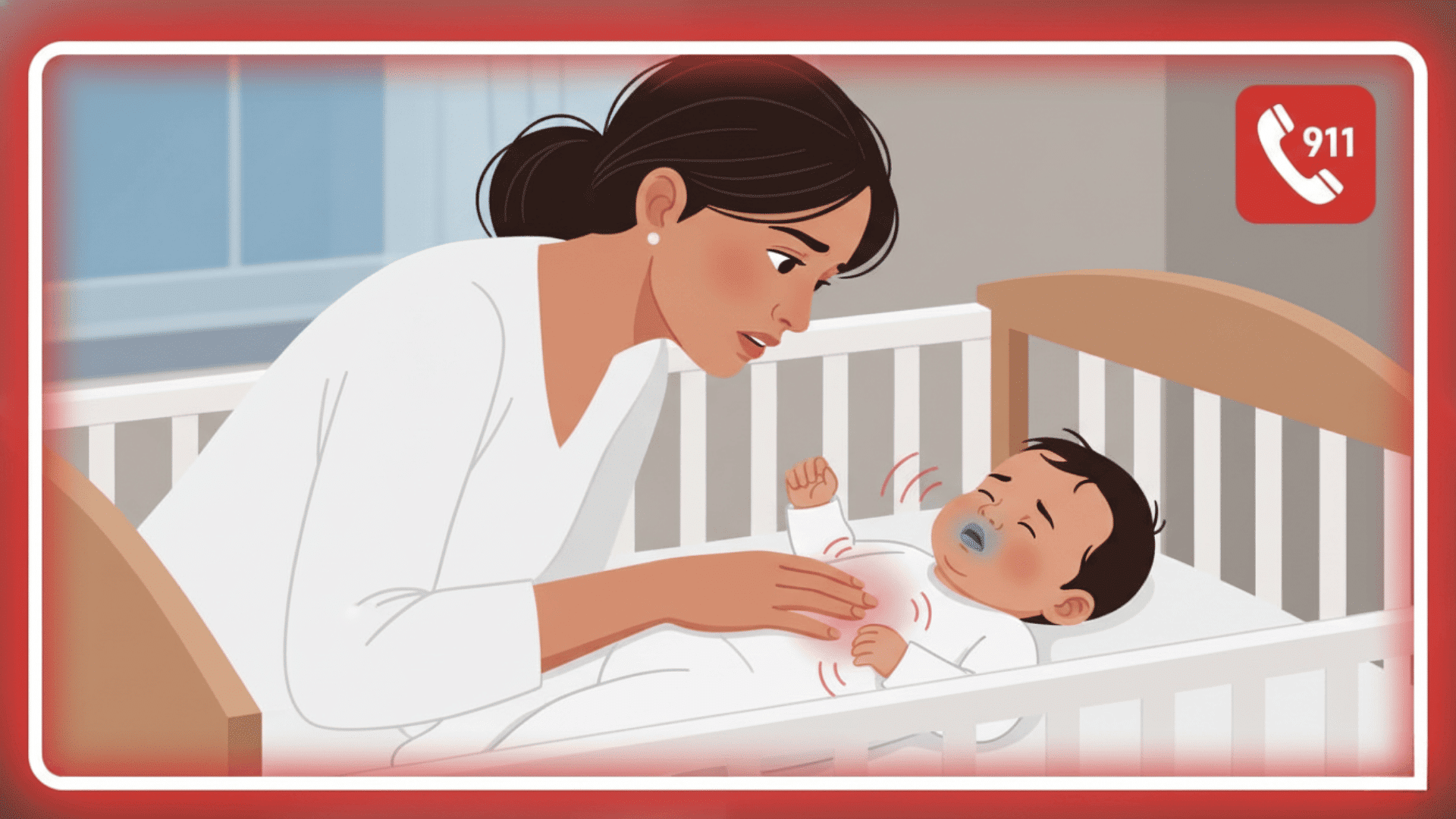
Knowing when To Seek Help Can Save Your Baby’s Life. Some Signs Need Immediate Emergency Care, While Others Require a Call to Your Pediatrician Within a Day.
Immediate Red Flags (call 911 or go to the Emergency Room Now):
- Severe Retractions with Labored Breathing: deep Pulling of Skin Between Ribs, Above Collarbones, or Below Rib Cage with Every Breath Means Your Baby Is in Serious Distress.
- Cyanosis (blue Lips or Skin): blue or Gray Color Around the Lips, Face, Tongue, or Fingertips Shows Your Baby Is Not Getting Enough Oxygen.
- Apnea Lasting Over 20 Seconds: If Your Baby Stops Breathing for More than 20 Seconds or Turns Pale or Blue During the Pause, This Is a Medical Emergency.
- Extreme Lethargy or Unresponsiveness: Your Baby Is Too Weak to Cry, Eat, or Respond to you, or Cannot Stay Awake Even when you Try to Wake Them.
- High-Pitched Stridors: A Loud, Harsh Sound when Breathing in May Mean the Upper Airway Is Severely Blocked.
- Inability to Cry or Make Sounds: Your Baby Tries to Cry but Cannot Make Noise, Which Signals a Blocked Airway.
- Severe Difficulty Feeding: Your Baby Cannot Eat at All or Stops Breathing While Trying to Feed.
When to Call Your Pediatrician (within 24 Hours):
- Continuous Fast Breathing (tachypnea): your Baby Breathes Faster than 60 Breaths per Minute for More than a Few Hours, even when Calm.
- Ongoing Wheezing or Grunting: You Hear Whistling Sounds when Your Baby Breathes Out, or Grunting Noises at the End of Each Breath.
- Difficulty Feeding While Breathing: Your Baby Pulls Away from the Breast or Bottle Frequently to Catch Their Breath During Feeds.
- Mild Retractions that Persist: You Notice Small Pulling Movements Under the Ribs or Between Ribs that Do Not Go Away After a Few Minutes.
- Increased Fussiness or Irritability: Your Baby Is Crankier than Usual and Seems Uncomfortable, Especially During or After Feeding.
- Flaring Nostrils During Breathing: your Baby’s Nostrils Spread Wide with Each Breath, Showing Extra Effort to Breathe.
- Poor Sleep Due to Breathing: Your Baby Wakes up Often, Cannot Sleep Comfortably, or Sleeps only When Held Upright.
How to Monitor Your Baby’s Breathing at Home?
Watch Your Baby Breathe when They Are Calm or Sleeping, and Count Breaths for a Full Minute by Observing Chest or Belly Movement.
Keep a Simple Log on Your Phone, Noting Breathing Rate, Unusual Sounds, Retractions, and the Time These Happen. This Record Helps Your Pediatrician Make Better Care Decisions.
A Cool Mist Humidifier Can Ease Mild Coughs from Colds or Dry Air by Loosening Mucus. Clean It Daily and use only Plain Water. If Symptoms Continue or Worsen, Call Your Pediatrician Right Away.
Closing Remarks
Understanding Normal Baby Breathing vs Retractions Gives You the Confidence to Care for Your Infant without Constant Worry.
Most Babies Breathe Perfectly Fine with Their Belly Movements and Occasional Pauses. But when you Spot Retractions, Unusual Sounds, or Color Changes, you Know It’s Time to act.
Trust Your Instincts as a Parent. If Something Feels Off About Your Baby’s Breathing, Don’t Wait.
Call Your Pediatrician or Head to the Emergency Room. Your Quick Response Could Make All the Difference.
Have you noticed any breathing changes in your baby? Share your experience in the comments below, and let’s help other parents learn from each other.