


Your baby cries the moment you flip them onto their stomach. You feel guilty and wonder if it’s really necessary.
Yes, it is. Tummy time builds the muscles your newborn needs for rolling, crawling, and sitting up later.
But here’s what matters: you can make it easier. The tummy time newborn position doesn’t have to be a battle. It just needs the right approach.
In this guide, you’ll learn when to start, which positions work best, how to handle resistance, and what milestones to expect. Let’s make tummy time less stressful for both of you.
What Is Tummy Time?
Tummy time is when you place your baby on their stomach while they are awake and supervised. This simple activity helps newborns build neck, shoulder, and core muscles.
It is different from regular floor play because the tummy time newborn position focuses on stomach-down exercises. Floor play can include back time, side-lying, or sitting activities.
The American Academy of Pediatrics recommends the “back to sleep, tummy to play” rule. This means babies should always sleep on their backs to reduce SIDS risk.
But during awake hours, they need supervised tummy time to develop properly. Think of it as gym time for your little one. Even a few minutes each day makes a real difference in building strength.
When to Start Tummy Time With a Newborn
Now that you know what tummy time is, you might be wondering when to start. The answer is simpler than most parents think.
- Start from day one: You can begin tummy time as soon as you bring your baby home from the hospital. Even newborns benefit from short sessions on your chest.
- Wait until the umbilical cord stump falls off: Some pediatricians recommend waiting until the stump has healed completely. This prevents discomfort or irritation during tummy time in the newborn position.
- Begin with chest-to-chest contact: The earliest form of tummy time happens when your baby lies on your chest. This counts as practice and helps with bonding, too.
- Start before your baby can roll over: Getting your newborn comfortable with tummy time early makes the process easier. Babies who start late may resist it more.
- Look for signs your baby is ready: Your baby should be alert and calm, not hungry or sleepy. The best time is after a diaper change or between feedings.
Newborn Tummy Time Positions (By Support Level)
Not all tummy time looks the same. Different positions work better at different stages, so let’s break down your options.
1. Chest-to-Chest Tummy Time

This is perfect for the first few weeks of life. Lie back at a slight angle and place your baby on your chest, tummy down. Your newborn gets to practice lifting their head while feeling safe against your body.
It combines bonding with gentle muscle building. Plus, hearing your heartbeat helps keep your baby calm during tummy time in the newborn position.
2. Lap Tummy Time

Place your baby across your lap, stomach down, with their head turned to one side. This gives you full control and support, which works well for babies who fuss during floor time.
You can gently rub their back to keep them comfortable. Many hesitant babies accept this position more easily than others.
3. Floor Tummy Time
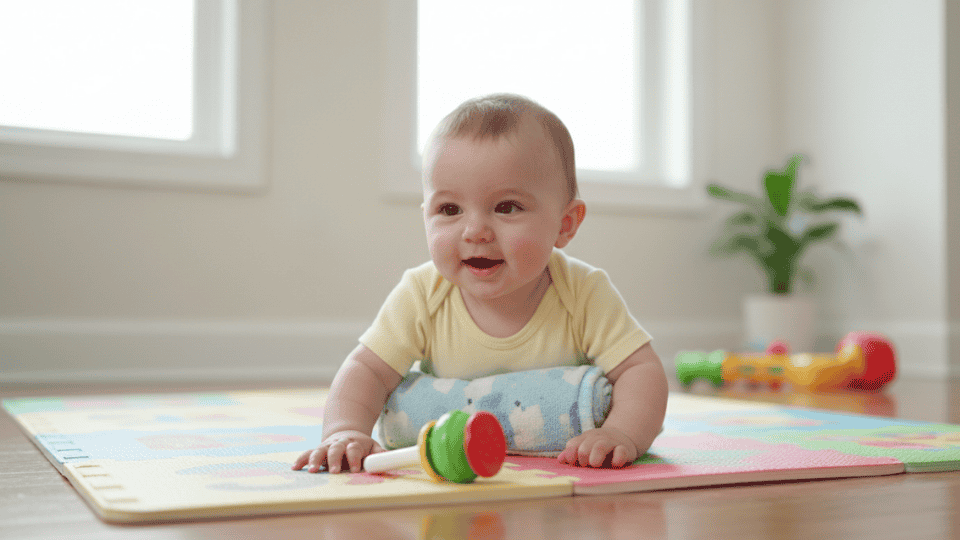
Use a firm, flat surface, such as a play mat or blanket, on the floor. Place your baby on their stomach and get down to their eye level.
You can roll a small towel and put it under their chest and arms for extra support. This setup helps your baby practice the full range of motion. Make sure the surface is not too soft, as firm ground works best.
4. Side-Lying as a Tummy Time Alternative

Lay your baby on their side with a rolled towel behind their back for support. This position helps when your baby really resists being on their stomach.
It still builds the same muscles without the full tummy time newborn position. Side-lying also supports early rolling movements and gives your baby a different view.
How to Provide Tummy Time Throughout the Day?
You do not need long sessions to make tummy time work. Start with just 2 to 3 minutes at a time, several times per day. Newborns tire quickly, so short bursts work better than one long stretch.
Try to fit the newborn tummy-time position into your daily routine. Do it after diaper changes, before feeding, or when your baby wakes from a nap. The key is frequency, not duration.
Three 3-minute sessions beat one 10-minute session. As your baby grows stronger, you can slowly add more time. But in the beginning, keep it short and repeat it often throughout the day.
How Tummy Time Progresses as Your Baby Grows
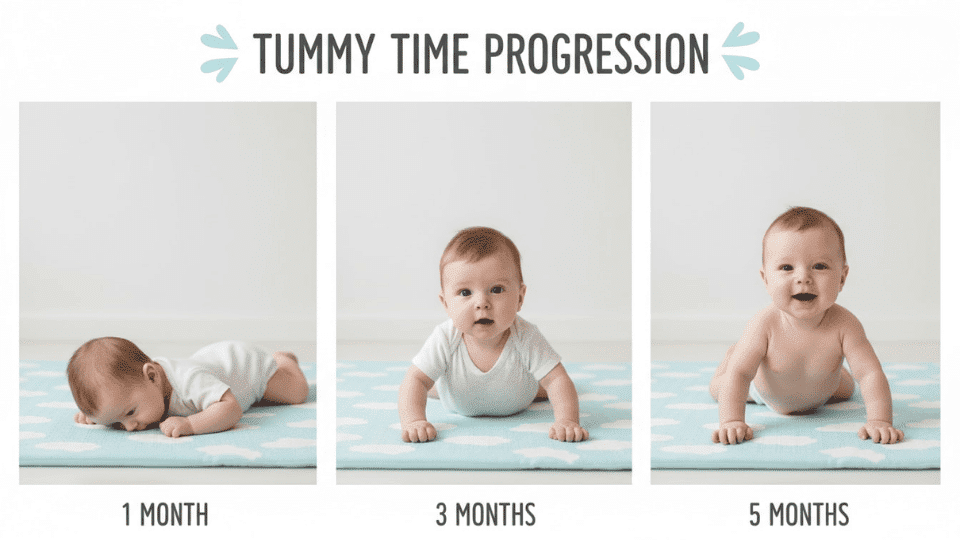
Tummy time is not a one-size-fits-all activity. As your baby develops, their abilities and needs change too.
Newborn to 1 Month
Your baby can only lift their head for a second or two at this stage. Focus on chest-to-chest or lap positions for comfort. Sessions should last just 1 to 3 minutes. The tummy time newborn position at this age is all about getting used to the feeling.
1 to 2 Months
Now your baby is starting to hold their head up a bit longer. You will notice them pushing up slightly with their forearms. Try 5-minute sessions multiple times per day. Floor tummy time becomes more practical as their neck gets stronger.
2 to 3 Months
Your baby can lift their head to 45 degrees and hold it steady. They might start pushing up on their arms and looking around. Aim for 10 to 15 minutes total throughout the day. You can add toys or mirrors to keep them interested.
3 to 4 Months
Head control improves a lot during this phase. Your baby may push up on straight arms and lift their chest off the ground. They might even start rocking back and forth. Try to reach 20 minutes of total tummy time per day.
4 to 6 Months
Your baby is getting ready to roll over and possibly crawl. They can hold their head up at 90 degrees and pivot in circles. Some babies start scooting during tummy time in the newborn position. At this stage, aim for up to 60 minutes total each day, broken into smaller chunks.
Developmental Milestones Linked to Tummy Time
Tummy time is not just exercise. It helps your baby hit important growth milestones on schedule.
| Milestone | Age Range | What You’ll See |
|---|---|---|
| Head Control | 0-2 months | Baby briefly tries to lift the head. Neck muscles start getting stronger. Head wobbles less over time. |
| Arm Pushing | 2-4 months | Baby pushes up on forearms. Chest lifts slightly off the ground. Arms bear more weight in the tummy-time newborn position. |
| Rolling Preparation | 3-5 months | Baby rocks side to side. They might accidentally roll from tummy to back. Core muscles get ready for full rolls. |
| Early Mobility | 4-6 months | Baby pivots in circles on their belly. Some start scooting backward. This leads to crawling later on. |
These milestones build on each other. Missing tummy time can delay some of these skills. But remember, every baby grows at their own pace. Some reach milestones early, others take more time.
What to Do if Your Baby Hates Tummy Time
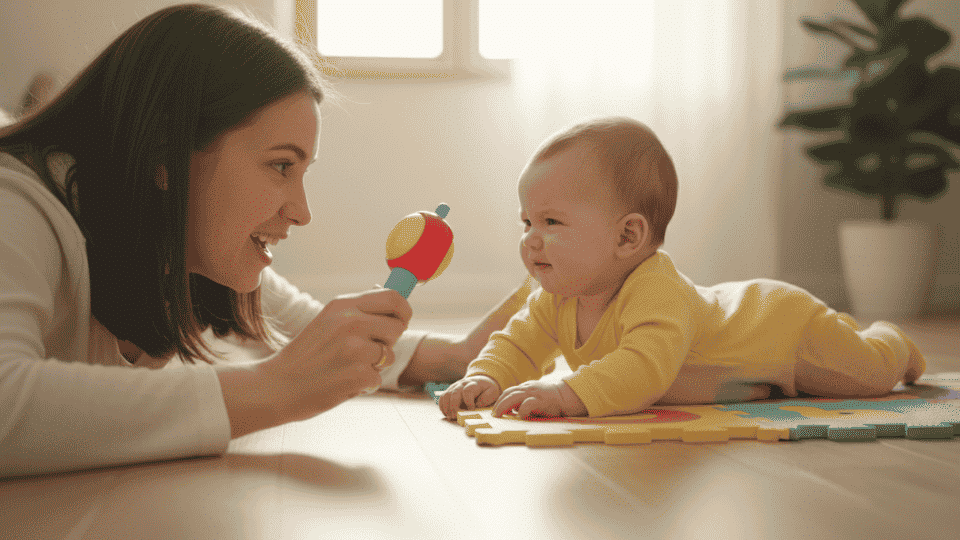
Many parents worry when their baby cries during tummy time. The good news is that resistance is normal and fixable.
Why Resistance Is Common
- It’s physically hard work: The tummy time newborn position requires muscles babies have not used much yet. Their neck, arms, and backs have to work hard, which feels tiring.
- A different view feels unfamiliar: babies spend most of their time on their backs, looking up. Being face-down gives them a completely new perspective that can feel strange or scary.
- They might feel trapped: Some babies do not like the feeling of being on their stomach. They cannot move freely or easily see familiar faces, which causes frustration.
- Timing might be wrong: Hungry, sleepy, or gassy babies will not enjoy tummy time. If your baby is uncomfortable for any reason, they will resist the activity.
- Not enough practice yet: Babies who start tummy time late or skip days often protest more. They have not built up tolerance or strength, so it feels harder each time.
Ways to Make Tummy Time Easier
- Start on your chest first: Skip the floor at first. Place your baby on your chest while you lie back slightly. This feels safer and more comfortable for hesitant babies.
- Use toys and mirrors: Put colorful toys or a baby-safe mirror at eye level. This gives your baby something interesting to look at during the tummy time newborn position. Distraction really helps.
- Get down to their level: Lie on the floor facing your baby. Make eye contact, sing songs, or make funny faces. Your presence makes them feel less alone and more motivated.
- Keep sessions very short: Do not push through tears. Try just 30 seconds to 1 minute if needed. You can always add more sessions throughout the day instead.
- Try different positions: Switch between chest time, lap time, and side-lying. Some babies prefer one position over another. Mix it up until you find what works best.
| When to Talk to a Pediatrician:
Contact your pediatrician if your baby shows limited head movement by 2 months, always turns their head to one side, or seems extremely distressed during the tummy time newborn position. Also, reach out if developmental milestones seem delayed. Trust your instincts. |
When Can You Stop Doing Tummy Time?
You can stop structured tummy time once your baby starts crawling and rolling independently. This usually happens around 6 to 8 months of age.
At this point, your baby can move around naturally on the floor without needing the tummy-time newborn position anymore.
They get plenty of strength-building from crawling, sitting up, and exploring on their own. The transition happens naturally as your baby becomes more mobile.
You do not need to force tummy time sessions when your little one is already spending active time on their stomach by choice. Let their natural movement take over.
Final Reflections
Tummy time doesn’t need to feel overwhelming. Start small, stay consistent, and remember that every baby moves at their own pace.
The tummy time newborn position might feel challenging at first, but those few minutes each day build real strength. Your baby is learning skills that last a lifetime.
Try chest-to-chest time today if your little one resists the floor. Keep sessions short and make them part of your daily routine. Progress happens gradually, not overnight.
What position worked best for your baby? Drop a comment below and share your experience. Your tip might help another parent who’s struggling right now.
If you found this helpful, check out our guide to baby sleep positions for more practical parenting advice.