

It is 2 a.m. Your baby is sniffling. You can hear every little breath. You tried rocking. You tried feeding.
You even sat in the bathroom with the shower running. Nothing worked. And now you are wondering if laying them a different way might help. That thought is completely normal. Most parents go there.
But before you stack towels under the mattress or tilt the crib, there is something you really need to know. The best sleeping position for a baby with a stuffy nose is not what most people expect.
In this blog, we cover the safest sleep positions, what causes baby congestion, and what actually helps your little one get some rest tonight.
What Causes a Stuffy Nose in Babies?
The most common cause is a cold or upper respiratory infection. On average, babies get 6 to 8 colds each year.
Other causes include dry air, the flu, RSV, allergens such as dust or pet dander, and cigarette smoke. Babies also get congested more easily than adults because their nasal passages are much smaller.
Even a tiny amount of mucus can block the airway, making breathing noticeably harder.
How to Tell If Your Baby Has Nasal Congestion
A stuffy nose shows up in more ways than just a runny nose. These are the most common signs that your baby has nasal congestion.
- Noisy breathing: Your baby makes sniffling, snorting, or whistling sounds while breathing.
- Mouth breathing: Your baby keeps their mouth open because the nose is too blocked to breathe through.
- Trouble feeding: Your baby feeds more slowly, pulls away often, or refuses to eat.
- Fussiness: Your baby is harder to settle, cries more, and sleeps poorly.
- Wet or barking cough: A wet cough may mean mucus is draining into the throat; a dry barking cough may suggest croup.
Best Sleeping Positions for a Baby with a Stuffy Nose
Most parents assume that changing their baby’s sleep position will help their baby breathe better at night. Here are the four positions you need to know about, along with what is safe and what is not.
1. Back Sleeping
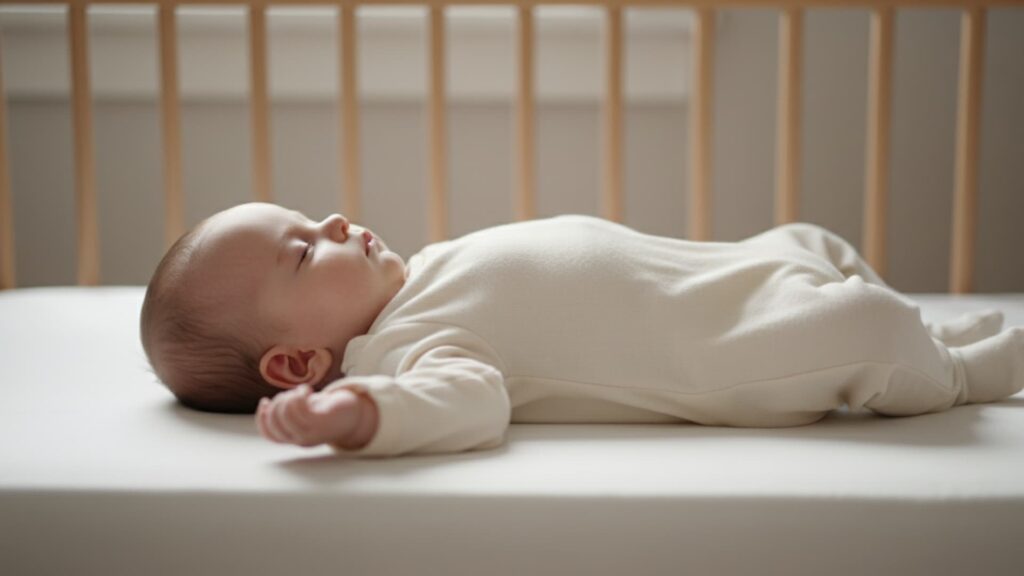
This is the only position the American Academy of Pediatrics (AAP) recommends for babies under 1 year. Lay your baby flat on their back on a firm, flat surface every single time.
This keeps the airway open, supports the baby’s natural breathing reflexes, such as swallowing and waking, and lowers the risk of SIDS. Even when your baby is congested, back sleeping is still the right and safest call.
2. Back Sleeping with Head Gently Turned to One Side

If one nostril seems more blocked than the other, you can gently turn your baby’s head to the less congested side. The body stays flat on the back. Only the head turns.
This small shift can help mucus move away from the more blocked side and make breathing slightly easier without putting your baby at any risk.
3. Upright Position

Holding your baby upright on your shoulder during wake time helps gravity pull mucus out of the nasal passages. This is not a sleep position.
But spending time upright before sleep, especially right after a feed, helps clear the nose before you lay your baby down for the night.
4. Tummy Sleeping
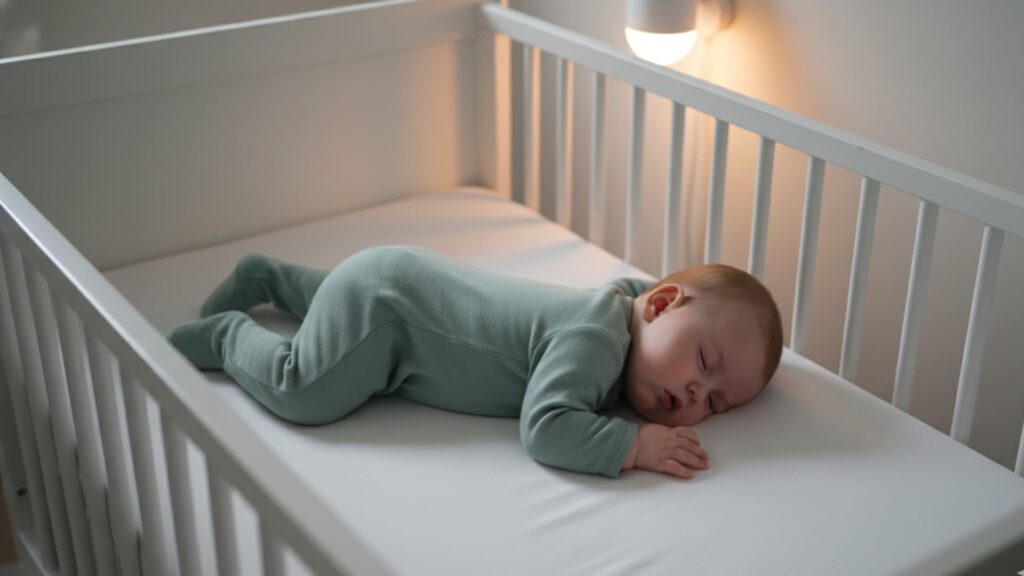
Tummy sleeping is not safe for babies who cannot yet roll on their own.
But once your baby can roll from back to front and front to back without help (usually around 4 to 6 months), it is okay if they naturally roll onto their tummy during sleep.
Always place your baby on their back first. If they roll over on their own during the night, it is fine to leave.
How to Help Your Baby Breathe Better Before Bedtime
These steps work best when done in order, right before feeding and sleep time. Start from the top and work your way down.
- Saline drops: Put 2 drops of saline solution in each nostril about 15 to 20 minutes before sleep to thin out thick mucus.
- Nasal aspirator: Use a nasal aspirator or bulb syringe right after saline drops to gently pull the loosened mucus out of the nose.
- Cool-mist humidifier: Run a cool-mist humidifier in the baby’s room to add moisture to the air and keep nasal passages from drying out overnight.
- Steam before sleep: Sit with your baby in a steam-filled bathroom for 15 minutes before bedtime to loosen thick, dry mucus.
- Upright time after feeding: Hold your baby upright for 20 to 30 minutes after each feed to let gravity help drain mucus before laying them down.
- Hydration: Keep feeding your baby breast milk or formula as normal; for babies over 6 months, small amounts of water (4 to 8 oz per day) also help keep mucus thin.
You cannot safely raise your baby’s head during sleep. But what you do in the 30 minutes before bedtime can make a real difference.
A few simple steps before you lay your baby down can help clear mucus, add moisture to the air, and give your baby a better shot at sleeping comfortably through the night.
What Not to Do When Your Baby Has a Stuffy Nose at Night
When a baby cannot sleep, it is tempting to try anything. But some common home remedies can do more harm than good. Here is a clear list of what to avoid tonight and every night.
| What to Avoid | Why It Is Not Safe |
|---|---|
| Inclined sleepers or tilted mattresses | Baby’s neck is too weak to hold the head steady; the airway can get blocked |
| Pillows, rolled towels, or wedge inserts | All raised or loose items are a suffocation risk for babies under 1 year |
| Over-the-counter cold or cough medicine | The FDA says these are not safe for children under 2 years old |
| Vicks VapoRub on babies under 2 years | Contains camphor, which can cause breathing problems in young babies |
| Essential oils directly on the baby’s skin | Can cause skin reactions or breathing irritation without a pediatrician’s guidance |
| Suctioning the nose too often | Overuse causes nasal swelling inside the nose and makes congestion worse |
| Smoke inside the home | Cigarette, marijuana, or vape smoke worsens symptoms and raises SIDS risk |
What Are Signs of Infant Respiratory Distress?
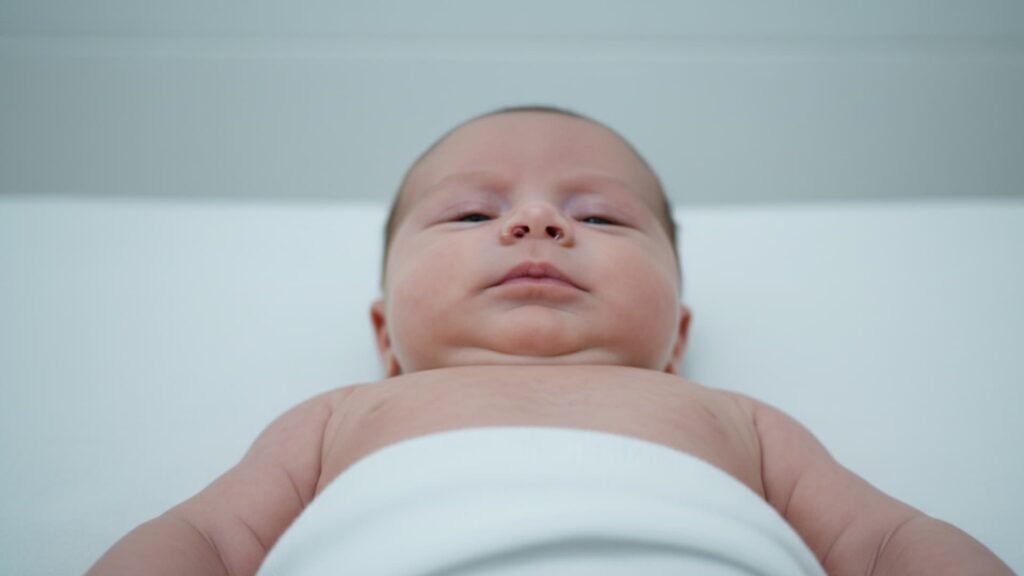
A stuffy nose is common. But some breathing symptoms go well beyond regular congestion. These signs mean your baby needs medical attention right away.
- Fast breathing: Your baby is breathing much faster than normal and cannot seem to slow down.
- Ribs showing with each breath: You can see the skin between or below your baby’s ribs pulling in with every single breath.
- High-pitched breathing sound (stridor): A harsh, squeaky sound when your baby breathes in may mean the upper airway is narrowed.
- Bluish or grayish lips and fingernails: This means your baby is not getting enough oxygen and needs emergency care immediately.
- Flaring nostrils: The nostrils widen with every breath as your baby works harder than normal to breathe.
- Unusual tiredness or limpness: Your baby is hard to wake up, seems limp, or is not responding the way they normally do.
| When to Call the Doctor
Call your pediatrician if your baby is under 3 months with any fever or if congestion has not improved after 10 days. If your baby’s lips look blue, breathing sounds high-pitched, or they are clearly struggling to breathe, skip the call. Go to the emergency room right away. |
How to Set Up a Safe Sleep Space for a Sick Baby
Use a firm, flat mattress inside a crib or bassinet that meets CPSC safety standards. Put only a fitted sheet on the mattress and nothing else, no pillows, bumpers, or positioners of any kind.
Dress your baby in warm, breathable layers, as sick babies with a fever can overheat quickly, even in a cool room. Place a cool-mist humidifier nearby and keep the room free of smoke and strong odors at all times.
To Sum It Up
A stuffy nose is hard on your baby. It is hard on you, too. But the safest thing you can do has not changed. Lay your baby flat on their back. Every single night.
The real relief comes from what you do before that moment. Clear the nose with saline drops. Run the humidifier. Hold your baby upright after feeding.
These small steps can make a real difference in how your baby sleeps tonight. And if things do not improve in a few days, your baby’s doctor is always the right next call.
You know your baby better than anyone. Trust that instinct. If something feels off, act on it. That is what good parenting looks like.