
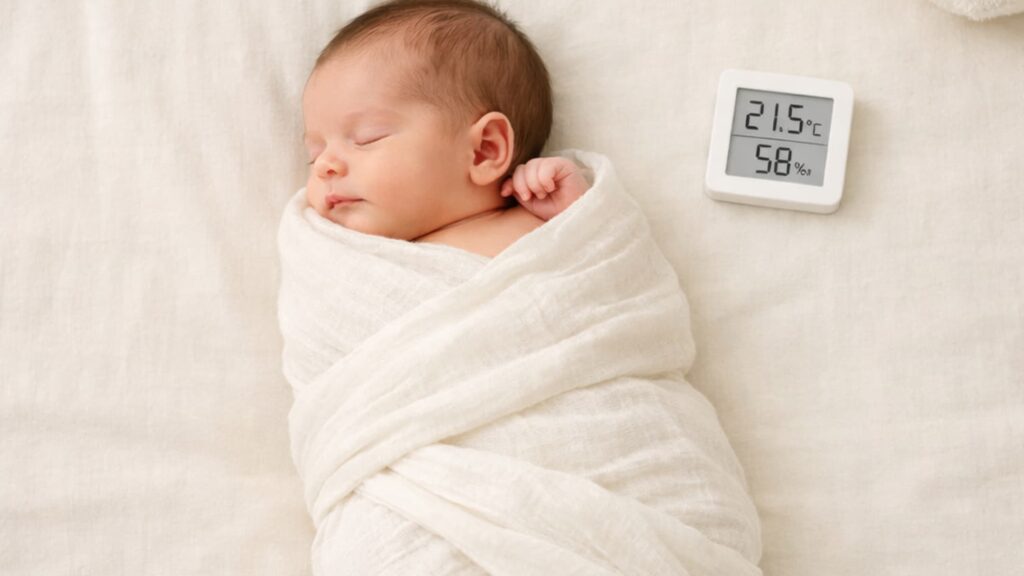
Most parents tuck their baby in and think, “Are they warm enough?” But here is the thing warmth is not always the problem.
Sometimes your baby is already too warm and won’t tell you. No crying, no fussing. Just silence. That is exactly what makes it so easy the miss the signs that a baby is too hot while sleeping.
Babies cannot cool themselves down the way adults can. Their bodies heat up fast, and parents often do not know what to look for.
This blog covers every sign of overheating, what a safe temperature looks like, and what to do when something feels off. By the end, you will feel confident checking on your baby every single night.
Why Babies Overheat More Easily Than Adults
Babies cannot control their own body temperature the way adults can. This ability starts to develop around 9 to 12 months of age. Until then, their body temperature rises much faster than yours.
On top of that, babies sweat far less than adults, and their sweat glands are smaller, especially in the early months.
This makes it very hard for them to release built-up heat on their own. Add a few extra layers of clothing or a warm room, and they can overheat quickly without showing obvious signs.
Signs Baby Is Too Hot While Sleeping
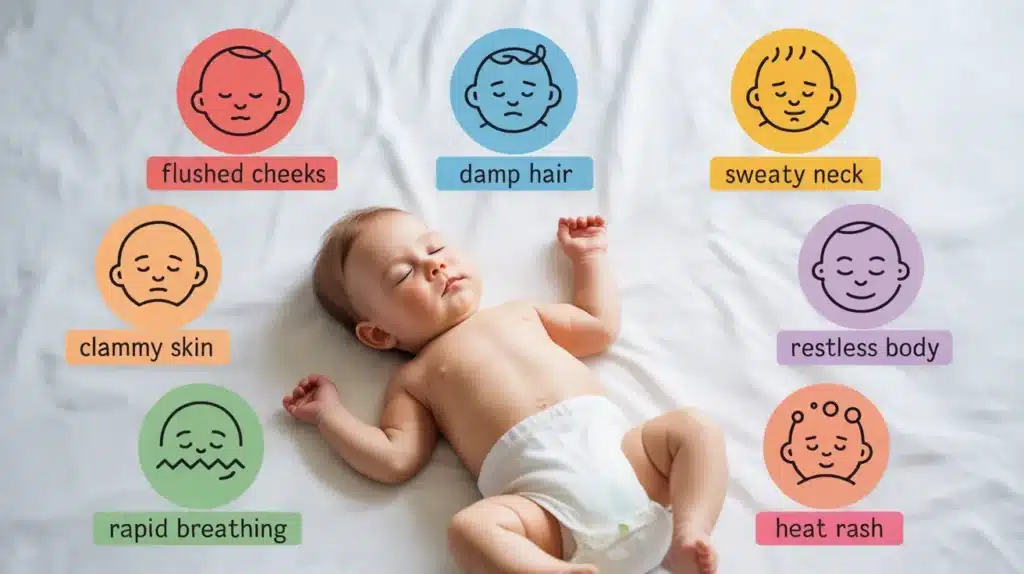
The signs of an overheated baby are there every single night. Most parents just do not know what they are looking for yet.
1. Flushed or Red Cheeks
When a baby starts to get warm, the body sends extra blood to the head to help dissipate heat. This makes the cheeks look red, almost like your baby has been running around. You might notice this even after hours of uninterrupted sleep.
2. Sweaty or Clammy Skin
Run your hand across your baby’s forehead, neck, or scalp. Sweaty skin feels warm and wet. Clammy skin feels cool and wet. Both are signs the body is working hard to manage rising heat.
3. Damp Hair or Sweaty Neck
A damp hairline or wet neck shows up early, often before other signs appear. If your baby’s hair feels wet near the roots during a nighttime check, the room temperature or their clothing may need adjusting right away.
4. Rapid Breathing
A baby’s breathing rate goes up when the body gets too warm. If their breathing sounds faster than normal during sleep, pair that with a quick neck or chest check before drawing any conclusions.
5. Restless Sleep or Fussiness at Bedtime
Some babies who are too hot simply cannot settle into sleep. They become cranky, fussy, and difficult to put down. If your baby is fighting sleep and the room feels warm, check their clothing layers before trying anything else.
6. Unusual Stillness or Lethargy
This is the most important sign to catch. An overheated baby can go very quiet and become hard to wake. Unlike a cold baby who tends to fuss, a hot baby can slip into a heavy, unresponsive sleep. Do not mistake stillness and silence for comfort here.
7. Heat Rash
Small red bumps on the neck, back, or chest mean your baby has been too warm for some time. Heat rash is not an emergency on its own, but it is a clear sign that changes need to happen before the next sleep.
What Is a Safe Body Temperature for a Baby?
A normal body temperature for a baby falls between 97°F and 100.3°F (36.1°C to 37.9°C). Once the reading reaches 100.4°F (38°C) or above, your baby may be overheating or running a fever.
A rectal thermometer gives the most accurate result for newborns. Oral and underarm readings tend to be less reliable for young babies.
Keep in mind that body temperature fluctuates slightly throughout the day, so a single reading alone may not tell the full story.
How to Check If Your Baby Is Too Hot
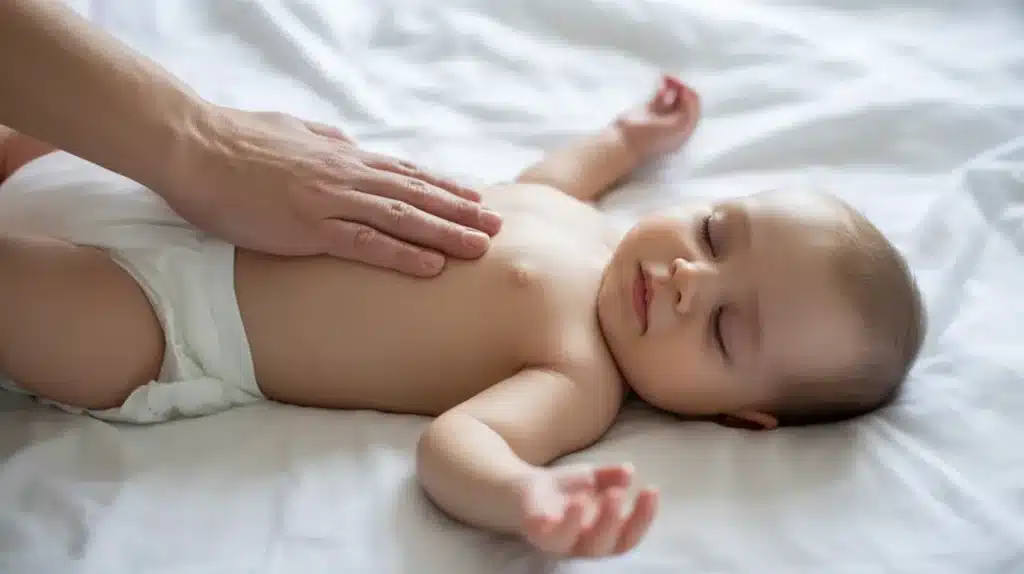
Most parents reach for the hands or feet first. That is actually the least helpful place to check. Here is where to look instead, and how to do it right.
- Check the neck, chest, or tummy: These areas give the most accurate read on how warm your baby actually is.
- Skip the hands and feet: Baby extremities stay naturally cooler than the rest of the body and are not a reliable guide.
- Feel the ears: Red, hot ears alongside a sweaty neck are a strong and reliable sign of overheating.
- Use the palm of your hand, not your fingertips: The palm picks up temperature differences far more accurately than fingertips do.
- Place a thermometer near the crib: Not inside the crib, but close enough to give you an accurate room temperature reading at any time of night.
What to Do When You Notice These Signs
Spotting the signs is only the first step. Once you know your baby is too warm, these actions can help lower their temperature safely and quickly.
| Action | What to Do |
|---|---|
| Remove a clothing layer | Take off one layer and check the neck or chest again after a few minutes |
| Adjust the room temperature | Lower the thermostat or move the baby to a cooler, well-aired room |
| Improve airflow | Set up a fan in the room, but do not point it directly at the baby |
| Open a window | Only if the outside temperature is cool enough to allow it safely |
| Offer more feeds | For babies over 6 months, extra breast milk, formula, or cooled boiled water helps on very hot days |
| Check for fever | Use a thermometer if the baby seems unwell, lethargic, or hard to wake |
| Call a doctor | If the temperature is 100.4°F (38°C) or above, or if your baby is very hard to rouse |
How to Dress a Baby for Sleep Based on Room Temperature?
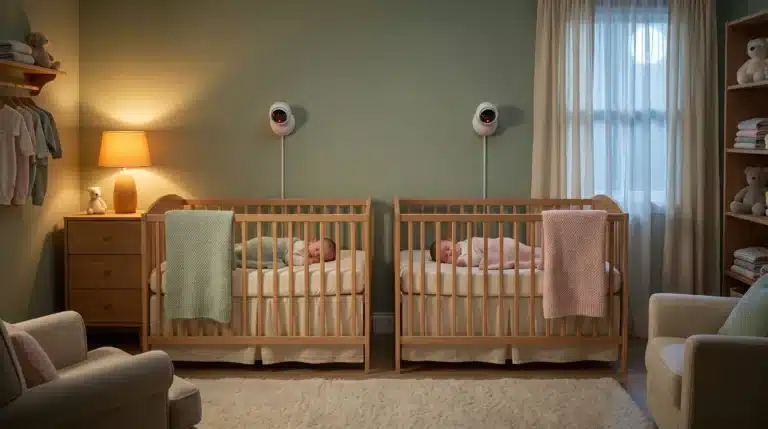
A simple starting point is to dress your baby in one more layer than a lightly clothed adult would wear in the same room. Choose lightweight, breathable fabrics like cotton and skip hats entirely during sleep.
The head is one of the main ways a baby releases body heat, and covering it can raise their temperature quickly. For very warm nights, a cotton onesie or just a diaper may be all that is needed.
For cooler nights, a sleep sack or swaddle with the right TOG rating keeps your baby comfortable without the risk of overheating.
Wrapping It Up
Overheating is one of those things that sneaks up quietly. The signs baby is too hot while sleeping are not always loud or obvious.
A sweaty neck, flushed cheeks, or a baby that simply will not settle can each point to the same problem. Now you know exactly what to check, where to check it, and how to respond quickly.
A safe sleep setup does not have to be complicated. Keep the room between 68°F and 72°F, dress your baby in light layers, and always check the neck or chest, not the hands. Small, consistent habits like these protect your baby every night.
Have a tip that worked well for your baby? Share it in the comments below. Other parents would love to hear it.