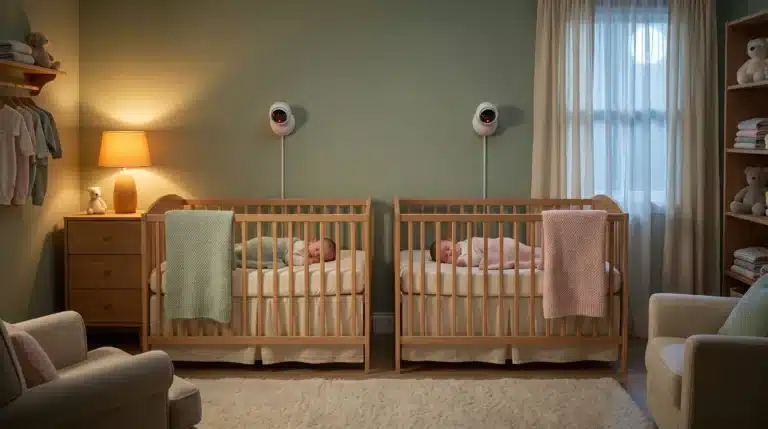

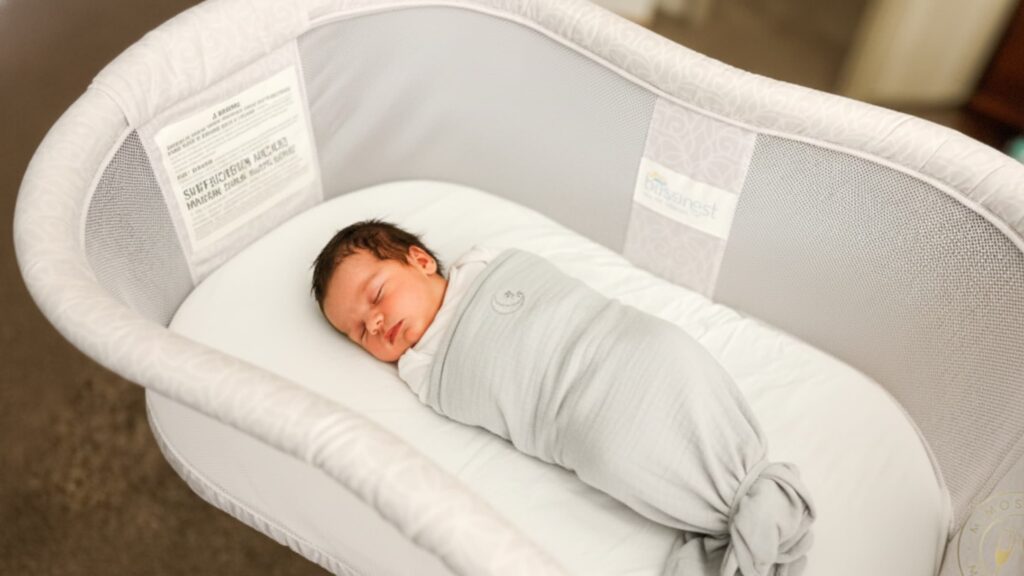
The bassinet is set up. The baby is finally asleep. And somewhere between the 2 am feeding and the 5 am wake-up, a thought hits you: how long do babies sleep in a bassinet before this stops working?
It happens to most parents around the 3 or 4-month mark. The baby starts looking cramped. The wakings get more frequent. And suddenly that cozy little bed you spent weeks researching feels like it has an expiration date.
Most babies use a bassinet for 4 to 6 months, but age is only part of the story. Weight, size, and what your baby is doing physically matter just as much.
This guide covers all of it.
What Is a Bassinet and Why Do Parents Use It?
A bassinet is a small, compact sleep space made for newborns. It sits close to the parents’ bed, which makes nighttime feedings much easier, especially in those first few weeks.
The American Academy of Pediatrics (AAP) recommends room-sharing with your baby for at least the first 6 months to lower the risk of SIDS.
A bassinet makes this possible without taking up the space a full crib would. Most parents choose a bassinet because it keeps the baby nearby, is easy to move from room to room, and feels cozier for a newborn who is used to a snug, enclosed space.
How Long Can a Baby Sleep in a Bassinet?

You bought the bassinet, set it up, and now you are hoping it lasts a while. The truth is, most babies outgrow a bassinet faster than parents expect. Here is a clear breakdown of what to expect at each stage.
- From birth to 1 month: Newborns sleep 14 to 17 hours a day, mostly in short 2 to 3-hour bursts.
- From 1 to 2 months: Sleep patterns stay roughly the same, with slightly longer stretches at night for some babies.
- From 2 to 3 months: Some babies start sleeping 4 to 5-hour stretches. The bassinet still works well here.
- From 3 to 4 months: This is when many parents notice the bassinet is getting tight. Babies grow fast.
- From 4 to 6 months: Most babies hit the weight or height limit of the bassinet during this window. This is when the move to a crib becomes necessary.
- Past the past 6 months: Continuing to use a bassinet beyond this point is not safe if the baby is rolling or has reached the weight limit.
Is a Bassinet Worth It? The Pros and Cons
Most baby gear comes with a sales pitch but no honest list of what to expect. Before you buy a bassinet or decide how long to use it, here is what the experience actually looks like for most families.
| The Good | The Bad |
|---|---|
| Keeps baby close to your bed for easy nighttime feeding | Most babies outgrow it in just 3 to 6 months |
| Lighter and easier to move than a crib | Weight limits are strict: usually 15 to 20 lbs |
| Feels snug and secure for a newborn | Some older or secondhand models may not meet current safety standards |
| AAP recommends room-sharing: a bassinet makes this easy | Not all babies take to a bassinet right away |
| Easier for parents recovering from a C-section | It is a short-term investment, not a long-term solution |
| Many models fold flat for travel or small spaces | Some cheaper models have unstable bases or soft mattresses |
Pro Tip: If budget is a concern, look for a bassinet that converts into a playard insert. You get more value from one product over a longer period of time.
Signs Your Baby Is Ready to Move Out of the Bassinet
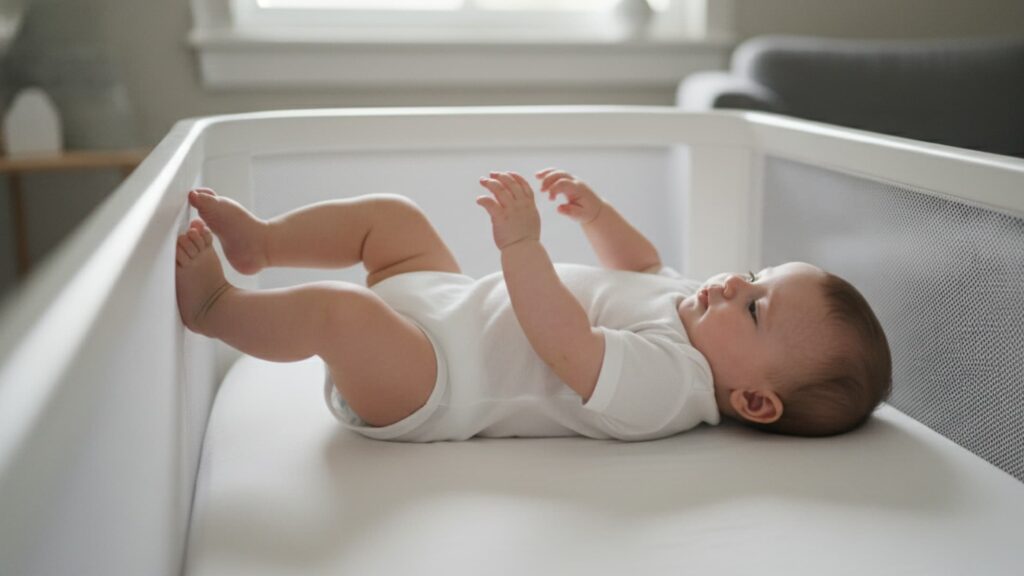
Knowing when to move your baby out of the bassinet is not always about age. Most parents miss the physical cues because they are running on little sleep. Here are the signs that actually matter.
1. Baby Is Rolling Over
This is the clearest sign. Once a baby can roll, a bassinet becomes unsafe. The low walls and tight space do not provide enough room for a baby to move around. Move them to a crib as soon as this happens.
2. Baby Looks Cramped or Keeps Hitting the Sides
If your baby’s head is near one end and their feet are near the other, they have outgrown the space. Babies who feel restricted tend to wake up more. The bassinet is no longer comfortable for them.
3. Baby Has Hit the Weight or Height Limit
Every bassinet has a maximum weight, usually between 15 and 20 pounds. Check the label on your model. Once your baby hits that number, stop using the bassinet. No exceptions. The frame is not built to hold more.
4. Baby Is Pushing Up on Hands and Knees
This is a major signal. A baby who can push up can also tip a bassinet or pull up on the sides. This creates a real fall risk. The crib, with its tall walls, is the safer option at this point.
5. Baby Is Waking up More than Usual
Sometimes, increased night waking is a sign that the bassinet is no longer comfortable. Babies need room to shift positions. If nothing else explains the wakings, the bassinet may be the issue.
When to Transition Baby to a Crib
Most babies are ready to move to a crib between 3 and 6 months. But your baby’s body will tell you before the calendar does.
- Is Baby rolling over? Move them to the crib now. A bassinet is not built for a baby who can flip.
- Hit the weight limit? Stop using the bassinet that same day. The frame is not designed to hold more than the listed limit.
- Feet touching the bottom? That is not a milestone to wait on. A cramped baby is an uncomfortable and unsafe baby.
- Waking up more than usual? The bassinet may simply not be giving them enough room to sleep comfortably anymore.
- You feel ready? That counts too. If you want your baby in the nursery and the bassinet phase feels done, it probably is.
Bassinet vs. Crib vs. Playard: Which One Is Right for Your Baby?
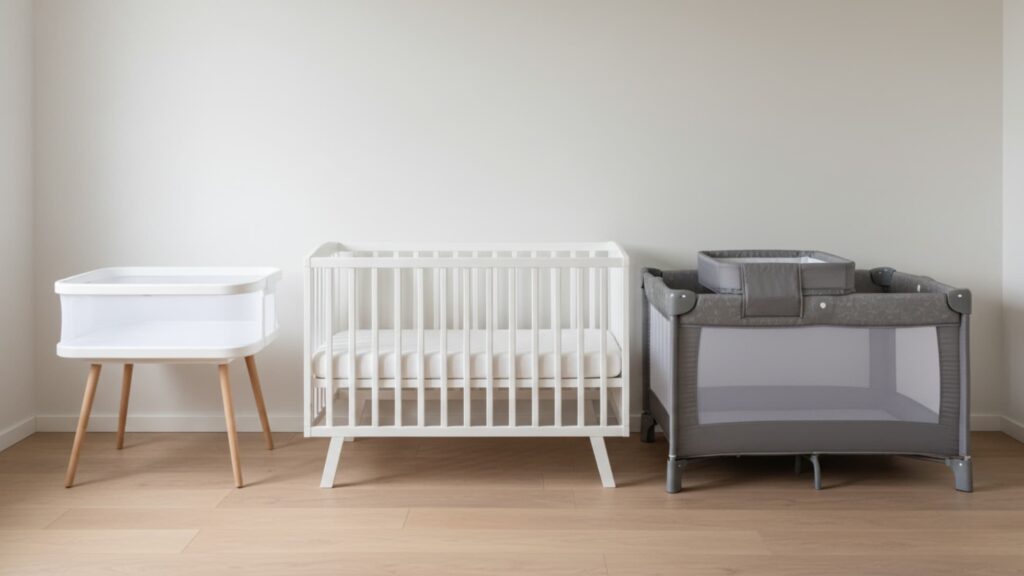
Many parents spend time comparing all three options before buying anything. Each one serves a different purpose, and knowing the difference can save you money. Here is a side-by-side look.
| Feature | Bassinet | Crib | Playard (Pack and Play) |
|---|---|---|---|
| Best for | Newborn to 4 to 6 months | Newborn through toddler years | Travel, naps, short-term use |
| Weight limit | 15 to 20 lbs (most models) | Up to 50 lbs | ~30 lbs for bassinet insert |
| Portability | High: easy to move from room to room | Low: heavy and fixed once set up | High: folds flat for travel |
| Lifespan | Short: a few months | Long: 3 to 4 years or more | Medium: playard lasts, insert is short-term |
| Cost range | $80 to $300 | $150 to $600 | $60 to $200 |
| Room-sharing friendly | Yes | Yes, if kept in the bedroom | Yes |
| Safe sleep approved | Yes (when meeting CPSC standards) | Yes | Yes (playard and bassinet insert) |
Which one should you pick?
If you want the baby close in the first few months, a bassinet is the most practical choice. If you want one product that lasts through toddlerhood, go straight to a crib.
If you travel often or need something that folds away, a playard with a bassinet insert covers both needs. Many families use all three at different points. There is no rule that says you have to pick just one.
Bassinet Safety Tips Every Parent Should Know
Always place your baby on their back on a firm, flat mattress with only a fitted sheet. The AAP is clear: no pillows, no blankets, no soft toys, and no bumpers inside the bassinet.
Check that your bassinet has a Children’s Product Certificate (CPC) from the Consumer Product Safety Commission (CPSC), especially if you are buying secondhand.
Older models may not meet current safety standards. Never use a bassinet that has broken parts, an unsteady base, or a mattress that does not fit snugly in the frame.
Keep the bassinet away from windows, cords, heaters, and any surface it could fall from. Always check the manufacturer’s weight and height limits before each use.
Conclusion
Most babies sleep in a bassinet from birth to around 4 to 6 months. But the real answer depends on your baby, not a fixed date.
Watch for the physical signs: rolling over, hitting the weight limit, or waking up more than usual. Those signals matter more than any calendar.
How long babies sleep in a bassinet varies from family to family. Some babies outgrow it at 3 months. Others stay comfortably until 6 months.
Trust what you see. Check the weight limit. Keep the sleep space bare and firm. And when it is time to move to the crib, take it one nap at a time.
Have a question about your baby’s sleep setup? Leave it in the comments below.