


You check on your baby in the middle of the night. Everything looks fine. But then you notice it. Their little mouth is hanging open, and they are breathing right through it.
Your first thought? Something must be wrong.
Most parents go through this exact moment. And the good news is, it does not always mean something serious is going on. But it is not something to completely brush off either.
A baby sleeping with the mouth open can happen because of something as simple as a stuffed-up nose, or it could point to something that needs a doctor’s attention.
This guide walks you through every possible reason, the signs to watch for, what you can do at home, and when it is time to call your pediatrician.
Is It Normal for a Baby to Sleep with Their Mouth Open?
Babies are born as nose breathers. In the first three to four months of life, they rely almost entirely on their noses to breathe, even during sleep.
So when a baby starts sleeping with their mouth open, it usually means their nasal passages are blocked or congested. Occasional mouth breathing during a cold is generally not a cause for worry.
But if your baby sleeps with their mouth open every single night, that is worth a closer look.
Why Do Babies Sleep with Their Mouths Open?

There is rarely just one answer to this question. Several different things can cause a baby to breathe through their mouth during sleep, and knowing the most common ones can help you figure out what is going on with your little one.
- Nasal Congestion from Colds or Allergies: Mucus from a cold or allergy blocks the nasal passage, leaving the mouth as the only way for your baby to breathe.
- Enlarged Tonsils or Adenoids: When tonsils or adenoids grow too large, they block the upper airway and force a baby to breathe through their mouth at night.
- Deviated Septum: A shift in the cartilage inside the nose, which can happen during birth or fetal development, makes it difficult to breathe through the nose consistently.
- Tongue-Tie (Ankyloglossia): A tongue-tie prevents the tongue from pressing against the roof of the mouth, making it harder for the baby to keep their lips closed during sleep.
- Mouth Breathing as a Habit: After an illness clears up, some babies continue to breathe through their mouths simply because their bodies have grown accustomed to it during the illness.
- Sleep Stage and Muscle Relaxation: During deep sleep, the jaw muscles relax, and the mouth can fall open, even in babies with no nasal blockage at all.
How to Tell If Your Baby Is Mouth Breathing at Night
You do not need to watch your baby all night to figure this out. A few simple signs can tell you a lot.
Look for lips that are parted during sleep, dry or cracked lips in the morning, and a pattern of snoring or noisy breathing.
If your baby seems more tired or cranky than usual, even after sleeping through the night, that is also worth noting.
Checking on them two or three times over a few nights will help you see whether mouth breathing is a regular pattern or just a one-off.
Baby Sleeping with Mouth Open by Age

Mouth breathing does not carry the same meaning at every age. What is considered occasional and what needs attention depends heavily on your baby’s age. Here is a breakdown by age group.
Newborns (0 to 3 Months)
Newborns breathe almost entirely through their noses. If a newborn is sleeping with their mouth open, it almost always means something is blocking their nasal passage.
Even a small amount of mucus can be enough to force mouth breathing at this age, so checking in with your pediatrician is always the right call.
Babies 4 to 12 Months
By four months, babies develop the reflex to breathe through their mouths when needed. But that does not make mouth breathing during sleep normal or something to ignore.
At this age, the most common causes are allergies, ongoing congestion, and the early growth of adenoids. Watch for poor sleep and feeding difficulties, along with open-mouth breathing.
Toddlers (1 Year and Older)
In toddlers, regular mouth breathing during sleep needs prompt attention. The longer it goes without being addressed, the higher the risk of dental changes, behavioral shifts, and disrupted sleep.
If your toddler breathes with their mouth open every night and also snores, a visit to your pediatrician is the right next step.
What Happens If Baby Keeps Sleeping with the mouth open?
A cold here and there is one thing. But when a baby sleeps with their mouth open night after night without a clear reason, it can have real effects on their health and development over time. Here is what the medical community says about the long-term impact.
- Dry Mouth and Oral Health Issues: Breathing through the mouth dries out saliva faster, which increases bacteria and raises the risk of tooth decay over time.
- Poor Sleep Quality: Mouth breathing does not deliver the same quality of airflow as nasal breathing, which means your baby may not be getting truly restful sleep.
- Behavioral and Developmental Concerns: Ongoing poor sleep linked to mouth breathing can cause irritability, difficulty focusing, and mood issues in babies and toddlers.
- Facial and Dental Changes Over Time: Long-term mouth breathing has been linked to a narrower face shape, receding chin, and dental alignment problems, a pattern sometimes referred to in dental literature as “mouth breathing face.”
- Speech Development Issues: Babies who breathe through their mouths for extended periods may struggle with certain speech sounds or develop a lisp as they grow older.
Home Remedies to Help Baby Breathe Through Their Nose
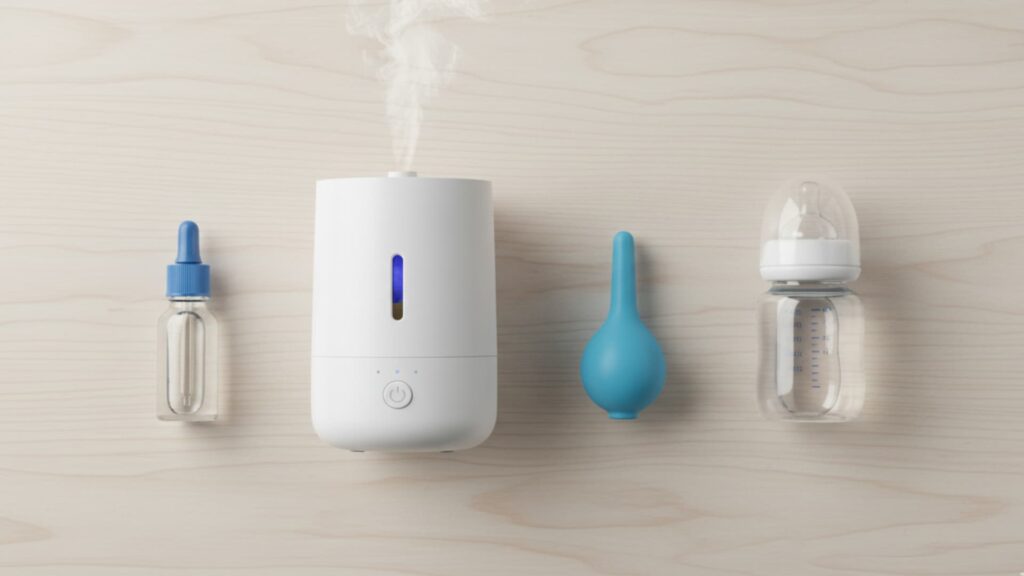
If congestion is the reason your baby sleeps with their mouth open, there are several things you can try at home before heading to the doctor. These remedies are safe, simple, and recommended by pediatric experts for mild cases.
1. Saline Drops and Nasal Suctioning
A few drops of saline solution in each nostril can loosen thick mucus, making it easier to clear. Follow it up with a bulb syringe to gently remove the mucus. Use this before sleep and before feeding for the best results.
2. Cool Mist Humidifier
Dry air can thicken nasal mucus and worsen congestion. A cool mist humidifier in your baby’s room adds moisture to the air and helps keep their nasal passages clear. Change the water daily and clean the unit regularly to prevent bacteria buildup.
3. Steam Therapy
Run a hot shower in your bathroom with the door closed for a few minutes. Sit with your baby in the steamy room for five to ten minutes before bedtime. The warm, moist air can help loosen congestion. Always stay in the room with your baby and step out if they seem uncomfortable.
4. Keeping Your Baby Hydrated
Breast milk and formula keep mucus thin and moving. For babies under 12 months, proper feeding is enough. Good hydration supports the body’s ability to clear nasal passages naturally.
5. Safe Sleep Position Adjustments
You can place a tightly rolled towel under the head end of the crib mattress to give a very slight incline. This helps with drainage and can reduce overnight congestion. Never put loose items, pillows, or wedges directly inside the crib, and always follow safe sleep guidelines from the American Academy of Pediatrics.
|
When to See a Doctor Call your pediatrician if your baby snores loudly every night, stops breathing briefly during sleep, has trouble feeding while mouth-breathing, or seems very tired during the day despite sleeping for long hours. These signs go beyond a simple cold and need a proper medical evaluation as soon as possible. |
Medical Treatments for Mouth Breathing in Babies
Treatment depends entirely on the cause. Your doctor will run a physical exam first and may refer you to a specialist based on their findings. Here is a short overview of what treatment can look like:
- Allergies: Nasal sprays or antihistamines prescribed by a pediatrician can reduce inflammation and relieve congestion.
- Enlarged Adenoids or Tonsils: Depending on severity, treatment may range from monitoring to surgical removal, known as an adenotonsillectomy.
- Deviated Septum: In rare cases involving structural issues, surgery may be recommended, though this is uncommon in young infants.
- Sleep Apnea: Positive airway pressure devices, such as CPAP, may be used in more severe cases.
- Tongue-Tie: A simple in-office procedure called a frenotomy can release the tie and improve tongue movement right away.
Most of these treatments are safe and effective when addressed at the right time. The key is not to wait too long once you notice the signs.
The Bottom Line
A baby sleeping with its mouth open is one of those things that can send a parent straight to a search engine at 2 in the morning. And honestly, that makes complete sense. You want to make sure your little one is okay.
Here is what it comes down to. Sometimes it is nothing serious. A stuffed nose from a cold, dry air, or a brief phase your baby moves through on their own. But when it becomes a nightly pattern, it is worth paying closer attention to.
You know your baby better than anyone else. Trust what you observe. Try the home remedies for mild congestion.
And if something feels off, do not talk yourself out of calling the doctor. That is exactly what they are there for.