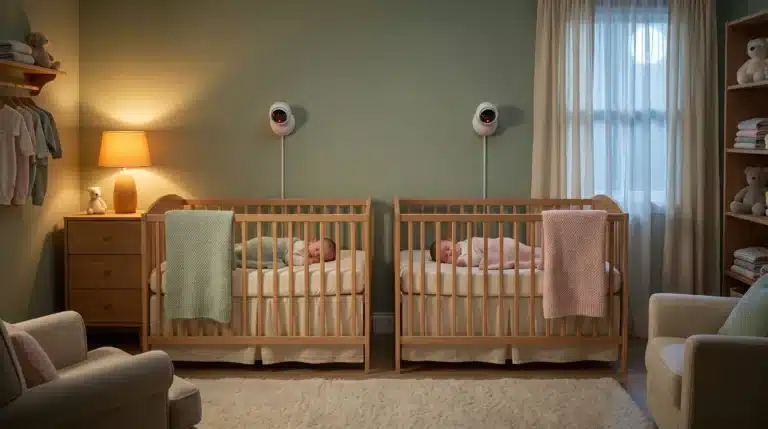

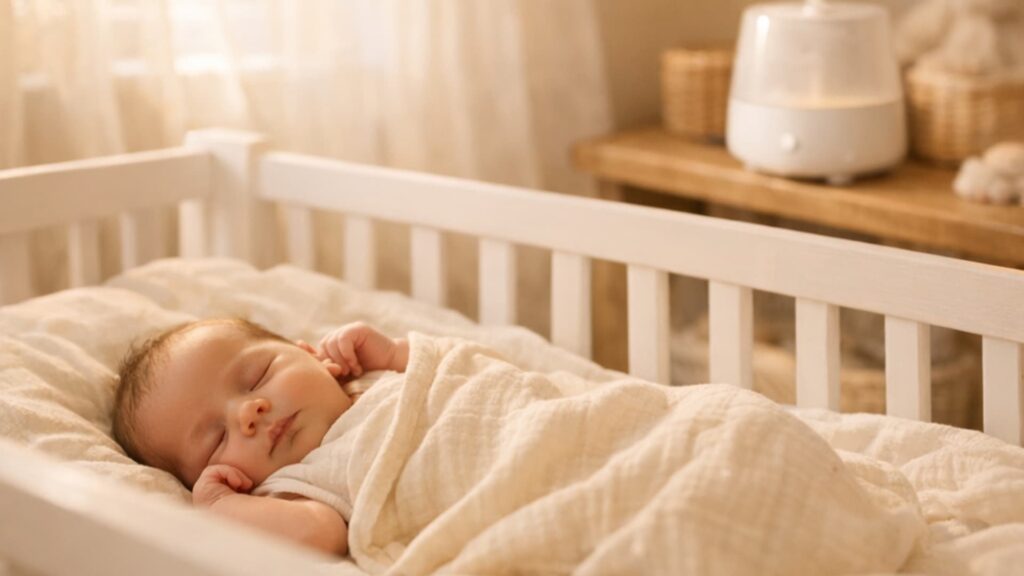
Most parents spend weeks picking the perfect crib, the softest blankets, and the safest baby monitor. But there is one thing that almost always gets overlooked: the moisture in the air where your baby sleeps.
You may not realize it, but the humidity level in your baby’s room directly affects how they breathe, how well they sleep, and how often they fall sick.
Too dry, and their nose gets blocked. Too humid, and mold quietly builds up in corners you rarely check.
This guide walks you through the ideal humidity for a baby, why it matters more than most parents think, and exactly what you can do about it starting today.
What Is Humidity and Why Does It Matter for Babies?
Humidity is the amount of moisture in the air around us. For adults, a small shift in air moisture is barely noticeable. For babies, the impact is far greater.
Their skin is thinner, their airways are significantly smaller, and their immune system is still in its earliest stages of development.
Babies are also obligatory nose breathers, meaning they breathe through their nose even when it is congested.
This makes the air quality in their room directly tied to how well they breathe, how comfortably they sleep, and how often they get sick.
What Is the Ideal Humidity for a Baby’s Room?
Now that you know why air moisture plays such a big role, the next question is what number you should actually aim for. The good news is that it is not complicated. The answer is a safe range, not a single perfect number, and staying within it makes all the difference for your baby.
| Humidity Level | What It Means for Your Baby |
|---|---|
| Below 30% | Too dry. Skin dries out, and nasal passages get irritated quickly |
| 30% to 40% | On the low side. Watch for early signs of dryness |
| 40% to 60% | Safe and comfortable. This is the target range |
| Above 60% | Too humid. Raises the risk of mold, overheating, and allergens |
Most pediatricians and the EPA both recommend 40% to 60% for indoor spaces. Many children’s hospitals maintain levels around 55%. Aiming for 50% as your daily target gives you a comfortable middle ground within the safe range.
How Low Humidity Affects Your Baby
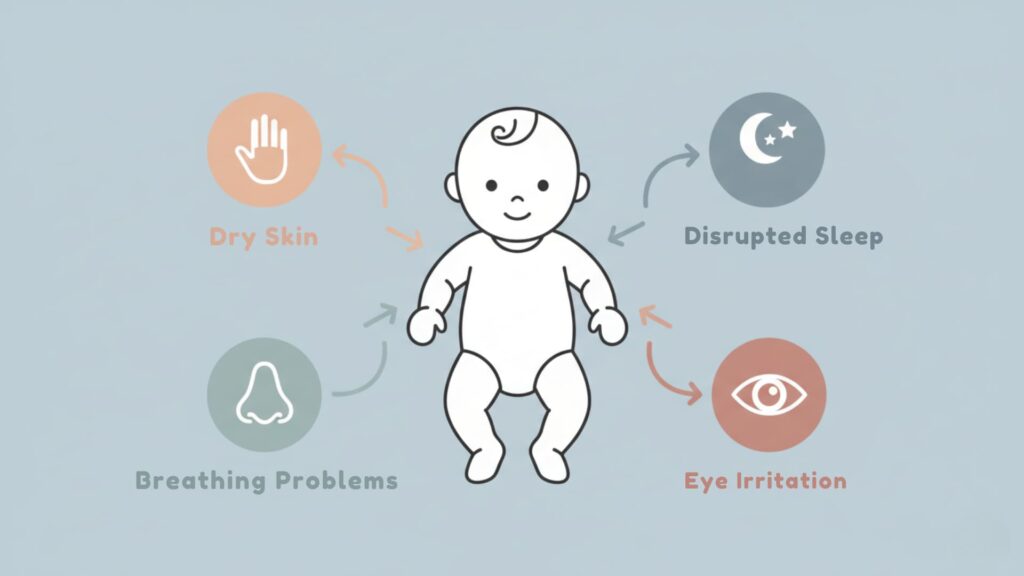
When the air in your baby’s room gets too dry, you will likely notice the effects before you even think to check the humidity level. Dry air is one of the most common and most overlooked causes of baby discomfort, and here is exactly what it does.
1. Dry Skin and Eczema Flare-Ups
Dry air pulls moisture from your baby’s skin faster than you might expect. Flaking, redness, and chapped lips are common early signs.
For babies who already have eczema, low humidity can worsen symptoms and trigger difficult-to-manage flare-ups.
2. Nasal Congestion and Breathing Problems
Dry air irritates the lining of the nasal passages and makes congestion harder to clear. It also allows viruses and bacteria to remain airborne for longer, increasing the risk that your baby will catch a cold or respiratory illness.
3. Nosebleeds and Eye Irritation
When the air stays very dry for extended periods, the inside lining of the nose can crack and start to bleed. Babies may also rub their eyes more frequently, which is often a sign of dry air irritation rather than tiredness.
4. Disrupted Sleep
Nighttime coughing, itchy skin, and nasal discomfort are among the most common reasons babies wake up unexpectedly during the night. In many cases, the cause is not illness. It is simply the air in the room being too dry.
How High Humidity Affects Your Baby
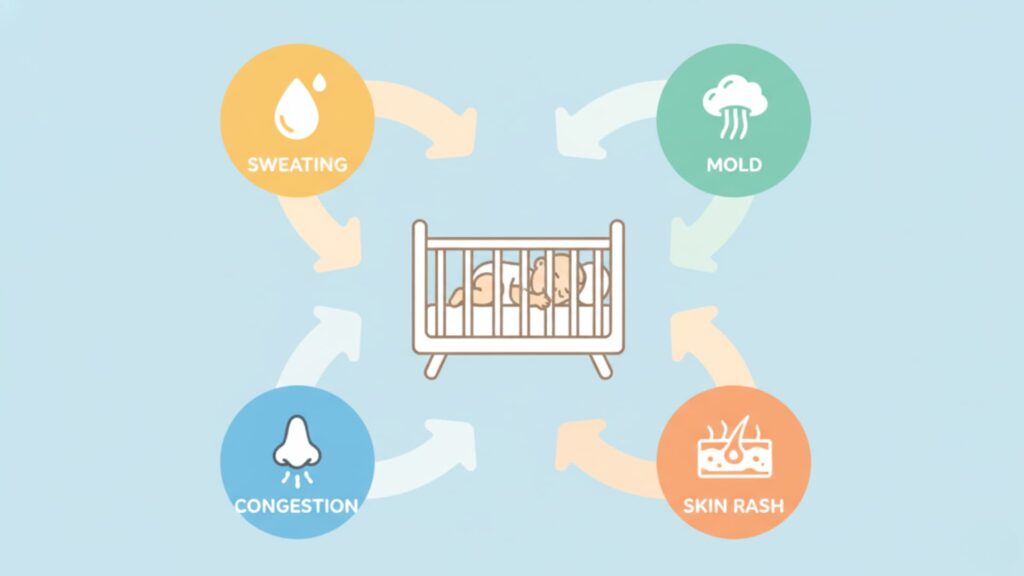
High humidity brings a completely different set of problems, and in some cases, the risks are more serious than those caused by dry air. It is easy to underestimate how quickly a room can feel off when moisture levels climb too high.
1. Mold and Mildew Growth
Once the moisture in the air crosses 60%, mold and mildew begin to grow fast. Cold walls and poor room insulation make this even worse, especially during winter.
Mold spores released into the air can cause serious breathing problems for your baby over time.
2. Overheating and SIDS Risk
High humidity makes a room feel warmer than the thermostat actually reads.
Babies cannot regulate their own body temperature, and overheating is a recognized risk factor for Sudden Infant Death Syndrome (SIDS) according to the American Academy of Pediatrics.
Keeping humidity in the safe range is one part of creating a safer sleep environment.
3. Dust Mites and Allergens
Dust mites thrive in warm and humid air. When moisture levels stay above 60%, concentrations of common allergens in the room also rise.
Some indoor air quality research indicates that sustained high humidity can increase the risk of allergic responses in young children by 1.5 to 3 times.
How Humidity and Room Temperature Work Together
These two factors do not operate separately. The humidity level in your baby’s room directly changes how the temperature feels to their body, and understanding this connection helps you make better adjustments throughout the year.
- The room feels warmer than the thermostat reads: High humidity traps heat and raises the perceived temperature in the room.
- The room feels cooler than the thermostat indicates: Low humidity makes the air feel colder than the thermometer shows.
- Ideal room temperature for your baby: Between 68°F and 72°F (20°C to 22°C), maintained alongside a humidity level of 40% to 60%.
- When you cannot control humidity directly, adjust the thermostat by a few degrees or dress your baby in a slightly lighter or warmer layer to compensate.
Signs Your Baby’s Room Humidity Is Off
Sometimes you will check the hygrometer and see a number outside the safe range. But other times, your baby gives you the signal first. Knowing what to look for helps you act faster and with more confidence.
| Sign You Notice | What It Most Likely Means |
|---|---|
| Baby wakes up coughing or with a blocked nose | Humidity is too low |
| Dry, flaky, or peeling skin | Humidity is too low |
| Nosebleeds or frequent eye rubbing | Humidity is too low |
| A persistent dry cough after a cold has passed | Humidity is too low |
| Baby feels sweaty at the correct thermostat setting | Humidity is too high |
| Musty smell when you walk into the room | Humidity is too high |
| Condensation forming on the windows | Humidity is too high |
| Visible mold spots near walls or window frames | Humidity is too high |
| Eczema flare-ups | Could be either too low or too high |
How to Measure Humidity in Your Baby’s Room
The simplest tool for this job is a hygrometer. It is affordable, easy to use, and available at most hardware stores or online.
Place it away from windows, air vents, and doorways to get the most accurate reading. Check it at least once in the morning and once at night, as levels can shift throughout the day.
Some smart baby monitors and cameras now come with built-in humidity sensors, which makes tracking even easier without adding another device to the room.
How to Maintain the Right Humidity for Baby’s Room
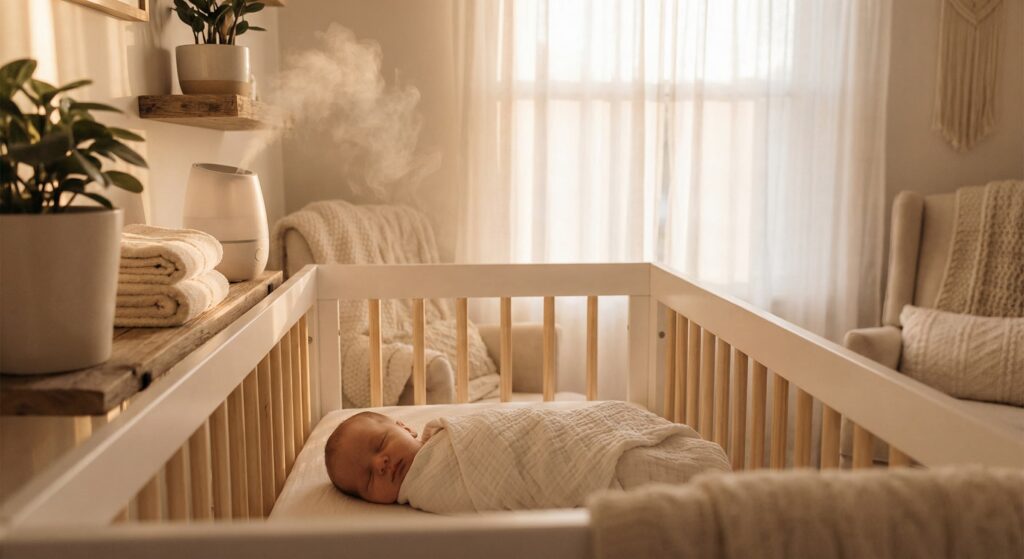
Keeping humidity in the right range does not need to be complicated. A few consistent habits go a long way toward keeping your baby’s room comfortable all year.
- Use a Humidifier When Levels Drop Below 40%. Run a humidifier during the winter months when indoor heating dries the air out fast. Use distilled water and clean the tank every 1 to 3 days to prevent bacteria from building up inside it.
- Use a Dehumidifier When Levels Reach 60% or Higher. A dehumidifier removes excess moisture from the air and stores it in a tank you empty regularly. It is most useful during humid summers or in naturally moist climates.
- Ventilate the Room Daily. Open a window for 10 to 15 minutes each morning to let fresh air in and balance moisture levels naturally. Avoid placing extra heaters in the baby’s room as they dry the air quickly and raise the risk of overheating.
- Adjust With the Season:s Check your hygrometer readings at the start of each new season and update your tools accordingly. What works in winter will not always be enough in summer.
Choosing the Right Humidifier for Baby’s Room
Not all humidifiers are built the same, and picking the wrong type can create new problems in a baby’s room. The table below breaks down your main options so you can make a confident choice based on your situation.
| Humidifier Type | How It Works | Safe for Baby? | Best For |
|---|---|---|---|
| Cool Mist | Releases cool water vapor into the air | Yes | Warmer months and general everyday use |
| Warm Mist | Heats water and releases it as steam | Use with caution | Cold climates only. Keep well out of reach due to burn risk |
| Ultrasonic | Uses high-frequency vibrations to produce a fine mist | Yes | Light sleepers. Runs very quietly |
| Evaporative | A fan passes air through a wet filter to release moisture | Yes | Low-maintenance use. Often self-regulating |
| Vaporizer | Boils water and releases steam | Use with caution | Targeted mist near the sleep area. Same burn risk as warm mist |
Important note from the AAP: The American Academy of Pediatrics advises against using warm mist humidifiers and vaporizers near babies due to the risk of burns from hot surfaces and steam.
Keep a Simple Maintenance and Monitoring Routine
Check the humidity level in your baby’s room at least twice a day, once in the morning and once before bedtime.
Clean the humidifier tank every one to three days, and replace filters according to the schedule listed in the product manual.
At the start of each new season, run a full check: test that the hygrometer is giving accurate readings, clean all equipment thoroughly, and adjust settings for the change in weather.
A small, consistent routine keeps the environment stable and eliminates the need for constant troubleshooting.
Summing It Up
Getting the humidity right in your baby’s room doesn’t have to be complicated.
The ideal humidity for a baby sits between 40% and 60%, and keeping it within that range protects their skin, supports healthy breathing, improves sleep quality, and reduces the risk of illness.
A basic hygrometer shows you where things stand. A humidifier or dehumidifier brings levels back on track when needed. These are small, affordable steps that make a real difference in how your baby feels every single day.
Have you checked the humidity in your baby’s room recently? What number did you find?
Leave a comment below and let us know. If you had questions, there is a good chance another parent has the same ones.