

Your baby was sleeping well. Then one morning, everything changed. The crying started. The drooling would not stop. You had no idea what was wrong.
Sound familiar? Teething hits hard, and it hits fast. Most parents feel completely lost trying to figure out what helps and what does not.
The good news? There are safe, proven natural teething remedies that bring your baby real relief. No harsh chemicals. No scary side effects.
In this blog, you will learn when teething starts, what order teeth come in, how to spot the signs, and which natural teething remedies actually work, including what to do when nothing seems to help.
When Do Babies Start Teething?
Most babies start teething between 4 and 8 months of age, with the first tooth usually showing up around 6 months.
Some babies get their first tooth as early as 3 months, while others do not get their first tooth until after their first birthday, and both are completely normal.
As a general rule, about four teeth come in every six months. Teething continues until your baby has a full set of 20 primary teeth, which usually happens by age 2.5 to 3.
What Order Do Baby Teeth Come In?

Knowing which tooth comes next helps you stay one step ahead. Most babies follow this sequence, though small variations are normal and nothing to worry about.
- Lower central incisors (bottom front two) — 6 to 10 months: These are almost always the very first teeth to appear.
- Upper central incisors (top front two) — 8 to 12 months: These follow right after the bottom front teeth come in.
- Upper lateral incisors (top sides) — 9 to 13 months: These sit on either side of the top front teeth.
- Lower lateral incisors (bottom sides) — 10 to 16 months: By now, most babies have eight teeth total.
- First molars (upper and lower) — 13 to 19 months: These wide, flat teeth come in toward the back of the mouth, often before the canines.
- Canines or cuspids (the pointed teeth) — 16 to 23 months: These fill the gap between the lateral incisors and the first molars.
- Second molars (upper and lower) — 23 to 33 months: These are the last baby teeth to arrive, giving your baby a full set of 20 primary teeth.
How to Tell If Your Baby Is Teething
Teething gets blamed for a lot of things it does not actually cause. This table shows exactly what is normal during teething and what may indicate something else is going on.
| Symptom | Normal During Teething | See a Doctor If |
|---|---|---|
| Drooling | Common and expected | Rash spreads beyond the face |
| Chewing on objects | Normal gum pressure relief | Paired with gagging or choking |
| Fussiness | Mild irritability for a few days | Crying is constant and inconsolable |
| Sore or swollen gums | Some redness is normal | Gums look bruised or have white patches |
| Drool rash on face | Common from skin wetness | Rash spreads to the neck or chest |
| Slight temperature rise | Under 100.4°F (38°C) is okay | At or above 100.4°F (38°C) |
| Fever | Not a teething symptom | Any fever needs a doctor’s call |
| Loose stools | Can happen, but not confirmed | Diarrhea lasting more than two days |
| Night waking | Brief fussiness is normal | Non-stop crying that won’t settle |
| Ear touching | Can be referred to as gum pain | Paired with fever or pain, lying flat |
| Lower appetite | Mild for one to two days | Refusing food or fluids beyond three days |
Pro Tip: A drool rash is very common. Keep a soft bib on your baby to protect their chin and cheeks. Gently pat the skin dry, do not rub.
9 Natural Teething Remedies That Actually Work
Now for the part you have been waiting for. These are the natural teething remedies that parents trust, and doctors consider safe to try at home.
1. Cold Washcloth or Chilled Spoon
Soak a clean cloth in water and place it in the refrigerator for about 20 minutes. Let your baby chew on it. A metal spoon chilled in the fridge for 15 minutes works just as well. The cold numbs the gums, and the gentle pressure brings real comfort.
Safety Note: Do not freeze the washcloth solid. A frozen cloth becomes too hard and can bruise your baby’s soft gum tissue.
2. Gentle Gum Massage
Wash your hands well with soap and water. Use one clean finger to apply gentle, circular pressure on your baby’s gums for about two minutes. This stimulates blood flow and helps ease the pain naturally. A silicone gum massager made for infants also works well.
Safety Note: Clean the massager thoroughly after every single use. Replace it at the first sign of wear or damage.
3. Chilled Teething Rings and Toys
Place a silicone or rubber teething ring in the fridge for 15 to 20 minutes before offering it to your baby. Always choose BPA-free, one-piece toys with no small parts that could break off. Check teething rings every week for cracks, loose pieces, or signs of mold.
Safety Note: Never freeze teething rings. They become dangerously hard and can seriously hurt your baby’s gums.
4. Frozen Fruits and Purees (For Babies 6 Months and Older)
Place a soft fruit, such as a banana or a mango, in a mesh feeder and freeze it for at least an hour. The cold and the chewing pressure work together to soothe sore gums. You can also freeze breastmilk or formula in a popsicle mold for a calming, nutritious option your baby will love.
Safety Note: Always supervise your baby when using a mesh feeder. Never leave them alone with any food item.
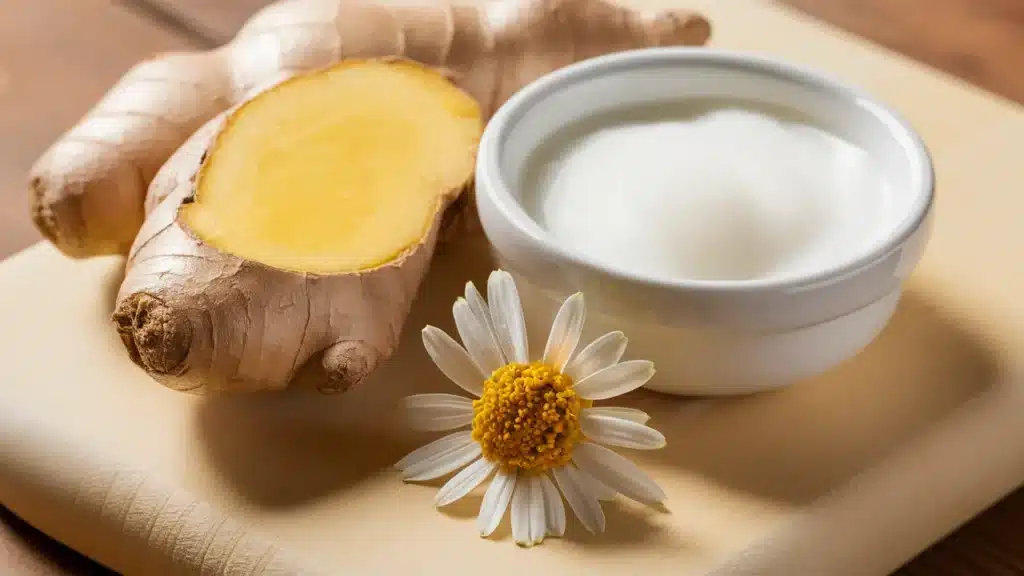
5. Chamomile Tea Compress
Brew a weak, caffeine-free chamomile tea and let it cool to room temperature. Soak a clean cloth in the cooled tea and offer it to your baby to chew on, or gently rub it along the gumline. Small studies suggest that chamomile may help reduce drooling and fussiness when applied to the gums.
Safety Note: Always check with your baby’s doctor before trying this, especially if your baby has any known allergies.
6. Ginger Root Rub
Peel a small, fresh slice of ginger and gently rub it on your baby’s gums for two to three minutes. Ginger has natural anti-inflammatory properties that help ease gum pain and reduce mild swelling in the tissue.
Safety Note: Stay with your baby the entire time. Remove the ginger immediately if any piece breaks off to prevent a choking risk.
7. Coconut Oil Rub
Use a clean finger to rub a tiny amount of food-grade, unrefined coconut oil directly on your baby’s gums. It is gentle and safe for babies. It may help reduce mild inflammation and keep the gum tissue moist and comfortable.
Safety Note: Use only a small amount each time. Stop right away if you notice any skin reaction or irritation.
8. Breastfeeding and Comfort Nursing
Nursing gives your baby both physical comfort and closeness during a painful time. The skin-to-skin contact is a natural calming tool that no product can fully replace. If your baby refuses to nurse because of gum pain, try offering breastmilk from a cup or spoon for a short period.
Safety Note: If your baby bites during nursing due to gum discomfort, gently remove them from the breast and pause feeding briefly. Do not push through repeated biting, as this can cause injury and discourage continued breastfeeding.
9. Distraction and Play
Sometimes the best remedy is a simple change of focus. Offer a new toy, take a short walk outside, or run a warm bath. Singing, gentle rocking, and skin-to-skin contact all help calm a fussy, teething baby when nothing else seems to work.
Safety Note: Stick to age-appropriate toys during teething. Babies put everything in their mouth at this stage, so always check that any toy your baby reaches for has no small parts, sharp edges, or loose pieces that could break off.
Natural Teething Remedies for Night Time

Teething pain often feels worse at night simply because there are no distractions to help your baby cope. These steps can make bedtime a little more manageable for both of you.
- Offer a chilled teething ring about 20 minutes before bed so the cold works before your baby tries to fall asleep.
- Do a gentle gum massage as part of the regular bedtime routine to ease pain right before sleep.
- Give your baby a warm bath to help their body relax and wind down before bed.
- Try a chamomile tea compress during the wind-down routine — always with your doctor’s approval first.
- Keep the bedtime routine calm, consistent, and quiet every single night, even on hard teething days.
- If your baby wakes in the night, comfort them briefly, then return calmly to the normal sleep routine without introducing new habits.
Pro Tip: Keep two or three teething rings in the fridge at all times. That way, there is always a cold one ready when you need it most.
Products and Remedies That Are NOT Safe
Not every teething product on the market is safe for your baby. Some carry serious risks that most parents are unaware of. Here is a clear look at what to avoid entirely.
| Product or Remedy | Why It Is Not Safe |
|---|---|
| Teething gels with benzocaine or lidocaine | The FDA warns that these can cause serious harm in infants, including breathing problems and a dangerous blood condition |
| Homeopathic teething tablets | Some contain belladonna, which has been linked to seizures and breathing difficulties in babies |
| Amber teething necklaces | Pose a real choking and strangulation risk. The AAP and pediatric experts do not recommend these. |
| Rubbing alcohol on gums | Directly toxic to babies. This should never be done under any condition. |
| Aspirin rubbed on gums | Toxic in children and linked to a serious condition called Reye’s syndrome |
| Undiluted clove oil | Contains eugenol, which can be toxic to infants in larger amounts and should never be applied directly |
| Honey for babies under 12 months | Can cause infant botulism, which is life-threatening |
| Frozen teething rings | Become too hard and can bruise or damage soft, tender gum tissue |
What Can You Give a Baby Instead of a Teether?

If a teether is not available or your baby refuses it, there are other safe options that work just as well. A cold, damp washcloth is one of the simplest swaps; most babies take to it right away.
A chilled metal spoon, a frozen mesh feeder filled with soft fruit, or even a clean finger pressed gently on the gums can bring the same kind of relief.
For older babies, cold unsweetened purees or frozen breastmilk popsicles are a great hands-free option that soothes the gums and gives them something to focus on at the same time.
Wrapping It Up
Teething is tough; there is no getting around it. But with the right natural teething remedies, you can help your baby feel better without reaching for medication first.
A chilled washcloth, a gentle gum massage, a cold teething ring, or a frozen puree can make a real difference on a hard day.
Every baby responds differently, so give yourself the time to find what works best for yours. Stay away from products the FDA and AAP have flagged as unsafe, and always check with your doctor when something does not feel right.
Natural teething remedies work best when you know how to use them safely. You have got this, and so does your baby.
Have a remedy that worked wonders for your little one? Share it in the comments below; other parents will thank you.