
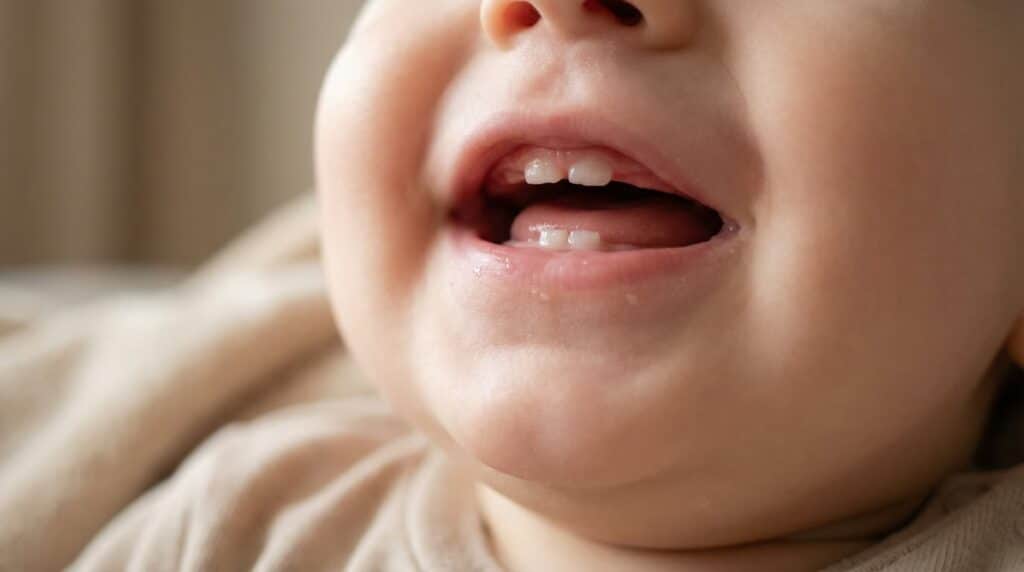
You peek into your baby’s mouth one morning. Two tiny white teeth are poking through right on top. The bottom? Completely bare.
Most parents expect the bottom teeth to show up first. So when the top ones appear instead, the worry sets in fast. You grab your phone and type “what if baby gets upper teeth first.”
Here is the short answer: it is completely fine. Many babies follow this exact pattern, and it does not mean anything is wrong.
This blog covers why this happens, what signs to watch for, how to care for those new teeth, and when a dentist visit makes sense. By the end, you will feel a lot more at ease.
How Baby Teeth Usually Come In
Before we get into upper teeth, it helps to know what a “typical” teething timeline looks like. That way, you can see where your baby fits in.
Here is something many parents do not know: your baby is born with all 20 teeth already sitting below the gum line. They are there from day one. They just need time to push through.
Teething usually begins somewhere between 4 and 7 months of age. Some babies start as early as 3 months. Others do not get their first tooth until after their first birthday. All of this is within the normal range.
Most babies follow this sequence:
| Tooth | Location | Typical Age |
|---|---|---|
| Central incisors | Bottom front two | 6 to 10 months |
| Central incisors | Top front two | 8 to 12 months |
| Lateral incisors | Upper and lower sides | 9 to 16 months |
| First molars | Upper and lower back | 13 to 19 months |
| Canine teeth | Upper and lower | 16 to 22 months |
| Second molars | Upper and lower back | 23 to 33 months |
A helpful rule to keep in mind: roughly four teeth appear for every six months of life, which means you’ll need to be shopping for children’s toothbrushes before you know it!
So by 12 months, most babies have around four teeth. By 18 months, around eight. By age 3, most children have all 20 baby teeth in place.
One more thing worth knowing: In rare cases, some babies are born with one or two teeth already through the gum. These are called natal teeth.
They are uncommon but not a sign of anything wrong. A dentist can check if they need any monitoring.
What If Baby Gets Upper Teeth First?
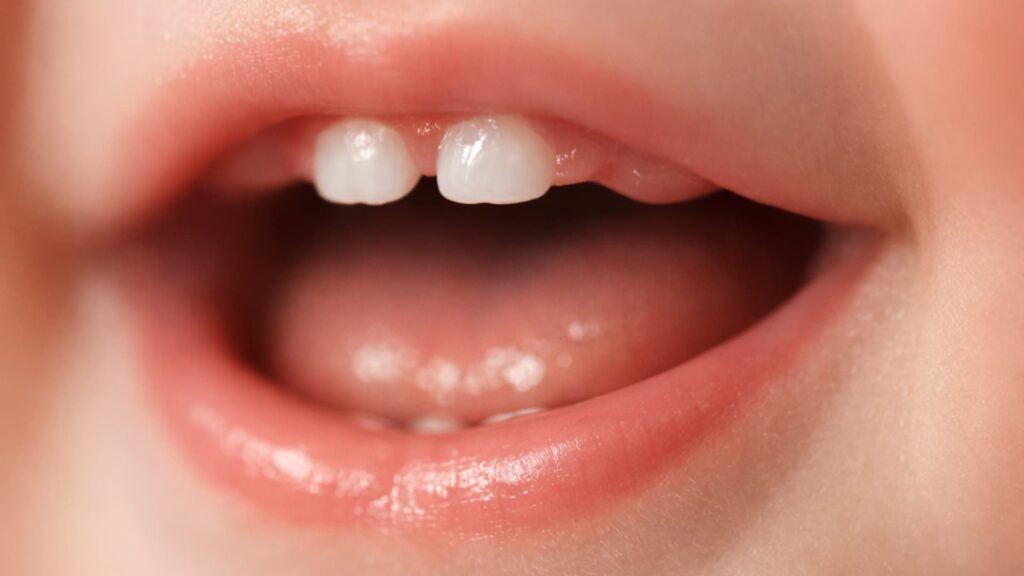
Yes. Completely and totally normal.
Most babies do cut their bottom teeth first. But a good number of babies get their upper teeth before their lower ones. Both patterns fall within the normal range of development.
The order in which your baby’s teeth arrive does not affect how healthy they become, how straight they grow, or how well they function later on.
The only thing that truly matters is that your baby has a full set of 20 teeth by around age 3. The path they take to get there? That is just your baby doing things their own way.
So keep caring for those teeth and watch for the next ones to follow.
Pro Tip: Keep a quick note on your phone logging which tooth appeared and roughly when. Your pediatric dentist will appreciate this during check-ups. It takes 10 seconds and makes those appointments much more useful.
Why Do Some Babies Get Upper Teeth Before Bottom Teeth?
There is no single reason this happens. A few different factors can play a role. Here is what the research and dental experts point to.
1. Genetics
This is the biggest factor. If you or your partner got your top teeth before your bottom ones as a baby, your child may follow the same pattern.
Family history shapes the timing of teething more than almost anything else. It is worth asking your parents how your own teeth came in; the answer might explain a lot.
2. Jaw Development Rate
Some babies’ upper jaws develop at a slightly faster rate than their lower jaws. When this happens, the upper teeth are closer to the surface and push through first.
This is a natural variation in how babies grow.
3. Position in the Womb
The position your baby was in during the later months of pregnancy may influence which teeth sit closer to the gum surface.
Babies who spent time in certain positions may have had slightly more pressure on the upper jaw, which could speed up upper tooth eruption.
4. Nutrition During Pregnancy and After Birth
Nutrition plays a background role in tooth development. Vitamin D is key because it helps the body absorb calcium properly. Deficiencies in vitamin A, vitamin C, vitamin D, and calcium can all slow down or change the timing of tooth eruption.
This does not mean upper-teeth-first is caused by poor nutrition. But it is one of the factors that shapes overall dental development in babies.
5. Every Baby Is Simply Different
Some babies start teething at 3 months. Others do not see a single tooth until after their first birthday. Some get bottom teeth first.
Some get top teeth first. Some get a tooth on one side before the other. All of this is normal. Teething, like most areas of baby development, has a very wide range of what counts as typical.
Special Cases: Premature Babies and Teething Order
If your baby was born early, their teething timeline will likely be different. And that is completely expected. A baby born two months before their due date may be 6 months old on paper.
But developmentally, they are only at about 4 months. Their teeth follow their developmental age, not their birth date. So their first tooth may not appear until 8 or 9 months instead of 6.
When tracking your premature baby’s teething progress, always use their corrected age, not their actual age. Corrected age means their age calculated from their original due date, not from the day they were born.
Dental Complications in Premature Babies
Premature and low-birth-weight babies face a slightly higher risk of certain dental issues:
- Enamel hypoplasia (also called “preemie teeth” ): The teeth may look brownish or pitted and are more likely to decay. This can happen due to intubation or stress on the body during early medical care.
- Delayed first tooth: The first tooth may arrive several months later than in full-term babies. This is normal and not a cause for concern on its own.
If your baby was born prematurely, let your dentist know at the very first visit. They will factor this into their assessment of your baby’s dental development. Do not compare your premature baby’s teething timeline to that of a full-term baby. It is not a fair comparison.
Signs That Your Baby’s Top Teeth Are Coming In
Once you know what to look for, you will usually spot the signs a few days or even weeks before a tooth actually breaks through. Here is what upper teething typically looks like.
Common Signs to Watch For:
- More drooling than usual. This is often the very first sign. Your baby’s shirt is soaked. Bibs become your best friend.
- Drool rash. All that extra saliva can irritate the skin around the mouth, chin, and neck. The skin may look red and a little raw. Gently pat the area dry with a soft cloth throughout the day. Do not rub; that makes the irritation worse.
- Red or raised gums at the top of the mouth. Run a clean finger along your baby’s upper gum. You may feel a firm ridge or see a slight red swelling right where the tooth is about to break through.
- Chewing on everything. Fingers, toys, your arm, the edge of a blanket. If your baby is gnawing on it, their gums are probably sore.
- Fussiness, especially toward the evening. Gum pain tends to feel more intense when a baby is tired. A baby who is fine in the morning may become very unsettled by bedtime.
- Disrupted sleep. A baby who normally sleeps well may wake up more often. The soreness does not stop just because it is nighttime.
- Pulling at the ears. Upper jaw discomfort can send pain signals to the ears. If your baby keeps tugging at one ear but has no other signs of illness, teething may be the reason.
- Mild temperature increase. A very slight rise in temperature is common during teething. However, a fever above 100.4°F (38°C) is not caused by teething. Neither is diarrhea, a runny nose, or a skin rash. If your baby has any of these, call your doctor.
Important: Teething does not cause high fever, diarrhea, or a rash. If you see these symptoms, your baby needs a doctor, not a teething toy.
Baby Top Teeth Coming In Front of Gums: What Does It Mean?
This one catches a lot of parents off guard. You expect to see a tooth push straight up through the center of the gum. But sometimes, the tooth appears near the front of the upper gum instead of on top of it.
Before you panic, here is what is actually going on.
What You Might See
- A small white dot or ridge near the front edge of the upper gum, rather than directly on top
- A tooth that seems to lean slightly forward rather than sit straight
- A blue or purplish bump on the gum before the tooth breaks through
What Is an Eruption Cyst?
That blue or purple bubble on the gum has a name: an eruption cyst. It forms when a small amount of fluid collects over a tooth that is about to break through the gum. It can look alarming, but it is almost always harmless. In most cases, it goes away on its own once the tooth pushes through.
You do not need to do anything about an eruption cyst unless:
- It is growing larger over several days
- It seems to be causing your baby significant pain
- It does not go away after the tooth breaks through
If any of those apply, have a pediatric dentist take a look. But in the vast majority of cases, the cyst resolves on its own within a week or two.
Will the Tooth Shift Into Place?
Often, yes. A tooth that appears slightly forward will usually move into a more typical position as the other teeth come in around it and the jaw continues to grow. Teeth are not fixed in one spot — they move and adjust over time.
When to watch and wait:
- The tooth is slightly forward, but coming in, and your baby is feeding normally. Give it a few weeks.
When to call the dentist:
- The tooth is coming in at a sharp angle and not moving after several weeks
- Your baby seems to be in intense or ongoing pain
- You are unsure what you are seeing and need some reassurance
How to Care for Your Baby’s Teeth During Upper Teething
There are two things to focus on here: easing the discomfort and building good dental habits from the start.
Easing the Discomfort
- Gum massage. Use a clean finger to gently rub the upper gums in small circular movements. This relieves the pressure building under the gum and is one of the most effective things you can do.
- Chilled teething ring. Put a solid silicone or firm rubber teething ring in the fridge for a little while, then give it to your baby to chew on. The cool temperature helps calm the soreness. Do not put it in the freezer; a frozen ring is too hard and too cold, and it can actually hurt the gum tissue.
- Cold, damp washcloth. Fold a clean cloth, run it under cold water, and let your baby chew on it. Simple and effective.
- Cold soft foods. For babies who have started solids, chilled plain yogurt, cold purees, or a cold cucumber stick can help soothe sore gums.
- Extra comfort and closeness. Never underestimate this one. Being held by a parent is genuinely soothing for a teething baby. Skin-to-skin, cuddling, or being carried can reduce fussiness just as well as any product.
What to avoid:
- Benzocaine teething gels. The FDA warns against using these on children under 2. They can cause a serious condition that reduces oxygen in the blood.
- Amber teething necklaces. The American Academy of Pediatrics does not recommend these. They pose a real choking and strangulation risk, and no research supports their effectiveness.
- Liquid-filled teething rings. These can break or leak and may contain bacteria, especially older ones or those made outside the US.
- Frozen teething rings. Too cold. They can burn or bruise soft gum tissue.
Do Upper Teeth Affect Your Baby’s Speech or Eating?

This is a question many parents have, but few blogs answer directly. So let’s clear it up. Your baby’s upper front teeth do more than just sit there looking cute. They have real jobs:
- They help your baby bite into soft foods and break them apart
- They support the shape and natural resting position of the lips
- They guide the jaw into its correct resting position when your baby closes their mouth
- They help with early speech sounds, particularly “t” and “th” sounds that develop as your toddler starts talking more
Does it matter that the upper teeth arrived before the lower ones? No. The order in which the teeth arrived has no effect on how they function. A tooth that came in first works exactly the same as one that came in later.
If your baby seems to struggle with feeding after the upper teeth appear, or if you notice a clear speech delay as your toddler grows, speak to your pediatrician. These issues are very unlikely to be related to teething order. They are usually tied to other factors that a doctor can help identify.
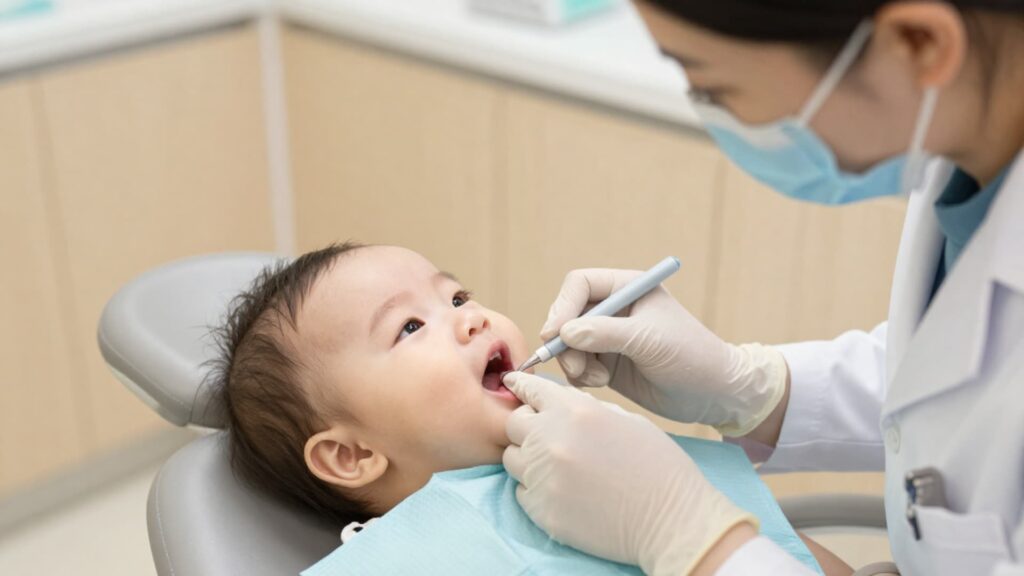
When Should Your Baby First See a Dentist?
The American Academy of Pediatric Dentistry recommends the first dental visit by your baby’s first birthday, or within 6 months of the first tooth appearing, whichever comes first.
Early visits allow the dentist to check that everything is developing normally and give you practical advice on brushing, diet, and care. They also help your child build a positive association with dental visits from a young age.
Wrapping It Up
So, what if the baby gets upper teeth first? In most cases, it means nothing at all. Teething order is simply a variation, not a warning sign. Many babies skip the “expected” pattern and turn out just fine.
What matters most is how you care for those teeth once they arrive. Wipe gums early, brush from the first tooth, skip the bottle at bedtime, and book that first dentist visit by their first birthday.
Your baby is just doing things in their own order. Pretty on-brand for babies, right?
Did your little one’s top teeth come first? Share your story in the comments!