


Some kids struggle in STEM and make it obvious. Bad grades. Tears during homework. Avoiding math like it’s a horror movie. But many kids struggle in a quieter way. They still pass.
They still submit work. They might even score fine sometimes. Yet something feels off. They take too long. They panic fast. They need help for every step. They “forget” what they learned last week. They avoid hard questions and choose the easy ones.
If you’ve seen any of that, your child might not need “more study time.”
They might need extra attention – the right kind.
This article will help you spot the signs, understand what’s really happening, and fix it in a simple, practical way.
First: “Extra Attention” Doesn’t Mean Your Child Is Weak
Let’s kill the biggest myth.
Needing extra attention in STEM does not mean your child isn’t smart.
STEM has two special traits:
- It builds on itself (miss one brick and the wall cracks)
- It punishes confusion (you can’t “write something nice” and still get marks)
So a small gap early can make a child feel lost later – even if they’re bright.
Most STEM struggle is not about IQ.
It’s about missing foundations and losing confidence.
9 Signs Your Child Might Need Extra Help in STEM
You don’t need to guess. Look for patterns.
1) They say, “I understand,” but can’t solve alone
This is one of the clearest signs.
They can follow when someone explains… but they can’t do it independently.
That usually means the concept isn’t truly understood yet.
2) They memorize steps without knowing why
If your child learns math like a dance routine – “first do this, then do that” – they’ll break down the moment a question looks different.
Real STEM learning requires reasoning, not copying.
3) Homework takes forever
Some children take 2 hours to do what should take 30 minutes.
That usually means they’re stuck repeatedly and spending time in confusion, not learning.
4) They panic fast when questions look new
STEM requires facing unfamiliar problems.
If your child gets stressed the moment the question is different, they likely lack confidence and problem-solving habit.
5) They avoid practice (even if they like the topic)
Many kids like science videos but hate solving problems.
That’s because passive learning feels safe. Active problem-solving feels risky.
Avoidance is a signal.
6) Their mistakes repeat
If they keep making the same type of error (sign mistakes, unit confusion, wrong formula usage), they need targeted correction – not more worksheets.
7) They do well in class but fail in tests
This usually means they rely on guided help.
In a test, there’s no teacher to “rescue” them, so they freeze.
8) They can’t explain concepts in simple words
A child who truly understands can explain simply.
If they can’t explain “why” in their own words, the understanding is shallow.
9) They’ve started saying: “I’m not a math/science person”
This sentence is a red flag.
It’s often not a truth – it’s a coping strategy.
Kids say this when they’ve failed enough times that they stop wanting to try.
The Real Reasons Kids Struggle in STEM
Most parents assume the reason is “lack of effort.”
Usually, it’s not.
Here are the real causes:
1) Weak foundations
STEM is like a ladder.
If your child missed fractions, algebra becomes painful.
If they missed basic concepts in science, later chapters feel like random facts.
They can’t climb smoothly with missing rungs.
2) The child is learning passively
Many kids “study” by reading notes, watching videos, or highlighting textbooks.
It feels productive, but it doesn’t train problem-solving.
STEM requires active struggle and practice.
That’s why Debsie’s courses have game-like puzzles with every lesson.
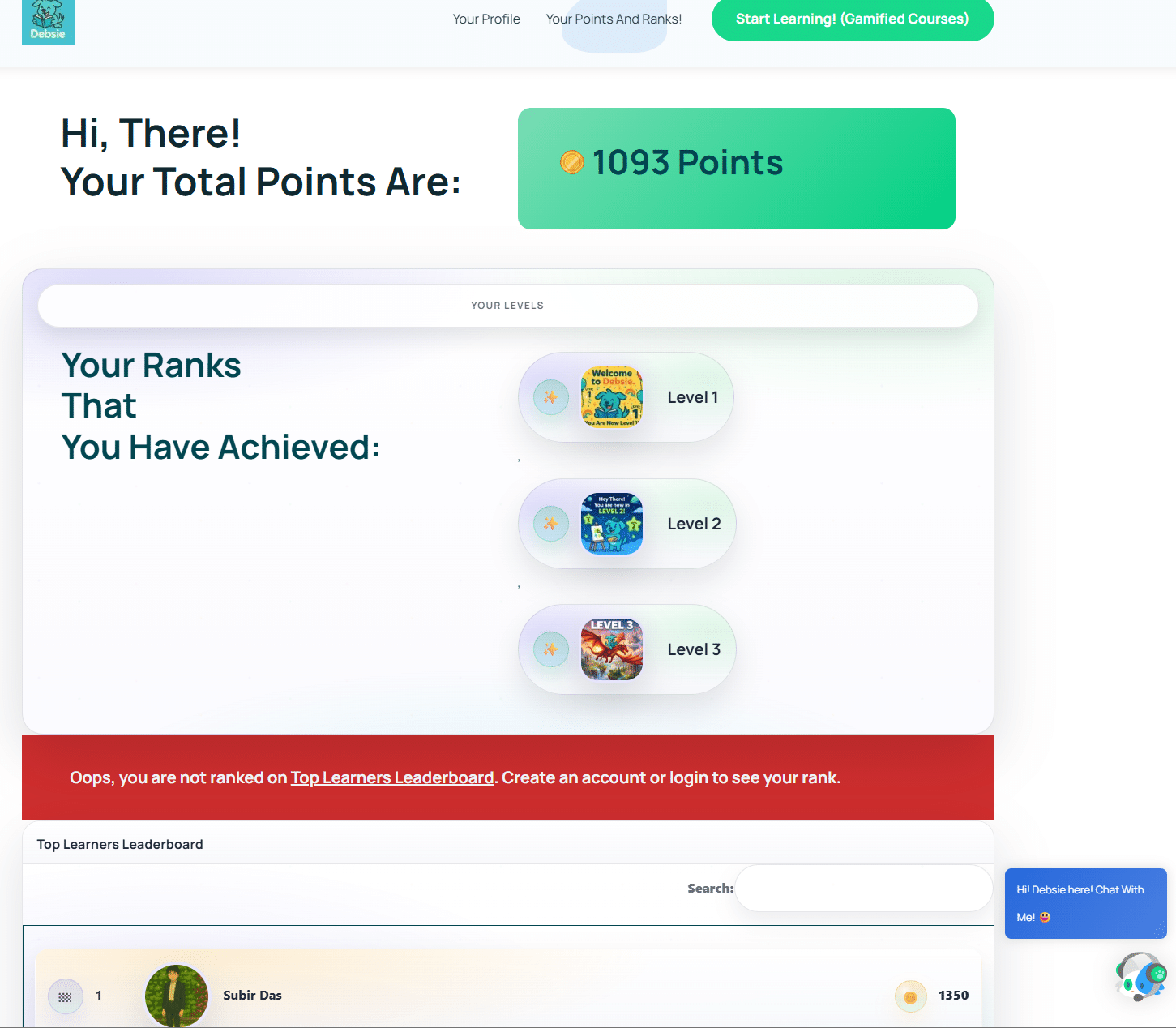
The more puzzles the student solves, the more they learn as well as climb the leaderboard and achieve ranks.
3) They don’t get fast feedback
When a child makes mistakes and nobody corrects them quickly, those mistakes become habits.
Habits become identity:
“I always mess this up.”
4) Confidence got damaged
Once a child feels embarrassed or “slow,” they stop asking questions.
They become silent.
And silent confusion grows.
What “Extra Attention” Should Actually Look Like
Extra attention isn’t just “more tuition.”
Good extra attention has three parts:
1) Diagnose the exact gap
Not “my child is weak in math.”
That’s too broad.
You want:
- “struggles with fractions”
- “doesn’t understand variables”
- “confused about units and conversions”
- “can’t break word problems into steps”
Specific gap = fixable gap.
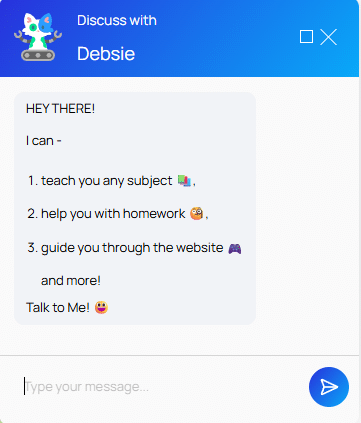
Debsie’s AI bot can also help you find these weaknesses.
2) Teach with questions, not lectures
A good teacher or tutor doesn’t just explain.
They ask:
- “Why did you choose this step?”
- “What would happen if we changed this value?”
- “Can you teach it back to me?”
This turns your child into an active thinker like a chess player.
If you want this style of learning done properly, Debsie is a strong option – especially for STEM subjects like physics – because it offers one-on-one classes through Debsie’s teacher partners.
Here’s why that matters so much.
In STEM, most kids don’t struggle because they’re “bad at science” or “bad at math.” They struggle because they get stuck at one small point, and nobody catches it early. Then that tiny confusion snowballs. By the time the next chapter starts, they’re already behind, and every class feels stressful.
A one-on-one class fixes this in a very direct way.
A) The teacher teaches your child, not “the average child”
In group settings, even great teachers have to keep moving. They can’t slow down for one student without losing the whole class.
In a one-on-one session, the teacher can:
- slow down exactly where your child needs it
- speed up where your child is already strong
- adjust the explanation style until it clicks
So instead of 60 minutes of “kind of understanding,” your child gets 60 minutes of targeted clarity.
B) Confusion gets corrected immediately (before it becomes a habit)
Physics is a perfect example. Kids often get stuck on small-but-deadly things like:
- what a formula really means (not just how to plug numbers)
- choosing the right equation for the situation
- direction and sign mistakes
- unit conversions
- reading diagrams without guessing
- understanding what the question is actually asking
In a normal class, these mistakes can repeat for weeks and become “their thing.”
In a Debsie one-on-one, the teacher can spot the exact wrong step instantly and fix it on the spot. That prevents the “I always mess this up” identity from forming.
C) Your child is pushed to think out loud (the fastest way to learn)
A good one-on-one teacher doesn’t just ask for the final answer. They ask:
- “Why did you choose this step?”
- “What does this value represent?”
- “What happens if we change this number?”
- “Can you explain this in your own words?”
This forces real understanding. And once a child can explain a concept simply, they don’t just “know it.” They own it.
D) Confidence grows faster because there’s no fear of looking “slow”
A lot of kids avoid asking questions in group classes because they don’t want to feel embarrassed.
One-on-one removes that pressure.
Your child can:
- ask every doubt (even the “small” ones)
- repeat a question without feeling judged
- take their time
- learn in a calm environment
That’s often the difference between a child who avoids STEM… and a child who starts enjoying it.
E) You get a real improvement plan, not random homework help
The best one-on-one sessions aren’t just “solve today’s worksheet.”
Debsie teacher partners can help your child:
- rebuild weak foundations (the real cause of most STEM struggles)
- improve speed and accuracy
- learn a repeatable problem-solving method
- stop panicking when questions look new
- move from guided solving → independent solving
So you’re not buying a temporary boost. You’re building long-term skill.
F) It’s already being used by students across major U.S. cities
Debsie’s one-on-one learning through teacher partners is already being used by students in major hubs like San Francisco, New York City, Austin, Boston and Seattle – because parents want strong tutors without the usual high tutoring costs or scheduling headaches.
3) Practice with feedback loops
The best learning cycle is simple:
Try → get corrected → try again → improve.
That’s how sports work. That’s how music works. That’s how STEM works too.
What You Can Do This Week (Simple Plan)
Here’s a practical 7-day plan that works for most kids.
Day 1: Pick one topic (not the whole syllabus)
Choose one painful topic only.
Example: fractions, algebra basics, motion in physics, chemical equations.
Day 2: Ask them to teach it back in 2 minutes
No textbook. No notes.
If they can’t explain, you found the weak point.
Day 3–5: 20 minutes a day of targeted practice
Short practice beats long sessions.
Do 5–10 problems, but review mistakes immediately.
Day 6: Mix old + new questions
This trains flexibility and confidence.
Day 7: Small test + praise effort, not talent
Reward the process:
“I like how you didn’t quit when it got hard.”
That builds resilience.
A Note on Online Learning Support
Many parents choose online platforms for STEM support because they solve two big problems:
- kids can ask questions anytime
- kids can learn at their own pace without pressure
The best platforms combine structured learning paths with instant doubt-clearing (often through AI tutors) and human guidance when deeper correction is needed.
If you use online support, make sure it’s interactive – not just videos.
Final Thought
If your child needs extra attention in STEM, it’s not a disaster.
It’s actually a good sign – because it means you noticed early.
Most STEM “weakness” is just:
- missing foundations
- lack of practice with feedback
- and low confidence from repeated confusion
Fix those three, and kids often improve fast – sometimes shockingly fast. The goal isn’t just better grades.
The goal is a child who can look at a hard problem and think:
“Okay. I can figure this out.”