
The sun is finally back. The kids are already at the door, shoes half on, ready to bolt. But after a long winter, “just go outside” works for about 11 minutes. Then they are back, staring at you. Sound familiar?
Spring is truly one of the best seasons to try new things with kids.
The days are longer, the weather is forgiving, and everything outside is changing fast. Kids notice that. They get curious. And all they really need is a good idea to run with.
This list has spring activities for kids, sorted into five easy categories, so you always have something ready, rain or shine.
Quick Tips for Parents Before You Start
Before you pick an activity from this list, keep a few things in mind. These small steps save time, cut frustration, and make the whole experience more enjoyable for both you and your kids.
| Tip | Why It Helps |
|---|---|
| Prep materials the night before | Kids lose interest fast if you are searching for scissors mid-activity |
| Let your child pick | They stick with it far longer when the choice was theirs |
| Start with what you already have | Most of these activities need no special supplies |
| Keep a backup indoor option ready | Spring weather changes quickly and without warning |
| Take a photo at the end | Kids love seeing what they made or did that day |
You do not need to do all 80 activities this spring. Pick two or three from each category and keep a running list on your fridge. Rotate each week, and by the end of the season, your kids will have tried more things than most adults do all year.
Outdoor and Nature Spring Activities for Kids
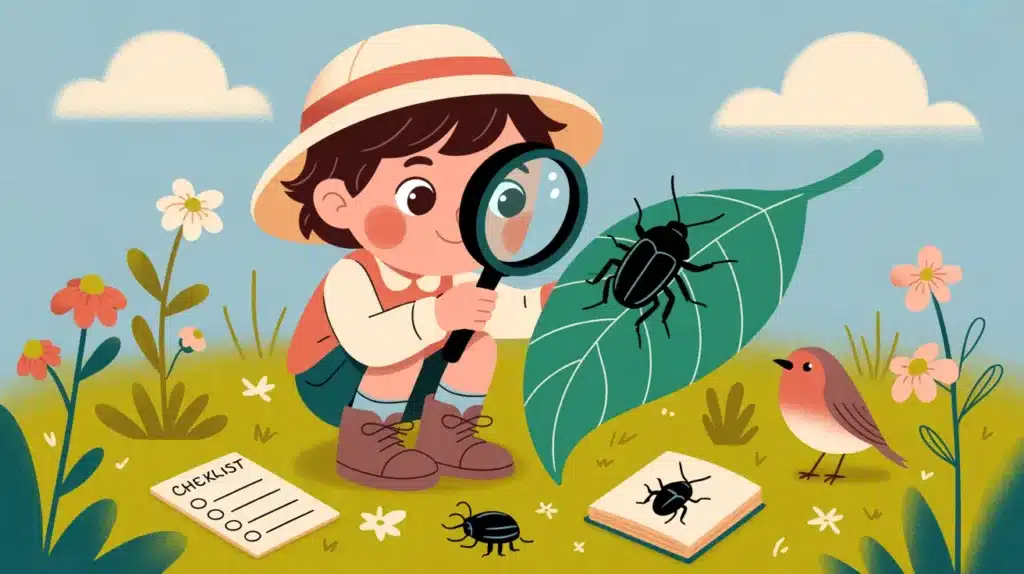
Spring is right outside your door. These outdoor activities get kids off the couch, into the fresh air, and fully focused on the world around them. No screens, no complaints.
1. Spring Scavenger Hunt
Kids search for signs of spring using a simple checklist: a flower bud, an ant, a robin, a puddle, and a cloud. Head to the nearest park or backyard and let them lead.
- Best for: Ages 3 and up
- Pro tip: Add a “mystery item” at the bottom of the list, something kids have to find on their own without a clue.
2. Insect Safari
Give kids a magnifying glass and a small notebook. They find insects, observe them up close, and sketch what they see on the page.
- How to do it: Walk slowly through grass or near a flower bed. Look under rocks and leaves. Write down or draw each insect found.
- Best for: Ages 4 and up
3. Bird Watching Starter
Print a simple bird ID sheet from a free wildlife website. Kids check off each bird they spot in the neighborhood or at a local park.
- Best for: Ages 5 and up
- Pro tip: Keep a tally across the week. At the end, kids share their top three most-spotted birds.
4. Nature Walk Photo Walk
Let kids use an old phone or tablet to photograph anything that looks like spring. Flowers just opening, a muddy trail, a caterpillar on a leaf.
- How to do it: Set a limit of 10 photos per walk. At home, review them together and pick a favorite to print or save.
- Best for: Ages 6 and up
5. Animal Track Hunt
Look for prints left in soft mud near trees, garden beds, or ponds. Bring a simple animal track chart (free to print online) and match what you find.
- Best for: Ages 5 and up
- Pro tip: Take a photo of the track right away before it fades. Compare it with the chart at home.
6. Sidewalk Chalk Art and Hopscotch
Classic, easy, and still one of the most loved outdoor spring activities for kids of all ages. Draw hopscotch grids, spring scenes, or full murals on the driveway.
- How to do it: Give kids a theme like “draw everything you see in spring.” Let them fill the whole driveway if they want.
- Best for: Ages 2 and up
7. Bubble Relay Race
Kids run a short distance while blowing a bubble with a wand. The goal is to cross the finish line without it popping.
- How to do it: Set up two markers about 10 feet apart. The one who keeps the bubble alive the longest wins.
- Best for: Ages 4 and up
8. Spring Kite Flying
A simple kite, a breezy spring afternoon, and an open field are all you need. Kids learn about wind direction while feeling a real sense of control.
- Best for: Ages 5 and up
- Pro tip: Let kids decorate a plain white kite with markers before flying it. They will care about it much more.
9. Puddle Jumping Circuit
After rain, use chalk to number puddles or draw a path between them. Kids jump through in order as fast as they can.
- How to do it: Time each round. Add silly rules like “hop on one foot for puddle 3.” Try to beat the previous time.
- Best for: Ages 2 to 7
10. Outdoor Obstacle Course
Use what you already have: hula hoops to jump through, buckets to run around, and a pool noodle to step over. No cost, big fun.
- Best for: Ages 4 and up
- Pro tip: Let kids design the course themselves. They will run it far more times when it is their own creation.
11. Somersault and Cartwheel Practice
Soft spring grass is the best surface for tumbling. Kids practice rolling, cartwheeling, and balancing freely in open air.
- How to do it: Use a foam mat for younger kids still learning. Focus on one move at a time.
- Best for: Ages 3 and up
12. Mud Kitchen Play
Set up a spot in the garden with soil, water, sticks, old pots, and spoons. Let kids mix, pour, and pretend-cook with zero rules.
- Best for: Ages 2 to 6
- Pro tip: Old kitchen tools from a charity shop work perfectly here. The messier it gets, the more kids love it.
13. Sensory Nature Bin
Fill a large tub with soil, grass clippings, flower petals, small rocks, and sticks. Let kids dig freely and feel everything with their hands.
- How to do it: Set the tub outside on a warm day. Add small cups or toy figures. No instructions needed, just open play.
- Best for: Ages 2 to 5
14. Cloud Watching and Drawing
Lie on a blanket in the garden or park. Look up and find shapes in the clouds. Name them, draw them, and tell a short story about each one.
- How to do it: Give kids a notebook. They draw the cloud shape and say or write what they think it looks like.
- Best for: Ages 4 and up
15. Spring Sound Walk
Walk to different outdoor spots, stop, and listen quietly for 30 seconds each. Kids list every sound they can hear at each location.
- How to do it: Compare notes between spots. Near a tree versus near a road sounds very different. Talk about why.
- Best for: Ages 4 and up
16. Homemade Rain Gauge
Cut a clear plastic bottle, mark equal lines with a ruler and marker, and place it outside in an open area.
- How to do it: Check and record the rainfall level each morning for one week. Chart the results on simple graph paper.
- Best for: Ages 6 and up
Arts and Crafts Spring Activities for Kids
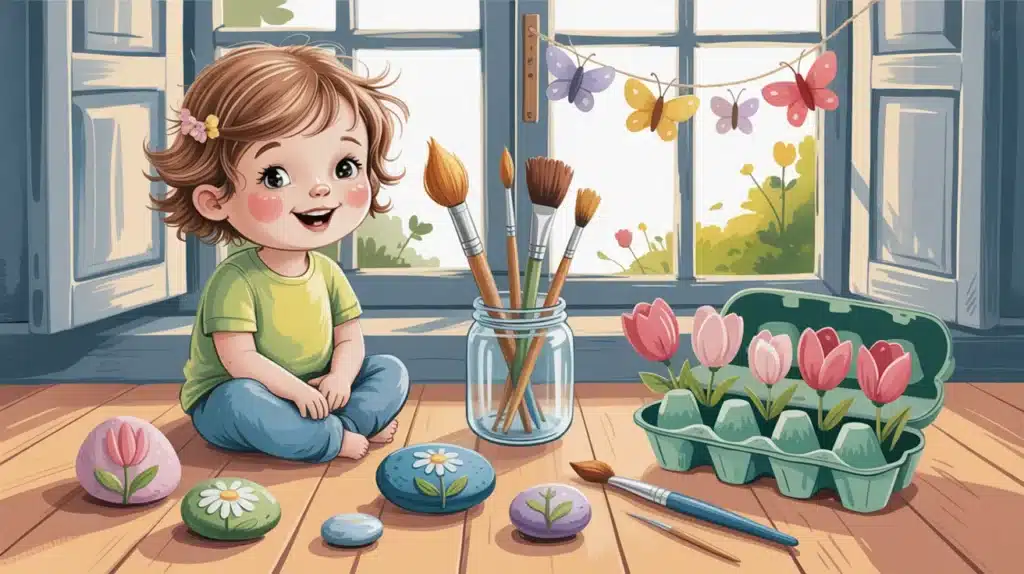
These spring craft ideas work well on weekend afternoons, after school, or as a spring break routine. Most need very few supplies and zero prior experience.
17. Rock Painting
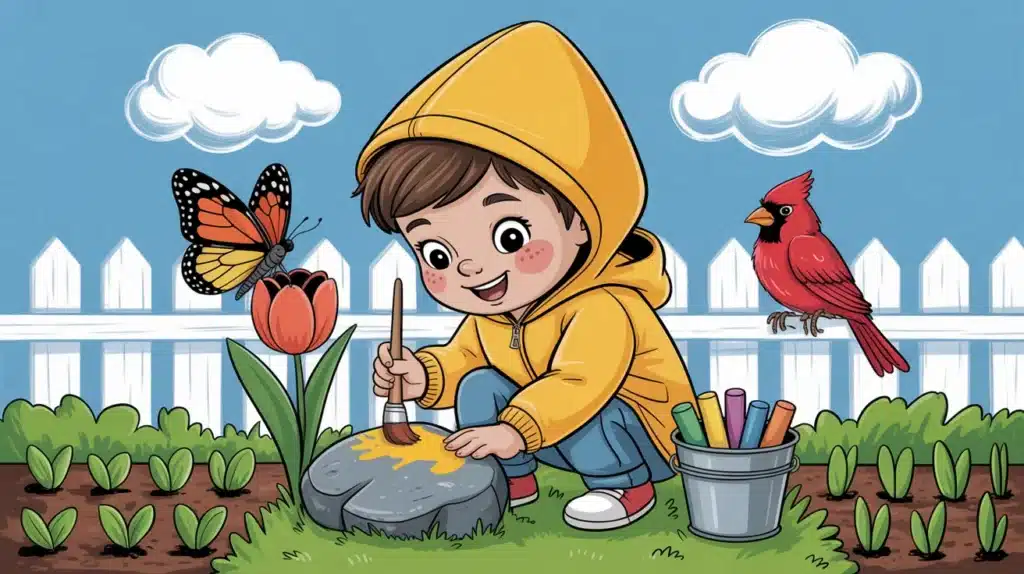
Collect smooth rocks on a walk, clean them, and let kids paint spring designs: flowers, ladybugs, suns, and raindrops.
- How to do it: Acrylic paint works best. Once dry, seal with a clear outdoor varnish to protect the artwork from rain.
- Best for: Ages 4 and up
18. Leaf Print Art
Brush paint directly onto a leaf and press it firmly onto paper. Lift it off carefully to reveal the detailed print underneath.
- Best for: Ages 2 and up
- Pro tip: Try mixing two colors on the same leaf. Use different leaf shapes to fill a whole page with prints.
19. Flower Pounding Art
Place fresh flowers between two sheets of paper, cover with a cloth, and tap gently with a hammer. The pigment transfers onto the paper below.
- How to do it: Pansies, dandelions, and marigolds give the best color transfer. Press firmly and evenly across the flower.
- Best for: Ages 5 and up (adult help needed for the hammer)
20. Watercolor Spring Scene
Set out watercolor paints, a wide brush, and white paper. Kids paint trees, birds, flowers, or whatever they can see through the nearest window.
- Best for: Ages 3 and up
- Pro tip: Wet the paper with clean water first before applying color. The colors blend softly and look very natural.
21. Butterfly Symmetry Painting
Fold a piece of paper in half. Paint one side with bright colors. Press both halves together firmly, then open to reveal matching butterfly wings.
- How to do it: Work quickly while the paint is still wet for the best result. Add antennae with a thin black marker once dry.
- Best for: Ages 3 and up
22. Chalk Pastel Nature Sketching
Take chalk pastels outside and let older kids draw plants, bark textures, flower petals, or garden scenes in close detail.
- Best for: Ages 8 and up
- Pro tip: Use dark card stock or black paper. Spring colors show up far more vividly against a dark background.
23. DIY Wind Chime
Tie old keys, beads, and small shells onto separate pieces of string. Attach all strings to a stick or rod at different lengths and hang outdoors.
- How to do it: Different lengths mean the pieces hit each other at different moments in the breeze. Hang near a window for the best sound.
- Best for: Ages 5 and up (adult help needed for knots)
24. Egg Carton Flowers
Cut individual cups from an egg carton into petal shapes. Paint them in spring colors and stack two or three together to make a 3D flower.
- Best for: Ages 4 and up
- Pro tip: Push a green pipe cleaner through the center as a stem. Arrange several in a small jar as a spring display.
25. Paper Plate Bird Feeder
Punch four holes around a paper plate, thread string through, and tie the strings to a central ring. Fill with birdseed and hang from a tree.
- How to do it: Hang at a height kids can see from a window. Refill every two to three days and keep a bird visit log nearby.
- Best for: Ages 4 and up
26. Pinecone Bird Feeder
Roll pinecones in peanut butter, coat them in birdseed, tie with yarn, and hang from a tree branch in the garden.
- Best for: Ages 3 and up
- Pro tip: Let kids collect their own pinecones on a walk and choose which ones to use. They will check on them every single morning.
27. DIY Spring Photo Frame
Decorate a simple cardboard frame with dried flowers, small leaves, painted stones, and short twigs. Add a spring photo or a child’s drawing inside.
- How to do it: Use a hot glue gun to attach heavier items (adults only). Kids arrange, adults stick.
- Best for: Ages 4 and up
28. Nature Collage
Collect leaves, petals, grass, bark, and small sticks on a walk. Glue everything onto thick cardboard to create a spring scene or free-form pattern.
- Best for: Ages 3 and up
- Pro tip: Set a theme before you collect, such as “only yellow things” or “only things smaller than your thumb.” It turns the walk into a focus activity too.
29. Cardboard Camera Craft
Cut a camera shape from cardboard, add a circle for the lens, and draw buttons and a strap. Kids carry it outside to “frame” nature shots.
- How to do it: Encourage kids to look through the viewfinder and describe what they see out loud. Note observations in a small notebook.
- Best for: Ages 3 to 7
30. Flower Crown Making
Use floral wire or pipe cleaners as a base. Attach real or paper flowers using tape or small twists of wire along the length.
- Best for: Ages 5 and up (adult help needed for wire)
- Pro tip: Make one for a spring party, a garden photo, or just for a regular Tuesday afternoon. No occasion needed.
31. Spring Suncatcher
Cut two identical shapes from clear contact paper. Let kids place colored tissue paper pieces between both layers. Trim edges and hang in a sunny window.
- How to do it: Spring shapes like butterflies, flowers, or rainbows work best as frames. The light coming through looks really good on a bright day.
- Best for: Ages 4 and up
32. Painted Tote Bag
Use fabric paint and spring-shaped sponges to decorate a plain canvas tote. Every bag turns out completely different.
- Best for: Ages 5 and up
- Pro tip: Let the bag dry fully for 24 hours. Heat-set with an iron over a cloth to make it washable.
Science and Learning Spring Activities for Kids
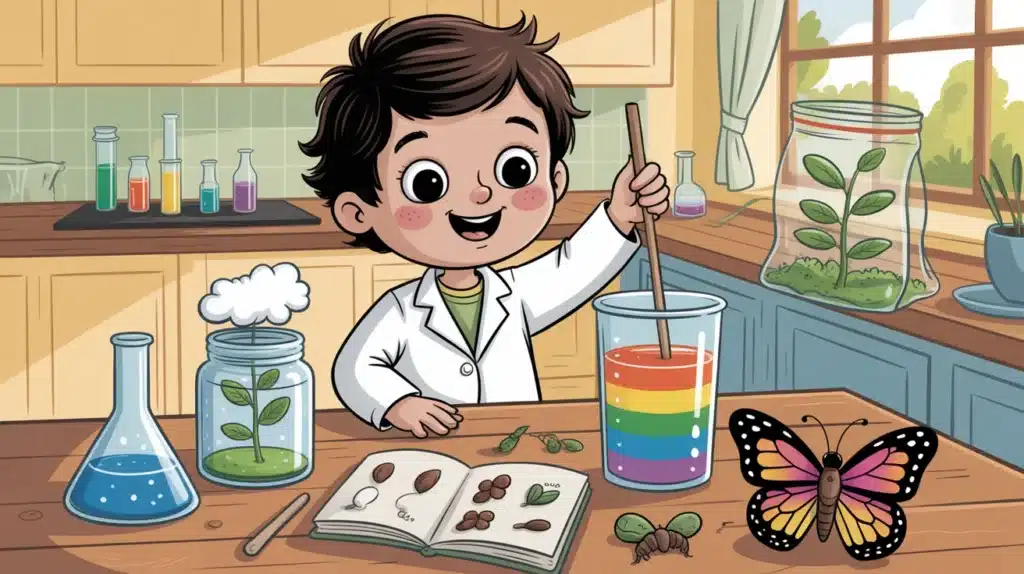
Spring is one big, live science lesson happening right in your backyard. These activities bring real concepts to life, from how clouds form to how a seed becomes a plant, without it feeling like schoolwork.
33. Cloud in a Jar
Fill a jar with hot water, place a plate with ice on top, and spray a small amount of hairspray inside before sealing. A mini cloud forms inside the jar.
- How to do it: The cold air from the ice meets the warm water vapor, causing condensation. Talk about how real clouds form the exact same way.
- Best for: Ages 6 and up (adult help needed for hot water)
34. Rainbow in a Glass
Fill a tall glass with layers of sugar water at different concentrations, each dyed a different color. The layers stay separate and create a rainbow effect.
- How to do it: Start with the highest sugar content at the bottom and work up to plain water at the top. Pour each layer slowly over the back of a spoon.
- Best for: Ages 7 and up
35. Seed Germination in a Bag
Place a bean seed and a damp paper towel inside a clear zip-lock bag. Tape it to a sunny window and watch the seed sprout over several days.
- How to do it: Check daily and note any changes. Kids draw the seed each day to track growth. Results show in 3 to 5 days.
- Best for: Ages 4 and up
36. Butterfly Life Cycle Project
Use paper, clay, or craft supplies to build a model of all four stages: egg, caterpillar, chrysalis, and butterfly.
- Best for: Ages 5 and up
- Pro tip: Label each stage and add one fact next to it. This makes a great simple science display for home or school.
37. Bird Nest Building Challenge
Give kids a set of materials: twigs, dry grass, string, leaves, and a small amount of mud. Can they build a nest strong enough to hold three marbles?
- How to do it: Set a 15-minute timer. Test all nests together at the end. Talk about how real birds choose and place each piece carefully.
- Best for: Ages 5 and up
38. Worm Study
After rain, carefully collect two or three earthworms. Place them on damp paper, observe, measure, and draw them. Release back into the garden within 10 minutes.
- Best for: Ages 4 and up
- Pro tip: Never leave worms in sunlight. Keep them on damp paper only, then return them gently to moist soil.
39. Flower Dissection
Take apart a tulip, daffodil, or dandelion. Identify and label the petals, stem, stamen, and pistil. Stick each part onto a card.
- How to do it: Use a simple flower diagram from a library book or free printable as a guide. Keep it curious and pressure-free.
- Best for: Ages 6 and up
40. Soil Test Experiment
Collect soil from three different spots: a garden bed, a path, and under a tree. Add equal amounts of water to each sample. See which drains fastest.
- Best for: Ages 6 and up
- Pro tip: This connects directly to the gardening category. Talk about why some plants grow better in certain soil types.
41. Spring Weather Journal
Kids record the weather every day for two full weeks, noting sun, clouds, rain, wind, and temperature each morning.
- How to do it: At the end of week two, count each weather type and make a simple bar chart. Talk about which days had the most rain or sun.
- Best for: Ages 6 and up
42. Tadpole Observation
If you live near a pond, visit twice during the same spring. Look for tadpoles at different stages of development and sketch what you see each visit.
- Best for: Ages 5 and up
- Pro tip: Never remove tadpoles from a pond. Observe from the bank and take a photo if possible.
43. Paper Bridge Challenge
Using only newspaper and tape, kids build a bridge across a gap between two chairs. The goal is to hold a small toy car.
- How to do it: Give each child the same materials. Try different designs. Test each one. The sturdiest bridge wins.
- Best for: Ages 6 and up
44. Egg Drop Challenge
Protect a raw egg using only spring-found materials: grass, leaves, mud, and sticks. Drop it from a set height. Did it survive?
- Best for: Ages 7 and up
- Pro tip: Start from waist height and work up after each attempt. Kids adjust their designs between rounds and rarely want to stop.
45. Spring Math Scavenger Hunt
Kids go outside and find things that match math clues: 5 round objects, 3 things taller than their hand, 2 things starting with the letter B.
- How to do it: Write clues on cards. Work in pairs for younger kids. Bring a simple recording sheet to fill in as you go.
- Best for: Ages 4 and up
46. Mini Windmill Making
Cut a square of paper and fold it to form a pinwheel. Attach to a straw with a pin. Take it outside and watch it spin to show how wind creates movement.
- How to do it: Fold corners toward the center without creasing all the way through. A pin through the center holds it to the straw.
- Best for: Ages 5 and up (adult help needed for the pin)
47. Coding a Spring Story
Use a free platform like Scratch Jr. or Code.org to help kids create a short spring-themed animation: a flower growing, a bird flying, or a sun rising.
- Best for: Ages 5 and up
- Pro tip: Start with just 10 minutes. Kids often get fully absorbed and want to keep going long past the timer.
48. Spring Nature Journaling
Give kids a blank notebook. Each day, they draw, write, or stick in something from outside: a pressed leaf, a feather sketch, a note on the weather.
- How to do it: Keep it casual, not an assignment. One page a day is plenty. By the end of spring, they have a full seasonal record.
- Best for: Ages 5 and up
Gardening Spring Activities for Kids
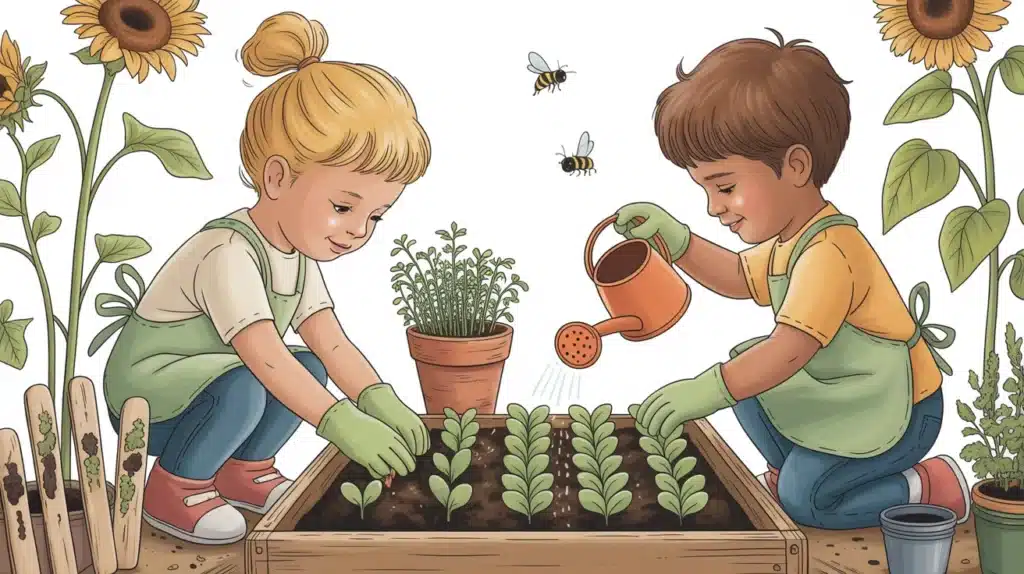
Gardening gives kids something rare: a task that actually matters. The seed either grows or it does not. The plant either gets watered or it does not. These gardening activities put kids in real charge of something living.
49. Start a Seed Tray
Fill small pots or a tray with soil. Plant radish, sunflower, or bean seeds. Label each row and water gently every day.
- How to do it: Place the tray on a sunny windowsill. Most seeds germinate in 3 to 10 days depending on the type.
- Best for: Ages 3 and up
50. Herb Garden in a Cup
Plant mint, basil, or parsley seeds in an old mug or tin. Water lightly every other day. Harvest leaves once the plant is tall enough.
- Best for: Ages 4 and up
- Pro tip: Label each cup with the herb name and the date it was planted. Kids love tracking how long it took to grow something they can taste.
51. Pea Shoot Growing
Push 4 to 5 pea seeds just below the surface of a small pot of soil. Water and watch shoots appear within 10 to 14 days.
- How to do it: Once shoots reach 10 to 15 cm tall, kids can harvest and eat them in a sandwich or salad. Fast results keep them motivated.
- Best for: Ages 3 and up
52. Build a Garden Marker
Paint popsicle sticks or smooth stones with the name of each plant in the garden. Use waterproof paint so the markers last outdoors.
- Best for: Ages 4 and up
- Pro tip: Let kids add a small drawing of the plant on each marker. It helps them remember what they planted where.
53. Create a Compost Bin
Set up a small bin to collect fruit peels, vegetable scraps, and dry leaves. Explain what happens to materials as they break down over time.
- How to do it: Alternate wet and dry materials. Stir once a week. In 6 to 8 weeks, the first signs of real compost start to form.
- Best for: Ages 5 and up
54. Design a Personal Garden Patch
Give each child their own small section of garden. They decide what to plant, where each plant goes, and how to care for it.
- Best for: Ages 5 and up
- Pro tip: Let kids draw their patch on paper before planting. It builds excitement and gives them real ownership of the space.
55. Plant a Pollinator Garden
Choose flowers that bees and butterflies are drawn to: lavender, marigolds, and sunflowers. Let kids choose the colors and layout.
- How to do it: Plant in a sunny spot with good drainage. Water at the base, not the leaves. Kids track which insects visit over the season.
- Best for: Ages 4 and up
56. Build a Bug Hotel
Stack bamboo sticks, pinecones, dry bark, and straw inside a wooden box or old pallet. Leave it in a quiet garden corner.
- Best for: Ages 4 and up
- Pro tip: Check the hotel each week. Small beetles, ladybugs, and lacewings often take up residence within just a few days.
57. Make Seed Bombs
Mix air-dry clay, compost, and wildflower seeds into small firm balls. Let them dry for 24 hours, then toss into bare patches of soil in the garden.
- How to do it: Use roughly 1 part seeds, 5 parts compost, and 3 parts clay. Press firmly so each ball holds its shape well.
- Best for: Ages 4 and up
58. Manage the Bird Feeder
After making a feeder in the craft category, kids take on the job of refilling it and keeping a log of every bird that visits.
- How to do it: Check the feeder each morning. Write down every species that shows up. By the end of spring, kids have a real, proper bird record.
- Best for: Ages 5 and up
59. Grow Sunflowers and Track Height
Plant sunflower seeds in a pot or garden bed. Measure each week and record the height on a simple hand-drawn chart.
- How to do it: Tape the chart to the wall beside the pot. Kids see the line rise on the page, just as the plant rises outdoors.
- Best for: Ages 4 and up
60. Make a Mini Pond
Use a large waterproof tub, fill it with rainwater, add rocks and aquatic plants, and place it in a shaded garden spot.
- Best for: Ages 5 and up (adult supervision near water)
- Pro tip: Frogs, water beetles, and small creatures often find the pond within a few weeks. Kids observe without touching the water.
61. Grow Lettuce and Make a Salad
Plant loose-leaf lettuce in a shallow tray or pot. Harvest the outer leaves in 4 to 6 weeks and make a simple salad together.
- How to do it: Let kids add other ingredients they choose from the kitchen. Kids who grew their own food are far more willing to eat it.
- Best for: Ages 4 and up
62. Strawberry Planting and Picking
Plant strawberry runners in a pot or bed. Water well and keep the pot in full sun. Kids pick berries once they are fully red.
- Best for: Ages 3 and up
- Pro tip: Strawberries take 4 to 6 weeks to fruit. The wait is part of the lesson: good things take time.
63. Make Flower Petal Lemonade
Mix fresh lemon juice, water, and sugar. Add edible flower petals such as lavender or rose. Chill and serve on a warm spring afternoon.
- How to do it: Confirm flowers are food-safe before using. Lavender, chamomile, and rose petals all taste mild and work well.
- Best for: Ages 4 and up (adult supervision for cutting lemons)
64. Press and Dry Herbs
Pick fresh mint, basil, or lavender. Press each sprig between parchment paper and stack heavy books on top for two full weeks.
- Best for: Ages 5 and up
- Pro tip: Pressed herbs work well on handmade cards, bookmarks, and photo frames. They stay flat and last for months.
Indoor Spring Activities for Kids on Rainy Days
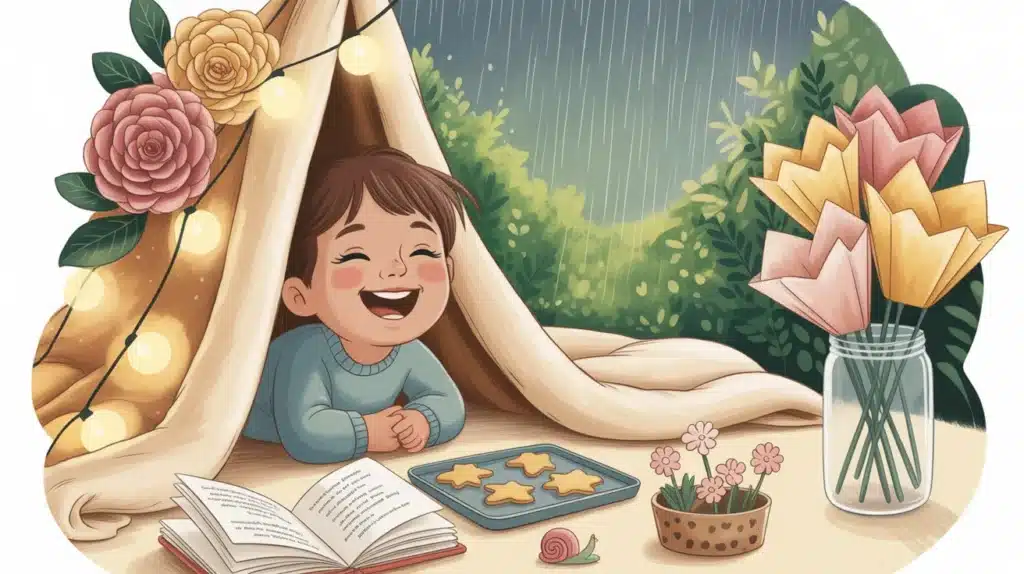
April showers are real, and they do not care about your plans. These indoor activities keep the spring feeling alive from inside the house, no matter what is happening outside the window.
65. Spring Sensory Bottle
Fill a clear plastic bottle with water, blue and green food coloring, glitter, and small plastic flowers or bugs. Seal the lid with craft glue and shake.
- How to do it: Watch the contents settle slowly after shaking. Great for calm-down time as well as simple sensory play.
- Best for: Ages 2 to 5
66. Build a Spring-Themed Blanket Fort
Use green, yellow, and white fabric or sheets. Hang paper flowers from the ceiling inside. Add spring books and a flashlight.
- Best for: Ages 2 to 9
- Pro tip: Add a nature sounds playlist from YouTube. It turns a simple blanket fort into a proper spring hideaway.
67. Spring Playdough Creations
Make or buy green and yellow playdough. Kids shape flowers, bugs, nests, and eggs. No instructions, just free-form making.
- How to do it: For homemade playdough: mix 2 cups flour, half a cup of salt, 2 tablespoons of oil, and enough warm water to form a soft dough. Add food coloring.
- Best for: Ages 2 to 6
68. Tissue Paper Flower Making
Stack six to eight sheets of tissue paper. Accordion-fold the stack along its length. Tie a pipe cleaner around the center. Fan out each layer gently.
- Best for: Ages 5 and up
- Pro tip: Alternate two colors in the stack for a layered look. These work as party decorations or bright window displays.
69. Spring Sticker Scene
Give kids a large sheet of white paper, spring-themed stickers, and crayons. They build their own spring scene by placing stickers and drawing around them.
- How to do it: Start with a background: sky and ground. Add sticker elements on top. Kids often spend 30 to 40 minutes on this without realizing it.
- Best for: Ages 3 to 7
70. DIY Spring Memory Card Game
Draw or print spring image pairs: a flower, a bee, a sun, a raindrop, a bird, a leaf. Flip all cards face down and play the classic matching game.
- Best for: Ages 3 and up
- Pro tip: Let kids color in the printed cards first. Having made the game themselves, they are far more engaged when playing it.
71. Spring Story Writing
Kids write or dictate a short story about a character who wakes up on the very first day of spring. What do they see? Where do they go?
- How to do it: Give younger kids three sentence starters to choose from. Older kids write freely. Fold pages together to make a mini book.
- Best for: Ages 5 and up
72. Simple Spring Poetry
Teach kids a basic two-line rhyming format using spring words: flower and shower, bird and heard, bee and tree. Write two or three together.
- Best for: Ages 6 and up
- Pro tip: Read a couple of short spring poems aloud first as examples. Kids find rhythm much easier once they have heard it.
73. Spring-Themed Worksheets
Use free printable word searches, coloring pages, matching games, and counting sheets based on spring animals and plants.
- How to do it: Gather 3 to 4 sheets into a “spring activity pack” for rainy afternoons. Laminate favorites so they can be used more than once.
- Best for: Ages 3 and up
74. Library Spring Book Hunt
Make a list of 5 to 8 spring-themed books to borrow. Read one a day across spring break.
- Best for: Ages 2 and up
- Pro tip: Let kids pick one extra book from the shelf purely because the cover caught their eye. No rules, just reading.
75. Spring Word Wall
Kids write every spring word they can think of on sticky notes and cover a section of wall or a large sheet of card.
- How to do it: Once the wall is full, kids pick words to use in a sentence, a drawing, or a short story. Add new words each day as they spot them.
- Best for: Ages 5 and up
76. Spring Journaling for Kids
Give each child a blank notebook as a personal spring journal. Each day they draw or write one thing they noticed about spring that day.
- Best for: Ages 5 and up
- Pro tip: Do not correct spelling or grammar in the journal. The habit of noticing and recording matters far more than perfect writing at this stage.
77. Spring Dance Party
Put on a playlist of upbeat songs mixed with outdoor nature sounds. Kids freestyle, follow along to simple moves, or just jump around freely.
- How to do it: Make it a regular 10-minute energy release after lunch or before dinner. Kids often start looking forward to it each day.
- Best for: Ages 2 and up
78. Rainy Day Stomp
Kids use clapping, stomping, snapping, and whistling to create the sounds of a spring rainstorm. Start soft and build to full volume together.
- How to do it: Begin with light finger tapping. Move to hand patting, then clapping, then foot stomping. Reverse the order to end the storm.
- Best for: Ages 3 and up
79. Spring Song Writing
Kids pick five spring words and try to turn them into a short, silly rhyming song. Sing it together at the end, the sillier the better.
- How to do it: Set it to a tune they already know, like a nursery rhyme or a familiar pop song. This takes the pressure off finding a melody.
- Best for: Ages 5 and up
80. Bake Spring Treats Together
Make flower-shaped shortbread cookies, lemon bars, or bird’s nest rice crispy treats using shredded wheat and melted chocolate.
- How to do it: Let kids measure, stir, shape, and decorate. Set aside time at the end to sit together and eat what you made.
- Best for: Ages 3 and up (adult supervision near the oven)
Closing Remarks
Spring does not last forever. But the things kids make, grow, and figure out this season tend to stick.
A nest they built, a plant they watered, a batch of cookies they baked with muddy hands from the garden earlier that day. These are not just ways to fill time.
They are the kind of small moments kids carry with them. Pick two or three spring activities for kids from this list and try them this week. You do not need to plan the whole season at once.
Start small, see what your kids enjoy most, and go from there. Which activity are you trying first? Drop it in the comments below!