
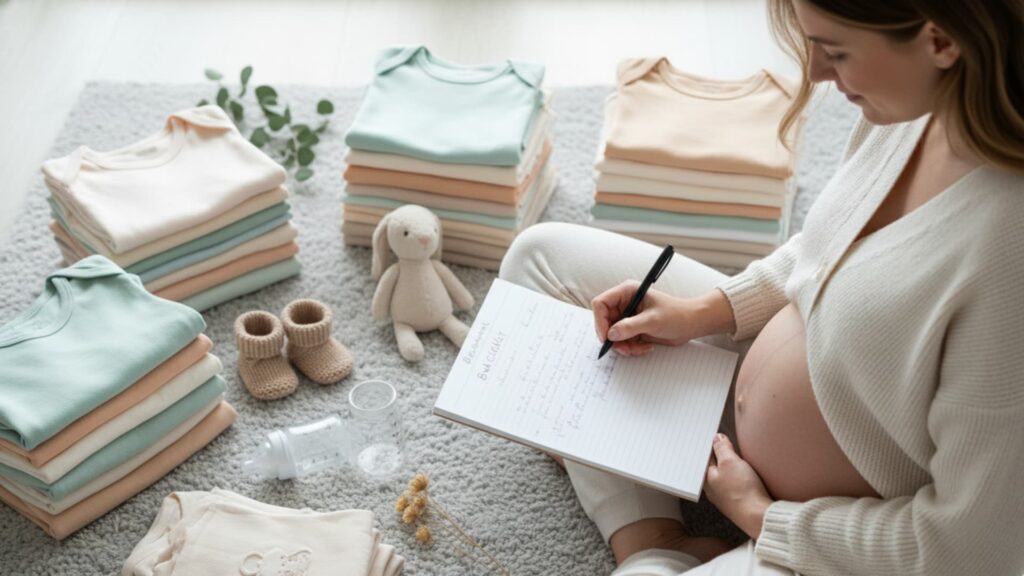
Three weeks before my due date, I stood in a baby store completely frozen. Diapers in 12 sizes.
Bottles in 9 shapes. White noise machines that cost more than my phone. I had no idea where to start. So I left with nothing and cried in my car.
If that sounds familiar, this baby checklist is for you.
No fluff. No overwhelming product roundups. Just a clear, category-by-category list of what a newborn actually needs, what can wait, and what is a complete waste of money.
By the time you finish reading, shopping for your baby will feel less like a test you forgot to study for.
When Should You Start Your Baby Checklist?
Start building your baby checklist around weeks 28-30 of pregnancy. That gives you enough time to research, compare prices, set up the nursery, and pack your hospital bag without doing it all in a panic.
Begin with the big-ticket safety items first, like the car seat and crib, then work your way through feeding, clothing, and everything else.
What to Buy First: Must-Haves vs. Nice-to-Haves
Not every item on a baby checklist carries the same weight. Some things are truly non-negotiable on day one, while others can wait weeks or even months before you need them.
| Category | Must-Haves | Nice-to-Haves | Can Wait |
|---|---|---|---|
| Sleep | Crib or bassinet, firm mattress, fitted sheets, swaddle blankets | White noise machine | Full-size crib (first 6 months) |
| Diapering | Diapers, wipes, a changing pad, and rash cream | Diaper pail | Diaper Genie upgrade |
| Feeding | Bottles or breastfeeding supplies, nursing pillow | Bottle warmer | High chair |
| Safety | Infant car seat (rear-facing) | Baby monitor | Cabinet locks, safety gates |
| Clothing | Onesies, sleepers, socks, hats, mittens | Special occasion outfits | Shoes (babies do not walk) |
| Bath | Baby tub, washcloths, hooded towel, gentle wash | Baby brush | Fancy bath toys |
| On-the-Go | Car seat, stroller | Baby carrier | Compact travel stroller |
Nursery Setup Checklist
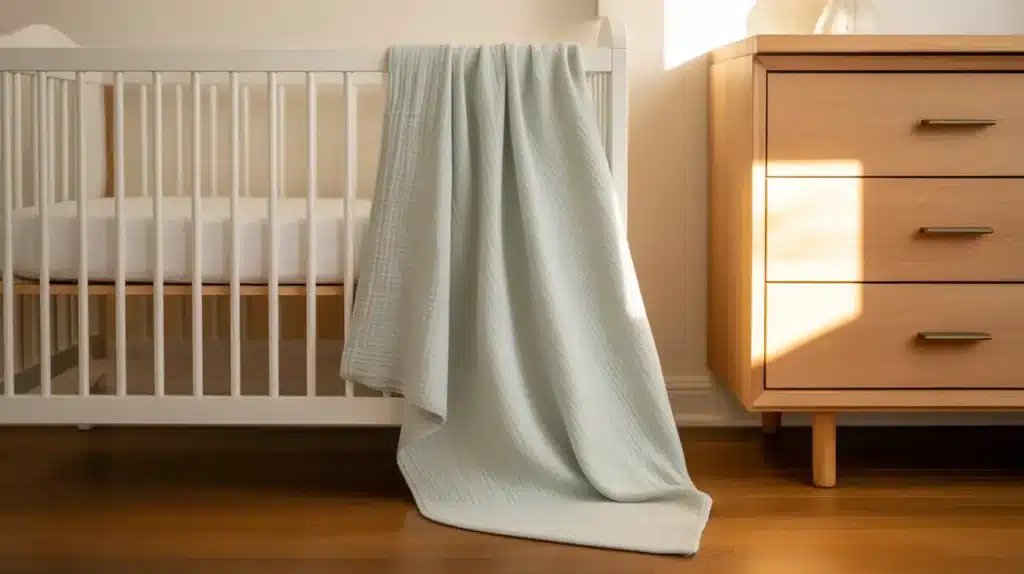
Your nursery does not need to look like a magazine spread. It needs to be safe, practical, and easy to use at 3 in the morning. The AAP recommends room-sharing for at least the first 6 months, so a bedside bassinet matters more than a decorated nursery right now.
Sleep Essentials
Getting the sleep setup right is the single most important thing you can do before your baby comes home. A firm, flat, and bare sleep surface is what keeps a newborn safe.
✓ Crib or portable bassinet
✓ Firm, flat mattress that fits flush with no gaps on any side
✓ Waterproof mattress cover (buy at least 2)
✓ Fitted crib sheets (4 is a good number)
✓ Sleep sacks or swaddle blankets (2 to 3)
✓ White noise machine (optional but widely used by parents)
Safety Note: No loose pillows, blankets, stuffed animals, or bumper pads inside the sleep space. A bare crib is the safest setup for a newborn.
Nursery Furniture
The nursery furniture list is shorter than most people expect. Focus on what you will actually use every single day.
✓ Changing table or dresser with a changing pad on top
✓ Waterproof changing pad cover (buy 2 so one is always clean)
✓ Dresser or storage unit for baby clothes and supplies
✓ Rocking chair or glider
✓ Baby monitor (audio or video, based on your preference)
Diapering Checklist
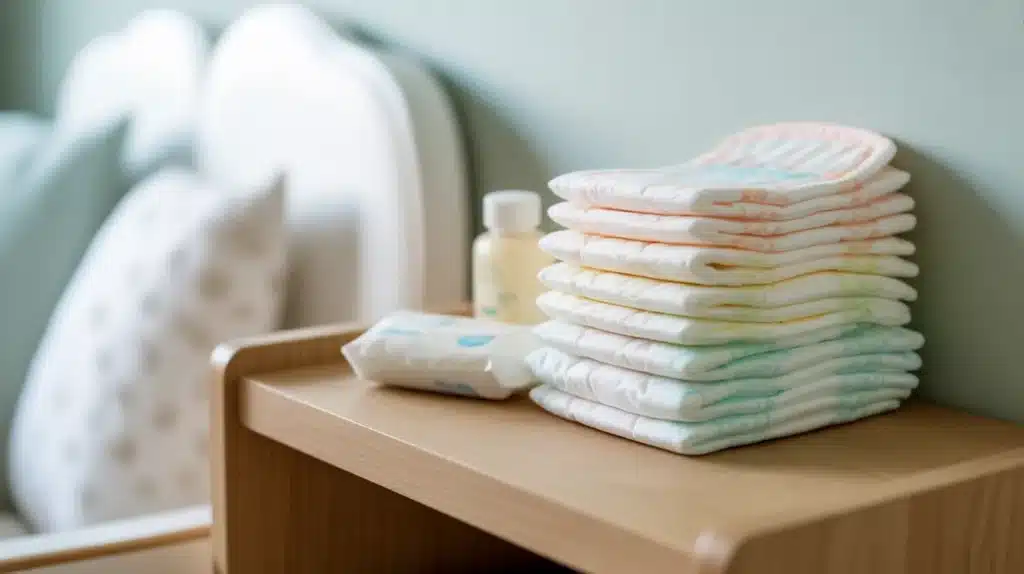
Newborns use about 10 diapers a day, totaling roughly 70 per week. That number catches almost every first-time parent off guard. Stock up before birth, but hold off on buying everything in newborn size since babies grow at very different rates.
✓ 2 to 3 boxes of newborn-size disposable diapers, or 6 to 10 dozen cloth diapers with 6 to 8 diaper covers
✓ Fragrance-free, gentle baby wipes
✓ Changing mat or pad
✓ Diaper rash cream or barrier cream
✓ Diaper pail or a covered trash bin
✓ 2 to 3 waterproof changing pad liners
Pro Tip: Buy one small pack of each diaper size before your due date. Once your baby is born, you will know the right fit and can stock up from there.
Baby Clothing Checklist
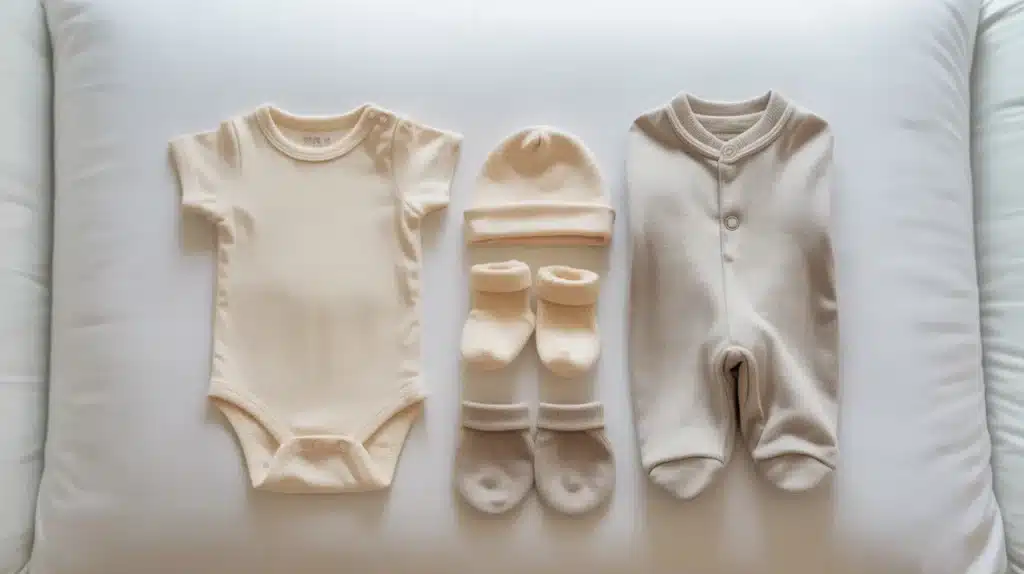
Tiny clothes are hard to resist, but most parents overbuy in the newborn size and barely use half of it. Keep the wardrobe simple, soft, and practical for the first few weeks.
Newborn Clothing Basics
Newborns spend most of their time sleeping, eating, and getting changed. Practical over pretty wins every time in those first few weeks.
✓ 4 to 8 onesies (envelope shoulders and snaps at the crotch for easier changes)
✓ 4 to 6 sleepers or footie pajamas
✓ 2 to 4 pairs of baby socks
✓ 2 to 4 soft baby hats
✓ 2 pairs of baby mittens (prevents face scratching)
✓ 4 to 6 burp cloths ✓ 4 to 6 bibs
Shopping Tip: Buy more in the 3 to 6-month size. Most newborns move past the 0 to 3-month range within just a few weeks.
Seasonal Clothing Tips
The time of year your baby is born changes what you need on the clothing side of your checklist.
✓ Winter babies: a warm snowsuit or bunting for outdoor trips, plus hats every time you go outside
✓ Summer babies: light short-sleeve onesies and a sunhat for outdoor use
✓ General rule: dress your baby in one more layer than you are wearing at all times
Feeding Checklist
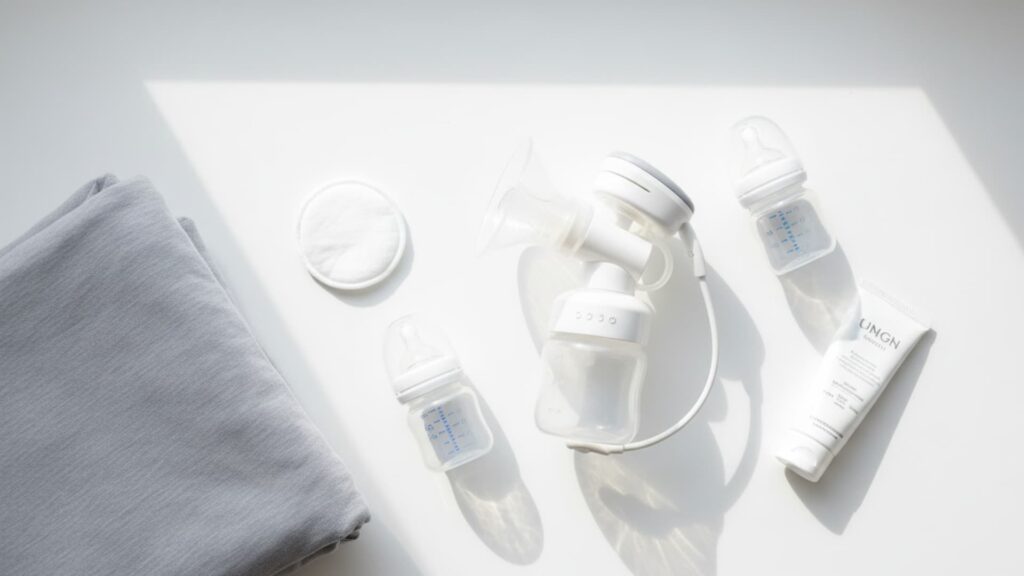
Fed is best. This section covers both feeding methods so you can prepare for what works for you and your baby, without any pressure either way.
Breastfeeding Essentials
Breastfeeding takes real practice, and having the right supplies ready before birth takes a lot of the stress out of those early days.
✓ Breast pump, electric or manual (many insurance plans cover this at no cost)
✓ 2 to 3 nursing bras
✓ Nursing pads for leakage between feedings
✓ Nipple cream for soreness in the early weeks
✓ Nursing pillow for positioning and back support during feeds
✓ Breast milk storage bags or containers
Talk to a lactation consultant before your baby arrives. Many hospitals offer free consultations, which make a real difference for first-time mothers.
Bottle-Feeding Essentials
For parents who plan to bottle-feed, a little prep work goes a long way in those first chaotic weeks at home.
✓ 8 to 10 bottles in both 4-oz and 8-oz sizes
✓ Bottle brush and drying rack
✓ Formula (ask your pediatrician for a recommendation)
✓ Bottle sterilizer or a large pot for boiling
✓ Bottle warmer (optional but convenient)
Pro Tip: Buy just 2-3 bottles before the baby is born. Some babies reject certain nipple shapes. Test first, then stock up on what works.
Baby Bath Time Checklist
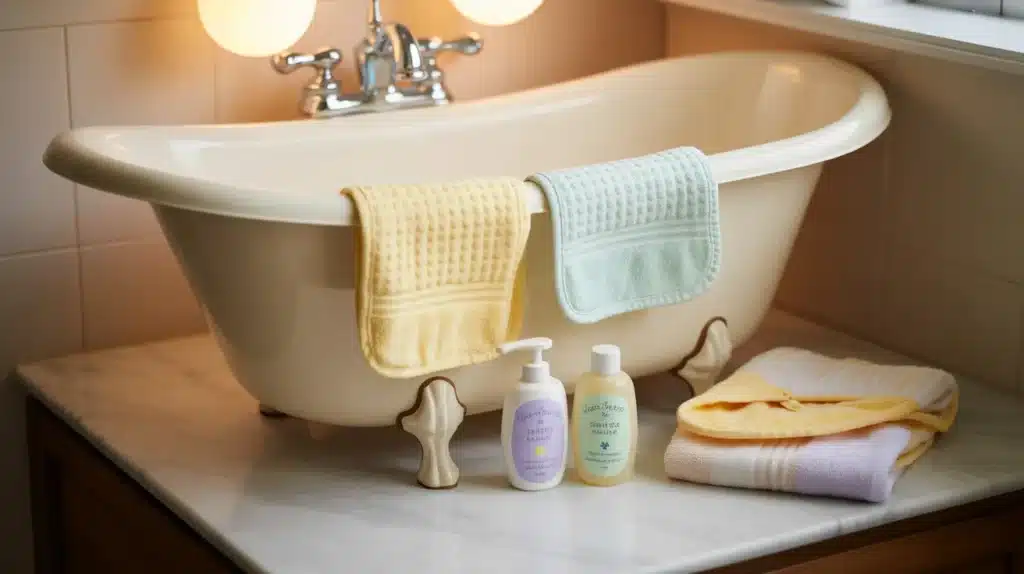
The first bath feels scary. Your baby is slippery, they might cry, and you might not feel confident at all. That is completely normal. With the right gear and a steady hand, it gets much easier every single time.
✓ Baby bathtub with a newborn support insert
✓ 3 to 4 soft washcloths
✓ 2 hooded baby towels
✓ Gentle, fragrance-free baby wash and shampoo (no-tears formula is ideal)
✓ Soft baby brush for hair and cradle cap
✓ Baby nail clippers or nail file (nails grow fast and can scratch)
Safety Rule: Never leave your baby alone in the bath. Keep one hand on your baby at all times during every bath, without exception.
On-the-Go Baby Checklist
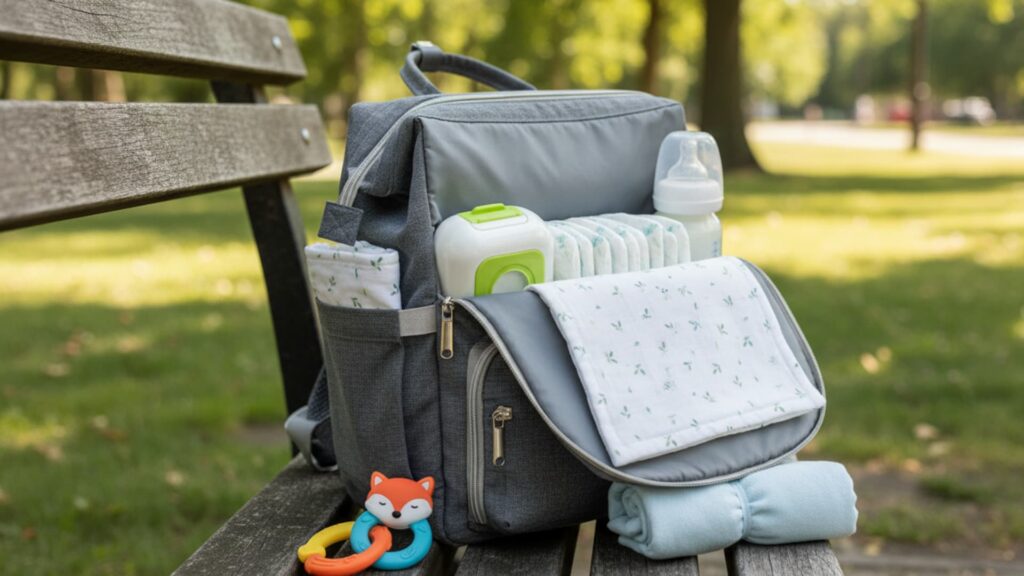
Leaving the house with a newborn requires real preparation. Having everything organized and ready means less stress when it is time to head out, even for a short trip.
Car Safety
The car seat is the single most important item on your entire baby checklist. It needs to be installed correctly before your due date, not the day after.
✓ Rear-facing infant car seat, required from birth
✓ Installation checked by a certified Child Passenger Safety Technician (many fire stations offer this free of charge)
✓ Car seat mirror so you can see your baby from the driver’s seat
The AAP recommends keeping children rear-facing as long as possible, until they reach the height or weight limit on their specific car seat.
Strollers and Carriers
You do not need the most expensive stroller on the market. You need one that fits your lifestyle and supports your baby safely from birth.
✓ Full-size stroller with a flat recline position for newborns
✓ Travel system with a stroller and infant car seat combo (popular and practical for most families)
✓ Baby carrier or wrap (keep baby’s airway clear and chin off their chest at all times)
Diaper Bag Essentials
A well-stocked diaper bag is the difference between a smooth outing and a stressful one. Keep it ready to go at all times.
✓ 5 to 6 diapers for a day out
✓ Travel pack of wipes
✓ At least one full change of baby clothes
✓ 2 burp cloths
✓ Feeding supplies such as bottles, formula, or a nursing cover
✓ Small first aid pouch
✓ Hand sanitizer
Tip: Restock the diaper bag the night before any outing. Do not wait until the morning you are trying to leave.
Baby Health and Safety Checklist
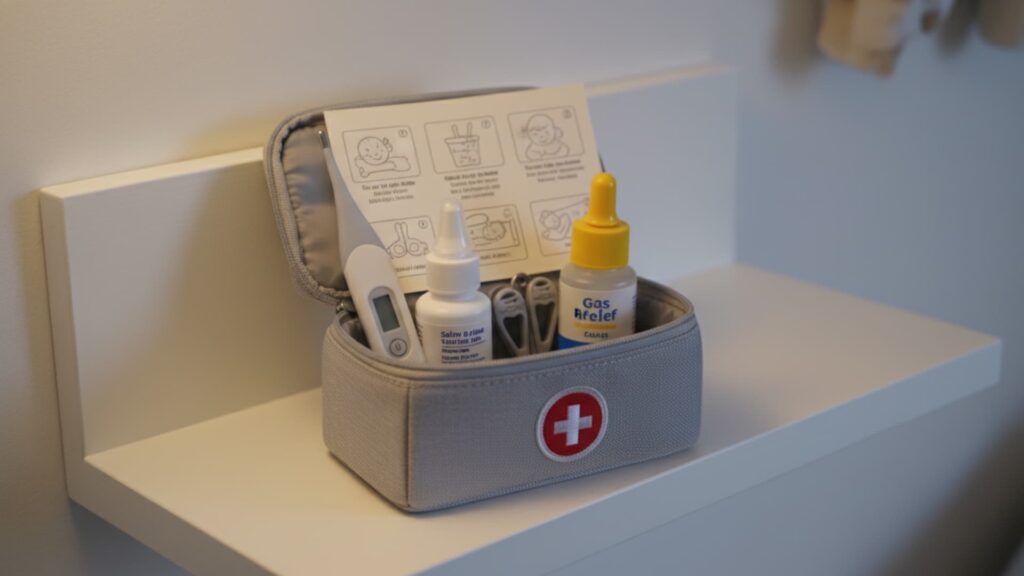
A newborn at home means having the right health tools ready and knowing your space is as safe as it can be. This section covers two things most baby checklists only skim over.
First Aid Kit for Babies
Every home with a newborn needs a proper infant first aid kit. This is not something to put together after the baby arrives.
✓ Rectal thermometer (the most accurate option for infants; a newborn’s fever is a medical emergency)
✓ Nasal aspirator or bulb syringe for clearing stuffy noses
✓ Baby nail clippers
✓ Gas relief drops
✓ Saline nasal drops
✓ Bandages and antiseptic wipes
✓ Baby-safe pain reliever (ask your doctor before giving anything to a newborn)
Look for first aid kits developed with input from pediatric doctors. A good kit includes CPR instructions, fever dosing charts, and step-by-step emergency guidance.
Baby-Proofing Your Home
You do not need to baby-proof everything on day one. Newborns do not move. But starting early means you are ready well before your baby starts rolling, crawling, and pulling up.
✓ Move all electronics cords out of reach
✓ Store cleaning products in locked or high cabinets
✓ Cover all electrical outlets
✓ Keep the sleep area completely clear of loose items at all times
✓ Check that all furniture is stable and cannot tip over
✓ Plan for safety gates on stairs before the baby starts moving
✓ Cabinet locks for kitchen and bathroom storage
Hospital Bag Checklist: What to Pack Before You Leave
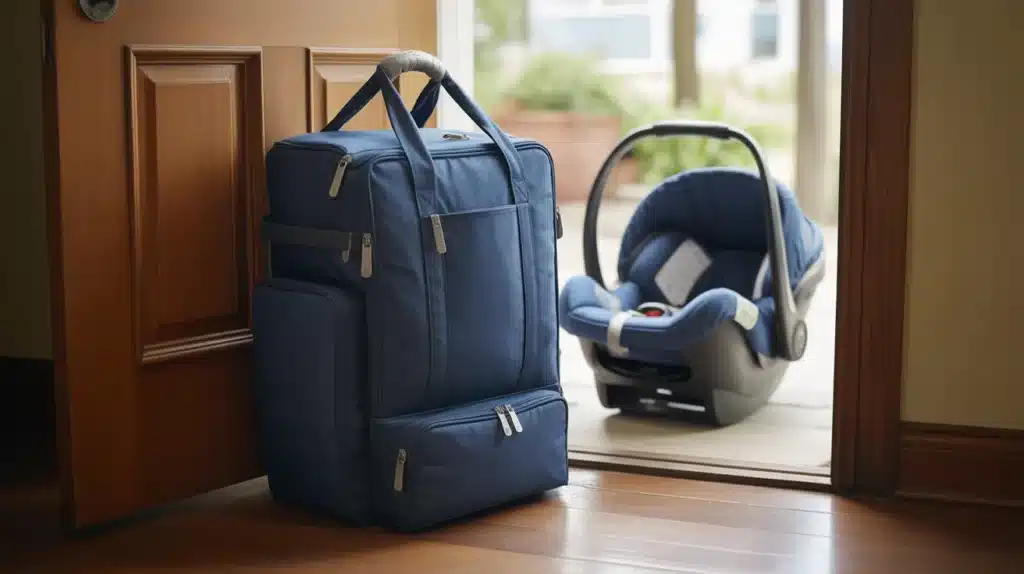
Pack your hospital bag between weeks 35 and 36. You want it sitting by the door before you need it, not getting assembled at midnight when contractions start.
For Baby
✓ 2 to 3 newborn onesies
✓ 1 to 2 sleepers
✓ Soft hat and socks
✓ 1 swaddle blanket
✓ One backup outfit in the next size up
✓ Installed car seat already in the car, not packed in the bag
For Parent
✓ Insurance cards and photo ID
✓ Birth plan if you have one
✓ Comfortable clothes for labor and after delivery
✓ Phone charger (most commonly forgotten item)
✓ Toiletries and personal care items
✓ Snacks for both the birthing parent and support person
Things You Can Skip (Save Your Money)
The baby product industry is very good at making everything feel essential. Most of it is not. Here is what most experienced parents wish they had skipped:
- Wipe warmer: Most babies do not notice or care about wipe temperature.
- Baby shoes for newborns: Newborns do not walk. Soft socks do the same job.
- Lots of 0 to 3-month clothing: Many babies outgrow this size in just a few weeks.
- Specialized baby laundry hamper: Any hamper works fine.
- Full nursery decor before month two: Newborns cannot see clearly. The decor can wait.
- Full-size crib in the first 6 months: The AAP recommends room-sharing, so a bassinet is the better choice in the early months.
- Baby swing without testing first: Some babies love them, some do not. Borrow one before spending money.
- Baby hair brush early on: Most newborns have very little hair. A soft comb works just fine.
How to Build a Baby Checklist Without Overspending
Baby prep costs add up fast, but there are real, practical ways to cut the bill without cutting corners on what actually matters. Spend smart, not more.
| Budget Tip | What to Do |
|---|---|
| Set up a baby registry | Direct family and friends toward items you actually need |
| Buy second-hand for non-safety items | Clothes, bouncers, and playmats are fine used |
| Never buy used safety items | Avoid second-hand car seats, cribs, or crib mattresses |
| Shop sales in the second trimester | More time to compare before the third-trimester rush |
| Invest in daily-use items | Prioritize quality for the car seat, crib mattress, and carrier |
| Borrow big items before buying | Try a swing or bouncer for a week before committing |
| Compare prices across stores | Amazon, Target, and Walmart often price the same item differently |
| Ask before leaving the hospital | Many hospitals give free samples of diapers, wipes, and formula |
Baby Checklist by Stage: First 3 Months vs. 3 to 6 Months
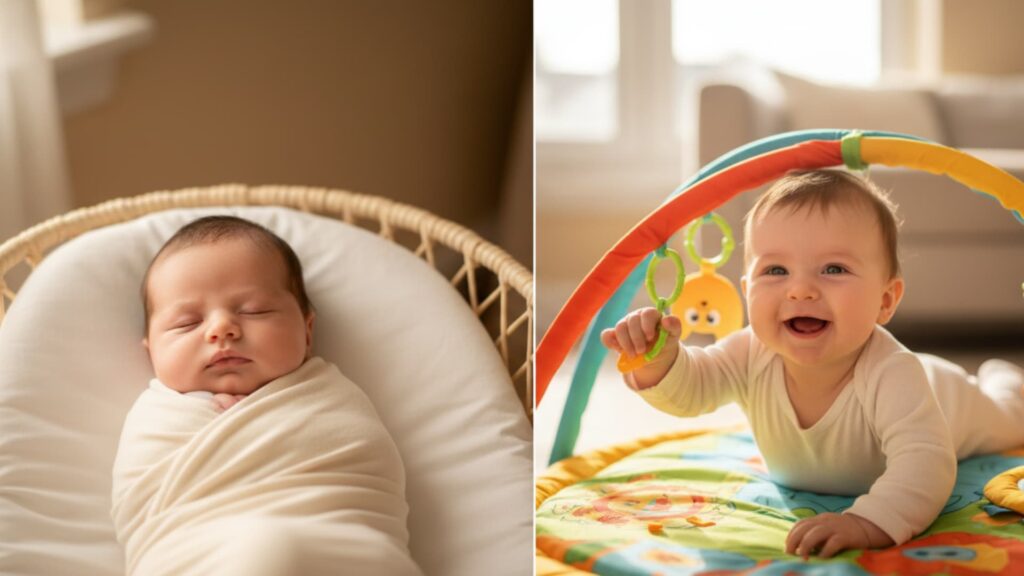
Most baby checklists make the list feel bigger than it needs to be by treating everything as urgent. Breaking it into stages keeps things manageable and helps you spend only on what your baby actually needs right now.
First 3 Months (Newborn Stage)
✓ Car seat, rear-facing and installed before birth
✓ Crib or bassinet with a safe sleep setup
✓ Diapers and wipes
✓ Feeding supplies, breastfeeding, or bottle-feeding
✓ Basic newborn clothing
✓ Bath essentials
✓ Baby first aid kit
✓ Stocked diaper bag
3 to 6 Months (Infant Stage)
✓ High chair for starting solids around 6 months
✓ Baby play gym or activity mat for tummy time and development
✓ Soft teething toys (babies teething from 4 to 7 months on average)
✓ Baby bouncer or jumper
✓ Sippy cup to introduce around 6 months
✓ More clothing in 3 to 6 and 6 to 9 month sizes
When should I start buying baby items?
Most parents start shopping around week 28 to 30 of pregnancy, which is the start of the third trimester.
This gives you enough time to research products, compare prices, build your registry, and get the nursery ready before your due date.
Start with the big non-negotiables first, like the car seat, crib, and feeding supplies, then fill in the rest gradually. There is no need to have everything done at once.
Wrapping It Up
Here is what every new parent needs to hear: you will not get this perfect. No one does.
A solid baby checklist covers safety, sleep, feeding, diapering, and clothing. That is it. Everything beyond that is either helpful or optional, and you will figure out what works for your baby as you go.
Start with what your newborn needs on day one. Add the rest as your baby grows. Skip what does not serve you. And give yourself some credit because getting this far means you are already doing a great job.
Did this baby checklist help you? Drop a comment below and tell us which section was the most useful for you.