

Last Saturday, a 7-year-old beat her dad at Sushi Go three rounds in a row. He still has not recovered.
That is what a good board game does. It levels the playing field. Kids win. Adults get surprised. Everyone ends up laughing about it later.
The hard part is picking the right game. Not every game works for a 6-year-old and a 60-year-old at the same table. The wrong choice ends in frustration before the first turn ends.
This guide covers the best family-friendly board games right now, how to choose wisely, and tips to make game night something your family actually looks forward to.
How to Pick the Right Game for Your Family?
Start with the youngest person at the table. Their age sets the limit on how complex the rules can get. Then think about how many people are playing and how much time you have.
A quick card game works on a busy weeknight. A longer strategy game fits a relaxed weekend session. When in doubt, read the box.
The age rating, player count, and play time printed on it tell you almost everything you need before buying.
Best Family Board Games for Every Game Night
Every game below has been selected based on real family reviews, award recognition, and how well it holds up across different ages and group sizes. Whether your group is just starting out or you already have a shelf full of games, there is something here worth trying.
1. Ticket to Ride
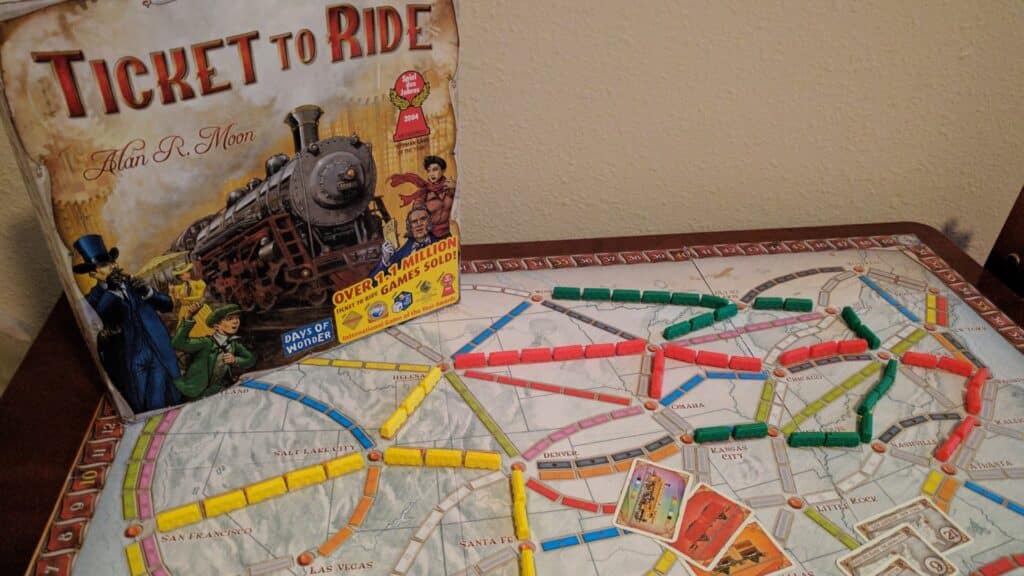
Best For: Ages 8 and up Players: 2 to 5 Play Time: 30 to 60 minutes
Players collect colored train cards to claim railway routes across a map of North America. The longer the route, the more points it earns.
Other players can cut off your path if they move faster, which adds a layer of friendly competition without making the game feel aggressive.
How to Play:
- Deal each player 4 train cards and 3 destination tickets. Keep at least 2 tickets.
- On your turn, do one of three things: draw 2 train cards, claim a route using matching cards, or draw more destination tickets.
- Claim routes by placing your colored train pieces on matching spaces between two cities.
- When any player has 2 or fewer trains left, everyone takes one final turn. Add up route points and destination ticket scores. Highest total wins.
Pro Tip: The First Journey edition is suitable for ages 6 and up. Routes are shorter, and the game ends the moment one player completes 6 tickets.
2. Carcassonne
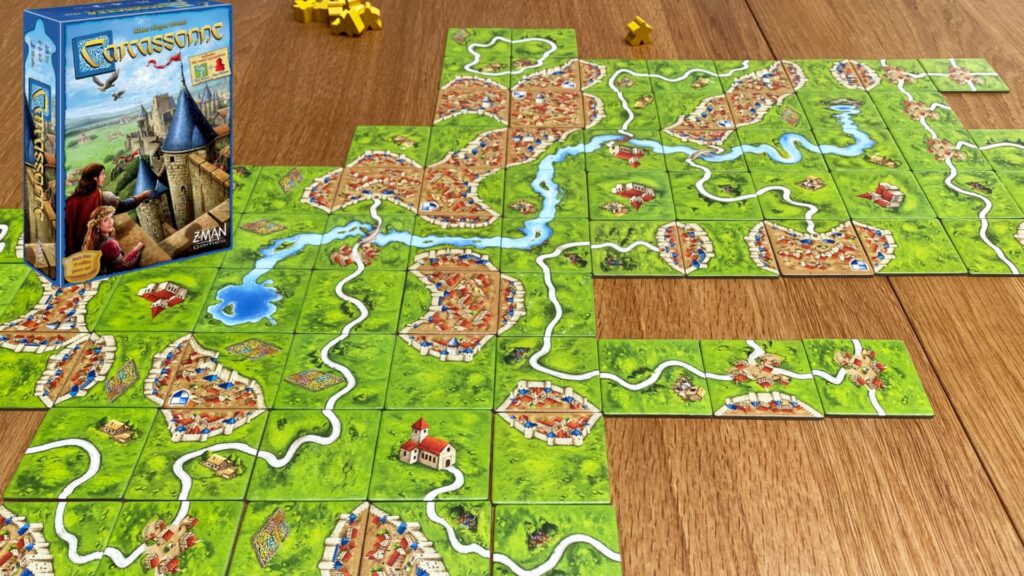
Best For: Ages 7 and up Players: 2 to 5 Play Time: 35 to 45 minutes
Each turn, a player draws one landscape tile and places it next to tiles already on the table. Cities, roads, and fields grow as the board expands.
Players place small wooden figures called meeples to score points when those features are completed. No two games ever look the same.
How to Play:
- Draw one tile from the stack. Place it so its edges connect logically to tiles already on the table.
- Decide whether to place one of your meeples on the tile you just placed, claiming a city, road, field, or monastery.
- Score any features that got completed by your tile placement. Return meeples from completed features back to your supply.
- After the last tile is placed, score all remaining unfinished features. Highest total wins.
Pro Tip: Play the first game without the scoring track. Just enjoy placing tiles and see how the board grows. Scores will click naturally in the second game.
3. Sushi Go
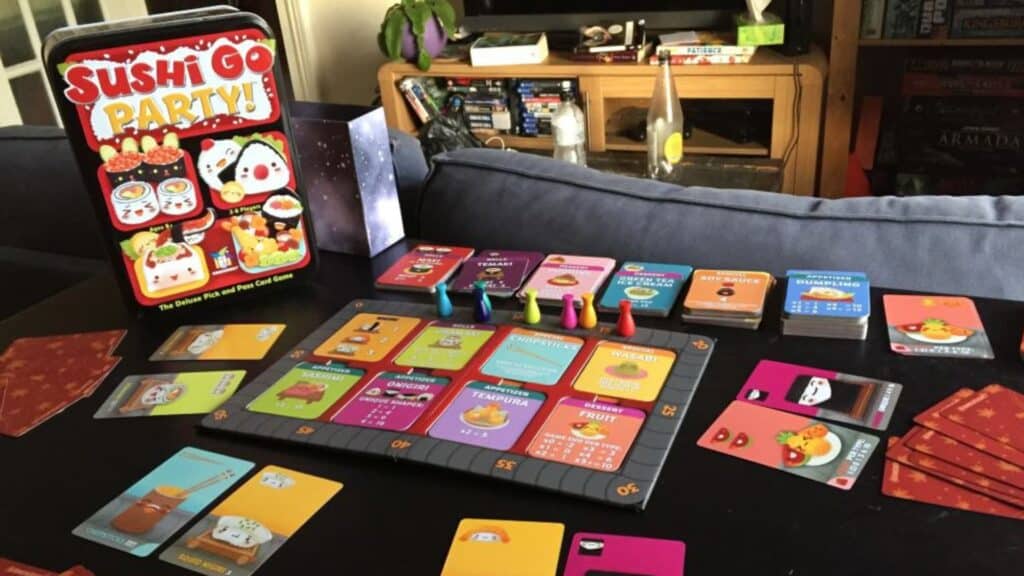
Best For: Ages 8 and up Players: 2 to 5 Play Time: 15 to 20 minutes
Players build the most points-worthy sushi meal from a rotating hand of cards. Everyone picks one card at the same time, then passes the rest of their hand to the next player.
This continues until all cards are gone. There is no board at all. The whole game fits in a small tin.
How to Play:
- Deal a hand of cards to each player. The number dealt depends on how many people are playing.
- Each player secretly picks one card from their hand and places it face down on the table.
- Everyone reveals their chosen card at the same time, then passes their remaining hand to the left.
- Repeat until all cards are played. Score points based on which sushi combinations you collected. The highest score after 3 rounds wins.
Pro Tip: Sushi Go Party supports up to 8 players and adds more dish types. A strong upgrade for larger family gatherings.
4. Codenames
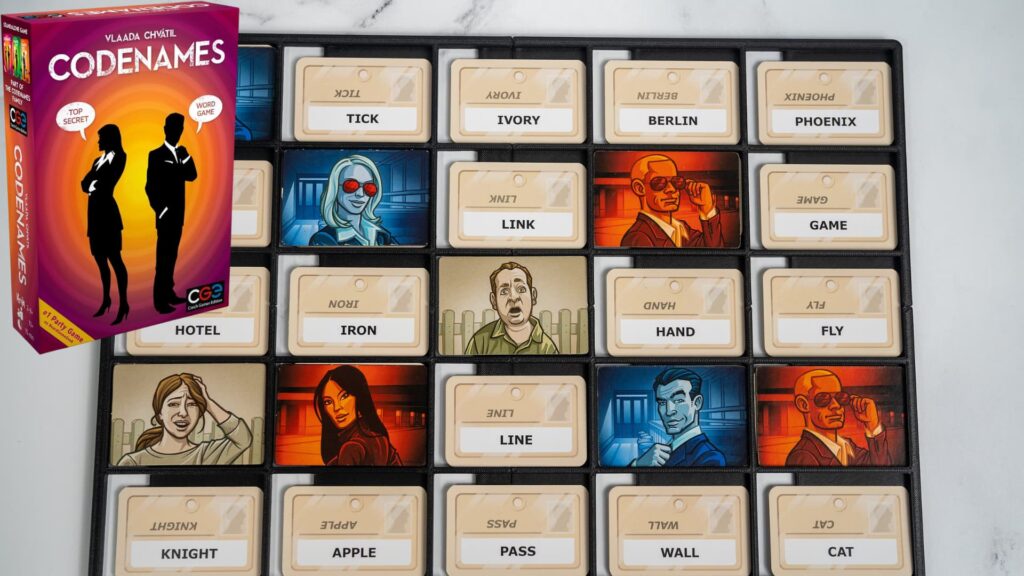
Best For: Ages 10 and up Players: 4 or more, in two teams Play Time: 15 to 30 minutes
Two teams compete to guess their secret code words on a 5×5 grid. Each team has a spymaster who sees which words belong to which side.
The spymaster gives a single-word clue that links to multiple words on the grid. The team guesses as many as they can before passing to the other side.
How to Play:
- Lay 25 word cards on the table in a 5×5 grid. One spymaster per team examines the key card to see which words belong to each team.
- The spymaster gives a one-word clue followed by a number. The number tells the team how many words match the clue.
- The team points to words one at a time. A correct guess continues the turn. A wrong guess ends it.
- The first team to correctly identify all their words wins. Touching the assassin word ends the game immediately as a loss.
Pro Tip: Pair a younger child with an adult spymaster. The adult gives the clues while the child handles the guessing. It keeps younger players fully involved.
5. Dixit
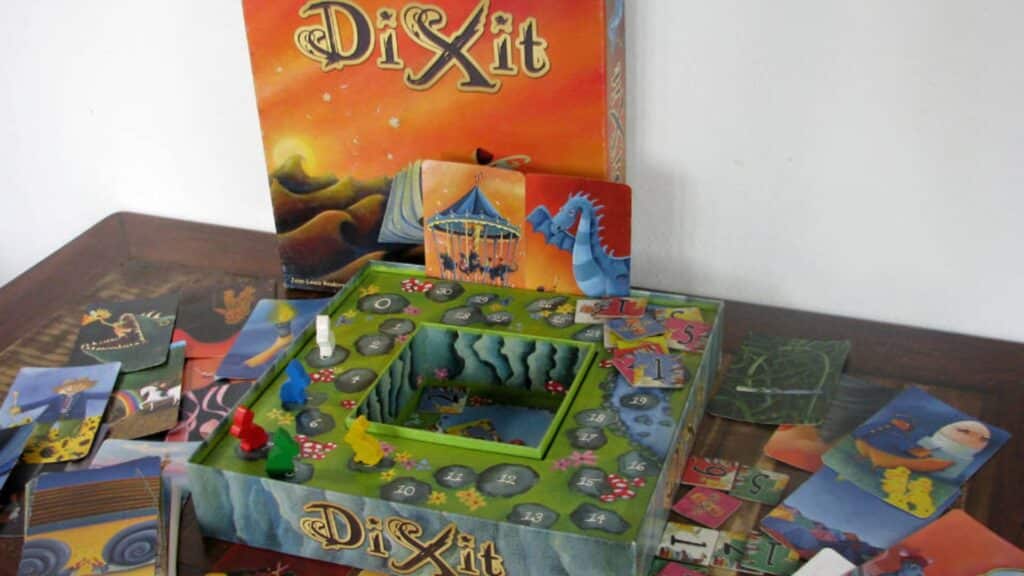
Best For: Ages 8 and up Players: 3 to 6 Play Time: 30 minutes
Each player holds a hand of large, art-filled cards with surreal images. On your turn, you pick one card and describe it with a word or short phrase.
Everyone else secretly picks their own card that best matches your clue. All cards are revealed, and players vote on which one you originally chose.
How to Play:
- Deal 6 cards to each player. The active player picks one card and says a short clue based on the image.
- All other players secretly pick a card from their own hand that fits the clue. Cards are shuffled together face down.
- Flip all submitted cards face up. Everyone except the active player votes for which card they think the active player chose.
- Score points based on correct votes. The trick: if everyone or no one guesses correctly, the active player scores nothing. Find the right balance.
Pro Tip: No reading is needed to play. Young children can join as long as someone helps them understand the voting mechanism.
6. Duck and Cover
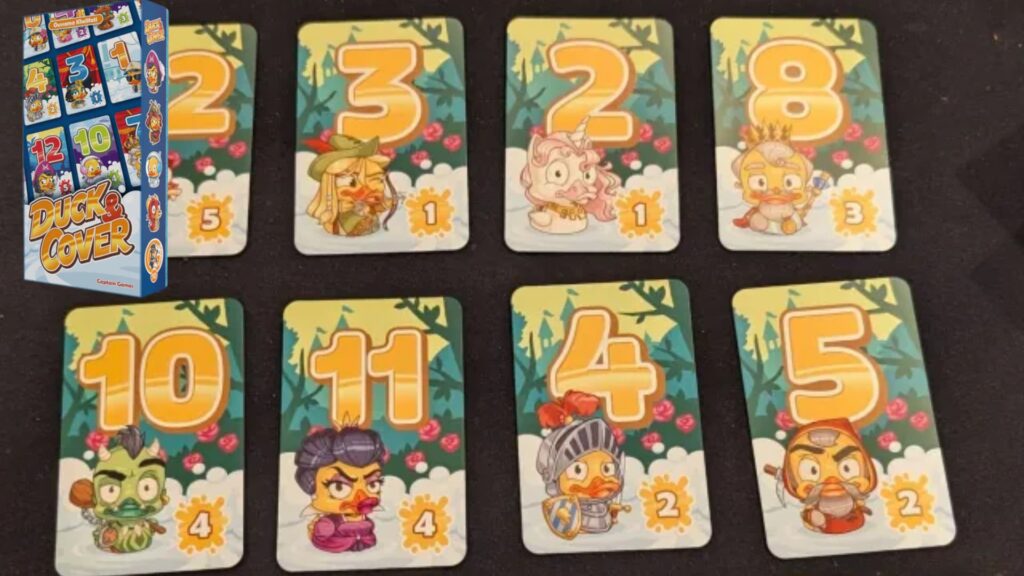
Best For: Ages 7 and up Players: 2 to 7 Play Time: 20 to 30 minutes
Named Best Family Board Game of 2025 by The Tabletop Family, Duck and Cover supports up to 7 players and gets going fast. The rules click quickly, no matter the age mix at the table.
Decisions feel meaningful at every turn without making the game feel heavy. It creates funny running jokes that stick with a family for weeks.
How to Play:
- Deal each player an equal number of cards from the shuffled deck.
- On your turn, play a card from your hand following the rule shown on the card. Respond to what other players play as needed.
- Use action cards to change the direction of play, skip turns, or force other players to draw more cards.
- The first player to empty their hand wins the round. Play multiple rounds and track scores to find the overall winner.
Pro Tip: Play a best-of-three series. Because each round is short, multiple rounds add a natural competition feel without dragging on too long.
7. Finspan
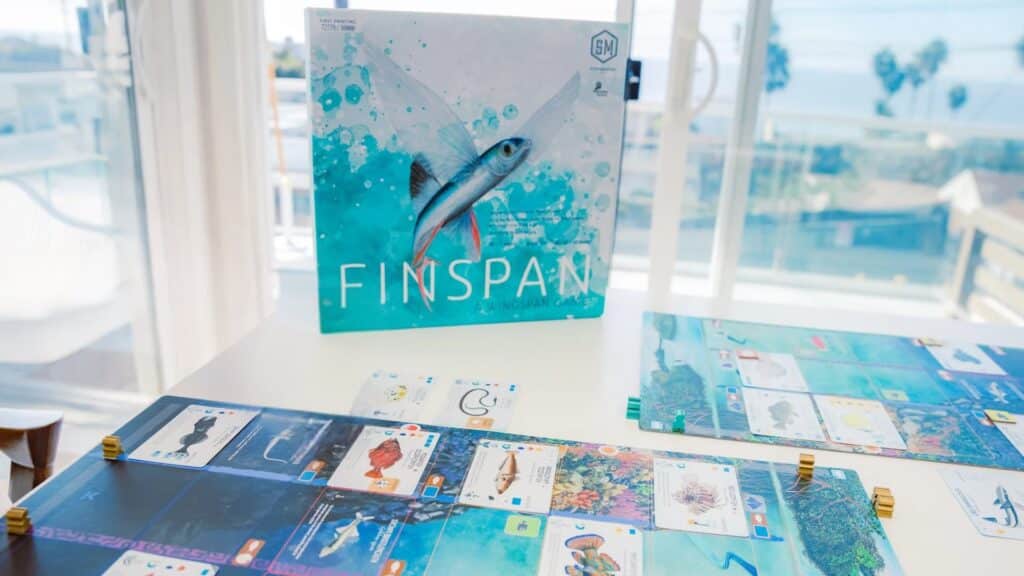
Best For: Ages 8 and up Players: 1 to 5 Play Time: 40 to 70 minutes
One of the most talked-about family strategy games of 2025. Players collect and play fish cards onto habitat boards to score points in different ways each round.
GamesRadar reviewers noted it is quicker and easier to get into than most strategy games of its type. Multiple families reported that it became an instant repeat at their tables after just one session.
How to Play:
- Set up personal habitat boards and deal a starting hand of fish cards to each player.
- On your turn, play a fish card to one of your habitat columns by paying the required food cost. Activate the fish’s special ability.
- Collect food tokens and bonus cards between rounds to fund bigger fish next turn.
- After the final round, score points for fish combinations, bonus cards, and completed habitat goals. Highest total wins.
Pro Tip: Use the scoring guide as a reference for the first two games. The point paths look complex at first, but feel natural once you see them in action.
8. MicroMacro Kids: Crazy City Park
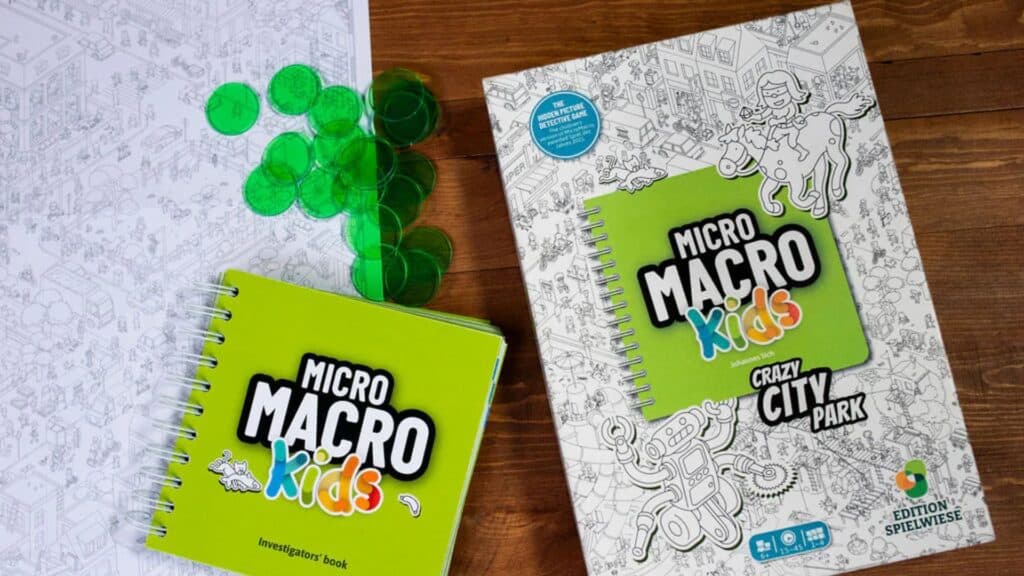
Best For: Ages 7 and up Players: 1 to 4 Play Time: 20 to 40 minutes per case
This 2025 release is the clean, family-safe version of the MicroMacro series. Players study a large, detailed black-and-white map and solve fun mysteries together.
There are no adult crime themes here. Every case is built for families with younger children. The seek-and-find format holds attention much longer than a standard card game.
How to Play:
- Read the introduction card for the case you are solving out loud to all players.
- Work together to search the large map for clues linked to the story. Follow the sequence of question cards step by step.
- When you find a clue, discuss what it means as a group before moving to the next question card.
- Once all questions are answered, reveal the final solution card to close the case.
Pro Tip: Let younger kids take the lead on searching the map. They often spot small visual details faster than adults. It builds their confidence and keeps them engaged.
9. Flip 7
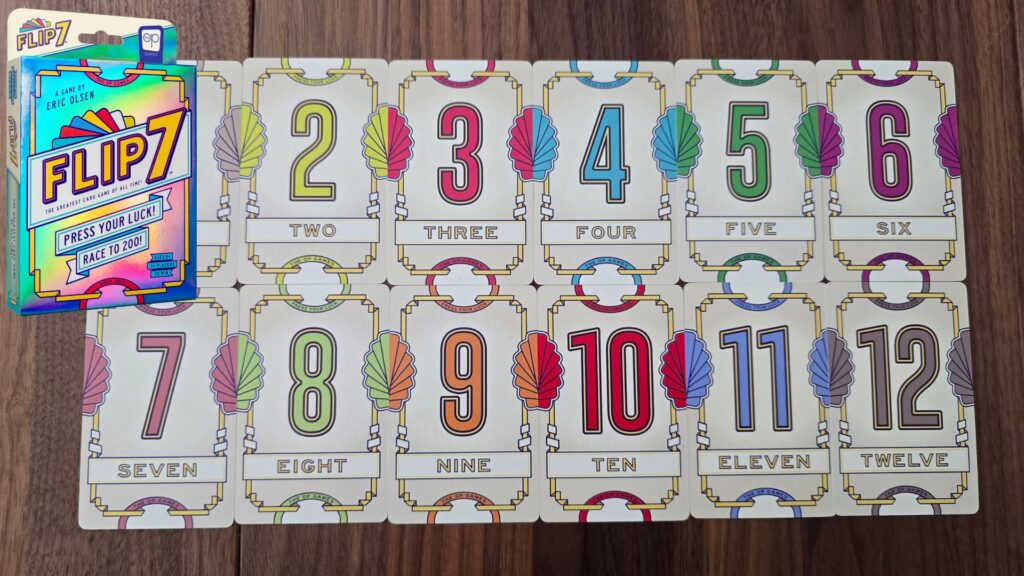
Best For: Ages 8 and up Players: 2 to 6 Play Time: 20 to 30 minutes
Flip 7 is a push-your-luck card game where the whole table watches and reacts to every single flip. The goal is to reach 200 points before anyone else.
Each round, players flip one card at a time, hoping to build a strong total without going bust. Stopping at the right moment is harder than it sounds.
How to Play:
- On your turn, flip the top card from the deck and add it to your running total.
- Choose to stop and bank your points or flip again to try for a higher score.
- If you flip a card that busts your total for that round, you score zero points for that round.
- Play rounds until one player hits 200 points. That player wins.
Pro Tip: Let the player who goes bust make a dramatic announcement. It turns a bad flip into a funny moment and keeps the energy light.
10. Cascadia Junior
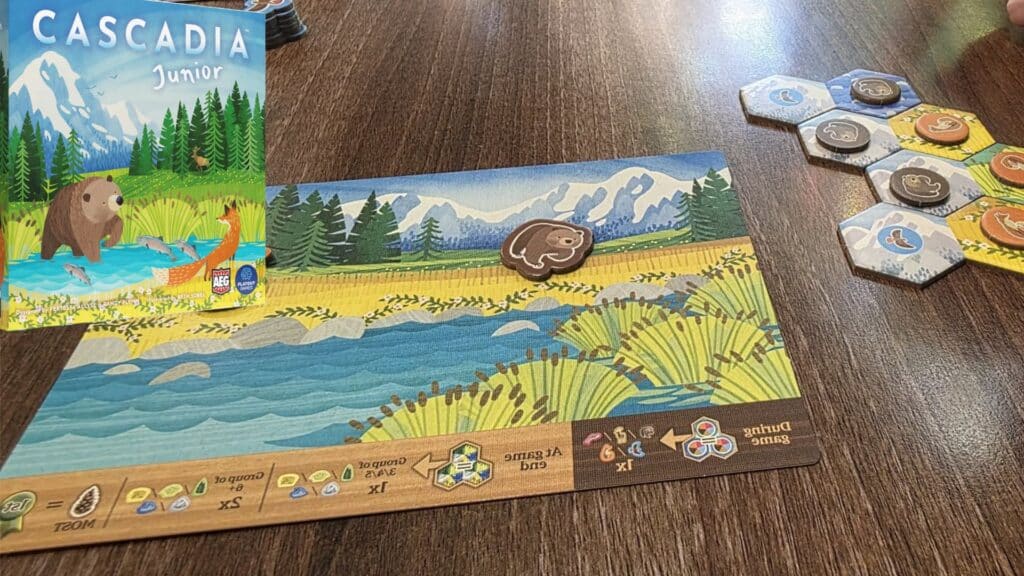
Best For: Ages 7 and up Players: 1 to 4 Play Time: 30 minutes
A 2025 nature game where players build their own personal wildlife ecosystems using habitat tiles and animal tokens.
The game is calm to play, but rewards careful placement. Young players can follow along without feeling lost. Adults appreciate the light strategic layer that builds round by round.
How to Play:
- Set up the central supply of habitat tile and animal token pairs. Each player starts with a small personal board.
- On your turn, pick one tile and token pair from the central display. Place the tile on your board and put the matching animal on a valid tile.
- Continue placing tiles to grow your personal habitat. Animal tokens score based on the pattern goals shown on the scoring cards.
- Once all tiles are placed, score your animal patterns and habitat groupings. Highest total wins.
Pro Tip: Cascadia Junior works well for solo play. It is a strong option when a child wants to try strategy on their own before the next family game night.
11. Candy Land
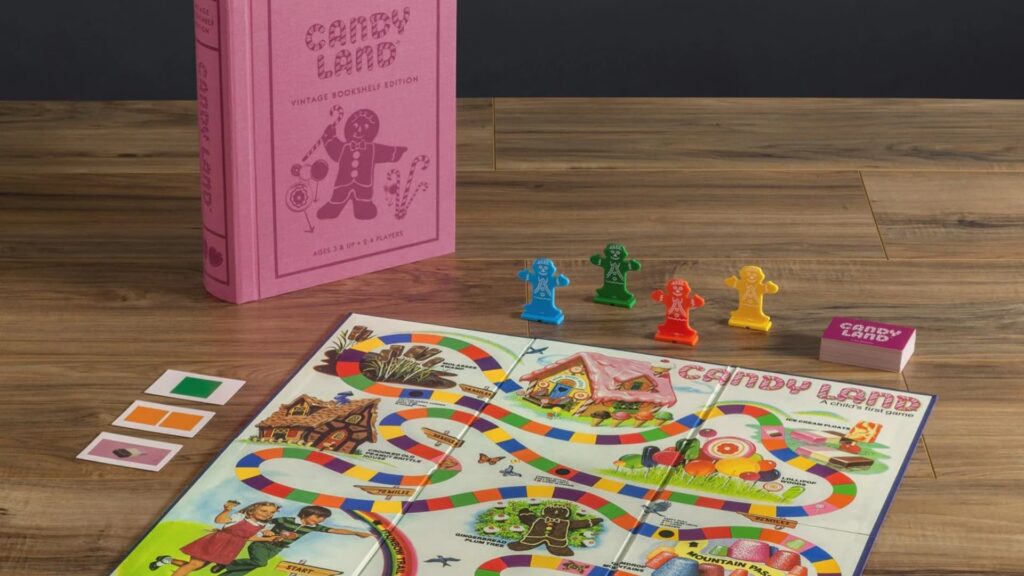
Best For: Ages 3 and up Players: 2 to 4 Play Time: 10 to 15 minutes
Candy Land is one of the first board games that most children ever touch. There are no numbers to count and no words to read.
A player draws a color card and moves their piece to the next matching color space on the board. It is straightforward enough for a 3-year-old to follow completely on their own.
How to Play:
- Each player picks a colored gingerbread pawn and places it at the start of the path.
- On your turn, flip the top card from the deck. Move your pawn forward to the nearest space that matches the color shown.
- Some cards show a picture location. Move directly to that special space on the board, even if it sends you backward.
- The first player to reach the Candy Castle at the end of the path wins the game.
Pro Tip: Laminate the board and card deck if you play often with young children. It protects against spills and rough handling during the early years.
12. Spot It (also sold as Dobble)
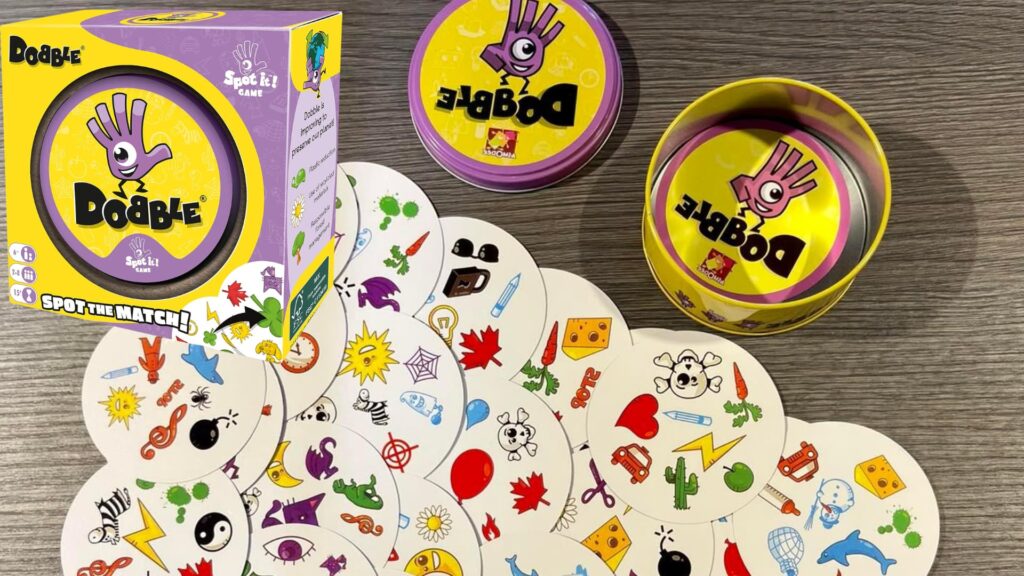
Best For: All ages from 3 and up Players: 2 to 8 Play Time: 10 to 15 minutes
Every two cards in the Spot It deck share exactly one matching symbol. Players race to find that match before anyone else can call it out.
It sounds easy, but it gets surprisingly tricky under time pressure. Very few games work this comfortably across a gap between a toddler and an adult.
How to Play:
- Place one card face up in the center of the table. Deal one card face down to each player.
- All players flip their cards at the same time and search for the one symbol that matches the center card.
- The first player to call out the correct symbol out loud takes the center card. Place your card face up as the new center card for the next round.
- Keep playing until the deck runs out. The player with the most cards collected wins.
Pro Tip: Give the youngest player a few seconds’ head start before everyone else starts looking. It keeps the game fair across very different age groups.
13. Sleeping, Queens
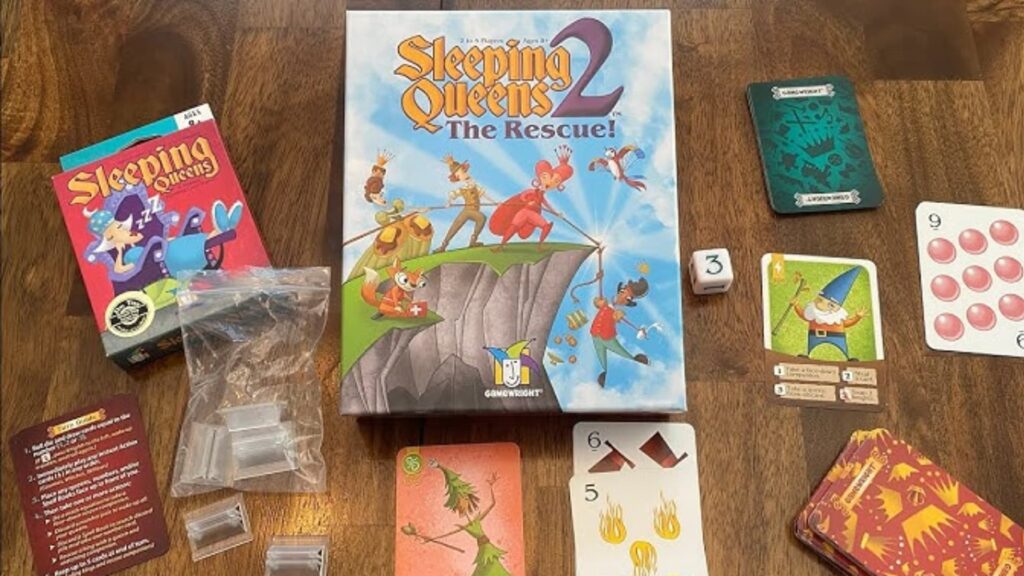
Best For: Ages 8 and up Players: 2 to 5 Play Time: 10 to 20 minutes
Players use kings, knights, potions, and number combinations to wake sleeping queen cards and collect them. Basic arithmetic is used throughout, but it never feels like schoolwork.
Both children and adults report genuinely enjoying this one, which is a reliable sign that a family game actually works.
How to Play:
- Place all queen cards face down in the center of the table. Deal 5 action cards to each player.
- On your turn, play one or more cards from your hand. A king wakes a queen card and adds it to your collection.
- Knights steal queens from other players. Potions block a knight. Number combinations that add up correctly let you discard more cards and draw fresh ones.
- The first player to collect 5 queens, or queens totaling 50 points, wins the game.
Pro Tip: Let younger players hold their cards face up while learning. It speeds up understanding and keeps them engaged instead of confused.
14. Catan Junior
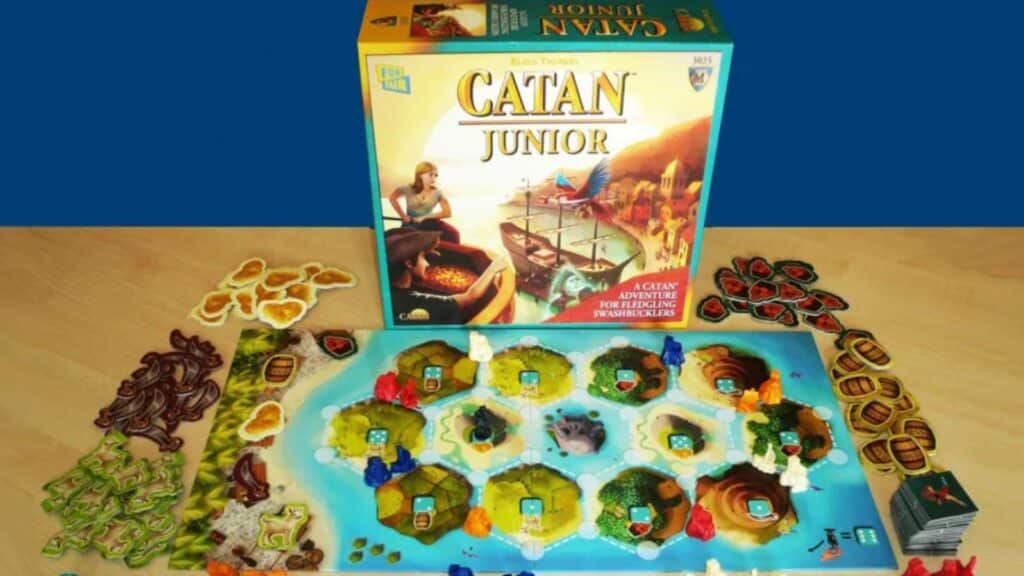
Best For: Ages 6 and up Players: 2 to 4 Play Time: 30 to 60 minutes
Catan Junior takes the core ideas from the full Settlers of Catan and rebuilds them for younger players. Collect resources, build pirate ships and hideouts, and trade with others around the board.
The pieces are larger and brighter than in the adult version. Many families use this as a bridge game before stepping up to the full Catan experience.
How to Play:
- Set up the island board and give each player starting ships and a hideout. Place resource tiles face up around the board.
- Roll the dice to collect the resources shown on your active hideout tiles.
- Trade resources with the ghost captain space or with other players to get what you need.
- Spend resources to build more ships and hideouts. The first player to build all 7 of their hideout pieces wins.
Pro Tip: Use the app version to track resources when playing with a larger group. It removes bookkeeping and keeps the focus on the actual game.
15. Pandemic
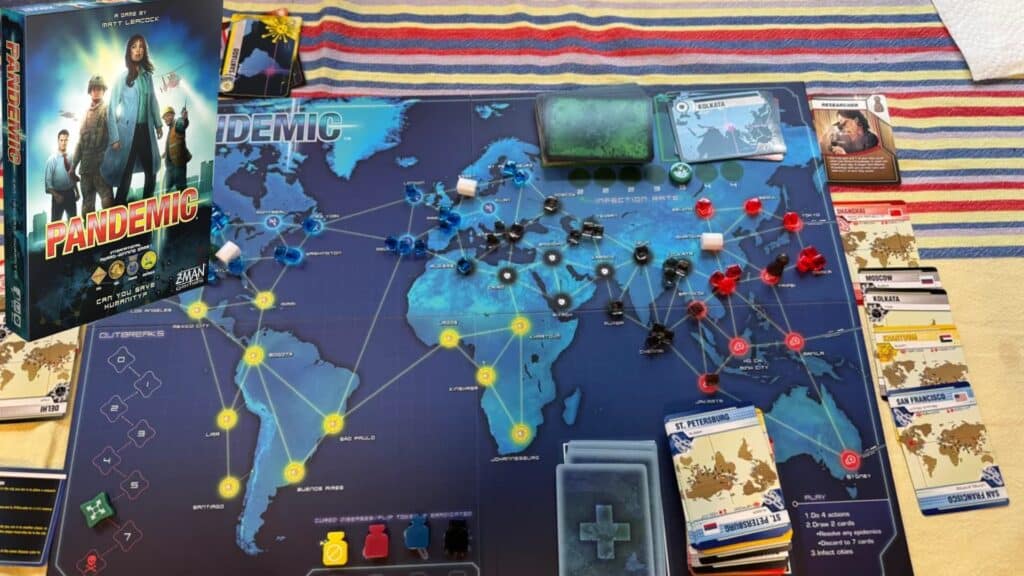
Best For: Ages 8 and up Players: 2 to 4 Play Time: 45 minutes
In Pandemic, every player is on the same team. The goal is to stop four diseases from spreading across a world map before the cards run out.
Each player takes on a specialist role with a unique ability that helps the group. No one wins alone, and no one loses alone, which removes the conflict that competitive games sometimes bring.
How to Play:
- Set up the world map board and infect 9 cities with disease cubes at the start of the game.
- On each turn, take up to 4 actions: move between cities, treat disease cubes, share knowledge cards with a teammate, or build a research station.
- Draw 2 player cards at the end of your turn. Epidemic cards in the deck increase infection speed when drawn.
- Cure all 4 diseases before the player deck runs out or before 8 outbreaks occur. If you achieve all 4 cures, the whole team wins together.
Pro Tip: Start on the easiest difficulty setting. Win two or three times at that level before stepping up. The greater difficulty settings offer a genuinely tense challenge.
16. Telestrations
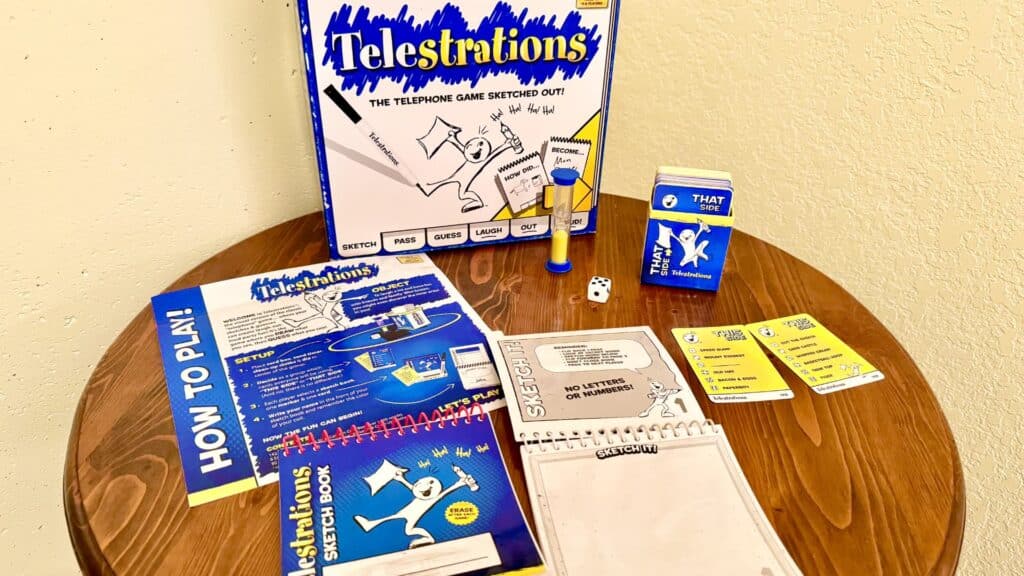
Best For: Ages 8 and up Players: 4 to 8 Play Time: 30 minutes
Telestrations works like a visual telephone game. A word gets sketched, guessed, sketched again, and guessed again as the booklet passes around the table.
By the end of each round, the original word has usually turned into something completely unrecognizable. The chain of misinterpretations produces some of the loudest laughter of any game on this list.
How to Play:
- Each player starts with a secret word and their own sketch booklet. Sketch your word on the first page within the time limit.
- Pass the booklet to the next player. They look at the drawing, guess what it shows, and write their guess on the next page.
- The next player sees only the written guess and draws what that guess describes. Continue alternating sketching and guessing around the table.
- Everyone opens their booklet at the same time and walks through how the original word changed from start to finish.
Pro Tip: Take photos of the best booklet chains at the end of the night. They make great keepsakes and give everyone a second laugh later.
17. Articulate
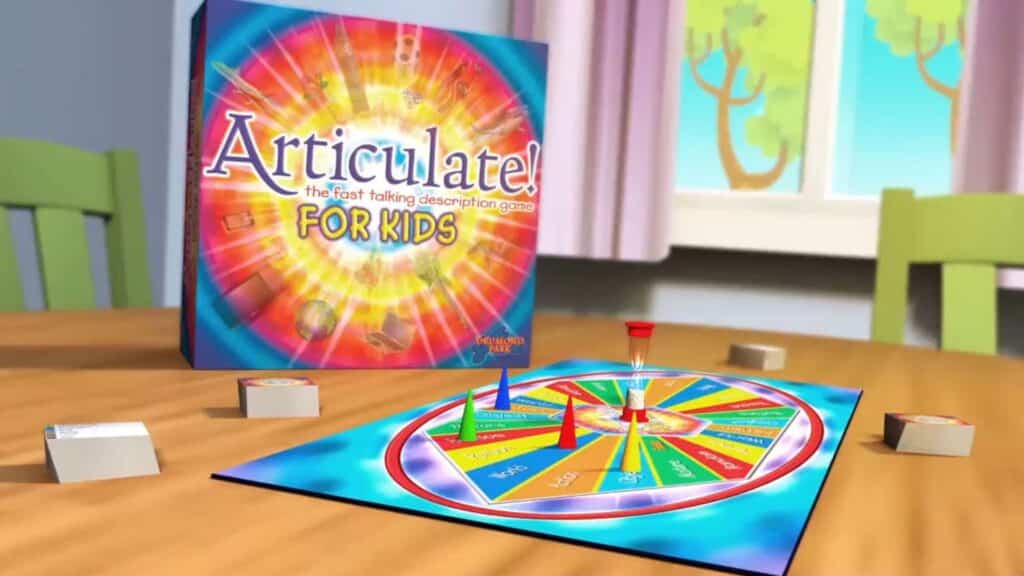
Best For: Ages 12 and up, with younger players on a team Players: 4 and above, in teams Play Time: 30 to 45 minutes
Articulate is a team description game where players race to get their teammates to say as many words as possible before a short timer ends. No acting, no sounds, just words.
The game uses general topics rather than niche trivia, which keeps it fair and relevant no matter the age of the players. It supports up to 20 players when split into teams, making it a strong pick for large holiday gatherings.
How to Play:
- Split into equal teams of at least 2 players. Place the board in the center of the table.
- On your team’s turn, the describer picks up a card and describes each word on it using only spoken words. No acting, no sounds, no spelling out letters.
- Teammates shout out guesses freely. Every correct guess in the time limit earns the team one space forward on the board.
- Pass the timer to the next team. The first team to complete a full loop of the board wins.
Pro Tip: Pair younger kids with adults on the same team. The adult handles the harder categories, while the child handles the simpler ones. Everyone contributes, and everyone stays in the game.
18. Bonsai
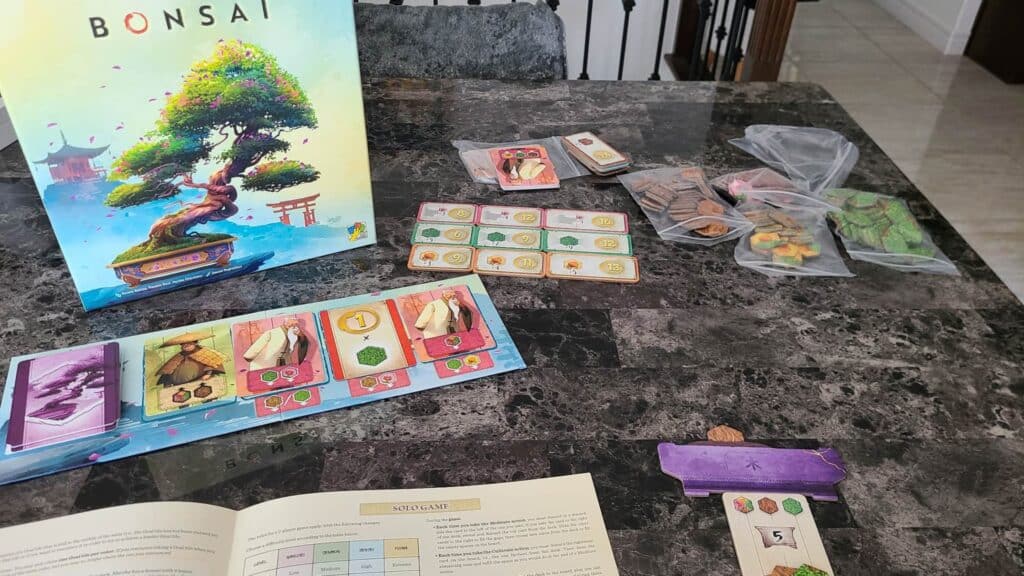
Best For: Ages 8 and up Players: 2 to 4 Play Time: 45 to 60 minutes
Winner of the 2025 Spiel des Jahres, one of the most respected awards in board gaming. Players grow their own miniature bonsai tree by collecting and placing tile types, including leaves, flowers, fruit, and wood. The game is calm and visually satisfying. Each placement decision matters more than it appears on the surface.
How to Play:
- Set up each player’s personal tree board and place the shared card display in the center of the table.
- On your turn, choose to meditate and collect tiles from the card row, or grow your tree by placing tiles you already hold onto your board.
- Each tile type has placement rules. Wood tiles support other tiles. Leaves must connect to wood. Flowers and fruit are connected only to leaves.
- At the end of the game, score points for tile combinations, completed growth goals, and claimed scoring cards. Highest total wins.
Pro Tip: Play the first game without worrying too much about scoring goals. Focus on how tiles connect. Scoring strategies develop naturally by the second game.
19. Skyjo
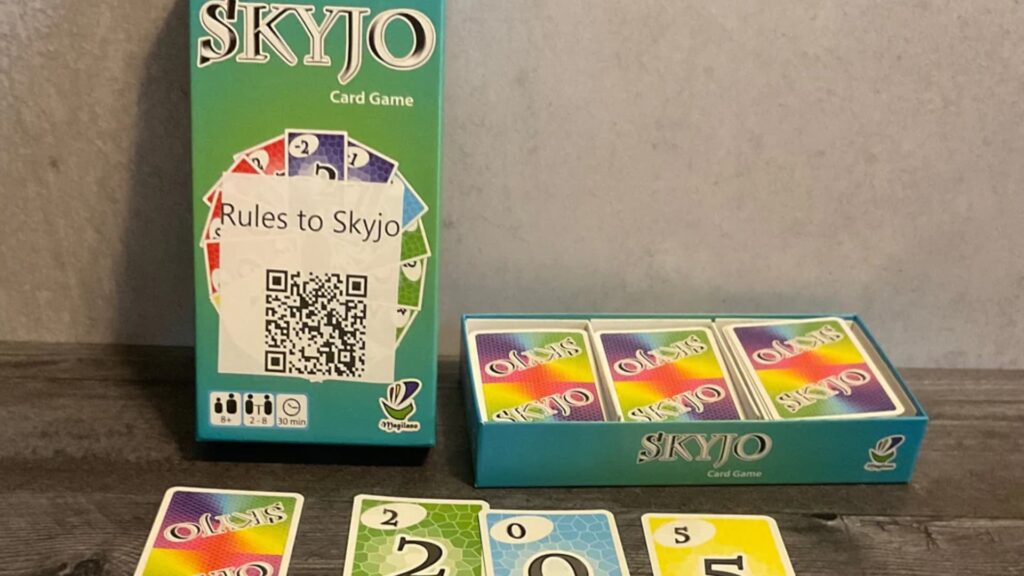
Best For: Ages 8 and up Players: 2 to 8 Play Time: 30 to 45 minutes
Skyjo is a card game where the goal is to end the game with the lowest total score possible. Players start with a grid of face-down cards and slowly replace them with lower-value ones from the deck.
The math involved stays simple throughout. It plays well with up to 8 people, giving it strong legs as a large-group game.
How to Play:
- Deal 12 cards face down to each player in a 3×4 grid. Each player flips 2 of their cards face up to start.
- On your turn, draw from the deck or take the top discard card. Swap it with any card in your grid to try to lower your total.
- Three cards of the same number stacked in a column cancel out and are removed from your grid, further lowering your total.
- Once a player reveals their entire grid, everyone else gets one final turn. Add up all visible card values. The lowest total wins the round.
Pro Tip: Ask kids to calculate their own score at the end of each round. It builds mental math skills quietly without feeling like a school task.
20. Positano
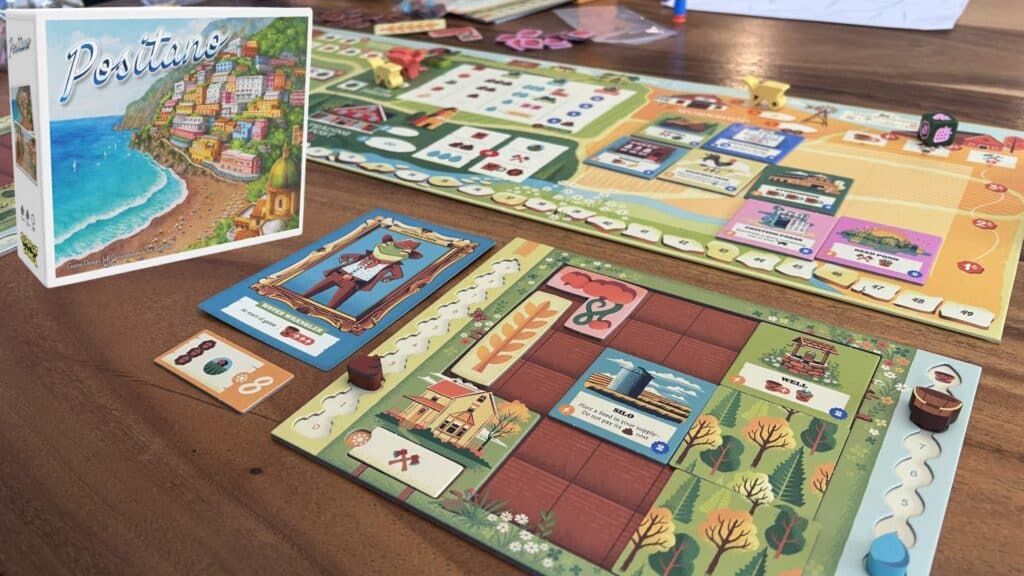
Best For: Ages 8 and up Players: 2 to 4 Play Time: Under 60 minutes
A 2025 strategy game built around coastal resort views along the Italian seaside. Players draft tiles to construct their personal resort board, scoring based on the view of the sea they create. Game Informer listed it as one of the easiest strategy games of recent memory to teach and replay. It draws in players new to strategy games without making experienced ones feel unchallenged.
How to Play:
- Set up each player’s personal resort board and prepare the shared tile supply in the center of the table.
- On your turn, draft one tile from the available selection and place it on your board following the placement rules.
- Build your resort so that sea-view spaces remain visible and match the scoring objectives for that round.
- After all tiles are placed, score points for sea views, completed resort sections, and bonus conditions. Highest total wins.
Pro Tip: Positano works well for families that usually have one reluctant player. The short play time and low setup make it easy to say yes to trying something new.
21. The Fellowship of the Ring Trick-Taking Game
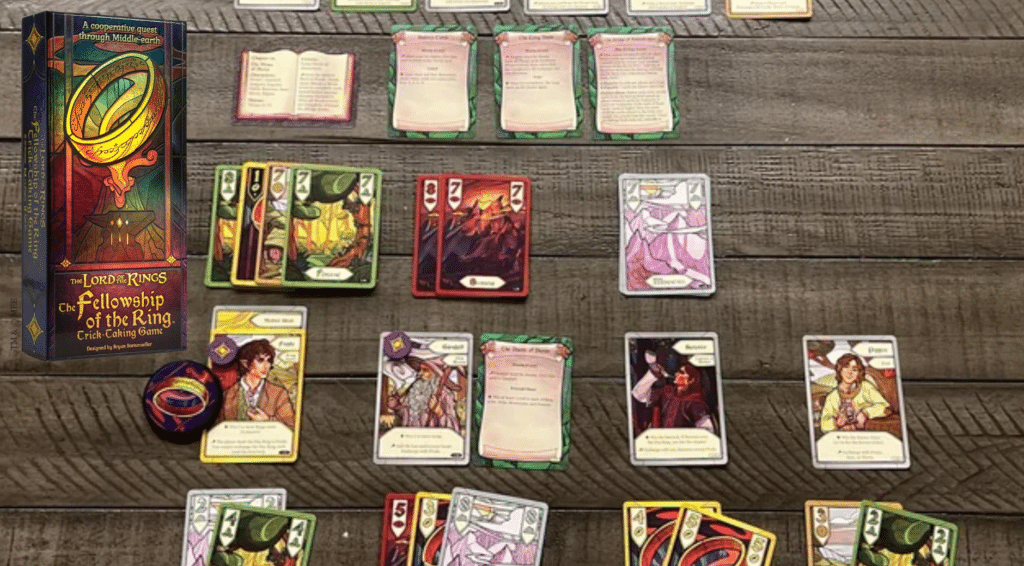
Best For: Ages 10 and up Players: 1 to 5 Play Time: 30 to 45 minutes per chapter
A cooperative card game based on Tolkien’s story of the Fellowship. Players work through the tale chapter by chapter.
Each chapter has a unique winning condition that the whole group must meet together before moving forward. The Tabletop Family named it one of their standout game experiences of 2025, noting it plays well at every player count.
How to Play:
- Set up the chapter deck and deal cards to each player according to the rules for the current chapter. Read the chapter objective out loud.
- On your turn, play one card to the current trick following the leading suit if possible. Special character abilities can bend the normal rules.
- The team works together to win or lose the right tricks in order to meet the chapter objective. Communication is limited by the chapter’s rules.
- If the group meets the chapter objective, flip to the next chapter. Fail, and you replay that chapter from the start.
Pro Tip: No knowledge of The Lord of the Rings is needed to enjoy this game. That said, fans of the books will find an extra layer of excitement in each completed chapter.
Tips to Make Family Game Night Actually Fun
Pick a set night each week and stick to it. Let kids choose the game at least half the time. Read the rules once before everyone sits down, not during the game.
Keep snacks on the table because they lighten the mood in a way hard to explain until you try it. Skip tracking scores on the first session with any new game.
If someone gets upset about losing, treat it as a short conversation rather than a reason to pack everything away. The best game nights are not about who wins. They are about showing up.
To Sum It Up
Family-friendly board games are not just for keeping kids busy on a rainy afternoon.
They give everyone at the table an equal shot, whether that is a 6-year-old or a grandparent. A good game does not need an occasion. It just needs a clear table and willing players.
The games in this list cover every age, every group size, and every kind of night.
Start with the youngest player at your table and work from there. You do not need a big collection to build a real game night tradition.
Even two or three games played regularly can become something your family genuinely looks forward to each week.
Which game on this list are you planning to try first? Drop it in the comments below.