
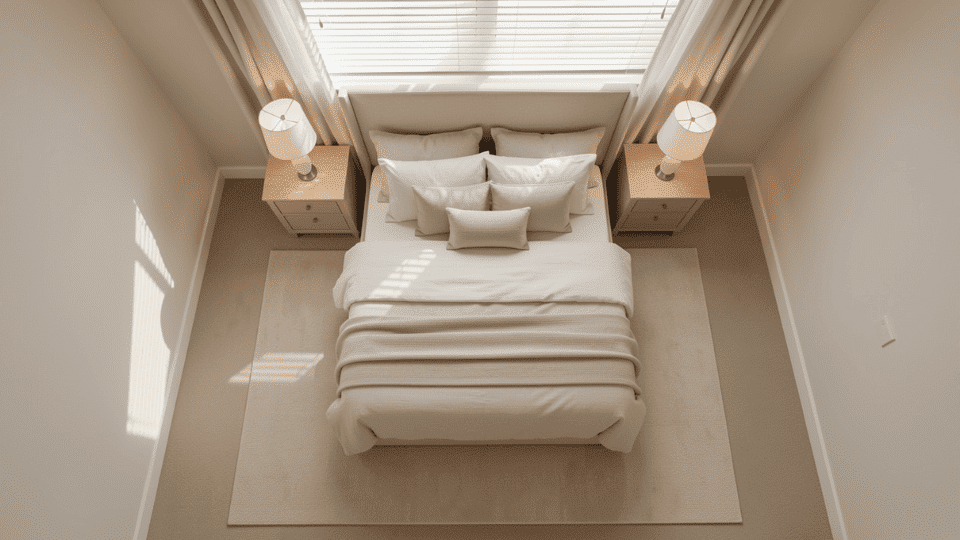
Are you planning to build or renovate your home? You probably want to know the average master bedroom size.
This information helps you make better choices. You can plan your space well. You can also fit all your furniture comfortably.
Most people don’t know how much space they really need. Some rooms feel too cramped. Others feel too empty. Getting the right size matters for your daily comfort.
In this guide, you’ll learn about standard bedroom measurements. We’ll cover minimum and maximum sizes. You’ll also see how different factors affect bedroom dimensions.
By the end, you’ll know exactly what size works best for your home.
What Are Average Master Bedroom Sizes?
The average master bedroom size in the U.S. ranges from 200 to 300 square feet. This size comfortably fits a queen- or king-sized bed, nightstands, a dresser, and often additional seating or storage.
While this is a general range, actual sizes can vary based on the type of home and design preferences.
Understanding these dimensions helps you visualize how furniture fits into the space and ensures you create a comfortable, functional layout.
Master Bedroom Size Range by Home Type
Understanding the size range helps you plan your space and set realistic expectations. Here’s what you can expect for each home category.
| Home Type | Minimum Size | Maximum Size |
|---|---|---|
| Small Homes | 150-200 sq ft (12×14 ft) | 200-250 sq ft (14×16 ft) |
| Standard Homes | 200-250 sq ft (14×16 ft) | 300-350 sq ft (16×18 ft) |
| Large Homes | 320-400 sq ft (16×20 ft) | 500-600 sq ft (20×25 ft) |
| Luxury Properties | 400 sq ft (20×20 ft) | 600+ sq ft (25×30 ft) |
Dimensions or Typical Sizes for Master Bedrooms
Different home sizes require different bedroom dimensions to maintain proper balance and comfort. Let’s look at what works best for each home category.
1. Small Home Master Bedrooms
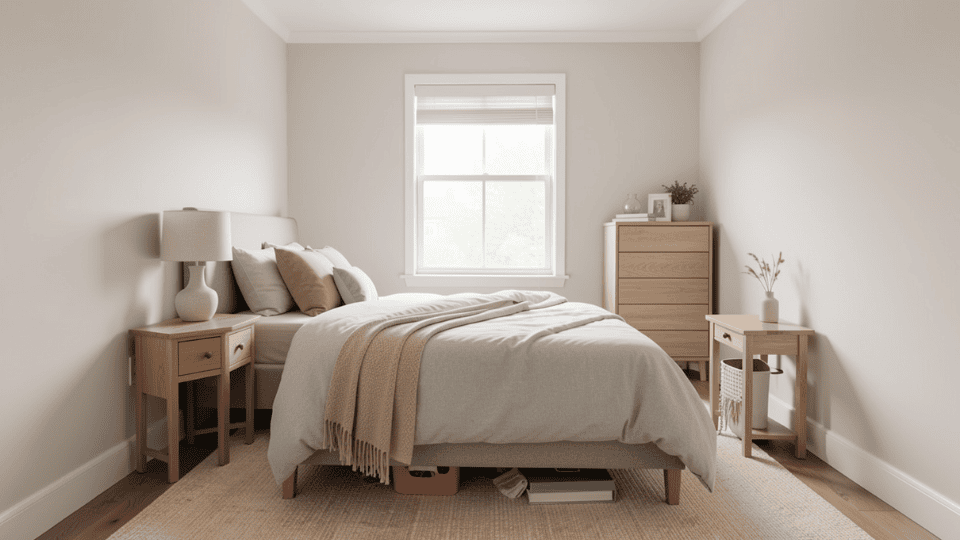
Small homes usually have master bedrooms around 150 to 200 square feet. The typical size is 12 feet by 14 feet or 14 feet by 14 feet.
This space accommodates a queen-size bed and basic furniture. You need smart storage solutions here. Wall shelves and under-bed storage help maximize space.
2. Standard Home Master Bedrooms
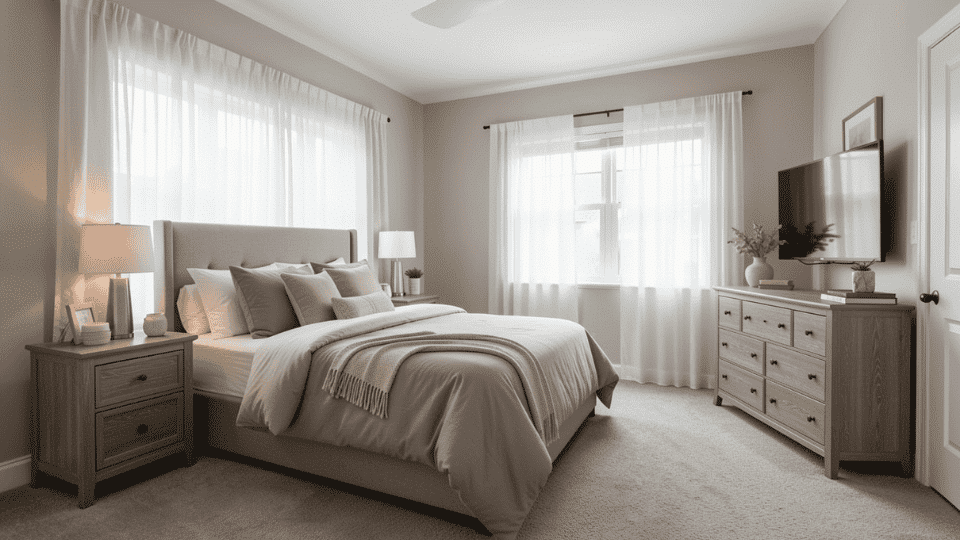
Most modern homes have master bedrooms between 200 and 350 square feet. Common dimensions are 14 feet by 16 feet. You can fit a king bed with two nightstands.
There’s room for a dresser and sometimes a small desk. The walking space remains comfortable around all furniture pieces.
3. Large Home Master Bedrooms
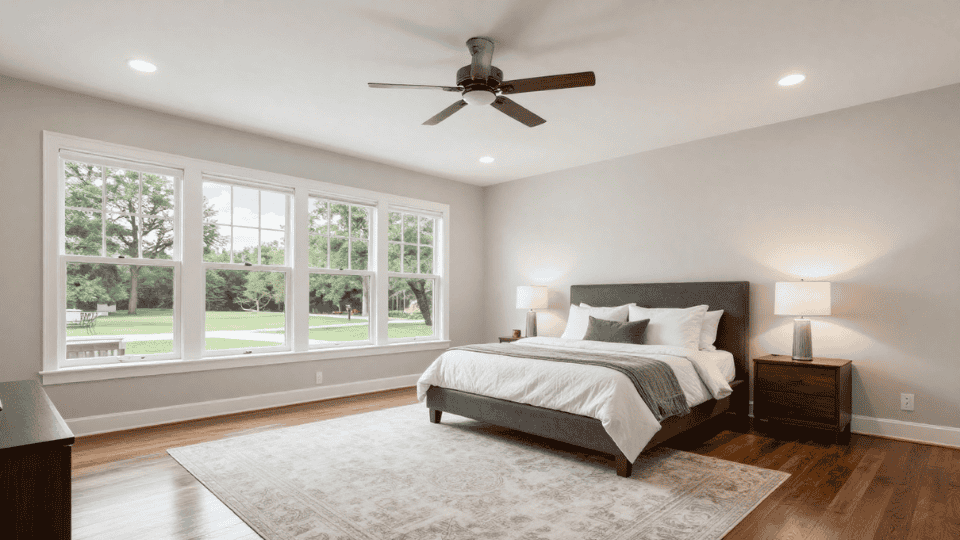
Larger homes offer master bedrooms ranging from 320 to 400 square feet. Dimensions often reach 16 feet by 20 feet or 18 feet by 20 feet. You get space for multiple zones.
Add a reading nook or seating area. Large windows and tall ceilings make the room feel even bigger.
4. Luxury Home Master Bedrooms
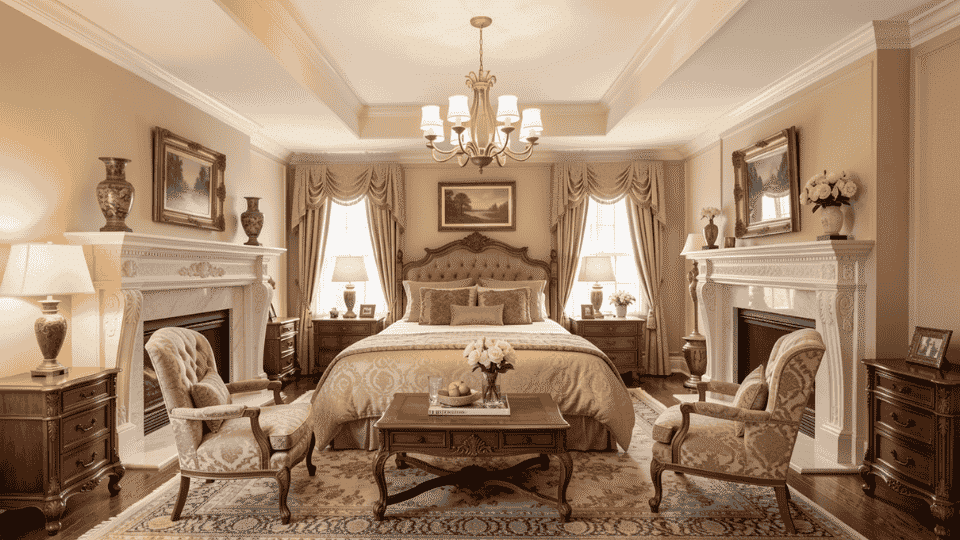
Luxury properties feature master bedrooms over 400 square feet. Some reach 600 square feet or more. Typical dimensions are 20 feet by 25 feet or larger.
These rooms include sitting areas, fireplaces, and large walk-in closets. You can create a private retreat with all the amenities you want.
Style Variations in Master Bedroom Design
Your design style influences how much space you need and how you arrange furniture. Different styles work better with specific room dimensions.
- Modern Style: Modern bedrooms start at 14 feet by 16 feet with clean lines and minimal clutter. Built-in storage and wall-mounted features save floor space.
- Farmhouse Style: Farmhouse designs range from 14 feet by 16 feet to 16 feet by 18 feet, with warm wood tones and cozy textiles that create a comfortable feel.
- Minimalist Style: Minimalist bedrooms work well at 12 feet by 14 feet because they use less furniture and focus on essential pieces.
- Traditional Style: Traditional styles require 14 feet by 16 feet or larger to accommodate ornate furniture and decorative elements such as crown molding.
- Contemporary Style: Contemporary designs typically feature 16-by-18-foot open layouts, large windows, and flexible furniture arrangements for multiple uses.
Factors Influencing Bedroom Size
Several key factors determine how big your master bedroom should be. Understanding these helps you make the right choice.
1. Home Size and Floor Plan
Your bedroom should match your home’s overall size. Master bedrooms typically take up 11 to 15 percent of total floor space.
A 2,000-square-foot home usually has a 224- to 300-square-foot master bedroom. Smaller homes need proportionally smaller bedrooms. Larger homes can support bigger bedroom spaces.
2. Bed Size
The bed you choose directly affects the room size. A queen bed needs at least 12 feet by 14 feet of space. King beds require at least 14 feet by 16 feet.
You should leave 30 inches of space on three sides of the bed. This allows comfortable movement and makes the room feel less cramped.
3. Furniture Requirements
Think about what furniture you need beyond the bed. Do you want a dresser, nightstands, and a TV stand? Will you add a chair or a desk? Each piece needs space.
Measure your furniture before finalizing room dimensions. This prevents overcrowding and keeps pathways clear.
4. Attached Spaces
Walk-in closets add 60 to 150 square feet of space. En-suite bathrooms require another 80 to 120 square feet. If you want these features, plan for a larger overall space.
Built-in closets save floor space compared to standalone wardrobes.
5. Budget Constraints
Bigger bedrooms cost more to build and maintain. You need more flooring, paint, and furniture. Heating and cooling costs increase, too.
Consider ongoing expenses like lighting and cleaning. Sometimes a moderate size works better for your wallet and daily life.
6. Location and Property Type
Urban homes typically have smaller bedrooms due to high land costs. Suburban areas offer more space, ranging from 14 feet by 16 feet to 16 feet by 18 feet.
Rural properties can be even larger, up to 18 feet by 20 feet or more. Your location affects what’s normal and affordable.
Ways to Make Your Master Bedroom Appear Bigger
Even if you have a smaller master bedroom, smart design choices can make it feel larger and more inviting. These simple tricks help you maximize space and create a comfortable atmosphere.
- Use Light Colors on Walls: Light shades like white, cream, or soft gray reflect more light, making rooms feel open and airy.
- Add Mirrors Strategically: Mirrors reflect light and create the illusion of more space, especially when placed opposite windows or light sources.
- Choose Multi-Functional Furniture: Beds with built-in storage or nightstands with drawers reduce clutter while serving multiple purposes in one piece.
- Keep Clutter to a Minimum: Clear surfaces and keep spaces organized to make any room feel bigger and more relaxing to spend time in.
- Install Vertical Storage Solutions: Wall-mounted shelves and tall bookcases draw the eye upward and use space that would otherwise go to waste.
- Improve Natural and Artificial Lighting: Good lighting opens up the room and makes it feel more spacious than dim or poorly lit spaces.
- Use Minimal Window Treatments: Sheer curtains or simple blinds let in more light than heavy drapes, which can make rooms feel closed off.
Regional Differences in Master Bedroom Size
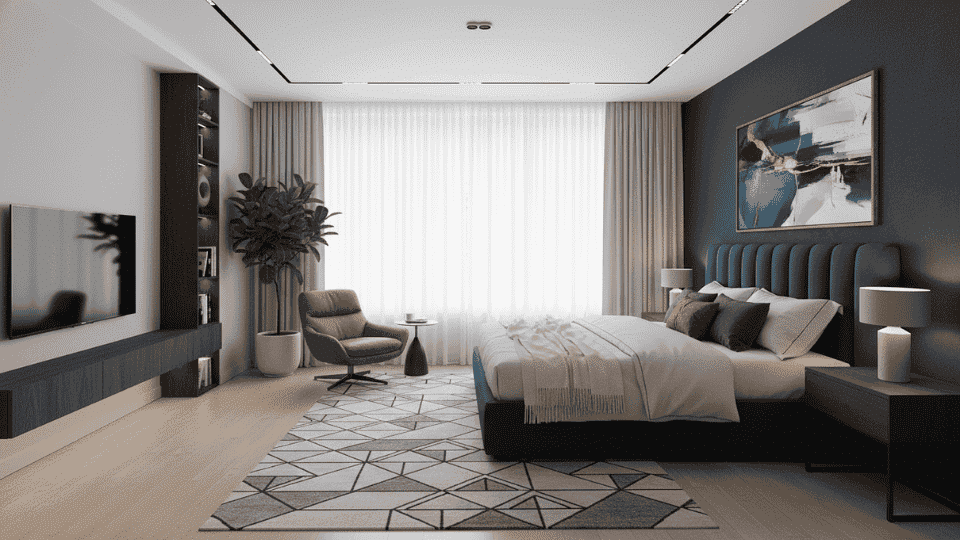
Bedroom sizes vary significantly based on where you live. Location affects available land, building costs, and cultural preferences for home design.
| Region/Country | Typical Size (sq ft) | Typical Dimensions | Key Features |
|---|---|---|---|
| United States | 200-350 sq ft | 14 ft x 16 ft | King bed, attached bath, common |
| Urban US Areas | 180-220 sq ft | 12 ft x 14 ft | Limited storage, efficient design |
| Suburban US | 224-300 sq ft | 14 ft x 16 ft to 16 ft x 18 ft | Larger furniture, connected baths |
| Rural US | 320-400 sq ft | 18 ft x 20 ft | Extra seating, wide windows |
| United Kingdom | 150-250 sq ft | 12 ft x 16 ft | Varies by property age |
| Australia | 200-300 sq ft | 14 ft x 18 ft | Larger in newer homes |
| Japan/South Korea | 100-200 sq ft | 10 ft x 12 ft | Compact due to limited space |
| Canada | Similar to the US | 14 ft x 16 ft | Follows North American standards |
How to Choose the Right Size for Your Master Bedroom?
Think about who will use the room daily. Singles need less space than couples. Families might want room for a crib or extra seating. Consider your lifestyle habits too.
Do you work from home and need a desk? Do you like reading in bed with a chair nearby? Your furniture list matters most. Measure everything you want in the room.
Add 30 inches around the bed for movement. Check if doorways and windows leave enough wall space.
Remember that 12 to 15 percent of your home’s total square footage is a good target for the master bedroom. Don’t make it so large that other rooms suffer. Balance is key.
Final Reflections
Now you know everything about the average master bedroom size. The standard is 14 feet by 16 feet or 224 square feet.
But your perfect size depends on your home, budget, and lifestyle. Small homes work fine with 150 to 200 square feet. Large homes can go up to 600 square feet or more.
Remember to consider your bed size and furniture needs. Leave enough space to move around comfortably. Match your bedroom size to your home’s total square footage. This creates balance and makes your whole house feel right.
Ready to plan your dream bedroom? Start by measuring your current space or sketching your ideal layout. Think about what matters most to you.
With the right size, your master bedroom becomes a true personal retreat. Share your bedroom plans or questions in the comments below!