
That bare ceiling in your basement is not doing you any favors. Pipes are going in every direction. Wires hanging loose. Ductwork that looks like it belongs in a boiler room.
But those same ceilings, when treated right, can look genuinely good. Not covered up. Not hidden. Just finished in a way that makes the whole space feel intentional. A lot of people are surprised by how little effort it takes.
This blog covers exposed-basement-ceiling ideas. Some cost under $50. Others take one weekend. All of them are real, doable, and far better than what you have right now. Let’s get into it.
What Is an Exposed Basement Ceiling?
An exposed basement ceiling reveals structural components. Beams, pipes, ducts, and wires remain open rather than being hidden behind drywall or dropped tiles.
The look came from industrial design, where raw structure is treated as a feature rather than something to cover up.
It works across modern, rustic, and industrial styles, and it costs far less than a traditional finished ceiling.
Before You Start: Things to Check First
A few quick checks now will save you real trouble later. Go through this list before you pick a style or buy any materials.
| What to Check | Why It Matters |
|---|---|
| Clean the ceiling first | Paint and panels need a clean surface to hold properly |
| Check for moisture | Damp areas need metal, PVC, or treated wood only |
| Mark utility access points | Pipes, gas lines, and electrical panels must stay reachable |
| Measure your ceiling height | Some finishes drop the ceiling by 1 to 2 inches |
| Check insulation needs | Insulation cuts noise from upstairs and helps with temperature |
| Pin loose wires to joists | Tidy wiring makes every ceiling idea look better from the start |
Exposed Basement Ceiling Ideas
There are more options here than most people realize. These 18 ideas go from a quick weekend paint job to a full weekend build, so there is something for every skill level and budget.
1. Paint It All Black
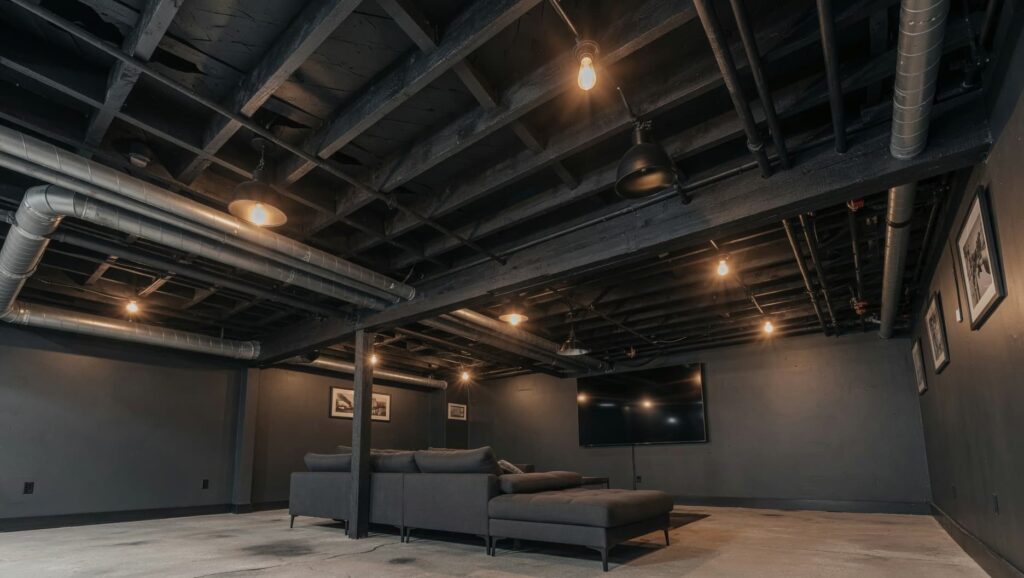
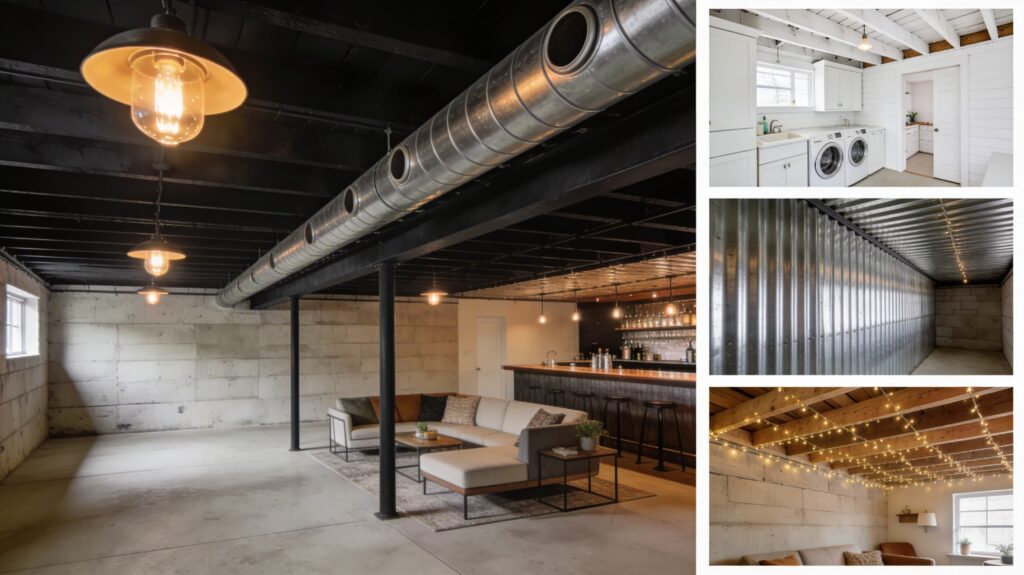
Painting every exposed surface the same shade of black is one of the most popular exposed basement ceiling ideas for a reason. It hides mess, unifies pipes and beams, and gives the space a look that feels planned.
- Paint type: Flat or matte black latex ceiling paint
- Tools needed: Paint sprayer (faster on ductwork), roller, brushes, drop cloths, painter’s tape
- Prep step: Apply primer on any raw wood or metal before painting
- Best for: Home theaters, game rooms, basement bars, man caves
- Approx. Cost: Under $100 for most spaces
- DIY: Yes
2. Paint It All White
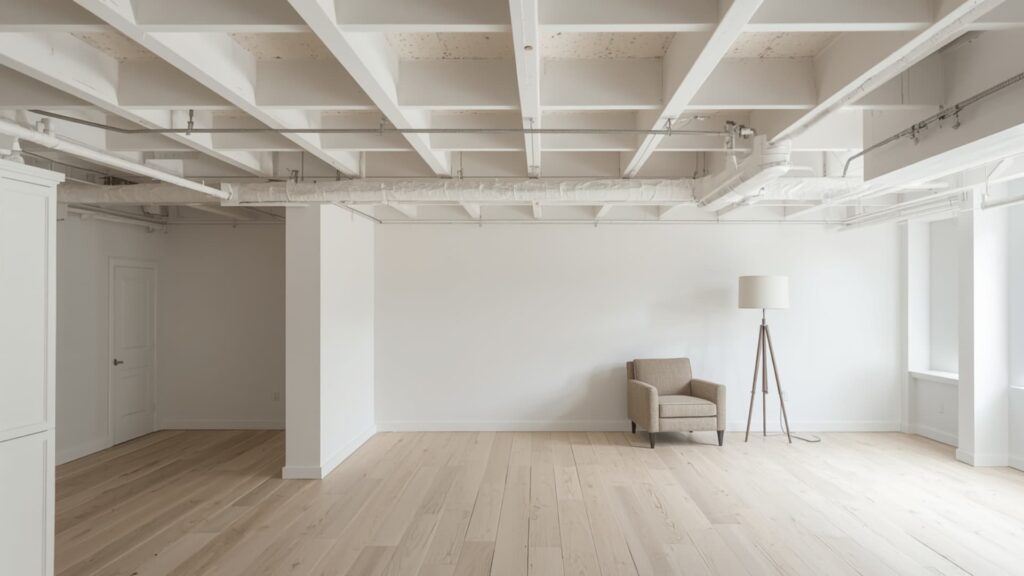
White does the opposite of black. It reflects light, makes low ceilings feel taller, and brings a clean, open feeling to any basement.
- Paint type: White ceiling paint with warm undertones (Swiss Coffee by Benjamin Moore is a popular pick)
- Tools needed: Roller, brush, primer, drop cloths
- Prep step: Prime raw wood and metal first for even coverage
- Best for: Laundry rooms, kids’ play areas, open-plan basements
- Approx. Cost: Under $80 for most spaces
- DIY: Yes
3. Leave the Wood Beams Raw and Natural
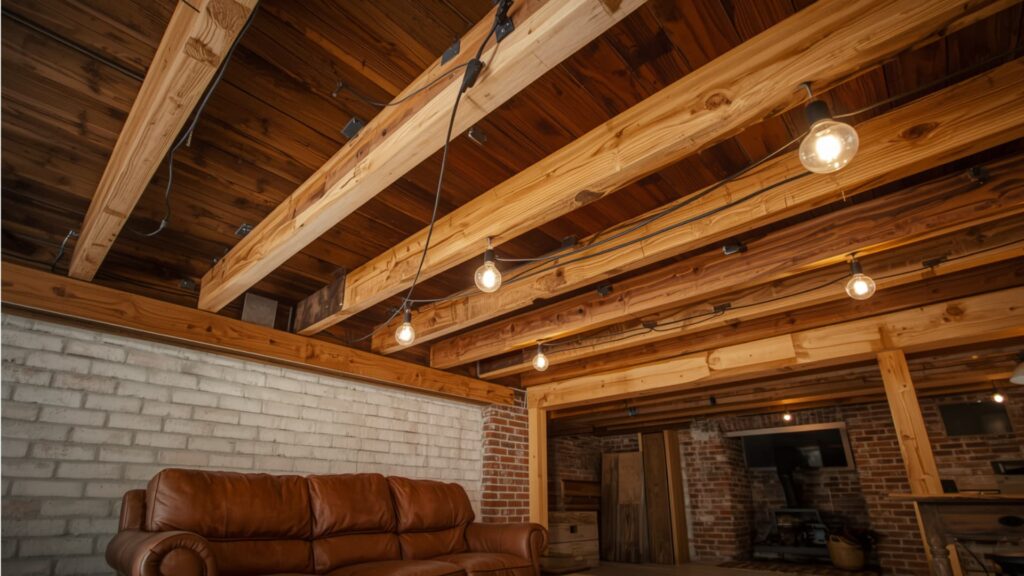
Sometimes doing almost nothing is the right call. Clean the joists, remove cobwebs, neatly pin the wires, and let the natural wood stand on its own.
- What to do: Deep clean with a shop vac, then light sand rough surfaces
- Optional finish: A clear wood oil brings out the grain without adding color
- Prep step: Pin all electrical wires to the joists before showing off the look
- Best for: Workshops, casual lounges, storage rooms
- Approx. Cost: Near zero
- DIY: Yes
4. Stain the Joists for a Rustic Look
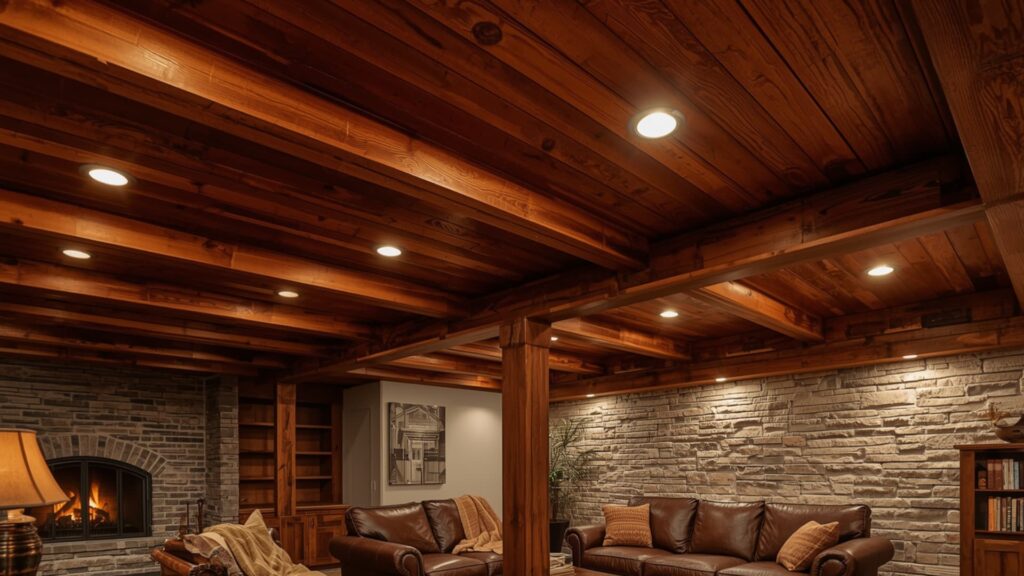
A wood stain gives exposed beams a warm, earthy tone without covering the grain. This works well in basements used as family rooms or entertaining spaces.
- Materials: Wood stain in your chosen color, paintbrushes or a cloth, and a clear sealer
- Steps: Sand the wood lightly, apply stain evenly, let dry fully, then seal
- Style pair: Earthy tones, stone accent walls, Edison bulb fixtures
- Best for: Family rooms, home bars, entertainment spaces
- Approx. Cost: Under $60 for stain and sealer
- DIY: Yes
5. Use Metallic Paint on Pipes and Ducts
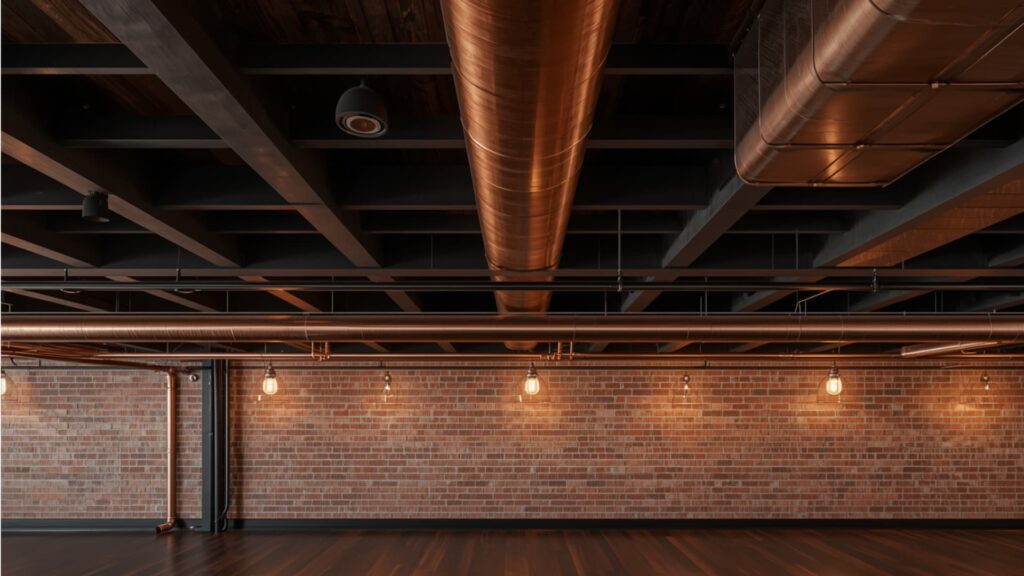
Instead of hiding pipes, make them look like they were meant to be there. Metallic paint in silver, copper, or bronze turns mechanical parts into design features.
- Materials: Metallic spray paint, painter’s tape, a cleaning cloth
- Prep step: Wipe pipes clean before painting so the finish sticks properly
- Style pair: Industrial-style light fixtures and dark or exposed brick walls
- Best for: Bars, media rooms, creative studios
- Approx. cost: Under $40
- DIY: Yes
6. Try a Multi-Color Painted Ceiling
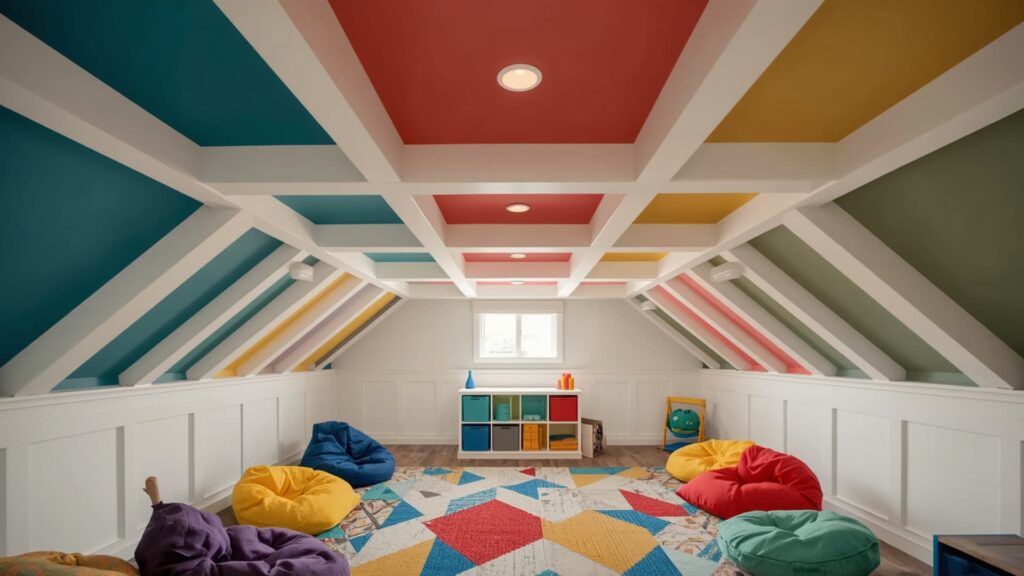
Each bay between joists gets its own color. The result is a ceiling that looks completely unique to your space and works well in rooms built for fun.
- Materials: Multiple paint colors, small brushes, painter’s tape
- Planning tip: Map out your color layout on paper before you open any cans
- Effect: Creates a shadow box look where each section pops on its own
- Best for: Kids’ playrooms, art studios, creative spaces
- Approx. Cost: Low, depending on how many colors you choose
- DIY: Yes
7. Add LED Strip Lights Between the Joists
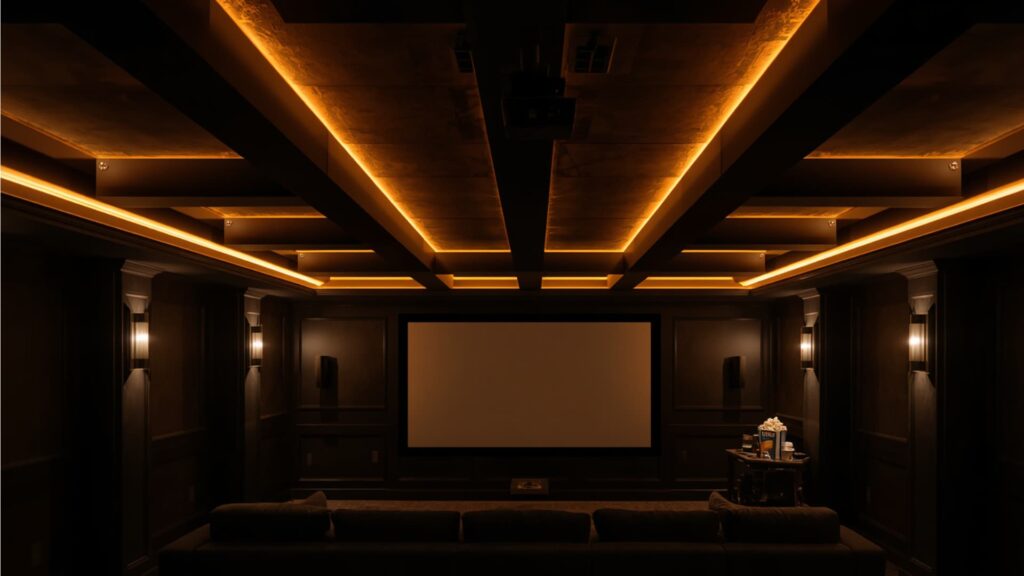
LED strips tucked into the joist bays give the ceiling a warm, layered glow without bulky fixtures. The setup takes less than an afternoon.
- Materials: LED strip lights (plug-in or hardwired), mounting clips, or adhesive
- Optional add-on: A dimmer switch for full mood control
- Pairing tip: Combine with pendant lights for depth and variety
- Best for: Home theaters, bars, entertainment rooms, game rooms
- Approx. cost: $30 to $80, depending on room size
- DIY: Yes
8. Install Wood Plank or Shiplap Panels
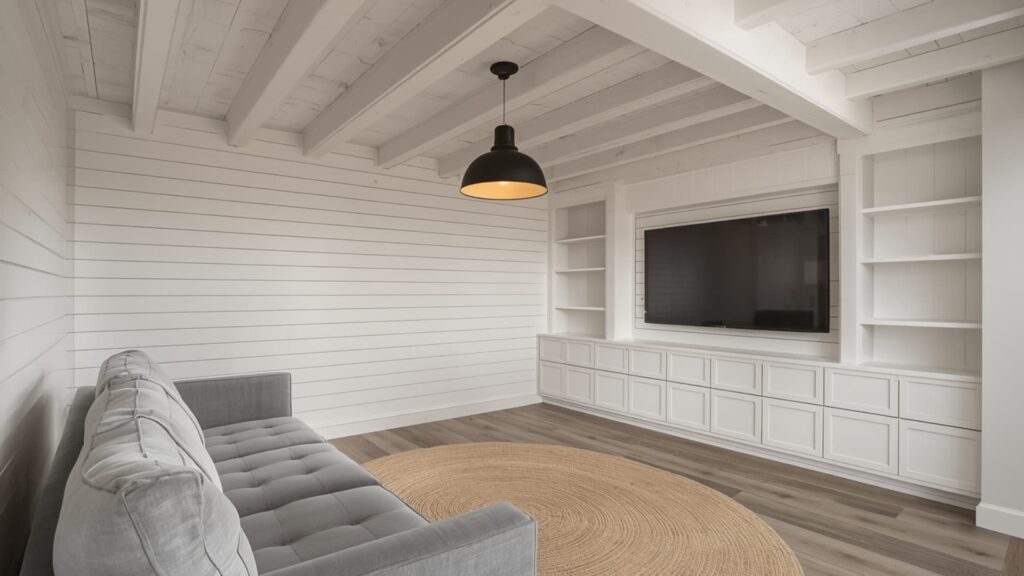
Shiplap or tongue-and-groove planks attached across joists add warmth and texture. The look is modern, the install is manageable, and it makes any basement feel like a real finished room.
- Materials: Shiplap boards or cedar tongue and groove planks, nail gun or screws, saw for cuts
- Optional: Stain or paint before installation for a custom finish
- Note: Two people make this job much easier
- Best for: Family rooms, home offices, finished basement bedrooms
- Approx. Cost: $1 to $3 per sq. ft. for lumber
- DIY: Yes, plan for a full day
9. Use Corrugated Metal Sheets
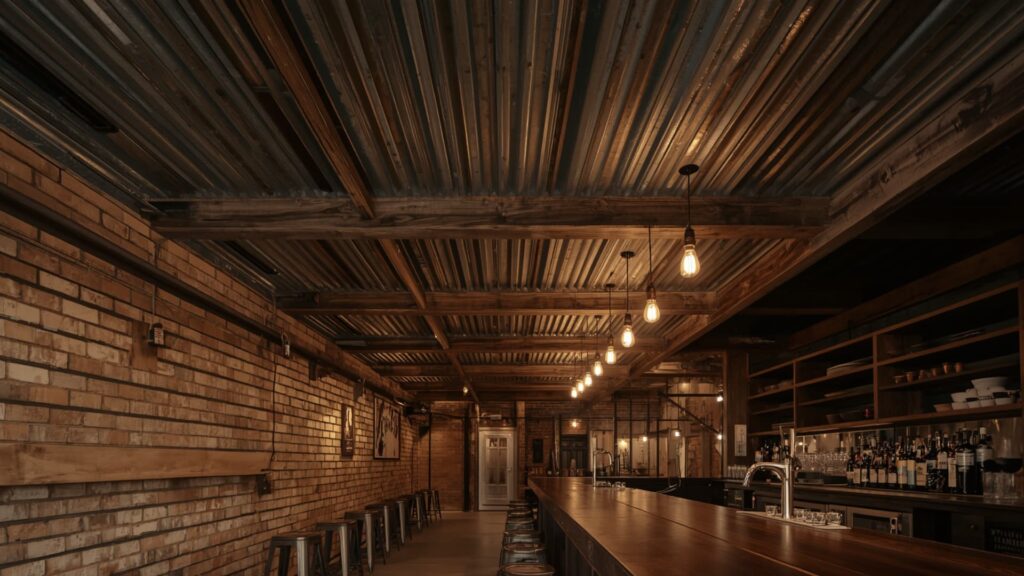
Galvanized metal panels give the ceiling a raw, industrial character. They reflect light, hold up for years, and go up as a manageable DIY weekend project.
- Materials: Corrugated metal sheets, metal-rated screws, drill, tin snips
- Style pair: Exposed brick walls, Edison bulbs, dark floors
- Effect: Adds a reflective quality that brightens the space naturally
- Best for: Home bars, workshops, media rooms
- Approx. cost: Mid-range, varies by thickness and sheet size
- DIY: Yes
10. Add Faux Tin Tiles
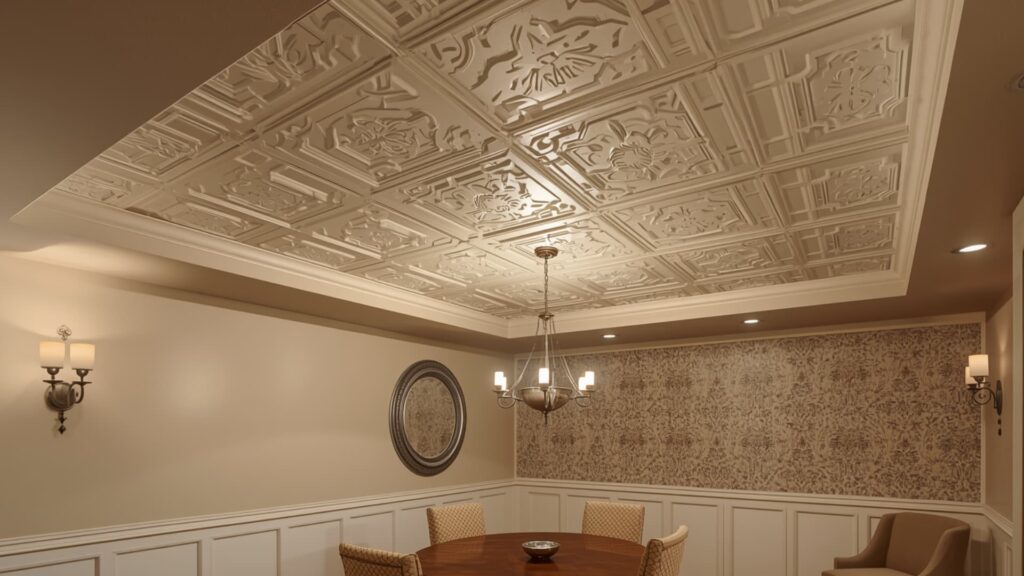
Pressed metal or faux tin tiles bring a vintage look to any basement ceiling. They come in several patterns and attach without heavy tools.
- Materials: Faux tin ceiling tiles, construction adhesive or nails, utility knife for cuts
- Available styles: Victorian, Art Deco, contemporary
- Effect: Reflects light and makes the room feel larger
- Best for: Basement bars, dining areas, entertaining spaces
- Approx. Cost: Under $2 per sq. ft. for most tile options
- DIY: Yes
11. Try Beadboard Paneling
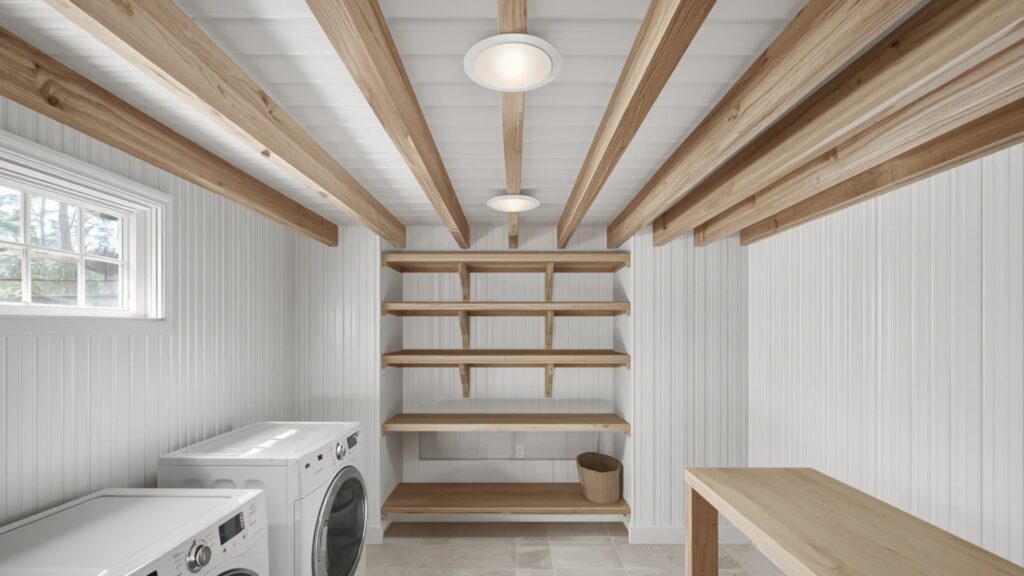
Beadboard panels add texture and a coastal feel without eating into ceiling height. They are one of the most practical exposed basement ceiling ideas for lower-clearance spaces.
- Materials: 4×8 beadboard sheets (faster than individual planks), nails or adhesive
- Moisture note: Use PVC beadboard in damp areas to avoid warping and mold
- Optional: Paint or prime for a polished finish
- Best for: Laundry rooms, bathrooms, casual family spaces
- Approx. cost: $1 to $2 per sq. ft.
- DIY: Yes
12. Slide Drywall Panels Between I-Joists
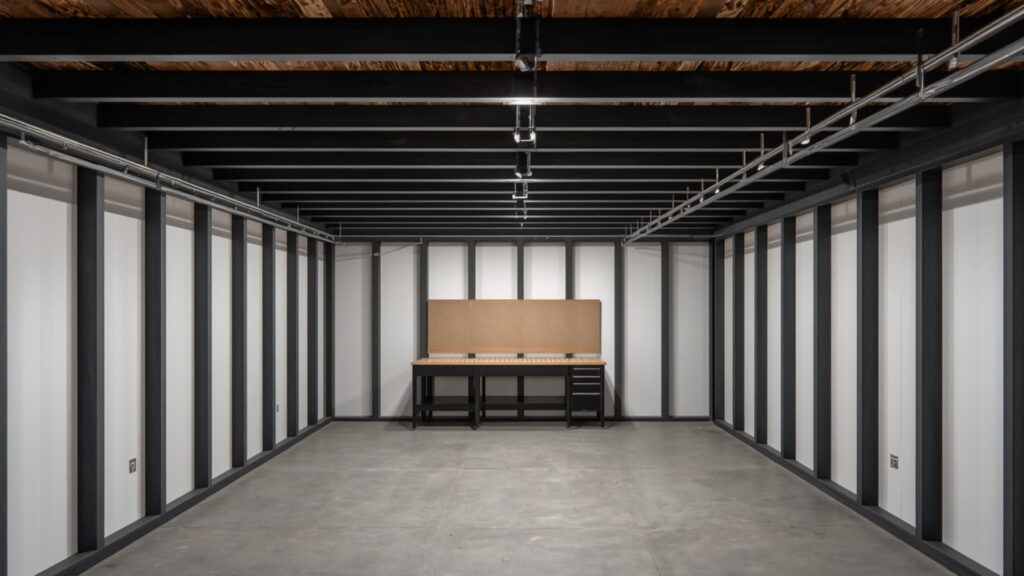
Cut drywall to fit the spaces between I-joists and rest the panels on the lip at the bottom. No screws. No tape. No mud. This is one of the most budget-friendly, cheap basement ceiling ideas available.
- Materials: Drywall scraps (check Facebook Marketplace for free offcuts), utility knife, straightedge
- Access: Panels sit loosely, so lifting them out later is easy
- Optional: Paint the panels and joists the same color for a clean, unified look
- Best for: Any basement where future utility access matters
- Approx. cost: Under $100
- DIY: Yes
13. Build Soffits to Hide Ducts
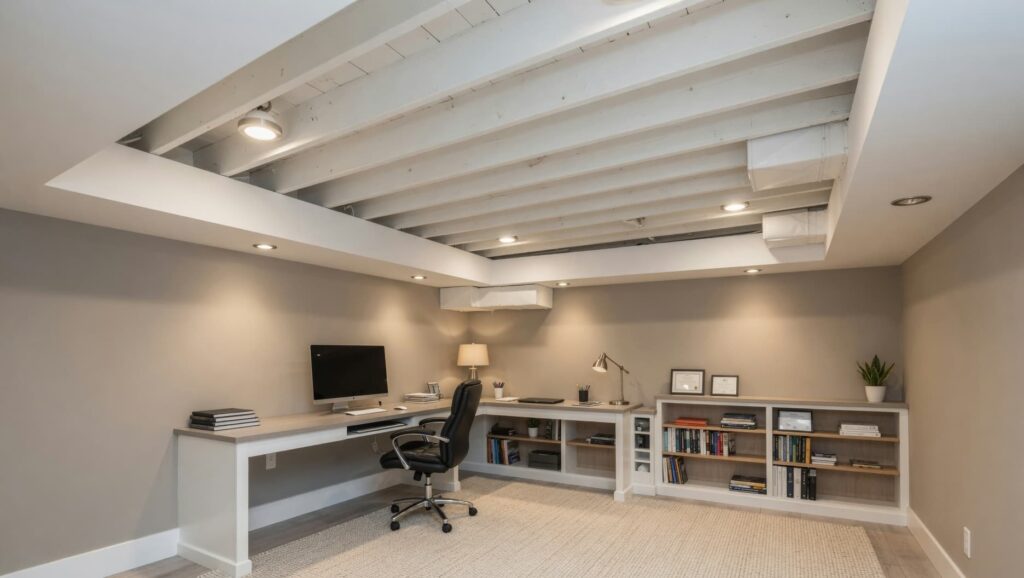
Some pipes and ducts are too large or awkward to make look good. A soffit is a small framed box built around the duct to hide it without covering the rest of the ceiling.
- Materials: 2×4 framing lumber, drywall sheets, screws, drill, paint
- Design tip: Match soffit paint to the ceiling color so it reads as part of the room
- Result: Gives a clean, partially finished look in any exposed ceiling space
- Best for: Finished basements, home offices, guest rooms
- Approx. cost: Mid-range, depends on soffit size
- DIY: Moderate skill needed
14. Replace Old Ductwork with Round Ducts
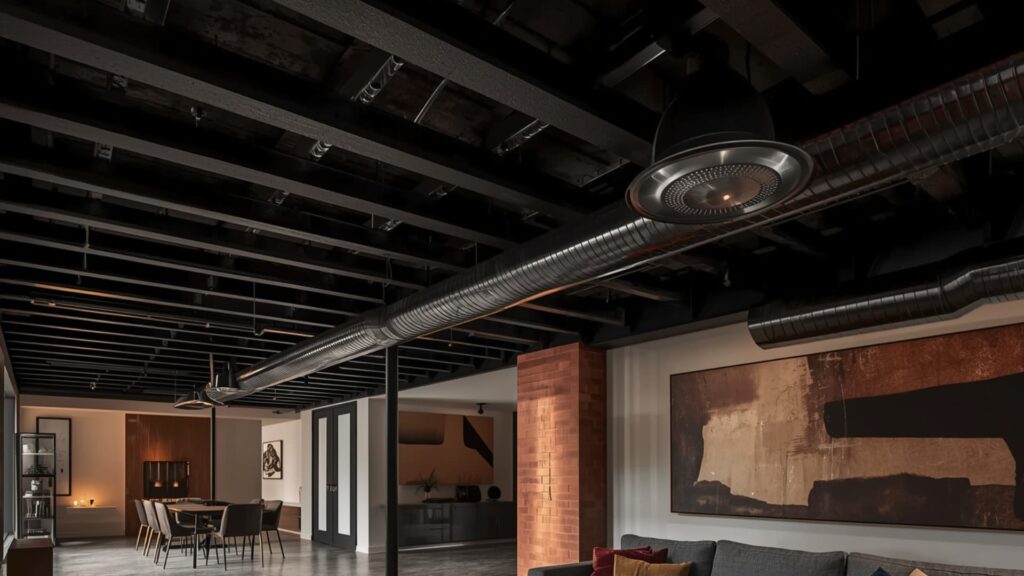
Old rectangular ducts rarely look good, no matter what you do with them. Round metal ducts with industrial-style grilles look clean and deliberate. This is a bigger project, but the result is worth it.
- What changes: Boxy ducts are replaced with round metal ducts sized by an HVAC professional
- Finishing touch: Industrial-style grilles at each vent outlet
- Style pair: Works well in open-plan spaces with a loft or factory-style look
- Best for: Open-plan basements, bars, entertainment spaces
- Approx. Cost: Higher. Not a budget option
- DIY: No. Hire a licensed HVAC professional
15. Hang Acoustic Panels
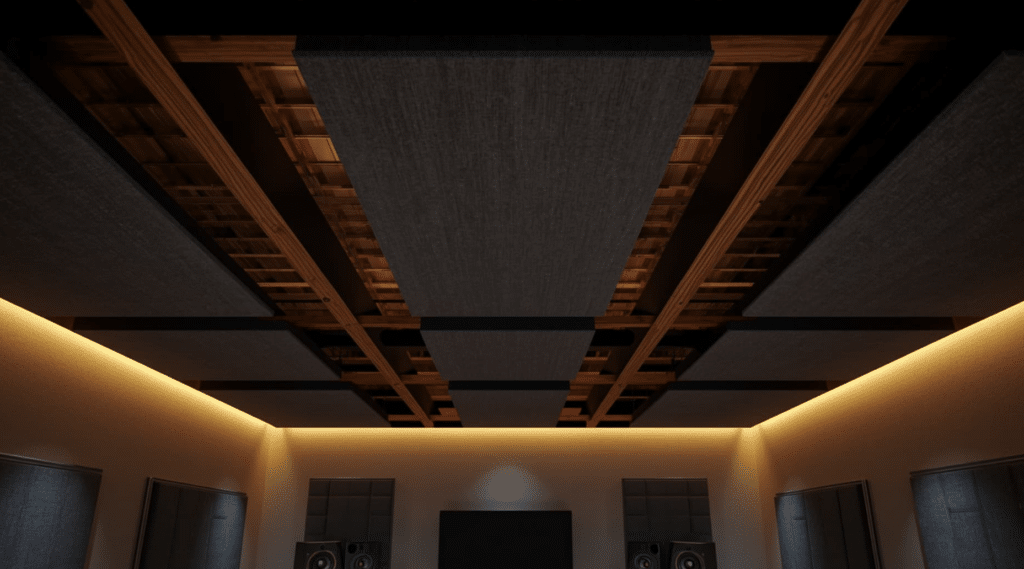
Acoustic panels reduce echo, absorb sound from upstairs, and give the ceiling a finished look. They come in foam, fabric, and wood options.
- Materials: Acoustic foam or fabric-wrapped panels, adhesive or a hook mounting system, a level
- Bonus: Reduces noise from footsteps and activity on the floor above
- Style tip: Fabric-wrapped panels come in colors that can match your room
- Best for: Home theaters, recording studios, basement gyms, playrooms
- Approx. cost: Mid-range, varies by material and brand
- DIY: Yes
16. Create a DIY Coffered Ceiling
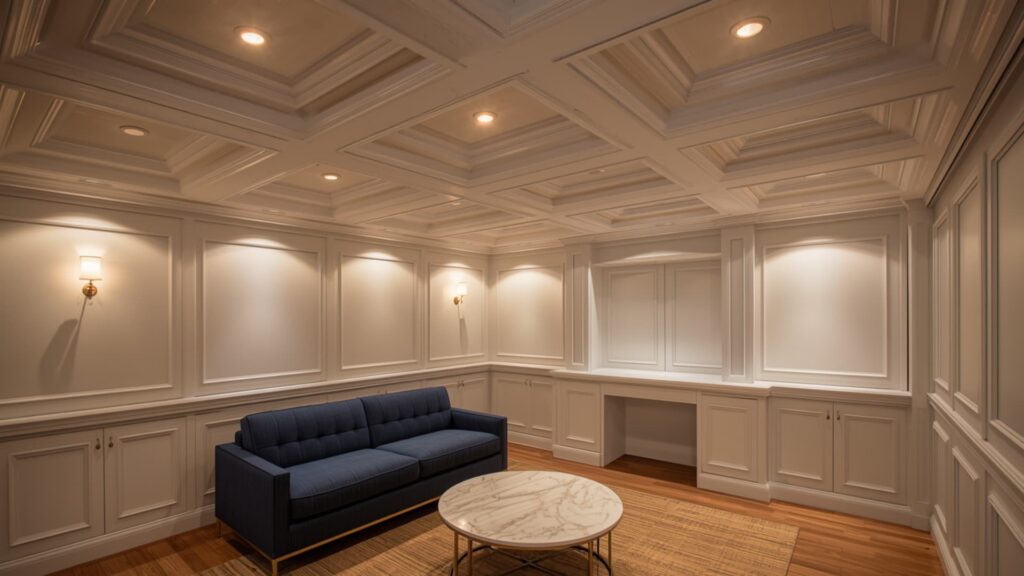
A coffered ceiling builds a grid of beams that creates sunken square panels across the ceiling. It looks more involved than it is and makes any basement feel more refined.
- Materials: 1×2 or 1×3 lumber for the grid, miter saw, wood glue, finishing nails, paint or stain
- Lighting upgrade: Add recessed lights inside the coffered squares for extra depth
- Ceiling height needed: Works best with at least 8 feet of clearance
- Best for: Basement dens, home offices, bars with higher ceilings
- Approx. cost: Mid to high, depending on room size
- DIY: Moderate skill needed
17. Use a Stretch Fabric Ceiling
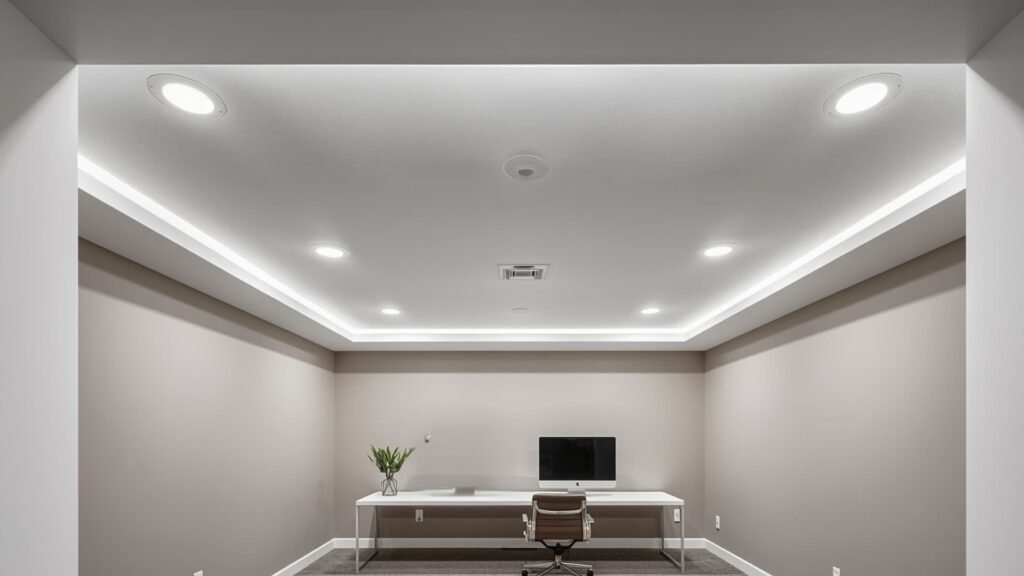
A stretch fabric ceiling uses a lightweight PVC or polyester membrane pulled across a perimeter frame. It covers all wires and pipes, leaving the ceiling with a flat, even surface.
- Materials: Aluminum perimeter frame, PVC or polyester fabric panels
- Finish options: Matte, gloss, or printed designs available
- Access note: A professional can cut access panels if needed for utility access
- Best for: Home offices, guest bedrooms, fully finished basements
- Approx. cost: Mid to high
- DIY: No. This one needs a specialist
18. Hang String Lights or Pendant Lights
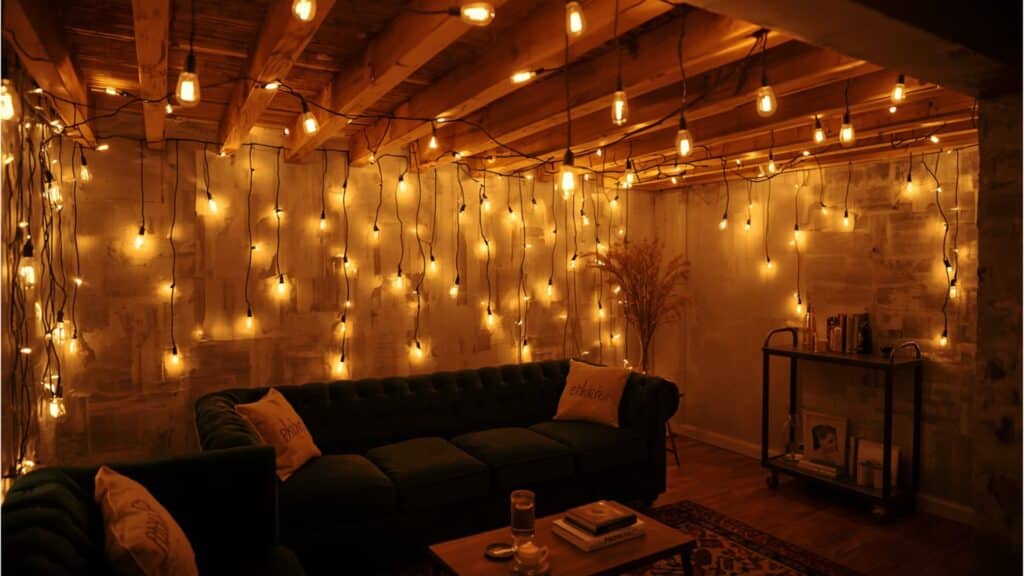
This is the easiest idea on the list. String lights draped across joists instantly make any exposed ceiling feel warm and lived-in, and they cost next to nothing.
- Materials: Edison bulb string lights or pendant fixtures, hooks or clips, nearby outlet or extension cord
- Pairing tip: Works alongside any other idea on this list
- Effect: Turns even a raw, unfinished ceiling into a welcoming space
- Best for: Bars, lounges, casual family rooms, gathering spaces
- Approx. Cost: Under $30 for most setups
- DIY: Yes
Pro Tips Before You Pick a Style
These small things make a real difference in the final result. Keep them in mind before you commit to any of the ideas above.
- Clean before anything else: Dust and cobwebs cause paint to peel and panels to fail over time.
- Use specialty ceiling paint: It resists drips and covers overhead surfaces better than regular wall paint.
- Prime first: Raw wood, metal, and plastic all need a coat of primer before paint will hold.
- Think about access: Do not permanently close off anything you may need to reach within the next few years.
- Get the lighting right: Even a basic exposed ceiling looks finished when the light fixtures are good.
- Check for humidity: Only use metal, PVC, or treated wood in areas that tend to get damp.
Which Basement Ceiling Idea Works Best for Your Room?
The best exposed basement ceiling idea depends on how you actually use the space. Black paint suits home theaters, game rooms, and bars.
White paint works well in laundry rooms and play areas. Wood planks and beadboard fit family rooms and home offices. Corrugated metal and tin tiles stand out in bars and entertaining spaces.
Acoustic panels are best for gyms and recording setups. String lights work with just about any style and any budget. Match the idea to both your room type and the way you want the space to feel.
Final Thoughts
Exposed basement ceilings have a reputation for looking rough and unfinished. That is only true if you leave them that way.
A coat of black paint can make a basement feel like a proper hangout spot. Some string lights change the whole mood of an evening. And if you want to go further, wood planks or beadboard can really highlight your ceiling.
Most of these cheap basement ceiling ideas do not require a contractor or a large budget. You can start this weekend. Pick one idea. Start small. See what it does for your space.
Which idea are you planning to try first? Drop it in the comments below.