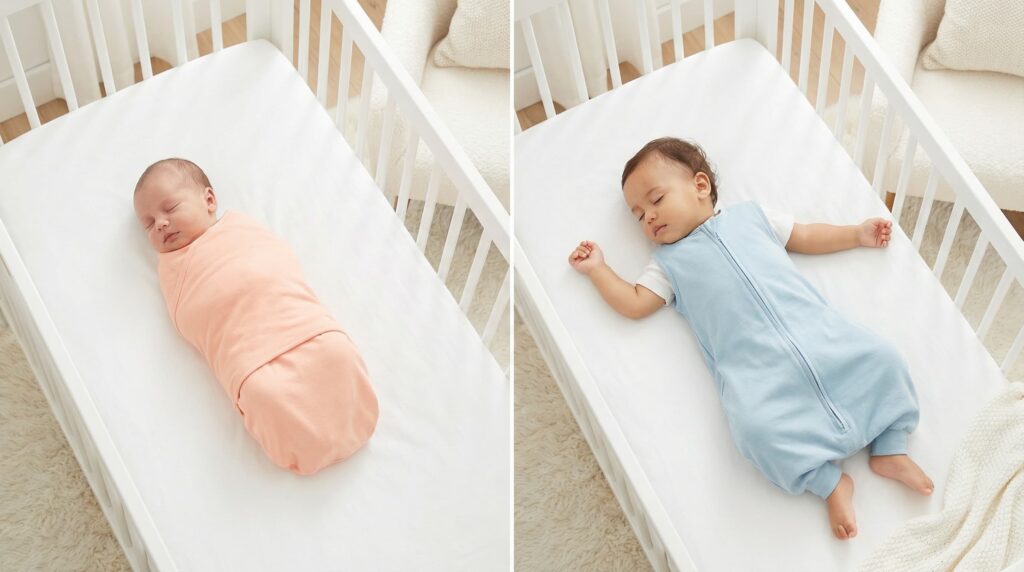

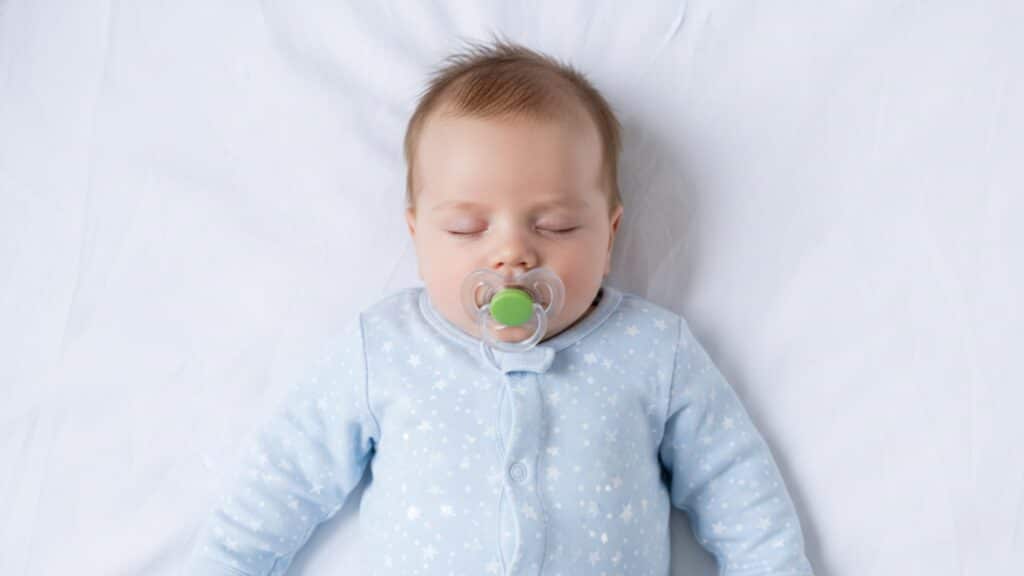
It is 2 a.m. Your baby is crying. You have tried feeding, rocking, and shushing. Nothing is working. Then you spot the pacifier on the nightstand. You offer it. Your baby goes quiet and drifts off to sleep. Relief.
But then the questions hit. Can babies sleep with a pacifier? Is it safe? Will it cause problems down the road? You are not alone in this.
These questions run through the mind of almost every new parent. The good news? Yes, babies can sleep with a pacifier, and research actually supports it.
This blog covers everything you need to know, from when to start to how to keep it safe for your little one.
Is It Safe for a Baby to Sleep with a Pacifier?
Yes, babies can sleep with a pacifier. The American Academy of Pediatrics (AAP) recommends offering a pacifier at nap time and bedtime.
Studies show that pacifier use during sleep is linked to a lower risk of Sudden Infant Death Syndrome (SIDS). It also helps babies meet their natural sucking need and settle more easily.
So if you have been wondering whether the pacifier is okay for sleep, the short answer is yes.
Can a Newborn Sleep with a Pacifier?
A newborn can sleep with a pacifier, but the right time to start depends on how your baby is fed. Here is a quick breakdown to help you know where your baby stands.
| Baby Type | When to Start | Key Thing to Know |
|---|---|---|
| Bottle-Fed | From birth | No feeding concerns, safe to offer from day one |
| Breastfed | Around 3 to 4 weeks | Wait until the latch and milk supply are well settled |
| Breastfed with latch issues | 4 or more weeks | Hold off until feeding feels consistent and steady |
| Premature | Only with the doctor’s approval | Helps build sucking muscles, but always check with your NICU team first |
Every baby is different. What works for one may not work for another. If you are unsure about the right time to start, a quick check-in with your pediatrician goes a long way.
Benefits of Letting Your Baby Sleep with a Pacifier
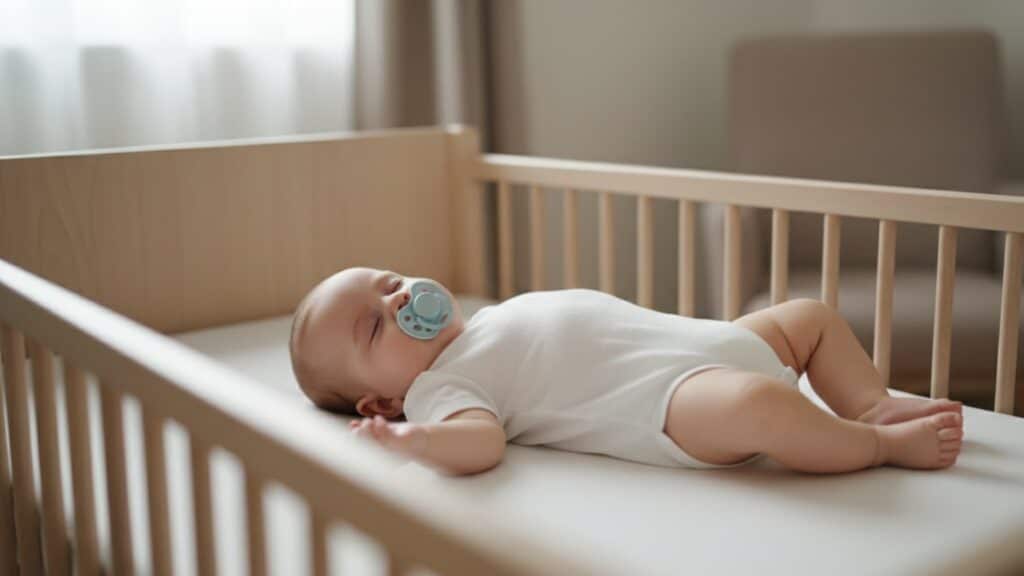
You already know a pacifier can help your baby sleep. But the benefits go well beyond a quiet night. Here is a closer look at why so many pediatricians support pacifier use at sleep time.
1. Reduces the Risk of SIDS
Research backed by the AAP shows that pacifier use during sleep can lower the risk of SIDS by up to 50 to 60 percent. The sucking motion may help regulate your baby’s breathing and keep the airway open.
This is one of the strongest reasons pediatricians recommend offering a pacifier at every sleep time, including naps.
2. Satisfies the Natural Sucking Reflex
Babies are born with a strong need to suck, and it is not always about hunger. A pacifier meets this natural need between feedings in a safe, simple way. This keeps your baby calm and settled without the risk of overfeeding.
3. Helps Babies Self-Soothe
Over time, babies start to link the pacifier with feeling calm and safe at sleep time. This helps them settle on their own when they stir in the night. Fewer disruptions for your baby often mean fewer wake-ups for you, too.
4. Builds a Bedtime Routine
Pairing a pacifier with a consistent bedtime routine creates a strong sleep signal for your baby. After a warm bath, a soft lullaby, and the pacifier, your baby learns that sleep is coming. These repeated cues help them settle faster and sleep more soundly as the weeks go by.
5. Eases Teething Discomfort
When your baby’s first teeth begin to come in, a pacifier gives them something safe to suck on. It can take the edge off some of the discomfort that comes with early teething. This may reduce nighttime crying during those first tough teething weeks.
Risks and Concerns of Pacifier
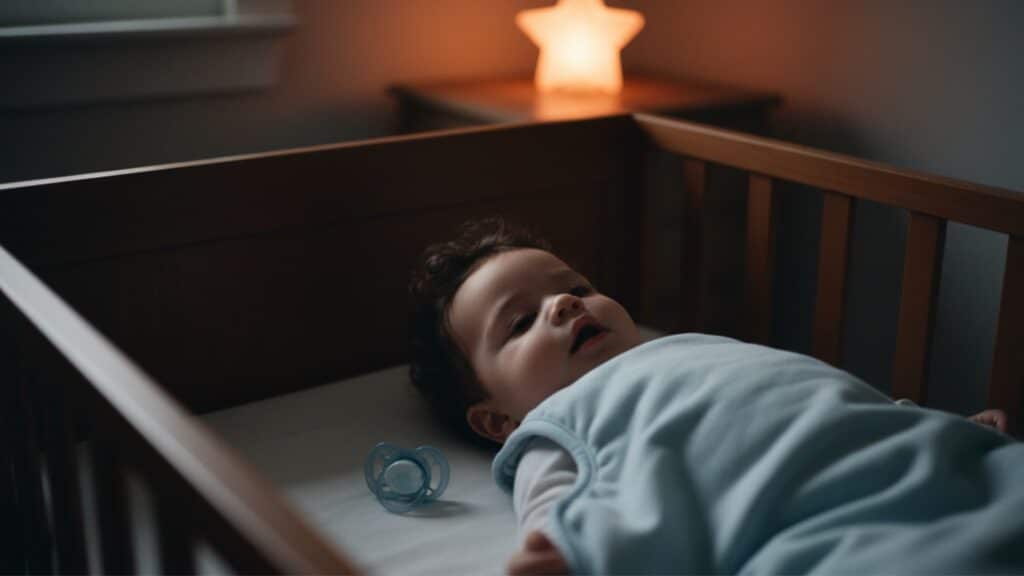
Pacifiers are helpful, but there are a few things worth knowing. Being aware of these early on helps you use the pacifier wisely and avoid common problems before they start.
1. Dependency and Night Wakings
Some babies cannot fall back asleep if the pacifier slips out during the night. Before around 6 months of age, most babies cannot replace it on their own. This can lead to multiple wake-ups where your baby needs you to come in and put it back in their mouth.
2. Higher Risk of Ear Infections After 6 Months
Studies show that prolonged pacifier use after 6 months is associated with a slightly higher risk of ear infections.
Limiting pacifier use to sleep time after this age can help reduce that risk. If your baby has had repeated ear infections, bring it up with your doctor.
3. Dental Concerns with Long-Term Use
Prolonged pacifier use, especially past the age of 2, can affect how your baby’s teeth and jaw develop over time.
Flat or bulb-shaped pacifiers carry a slightly higher risk with extended use. Most dental concerns are tied to use beyond 2 to 4 years, not typical newborn or infant sleep use.
4. Nipple Confusion for Breastfed Babies
Introducing a pacifier too early can sometimes make it harder for a baby to latch correctly at the breast.
This is why waiting until breastfeeding is well established matters for nursing mothers. Once your baby has a good latch and a steady feeding routine, this concern becomes much less of a factor.
How to Introduce a Pacifier to Your Baby the Right Way
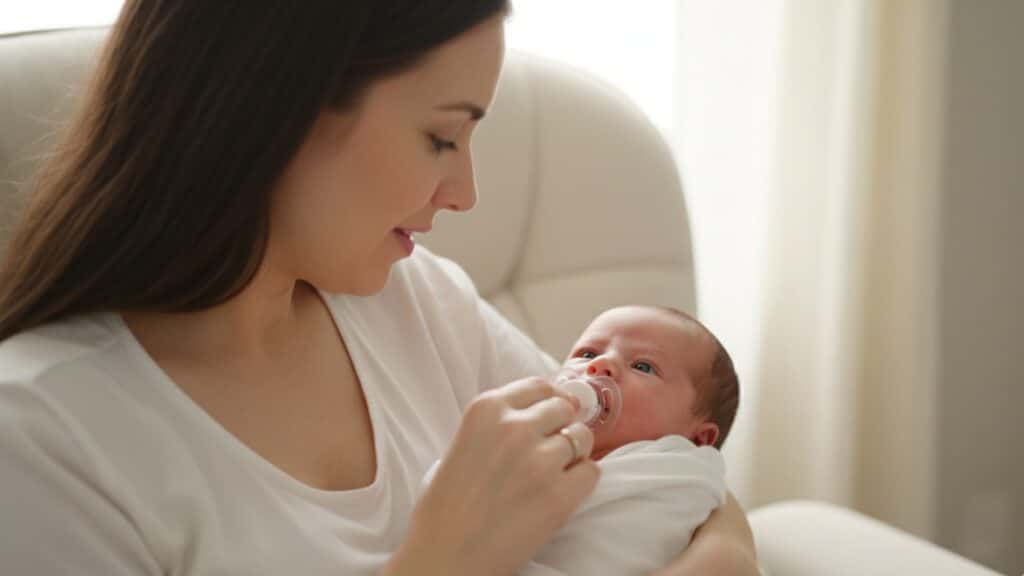
Getting the timing and approach right makes a real difference. Follow these simple steps to introduce a pacifier without making it a stressful experience for you or your baby.
- Wait until after a feeding. Offer the pacifier when your baby is calm and already satisfied, not when they are hungry.
- Let the baby lead. Place it near their lips and let them draw it in on their own, rather than pushing it in.
- Try different shapes. Some babies prefer a flat nipple shape, while others take better to a round or oval one.
- Do not push it. If your baby refuses, give it a break and try again at the next sleep time.
- For breastfed babies, wait 3 to 4 weeks. This gives your feeding routine time to get solid before you add the pacifier.
- Never use it to delay a feeding. A pacifier is a comfort tool, not a substitute for food.
Signs Your Baby Is Too Dependent on the Pacifier
There is a clear difference between using a pacifier as a helpful sleep tool and relying on it too heavily. Keep an eye out for these signs to know when things may have gone a little too far.
| Sign | What It Looks Like |
|---|---|
| Cannot fall asleep without it | Baby cries and stays wide awake unless the pacifier is in their mouth |
| Wakes up multiple times at night | Baby wakes up only because the pacifier has fallen out |
| Refuses naps without it | Daytime sleep only happens when the pacifier is present |
| Uses it outside of sleep for long periods | Baby relies on it well beyond bedtime throughout the whole day |
| Gets very upset when it is taken away | Strong, prolonged crying at the sight of no pacifier |
If you notice several of these signs showing up regularly, it may be time to start working on other ways to help your baby feel calm and settled at sleep time.
How to Choose the Right Pacifier for Sleep?
Look for a pacifier that is one piece, the right size for your baby’s age, and made from BPA-free, medical-grade materials.
The shield should be large enough that it cannot fit fully into your baby’s mouth, and it should have ventilation holes for proper airflow.
For breastfed babies, a breast-like shape helps reduce nipple confusion during the early weeks.
Avoid two-piece designs, pacifiers attached to clips or stuffed animals, and flat or bulb-shaped nipples for long-term use.
When you are not sure what to pick, ask your pediatrician for a recommendation based on your baby’s specific age and feeding type.
Final Thoughts
Pacifiers are not the problem most parents fear they are.
When used the right way, babies can sleep with a pacifier safely, and the research is clear on this. From supporting better sleep to lowering SIDS risk, the case for pacifier use at sleep time is strong.
Start at the right age, choose a safe one-piece design, and follow basic sleep guidelines. That is really all it takes.
If you start to notice signs of heavy dependency, a gradual, gentle reduction works well without overwhelming your baby. And if you feel unsure at any point, your pediatrician is always the right person to ask.
Trust your instincts, use the facts, and make the call that feels right for your family.