
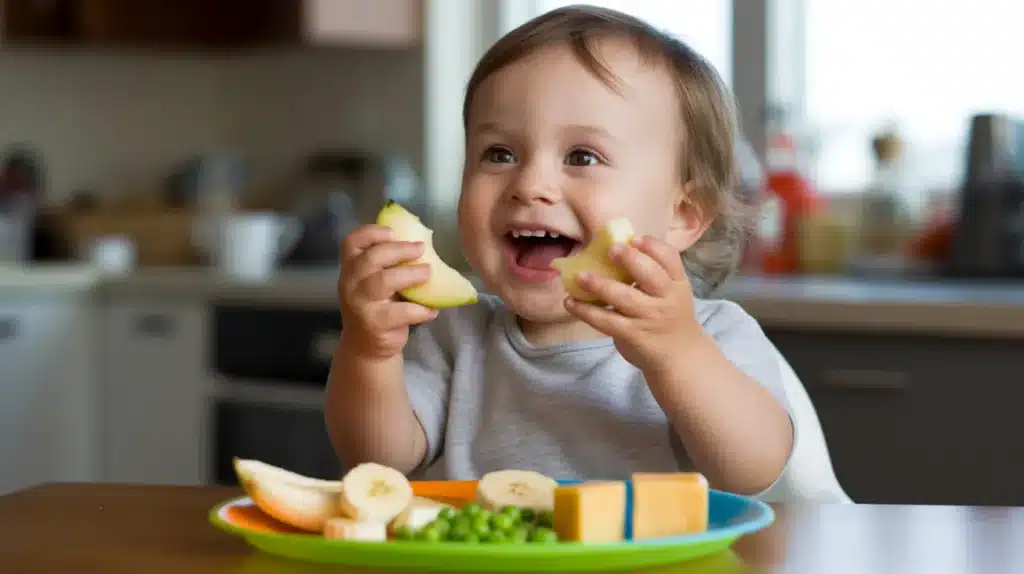
Your toddler just threw the banana on the floor. Again.
Snack time feels like a battle most days, too hard, too soft, too messy, or just plain refused. And the internet gives you a hundred ideas that look cute but end up in the bin.
This blog cuts through all of that. Inside, you will find toddler snack ideas sorted by age, from 12 months to 3 years.
Each one is simple, safe, and actually toddler-approved. We will also cover the right snack portions, foods to skip, and how to serve snacks without the worry of choking.
What Makes a Good Toddler Snack?
A good toddler snack fills the gap between meals and gives your child useful nutrients.
The best snacks combine protein, healthy fat, or fiber; think cheese with fruit, yogurt with berries, or eggs with toast. Avoid anything high in added sugar or salt.
And always match the texture to your toddler’s age, a snack that is too hard or too large is not just unhealthy, it is a choking risk.
How Often Should Toddlers Snack?
Meals give toddlers most of what they need. But their stomachs are small; they need a little fuel in between.
- How many snacks per day? Most toddlers do well with 2 to 3 snacks each day.
- When should snacks happen? Offer a snack about 2 to 3 hours after a meal.
- Should I let my toddler snack all day? No, constant snacking, called grazing, can reduce appetite at mealtimes.
- How big should a toddler snack be? Keep it small; a snack is not a meal.
- What time should the last snack be? Try to finish the last snack at least one hour before dinner.
Toddler Snacks for 12–15 Months
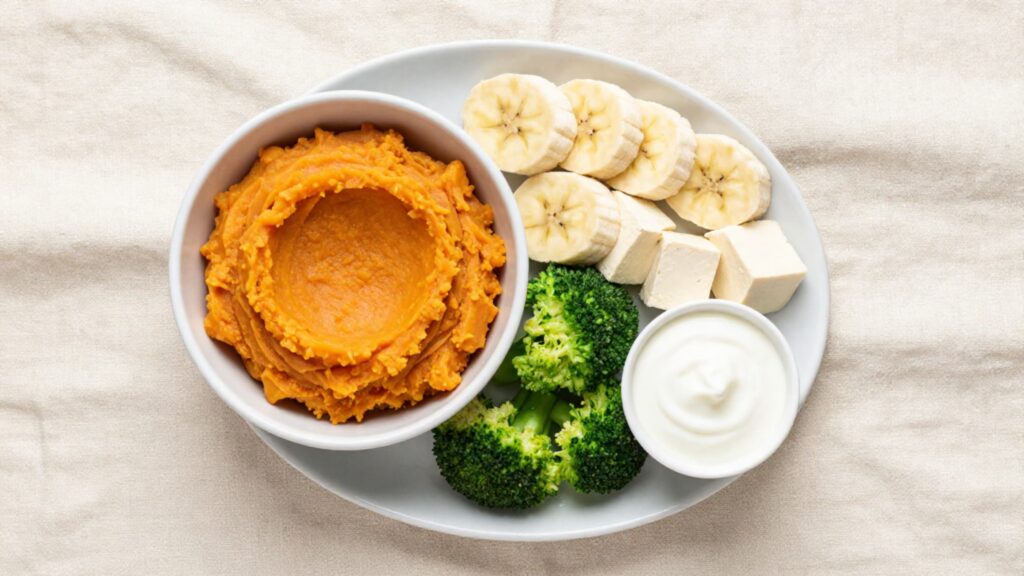
Starting solids is a big step. At this age, texture and size matter more than anything else. Toddlers at 12 to 15 months have just a few teeth and small hands. Soft, small foods are safest; aim for pieces no bigger than a pea.
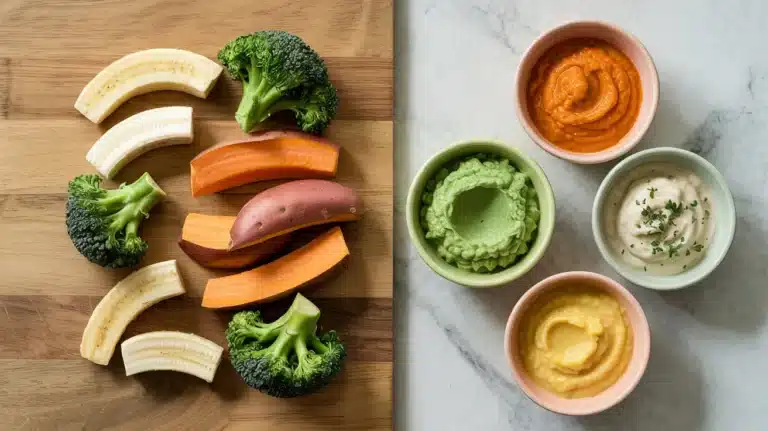
- Soft banana slices: Peel and cut into ½-inch rounds. No prep needed; serve as-is.
- Steamed broccoli florets: Steam for 8–10 minutes until soft enough to mash with your fingers. Cut into small pieces before serving.
- Scrambled egg pieces: Cook on low heat with a little butter. Break into small, soft pieces before serving.
- Avocado chunks: Scoop from the skin and cut into small cubes. Add a tiny squeeze of lemon to prevent browning.
- Plain whole-milk yogurt: Spoon into a small bowl. Mix in mashed banana or pureed fruit for variety.
- Ripe mango cubes: Peel and cut into ¼-inch cubes. Choose a very ripe mango; it is softer and naturally sweeter.
- Mashed sweet potato: Bake or boil, then mash. Serve warm or at room temperature; no salt needed.
- Soft-cooked peas: Boil or steam frozen peas until tender. Let cool, then serve by the spoonful.
- Soft tofu cubes: Use silken or soft tofu. Cut into small cubes; serve plain or drizzled with olive oil.
- Rice puffs (unsalted): Look for baby-friendly rice puffs. They dissolve quickly, making them a low choking risk.
- Ripe kiwi slices: Peel fully and cut into small pieces. Very soft when ripe and high in vitamin C.
- Cooked pasta pieces: Boil small shapes like orzo or mini shells until very soft. Toss with a little olive oil.
- Ripe peach chunks: Peel the skin off fully. Cut into very small pieces and serve chilled or at room temperature.
- Soft-cooked carrot sticks: Boil for 10–12 minutes. They should be soft enough to break apart with two fingers.
- Plain oatmeal fingers: Mix oats with mashed banana and bake at 350°F for 12 minutes. Cut into finger-sized strips.
- Mashed black beans: Rinse canned beans and heat on the stovetop. Mash with a fork and serve with a spoon.
- Cream cheese on soft bread: Spread a thin layer on soft whole wheat bread. Cut into small squares.
- Cottage cheese: Use full-fat cottage cheese. Serve in a small bowl with a spoon; stir before giving.
- Ripe pear slices (peeled): Peel fully and cut into thin strips. Choose a very ripe pear — it should feel soft when pressed.
- Steamed apple pieces: Peel, core, and cut into cubes. Steam for 5–7 minutes until soft; cool before serving.
Toddler Snacks for 15–18 Months
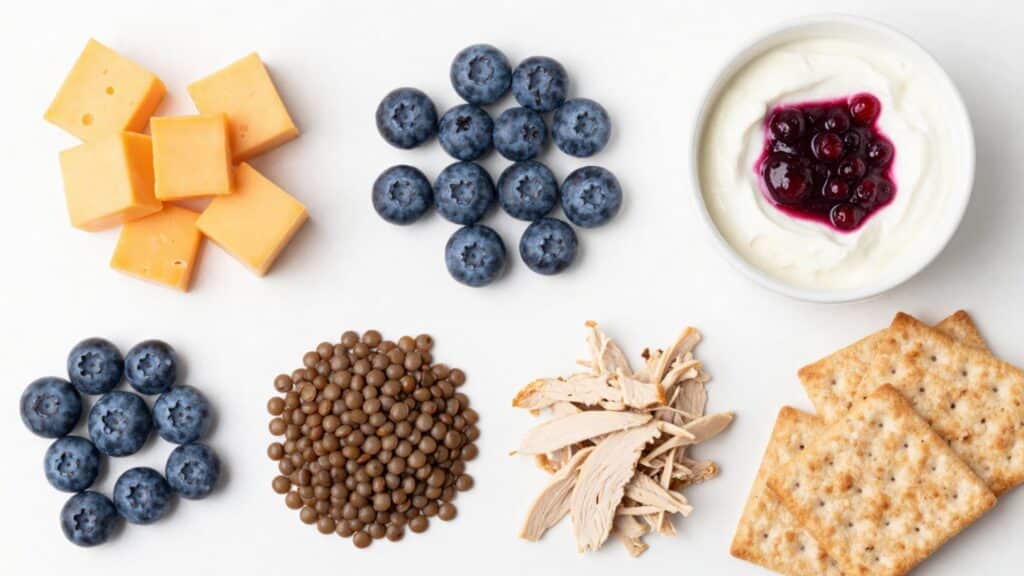
Your toddler is getting better at picking up food and chewing. This is the right time to add slightly firmer textures and new flavors.
Between 15 and 18 months, most toddlers have more teeth and stronger jaw muscles. You can now move beyond fully soft foods and start offering more variety.
- Cheese cubes (mild cheddar): Cut into ½-inch cubes. Mild cheddar or mozzarella works best; stronger cheese can be too salty.
- Soft whole wheat crackers + hummus: Choose crackers that soften quickly. Spread a thin layer of plain hummus on each one.
- Blueberries (halved): Cut each blueberry in half to reduce choking risk. Serve chilled or at room temperature.
- Cucumber strips (peeled): Peel fully and cut into short, thin strips. The inside is soft and easy to chew.
- Mini rice cakes (plain): Look for unsalted, toddler-size rice cakes. Light, easy to hold, and low mess.
- Nut butter on soft bread (thin spread): Use a very thin layer of peanut or almond butter. Never serve in thick globs; that is a choking risk.
- Hard-boiled egg slices: Boil the egg for 10 minutes, cool, peel, and cut into quarters. High in protein and easy to hold.
- Cooked lentils: Boil red lentils until soft. Mix with a little olive oil and serve by the spoonful. Rich in iron.
- Steamed zucchini spears: Cut into finger-length spears and steam for 6–8 minutes. Very mild flavor, most toddlers accept.
- Plain Greek yogurt with mashed berries: Mash a few berries with a fork and stir into plain Greek yogurt. No added sugar needed.
- Soft melon balls (cantaloupe): Scoop small balls or cut into cubes. Remove all seeds fully. High in vitamin A.
- Puffed corn snacks (no salt): Look for unsalted, toddler-friendly corn puffs. They dissolve quickly, reducing the risk of choking.
- Shredded chicken pieces: Cook chicken breast with no seasoning. Shred into very small, moist pieces before serving.
- Mashed chickpeas: Use canned chickpeas (rinsed). Mash thoroughly with a fork, then add a small drizzle of olive oil.
Toddler Snacks for 18–24 Months
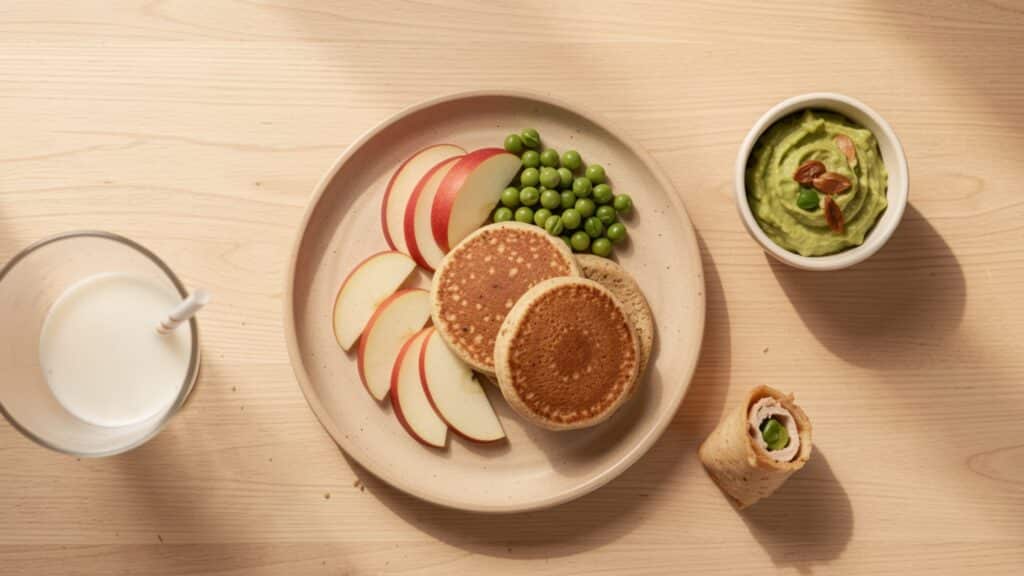
At 18 to 24 months, toddlers want to do things themselves. That includes feeding themselves and often making a mess.
Most toddlers this age have enough teeth to chew a wider range of foods. Snacks can now include dips, combinations, and new textures that they can manage on their own.
- Apple slices (thin, peeled): Peel and slice very thin. At this age, thin slices are safe; thick chunks are still a risk.
- Celery sticks with cream cheese: Cut celery into 2-inch pieces and steam lightly to soften. Fill the groove with a little cream cheese.
- Mini pancakes (whole grain): Mix whole wheat flour, egg, and milk. Cook small silver-dollar-size pancakes. Serve plain, no syrup.
- Frozen peas (thawed): Run cold peas under warm water to thaw. No cooking needed. Soft, small, and easy to pick up.
- Pita bread + hummus: Cut a small whole wheat pita into triangles. Serve with plain hummus on the side for dipping.
- Edamame (shelled): Buy pre-shelled frozen edamame. Boil for 3–4 minutes, cool, and remove from pods fully before serving.
- String cheese pieces: Pull into small, thin strips. Toddlers love pulling string cheese apart themselves.
- Soft granola bar (low sugar): Choose bars with under 5g of sugar. Break into small pieces before handing to your toddler.
- Watermelon cubes (seedless): Cut into ½-inch cubes and remove all seeds. Mostly water, great for keeping toddlers hydrated.
- Sweet potato fries (baked, soft): Cut sweet potato into thin strips and bake at 375°F for 20 minutes. No salt; bake until very soft.
- Turkey roll-up pieces: Lay a thin slice of low-sodium turkey flat and roll it up. Cut into 1-inch rounds.
- Corn tortilla strips + guacamole: Cut a small corn tortilla into short strips. Mash ripe avocado with a squeeze of lemon for a simple dip.
- Fruit smoothie in a straw cup: Blend ½ banana, ¼ cup yogurt, and a few berries. Pour into a straw cup. No added sugar.
- Mini muffins (banana or carrot): Add mashed banana or grated carrot to a simple muffin batter. Bake in mini tins; keep sugar-free or very low sugar.
- Raisins (small portions): By 18–24 months, raisins are manageable in tiny amounts. Keep it to a small pinch — they are sticky and high in natural sugar.
- Cooked quinoa with veggies: Cook quinoa and mix with finely diced soft vegetables like zucchini or peas. Serve in a small bowl.
- Cheese and soft cracker stacks: Place a small piece of mild cheese on a soft cracker. Cut the stack in half before serving.
Toddler Snacks for 2–3 Years
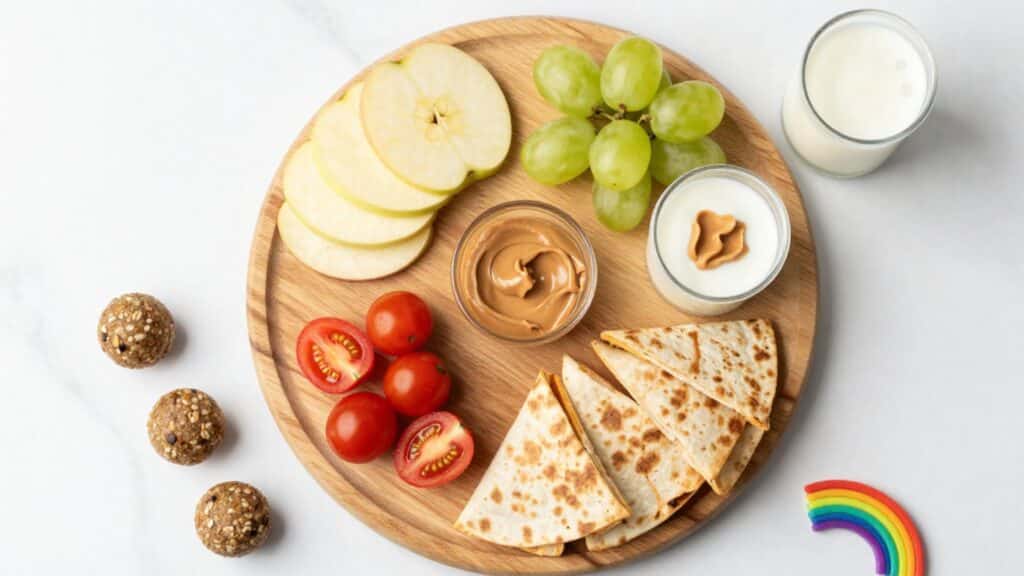
Two- and three-year-olds are ready for much more variety. They also have strong food opinions, so keep snacks fun and colorful.
At this age, toddlers can handle most textures. The focus shifts to building healthy eating habits and ensuring snacks stay nutritious, not just convenient.
- Apple slices with peanut butter: Cutthe apple into thin slices. Spread a thin layer of peanut butter on each piece for a protein boost.
- Grapes (halved lengthwise): Always cut grapes in half lengthwise, not crosswise. Serve chilled or at room temperature.
- Cheese quesadilla triangles: Fill a small whole wheat tortilla with mild shredded cheese. Cook in a pan and cut into small triangles.
- Veggies + dip: Serve soft carrot sticks, cucumber strips, or bell pepper pieces with a small cup of mild ranch or hummus.
- Whole grain cereal with milk: Choose a low-sugar cereal. Pour a small amount of whole milk and serve with a spoon.
- Sunflower seed butter on rice cakes: Spread a thin layer on a plain rice cake. Great for nut-free settings like daycares.
- Cherry tomatoes (halved): Cut each cherry tomato in half. Never serve whole; they are exactly the right size to be a choking risk.
- Fruit plate with dip: Arrange soft fruit pieces on a small plate. Serve with a spoonful of plain yogurt as a dip.
- Yogurt parfait: Layer plain yogurt with soft fruit in a small cup. Skip granola for now; it can be too crunchy.
- Mini veggie muffins: Fold finely shredded zucchini or carrot into a simple muffin batter. Bake in mini tins. Low sugar, high nutrition.
- Whole-grain toast with mashed avocado: Toast one slice of whole-grain bread and spread ripe mashed avocado on top. Add a squeeze of lemon.
- Hard-boiled egg + fruit cup: Serve one quartered hard-boiled egg alongside a small cup of soft fruit. A balanced, filling mini snack.
- Oat energy balls: Mix rolled oats + peanut butter + mashed banana. Roll into small balls and refrigerate for 30 minutes before serving.
- Cottage cheese with fruit: Scoop full-fat cottage cheese into a small bowl. Top with halved blueberries or diced soft peach.
- Bean quesadilla triangles: Mash rinsed canned beans and spread on a small tortilla with mild cheese. Cook and cut into small triangles.
Healthy Toddler Snack Portion Chart
Toddlers have stomachs about the size of their fist. Small portions are not just normal; they are exactly right for their age.
| Food Group | 12–18 Months | 18–24 Months | 2–3 Years |
|---|---|---|---|
| Fruit | 2–3 tbsp | 3–4 tbsp | ¼ cup |
| Vegetables | 2–3 tbsp | 3–4 tbsp | ¼ cup |
| Protein (egg, chicken, beans) | 1–1.5 oz | 1.5 oz | 1.5–2 oz |
| Dairy (yogurt, cheese) | 2–3 tbsp | ¼ cup | ¼ cup |
| Grains (crackers, toast) | ½ slice or 2–3 small crackers | 1 slice or 4 crackers | 1 slice or 4–5 crackers |
Foods to Avoid Giving Toddlers as Snacks
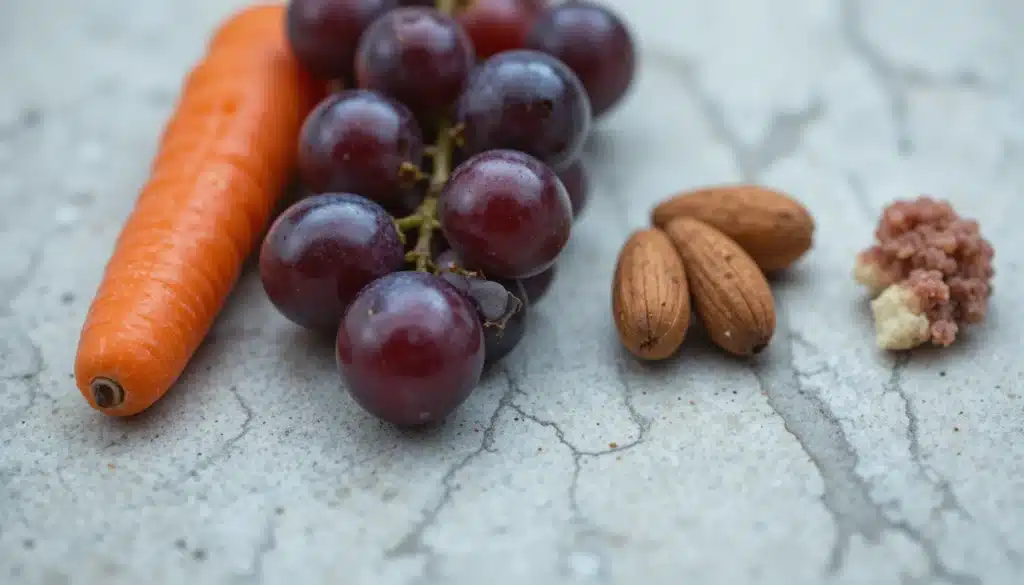
Some foods that seem fine for adults are not safe for toddlers. Knowing what to skip is just as important as knowing what to serve.
- Whole grapes: Always cut them in half lengthwise; whole grapes are one of the top choking risks for toddlers.
- Raw carrots: Hard and difficult to chew; always steam or boil until soft before serving.
- Popcorn: Not safe before age 4; it can easily get stuck in the airway.
- Whole nuts: Too hard and round; use nut butter spread thinly instead.
- Hot dogs (cut into rounds): The round shape remains a choking risk; always cut into thin strips or small pieces.
- Honey (under 12 months): It can cause infant botulism; only safe after the first birthday.
- High-sugar snacks: Cookies, candy, and flavored fruit snacks add sugar with little nutrition.
- High-sodium foods: Chips and heavily salted crackers have too much salt for young toddlers’ kidneys.
- Large chunks of meat: Always shred or cut into very small, thin pieces before serving.
- Hard candy or lollipops: Always a choking and sugar risk; avoid completely for this age group.
How to Serve Snacks Safely?
Always sit your toddler down before giving any snack; running or walking while eating is a choking risk. Cut all round foods, like grapes and cherry tomatoes, in half before serving.
Avoid hard, sticky, or small foods until your toddler has enough teeth to chew properly. Stay close while your toddler eats, and never leave them alone with food.
If you are unsure about a food’s safety, offer a small piece first and watch closely before giving more.
Final Thoughts
Snack time does not have to be stressful.
In this blog, we covered age-by-age toddler snack ideas, what makes a snack worth giving, how often to offer food between meals, portion sizes that fit your toddler’s small stomach, foods to skip and why, and how to serve everything safely.
Small, simple, and consistent, that is all it takes to build good eating habits early. Pick two or three ideas from this list and try them this week.
Found a snack your toddler loves? Share it in the comments; other parents will thank you.