
Soil-free. No pot. Almost nothing to do. That is what drew you to air plants in the first place. But somewhere between “these are so easy” and actually keeping one alive, things got confusing fast.
Did you water it too much? Too little? Does it even need sunlight?
Air plant care is not hard. It just has a few rules that most people skip over. Once you know them, keeping your plant healthy becomes second nature.
This guide covers everything: light, water, display, blooming, propagation, and what to do when things go wrong. Read it once, and you will not lose another air plant again.
What Are Air Plants?
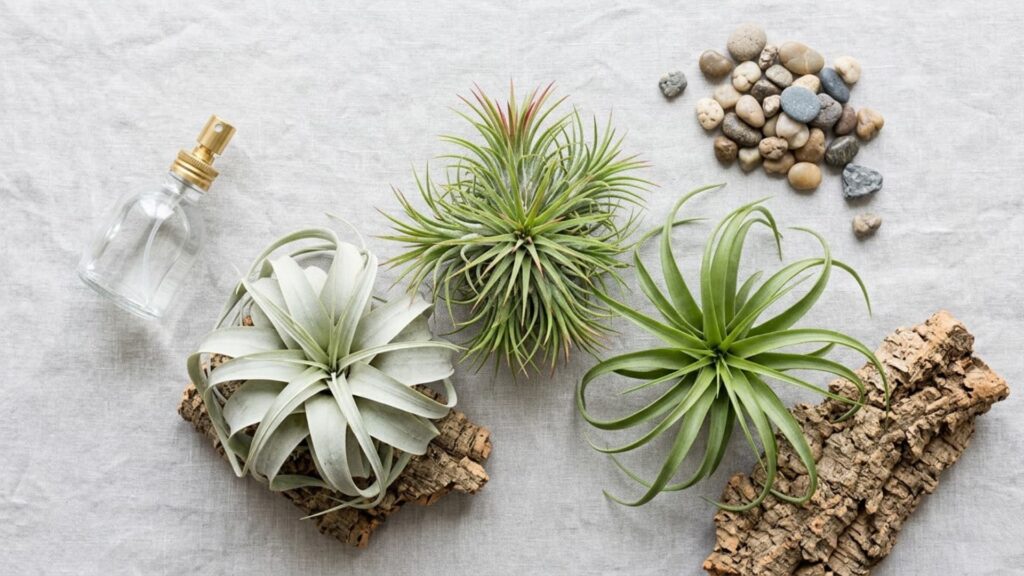
Air plants, known scientifically as Tillandsia, belong to the bromeliad family, which also includes pineapples.
They grow naturally across South America, Central America, and the southern United States, attaching themselves to rocks, trees, and other surfaces. Unlike regular plants, they do not need soil at all.
They absorb water and nutrients directly through their leaves using tiny surface cells called trichomes, which also give many air plants their signature fuzzy or silvery appearance.
Types of Air Plants: Mesic vs. Xeric
Not all air plants are the same. The type you have will directly shape how you water it and how much light it needs.
| Feature | Mesic | Xeric |
|---|---|---|
| Appearance | Green, smooth, shiny leaves | Grey-green, fuzzy, dull leaves |
| Natural Origin | Moderate-moisture environments | Dry or desert environments |
| Light Needs | Bright, indirect light only | Can tolerate direct morning sun |
| Watering Frequency | Once or twice a week | Once a week |
| Drought Tolerance | Lower | Higher |
Air Plant Care: 7 Things You Need to Get Right
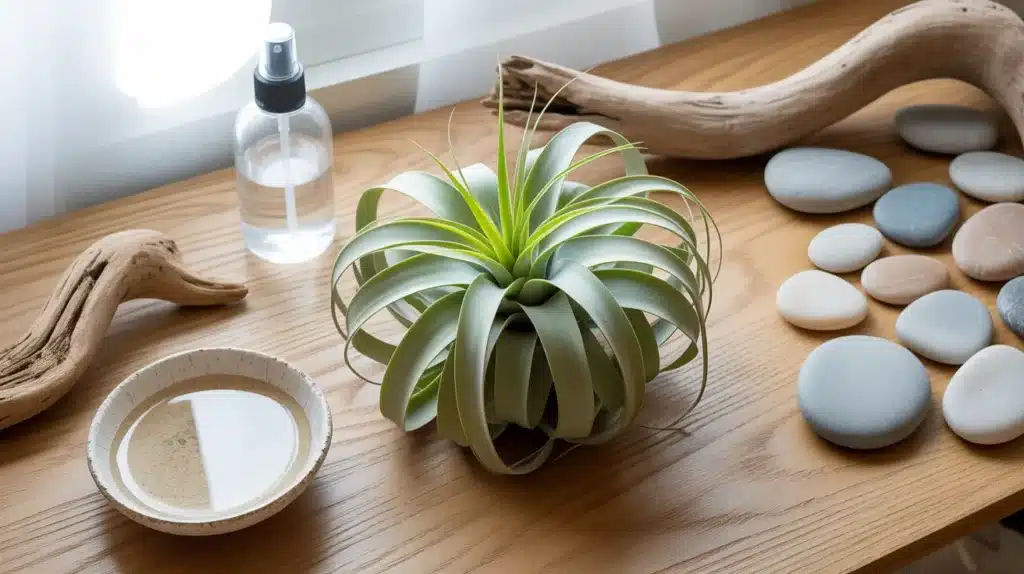
Getting air plant care right comes down to a handful of basics. Nail these seven things and your plant will stay healthy, grow steadily, and reward you with a bloom.
1. Light
Air plants need bright, indirect light for most of the day. A spot near a window with filtered light works best for almost every variety. Keep them away from dark corners, as low light slows growth and weakens the plant over time.
- Best indoor spot: Near a window that receives light throughout the day
- Artificial light: At least 12 hours of fluorescent light per day, no more than 3 feet from the bulb
- Sun tolerance: Xeric types can handle some direct morning sun. Mesic types cannot.
2. Watering
Air plants absorb water through their leaves, so they need to be regularly wet. The two methods that work best are soaking and misting.
Soaking (main method):
- Fill a bowl or sink with room-temperature water
- Fully submerge the plant for 20 to 30 minutes
- For a very dry or stressed plant, soak for up to an hour
Misting (supplement only):
- Use between soaks when leaves start curling inward
- Mist all leaf surfaces evenly, not just the top
How often to water:
- Mesic types: once or twice a week
- Xeric types: once a week
- Hot, dry conditions: increase frequency. Cool, humid conditions: reduce frequency.
Best water to use:
- Tap water works well if you are comfortable drinking it
- Rainwater, springwater, and creek water are excellent choices
- Avoid softened water (high salt content damages the plant)
- Avoid distilled water (stripped of minerals the plant needs)
3. Drying After Watering
This step matters just as much as watering itself. After soaking, gently shake off extra water from the base and leaves. Turn the plant upside down on a clean towel in a well-ventilated area. Full drying usually takes 1 to 2 hours.
- Do not put the plant back in a terrarium or glass globe until it is completely dry
- If it has not dried within 3 hours, move it to a brighter spot
- A plant left wet too long will rot at the base, and that is very hard to reverse
4. Temperature and Humidity
Air plants are comfortable in temperatures between 50 and 90 degrees Fahrenheit (10 to 32 degrees Celsius). Keep them away from air conditioning vents, heating vents, and cold drafts near windows.
- Ideal humidity level: 40 to 60 percent
- Best rooms: Bathrooms and kitchens, where natural humidity is higher
- Bathroom tip: Steam from a regular shower can keep plants hydrated between waterings
- Dry rooms: Place a small humidifier nearby to compensate
5. Fertilizing
Fertilizing is optional but genuinely helpful. It encourages faster growth, blooming, and pup production. Use a bromeliad-specific or air plant fertilizer added to soaking water or a misting spray, once or twice a month.
- Fertilize only during spring and summer
- Cut back or stop completely in winter as the plant’s growth slows
- A small amount goes a long way. Do not over-fertilize, as it can burn the leaves
6. Grooming and Trimming
Lower leaves drying out as the plant grows is completely normal. Pull them off gently at the base. If leaf tips turn brown, trim them with clean scissors at a slight angle to maintain a natural-looking point.
- Trim dry roots the same way. Roots grow back without issue.
- Regular grooming keeps the plant looking healthy and helps it focus energy on new growth
7. Display and Mounting
Air plants can be placed in glass terrariums, hung in wire frames, or mounted on driftwood, cork bark, or stone. The one rule that applies to every display option is airflow. Anything that traps moisture around the plant will cause rot.
- Avoid placing air plants on sand, moss, or fabric
- Never plant them in soil, even partially
- For glass globes: a larger opening means better airflow. Always dry the plant fully before placing it back inside any enclosed display.
Air Plant Blooming: What to Expect
If your air plant starts pushing out a bright spike or flushing with color, something good is about to happen. Blooming is one of the most satisfying parts of keeping Tillandsia, and knowing what comes next helps.
- When does it bloom? Air plants bloom once in their lifetime, with timing that varies by species and care conditions.
- What does a bloom look like? A bloom is a brightly colored spike or flower that can last anywhere from a few days to several months.
- What happens to the plant after blooming? The mother plant slowly begins to die. This is a natural part of its life cycle, not a care mistake.
- Will the plant be gone for good? No. Before or after the bloom, the plant produces baby plants called pups that carry the cycle forward.
- Should the spent bloom be removed? Yes. Once the bloom dries out fully, trim it off carefully with clean scissors.
How to Propagate Air Plants?
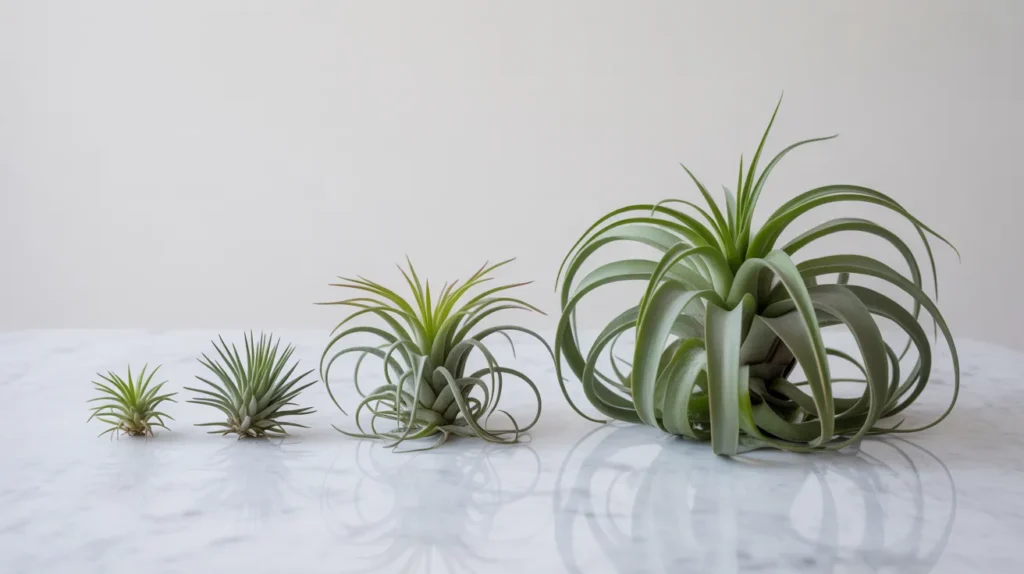
One of the best things about air plants is that they multiply on their own. Once your plant has matured and bloomed, it will start producing pups at its base.
1. What Are Pups?
Pups are small baby air plants that grow from the base of the mother plant. Each mother produces between 2 and 8 pups in her lifetime. They are genetic copies of the mother and will grow into full-sized plants with the same care.
2. When to Separate Pups
Wait until the pup reaches at least one-third the size of the mother plant before separating it. Separating too early puts stress on the young plant and significantly slows its growth.
3. How to Separate Pups
Hold both the mother and the pup firmly at their bases. Gently twist the pup downward in a slow, steady motion. If it does not come free easily, use clean scissors and cut as close to the mother’s base as possible.
4. After Separation
Treat the pup exactly like any other air plant from day one. Give it its first soak within a few hours of separation, then set it in a bright spot to dry.
5. Keep the Mother Plan
Do not discard the mother after the pups are removed. She may continue producing pups for several years before she dies naturally.
Common Air Plant Problems and How to Fix Them
Even with good care, air plants can show signs of stress. Most problems have a clear cause, and fixing them is usually straightforward once you know what you are looking at.
| Problem | Likely Cause | Fix |
|---|---|---|
| Brown or crispy leaf tips | Underwatering | Give an extra-long soak and return to a regular watering schedule |
| Soft or black base | Overwatering or poor drying after soaking | Trim the affected area, and let the plant dry completely. Often fatal if caught late. |
| Tightly curled leaves | The plant is thirsty | Soak immediately for 30 minutes |
| Yellowing leaves | Too much direct sun or overwatering | Move to indirect light and adjust watering frequency |
| Leaves falling from the center | Root rot from prolonged moisture | Remove dead leaves, trim affected roots, and allow the plant to dry out fully |
| No growth or very slow growth | Insufficient light or no nutrients | Move to a brighter spot and add fertilizer once a month |
Seasonal Air Plant Care Tips
Your air plant’s needs shift slightly as seasons change. Small adjustments at the right time keep it in good shape all year long.
- Spring: Increase watering frequency and begin monthly fertilization as the plant enters its active growth phase.
- Summer: Water more often in heat and low humidity. If moving plants outdoors, keep them in filtered shade rather than full sun.
- Fall: Begin scaling back fertilizer as temperatures drop and growth slows.
- Winter: Reduce watering frequency, skip fertilizing entirely, and keep plants away from cold windows, drafts, and heating vents.
Are Air Plants Safe for Pets?
Air plants are non-toxic to both humans and pets. If a cat or dog chews on one, it will not cause serious harm, though mild stomach upset is possible.
To keep both your plant and your pet out of trouble, place air plants in spots that are out of easy reach.
Key Takeaways
Air plant care comes down to four things: the right light, regular watering, complete drying after each soak, and good airflow around the plant. That is genuinely all it takes.
The problems most people run into trace back to one of two things: too much water sitting too long or not enough light. Now that you know the signs, you can catch issues early and fix them before any real damage sets in.
These plants are not fussy. They are just specific. Once you match what they need to what you provide, they grow well, bloom beautifully, and multiply on their own.
Got questions about your air plant, or tips that have worked well for you? Drop them in the comments below.
Frequently Asked Questions
How Often Do You Water an Air Plant?
Soak mesic air plants once or twice a week and xeric air plants once a week. Water more often in hot, dry conditions and less in cooler, humid ones.
How Do You Keep an Air Plant Alive?
Give it bright indirect light, soak it regularly, and always let it dry completely within 3 hours of watering. Those three things cover most of what the plant needs.
What Is the Lifespan of an Air Plant?
Most air plants live for several years. They bloom once near the end of their life, then produce pups that grow into new plants and continue the cycle.
How Do I Know If My Air Plant Is Happy?
A healthy air plant has open, slightly spread leaves, a firm base, and good color. Tightly curled leaves, brown tips, or a soft base are signs that something needs to change.