

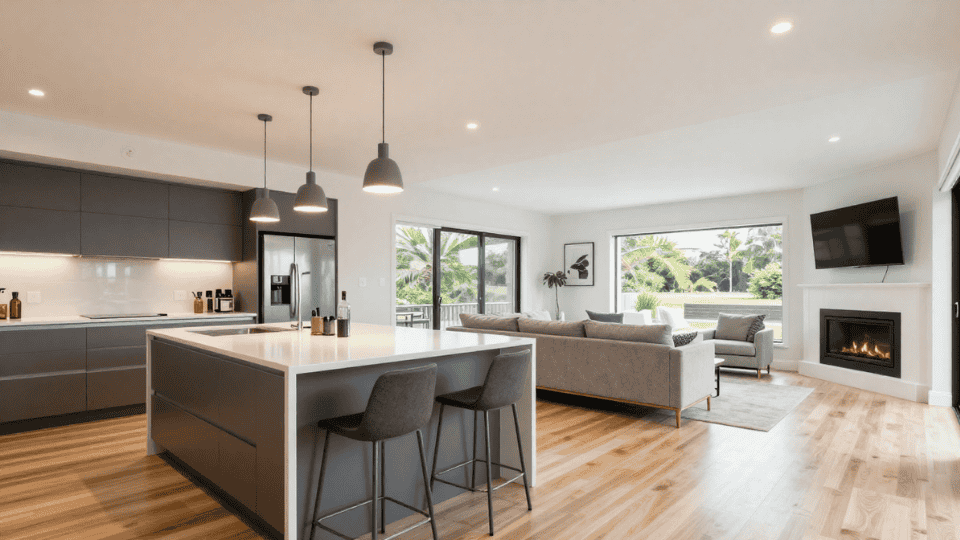
Thinking about knocking down walls? Open floor plans sound great until you actually live in one.
Your kitchen smells reach the living room. Noise bounces everywhere. And somehow, that big space feels cluttered.
But here’s what works: smart zoning tricks that give you openness without the headaches. You can have connected spaces that still feel organized and private when you need them.
This guide covers what open floor plans actually are, practical ideas you can use today, and how to design yours around real life.
Let’s get started.
What is an Open Floor Plan?
An open floor plan removes walls between main living spaces, such as the kitchen, dining area, and living room. This layout creates one large, connected space instead of separate rooms.
It became popular in modern homes because it makes spaces feel bigger and brighter. The design lets you see from one area to another without barriers.
Many homeowners choose open floor plan ideas to improve family interaction and make entertaining guests easier. The concept focuses on flow, natural light, and flexible use of space.
Open Floor Plan vs. Traditional Layout
| Feature | Open Floor Plan | Traditional Layout |
|---|---|---|
| Walls | Few or no walls between main areas | Separate rooms with full walls |
| Space Feel | Larger, more spacious | Smaller, more enclosed |
| Natural Light | Flows freely throughout | Limited to individual rooms |
| Privacy | Less privacy, more togetherness | More privacy in each room |
| Noise Control | Sound travels easily | Better sound separation |
| Heating/Cooling | Harder to control the temperature | Easier to heat/cool individual rooms |
| Flexibility | Easy to change furniture layout | Fixed room purposes |
| Social Interaction | Encourages family time | Allows for quiet, separate activities |
| Cost to Build | Often less expensive | More materials are needed for the walls |
Benefits of Open Floor Plans
Open floor plan ideas offer real advantages for modern living. Here’s why so many homeowners prefer this layout over closed-off rooms.
- Spaciousness & Flow: The lack of walls makes even small homes feel much larger and lets you move freely between spaces.
- Natural Light: Sunlight spreads throughout the area rather than stopping at walls, reducing the need for artificial lighting during the day.
- Social Interaction: Parents can cook dinner while watching kids play, and hosts can chat with guests instead of being stuck alone in the kitchen.
- Flexibility & Real Estate Appeal: You can rearrange furniture easily to fit your lifestyle, and buyers often pay more for homes with open layouts.
14 Open Floor Plan Ideas with How to Create
Now let’s look at practical ways to make your open space work better. These open-floor-plan ideas help you create zones, add style, and address common layout challenges.
1. Living Room Furniture Layout
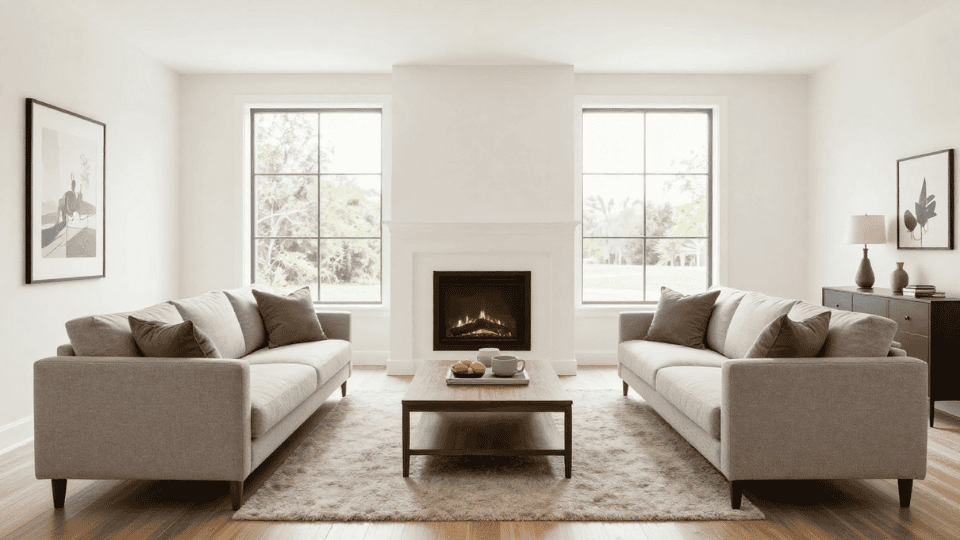
How to Create: Start by placing your sofa and chairs to face each other or toward a focal point. This could be your TV, fireplace, or a large window with a great view.
Keep walkways clear so people can move through easily. Group furniture close enough for conversation, but leave space to breathe.
| Pros | Cons |
|---|---|
| Encourages conversation and family time | Can feel cramped without proper spacing |
| Creates a clear gathering spot | Hard to arrange in very large spaces |
| Works with any decor style | May block natural traffic flow if poorly placed |
2. Kitchen Island as a Divider
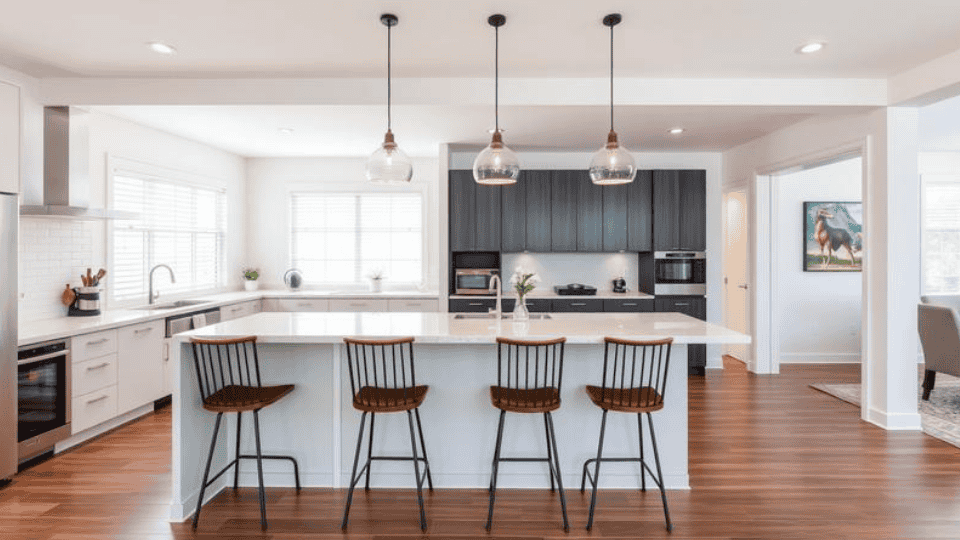
How to Create: Install a large kitchen island or peninsula between your cooking area and living space. Choose one with storage underneath and overhang for bar stools.
Make sure you leave at least 3 feet on all sides for walking. Add pendant lights above to highlight the division.
| Pros | Cons |
|---|---|
| Provides extra counter space and storage | Takes up significant floor space |
| Offers casual seating for meals or homework | Can block sightlines in smaller homes |
| Acts as a natural room divider | Expensive to install if not already present |
3. Flexible Dining Area
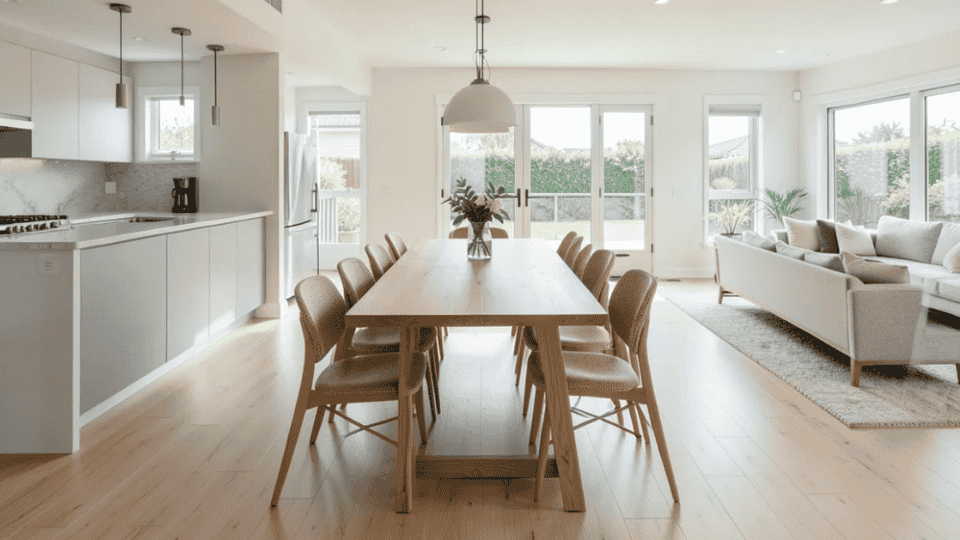
How to Create: Pick a dining table with leaves that expand or choose modular pieces you can rearrange. Consider benches instead of chairs for easy tucking away.
Place the table where it won’t block the main walkways. You can move it closer to the kitchen for daily meals or center it for parties.
| Pros | Cons |
|---|---|
| Adapts to different group sizes easily | Can look messy when pieces are mismatched |
| Saves space when not entertaining | Requires storage for extra leaves or pieces |
| Great for multi-use spaces | Moving furniture frequently can scratch floors |
4. Multi-Purpose Zones (Play, Office, etc.)
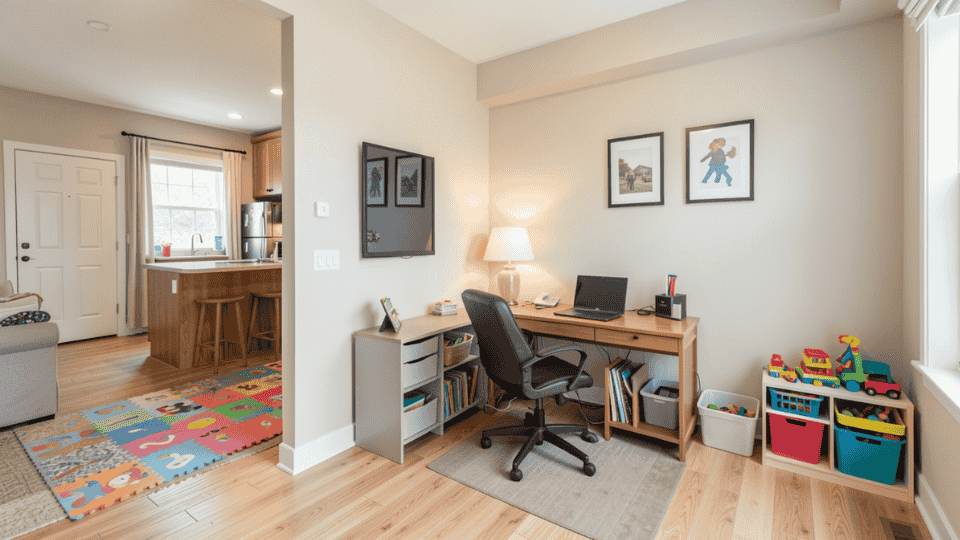
How to Create: Use bookshelves, console tables, or the back of your sofa to separate activity areas. Place a desk in one corner for work and a play mat in another for kids.
Different rugs under each zone help define the spaces. Keep related items stored together in baskets or bins.
| Pros | Cons |
|---|---|
| Maximizes every inch of your home | Noise travels between zones easily |
| Perfect for families with different needs | Can feel chaotic without organization |
| No construction needed | Visual clutter if not well-maintained |
5. Defined Spaces with Lighting
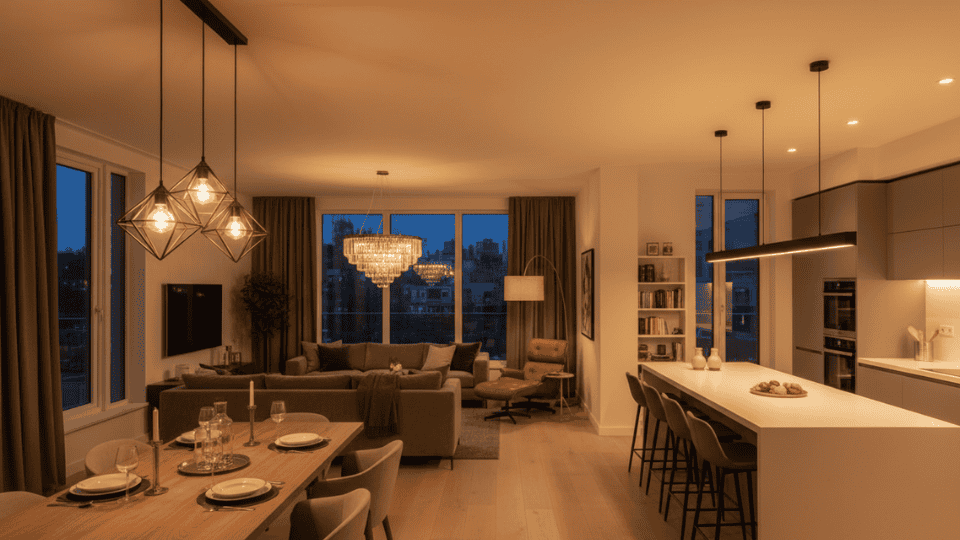
How to Create: Hang pendant lights over your dining table and island to mark those spots. Use floor lamps near reading chairs and table lamps on side tables.
Install dimmer switches so you can change the mood. Layer your lighting with overhead, task, and accent options.
| Pros | Cons |
|---|---|
| Creates ambiance and visual boundaries | Too many fixtures can feel cluttered |
| Highlights specific activities or areas | Requires multiple electrical outlets |
| Easy to adjust and update | Can be expensive with quality fixtures |
6. Use of Area Rugs
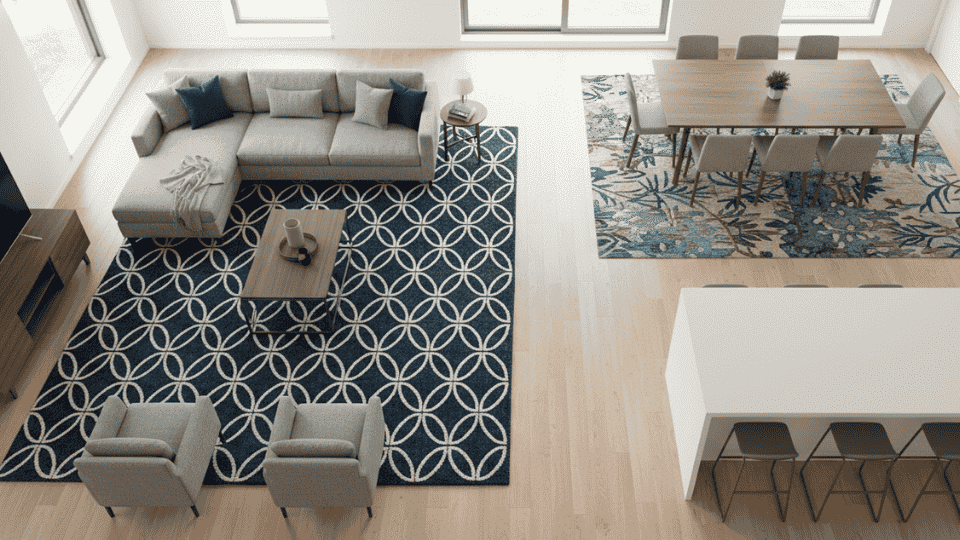
How to Create: Choose large rugs that fit under all furniture legs in each zone. A rug under the sofa and chairs defines the living area.
Another mark under the dining table marks that space. Pick colors and patterns that work together but don’t match exactly.
| Pros | Cons |
|---|---|
| Affordable way to define zones | Can shift or bunch up with use |
| Easy to change with seasons or trends | May create tripping hazards |
| Adds warmth and texture | Needs regular cleaning and maintenance |
7. Wall-Mounted Storage
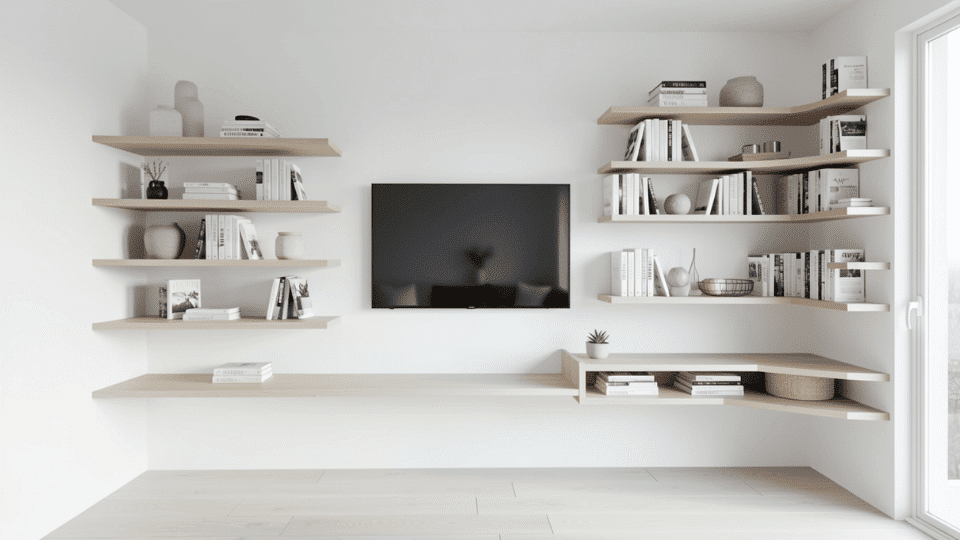
How to Create: Install floating shelves above your sofa or desk for books and decor. Add wall-mounted cabinets in the kitchen for dishes and pantry items.
Use pegboards or wall grids for organizing supplies. Mount your TV to free up floor space.
| Pros | Cons |
|---|---|
| Keeps floors clear and open | Requires drilling into walls |
| Looks modern and clean | Weight limits must be followed |
| Makes cleaning easier | Not suitable for renters without permission |
8. Sliding Doors & Glass Partitions
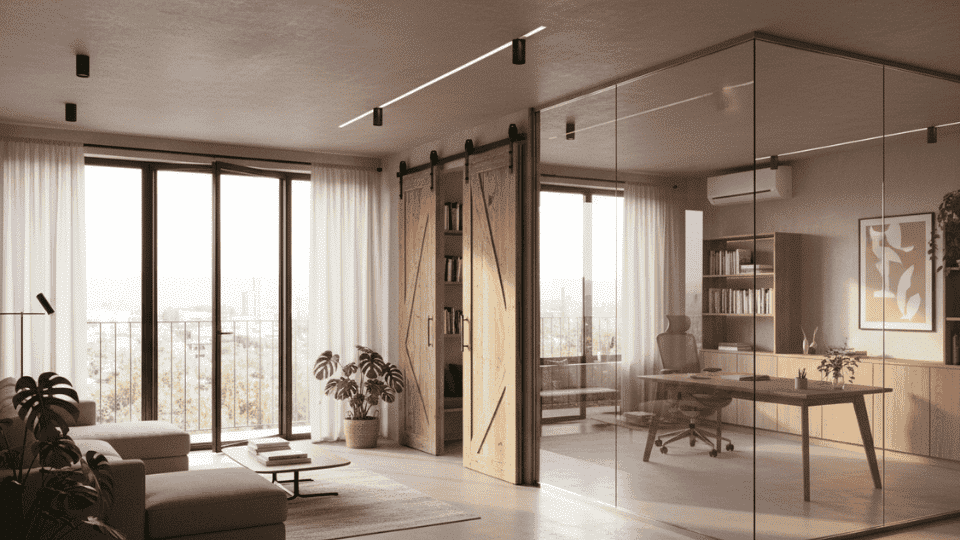
How to Create: Install sliding barn doors or pocket doors between spaces you sometimes want to close off. Use frosted or clear glass panels that slide along tracks.
Choose hardware that matches your home’s style. Make sure doors don’t block furniture when open.
| Pros | Cons |
|---|---|
| Offers privacy when needed | Glass shows fingerprints and smudges |
| Maintains an open feel when not in use | Professional installation is often required |
| Great for home offices or guest rooms | Can be costly compared to curtains |
9. Vertical Gardens & Tall Plants
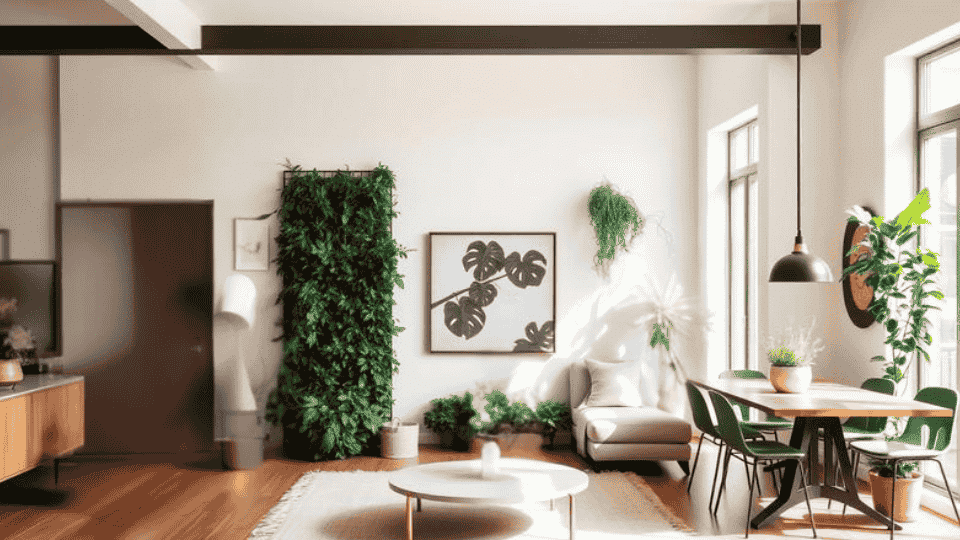
How to Create: Place tall plants like fiddle leaf figs or snake plants between living zones. Create a living wall with mounted planters or a freestanding plant shelf.
Group several plants together for more impact. Choose low-maintenance varieties if you’re not a plant expert.
| Pros | Cons |
|---|---|
| Adds life and improves air quality | Needs regular watering and care |
| Natural way to divide spaces | Can attract bugs if not maintained |
| Brings outdoor feel inside | May block light or views if too large |
10. Cohesive Color Palette
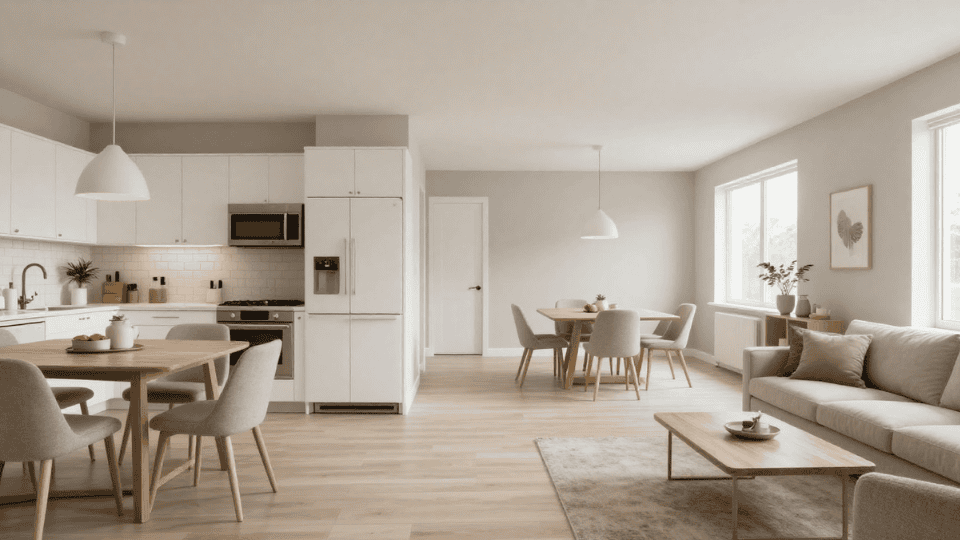
How to Create: Pick three main colors for your entire open space and stick to them. Use the lightest shade on walls and the darkest as accents.
Repeat colors across different zones to guide your eye smoothly. Add pops of color with pillows, art, and accessories.
| Pros | Cons |
|---|---|
| Makes the space feel larger and unified | Can feel boring without texture variation |
| Easier to shop for new items | Limits your color options |
| Creates a calm, organized look | Too neutral may lack personality |
11. Ceiling Treatments
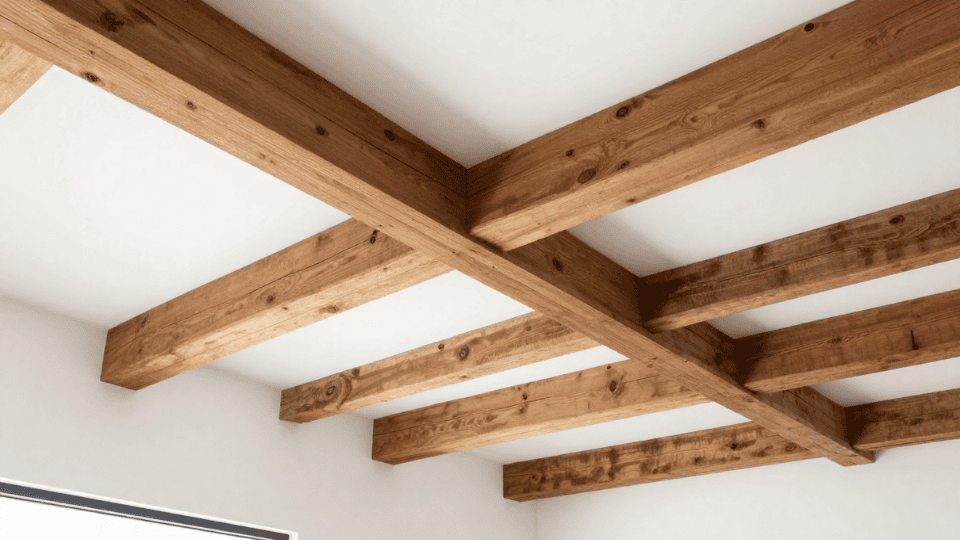
How to Create: Add exposed wooden beams above your living area or dining space. Install a tray ceiling or coffered ceiling in one zone. Paint different ceiling heights in subtle contrasting colors.
Use tongue-and-groove planking for texture.
| Pros | Cons |
|---|---|
| Adds character and visual interest | Expensive renovation project |
| Helps separate areas without walls | May lower ceiling height perception |
| Works with many design styles | Not DIY-friendly for most homeowners |
12. Open Shelving
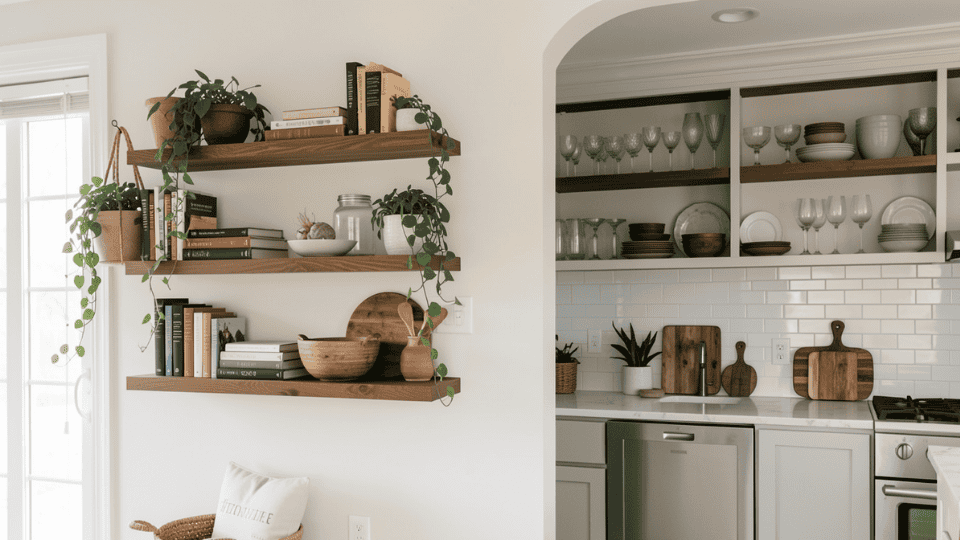
How to Create: Replace upper kitchen cabinets with floating shelves to display dishes and glassware. Add open shelving in your living area for books and family photos.
Keep items organized and limit what you display. Use baskets to hide things you want.
| Pros | Cons |
|---|---|
| Makes spaces feel larger and airy | Items collect dust quickly |
| Easy access to everyday items | Everything must look neat |
| Shows off your style | Less storage than closed cabinets |
13. Mirrors for Light & Space
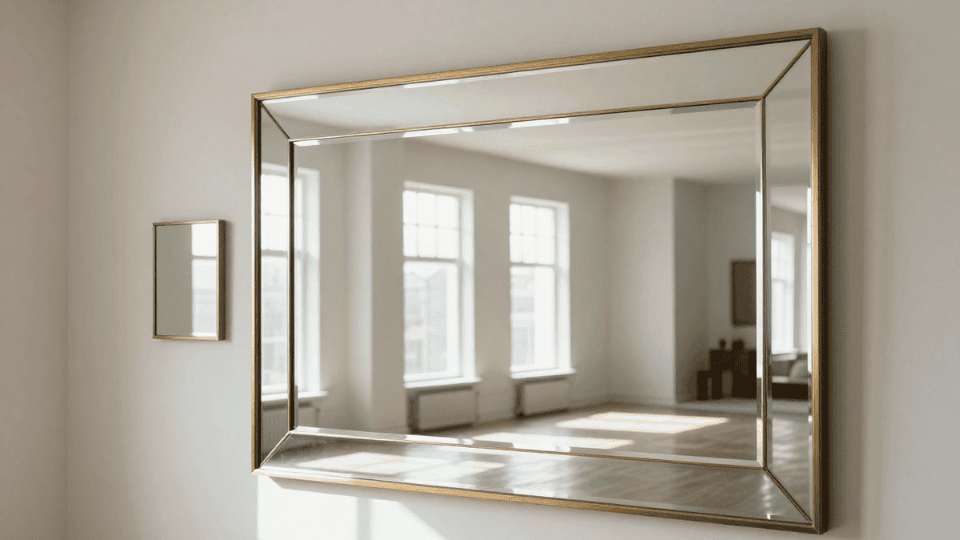
How to Create: Hang a large mirror across from windows to reflect natural light. Place mirrors behind lamps to amplify their glow.
Use mirrored furniture or decor accents throughout. Keep mirrors at eye level for the best effect.
| Pros | Cons |
|---|---|
| Makes rooms feel twice as large | Can create odd reflections if poorly placed |
| Bounces light into dark corners | Requires frequent cleaning |
| Affordable compared to renovations | Too many can feel disorienting |
14. Accent Walls or Statement Features
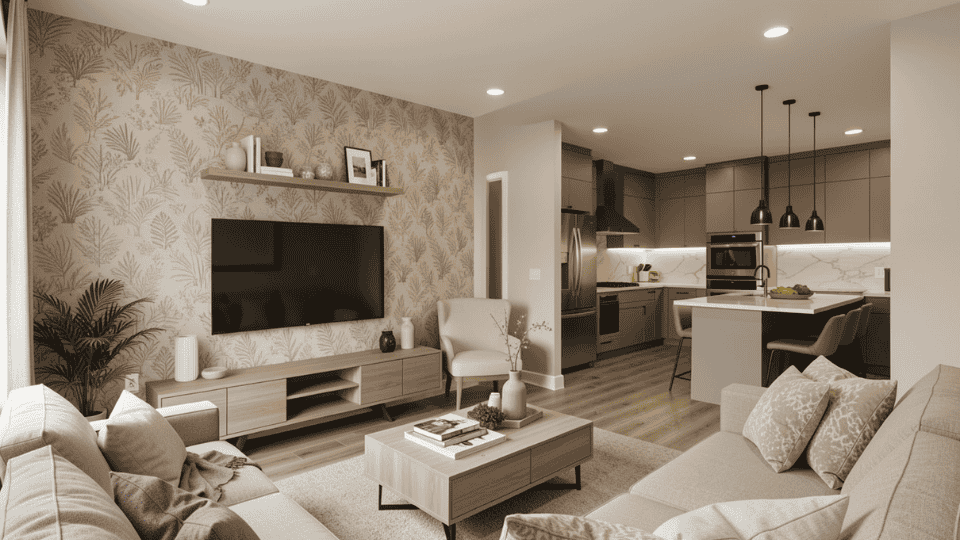
How to Create: Paint one wall in a bold color or add textured wallpaper. Install a stone or brick feature wall behind your sofa or TV.
Use wood paneling or shiplap for warmth. Keep other walls simple so the accent wall stands out.
| Pros | Cons |
|---|---|
| Creates a focal point instantly | Can overwhelm small spaces |
| Adds depth and personality | Trends change, and may look dated later |
| Relatively affordable project | Bold choices are harder to sell later |
Design Principles for Open Floor Plans
Good open-floor-plan ideas start with smart design choices. Follow these basic principles to make your space work for your daily life.
- Understand Your Lifestyle: Think about how you actually use your home every day before arranging furniture or choosing colors.
- Plan for Traffic Flow: Keep at least 3 feet of clear walkway space so people can move through without bumping into furniture.
- Use Color Schemes & Zoning: Pick one main color for walls throughout, then use accent colors to visually separate each zone.
- Balance Openness with Privacy: Create flexible spaces where you can close off areas when needed using curtains, screens, or sliding doors.
- Consider Scale and Proportion: Choose furniture that fits your space so the room doesn’t feel cramped or awkward.
Is the Open Floor Plan Still in Style?
Yes, open floor plans remain popular, but they’re changing. Homeowners now want some separation instead of completely open spaces.
The pandemic showed us that people need quiet spots for work and privacy. Modern open floor plan ideas blend openness with flexible dividers, such as sliding doors or partial walls.
Buyers still prefer open kitchens and living areas over closed-off rooms. However, they also want the option to close off spaces when needed.
The trend is moving toward “broken plan” designs that offer both connection and privacy. Real estate agents report that homes with open layouts still sell faster and for higher prices than traditional layouts.
The Bottom Line
Open floor plan ideas work best when they fit your real life, not just look good in photos.
The key is balancing openness with practical zones that give you space to cook, work, relax, and entertain without feeling overwhelmed.
Start small. Pick two or three ideas from this guide that match your needs. Maybe add a kitchen island or define zones with rugs. Test them out before making permanent changes.
Your home should work for you, not against you. Which idea will you try first? Share your thoughts in the comments below, and let us know if you need help planning your space.
We’d love to hear how your project turns out!