
Staghorn ferns have earned a reputation for being hard to keep alive.
But honestly, most people run into problems because nobody told them one important thing: these plants do not follow regular houseplant rules.
They do not grow in soil. They do not respond well to being treated like a pothos or a peace lily. Once that clicks, everything starts to make sense.
This guide covers every part of staghorn fern care, from picking the right light to watering, mounting, fertilizing, and fixing the most common problems.
No recycled tips. No filler. Just clear, practical information that helps your plant stay healthy and look great all year long.
What Is a Staghorn Fern?
Staghorn ferns (Platycerium spp.) are tropical, tree-growing plants native to the rainforests of Australia, Southeast Asia, and Africa.
They belong to the Polypodiaceae family and are epiphytes, meaning they grow on other plants rather than in soil.
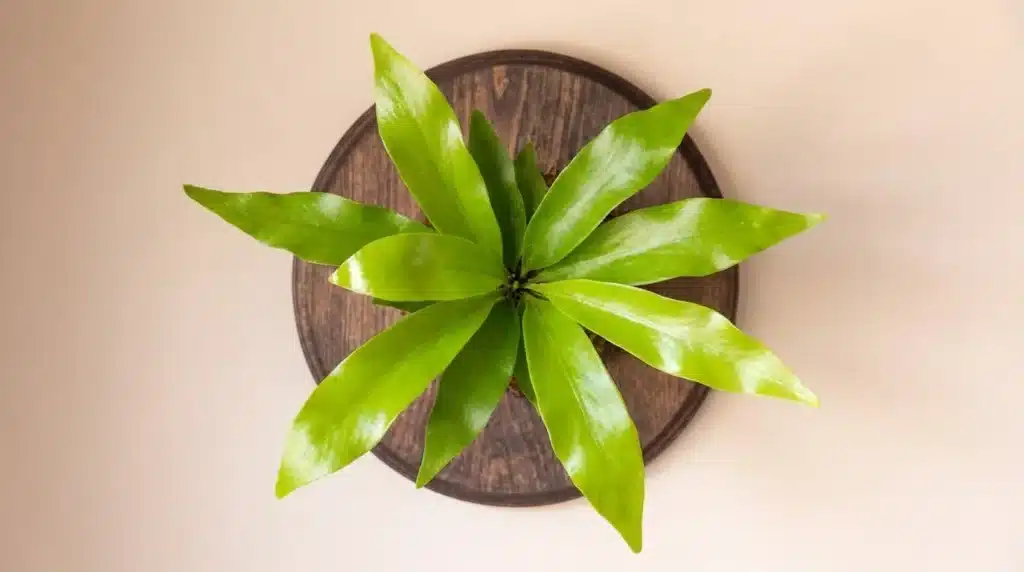
They produce two types of leaves: flat, round shield fronds at the base that protect the roots and absorb nutrients, and large, forked antler fronds that grow upward and resemble a deer’s antlers.
There are about 18 known species, with Platycerium bifurcatum being the most widely grown and the easiest to manage indoors.
Staghorn Fern Care at a Glance
Before getting into specifics, here is a quick snapshot of what staghorn ferns need to stay healthy. Keep this table handy as a fast reference anytime something feels off.
| Care Factor | What You Need to Know |
|---|---|
| Light | Bright, indirect light. No direct sun. |
| Water | Once a week in summer. Every 2 to 3 weeks in winter. |
| Humidity | 50 to 80% preferred |
| Temperature | 60 to 80°F (16 to 27°C). Not below 55°F. |
| Fertilizer | Monthly in spring and summer. None in winter. |
| Growing Medium | Orchid bark and sphagnum moss, or mounted on wood |
| Toxicity | Non-toxic to cats, dogs, and humans |
| Lifespan | 50 years or more with proper care |
How to Care for a Staghorn Fern
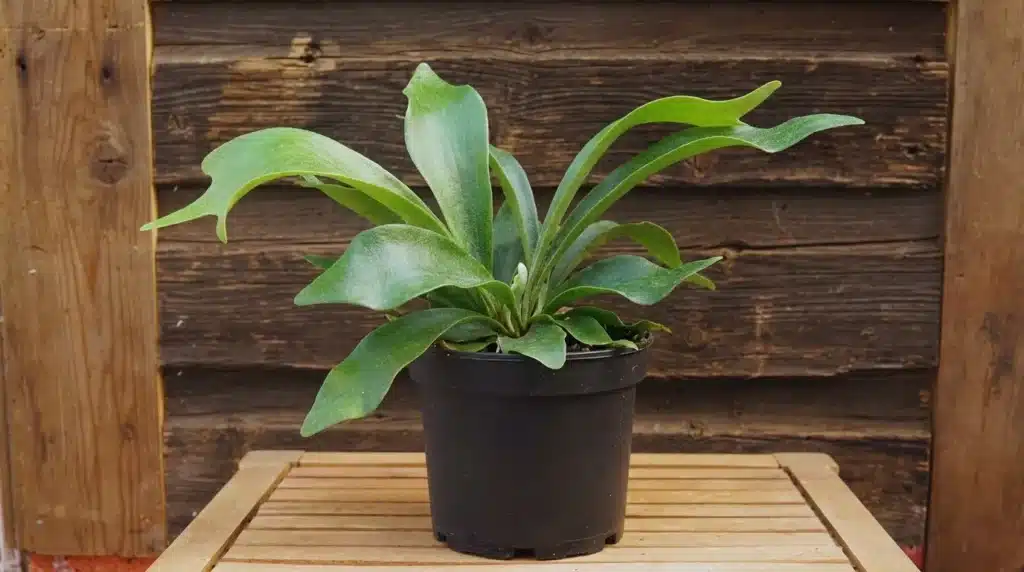
Staghorn fern care comes down to one thing: understanding how this plant grows in the wild, then recreating those conditions at home as closely as you can. Each section below covers a key part of that process.
1. Light
Staghorn ferns need bright, indirect light. In the wild, they grow under a forest canopy and receive filtered, dappled light throughout the day. Keep them near a north or east-facing window indoors. Avoid direct afternoon sun. It can burn the fronds within days.
Pro Tip: If mounted on a wall, position it slightly above or to the side of a window, not directly in front of one.
2. Watering
This is where most people go wrong. Staghorn ferns absorb water through both their roots and their shield fronds. This means you water them very differently from how you water a regular potted plant.
- Mounted Plants: Take the mount off the wall before watering. Soak it in a sink or bathtub for 15 to 30 minutes. Let it dry fully before hanging it back up. Water again only when the moss around the root ball feels dry.
- Potted Plants: Water when the top 1 to 2 inches of the mix feel dry. Pour at the base, not over the fronds. Let it drain fully and never leave it sitting in standing water.
- By Season In summer, water about once a week. In winter, cut back to every 2 to 3 weeks. Hot or dry climates may need watering every 4 to 5 days during peak summer.
Watch the fronds: Brown tips mean the plant needs more water. Black or mushy fronds at the base mean you are watering too much. Cut back right away.
3. Humidity and Temperature
Staghorn ferns come from tropical rainforests, and dry indoor air is one of the top reasons they fail. Aim for 50-80% humidity.
Bathrooms, kitchens, and laundry rooms work well naturally. In dry climates or during winter, place a humidifier nearby or mist the shield fronds and moss regularly.
Keep temperatures between 60 and 80°F (16 to 27°C). Most species cannot handle anything below 55°F. Keep the plant away from cold drafts, air conditioning vents, and cold exterior walls in winter.
P. bifurcatum and P. veitchii can survive down to 30°F, but that is not a condition to aim for. Plants can stay outdoors year-round in USDA Zones 9 and above.
4. Soil and Potting Mix
Skip regular potting soil entirely. It holds too much moisture and cuts off air from the roots. Use a very loose, well-draining mix of orchid bark and sphagnum moss instead.
Young plants can start in a moist potting mix, but older, larger plants do much better mounted on wood. If staying in a pot, repot every 1 to 2 years and move up only one size at a time.
5. Fertilizing
Staghorn ferns do not need heavy feeding. Feed once a month during spring and summer with a balanced, water-soluble fertilizer (a 1:1:1 ratio works well).
Apply it the same way you water: either by soaking the root ball or by pouring it onto the moss. Stop feeding completely in fall and winter. Too much fertilizer causes leaf damage, so always follow the label.
Pro Tip: Some growers tuck a small piece of banana peel inside the shield fronds as a slow-release potassium source. It breaks down naturally and feeds the roots over time.
6. Mounting
Mounting is the most natural way to grow a staghorn fern. It supports the plant’s growth habit and allows it the behave as it would in the wild.
What You Need
- A piece of untreated wood (cedar or pine works well)
- Sphagnum moss or coir as the growing medium
- Soft twine or plastic strips to hold the plant (avoid copper wire; it harms the roots)
- A hook or bracket for hanging
Step-by-Step
- Soak the moss in water, then squeeze out the excess.
- Form the wet moss into a rounded mound in the center of the wood.
- Place the fern on top of the moss with the shield fronds touching the board directly.
- Secure it with soft twine or plastic strips.
- Hang in a spot with bright, indirect light.
- As the fern grows, the fronds will spread and gradually cover the ties naturally.
When to Remount: Remount when the shield fronds grow to the edges of the current board. If the plant becomes very large, remounting may not be practical. That is fine. Staghorn ferns handle tight conditions well.
7. Seasonal Adjustments
Your staghorn fern has different needs at different times of year. Matching your care routine to the season keeps it healthy through every change.
- Spring: Growth picks up again. Resume monthly feeding. Increase watering gradually as temperatures rise. Good time to remount if the plant has outgrown its board.
- Summer: Most active growing season. Water more often in hot or dry weather. Keep humidity up with regular misting. Move outdoors to a shaded spot if you want.
- Fall: Start reducing watering. Stop fertilizing. If kept outside, bring inside before nighttime temps drop below 55°F.
- Winter: Water only every 2 to 3 weeks. No feeding. Keep away from heating vents and cold windows. A grow light can help in rooms with very poor natural light.
How to Propagate a Staghorn Fern
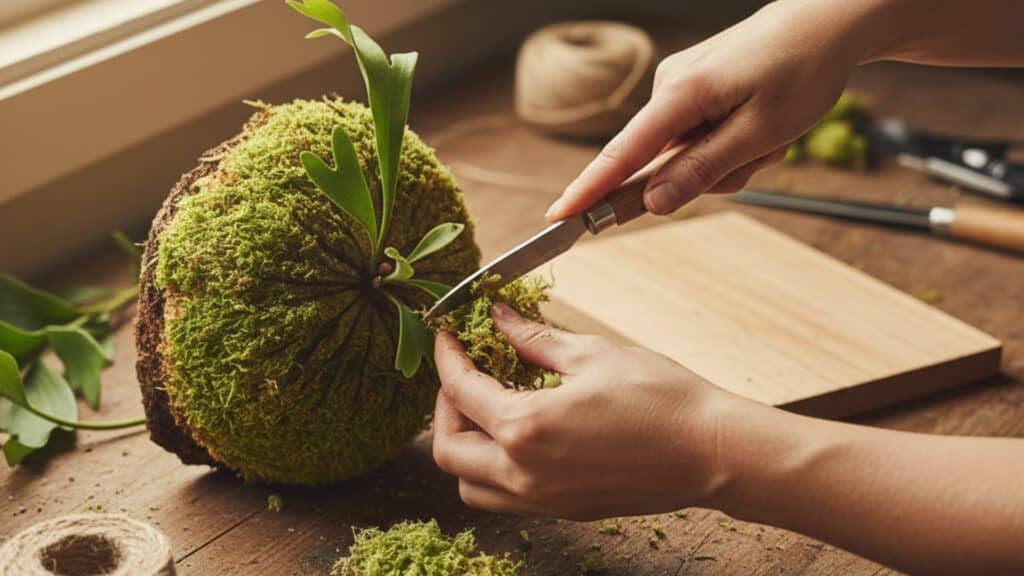
Good news: you do not need any special tools or skills to multiply your staghorn fern. There are three ways to do it, and at least one of them is very manageable for beginners.
1. From Pups (Easiest Method)
Pups are small offshoots that grow from the base of a mature plant. Wait until the pup has its own shield fronds before you remove it. Use a clean, sharp knife to cut it away from the parent.
Mount or pot it in fresh, moist sphagnum moss and keep it warm and consistently moist until it settles in. This can take a few weeks.
2. By Division
Large plants with multiple growing points can be divided carefully. Cut so that each piece has antler fronds, shield fronds, and some roots. Mount each section separately on its own board.
Keep divisions warm and moist until they take hold. This takes patience but works well on very mature, established plants.
3. From Spores (Advanced Only)
Spores sit on the underside of mature antler fronds. Spore propagation is very slow and is better suited to experienced growers.
The spores develop into tiny, heart-shaped structures called gametophytes, which eventually grow into full plants. Most home growers skip this method entirely and stick to pups or division instead.
Common Staghorn Fern Problems and How to Fix Them
Even with the best care, problems can show up. Most of them are caused by watering, light, or humidity, and they are usually very fixable. Here is a quick breakdown to help you spot and sort out the issue fast.
| Problem | Likely Cause | Fix |
|---|---|---|
| Brown tips or crispy edges | Low humidity or underwatering | Mist more often. Soak the mount. Move to a more humid spot. |
| Yellow or mushy fronds | Overwatering or poor drainage | Let the plant dry out fully. Improve airflow. Hold off watering. |
| Soft, spreading brown spots on shield fronds | Root rot or fungal issue | Reduce watering. Improve air circulation around the plant. |
| Pale fronds or stunted growth | Not enough light or nutrients | Move to brighter indirect light. Start monthly feeding. |
| White cottony clusters at the base | Mealybugs | Remove with a cotton swab dipped in rubbing alcohol. |
| Small tan bumps on fronds | Scale insects | Remove by hand with tweezers. Check the plant regularly. |
Important: The natural white-grey coating on antler fronds is healthy. Do not try to wipe it off. It protects the plant and helps slow water loss.
How to Display a Staghorn Fern as Wall Art
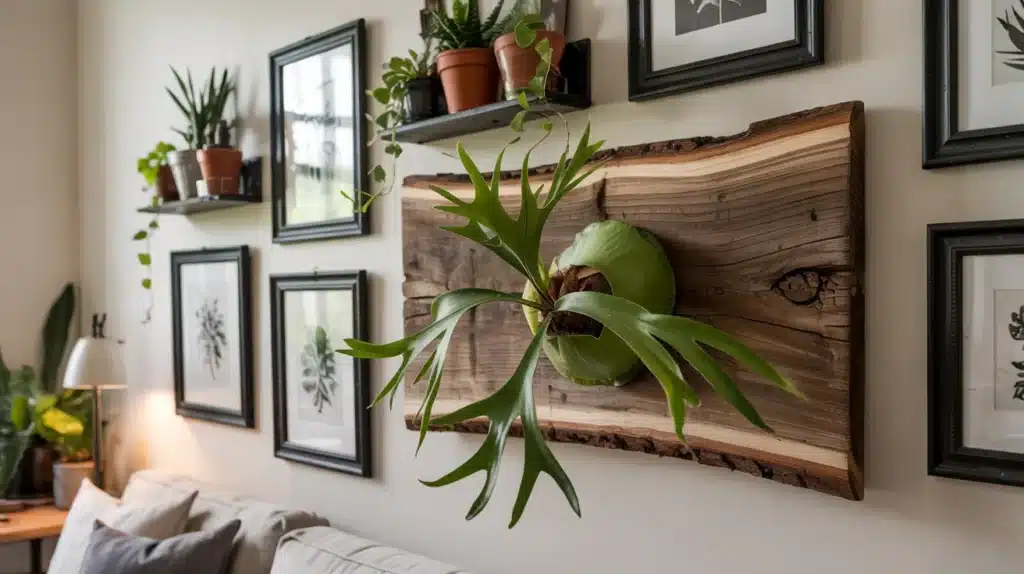
Staghorn ferns are one of the few plants that genuinely pull double duty as decor. With a bit of thought about placement and display, they can completely change the feel of a room.
- Rustic wood plank mount: A clean, natural look that works well in almost any room style.
- Gallery wall grouping: Two or three mounted ferns together create a layered, textured wall display.
- Bathroom display: You get both the plant’s humidity needs met and a spa-like look at the same time.
- Paired with macrame: Warm, earthy, and very effective for a cozy, natural room setup.
- Wire basket display: A solid choice for industrial or modern-style interiors.
- Rotated monthly: Turning the mount slightly every few weeks ensures all sides of the plant receive even light.
How Long Do Staghorn Ferns Live?
With proper care, staghorn ferns can live for 50 years or more, making them one of the longest-living houseplants you can own.
Growth is slow, especially indoors, but a healthy plant continues to expand steadily over the years. A well-kept staghorn can eventually grow large enough to fill an entire wall section.
Many families pass them down through generations, much like heirloom furniture. That long lifespan is exactly what makes getting the care right genuinely worth the effort.
Closing Remarks
Staghorn fern care is not complicated once you know what this plant actually needs.
Keep it away from direct sunlight. Water is based on the season, not the calendar. Give it humidity. Mount it if you can. And most importantly, do not panic when the shield fronds turn brown.
That is completely normal. These plants are slow growers, but they reward patience in a big way. A well-kept staghorn can outlive most houseplants by decades, making every bit of effort worth it.
Got a staghorn at home? Drop a comment below and let us know how it is doing. We would love to hear from you.
Frequently Asked Questions
How Do You Make a Staghorn Fern Happy?
Give it bright, indirect light, water it according to the season, and keep the humidity up. Those three things alone will keep most staghorn ferns in great shape.
Where Is the Best Place to Put a Staghorn Fern?
Near a north or east-facing window indoors, or in a bathroom where humidity is naturally higher. Avoid direct sunlight and cold drafts at all costs.
How Often Do You Water a Staghorn Fern?
Once a week in summer and every 2 to 3 weeks in winter. Always check if the moss feels dry first before watering again.
Should I Remove Dead Leaves From Staghorn Fern?
Never remove the brown shield fronds, even if they look dead. They still protect the roots. Only trim withered antler fronds if they are fully dried out.