
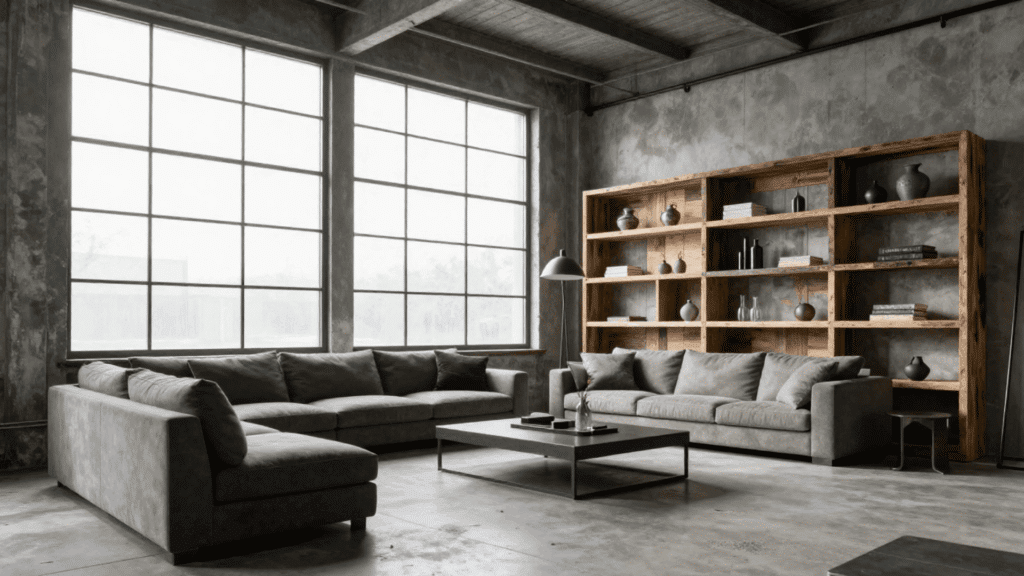
Walk into an old factory building turned into a home, and you’ll feel something different. The exposed brick, metal beams, and concrete floors tell a story.
Industrial interior design changes these rough elements into spaces people actually want to live in. It’s not about copying a warehouse. It’s about bringing character and honesty into your home.
This style works in apartments, houses, offices, and cafés. You don’t need a loft in Brooklyn to pull it off.
In this guide, you’ll learn what makes industrial design tick, how it evolved from factories to modern homes, and practical ways to use it room by room.
We’ll cover the core elements, popular variations, and fresh ideas.
What Is Industrial Interior Design?
Industrial interior design takes inspiration from old factories and warehouses. It celebrates raw materials like exposed brick, metal pipes, and concrete floors.
Unlike minimalist styles that hide everything, industrial design shows the bones of a building.
Contemporary styles use soft textures and warm colors, but industrial spaces keep things rough and unfinished. This style gained popularity as urban lofts became trendy living spaces.
People love how it mixes old character with modern living. The look feels honest and authentic. It works well in cities where historic buildings get new life as homes and offices.
The Origins of Industrial Interior Design
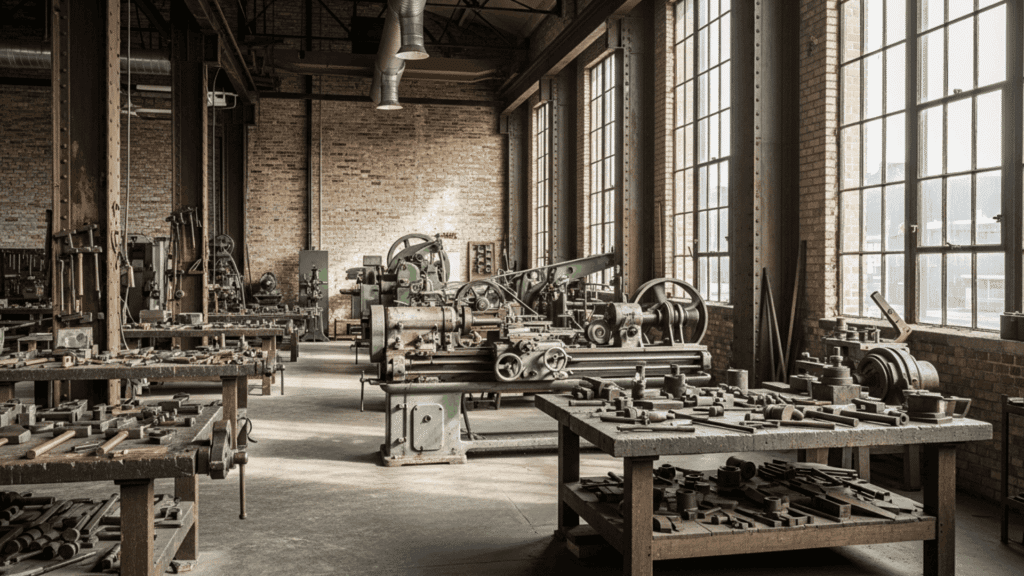
The Industrial Revolution changed how buildings looked and functioned. Factories in the late 1800s used steel, iron, and large windows. These structures focused on function over decoration.
By the mid-1900s, many factories had closed. Artists and designers moved into empty warehouses because rent was cheap. They kept exposed beams and brick walls.
This adaptive reuse created an industrial interior design. Today, both homes and commercial spaces use this style for character.
| Era | Key Development | Impact on Design |
|---|---|---|
| Late 1800s – Early 1900s | An Industrial Revolution builds functional factories | Steel beams, large windows, and open spaces become standard |
| 1950s – 1960s | Factory closures in urban areas | Empty buildings available for new uses |
| 1970s – 1980s | SoHo loft movement takes off | Raw materials and exposed structures become stylish |
| 1990s – 2000s | Industrial style enters the mainstream | Restaurants, offices, and homes adopt the look |
| 2010s – Present | Modern industrial fusion | Combines vintage elements with contemporary comfort |
Cities revived abandoned industrial areas in the 1960s and 1970s. New York’s SoHo district became famous for artist lofts. The loft movement spread worldwide. People wanted open floor plans and high ceilings. The raw, unfinished look became desirable. This shift influenced modern design approaches.
Core Characteristics of Industrial Interior Design
Industrial interior design stands out because of its honest approach to space. Here are the key traits that make this style unique.
- Exposed Structural Elements: Visible beams, ductwork, and brick walls stay on display instead of getting covered up.
- Raw, Authentic Materials: Brick, steel, concrete, and reclaimed wood form the foundation of every industrial space.
- Neutral & Earth-Toned Palette: Grays, blacks, and browns dominate, with warm accents such as rust or copper that add depth.
- Open, Airy Layouts: Minimal walls, high ceilings, and large windows create a sense of freedom and light.
- Functional Furniture & Vintage Pieces: Simple furniture with clean lines pairs well with industrial-era pieces such as metal stools or wooden crates.
- Industrial Lighting: Pendant lights, Edison bulbs, and metal fixtures provide both function and style.
Room-by-Room Guide to Industrial Interior Design
Bringing industrial style to different rooms requires specific approaches. Here’s how to make it work in every space of your home or business.
1. Living Room
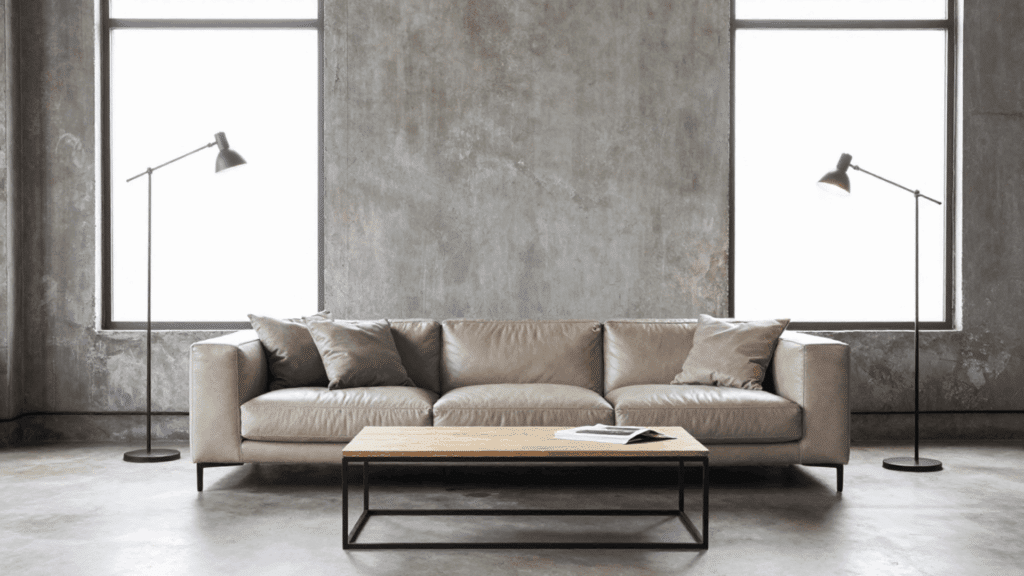
Start with a neutral leather or canvas sofa. Add a metal coffee table with a wooden or glass top. Use floor lamps with exposed bulbs for ambient lighting.
Keep the layout open by avoiding too many small pieces. Layer textures with throws and cushions to make the space comfortable.
2. Kitchen
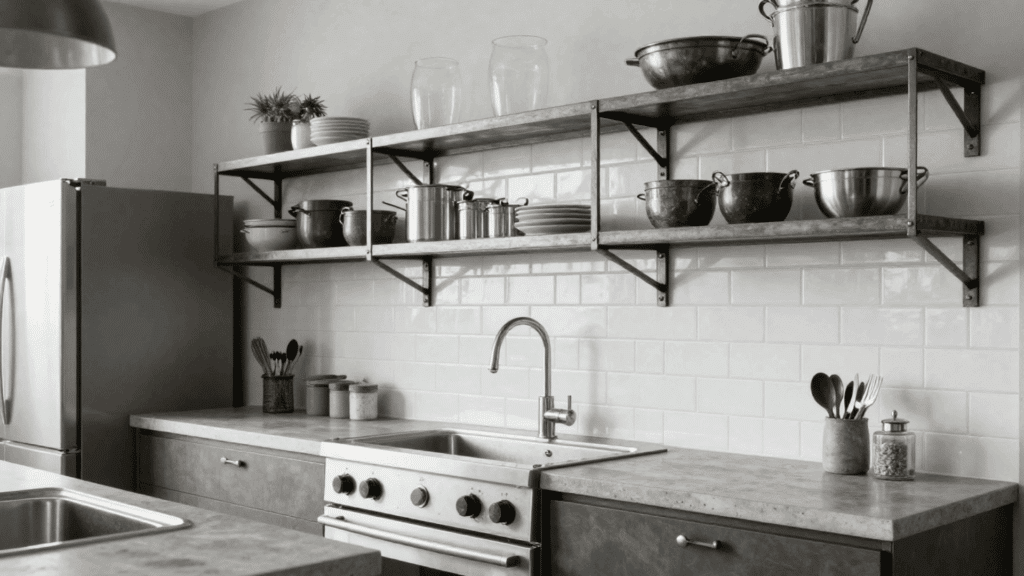
Choose stainless steel appliances and metal cabinet hardware. Install open shelving with metal brackets instead of upper cabinets.
Use subway tiles or exposed brick for the backsplash. Concrete countertops work well, but need proper sealing. Hang pendant lights over the island or sink area.
3. Bedroom
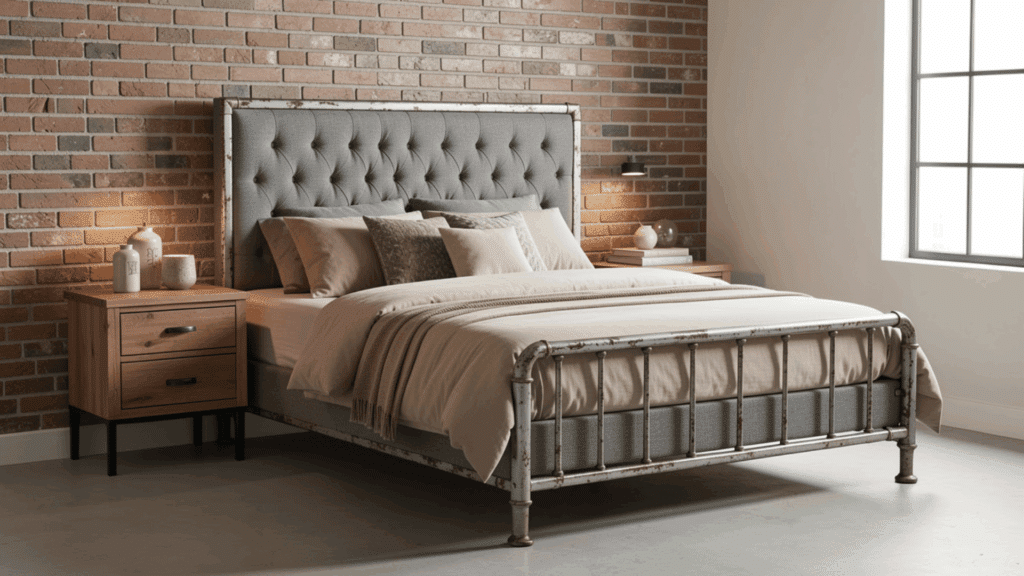
Balance hard surfaces with soft bedding and thick curtains. Use a metal bed frame with an upholstered headboard for comfort.
Add wooden nightstands with metal legs or accents. Keep walls neutral and add warmth through textiles. Industrial lighting can be used as reading lamps or overhead fixtures.
4. Bathroom
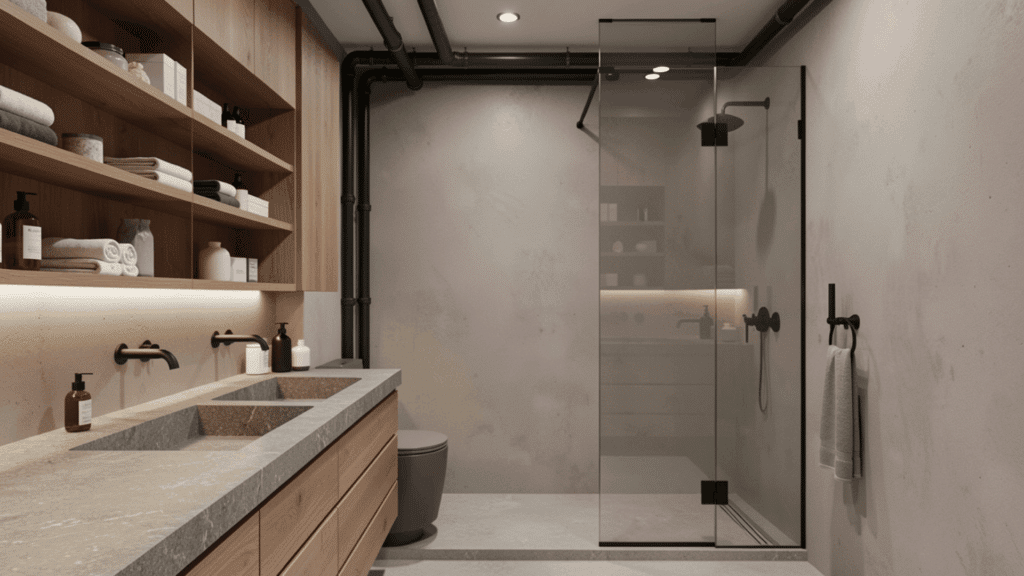
Install concrete or stone countertops for a raw look. Use frameless glass shower doors to maintain an open feel.
Choose matte black or brushed nickel fixtures. Expose pipes under the sink if they’re in good condition. Add wooden elements, such as shelving or mirror frames.
5. Office/Workspace
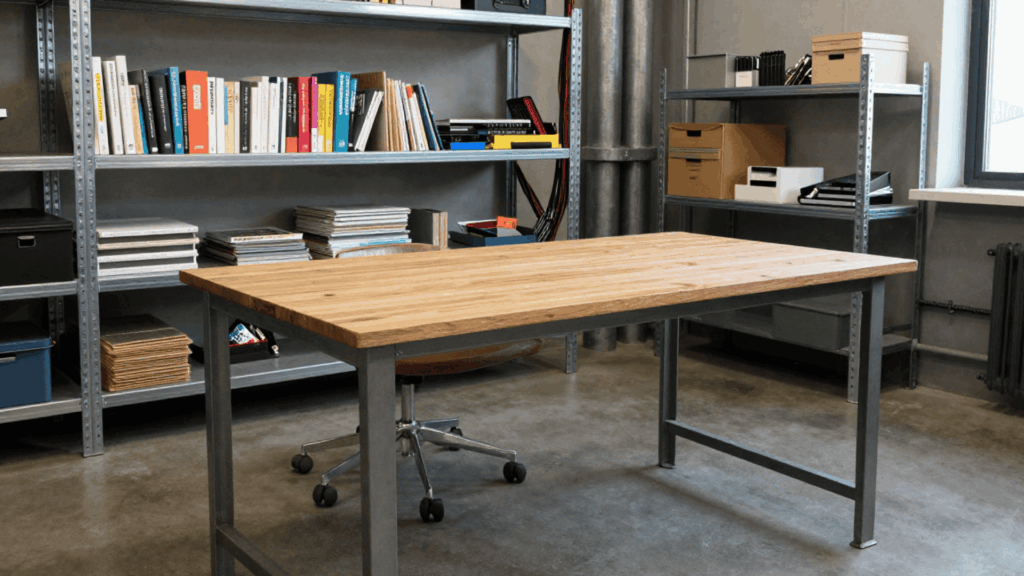
Select a solid desk with metal legs and a wooden top. Use open metal shelving for books and supplies. Keep cords visible or use industrial-style cord management.
Position your desk near windows for natural light. Add a comfortable chair that matches the functional aesthetic.
6. Commercial Spaces
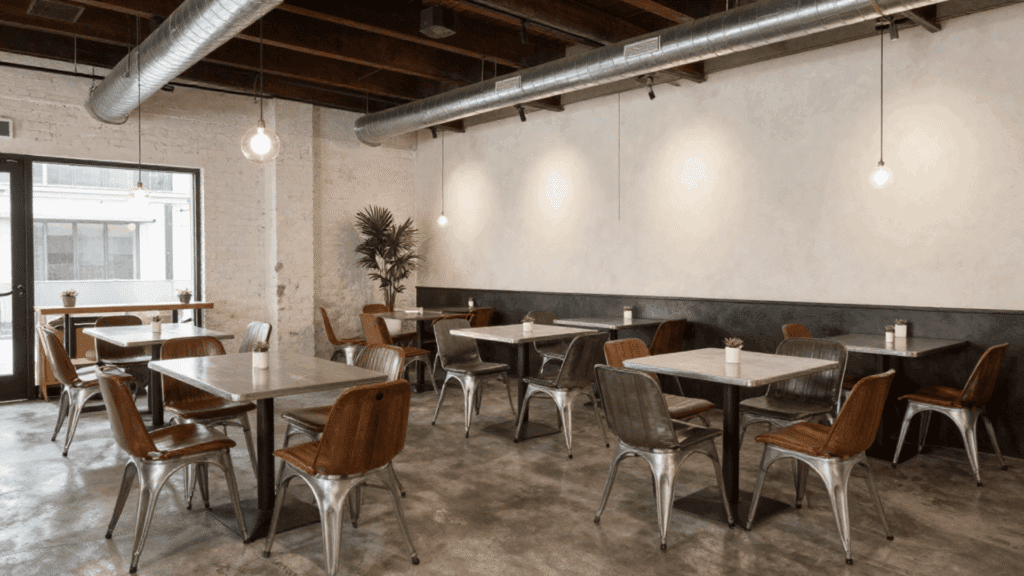
Cafés and restaurants benefit from communal metal tables. Keep ceilings high and exposed for a spacious feeling.
Use concrete or polished floors for easy cleaning. Install industrial pendant lights at varying heights. Mix vintage and modern seating for visual interest.
Should You Choose Industrial Interior Design?
Every design style has its strengths and challenges. Here’s what you need to know before committing to industrial interior design.
| Pros | Cons |
|---|---|
| Creates a bold, striking visual impact | Can feel cold or harsh without proper balance |
| Uses durable materials that last for years | May require custom elements that cost more |
| Offers flexible layouts for various needs | Needs careful planning to feel welcoming |
| Works well in both small and large spaces | Raw materials can show wear over time |
| Easy to maintain and clean | May not suit traditional home settings |
| Pairs well with other design styles | Finding authentic vintage pieces takes time |
Popular Industrial Interior Styles
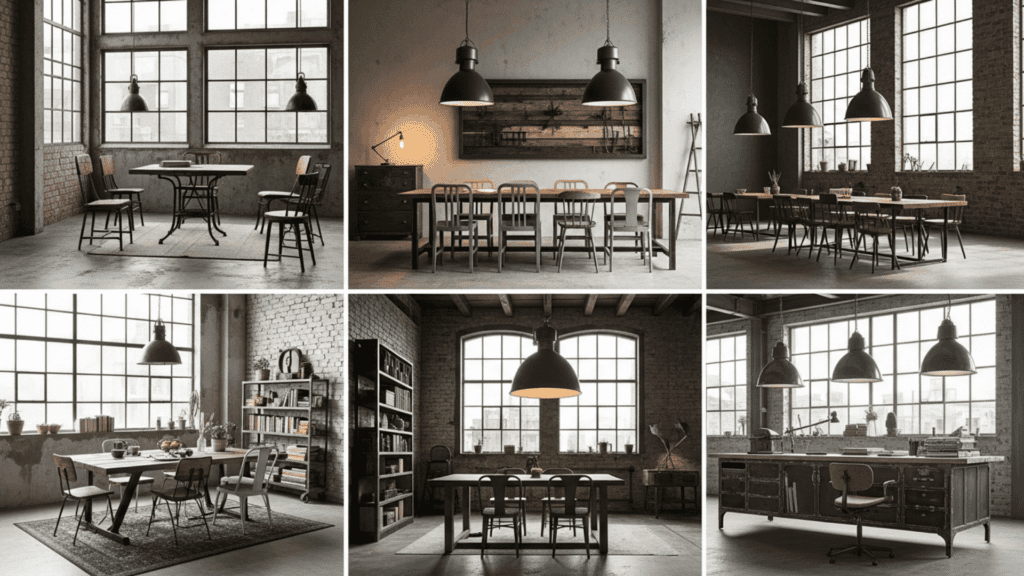
Industrial interior design comes in different flavors depending on your taste. Here are the main variations you’ll see today.
- Urban Industrial: This style captures the raw, city-loft feel with exposed brick, metal, and minimal decoration.
- Rustic Industrial: Warm woods blend with industrial bones to create a cozy yet edgy atmosphere.
- Minimalist Industrial: Clean lines and less clutter define this approach, focusing on essential pieces only.
- Modern Industrial: Contemporary comforts, such as plush seating and smart technology, merge with traditional industrial elements.
The Future of Industrial Interiors: What’s Coming
Industrial interior design is going green without losing its edge. Designers now use reclaimed materials and recycled steel to reduce environmental impact.
Solar panels and energy-efficient lighting fit naturally into the industrial aesthetic. The color palette is warming up, too. Terracotta, sage green, and rust tones appear alongside traditional grays.
Smart home technology integrates smoothly with exposed pipes and brick. Comfortable seating and soft textiles make spaces feel lived-in rather than stark.
The focus is shifting from pure authenticity to livable comfort. This means more insulation, better acoustics, and hidden storage solutions.
Industrial style keeps its character while becoming more practical for everyday life.
Final Verdict
Industrial interior design gives you freedom to create honest, functional spaces. The exposed materials, neutral colors, and open layouts work together to build character.
You can start small with one room or go all in. Mix vintage pieces with modern comfort. Add plants to soften the edges. The beauty of this style is its flexibility. It adapts to your needs and budget.
Industrial spaces feel authentic because they celebrate imperfection rather than hiding it. Whether you’re renovating a home or designing a café, these principles apply.
Ready to start your own project? Share your favorite industrial design idea in the comments below. Or tell us which room you’re planning to change first.
We’d love to hear your thoughts and answer any questions you have.