
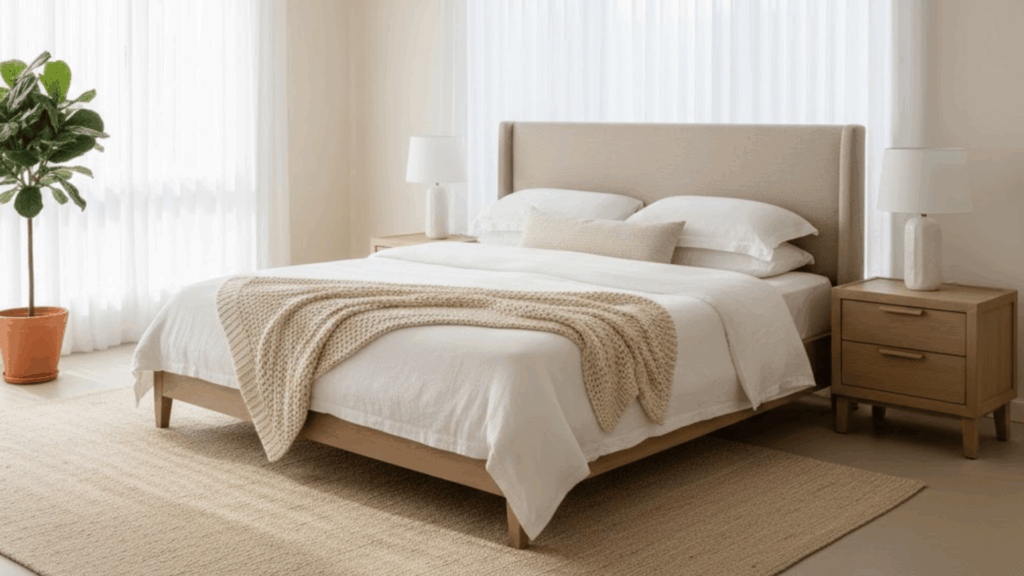
Want a king bed but worried your bedroom is too small? Here’s what matters: a king mattress is 76 by 80 inches, but that’s not the full story. You need space for the frame, walking paths, and other furniture, too.
Most rooms need at least 12-by-12 feet, but the right size depends on your layout and what else you plan to put in there.
This guide breaks down the exact room dimensions for different setups, explains how to measure your space correctly, and outlines what to do if your bedroom is on the smaller side.
You’ll learn which clearances actually matter, how room shape changes everything, and simple fixes that make tight spaces work.
What Are the Dimensions of a King-Size Bed?
A standard king-size mattress measures 76 inches wide by 80 inches long. That’s 6,080 square inches of sleeping space. But the mattress size is only part of the story.
Bed frames add 2 to 4 inches on each side. Headboards can extend another 2 to 6 inches from the wall. Footboards also take up space at the end.
So your actual bed footprint is typically 80 inches wide by 84 to 86 inches long. This matters when planning the size of your bedroom for a king bed. You can’t just measure the mattress. You need space for the frame, furniture, and walking room around it.
Think of it like parking a car. You don’t want a garage that’s exactly the size of the car. You need space to move. Your bedroom works the same way. The mattress dimensions are just your starting point.
King vs California King vs Queen Sizes
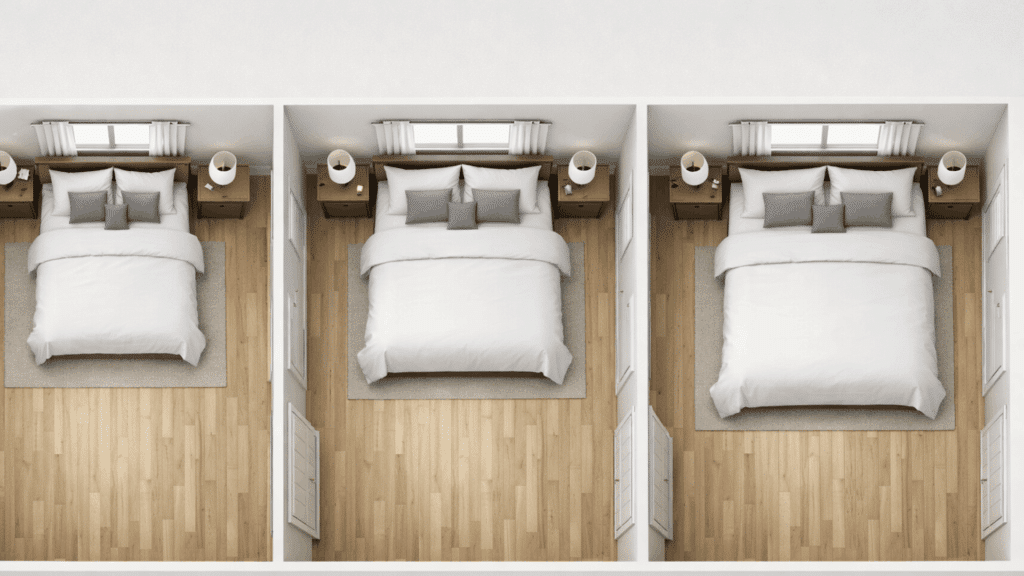
Not all beds are created equal. Let’s compare how different bed sizes affect your bedroom space.
| Bed Type | Width | Length | Total Area | Best For | Minimum Room Size |
|---|---|---|---|---|---|
| Queen | 60 inches | 80 inches | 4,800 sq in | Small to medium rooms | 10 x 10 feet |
| King | 76 inches | 80 inches | 6,080 sq in | Square rooms, more width | 12 x 12 feet |
| California King | 72 inches | 84 inches | 6,048 sq in | Narrow rooms, tall sleepers | 12 x 12 feet |
How Much Space Do You Really Need?
The bedroom size for a king bed is not just about fitting furniture. It’s about how easily you can move around without bumping into things.
Recommended Clearance Guidelines
Walking space makes or breaks a bedroom layout. Here’s what you need for a functional room.
- Minimum walking clearance: 30 inches on each side of the bed and at the foot.
- Comfortable clearance: 36 inches gives you breathing room and easier movement.
- Foot of the bed clearance: 36 to 42 inches if you place a dresser or bench there.
Anything less than 30 inches will feel restrictive. This is especially true in shared bedrooms where two people move around at the same time. You’ll constantly squeeze past furniture or turn sideways to walk.
Accessibility Considerations
Some bedrooms need extra space for mobility aids or medical equipment. Wheelchairs, walkers, and other aids require wider paths. Clearances closer to 42 inches work better and feel safer.
This also helps if someone has limited mobility or uses crutches. The extra space prevents accidents and makes daily routines easier. When determining your bedroom size for a king bed, account for these needs from the start.
How to Measure Your Bedroom for a King Bed?
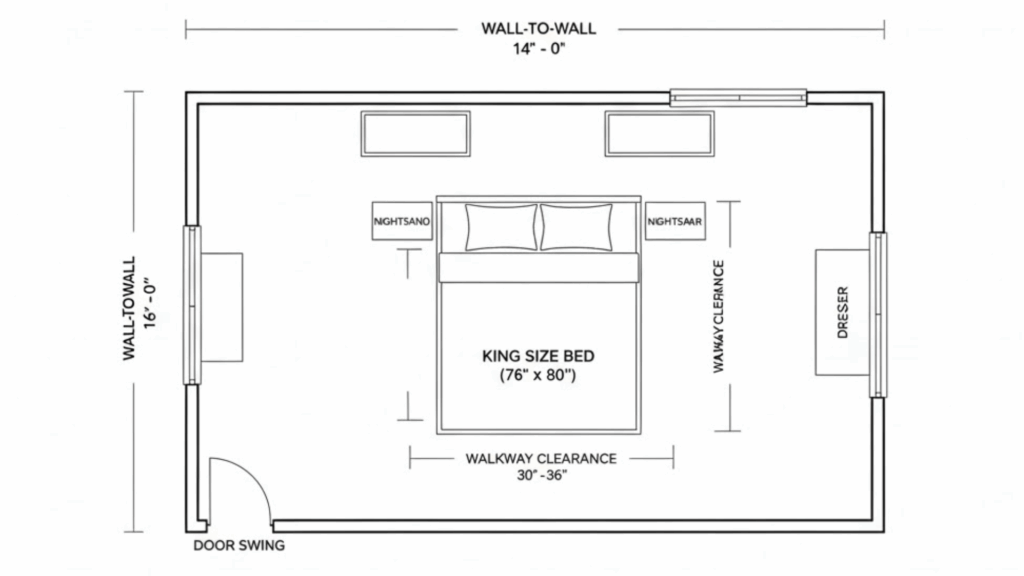
Ready to check if a king bed will fit? Follow these six steps to accurately measure your bedroom size for a king bed.
Step 1: Measure Wall-To-Wall and Note Baseboards
Start with a tape measure. Measure the width and length of your room from wall to wall. Write down both numbers. Check your baseboards, too.
They usually stick out 0.5 to 1 inch from the wall. This affects furniture placement against walls.
Step 2: Mark Doors, Door Swing, Windows, and Closets
Draw a simple room sketch on paper. Mark where the doors open and how far they swing. Note all windows and their heights. Mark closet doors and their clearance needs.
These spots are dead zones where you can’t place furniture. Door swings eat up more space than people realize.
Step 3: Add the Bed Footprint (mattress + Frame)
A king mattress is 76 x 80 inches. Add your frame, which adds 2 to 4 inches on each side. Your total bed footprint becomes roughly 80 x 84 inches.
Draw this rectangle on your room sketch. Try different positions to see what works best.
Step 4: Add Clearance Zones (30 to 36 Inches)
Add 30 inches of walking space on each side of the bed. Add 36 inches at the foot for comfortable movement. This is non-negotiable space.
You need it to walk, make the bed, and access drawers. Without proper clearance, your bedroom won’t feel right for a king bed.
Step 5: Place Supporting Furniture
Add nightstands next to the bed. Standard nightstands are 24 to 30 inches wide and 18 to 24 inches deep. Place your dresser on the opposite wall.
Most dressers are 18 to 24 inches deep and 60 inches wide. Check if everything fits with the clearance zones you marked. If things overlap, your room is too small.
Step 6: Check the Delivery Path
Measure your doorways. Most are 30 to 36 inches wide. Measure hallway width and any tight turns. Check the stairway width if you live upstairs.
King mattresses come rolled and compressed, but bed frames don’t. Headboards and footboards need clear paths. Many people forget this step and can’t get furniture into their room.
How Does Room Shape Affect King Bed Layout?
Room shape affects layout just as much as square footage. The same bedroom size for a king bed can feel completely different based on its shape.
1. Square Bedrooms
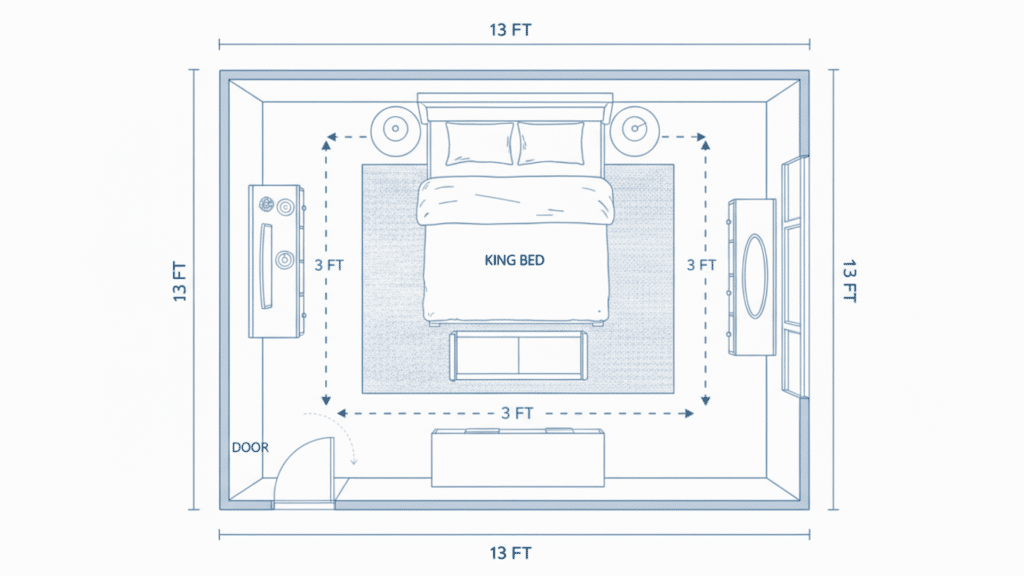
Square rooms offer the most balanced layouts. You get equal space on all sides. Centered bed placement works best here. You can add matching nightstands and still have room for a dresser on the opposite wall.
Best practices:
- Center the bed on the main wall
- Use symmetrical furniture placement
- Add equal walking space on both sides
Ideal dimensions:
- 13 x 13 feet or larger
- 14 x 14 feet for a spacious feel
2. Rectangular Bedrooms
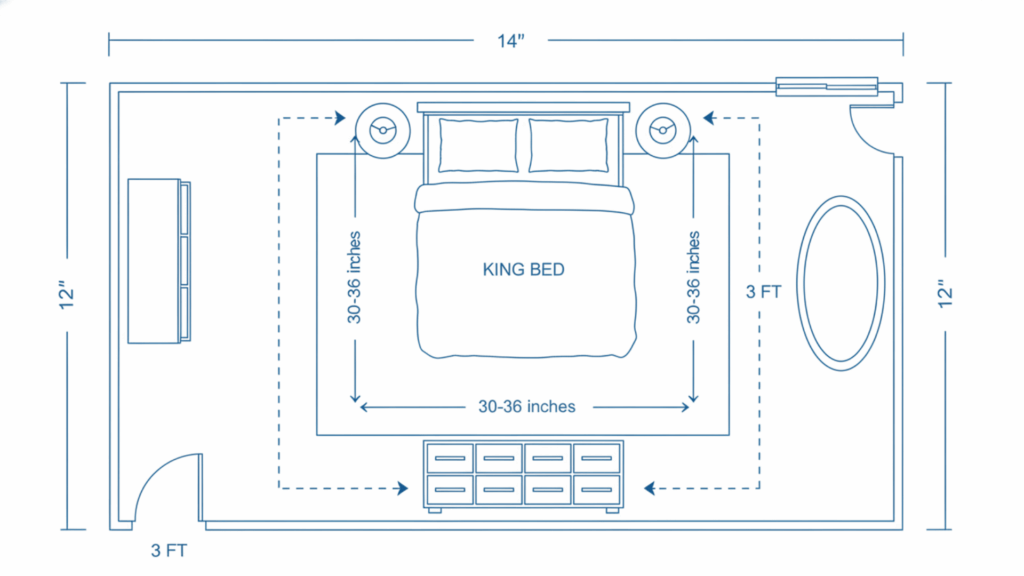
Rectangular rooms need thoughtful planning. Place the bed along the longer wall. This keeps walking paths consistent. Your nightstands fit better, and you avoid a bowling alley effect.
Best practices:
- The bed goes on the long wall
- Dresser on the short wall opposite
- Maintain 30 to 36 inches of clearance
Common sizes:
- 12 x 14 feet (standard)
- 12 x 16 feet (spacious)
3. Long and Narrow Rooms
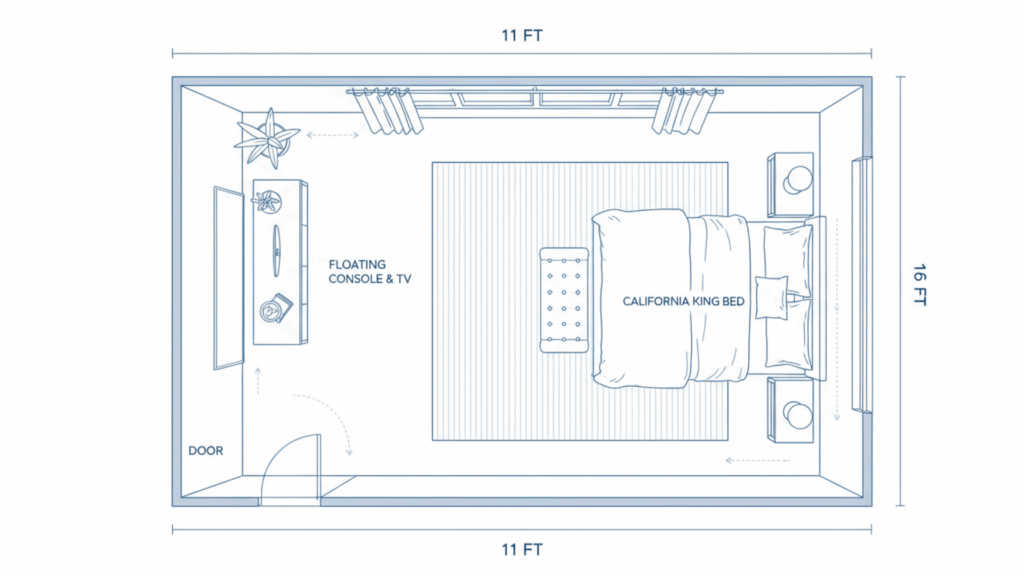
Long, narrow rooms challenge even the best layouts. Avoid oversized nightstands that crowd the sides. Use floating furniture where possible. Consider a California king instead of a standard king for better proportions.
Space-saving tips:
- Choose slim nightstands (18 inches wide max)
- Wall-mount lighting instead of table lamps
- Skip the footboard for open flow
What to avoid:
- Bulky furniture
- Heavy drapes that narrow the space
- Too many pieces along one wall
4. Awkward Layouts
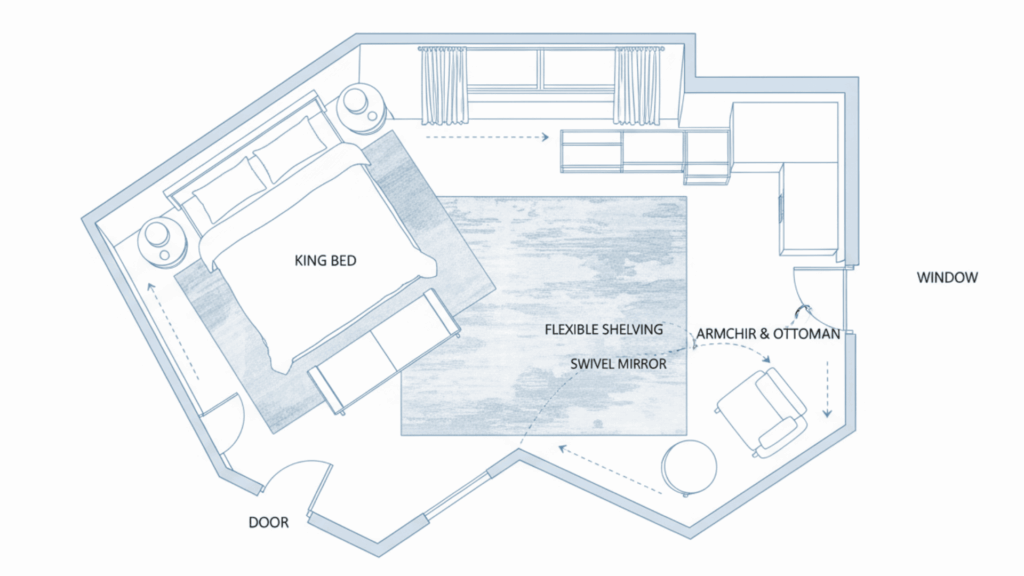
Rooms with offset doors or closets need extra planning. Careful clearance planning prevents blocked doorways. Flexible furniture placement helps you work around odd angles. Reduced furniture depth keeps paths open.
Problem areas:
- Doors that swing into furniture zones
- Closets that jut into the room
- Windows placed off-center
Solutions:
- Measure door swings first
- Use shallow dressers (16 inches deep)
- Consider custom headboard placement
Your bedroom size for a king bed matters less than how you use the shape you have.
Furniture Planning That Changes Space Requirements
Furniture size often determines whether the room feels comfortable. Smart choices can make your bedroom work better for a king bed.
- Nightstands: Slim nightstands (18 to 20 inches wide) or wall-mounted shelves save 6 to 10 inches on each side without sacrificing functionality.
- Dressers: A dresser’s depth matters more than its width; choose 16- to 18-inch-deep models instead of 24-inch-deep ones to gain walking space.
- Closets: Sliding closet doors require zero clearance, while hinged doors require 30 to 36 inches of clearance in front.
- Extra furniture: Remove one large piece, such as a bulky armchair or a second dresser, if the room feels crowded after placing your king bed.
Building Code Basics for Bedrooms
Building codes exist for safety. Egress means a safe exit in emergencies. Bedrooms need a window or door leading directly outside.
The window must be at least 5.7 square feet with a minimum opening height of 24 inches and a width of 20 inches. This matters if you’re converting a basement, attic, or other space into a bedroom.
Check local building codes before remodeling. Call your city’s building department if you’re adding a bedroom, changing windows, or converting non-bedroom space.
Your room might fit a king bed, but without proper egress and permits, it’s not legally a bedroom.
Best King Bed Placement Options
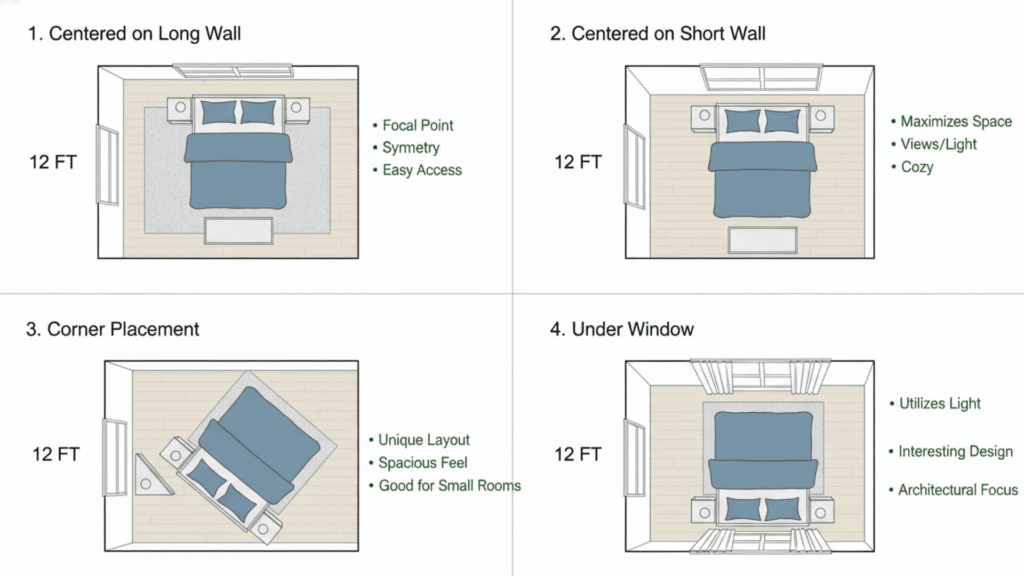
Where you place your king bed matters as much as the bedroom size for the king bed itself. The right placement maximizes space and improves flow.
- Centered on the Longest Wall: This is the most visually balanced option and works best for larger rooms with good symmetry.
- Centered on the Shortest Wall: Common in 12 x 12 rooms, this placement tightens side clearance but keeps the room functional.
- Corner Placement: This is a last-resort option that reduces accessibility on one side but frees up floor space in very tight rooms.
- Under a Window: This works in some layouts but requires attention to drafts, curtain placement, and headboard height clearance.
Small Bedroom Fixes That Make a King Bed Work
If space is limited, small changes make a big difference. Choose a slim platform frame that sits lower and takes up less visual space. Skip footboards to open up the foot of the bed.
Use wall-mounted lighting instead of table lamps to free up nightstand space. Replace bulky furniture with floating shelves or wall-mounted storage.
Hang mirrors on walls opposite windows to reflect light and make the room feel larger. These fixes won’t change your actual bedroom size fora king bed, but they’ll make the space feel more open and functional.
Final Thoughts
Finding the right bedroom size for a king bed is about more than just measurements. It’s about creating a space where you can move comfortably, store your things, and actually enjoy your room.
A 12-by-12-foot room works for minimal setups. A 12-by-14-foot room gives you the standard comfort most people need. Anything larger opens up more options.
Measure your space using the steps we covered. Check your clearances. Think about your furniture needs. If your room is borderline, try the small space fixes we mentioned.
Ready to upgrade? Measure your bedroom today and see which layout works for you. Drop a comment below if you have questions about your specific room.