

Last week, someone tried squeezing a queen mattress through a 30-inch bedroom door. It did not go well. If you have been there, you already know the frustration.
Planning a renovation or buying a replacement door? Getting the size right from the start saves you a lot of time and money.
Standard bedroom doors in the US are 80 inches tall and 30 to 36 inches wide. But height and width are just two pieces of the full story. Ceiling height, home age, and accessibility needs all affect what fits your space.
This blog covers everything you need to know, from standard sizes and thickness to rough openings and how to measure correctly.
How Tall Are Most Bedroom Doors?
Most bedroom doors in the United States are 80 inches tall. That is 6 feet and 8 inches. The International Residential Code sets this as the minimum height for interior doors in habitable rooms.
You will find this size in most homes built over the last 50 to 60 years.
Bedroom Door Size Chart: Quick Reference Guide
All the key numbers in one place. Use this table before you buy or order anything.
| Measurement | Standard Size | Full Range |
|---|---|---|
| Height | 80 inches (6 ft 8 in) | 78, 80, 84, 96 inches |
| Width | 32 inches | 28, 30, 32, 36 inches |
| Thickness | 1 and 3/8 inches | 1 and 3/8 to 1 and 3/4 inches |
| Rough Opening Height | 82 to 82.5 inches | Door height + 2 to 2.5 inches |
| Rough Opening Width | 34 inches (for 32-inch door) | Door width + 2 inches |
| ADA Minimum Width | 36 inches | 36 inches or wider |
Standard Bedroom Door Width: What Size Should You Pick?
The most common bedroom door width in the US is 32 inches. Widths range from 28 inches for smaller rooms up to 36 inches for primary bedrooms and accessible spaces. If you plan on moving large furniture in or out of the room, 36 inches will make the job noticeably easier.
Bedroom Door Thickness: The One Spec You Should Not Skip
Door height and width get most of the attention. But thickness is just as important, especially if you are replacing only the door slab and keeping the old frame.
- Standard thickness: Most bedroom doors are 1-3/8 inches thick. This is the size available at any home improvement store.
- Thicker option: For doors wider than 36 inches or taller than 80 inches, use 1-3/4 inches for proper support.
- Hardware fit: If you are keeping the old frame, the hinge and knob cutouts on the new door must line up exactly with the existing placements.
- Hollow core doors: Almost always 1 and 3/8 inches thick. The standard choice for most bedrooms due to lower cost and lighter weight.
- Solid core doors: Available in both thicknesses. Worth choosing when sound privacy between rooms matters to you.
Bedroom Door Height Options: Which One Fits Your Home?

The 80-inch standard works well for most homes, but it is not the only option available. Your ceiling height plays a big role in what looks right and what actually fits the space.
78-Inch Doors
This height is common in homes built before the 1980s and in mobile homes. If your house dates back to the 1950s through the 1970s, there is a solid chance your bedroom doors are 78 inches tall. Replacing them means either sourcing this specific size or adjusting the rough opening to fit a standard 80-inch door.
80-Inch Doors
This is the standard for US homes built over the last five to six decades. It fits well with the most common 8-foot ceiling height and remains the most affordable, widely available option in any store or online supplier.
84-Inch Doors
Found in newer builds with 9-foot ceilings. The extra 4 inches visually expand the space without requiring any major structural changes. Before ordering, confirm that your existing rough opening is tall enough to accommodate this height.
96-Inch Doors
The go-to choice for luxury homes with 10-foot or higher ceilings. It makes a strong visual statement and pairs well with high-end interior design. Costs more than standard sizes and often requires custom framing or header work during installation.
How to Measure Your Bedroom Door the Right Way
Getting the measurement wrong is one of the most common and costly mistakes in any door project. Here is exactly what to do before you order or buy anything.
- Step 1: Measure the Width: Measure horizontally at three points (top, middle, bottom) and use the largest of the three.
- Step 2: Measure the Height: Measure top to bottom on both the left and right sides, then use the shortest number.
- Step 3: Measure the Thickness: Run your tape across the door edge. Most bedroom doors measure 1 and 3/8 inches thick.
- Step 4: Check Hinge and Knob Placement: Note the distance from the top of the door to each hinge and from the door edge to the center of the knob hole.
- Step 5: Confirm the Door Swing: Stand inside the room. If the door opens to your right, it is right-handed. If it opens to your left, it is left-handed.
Standard Bedroom Door Sizes: Older Homes vs. Newer Homes
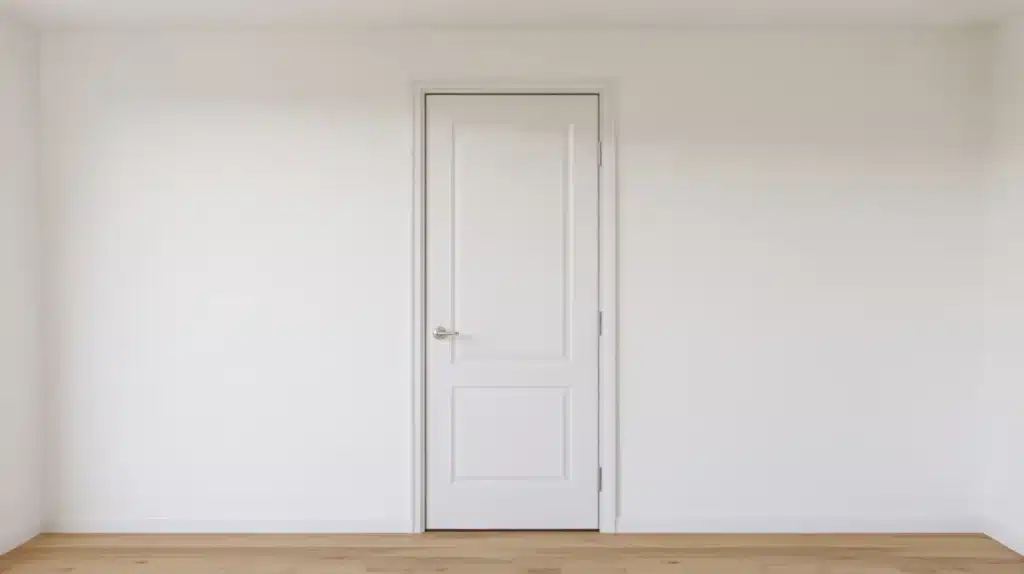
Door standards have shifted significantly over the decades. If you live in an older home and assume your bedroom doors match today’s sizes, you may be off by more than you expect.
| Home Age | Typical Door Height | Typical Door Width | Notes |
|---|---|---|---|
| Pre-1950s | 78 inches or less | 24 to 28 inches | Non-standard sizes are very common |
| 1950s to 1970s | 78 inches | 28 to 30 inches | Slightly below today’s standard |
| 1980s to 2000s | 80 inches | 30 to 32 inches | Standard sizing becomes consistent |
| 2000s to present | 80 to 84 inches | 32 to 36 inches | Taller doors are more common in new builds |
| Luxury or Custom | 84 to 96 inches | 36 inches or more | High ceilings, premium finishes |
ADA Requirements: When Wider Doors Are Needed
A standard 32-inch door works fine for most people. But not every home is built with everyone in mind. ADA guidelines shift the sizing requirements when accessibility is part of the plan.
- Minimum width: The Americans with Disabilities Act requires a minimum clear width of 36 inches for any accessible doorway, including bedroom doors.
- Wheelchair clearance: A 36-inch opening gives a standard wheelchair enough room to pass through without clipping the frame or trim.
- Aging in place: Homes built for long-term living should use 36-inch bedroom doors throughout for both comfort and safety.
- Furniture benefit: A 36-inch door also makes moving large pieces, such as bed frames, dressers, and wardrobes, noticeably easier.
- Local codes: Some local building codes exceed ADA minimums. Always check your area’s requirements before ordering or starting any renovation.
When to Order a Custom Bedroom Door
A custom door becomes necessary when your rough opening does not match any standard size. This most often occurs in older homes, historic properties, and one-of-a-kind custom builds.
Before committing to a full custom order, ask a contractor whether it’s possible to modify the rough opening to fit a standard door. It often costs less overall.
If custom is the only option, check whether semi-custom sizes, such as 34-inch widths or 82-inch heights, are available. They can bridge the gap at a lower price than a fully bespoke order.
Summing It Up
Bedroom door sizing seems simple. Then you show up at the hardware store with the wrong measurements written on your hand.
The standard height is 80 inches, and the most common width is 32 inches for most US homes. But older houses, taller ceilings, and accessibility needs can quickly change that.
Before buying or replacing a bedroom door, measure in three spots. Check the rough opening size. Confirm the door swing direction. A little prep work up front saves a very frustrating return trip to the store.
Have you recently replaced a bedroom door or run into a sizing problem at home? Drop your experience in the comments below. We would love to hear what worked for you.