

Your students shuffle in each morning, half awake and scattered. Some stare at the clock. Others fidget or look anxious about the day ahead.
How do you bring them together before diving into math or reading?
Morning meeting games change everything. These quick 5- to 10-minute activities turn quiet, disconnected kids into an engaged, ready-to-learn class. They build friendships, teach cooperation, and set a positive tone that lasts all day.
In this guide, you’ll find tried-and-tested games organized by purpose. We’ll cover icebreakers, movement activities, SEL games, critical-thinking challenges, and zero-prep options.
You’ll also get a weekly structure that balances routine with variety, so your mornings run smoothly without feeling repetitive.
What Is a Morning Meeting?
A morning meeting is a structured daily routine with four key parts: greeting, sharing, group activity, and a morning message.
Games fit naturally into the activity section, where they build social skills and create a positive classroom mood in just 5 to 10 minutes.
They support social and emotional learning by teaching cooperation, listening, and problem-solving. The key is keeping activities short and focused while matching your class energy level.
When done right, these brief game moments set a respectful, engaged tone that carries over into group projects and lessons throughout the day.
Benefits of Morning Meeting Games
Why do teachers love starting their day with games? The answer is simple: these activities create real change in how students learn and connect. Let’s look at what makes morning meeting games so valuable.
- Builds classroom community: Games help students see each other as teammates, not just classmates who sit nearby.
- Develops communication & listening skills: Students practice taking turns, speaking clearly, and paying attention when others talk.
- Promotes movement & focus: Quick physical activities wake up the body and the brain, making students ready to learn.
- Supports emotional well-being: Fun games reduce stress and help students feel safe, happy, and included each morning.
- Why they work for K–2 learners: Young children need active play to process emotions and build friendships through doing, not just talking.
- Why they work for grades 3–5: Older students benefit from structured social time that builds confidence and teaches teamwork without making them feel babyish.
Fun Icebreaker Morning Meeting Games to Start the Day
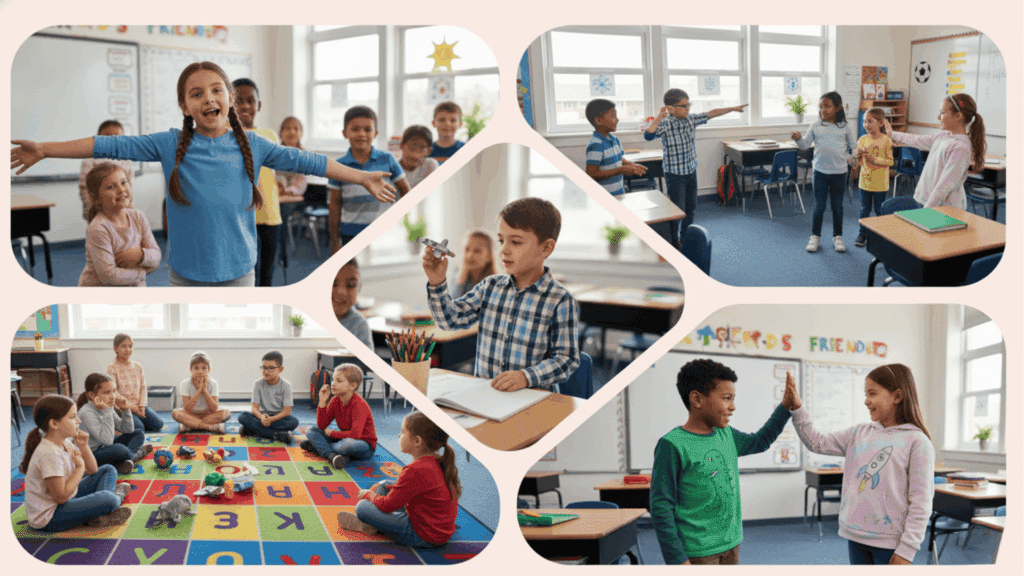
New students feel nervous. Quiet classrooms need a spark. These icebreaker activities get everyone talking and laughing within minutes.
1. Name and Motion
This game helps students remember names through movement and fun. Each person creates a unique motion that matches their personality. The physical action makes names stick in everyone’s memory better than words alone.
How to Play:
- Students introduce themselves: Each person says their name and does a motion (like spinning or clapping).
- Class repeats together: Everyone copies the name and motion as a group.
- Continue around the circle: Move to the next student and repeat until everyone has shared.
2. Four Corners
Students move to different corners based on their preferences. This game reveals what classmates have in common. It gets kids up and moving while learning about each other.
How to Play:
- Label each corner: Assign choices to each corner (e.g., seasons: winter, spring, summer, fall).
- Ask a question: Students walk to the corner that matches their answer.
- Share and discuss: Each corner group talks briefly about why they made that choice.
3. Show and Tell Short Share
Quick sharing builds confidence without taking too much time. Students pick something small from their desk or bag. This works great for shy students who need a conversation starter.
How to Play:
- Choose an item: Students grab something from their space (a pencil, an eraser, a drawing).
- Share in 20 seconds: Each person tells one interesting thing about their item.
- Ask one question: Classmates can ask a quick follow-up question to keep the conversation going.
4. Who Am I?
This guessing game builds question-asking skills. One student thinks of a character everyone knows. The class works together to solve the mystery through smart questions.
How to Play:
- Pick a character: One student thinks of someone famous (a book character, a historical figure, or a cartoon).
- Ask yes-or-no questions: Classmates take turns asking questions that require yes-or-no answers.
- Guess the answer: After enough clues, students try to name the character.
5. Find a Friend
Students discover shared interests with classmates they might not know well. This game breaks up cliques naturally. Everyone finds at least one thing they have in common with someone new.
How to Play:
- State the challenge: Tell students to find someone who shares something specific (favorite color, pet type, hobby).
- Walk-and-talk: Students move around, asking each other questions until they find a match.
- Pair up and share: Matching pairs sit together and tell the class what they found.
Active and Energizing Morning Meeting Games for Kids
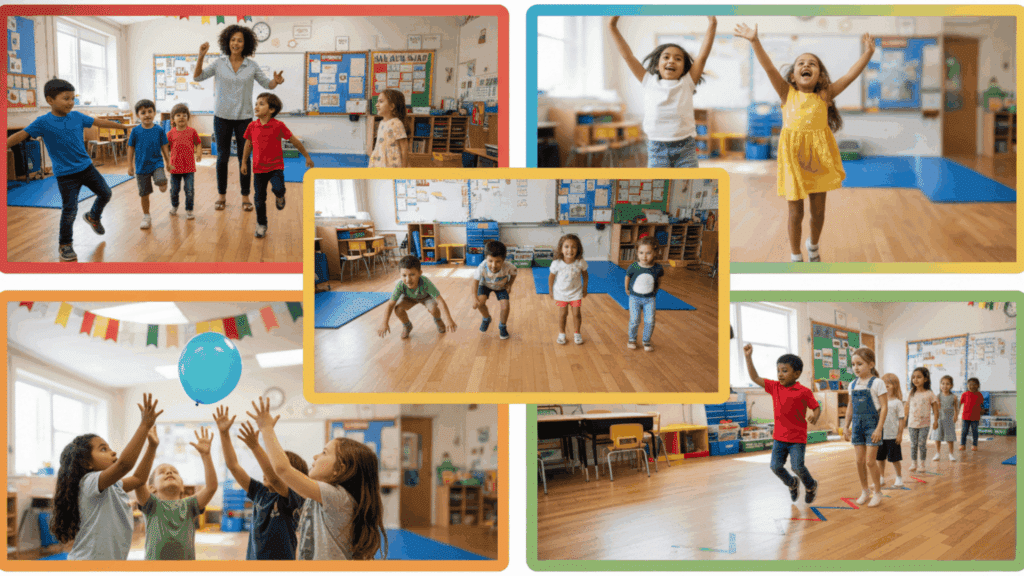
Sitting still drains energy. Fidgety students need movement to focus. These active games wake up bodies and prepare brains for learning.
6. Simon Says
This classic game teaches careful listening and self-control. Students must pay attention to every word before acting. It builds focus skills they will use during instruction time.
How to Play:
- Explain the rule: Students only move if you say “Simon says” before the command.
- Give commands: Mix in actions with and without “Simon says” to challenge attention.
- Students who move incorrectly sit out: They watch and cheer until the next round starts.
7. Freeze Dance
Music makes movement fun and natural. When the music stops, students must freeze completely. This game works on body control and listening skills at the same time.
How to Play:
- Play upbeat music: Students dance however they want while the music plays.
- Stop the music suddenly: Everyone freezes in whatever position they are in.
- Check for movement: Anyone who wobbles or moves sits down until the next game.
8. Animal Movements
Kids love pretending to be animals. This game channels energy into fun actions. Different animals work different muscle groups and energy levels.
How to Play:
- Call out an animal: Say an animal name like frog, elephant, or snake.
- Students move like that animal: They hop, stomp, or slither around the meeting space.
- Switch animals quickly: Change animals every 15 to 20 seconds to keep energy high.
9. Balloon Toss
A soft balloon creates excitement without chaos. Students toss it gently to keep it in the air. Whoever holds it when music stops gets to share something positive.
How to Play:
- Toss the balloon: Students tap a balloon to each other while music plays.
- Stop the music: Whoever is holding or closest to the balloon when the music stops shares.
- Students share quickly: they share one goal for the day or something that makes them happy.
10. Jump the Line
A simple line on the floor becomes a fun challenge. Students jump back and forth in different patterns. This gets blood flowing and helps kids who learn through movement.
How to Play:
- Mark a line: Use tape or a crack in the floor as your jumping line.
- Call out patterns: Tell students to hop on one foot, jump with both feet, or step to the side.
- Speed up gradually: Make the pattern faster or add new movements to increase the challenge.
Social Learning Morning Meeting Games for Connection
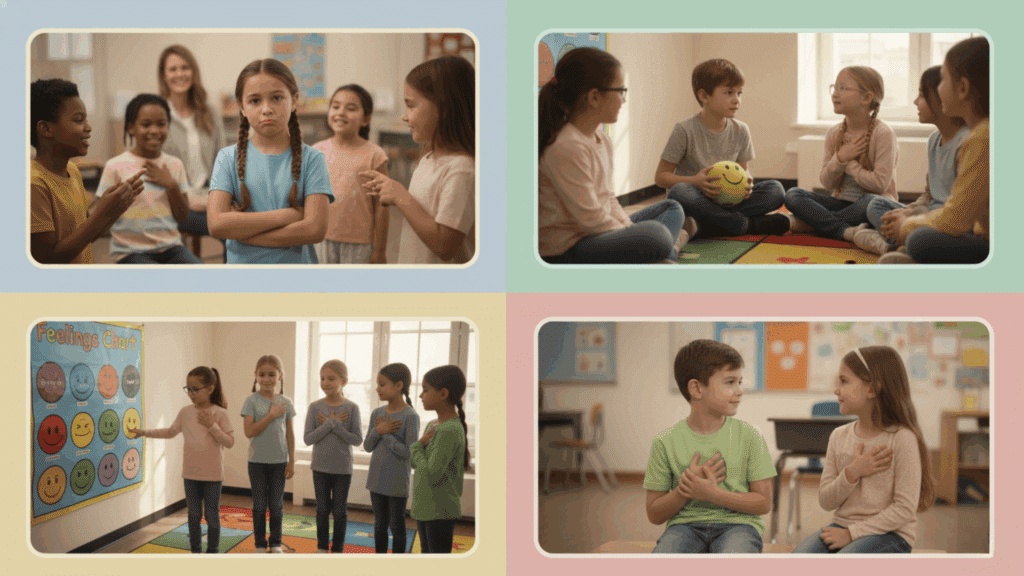
Feelings matter just as much as facts. Students need safe ways to express emotions. These SEL-focused activities teach empathy and self-awareness through play.
11. Emotion Charades
Acting out feelings helps students recognize their own emotions and those of others. No words are allowed, only facial expressions and body language. This builds emotional vocabulary naturally.
How to Play:
- Pick an emotion card: One student draws a card with an emotion word (happy, frustrated, excited, worried).
- Act it out silently: The student shows that feeling using only their face and body.
- Class guesses: Other students raise their hands to guess which emotion is being shown.
12. Compliment Circle
Kind words create a positive classroom culture. Students practice giving genuine compliments. Everyone receives at least one kind comment, which builds confidence and a sense of belonging.
How to Play:
- Form a circle: Students sit or stand in a circle formation.
- Pass a soft ball: The person holding the ball gives a sincere compliment to someone in the circle.
- Toss to the next person: The ball moves to the person who received the compliment, who then gives it to someone else.
13. Feelings Chart
A visual chart helps students accurately name their emotions. Many kids struggle to describe how they feel. This tool gives them specific words and faces to match their mood.
How to Play:
- Show the chart: Display faces showing different emotions (calm, angry, silly, nervous, content).
- Students point to their feelings: Each student indicates which face matches how they feel today.
- Optional sharing: Students can explain why they feel that way if they want to talk about it.
14. Gratitude Round
Thinking about good things shifts the mindset from negative to positive. Each student shares something they appreciate. This simple practice improves mood and reduces complaints throughout the day.
How to Play:
- Start with yourself: The teacher models by sharing something they are grateful for.
- Go around the circle: Each student says one thing they appreciate (big or small).
- Accept all answers: Thank each student and move to the next person without judging responses.
15. Pass the Compliment
This game creates a chain of kindness. Students give compliments to the person next to them. By the end, everyone has both given and received positive words.
How to Play:
- Turn to your neighbor: Each student faces the person sitting next to them.
- Say something kind: They give a specific compliment about something they notice or appreciate.
- Accept graciously: The person receiving says “thank you” before turning to compliment their other neighbor.
Critical Thinking and Problem-Solving Games
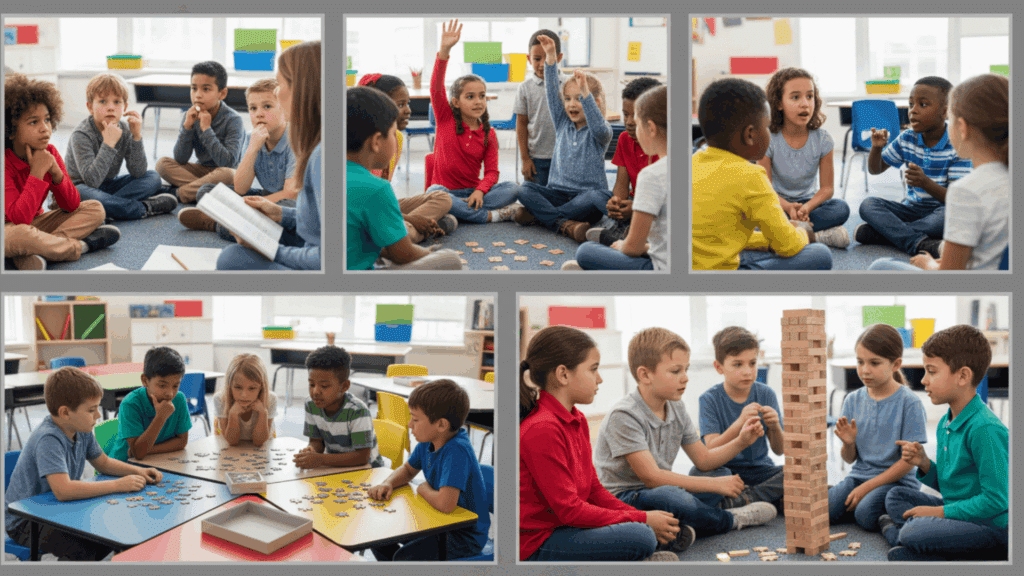
Brains need exercise just like bodies do. These thinking games challenge students to work together. Problem-solving becomes fun instead of frustrating when everyone helps.
16. Riddle Me This
Riddles make students think in new ways. They practice logic and reasoning skills. Even students who struggle with traditional academics can shine at solving riddles.
How to Play:
- Read a riddle aloud: Choose age-appropriate riddles with clear answers.
- Give thinking time: Let students process quietly for 10-15 seconds.
- Accept answers: Students raise their hands to guess, and you confirm or give gentle hints.
17. 20 Questions
This classic game teaches strategic questioning. Students learn to ask broad questions first, then narrow them down. The process builds logical thinking and deduction skills.
How to Play:
- One student picks an object: They think of something in the room or a common item everyone knows.
- Class asks yes-or-no questions: Students take turns asking questions to narrow down possibilities.
- Make a final guess: After gathering clues, someone tries to name the object.
18. Story Building
Collaborative stories spark creativity and listening skills. Each person adds one sentence to continue the plot. Students must pay attention to keep the story making sense.
How to Play:
- Teacher starts: Begin with an opening sentence like “One morning, a student found a magic backpack.”
- Students add sentences: Go around the circle with each person adding one sentence to the story.
- End together: After everyone contributes, the last person creates an ending sentence.
19. Quick Puzzles
Small group puzzles encourage cooperation without competition. Students work together toward a common goal. Time limits add excitement without creating too much pressure.
How to Play:
- Divide into teams: Create groups of three or four students.
- Give each team a puzzle: Provide simple jigsaw puzzles or tangram challenges.
- Set a timer: Give teams three to five minutes to complete their puzzle together.
20. Team Challenges
Building activities teach planning and communication. Teams must discuss strategies before acting. These challenges show students that many hands make work lighter and more fun.
How to Play:
- Present the challenge: Give each team the same task (build the tallest block tower, create a paper chain).
- Provide materials: Hand out equal supplies to each team.
- Work and share: Teams build for five minutes, then show their solutions to the class.
Quick and Easy Morning Meeting Games for Busy Classrooms
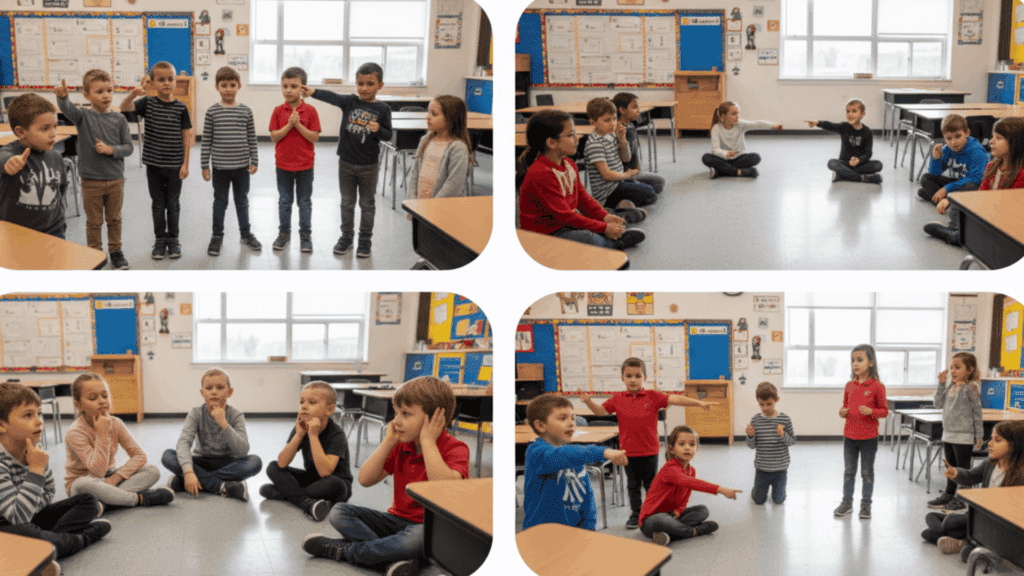
Busy mornings need simple solutions. These games require almost no setup. You can play them anytime with zero advance planning.
21. Thumbs Up, Thumbs Down
This quick game reveals student opinions instantly. Everyone responds at the same time, so shy students feel safe participating. It is perfect for checking in or making class decisions.
How to Play:
- Make a statement: Say something like “I love rainy days” or “Reading is my favorite subject.”
- Students show thumbs: Thumbs up means agree, thumbs down means disagree, sideways means unsure.
- Notice patterns: Quickly see what most students think and move to the next statement.
22. This or That
Students choose between two options and move to different sides of the room. This gets bodies moving while revealing preferences. The physical separation makes choices visible and interesting.
How to Play:
- Label two sides: One side represents option A, the other represents option B.
- Ask a question: Present two choices like “Beach or mountains?” or “Books or movies?”
- Students move: They walk to the side that matches their preference and briefly discuss with neighbors.
23. Would You Rather?
Silly hypothetical questions make students think and laugh. This game works great for transitions or filling extra minutes. Students explain their reasoning, which builds speaking skills.
How to Play:
- Pose a fun question: Ask something like “Would you rather fly or breathe underwater?”
- Students choose: They pick one option and think about why.
- Share reasoning: Call on a few students to explain their choice to the class.
24. Name That Sound
This listening game sharpens auditory attention. Students close their eyes and focus only on what they hear. It naturally quiets the room and prepares students to listen during lessons.
How to Play:
- Students close their eyes: Ask everyone to shut their eyes and listen carefully.
- Make a sound: Clap, tap a pencil, jingle keys, or crinkle paper.
- Students’ guess: They raise their hands and identify what made the noise.
25. I Spy
The classic observation game needs nothing but what is already in your room. Students scan the environment and think critically. It builds vocabulary and description skills through natural play.
How to Play:
- Give a clue: Say “I spy with my little eye something that is [color/shape/size].”
- Students look around: They search the room for items matching your description.
- Make guesses: Students raise their hands to name objects until someone correctly identifies them.
Structuring a Weekly Morning Meeting Routine
Planning a weekly structure makes morning meetings easier to manage. Students thrive when they know what to expect but still get variety each day.
| Day | Activity Type | Purpose | Example Game |
|---|---|---|---|
| Monday | Icebreaker | Start the week with connection and conversation | Four Corners, Find a Friend |
| Tuesday | Movement game | Energize students after a restful weekend | Freeze Dance, Animal Movements |
| Wednesday | SEL discussion | Build emotional skills midweek when stress builds | Emotion Charades, Feelings Chart |
| Thursday | Partner share | Strengthen peer relationships through paired work | Show and Tell Short Share, This or That |
| Friday | Team challenge | End the week celebrating cooperation and fun | Story Building, Team Challenges |
Tips for Balancing Routine and Novelty
- Keep the structure, change the content: Students need predictable patterns, but different games within each category keep things fresh.
- Rotate favorites monthly: Bring back popular games from previous weeks so students feel comfortable while still experiencing new ones.
- Let students choose sometimes: Ask the class to vote on Friday’s game or pick between two options to increase engagement.
- Watch energy levels: If your class seems tired on Wednesday, swap in a movement game instead of sticking to the plan rigidly.
- Track what works: Keep notes on which games your students love and which fall flat for future planning.
- Mix solo, group, and partner activities: Balance individual sharing with partner work and whole-class games throughout the week.
Wrapping It Up
Morning meeting games take just minutes but create lasting change in your classroom.
Students who start the day connected and energized learn better, cooperate more, and show up ready to participate.
The games in this guide give you options for every mood, energy level, and learning goal. Start small.
Pick one game from each category this week and see what your students respond to best. Pay attention to which activities bring out smiles, participation, and focus. Build your favorites into a weekly routine that students can count on.
What game will you try tomorrow morning? Choose one tonight, set up any materials you need, and watch how a few minutes of intentional play changes your classroom culture.
Your students are waiting for that moment of connection before the learning begins.