
There’s a moment every parent hits where you realize your kid isn’t asking for toys anymore, they’re asking for responsibility. That’s exactly where I found myself when my son brought up wanting an airsoft gun. My first reaction was hesitation, not because I didn’t trust him, but because anything that even looks like a weapon makes your brain go straight to worst case scenarios. Still, after sitting with it for a while and actually digging into what airsoft is and how it works, I ended up surprising myself. I said yes, and I feel good about it.
Understanding the Appeal
Kids don’t usually want things for no reason. My son wasn’t just asking for something flashy or loud, he was drawn to the strategy behind it. Airsoft has this mix of physical movement and problem solving that you don’t really get from a screen. It’s not mindless. It requires awareness, patience, and a bit of self control, which, if we’re being honest, are things most kids could use more of these days.
Once I actually watched how these are used, I realized they’re not about chaos. They’re about structured play. There are rules, there are boundaries, and there’s a clear understanding that safety comes first. That changed the entire tone for me. It stopped feeling reckless and started looking more like a sport.
What Changed My Mind
I did what every slightly nervous parent does, I went down a research rabbit hole. What stood out right away is how regulated and intentional the airsoft world is. Proper eye protection is non-negotiable. There are velocity limits. There’s etiquette. And most importantly, there’s a culture of accountability.
That’s where the shift happened for me. I realized I wasn’t handing my kid something dangerous without context, I was giving him an opportunity to learn how to handle something responsibly. That distinction matters more than anything.
The conversations we had leading up to it were honestly better than I expected. We talked about safety, respect, and knowing when something is appropriate. He understood that this wasn’t just another backyard toy. That level of awareness made me feel like he was ready.
Why it Encourages Movement
One thing I did not expect was how much this would pull him outside. And not in a forced way where I’m standing at the door telling him to go get fresh air. He actually wants to be out there.
There’s something about airsoft that naturally leads to outdoor activities for kids without it feeling like a chore. It taps into that instinct to explore, move, and engage with the environment. He’s running, hiding, thinking on his feet. It’s active in a way that feels fun, not assigned.
For a kid who could easily default to screens, that alone made the decision feel worthwhile. It gave him a reason to step outside that didn’t involve me pushing him out the door.
Setting Boundaries that Work
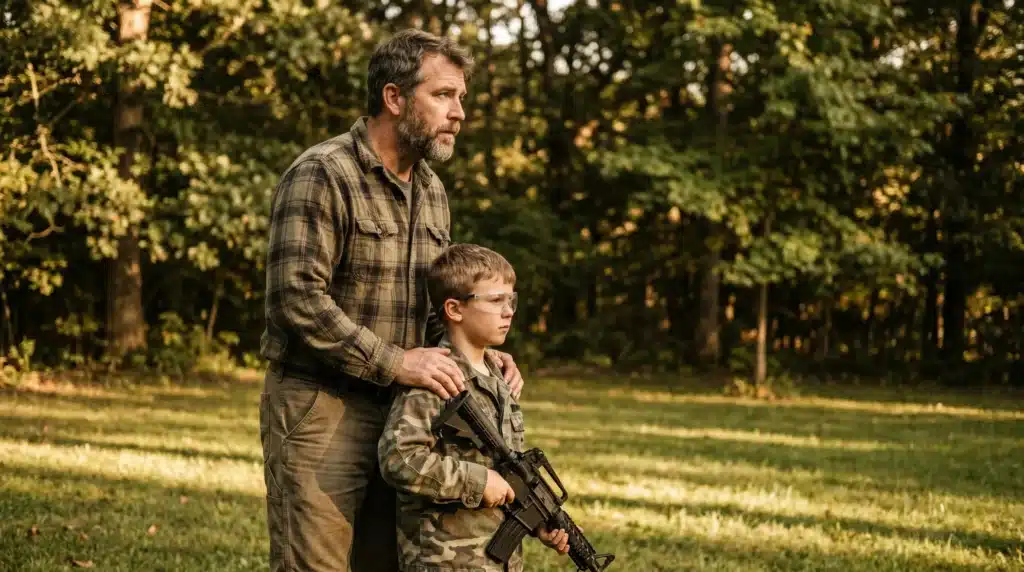
Saying yes didn’t mean letting go of structure. If anything, it meant doubling down on it. We set very clear rules from the start. Protective gear is always worn, no exceptions. It’s used only in designated areas. It gets stored safely when not in use.
What surprised me is how seriously he took those expectations. Kids tend to rise to the level you set, especially when they know you trust them. Instead of pushing limits, he leaned into the responsibility. That told me more than anything that we made the right call.
I also stayed involved. Not hovering, but present. I asked questions, checked in, and made sure the environment stayed safe and appropriate. It became something we navigated together instead of something I just allowed and walked away from.
Letting Go of Fear
There’s a difference between being cautious and being stuck. I realized I was leaning toward the second one at first. It’s easy to say no to something unfamiliar just to avoid the discomfort of figuring it out.
But when I looked at what airsoft guns actually represent in this context, it wasn’t what I initially pictured. It wasn’t reckless or aggressive. It was structured, supervised, and rooted in discipline. That’s a completely different story.
Kids are going to grow into new interests whether we’re ready or not. Trying to block that entirely usually backfires. Guiding it, shaping it, and staying involved tends to go a lot better. That’s where I landed.
A Different Kind of Confidence
There’s something subtle but noticeable that happens when a kid is trusted with something that comes with rules. They stand a little differently. They take things a bit more seriously. It’s not about the object itself, it’s about what it represents.
I’ve seen that shift already. He’s more mindful, more aware, and honestly more open in how he communicates about what he’s doing. It didn’t create distance, it created connection. I wasn’t expecting that, but I’ll take it.
It also gave us a new kind of shared ground. Not in a forced bonding way, but in a natural, everyday way. He talks to me about it. He explains things. He invites me into his world a little more.
Where I Landed on It
Saying yes wasn’t about giving in, it was about paying attention. I saw a kid who was ready for something new, something that required trust and responsibility, and I chose to meet him there instead of shutting it down.
There’s always going to be a part of parenting that feels like a balancing act. You want to protect, but you also want to prepare. Sometimes those two things look like opposites when they’re really not.
I went from hesitant to confident, not because I lowered my standards, but because I understood what I was actually saying yes to. And for us, it ended up being a good call.