

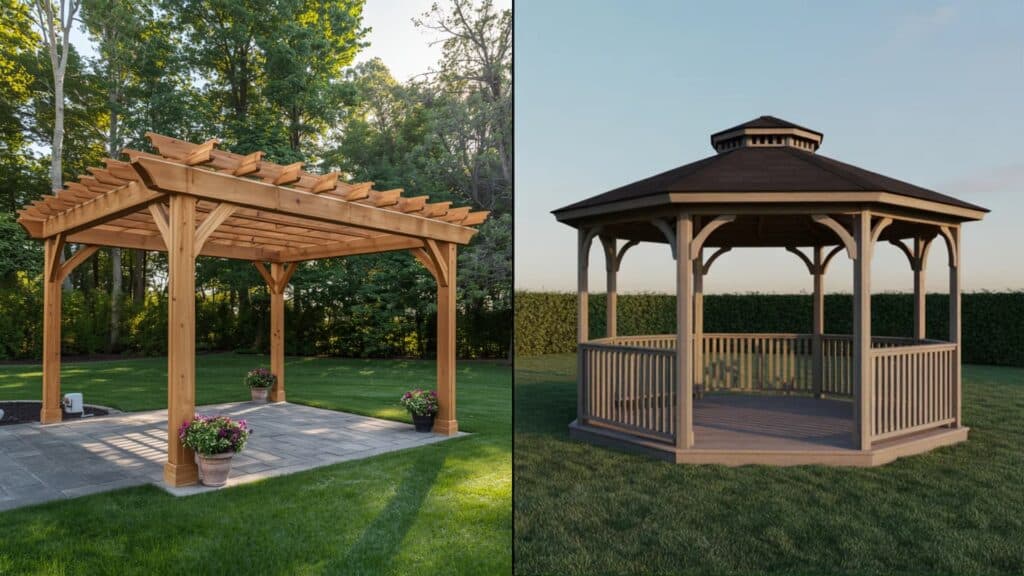
Backyard upgrades can get confusing fast. You want shade, a comfortable outdoor space, and something that actually looks good in every season.
Then you come across a pergola and a gazebo, and suddenly it all feels like a coin toss.
They look similar in photos, and both add real value to your outdoor space. But they work in completely different ways.
The wrong pick can cost you money. It can also leave you with a structure that sits unused for months.
From cost and roof type to climate fit and resale value, this full pergola vs gazebo comparison gives you what you need to decide.
What Is a Pergola?
A pergola is an outdoor structure with vertical posts and an open, slatted roof made of crossbeams. It gives partial shade while keeping your space open and airy.
You can attach it to your home or set it up anywhere in the yard. Pergolas are popular for dining areas, poolside spaces, and growing climbing plants.
They come in wood, vinyl, and aluminum, so you can pick based on how much upkeep you want.
What Is a Gazebo?
A gazebo is a freestanding outdoor structure with a full, solid roof. It provides complete shelter from sun, rain, and wind.
It typically comes in a six- or eight-sided shape, though square and rectangular versions also exist. Unlike a pergola, a gazebo feels more like an outdoor room.
Many models include railings, benches, and optional screened sides that keep insects out.
Pergola vs Gazebo: Key Differences
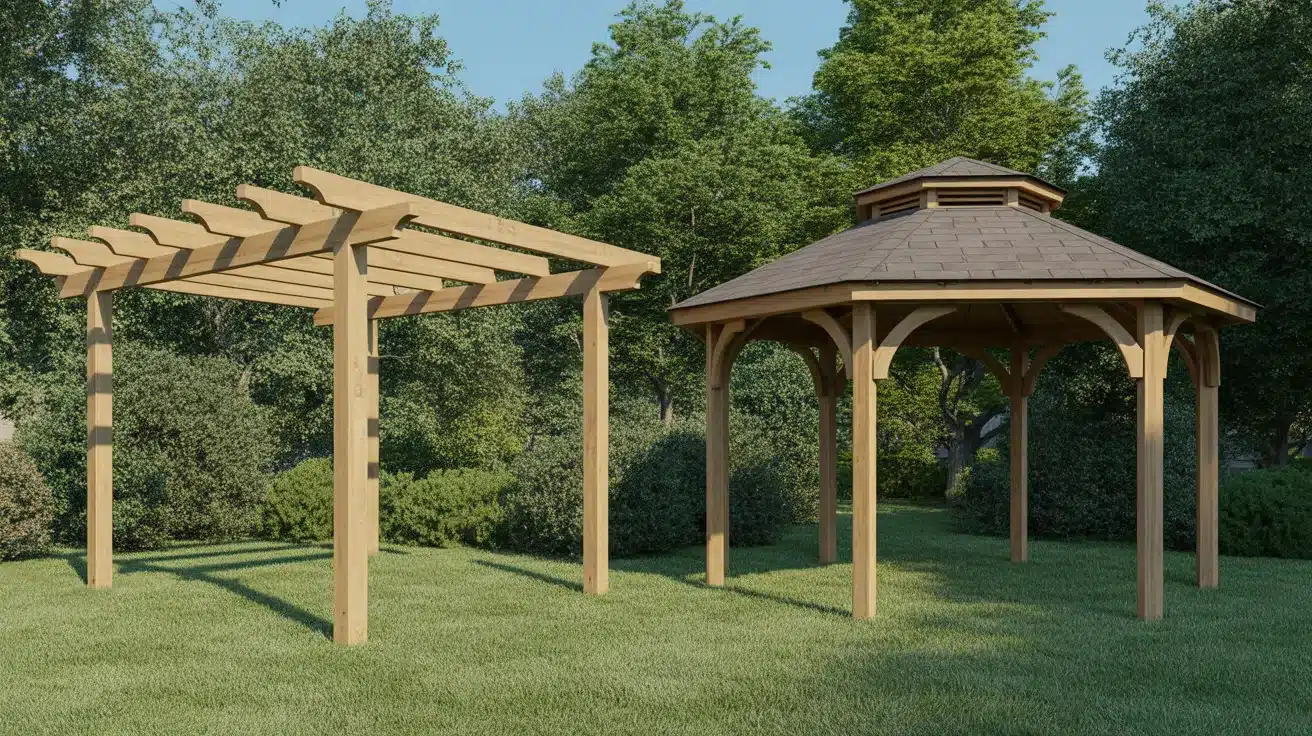
Alt Text: Wooden pergola with an open beam roof next to a wooden gazebo with a fully covered roof, placed on a grassy lawn to show structural and design differences clearly.
1. Roof
Pergola: A pergola has an open, slatted, or latticed roof. Sunlight filters through, but so does rain. This limits how much you can use it in bad weather.
Gazebo: A gazebo comes with a solid, weatherproof roof that gives you complete overhead cover. Rain, hail, and strong sun never reach you under a properly built gazebo.
2. Structure and Design
Pergola: A pergola is typically rectangular. It can attach to your home or stand freely in the yard. Its open frame gives it a light, modern look that blends well with most backyard styles.
Gazebo: A gazebo always stands alone, usually in a six or eight-sided shape. It draws attention and becomes the main visual feature of the yard, often matching the architectural style of the home beside it.
3. Weather Protection
Pergola: A standard pergola works best in mild, dry climates. It gives you some shade but offers little protection from rain or strong winds without an added canopy.
Gazebo: A gazebo gives you full cover from all types of weather. For anyone in a rainy or very hot climate, a gazebo delivers far more usable outdoor time.
4. Space Requirements
Pergola: Pergolas fit well in smaller yards, with common sizes from 8 by 8 feet to 12 by 12 feet. Attaching one to the home means it takes up even less open yard space.
Gazebo: Gazebos need more room, with sizes typically between 10 by 10 feet and 20 by 20 feet. As they are always freestanding, you need enough open yard space to place one without crowding the area.
5. Climate Fit
Pergola: A pergola suits sunny, mild climates like the American Southwest, where airflow matters and rain is rare. A louvered pergola adds weather control for areas with more variable conditions.
Gazebo: A gazebo works better in rainy or high humidity climates, like the Pacific Northwest or Southeast US. A screened gazebo is especially useful in areas where bugs are a problem during warm months.
6. Resale Value
Pergola: A well-built pergola can return 50 to 80 percent of its cost at resale. Pergolas photograph well for listings and appeal to buyers who want outdoor spaces that are ready to use.
Gazebo: A gazebo adds visual appeal and can boost sale value. Returns vary based on the overall condition and how well the structure fits the yard.
7. Maintenance
Pergola: Wood pergolas need sealing or staining every one to three years. Vinyl and aluminum options need very little upkeep; a wash now and then keeps them in good shape.
Gazebo: Gazebos have more components, which means more to check over time. Solid roofs need inspection after storms, and screened panels may need replacing after a few years of regular use.
Open Roof or Solid Roof: Which Works Better?
The roof is what separates a pergola from a gazebo more than anything else. Each structure comes with different roof options, and the one you choose affects how much protection and flexibility you get.
| Roof Type | Found On | What It Does | Best Climate |
|---|---|---|---|
| Open slats / lattice | Pergola | Filters light; rain passes through | Mild, sunny climates |
| Retractable canopy | Pergola | Adds rain cover on demand | Flexible, mixed use |
| Louvered (adjustable slats) | Pergola | Open or close for light or rain control | All climates |
| Solid hardtop (metal / shingle) | Gazebo | Full sun and rain protection | Rainy or very hot climates |
| Polycarbonate panels | Gazebo | Blocks UV rays while letting light in | High UV / hot climates |
| Fabric canopy (portable) | Gazebo | Lightweight, temporary overhead cover | Events, seasonal use |
What Are Pergolas and Gazebos Made Of?
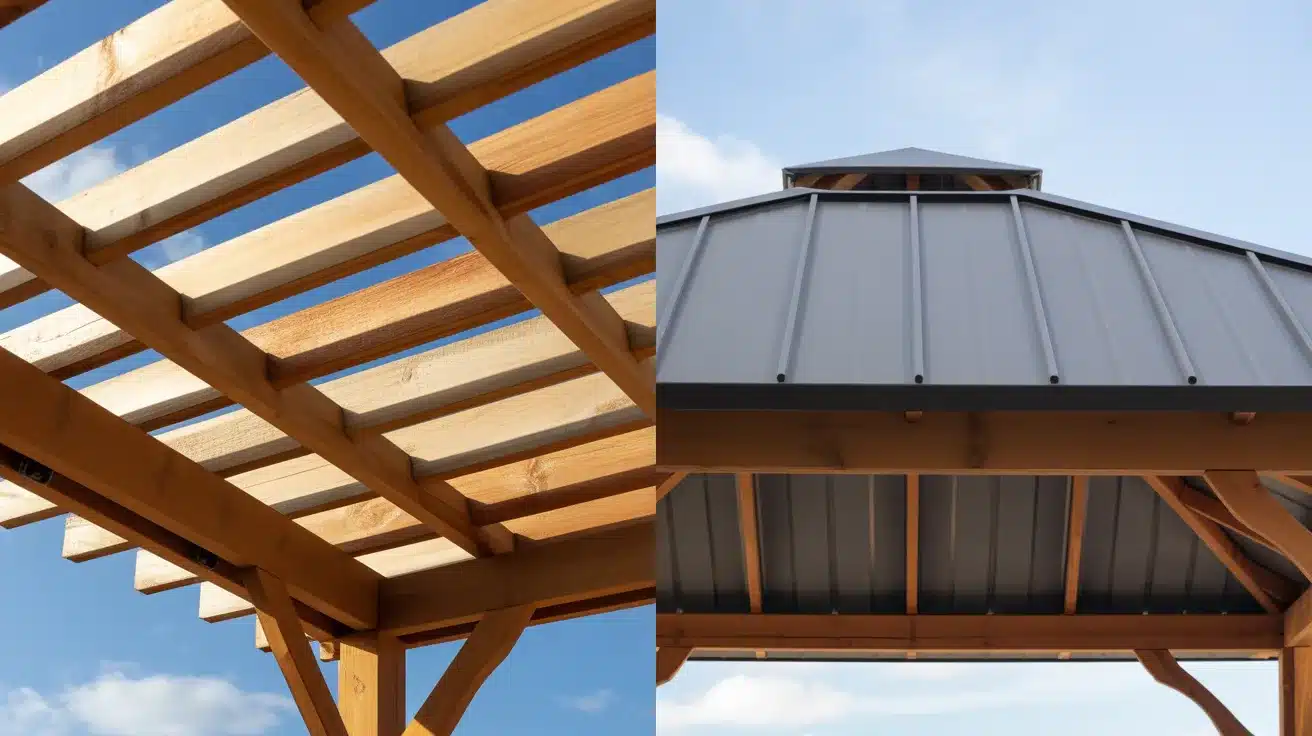
Alt Text: Close-up comparison showing a wooden pergola with open slatted beams on one side and a gazebo with a solid metal roof on the other, highlighting structural differences.
The material you pick shapes how long your structure lasts and how much upkeep it needs. Here is a quick look at what each option brings to the table.
- Wood (Cedar, Redwood, Pressure-Treated): Has a warm, natural look with lasting strength; needs sealing every one to three years to resist moisture and insects.
- Vinyl: Mimics the look of wood without the maintenance work; does not rot or warp, but lacks the feel of natural timber.
- Aluminum: Lightweight, rust-resistant, and easy to clean; can get warm in direct sun but stays strong in all types of weather.
- Fiberglass: Weather resistant with a clean finish; less common but holds up well over the long term with very little care.
- Steel: Mostly used in gazebos, powder-coated steel handles heavy snow and wind well and does not corrode easily.
Cost Comparison: Pergola vs Gazebo
Knowing what each structure typically costs helps you plan your budget before you fall in love with a specific model. Here is a general price breakdown for both.
| Structure | Type | Estimated Cost |
|---|---|---|
| Pergola | Basic wood or vinyl kit | $1,000 to $3,000 |
| Pergola | Aluminum louvered (premium) | $3,000 to $8,000 or more |
| Gazebo | Portable fabric (temporary) | $100 to $500 |
| Gazebo | Standard hardtop (metal or wood) | $3,000 to $7,000 |
| Gazebo | Large permanent structure | $7,000 to $10,000 or more |
Shade and Sunlight: Finding the Right Balance
A pergola filters light through its open slats, so you get a natural mix of sun and shade underneath. A gazebo blocks all direct sunlight under its solid roof, keeping things consistently cool and shaded.
If you want full, reliable shade, a gazebo is the stronger pick. If you prefer a bright outdoor space with just enough cover, a pergola works better.
Louvered pergolas give the most control. Tilt the slats open for more light, or close them to block it out.
Pergola vs Gazebo: Best Uses for Each
A pergola and a gazebo both improve your outdoor space, but each one fits certain situations better than the other. Here is where each structure performs best.
Best Uses for a Pergola:
- Outdoor dining area with string lights
- Poolside lounge or shade spot beside a hot tub
- Support for climbing plants like roses or wisteria
- Covered walkway between the house and garden
- Outdoor kitchen or bar setup
- Modern patio upgrade for a smaller yard
Best Uses for a Gazebo:
- Year-round outdoor room in rainy or very hot climates
- Private hot tub space with screened sides
- Backyard event or party space for large gatherings
- Shaded reading or relaxation corner in a large garden
- Family dining area in bug-prone regions (screened model)
| Do You Need a Permit?
In most US cities, yes. Permanent outdoor structures, including pergolas attached to your home and full hardtop gazebos, typically require a building permit. Portable and temporary gazebos usually do not. Always check with your local building department before starting. Also review HOA rules if they apply to your neighborhood. |
How to Choose Between a Pergola vs Gazebo?
Pick a pergola if you want a modern, open feel on a tighter budget and live somewhere with mild weather.
Pick a gazebo if you need full rain protection, have a large yard, and want a covered outdoor room.
If you want both sun control and rain cover in a single structure, a louvered pergola gives you that flexibility. Your climate, yard size, and how often you plan to use the space should guide your decision.
There is no wrong answer here as long as the structure matches how you actually live. A pergola you use every week is a better investment than a gazebo that sits empty for months.
Final Thoughts
So, pergola or gazebo? Both are solid investments for your backyard.
A pergola keeps things open and works well in mild, sunny climates on a tighter budget. A gazebo gives you full shelter and suits spaces that see more rain, heat, or heavy use.
There is no single right answer. It all comes down to your yard, your weather, and how you plan to use the space.
Before you commit, think about how often you will actually be out there and which season matters most to you. That will guide you better than any spec sheet can.
Which one are you leaning toward? Drop it in the comments below.