

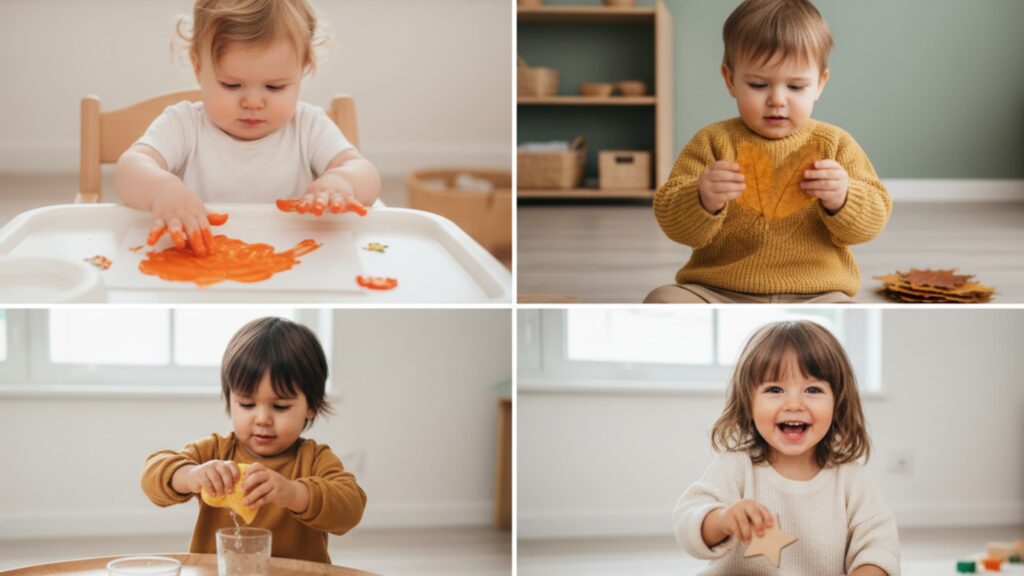
Your toddler is staring at you. Bored. Again. You hand them a toy. They toss it aside in 30 seconds flat. Sound familiar?
Here’s what changes everything: the right activity for the right age. A 14-month-old and a 32-month-old need completely different things. One size does not fit all.
This blog gives you toddler learning activities sorted by your child’s age in months, from 12 months all the way to 36 months. No expensive kits. No complicated setups.
Here’s what we cover:
- Activities for 12 to 15 months
- Activities for 15 to 18 months
- Activities for 18 to 24 months
- Activities for 24 to 30 months
- Activities for 30 to 36 months
Why Age-Based Activities Matter for Toddlers
A toddler at 12 months and a toddler at 30 months are completely different children. Their motor skills, attention span, and language grow fast, almost month by month. An activity that fits their current stage keeps them interested, busy, and learning.
Here is why matching the activity to the age matters:
- Motor skills change quickly. A 12-month-old is still working on grip and balance. A 2.5-year-old can cut paper, sort objects, and build with blocks.
- Attention span grows with age. Younger toddlers stay focused for 2 to 5 minutes. Older toddlers can stick with an activity for 15 to 20 minutes.
- Language develops through the right activities. Naming, asking questions, and storytelling all progress faster when the activity matches the child’s readiness.
- Age-right activities build confidence. When a child can actually do something, they want to keep trying.
The goal is not to push them ahead. It is to meet them exactly where they are right now.
Quick rule to remember: If your toddler finishes an activity in under 2 minutes and walks away, it is probably time to try the next age group.
12 to 15 Months: First Steps Into Learning
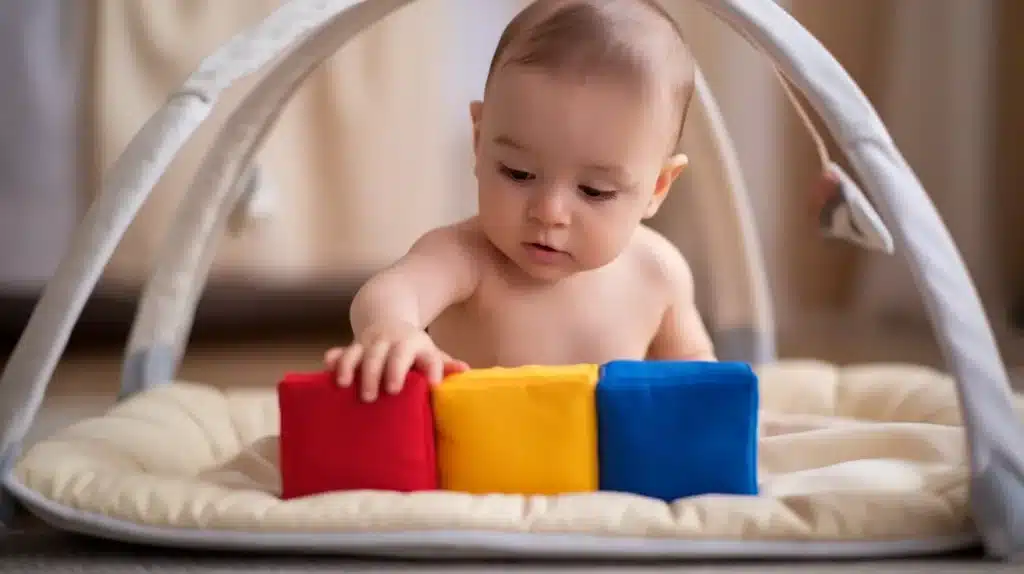
At this age, toddlers are just starting to walk, point, and copy what they see. They learn best through touch, sound, and simple cause-and-effect play.
Skills in Focus: Gross motor, sensory exploration, cause and effect, and early language
1. Soft Block Stacking: Give your toddler 3 to 4 soft fabric blocks. Show them how to stack and knock down. They will love the cause-and-effect and the crashing sounds. Skills: Gross motor, cause and effect
2. Object in, Object Out: Use a cardboard box with a hole cut in the top. Let them drop objects in and pull them out again. Simple. Satisfying. Great for hand control. Skills: Fine motor, object permanence
3. Crinkle Paper Tearing: Give your toddler a few sheets of plain paper or old magazines. Let them tear, crinkle, and scrunch freely. Skills: Fine motor, sensory, sound awareness
4. Mirror Play: Sit your toddler in front of a child-safe mirror. Make faces together. Point to the eyes, nose, and mouth and say the words. Skills: Self-awareness, language, social bonding
5. Peek-a-Boo with a Blanket: Cover a toy with a small blanket. Ask “Where did it go?” Let them pull it off. This builds object permanence in a playful way. Skills: Cognitive, cause and effect, early language
6. Push and Pull Toy Walking: If your toddler is pulling to stand or starting to walk, give them a push toy or a laundry basket to push across the floor. Skills: Gross motor, balance, independence
7. Texture Basket: Fill a small basket with safe household items of different textures, a wooden spoon, a soft cloth, a sponge, and a smooth stone. Let them feel each one. Skills: Sensory processing, curiosity, hand control
8. Banging with Kitchen Spoons: Set out pots, bowls, and wooden spoons. Let your toddler bang away. This builds rhythm and cause-and-effect thinking. Skills: Gross motor, rhythm, sound awareness
9. Ball Rolling Back and Forth: Sit across from your toddler on the floor. Roll a soft ball to them. Wait for them to push it back. This is one of the first social games toddlers play. Skills: Social skills, gross motor, and early turn-taking
10. Finger Painting on a Tray: Put a spoonful of baby-safe paint on a tray. Let them spread it with their fingers. No rules. Just feel and move. Skills: Sensory, fine motor, and early creativity
Pro Tip: At this age, the activity lasts as long as the toddler wants, which might be 3 minutes. That is perfectly fine. Follow their lead.
15 to 18 Months: Building Curiosity and Control

By 15 months, most toddlers are walking and getting into everything. They want to do things themselves. Give them activities that let them explore with their hands and test what happens.
Skills in Focus: Fine motor, early problem-solving, imitation, vocabulary building
11. Nesting Cups: Give a set of nesting cups or bowls of different sizes. Show how they fit inside each other. Let them figure out the order on their own. Skills: Spatial reasoning, problem-solving, size concepts
12. Posting Coins into a Piggy Bank: Use a large-slot piggy bank or a container with a slit cut in the lid. Let them post large, flat objects (poker chips, cardboard circles) through the slot. Skills: Fine motor, hand-eye coordination, focus
13. Simple Shape Sorter: A basic 3-shape sorter, circle, square, triangle. Do not rush them. Let them try each hole. Skills: Shape recognition, problem-solving, persistence
14. Pouring Dried Pasta: Set up two containers and a cup of dried pasta. Show them how to pour from one to the other. They will pour back and forth for a surprisingly long time. Skills: Fine motor, early math (volume), focus
15. Sticker Peeling and Sticking: Give large stickers and a blank sheet of paper. Let them peel and stick wherever they like. Peeling builds finger strength. Skills: Fine motor, creativity, self-expression
16. Sorting Big and Small: Collect pairs of similar objects in two sizes, a big spoon and a small spoon, a big ball and a small ball. Sort them into two boxes labeled BIG and SMALL. Skills: Size concepts, sorting, and early language
17. Water Pouring with Small Pitchers: At the sink or in a water tray, give a small plastic pitcher and a few cups. Practice pouring water from one container to another. Skills: Fine motor, cause and effect, early science
18. Animal Sound Matching: Show pictures of animals, a dog, a cat, a cow, and a duck. Say the name and the sound together. Ask “What does the dog say?” after a few rounds. Skills: Language, memory, listening
19. Cardboard Tube Roll: Hold a cardboard tube at an angle against a wall. Drop small balls or pom-poms through it and watch them roll out. Let them figure out the angle. Skills: Cause and effect, fine motor, and early physics concepts
20. Scribble Drawing: Give a thick crayon and a large piece of paper taped to the floor. Let them scribble freely. Name the colors as they use them. Skills: Fine motor, pre-writing, color awareness
Pro Tip: Toddlers at this age love doing what they see adults doing. Let them “help” with simple tasks like wiping the table or putting items in a bin; it counts as learning, too.
18 to 24 Months: Language, Play, and Discovery

This is a big stage for language. Most toddlers go from single words to short phrases between 18 and 24 months. The best activities at this age combine hands-on play with talking, naming, and storytelling.
Skills in Focus: Language development, imaginative play, early counting, social awareness
21. Simple Pretend Kitchen Play: Set up a corner with a few pots, plastic food, and a spoon. Ask “What are you cooking?” and respond to their answer. Narrate their play back to them. Skills: Language, imagination, social play
22. Two-Piece Puzzles: Start with puzzles that have just 2 to 4 large pieces with clear pictures. Talk about what each piece shows while they fit it together. Skills: Problem-solving, language, fine motor
23. Sorting Colors into Bowls: Use 3 colored bowls and a mix of pom-poms or blocks in those same colors. Sort them together, naming each color out loud. Skills: Color recognition, sorting, language
24. Storytime with Puppets: Read a simple board book and use a hand puppet to “act out” the story. Ask the puppet questions, and have your toddler answer on the puppet’s behalf. Skills: Language, listening, imagination
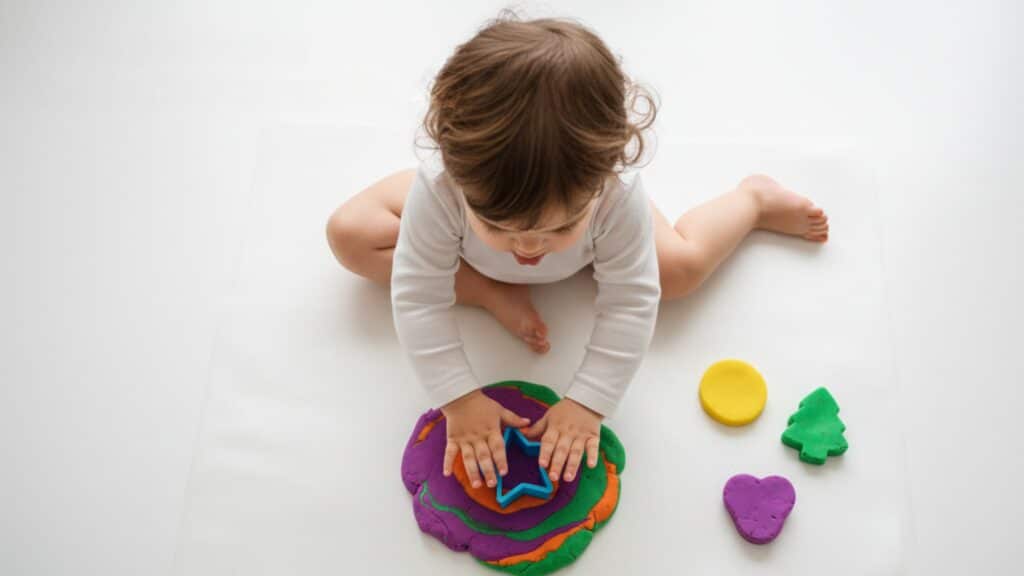
25. Dough Rolling and Cutting: Give playdough, a rolling pin, and a few simple cookie cutters. Name the shapes as they press them out. Skills: Fine motor, shape recognition, language
26. Simple Matching Cards: Use pairs of picture cards (two dogs, two apples). Lay them out and find the matches together. Start with just 4 pairs. Skills: Memory, visual recognition, language
27. Helping to Sort Laundry: Let them pull socks out of a basket and try to match pairs. This is a real task that feels important to them. Skills: Sorting, matching, responsibility
28. Filling and Dumping a Sensory Bin: Fill a bin with dried rice or oats. Add a few cups, spoons, and small containers. Let them scoop, fill, and dump freely. Skills: Sensory, fine motor, and early math concepts
29. Counting Stairs: Every time you walk up or down stairs, count each step out loud. Point and touch each one. Make it a daily habit. Skills: Counting, number awareness, routine
30. Dot Marker Art: Use large dot markers (bingo daubers) on plain paper or simple coloring sheets. These are easy for small hands to control. Skills: Fine motor, color recognition, early creativity
Pro Tip: Talk constantly during activities at this stage. Name everything. Ask simple questions. The more words they hear in context, the faster their language grows.
24 to 30 Months: Creative Thinking and Problem Solving
Two-year-olds have opinions, ideas, and a strong need to do things their way. Channel that energy into open-ended activities that let them make choices and figure things out on their own.
Skills in Focus: Problem-solving, creativity, early math, independence
31. Building with Duplo or Large Blocks: Give a set of large building blocks. Ask them to build something specific, a house, a tower, a road. Talk about what they make. Skills: Spatial reasoning, creativity, early engineering thinking
32. Simple 6 to 8 Piece Jigsaw Puzzles Move up from knob puzzles to flat jigsaw puzzles with 6 to 8 pieces. Let them try before offering help. Skills: Problem-solving, patience, visual reasoning
33. Painting with Unusual Tools Skip the brush. Use cotton swabs, a fork, a sponge, or a toothbrush to paint. Talk about the different marks each tool makes. Skills: Creativity, fine motor, cause and effect
34. Pattern Making with Blocks: Lay out a simple color pattern, red, blue, red, blue. Ask them to continue it. Start with 2 colors before adding more. Skills: Pattern recognition, early math, focus
35. Homemade Obstacle Course: Set up a simple course using pillows, a low step, a tunnel (cardboard box), and a hoop on the ground. Give instructions: “crawl through, jump in, climb over.” Skills: Gross motor, listening, following directions
36. Playdough with Loose Parts: Add buttons, sticks, leaves, and googly eyes to a playdough session. Let them build their own creatures or scenes. Skills: Creativity, fine motor, imaginative thinking
37. Simple Science: Baking Soda and Vinegar: Put baking soda in a tray. Give small cups of vinegar with droppers. Let them squeeze and watch it fizz. Talk about what happens. Skills: Early science, cause and effect, fine motor
38. Dress-Up and Role Play: Put together a simple dress-up box, old hats, scarves, bags, and shoes. Let them choose what to wear and play out a role. Skills: Imagination, language, self-expression
39. Sorting Objects by Type: Mix up a collection of everyday objects, coins, buttons, small toys, and shells. Give three boxes. Sort them into groups and discuss why each item goes where it does. Skills: Sorting, categorizing, early logic
40. Tracing Shapes with Fingers: Draw large, simple shapes on paper. Let them trace the lines with their finger, then with a crayon. Name each shape as they trace it. Skills: Pre-writing, shape recognition, fine motor
Pro Tip: At this age, resist the urge to fix their work or show them “the right way.” Their process matters more than the result.
30 to 36 Months: School-Readiness Skills Through Play
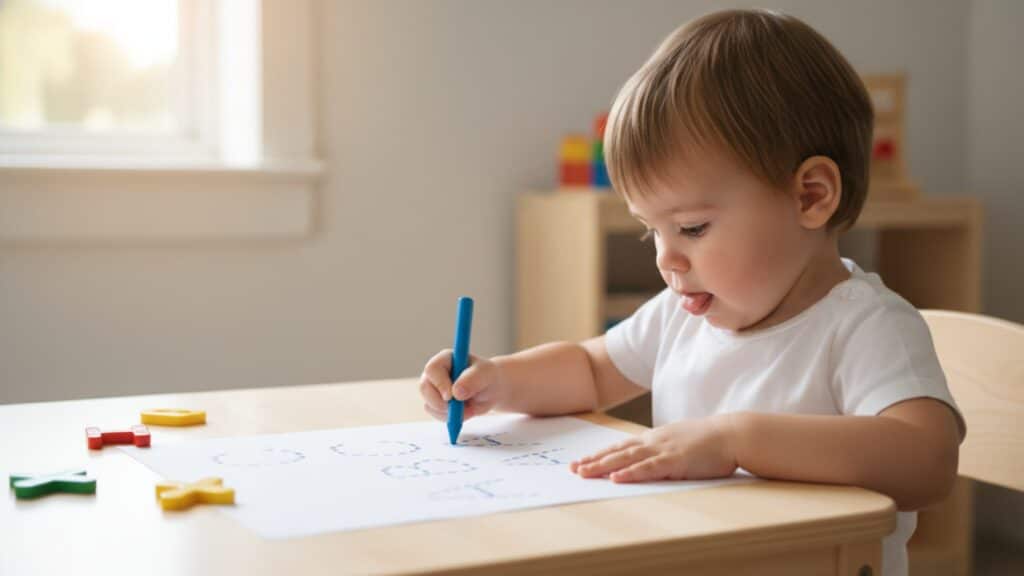
As toddlers near age 3, they are ready for activities that build real school-readiness skills, letters, numbers, scissors, listening, and group play, all through experiences that still feel like fun.
Skills in Focus: Pre-writing, number sense, early literacy, listening, social skills
41. Name Writing Practice (Dotted Letters): Write your child’s name in large, dotted letters. Let them trace over the dots with a crayon or marker. Praise the effort, not the result. Skills: Pre-writing, letter recognition, fine motor
42. Letter Matching with Magnetic Letters: Put magnetic letters on the fridge. Call out a letter and ask them to find it. Start with the letters in their name. Skills: Letter recognition, memory, early literacy
43. Counting Objects Up to 10: Gather 10 small objects, buttons, blocks, coins. Count them together, touching each one as you count. Practice every day. Skills: Number sense, one-to-one counting, math readiness
44. Simple Scissor Practice: Give child-safe scissors and strips of paper. Show them how to hold the scissors and make a single snip across the strip. Skills: Fine motor, hand strength, pre-writing
45. Rhyming Word Games: Say a word. Ask them to say something that rhymes; it does not have to be a real word. Cat, bat, sat, zat, all fine. Skills: Phonological awareness, language, and early reading readiness
46. Story Sequencing with 3 Cards: Draw or print 3 cards showing a simple story, a seed, a plant, a flower. Ask them to put the cards in order and tell the story. Skills: Sequencing, early literacy, language
47. Button and Zip Practice: Use a dressing frame or an old shirt to practice buttoning and zipping. These are real skills they will need in school. Skills: Fine motor, independence, self-care
48. Simple Board Games: Try a basic first game, Snakes and Ladders, Candyland, or a memory card game. Focus on taking turns, waiting, and following rules. Skills: Social skills, turn-taking, listening, patience
49. Drawing a Person: Ask your toddler to draw a person. At this age, a circle with some lines is perfectly right. Talk about what each part is. Skills: Creativity, pre-writing, body awareness, language
50. Show and Tell Practice at Home: Let your toddler pick one toy or object. Ask them to tell you three things about it: what it is, what it does, and why they like it. Skills: Language, confidence, and early public speaking
Pro Tip: Many of these activities double as preschool interview prep. Keep the mood light and praise effort over correctness every time.
Final Notes
Every toddler learns differently. But one thing stays the same: the right activity at the right age makes all the difference.
You do not need to spend money or spend hours setting things up. A bowl of dried pasta, a few pom-poms, or a sheet of paper can teach your child more than any expensive toy.
Pick one activity from your child’s age group and try it today. See how they respond. Then come back and try the next one.
Which activity are you starting with? Tell us in the comments below. We would love to hear how it goes.