
You walk into a room, and something just feels different. More light. More air. More space. That feeling often comes from one simple change: a set of French doors.
French doors have been a popular choice for homeowners for centuries. They bring in natural light, connect indoor and outdoor spaces, and give any room a clean, open look without a major renovation.
But if you have ever stood in a showroom wondering what a French door is, exactly, you are not alone. Many people confuse them with regular double doors or sliding patio doors.
This guide answers all of that, clearly and simply.
What Is a French Door?
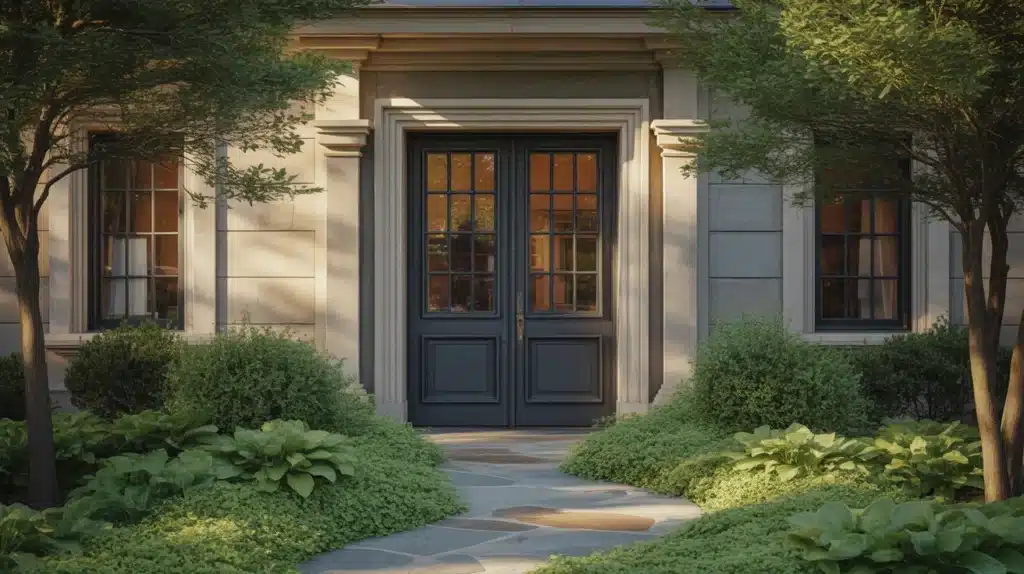
A French door is a type of door with glass panes running most of its height, built as a matching pair that opens from the center on hinges.
According to the Merriam-Webster Dictionary, a French door is defined as a door with rectangular glass panes extending its full length, also called a French window.
The glass typically covers 80 to 90 percent of the door’s surface. What defines it as a French door is the hinged, center-opening operation, not just its appearance.
The History Behind French Doors
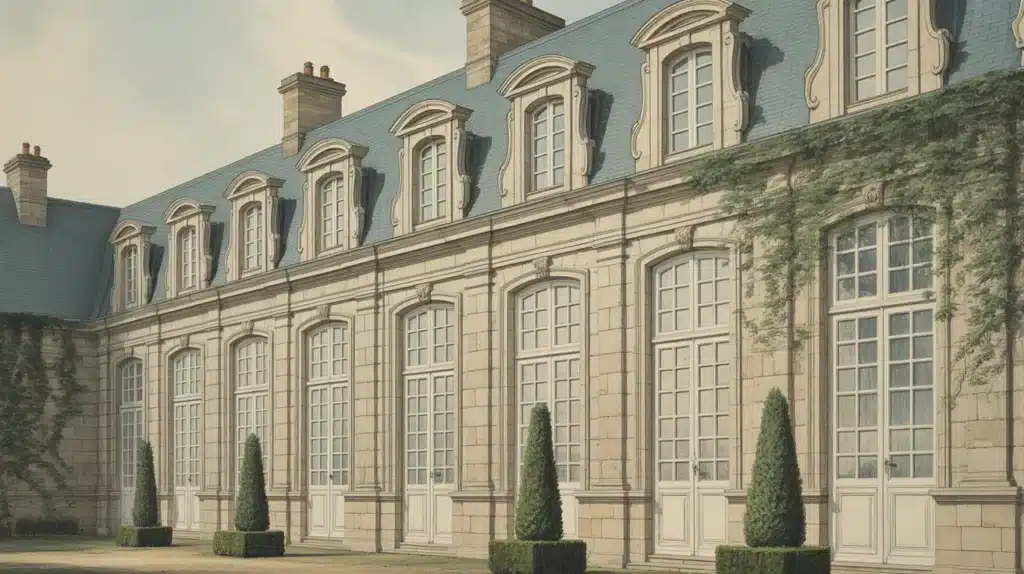
French doors did not start as doors at all. They began in 17th-century France as tall, floor-length windows that swung open onto a balcony.
Architects during the French Renaissance wanted to bring more light into grand homes. Inspired by
With Roman values of symmetry and balance in mind, they created large glass-filled openings that stretched nearly to the floor and opened from the center.
Over time, these “windowed doors” spread from French palaces to everyday homes across the world.
| Time Period | Development |
|---|---|
| 17th Century | First appeared in France as floor-length balcony-style windows |
| French Renaissance | Grew popular in grand estates and royal palaces |
| 18th to 19th Century | Spread through Europe and into American homes |
| 20th Century | Wood frames gave way to vinyl, fiberglass, and aluminum options |
| Today | Double and triple-pane glass with ENERGY STAR certification is widely available |
The name “French door” reflects a long association with French craftsmanship and design. It does not mean the door is made in France. It simply points to where the style first became popular.
Key Features of a French Door
Not every glass door is a French door. A few specific design details distinguish French doors from other doors on the market.
- Large glass area: Glass typically covers 80 to 90 percent of the door’s height, letting in plenty of natural light throughout the day.
- Hinged operation: Doors hang on hinges placed on the outer sides of the frame and swing open from the center.
- Center opening: Both panels meet in the middle when closed, with no fixed post blocking the passage.
- Inswing or outswing: You choose the opening direction based on your room layout and available space.
- Grid or grille patterns: Glass may be divided into smaller sections by wooden or metal bars called mullions. Modern styles often use one clean, uninterrupted pane.
- Pair design: Classic French doors come as a matching pair, though single-panel versions are also available for narrower spaces.
- Frame material options: Frames come in wood, vinyl, fiberglass, aluminum, or steel, each with its own look and maintenance level.
Types of French Doors
French doors come in more varieties than most people expect. The right type depends on your available space and where you plan to put the door.
1. Traditional Hinged French Doors
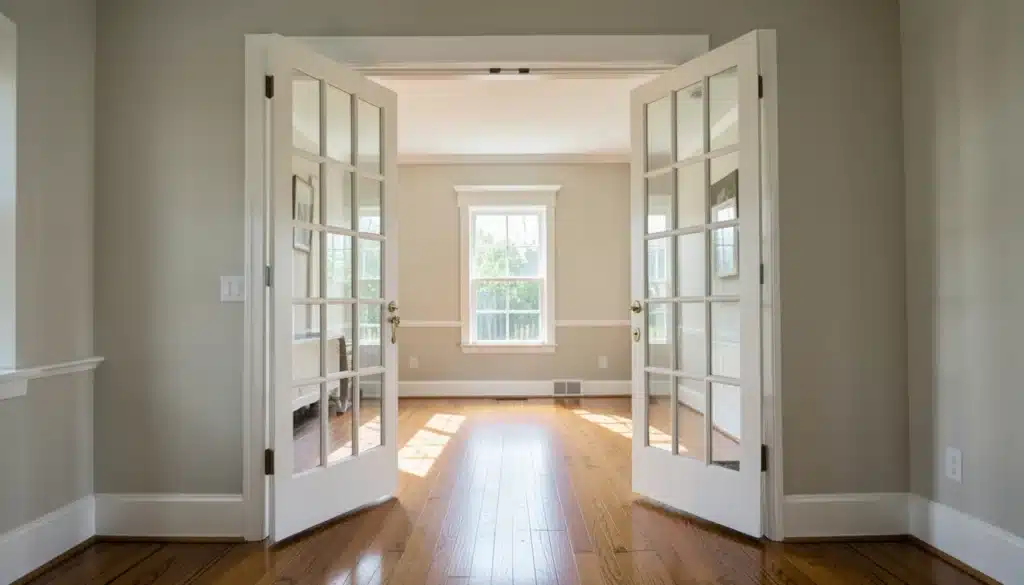
This is the version most people picture when they hear the words “French door.” Two glass panels hang on hinges placed on the outer sides of the frame and swing open from the center.
They work well as patio doors, dining room entries, and front entry doors. The wide center opening creates a grand, welcoming feel that very few other door styles can match.
2. Inswing French Doors
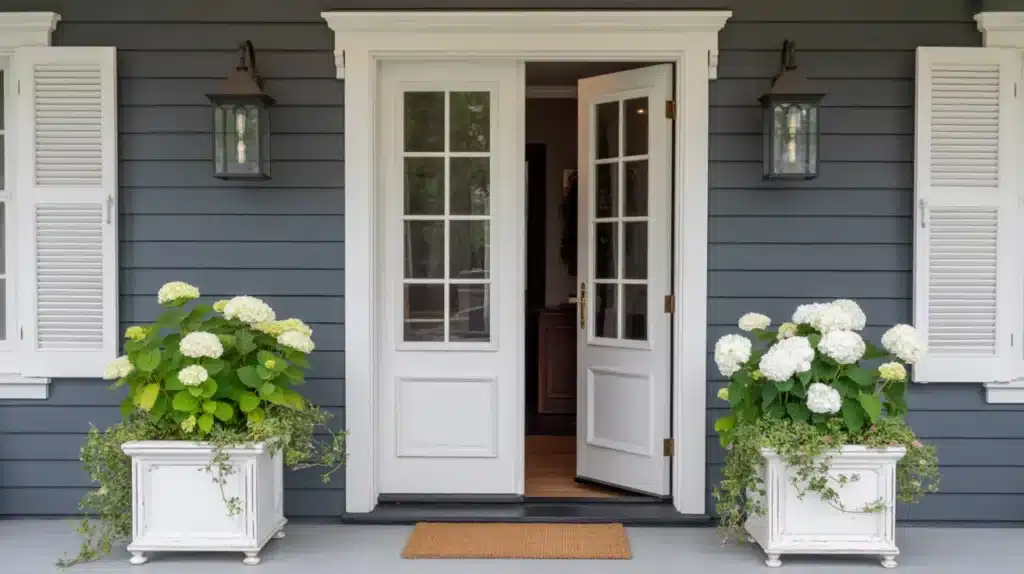
Inswing French doors open toward the inside of the room. This makes them a practical choice when the outside space near the door is limited, such as a covered porch, a narrow walkway, or a small balcony.
The door panels clear the exterior completely, so rain and wind do not push them open by accident. Keep in mind that the interior floor space near the door must remain clear for the panels to swing freely.
3. Outswing French Doors
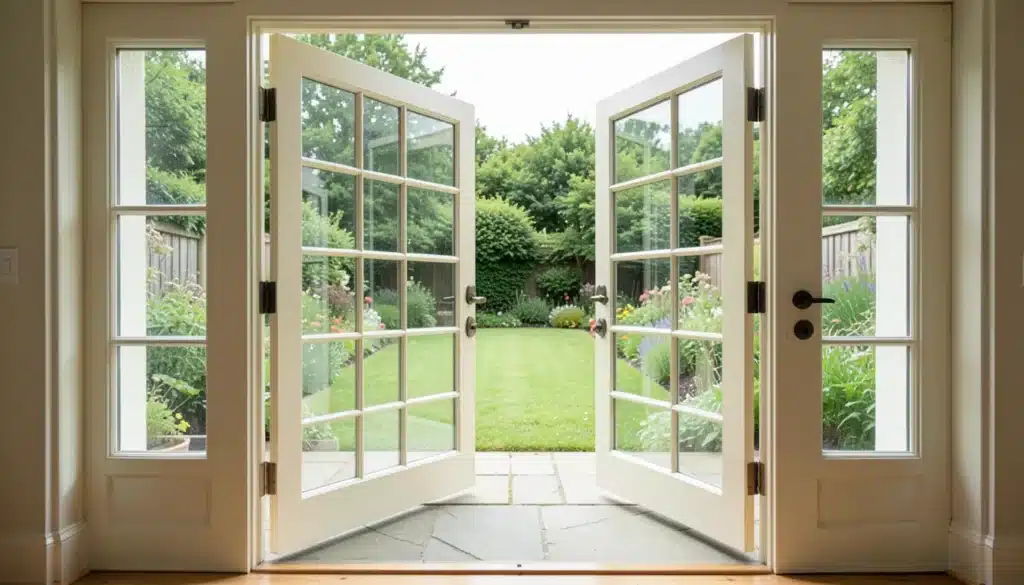
Outswing French doors push open toward the exterior. This is a smart option when furniture sits close to the door or when interior floor space is tight. Because the panels open away from the room, they do not eat into your living area at all.
One thing to check before going this route is that the outdoor area directly in front of the door has enough clearance for both panels to open all the way.
4. Sliding French Doors
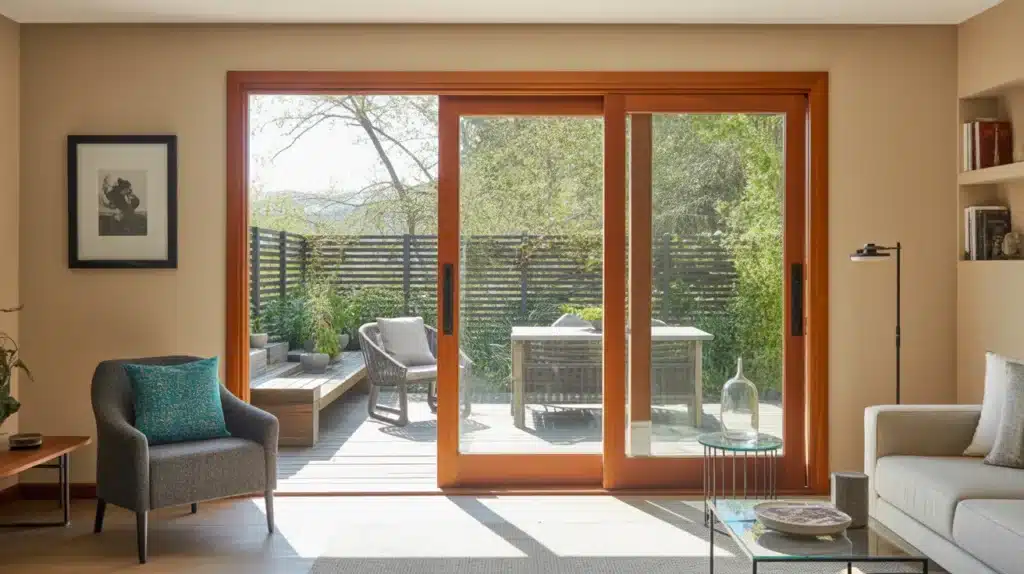
Sliding French doors move along a fixed track instead of swinging open.
One or both panels glide sideways, making them a great fit for rooms where a swinging door would get in the way of furniture or foot traffic.
They take up no floor space at all when open. The overall look leans more contemporary, which suits modern and transitional home styles very well.
5. Bi-Fold French Doors
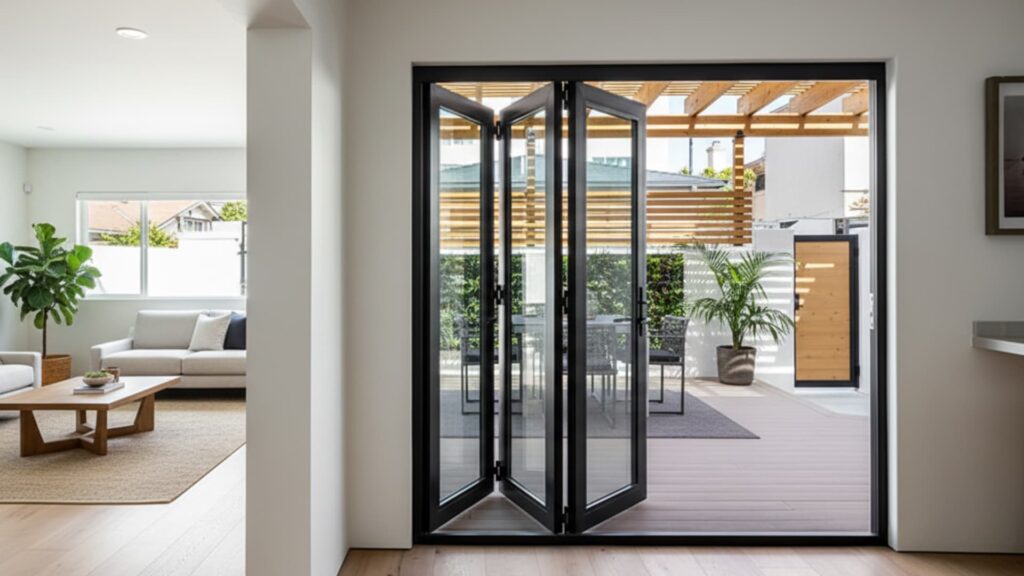
Bi-fold French doors have multiple glass panels that fold back on themselves like an accordion. When fully open, they stack to one side, creating an extra-wide, nearly wall-free passage.
This style works best for connecting large living rooms directly to a patio or garden.
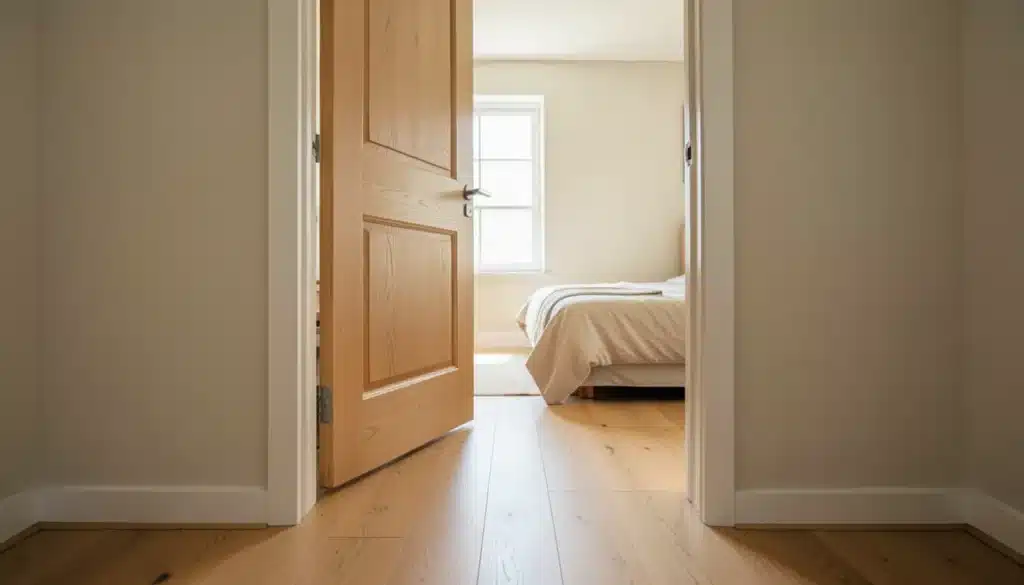
6. Interior French Doors
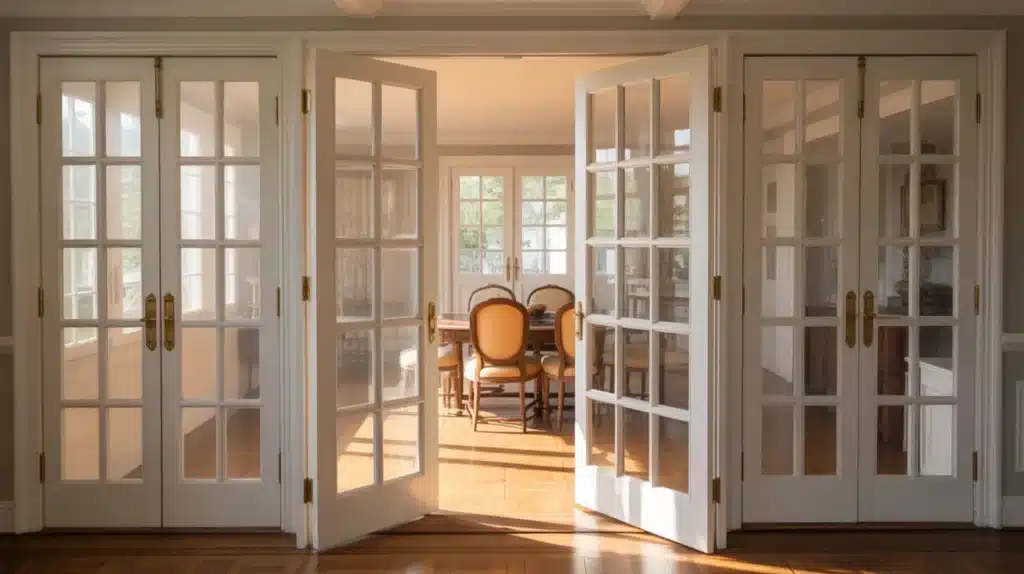
Interior French doors divide two rooms inside the home without blocking light between them.
They are commonly placed between a living room and a dining room, at a home office entrance, or between a bedroom and a bathroom. You get the option to close off a space while keeping the light flowing.
7. Exterior / Patio French Doors
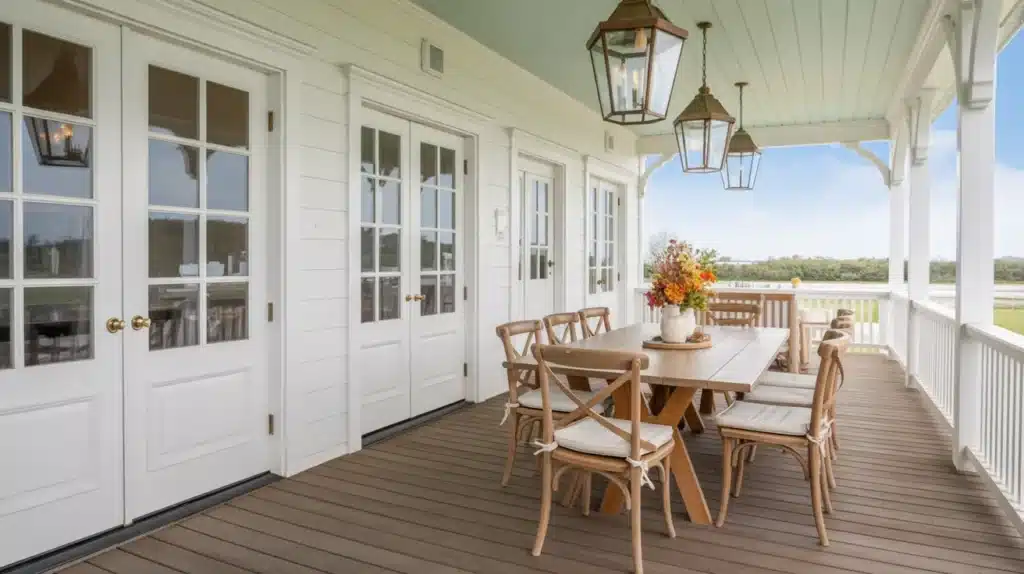
These are the most common types found in American homes that open directly onto a deck, patio, balcony, or backyard.
They are built with weather-resistant frames and sealed glass to handle rain, heat, and cold year-round. Many are ENERGY STAR certified for better insulation.
8. Single-Panel French Door
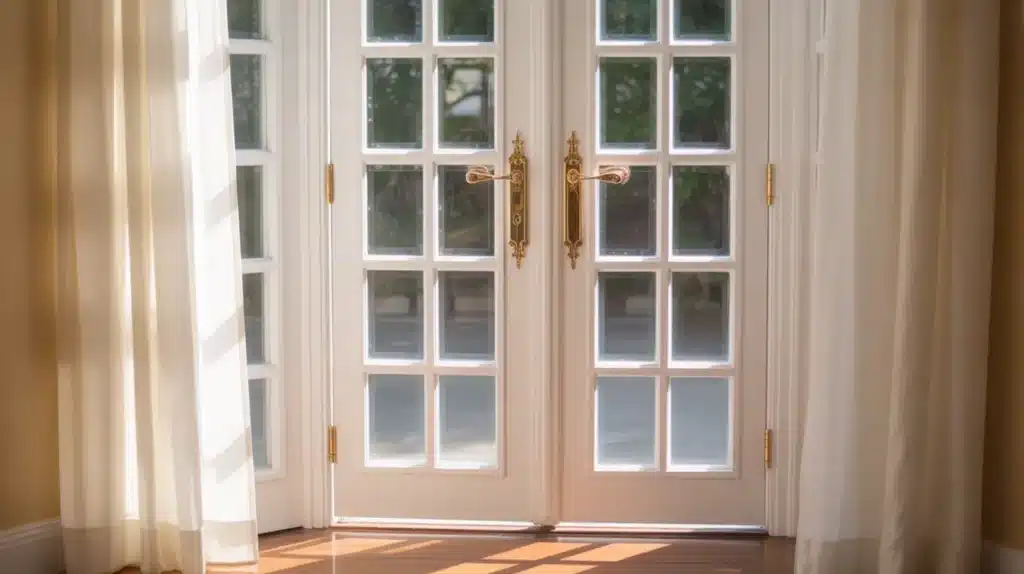
A single-panel French door is one hinged glass panel instead of a pair, ideal for narrower openings where a full double-door frame would not fit.
It still carries the same full-length glass look and brings in just as much natural light for its size.
French Door Materials
The material you choose shapes how long the door lasts, how it looks each season, and how much upkeep you are signing up for. Here is a quick look at each option.
- Wood: Warm, natural look. Can be painted or stained, but needs regular care to prevent rot and swelling over time.
- Fiberglass: Strong, long-lasting, and resistant to rot. Can be made to look like real wood grain and requires very little maintenance.
- Vinyl (uPVC): Budget-friendly and easy to maintain. Insulates well but offers fewer design options than wood or fiberglass.
- Aluminum: Slim, strong frames with a modern look. Conducts cold in winter, so a thermally broken frame is important in colder climates.
- Steel: Very strong and secure. Needs a good protective coating to prevent rust in humid or wet environments.
- Single-pane glass: Basic option. Minimal insulation. Best for interior use only.
- Double-pane glass: Two layers with a gas fill between them. Reduces heat transfer and outside noise significantly.
- Triple-pane glass: The highest level of insulation. Best for very cold or very hot climates.
- Low-E glass: A special coating that blocks UV rays and reduces heat loss. Works best when paired with double or triple-pane construction.
French Doors vs. Double Doors vs. Sliding Patio Doors
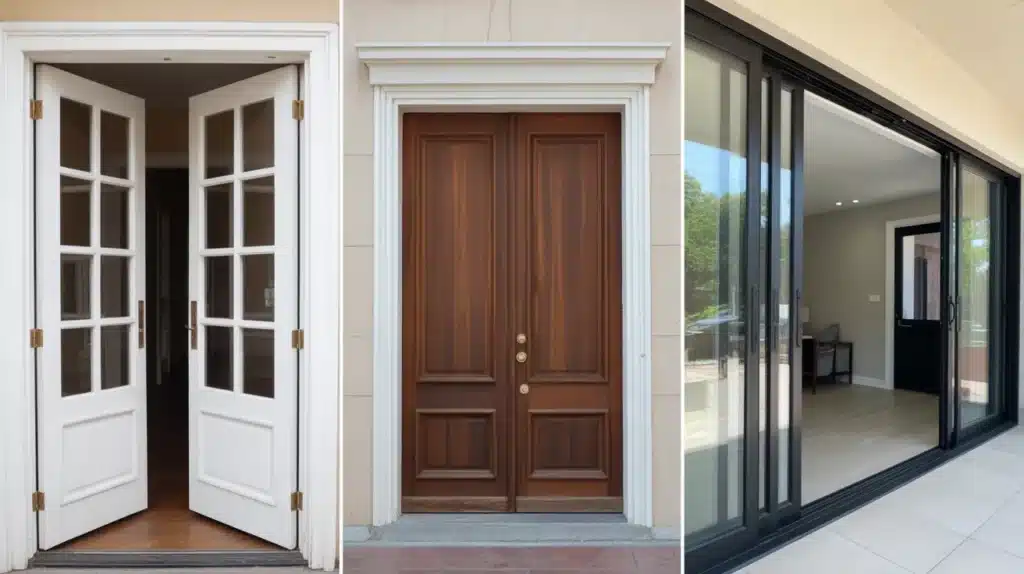
These three door types get mixed up all the time. They may look similar in photos, but they function very differently in a real home.
| Feature | French Doors | Double Doors | Sliding Patio Doors |
|---|---|---|---|
| Glass coverage | 80 to 90 percent | Varies, often low or none | High, full panel |
| Operation | Hinged, swings open from the center | Hinged, swings open from the center | Glides on a track |
| Full opening | Yes, both panels clear the frame | Yes, both panels clear the frame | No, one panel always stays fixed |
| Best use | Light, airflow, indoor/outdoor flow | Grand entryways, formal entries | Small spaces, modern interiors |
| Energy performance | Good with double-pane glass | Better with solid panels | Good with quality sealed glass |
| Floor space needed | Needs swing clearance | Needs swing clearance | No swing space required |
| Privacy | Less, due to high glass area | More solid panels block the view | Moderate, frosted options available |
| Typical style | Traditional to contemporary | Formal, heavy, statement-making | Modern, minimal, clean-lined |
Pros and Cons of French Doors
Every door type has its strengths and its limits. French doors are no different. Here is an honest look at both sides so you can make a clear-headed decision.
Pros
- Natural light: Large glass panels let daylight into any room, reducing the need for artificial lighting during the day.
- Open feel: The large expanse of glass makes rooms look larger and more connected to the space beyond.
- Wide passage: When both panels are open, you get a clear, unblocked opening. This makes moving large furniture or hosting groups much easier.
- Adds home value: French doors at primary entryways can raise a home’s resale appeal and market value.
- Versatile placement: Works as an exterior patio door, front entry door, and interior room divider in the same home.
- Good airflow: A fully open French door pair creates strong cross-ventilation on warm days.
- Lots of design choices: Available in many materials, glass styles, and frame finishes to match any home.
Cons
- Security concerns: Glass-heavy doors can be a weak point if low-quality glass or basic locks are used on exterior installations.
- Needs swing clearance: Hinged versions need room to open, which limits where you can place nearby furniture.
- Higher upfront cost: Quality French doors with good glass and frames cost more than a basic sliding door.
- Wood needs regular care: French door frames need re-staining or repainting every 2 to 3 years.
- Heat loss risk: Poorly sealed or single-pane French doors can let cold air in during the winter months.
Where Can You Use French Doors in Your Home?
French doors are more flexible than most people realize.
They fit on patios and backyard entrances, as front entry doors, between a living room and dining room, from a kitchen leading to an outdoor dining area, at a home office entry, in a master bedroom opening to a bathroom or closet, and even in a finished basement or flex room.
Anywhere you want more light and a wider visual connection between two areas, a French door is a practical choice.
Things to Consider Before Buying French Doors
A French door is an investment, and like any investment, a few checks before you buy will save you time, money, and frustration.
- Opening size: Measure the rough opening carefully. Standard pairs run 60 to 72 inches wide and 80 inches tall.
- Swing direction: Decide early on whether to go inswing or outswing based on your interior layout and outdoor space.
- Frame material: Match the material to your local climate and how much maintenance you are willing to do each year.
- Glass type: Double-pane glass with Low-E coating and argon gas fill is the most practical choice for most climates.
- Security features: Look for multi-point locking systems and laminated or tempered glass on all exterior doors.
- ENERGY STAR rating: Certified doors meet strict insulation and efficiency standards, which matters in hot summers or cold winters.
- Budget: Factor in installation costs alongside the door price. Custom sizes and specialty materials raise the total.
- Wall space: If the door swings inward, confirm that no furniture or interior walls block the full swing path.
How to Maintain French Doors?
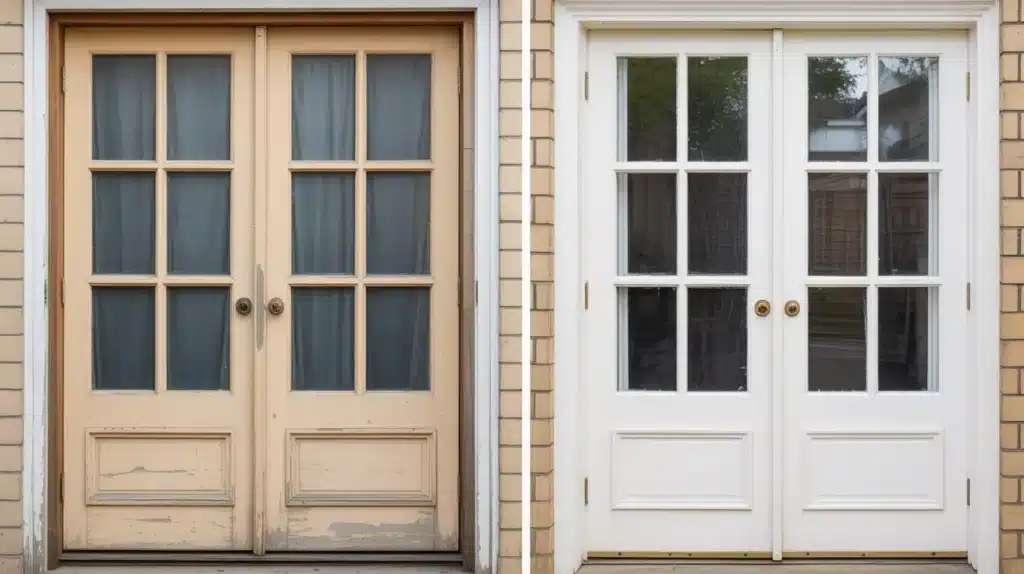
French doors do not need much, but they do need consistency. Clean the glass regularly, oil the hinges once a year, and check the weather-stripping each season for gaps or cracks.
Wood frames need a fresh coat of stain or paint every two to three years to stay protected, while fiberglass and vinyl frames just need a simple wipe-down with soap and water.
If the doors stop closing flush, tighten the hinge screws first, then call a professional.
Conclusion
French doors are a practical, light-friendly addition to almost any home.
They serve as patio doors, room dividers, and front-entry doors. The right choice depends on your space, your budget, and how you plan to use the door.
From the classic hinged pair to space-saving bi-fold options, there is a French door for nearly every layout.
Pick the right material, the right glass, and the right size, and you will notice the difference right away. Your home will feel brighter, more open, and better connected without a major overhaul.
Still have questions about which French door works best for your home? Drop them in the comments below. We would love to help you figure out the right fit.