


Ever looked at your child’s report card and wondered what that B+ actually means? Does it show they’re struggling with fractions but great at geometry? Or did they just forget to turn in homework?
Traditional grading lumps everything together, making it hard to see what students really know.
Standards-based grading changes that. Instead of one mysterious letter, students get clear feedback on each skill they’re learning. Schools across the country are switching to this system because it shows actual progress, not just average points.
In this guide, you’ll learn what standards-based grading is, how it compares to traditional methods, the core principles behind it, how teachers use it in real classrooms, and the pros and cons you should know before your school makes the switch.
What Is Standards Based Grading?
Standards-based grading is an assessment system that measures student learningby assessing mastery of specific learning objectives rather than averaging scores from tests and assignments.
The main goal is to show how well students understand the key concepts and skills they need to learn.
This approach gives teachers, parents, and students a clearer view of actual progress toward meeting educational goals.
Many schools are now moving toward this method because it focuses on what students truly know and can do, not just their test-taking abilities or homework completion rates.
In standards-based grading, a student’s grade reflects their current understanding of each standard, making it easier to identify strengths and areas that need more practice.
Traditional Grading vs. Standards-Based Grading

Understanding the difference between these two grading systems helps explain why many schools are making the switch. Let’s look at how they stack up against each other.
| Aspect | Traditional Grading | Standards-Based Grading |
|---|---|---|
| What Gets Measured | Combines test scores, homework, participation, behavior, and effort into one grade | Measures only mastery of specific learning standards |
| Grade Calculation | Averages all work together, including early attempts when learning | Shows current understanding of each standard |
| Clarity | One letter or number without details on strengths or gaps | Breaks down performance by learning goal |
| Feedback | General grade with limited guidance | Specific feedback on each objective |
| Focus | Mixes academic performance with behavior and work habits | Separates learning achievement from effort |
Core Principles of Standards-Based Grading
Standards-based grading works differently from traditional methods because it’s built on five key principles. These foundations make the system more fair and focused on real learning.
- Focus on Mastery Over Points: Grades show how well students understand specific skills or knowledge areas, not how many points they earned from homework and tests.
- Clear and Measurable Standards: Each learning standard is specific and measurable, so students know exactly what they need to learn and what success looks like.
- Multiple Opportunities to Demonstrate Learning: Students can retake assessments or complete additional tasks to prove their understanding, which supports real growth and learning.
- Separation of Academic Achievement and Behavior: Grades reflect only what students know and can do academically, keeping behavior, effort, and participation separate from learning assessments.
- Feedback for Improvement: Students receive ongoing, specific feedback that shows exactly where they’re doing well and where they need improvement.
How Standards-Based Grading Works in Practice
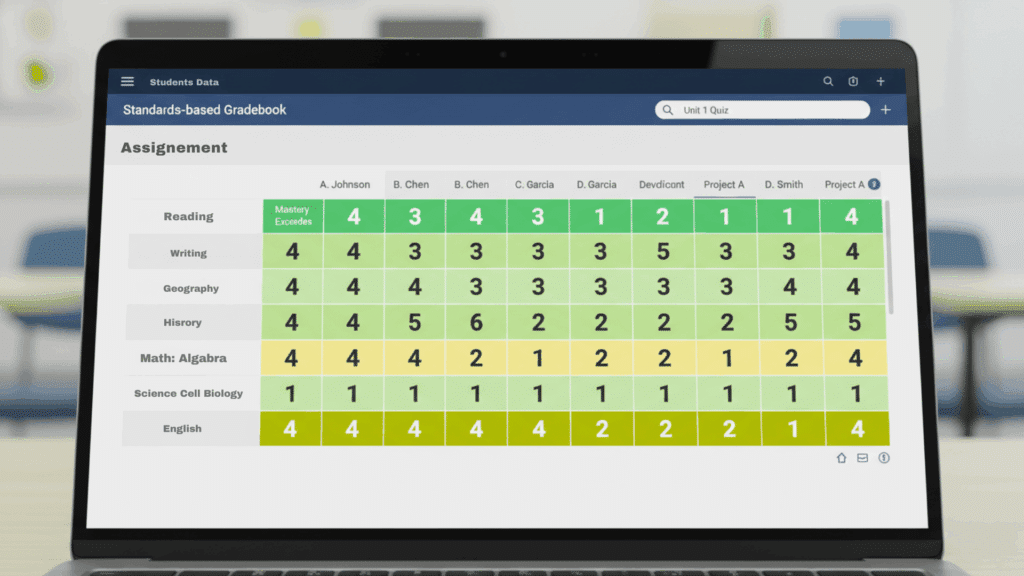
Standards-based grading might sound complex, but it follows a straightforward process in the classroom. Here’s how teachers actually use this system day to day.
Grading System: Proficiency Scales
Teachers use scales rather than traditional letter grades to indicate mastery levels. Common scales include:
- 4-point scale: 4 (Exceeds Standard), 3 (Meets Standard), 2 (Approaching Standard), 1 (Beginning)
- Descriptive levels: Advanced, Proficient, Developing, Beginning
- Number scale: Sometimes 1-5 or 1-3, depending on school preferences
Each level describes what students can do, not just a score.
Assessments and Feedback
- Teachers score each learning objective separately on assessments
- Students receive specific marks for different skills tested
- If a math test covers three standards, students get three separate scores
- Feedback tells students exactly which concepts they understand and which need review
- Scores reflect current understanding, not an average of past attempts
Gradebooks and Reporting
- Report cards show progress on individual learning standards
- Instead of “Math: B+,” parents see “Multiplying Fractions: 3, Solving Equations: 4, Word Problems: 2”
- Digital platforms track each standard over time
- Parents can see which specific skills their child has mastered
- Progress reports highlight growth and areas needing support
Steps to Implementing Standards-Based Grading
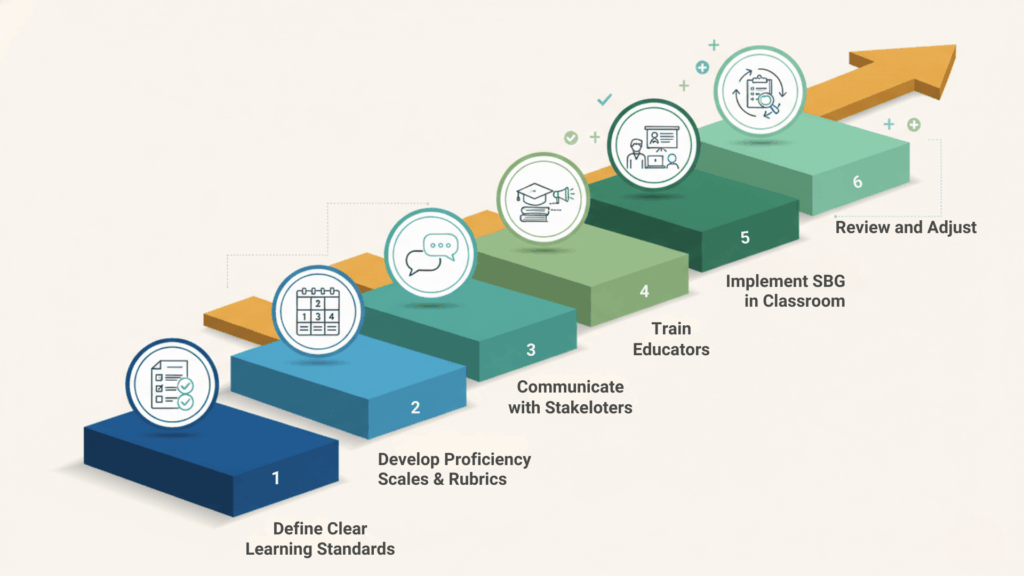
Moving to standards-based grading requires careful planning and support from everyone involved. Follow these six steps to make the transition smooth and successful.
Step 1: Define Clear Learning Standards
Start by working with teachers, administrators, and curriculum specialists to create specific learning objectives for each subject and grade level.
These standards should be measurable and clearly state what students need to know and do. Make sure each standard focuses on one skill or concept so the assessment stays clear and focused.
Step 2: Develop Proficiency Scales and Rubrics
Create a proficiency scale that shows different levels of mastery, such as a 1-4 system or descriptive levels like Beginning, Developing, Proficient, and Advanced.
Build rubrics that explain exactly what student work should look like at each level for each standard. These tools help teachers grade consistently and help students understand what they’re working toward.
Step 3: Communicate with Stakeholders
Share information about the change with parents, students, and all school staff before starting. Hold meetings, send guides home, and create FAQs that explain how standards-based grading works and why it benefits students. Clear communication prevents confusion and builds support for the new system.
Step 4: Train Educators
Provide teachers with training sessions and ongoing support to learn the new grading system. Offer workshops on creating assessments, using proficiency scales, and giving helpful feedback.
Give teachers time to practice and ask questions so they feel confident using standards-based grading in their classrooms.
Step 5: Implement SBG in the Classroom
Teachers begin using the new system for tests, projects, homework, and class activities. Update gradebooks to track each learning standard separately rather than averaging all scores.
Send home progress reports that show mastery levels for individual standards so families can see exactly how their child is doing.
Step 6: Review and Adjust
Check in regularly with teachers, students, and parents to see how the system is working. Collect feedback about what’s going well and what needs improvement.
Make changes to scales, standards, or processes based on real classroom experiences to keep improving the system over time.
Pros and Cons of Standards-Based Grading
Like any system, standards-based grading has both strengths and challenges. Here’s a balanced look at what schools should consider before making the switch.
| Pros | Cons |
|---|---|
| Students know exactly what they need to learn | Takes significant time and resources to implement |
| Removes behavior and effort from academic grades | Teachers and parents may resist the change |
| Multiple attempts reduce anxiety and build a growth mindset | Different schools use different approaches |
| Teachers get clear data on student progress | New grading scales can confuse families initially |
Is Standards-Based Grading the Future of Education?
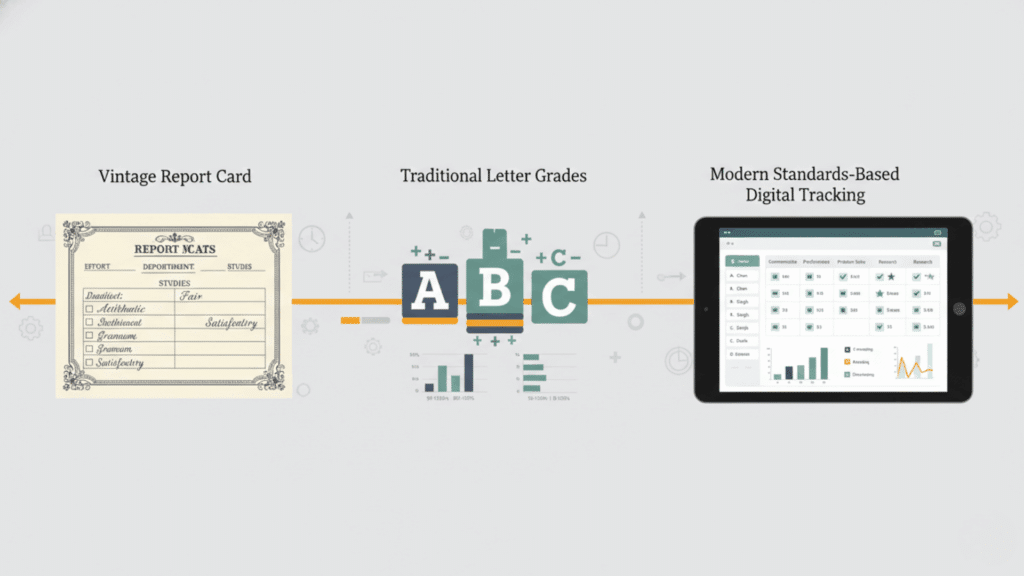
Standards-based grading may become the norm as schools seek fairer, clearer ways to measure learning.
The system aligns with how modern workplaces evaluate people based on specific skills rather than overall averages.
As personalized learning grows and technology improves, traditional letter grades make less sense for students who learn at different paces.
More districts adopt this approach each year, with early results showing better student motivation and clearer family communication.
While full adoption takes time and training, the shift toward mastery-based assessment seems inevitable as education continues to focus on what students actually know and can do.
Closing Remarks
Standards-based grading gives everyone a clearer picture of student learning.
Instead of combining homework completion, test scores, and behavior into a single confusing grade, this system shows exactly which skills students have mastered and where they need more support.
The shift takes time and effort, but the payoff is worth it. Students get fairer assessments, multiple chances to learn, and specific feedback that actually helps them improve.
Parents see real progress, not just mystery letters. Teachers make better instructional decisions based on solid data.
Is your school considering standards-based grading, or are you already using it? Share your experience in the comments below. We’d love to hear how it’s working for your students.