
Most people never think about bedroom size until something goes wrong. The mattress barely fits.
The dresser blocks the door. Or a listing calls a room a “bedroom,” and it looks more like a walk-in closet with a window. Getting the numbers right matters more than most buyers and renters realize.
The average bedroom size in US homes varies widely, and it is shaped by everything from your home’s total square footage to what your local building code actually allows.
This blog covers the standard dimensions for each bedroom type, the factors behind those numbers, what the law requires, and how size affects your home’s value. Let us get into it.
What Is the Average Bedroom Size in the US?
The average bedroom size in the US is between 120 and 150 square feet, roughly 11 by 12 feet. That number reflects the number of standard bedrooms across apartments, condos, and single-family homes.
When master bedrooms are factored in, the overall average across all bedroom types rises to about 219 square feet.
In newly built homes, the most common master bedroom size is 14 by 16 feet (224 square feet), and the master suite typically takes up about 11.3 percent of the home’s total floor plan.
Standard Bedroom Sizes: A Full Breakdown by Type
Not all bedrooms are built the same. Size depends on who will use the room and what it needs to hold comfortably.
1. Master Bedroom Size
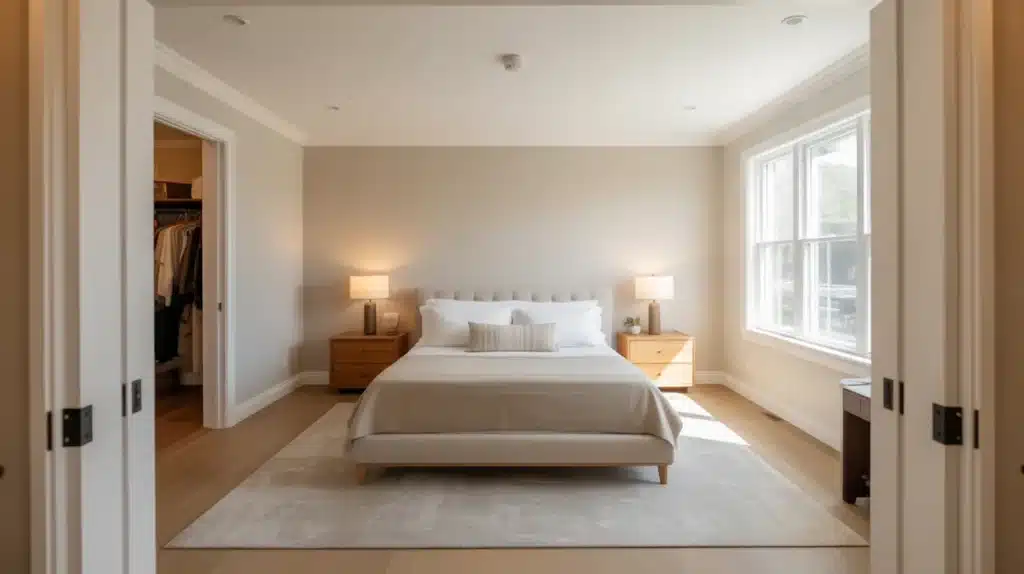
The standard master bedroom runs 14 by 16 feet, or 224 square feet.
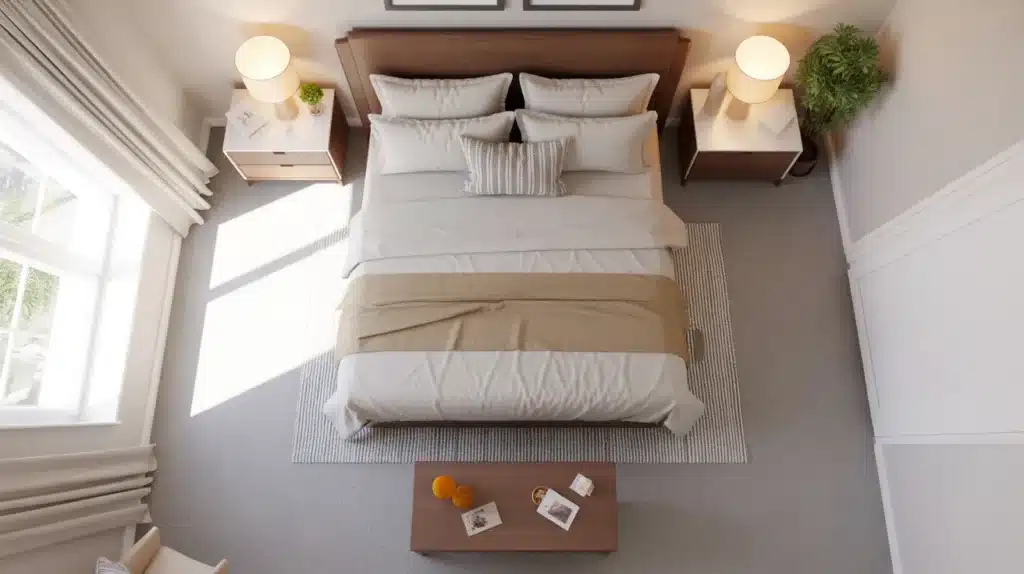
This gives enough room for a king-size bed, two nightstands, a dresser, and clear space to move around without squeezing past furniture.
In larger homes, master suites often range from 250 to 350 square feet and include a private bathroom and a walk-in closet built into the overall footprint.
2. Standard (Secondary) Bedroom Size
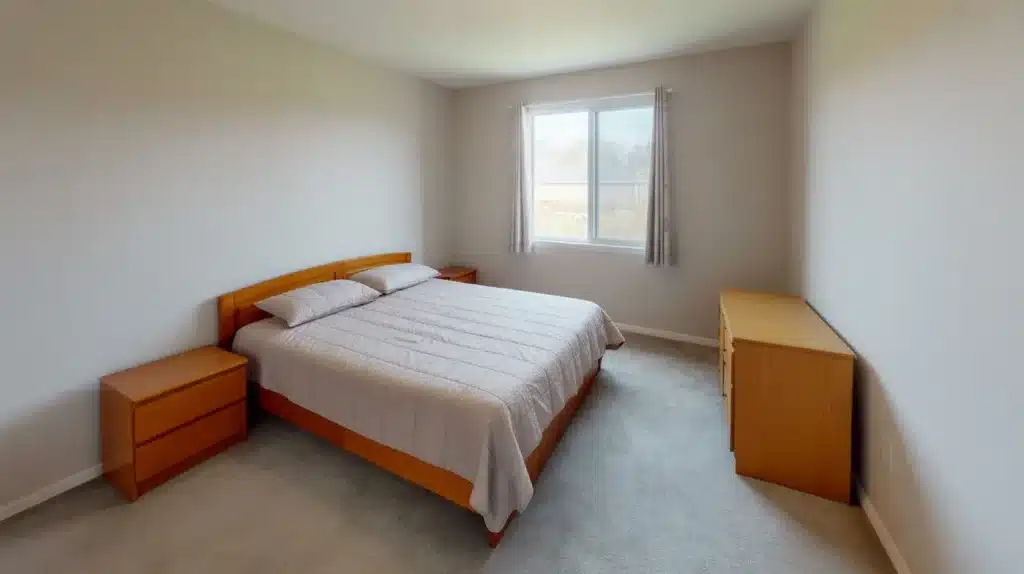
A secondary bedroom typically measures 10 by 12 feet, or about 120 square feet. This size fits a full or queen-size bed alongside a dresser and nightstand with room left to move.
It is the most common bedroom size found in apartments and mid-sized single-family homes across the US.
3. Kids’ Bedroom Size
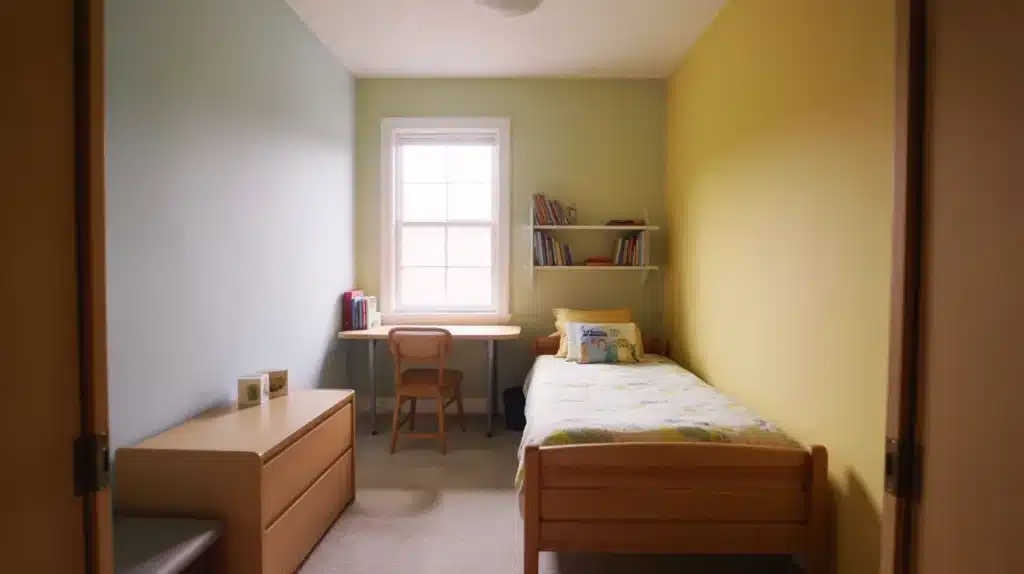
Kids’ bedrooms usually measure 10 by 10 feet, or 100 square feet. That fits a twin bed, a small dresser, and a desk without the room feeling too tight.
A room that works well for a six-year-old may feel cramped for a teenager, so it is worth thinking ahead to ensure the space will last a few years.
4. Guest Bedroom Size
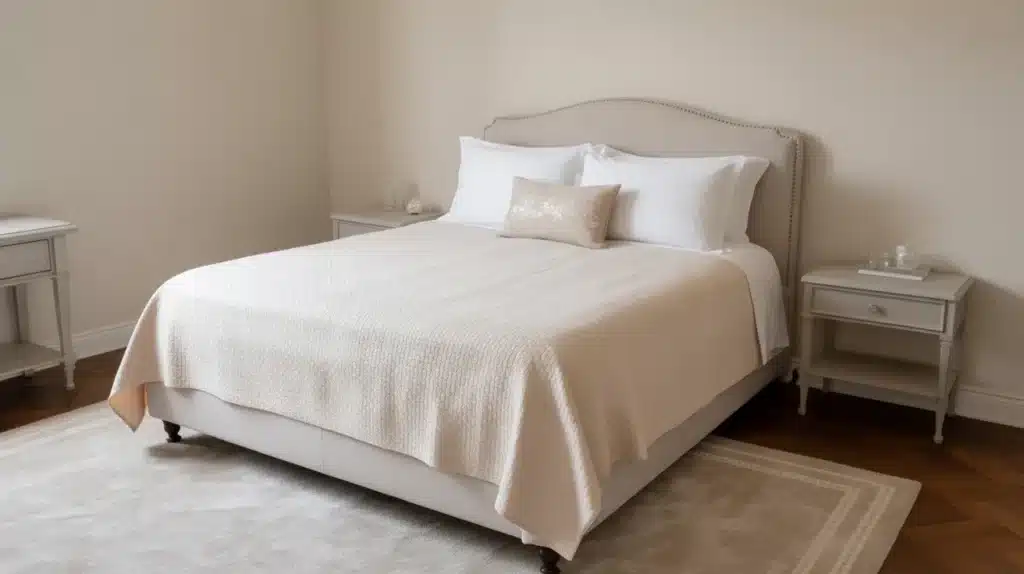
A guest bedroom typically measures 10 by 12 to 10 by 15 feet, or 120 to 150 square feet. A full-size bed, one nightstand, and a slim dresser fit well in 120 square feet.
Many guest rooms also double as home offices or hobby rooms, and the extra few feet in a 150-square-foot layout make a noticeable difference.
5. Nursery Size
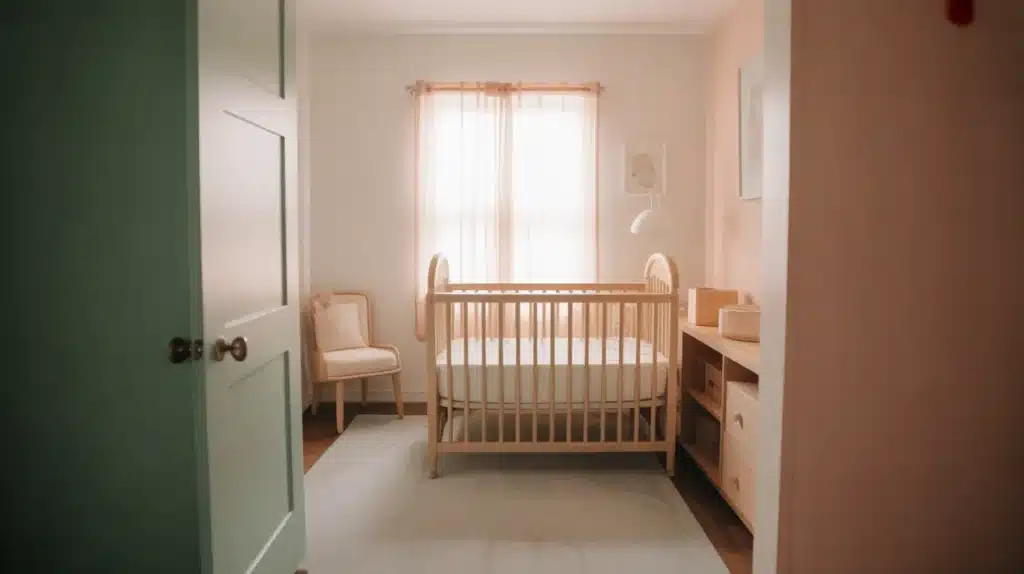
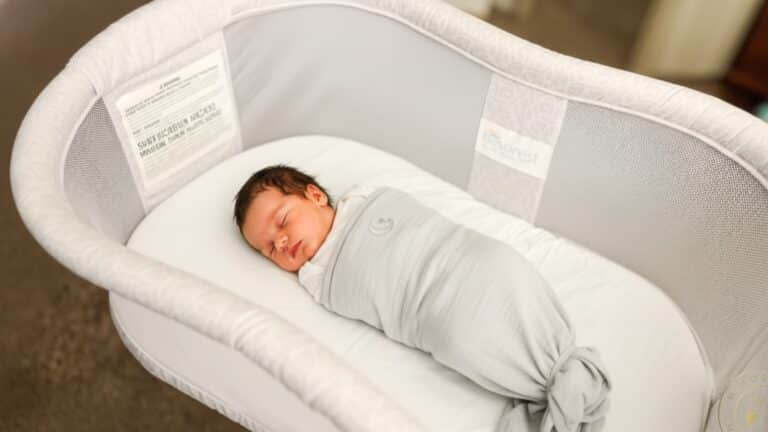
A nursery usually ranges from 8 by 10 to 10 by 12 feet, or about 80 to 110 square feet. A standard crib has a small footprint, so this size works well for the essentials.
The priority is to leave open floor space for movement and to provide a safe area for a changing table.
Factors That Affect Bedroom Size
Bedroom size does not come from a single rule or formula. Several things work together to determine how much space a room ends up with.
- Total Home Size: The master bedroom should take up roughly 11 to 15 percent of a home’s total floor plan. A 400-square-foot bedroom in a 1,000-square-foot home takes up nearly half the house, and that kind of imbalance shows.
- Intended Use: A room built for sleeping alone needs less space than one that also needs to hold a desk, workout equipment, or a reading chair.
- Bed Size and Furniture Needs: A king-size bed covers just over 42 square feet on its own, and comfortable movement around it requires at least 30 inches of clear space on each side.
- Storage Requirements: Walk-in closets and en suite bathrooms are counted separately from the bedroom itself, but they directly shape how square footage gets divided across a floor plan.
- Home Age and Era of Construction: Homes built before the 1970s tend to have smaller, more uniform bedrooms, while modern construction typically gives the primary suite noticeably more floor space.
- Location and Local Housing Market: In high-cost urban areas like the San Francisco Bay Area, standard bedrooms can average as little as 80 square feet because land costs push builders to shrink room sizes.
- Local Building Codes: About 90 percent of US communities follow the International Residential Code, but local amendments can shift the specific requirements in your area.
Bedroom Sizes by Home Style
The style and structure of your home shape what is possible inside it. Floor plan layouts can either make room for generous bedrooms or leave very little to work with.
1. Traditional Ranch-Style Homes
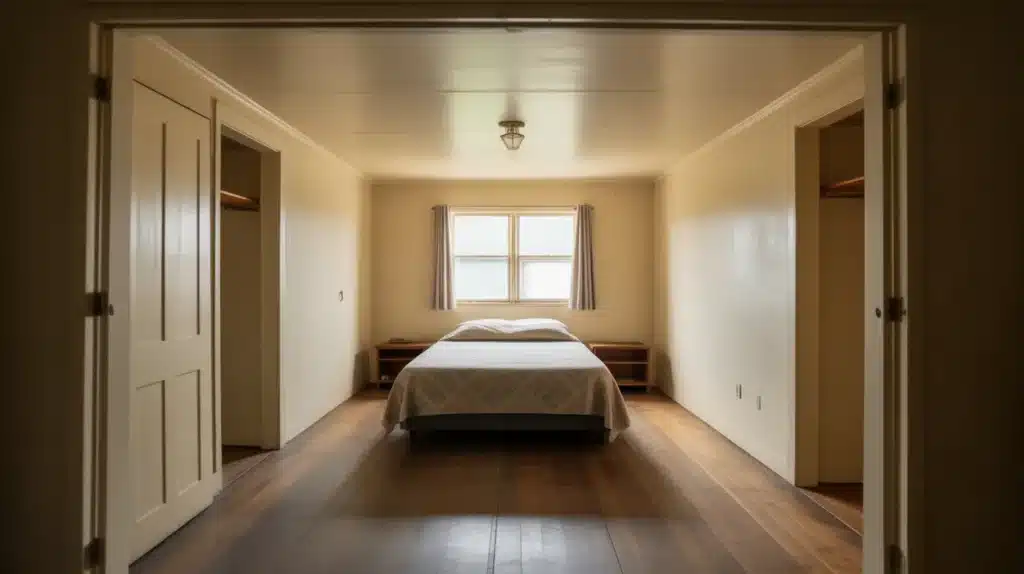
Traditional ranch homes typically have one to three bedrooms, and older versions can have bedrooms as small as 8 by 10 feet.
The master bedroom in a smaller ranch plan may be only slightly larger than the other rooms. These homes were built for efficient use of space, not extra square footage.
2. Modern Craftsman Homes
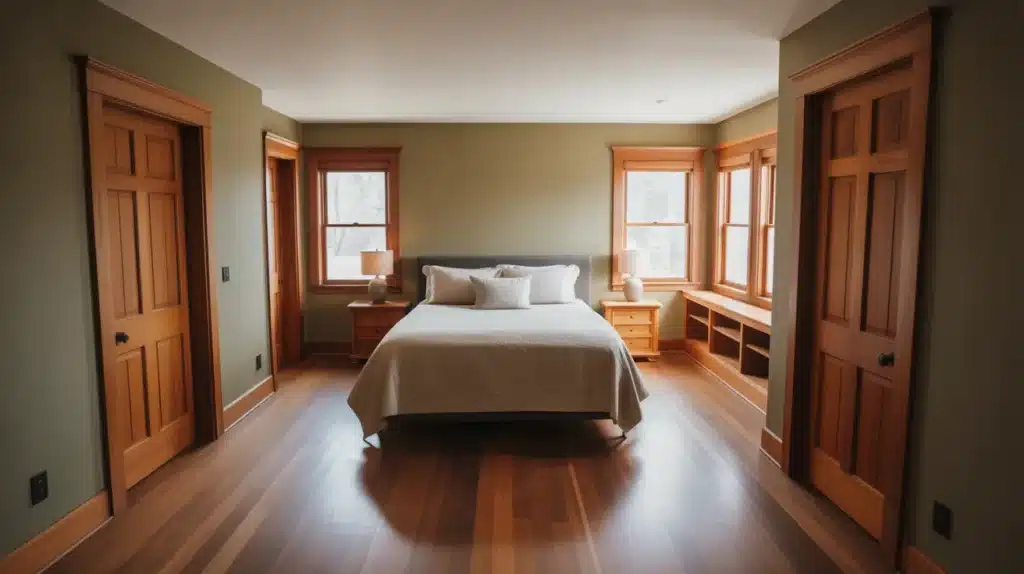
Craftsman homes usually have three to five bedrooms, with sizes that closely follow standard measurements. On floor plans over 2,500 square feet, master suites can reach 16 by 19 feet.
This style gives builders more flexibility to work with bigger room layouts.
3. Apartments and Condos
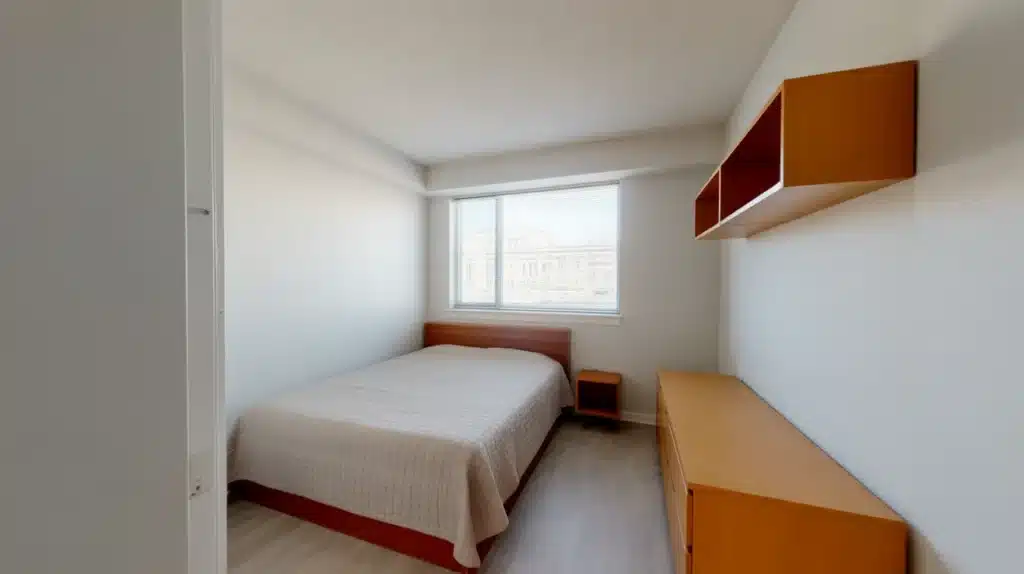
Apartment bedrooms average around 11 by 12 feet, or 132 square feet. The full one-bedroom apartment in the US averaged 735 square feet in total in 2024, not just the bedroom itself.
Urban apartments tend to run smaller, which makes furniture placement and room layout far more important.
4. Luxury and Custom Homes
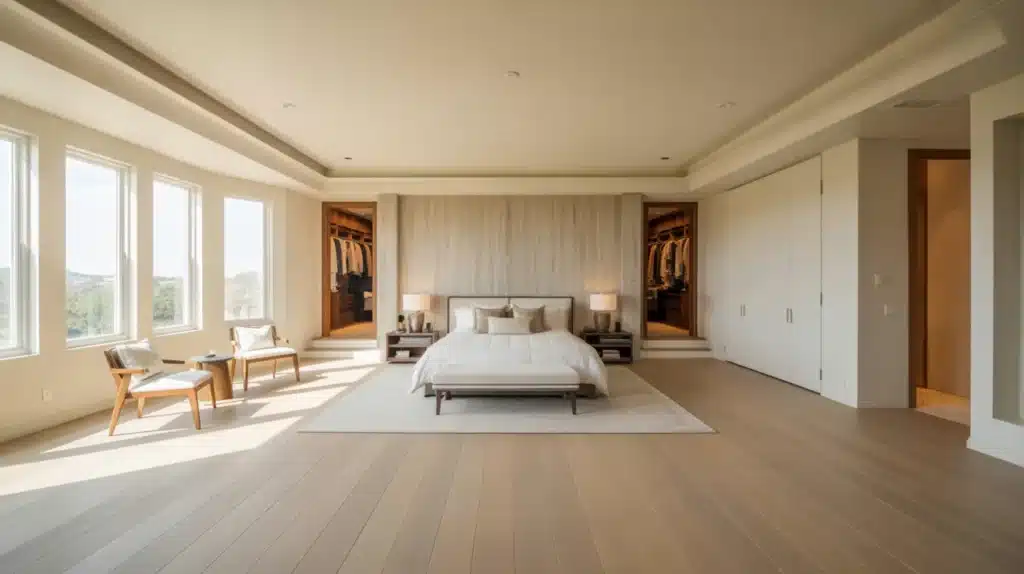
In high-end homes, master bedrooms can exceed 500 square feet and include sitting areas, dual walk-in closets, and large private bathrooms.
Buyers in this market often rank the primary suite above every other room in the house. Some empty nesters specifically choose the builder’s largest floor plan for the master bedroom alone.
Minimum Bedroom Size: What the Law Requires
Under the 2021 International Residential Code, a bedroom must have at least 70 square feet of floor space, with no side shorter than 7 feet, making the smallest legal layout 7 by 10 feet.
The ceiling must be at least 7 feet tall across half the room’s floor area.
The room also needs an egress window with a minimum opening of 5.7 square feet, placed no higher than 44 inches from the floor; at least two electrical outlets; and a permanent heat source capable of maintaining 68 degrees Fahrenheit.
Any room that does not meet these requirements cannot legally be listed as a bedroom in a real estate sale.
Average Bedroom Size Around the World
US bedrooms are larger than most people realize, especially when compared to the rest of the world. Here is how American bedroom sizes stack up globally.
| Country | Avg. Home Size | Master Bedroom Size (Approx.) | Notes |
|---|---|---|---|
| Australia | ~2,032 sq ft | 200 to 300 sq ft | Larger in newer homes |
| USA | ~1,901 sq ft | ~224 sq ft | Standard is 14 x 16 ft |
| Canada | ~1,792 sq ft | Varies by region | Generally close to US sizes |
| UK | ~818 sq ft | 150 to 250 sq ft | Varies by property age |
| Japan / South Korea | Much smaller | 100 to 200 sq ft | Space is at a premium |
| European avg. (France, Germany, Spain) | 1,300 to 1,550 sq ft | Often under 150 sq ft | Compact living is the norm |
US homes are among the largest in the world by total square footage, and that extra space flows directly into bigger bedrooms.
Countries with smaller average homes have adapted by making smart furniture choices, using vertical storage, and adopting design styles built around limited floor area.
Scandinavian interiors, for example, are built around open space, light colors, and low-profile furniture because they have to be.
What Bed Size Fits Each Bedroom?
Bedroom size only makes sense when you know what bed goes inside it. Here is a clear guide to what fits where, without squeezing past furniture every morning.
- Twin: A twin bed (38 by 75 inches) fits in a room as small as 7 by 10 feet, making it the right choice for small kids’ rooms or compact spare spaces.
- Twin XL: A twin XL (38 by 80 inches) requires at least an 8 by 10-foot room and works well for taller sleepers in small rooms.
- Full / Double: A full-size bed (54 by 75 inches) needs at least 9 by 10 feet of floor space to allow basic movement around the frame.
- Queen: A queen bed (60 by 80 inches) fits comfortably in a 10 by 10 foot room, though a 10 by 12 foot layout gives you space for a nightstand and dresser without crowding.
- King: A king bed (76 by 80 inches) needs at least 12 by 12 feet, and you should plan for 30 inches of clear space on each side.
- California King: A California king (72 by 84 inches) fits in the same minimum footprint as a standard king but works better in rooms that are narrow and long rather than square.
- Clearance Rule (for Any Bed): No matter the bed size, leave at least 30 inches of open floor space on the sides and at the foot of the bed for comfortable, daily use.
How Bedroom Size Affects Home Value
Bedroom size has a direct effect on what buyers are willing to pay. A master bedroom that feels tight or out of proportion with the rest of the home can put buyers off, even when everything else looks good.
Secondary bedrooms also matter. Rooms that feel functional and reasonably sized add to a home’s overall balance.
Bedroom remodels in the US cost between $3,500 and $40,000, depending on scope, and a well-proportioned, properly laid out bedroom consistently improves both a home’s appeal and its resale value.
Conclusion
The average bedroom size in the US gives you a real starting point. A standard bedroom runs about 132 square feet.
A master bedroom is around 224 square feet. And no room under 70 square feet can legally carry that label.
But numbers only go so far. How a room is laid out, what goes inside it, and how it fits within the rest of the home matter just as much.
If you are buying a new home, planning a remodel, or simply trying to figure out if your room is big enough for that bed you want, these numbers are your guide.
Have a question about your bedroom size? Drop it in the comments. We read everyone.