
You measured the space. You ordered the door. Then it did not fit.
That moment is more common than most people think. A wrong door size means extra costs, wasted time, and a trip back to the hardware store.
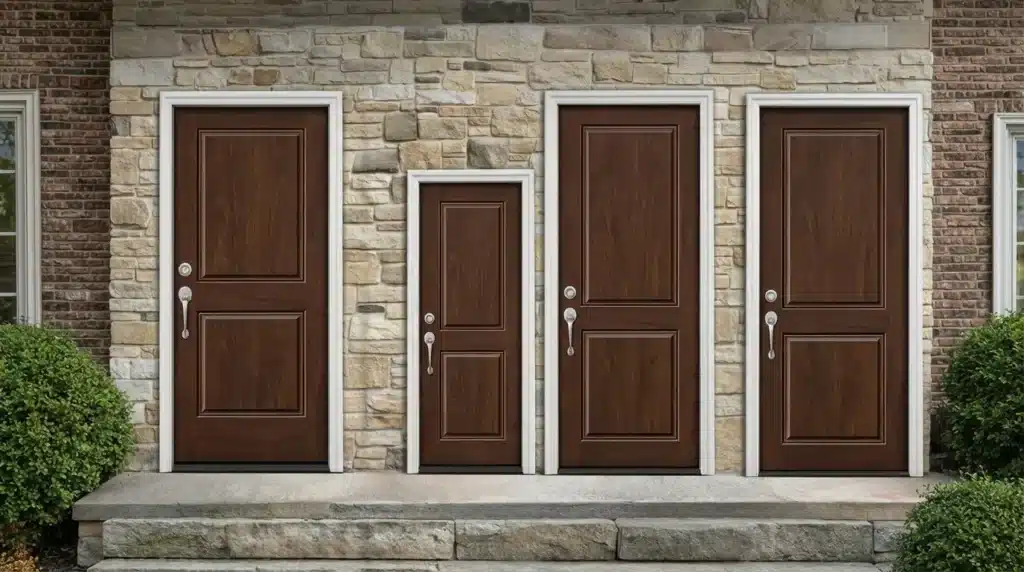
Most people assume the size of the old door is good enough. It rarely is.
Here is the good news. Door sizes in the US follow clear, consistent guidelines. Once you know the standard door size in feet for your home, shopping becomes much easier.
This guide covers every door type, from your front entry to your bedroom closet, so you can get it right the first time.
Why Door Sizes Are Standardized in the US
Door sizes became standardized over decades of construction, building codes, and practical use.
Builders and manufacturers settled on common measurements so that doors could be mass-produced, easily replaced, and safely installed without custom work.
These guidelines also make sure that people of all heights and mobility levels can move through a home comfortably.
Local building codes across most US states follow similar rules, which keep sizing consistent from one region to the next.
Door Size in Feet vs Inches: A Simple Reference Chart
Most door sizes you see in stores are listed in inches. But when you are planning a space or working with a contractor, feet are easier to communicate.
Here is a quick reference chart to help you convert common door measurements:
| Size in Inches | Size in Feet | Common Use |
|---|---|---|
| 80″ x 36″ | 6 ft 8 in x 3 ft | Standard exterior or front door |
| 80″ x 32″ | 6 ft 8 in x 2 ft 8 in | Standard bedroom door |
| 80″ x 30″ | 6 ft 8 in x 2 ft 6 in | Interior hallway or smaller bedroom |
| 80″ x 28″ | 6 ft 8 in x 2 ft 4 in | Bathroom door |
| 80″ x 24″ | 6 ft 8 in x 2 ft | Closet or utility door |
| 96″ x 36″ | 8 ft x 3 ft | Tall exterior or modern entry door |
| 72″ x 80″ | 6 ft x 6 ft 8 in | Sliding patio or glass door |
Standard Door Size in Feet
Interior doors are the ones you use every single day. Getting their size right keeps your home functional and up to code.
1. Bedroom Door
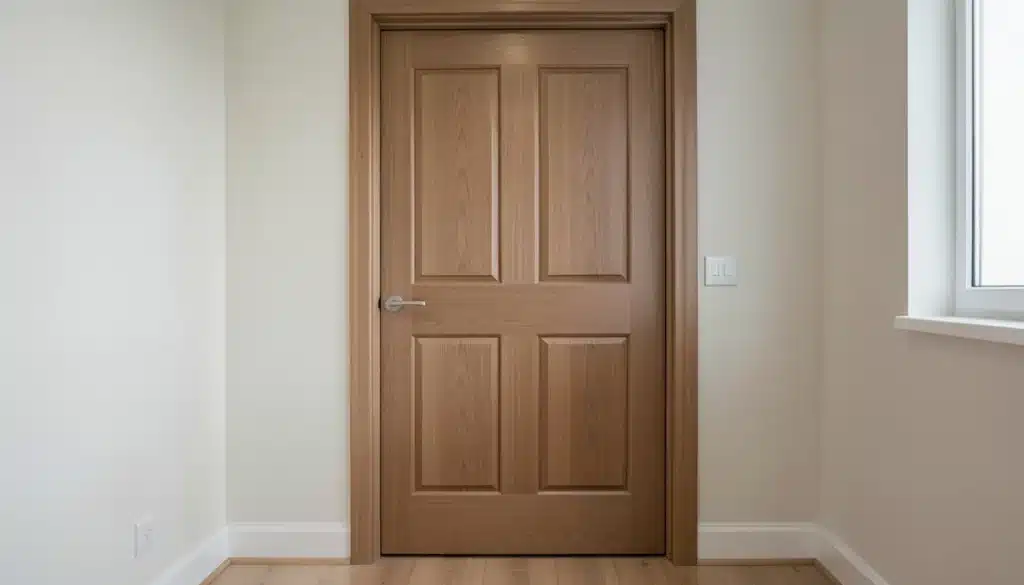
The most common bedroom door size in feet is 2 ft 8 in wide by 6 ft 8 in tall (32” x 80”). This works well for most rooms and makes it easy to move furniture in and out.
Wider options at 3 ft are a smart pick for guest rooms or any space where accessibility matters.
2. Bathroom Door
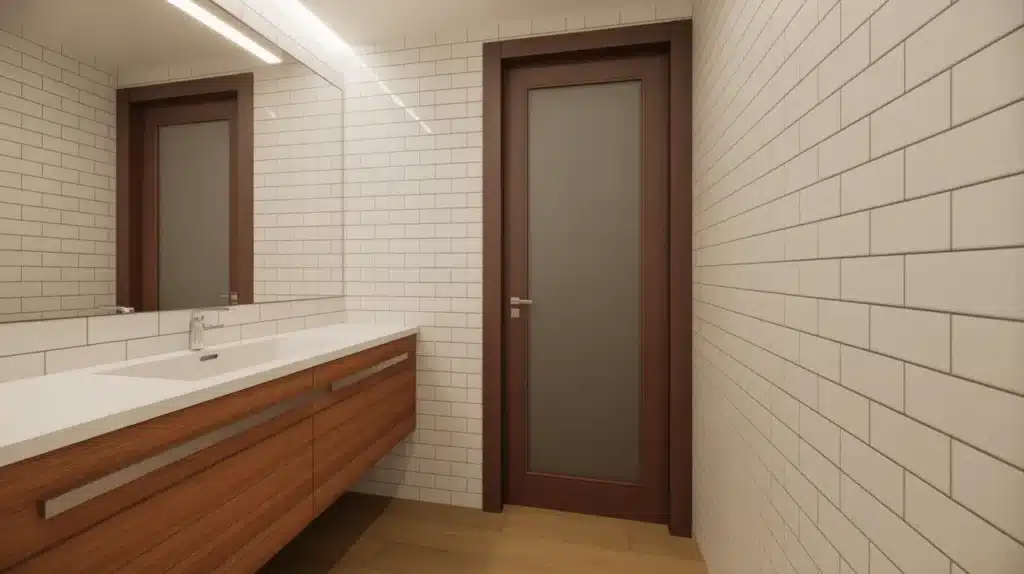
Bathroom doors are usually 2 ft 4 in to 2 ft 8 in wide and 6 ft 8 in tall (28″ to 32″ x 80″). A smaller powder room may work fine with a 24-inch door.
For homes with elderly residents or anyone using a mobility aid, 32 inches is the safer, more practical choice.
3. Closet Door
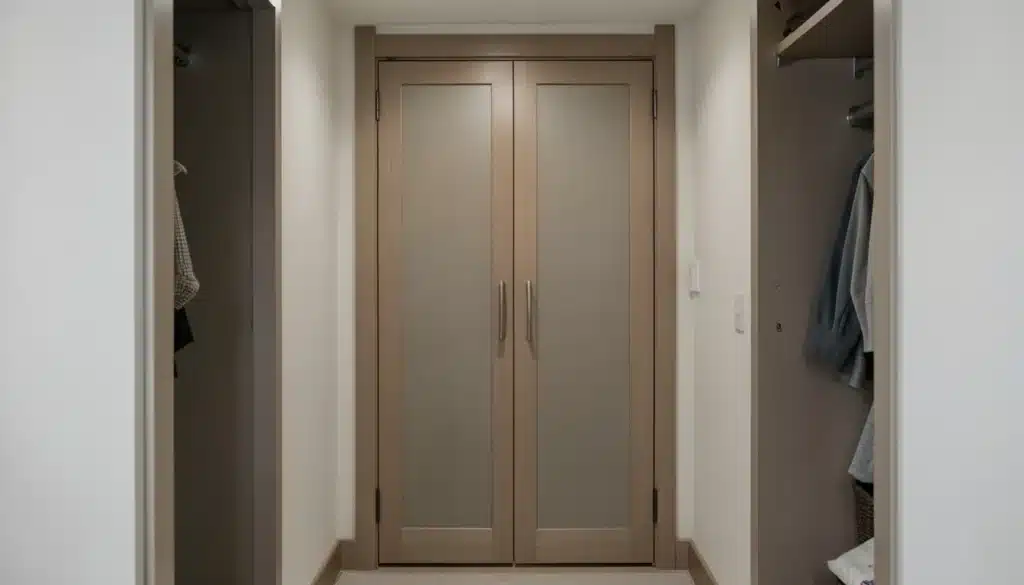
Reach-in closet doors are 2 ft to 3 ft wide (24” to 36”) and 6 ft 8 in tall. Walk-in closets often use single doors at 2 ft 8 in to 3 ft wide, or double doors spanning 4 ft to 6 ft.
Closet doors are also thinner than other interior doors, sitting at around 1 inch thick.
Standard Exterior Door Size in Feet
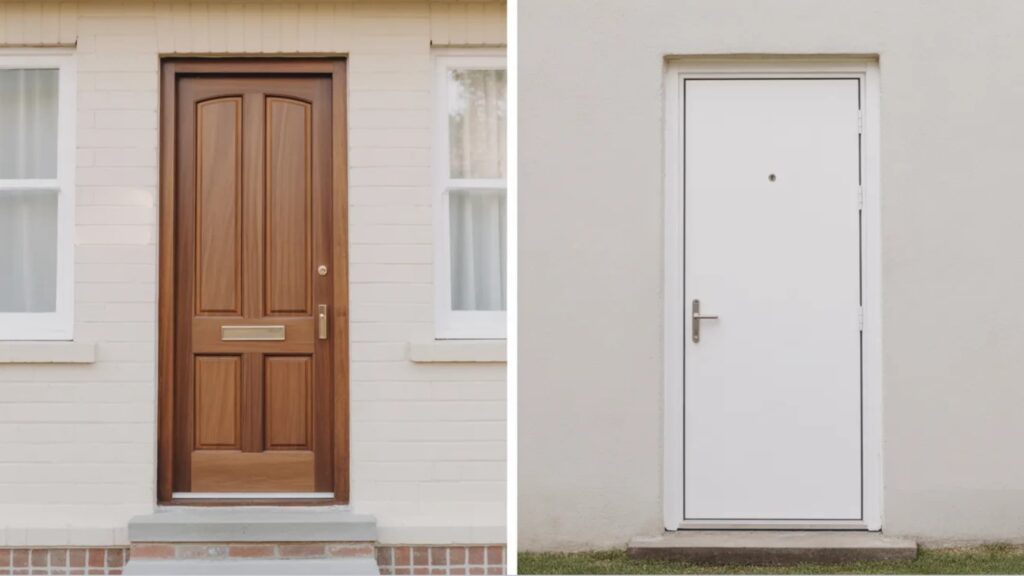
Exterior doors take on more pressure than any other door in your home. They face weather, security demands, and daily use, so their size and build carry more weight than most people realize.
1. Front Door
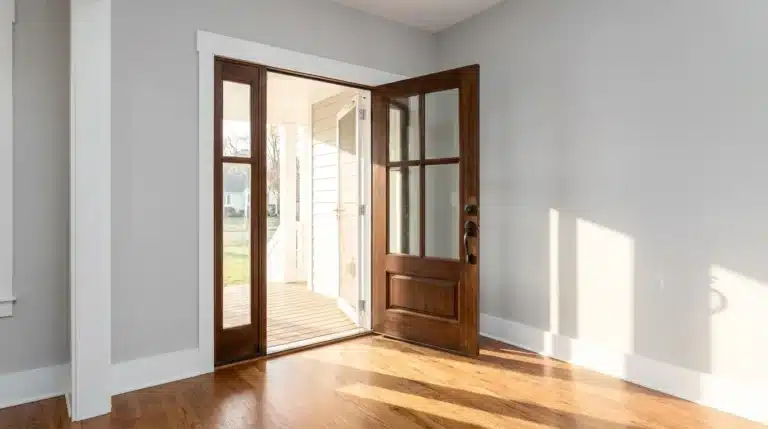
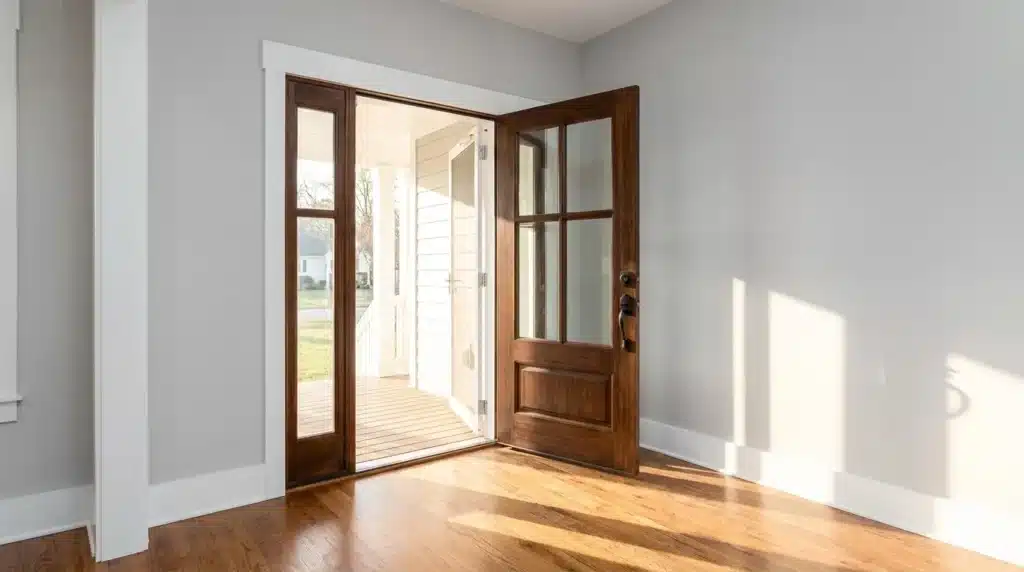
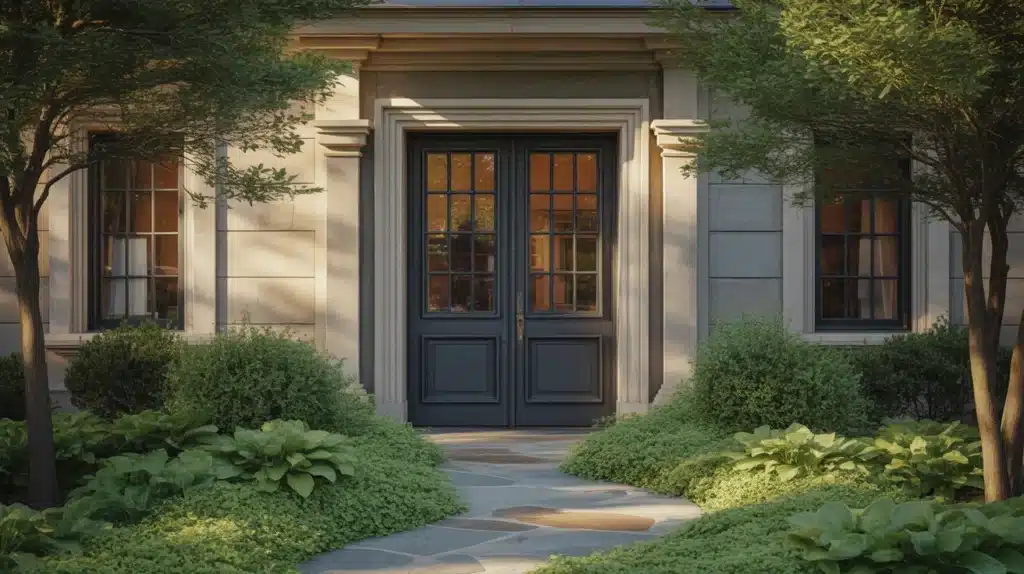
The standard front door size in feet is 3 ft wide by 6 ft 8 in tall (36” x 80”). The thickness is 1 3/4 inches, which is thicker than that of interior doors and helps with insulation and security.
Homes with high ceilings often go taller, with 7 ft (84”) or 8 ft (96”) front doors becoming more common in modern builds.
2. Back Door
Most back doors match the front door at 3 ft wide and 6 ft 8 in tall (36” x 80”). Some older homes have narrower back doors at 30 or 32 inches wide.
Steel and fiberglass are the most popular materials for back doors because of their strength and weather resistance.
Standard Size for Specialty Door Types
Not every door in your home fits the standard interior or exterior category. Specialty doors follow their own sizing rules based on how and where they are used.
1. French Doors
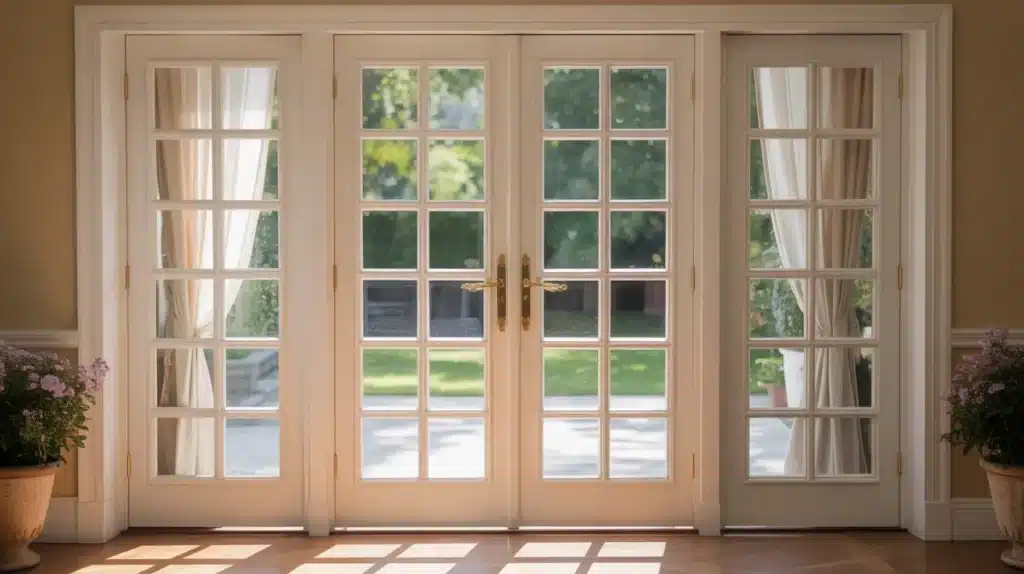
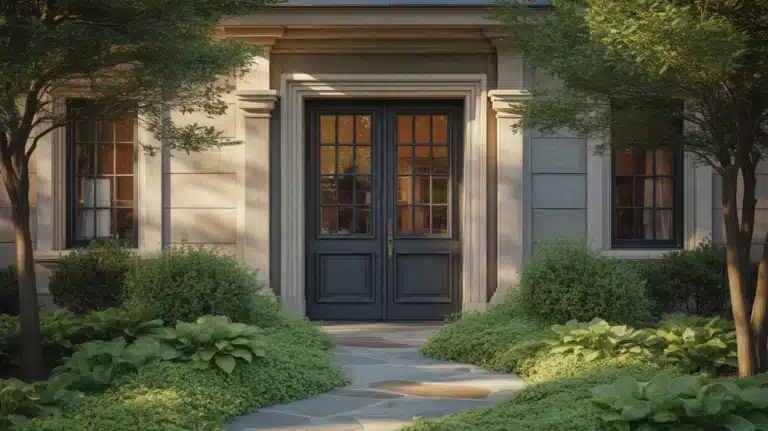
French doors come as a pair, with each panel typically 2 ft 6 in wide. Together, they span 5 ft to 6 ft in total width (60” to 72”) and stand 6 ft 8 in tall. Some modern homes install French doors up to 8 ft (96″) tall for a grander entry or room divider effect.
2. Sliding Glass or Patio Doors
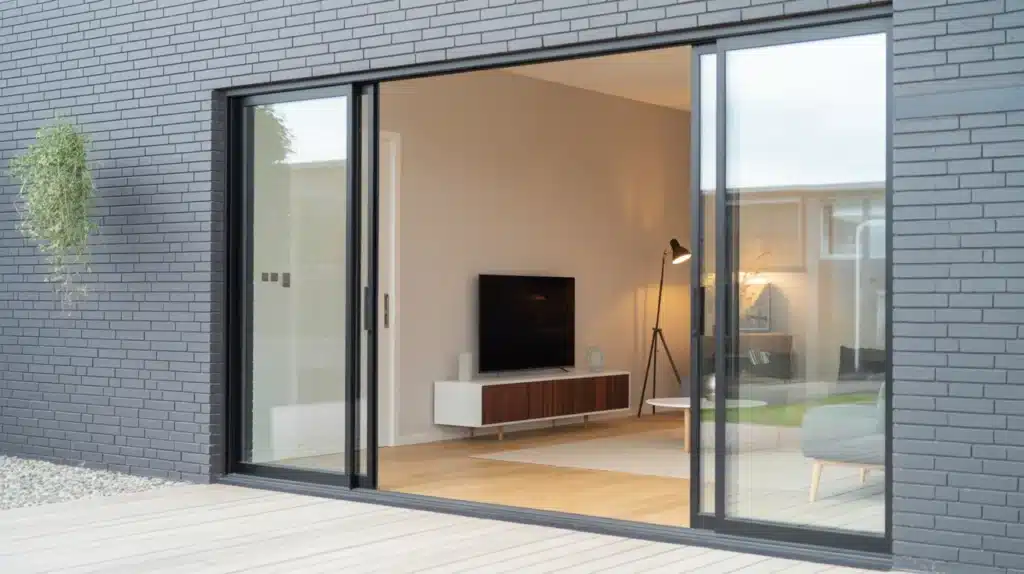
The standard sliding glass door is 6 ft wide by 6 ft 8 in tall (72” x 80”). Two-panel sets can range from 5 ft to 6 ft wide, while three-panel configurations stretch to 9 ft or 12 ft wide. Heights of 8 ft (96”) are also available for homes with higher ceilings.
3. Garage Doors
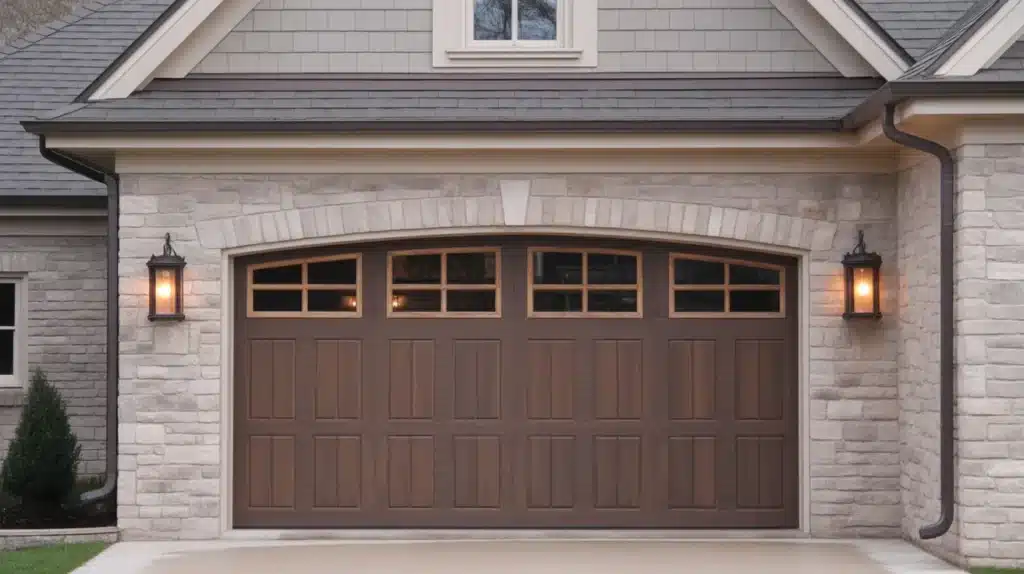
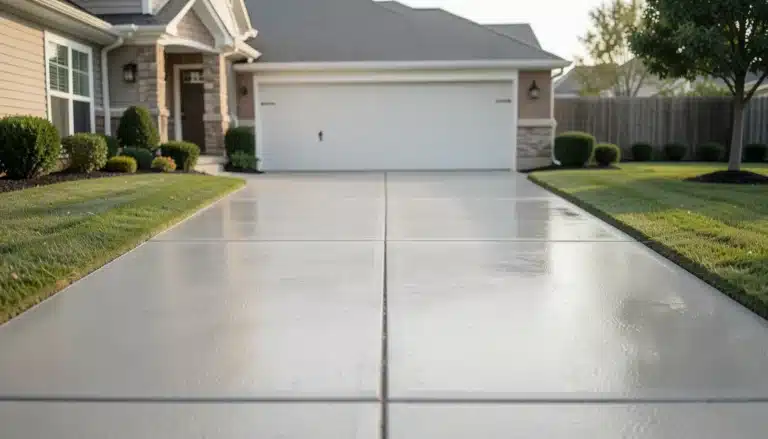
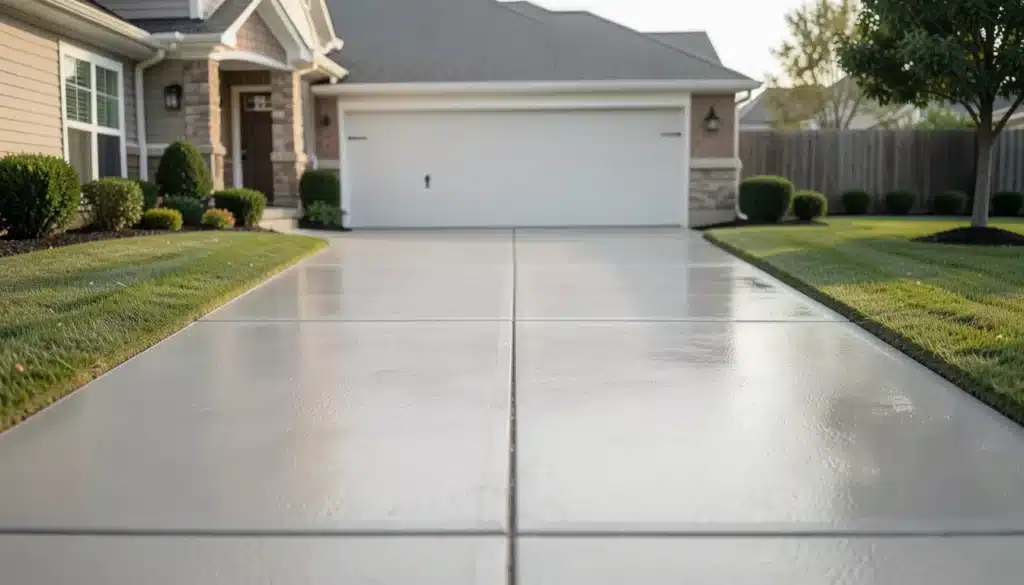
A single-car garage door is typically 8 to 9 ft wide and 7 to 8 ft tall. Double-car garages use doors that are 16 ft wide and 7 to 8 ft tall. Custom sizes are also available for trucks, RVs, and specialty vehicles with taller clearance needs.
What Is a Rough Opening and Why Does It Matter?
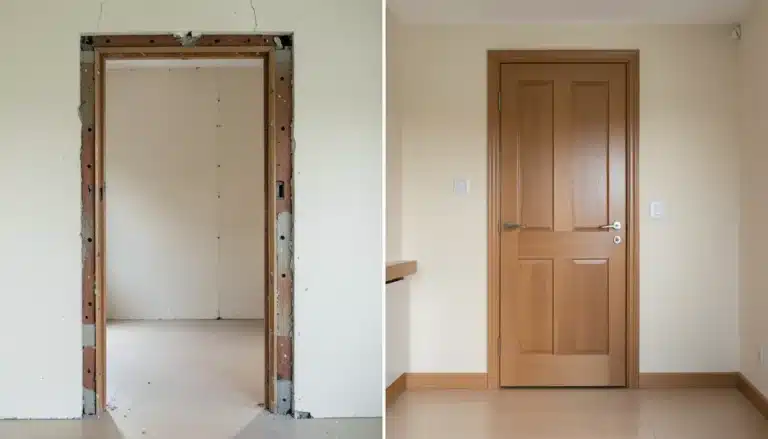
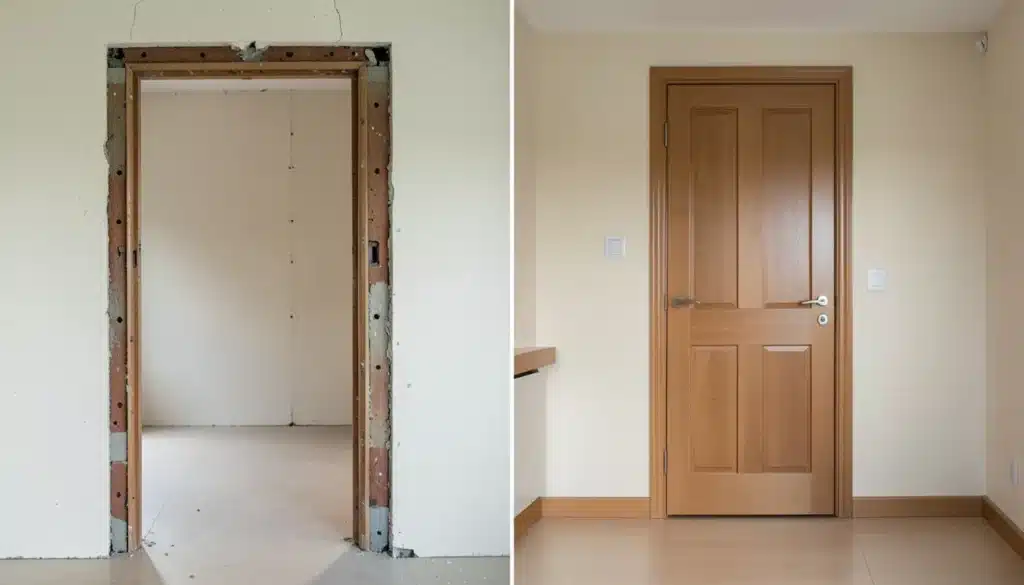
A rough opening is the framed gap in the wall where your door and frame will be installed. It needs to be slightly larger than the door itself to allow for the frame, shims, and leveling.
The standard rule is to add 2 inches to both the width and height of the door slab. So a 36″ x 80″ door needs a rough opening of 38” x 82”.
Skipping this step is one of the most common reasons a new door doesn’t fit after purchase.
ADA Door Width Requirements for Residential Homes
Accessibility is not just a concern for commercial buildings. More homeowners are making sure their doors work for every member of the household, now and in the future.
- Minimum clear width: The ADA sets a minimum clear door width of 36 inches (3 feet) for full wheelchair access.
- Residential recommendation: For private homes, a 32-inch clear width is the minimum suggested for anyone using a wheelchair or walker.
- Bathroom doors: The door should not swing more than 12 inches into the open floor space of the bathroom.
- Hardware rule: Door handles must work with one hand and should not require a tight grip, pinching, or twisting.
- Building codes: Public buildings must meet stricter ADA standards than private homes, but residential builders are strongly encouraged to follow the same access principles.
Mistakes People Make When Buying a New Door
Most door-buying problems come down to one thing: skipping the small details before placing an order. Here are the mistakes that cost homeowners the most time and money.
| Mistake | Why It Causes a Problem |
|---|---|
| Measuring the door slab instead of the rough opening | The door ends up too small for the frame |
| Forgetting to account for the new flooring thickness | The door scrapes the floor after installation |
| Assuming all doors in the home are the same size | Older homes often have mixed or non-standard sizes |
| Buying a pre-hung door when only a slab is needed | Extra cost and unnecessary framing work |
| Not checking local building codes before ordering | The door may not pass inspection or meet safety rules |
| Using interior door thickness for an exterior opening | Thin doors let in drafts, noise, and reduce security |
How to Measure a Door the Right Way?
Start by measuring the width of the door opening at three points: top, middle, and bottom. Use the widest number. Then measure the height on both the left and right sides and use the taller of the two.
Measure the thickness of the existing door as well. Do not include the trim or molding in any of your measurements.
Finally, add 2 inches to the width and 2 inches to the height to get your rough opening size. This one step alone prevents most sizing mistakes before they happen.
Summing It Up
Getting the standard door size in feet right is not complicated. It just takes a few minutes and a tape measure.
Most US homes use 6 ft 8 in tall doors throughout. Front doors sit at 3 ft wide. Bedroom and bathroom doors run a little narrower.
Specialty doors like sliders and French doors follow their own rules. And rough openings always need that extra 2 inches.
Now you have all the numbers you need. If you are replacing a single door or planning a full build, this guide has you covered.
Have you recently replaced a door at home? Did the sizing trip you up? Drop a comment below and share your experience.