


Ever watched a middle schooler stare at a blank page for 20 minutes? It’s painful. They tap their pencils. They sigh. They suddenly need a bathroom break. Getting students to write can feel like pulling teeth.
But what if you had a simple tool that instantly sparked their creativity? Writing prompts for middle school are game changers.
They remove the intimidation of starting from nothing and give students clear direction. A good prompt can turn a reluctant writer into an engaged storyteller in minutes.
In this guide, you’ll find ready-to-use prompts across five categories, plus practical tips for using them effectively in your classroom.
Let’s get those pencils moving.
What Are Middle School Writing Prompts?
Writing prompts are short questions or statements that inspire students to write. They act as starting points for stories, essays, and academic papers.
Think of them as creative sparks that help students know where to begin. These prompts reduce the stress of staring at a blank page.
Students benefit greatly from using prompts. They build writing confidence and reduce anxiety around assignments. Prompts help improve creativity, fluency, and critical thinking skills.
They also expand vocabulary and strengthen language development. Regular practice makes writing feel more natural and less intimidating.
Writing Prompts for Middle School Students
Unlock the creativity of middle school students with these engaging prompts. Whether for journal entries, essays, or storytelling, these ideas are sure to inspire.
Creative & Imaginative Prompts

These creative prompts help students stretch their imagination and build fictional worlds. They encourage thinking beyond everyday life and exploring what-if scenarios.
- You wake up with the ability to talk to animals. What happens next?
- Write about a world where everyone can fly except you.
- Your locker becomes a portal to another dimension. Where does it lead?
- Describe a day in the life of your favorite fictional character.
- You find a mysterious key in your backyard. What does it open?
- Write about a robot that wants to become human.
- Your reflection in the mirror starts acting differently. What’s going on?
- Create a story about a school for superheroes.
- You receive a letter from your future self. What does it say?
- Write about a library where books come to life at night.
- Your pet suddenly becomes your size. How does life change?
- Describe a city built entirely underwater.
- You can pause time for one hour each day. How do you use it?
- Write about a character who can taste emotions.
- Your phone starts predicting the future through notifications.
- Create a story about a magical vending machine.
- You swap bodies with your best friend for a week. What happens?
- Write about a world where music is forbidden.
- Describe what happens when clouds start falling from the sky.
Personal & Reflective Prompts
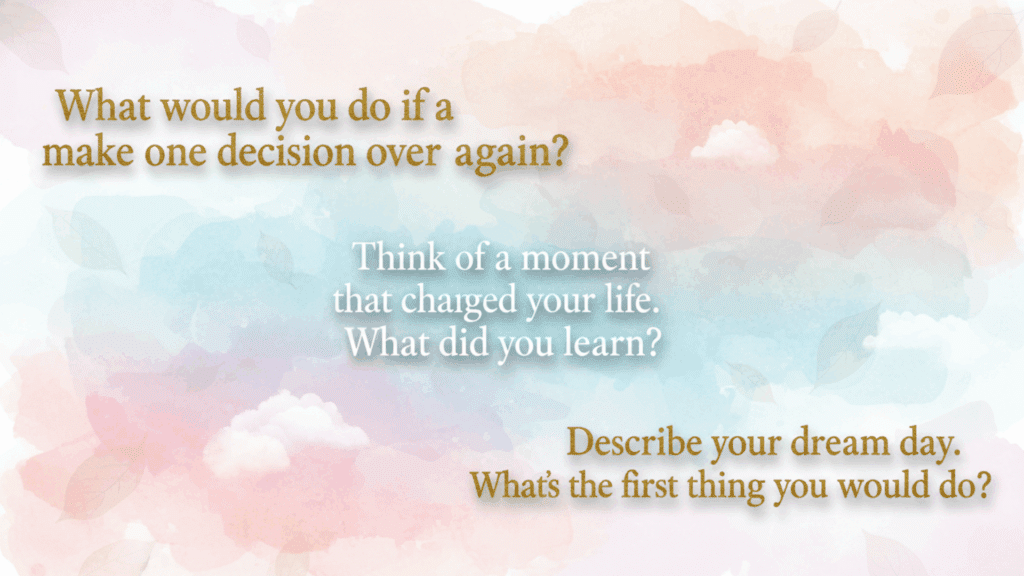
These reflective prompts encourage students to reflect on their experiences and share them. They help develop self-awareness and emotional expression through writing.
- Write about a time you felt proud of yourself.
- Describe your perfect day from start to finish.
- What does friendship mean to you?
- Write about someone who changed your perspective on life.
- Describe a moment when you faced a fear.
- What would you tell your younger self?
- Write about a tradition your family celebrates.
- Describe a place where you feel completely safe.
- What skill would you like to learn and why?
- Write about a mistake that taught you something important.
- Describe your favorite memory from elementary school.
- What does success look like to you?
- Write about a time you stood up for something you believe in.
- Describe your ideal future career and why it interests you.
- What makes you different from everyone else?
- Write about a book or movie that changed how you think.
- Describe the best advice you ever received.
- What are three things you’re grateful for today?
- Write about a challenge you’re currently facing.
Persuasive & Opinion Prompts

Persuasive prompts teach students to form strong arguments and support their views with evidence. These help build critical thinking and reasoning skills.
- Should students have homework on weekends? Explain your view.
- Convince your parents to let you have a pet.
- Should school start later in the morning? Why or why not?
- Write about whether social media does more harm than good.
- Should students be allowed to use phones during lunch?
- Convince someone to read your favorite book.
- Should gym class be required every year? Defend your position.
- Write about whether video games are educational.
- Should students wear uniforms to school? State your opinion.
- Convince your principal to add a new club or activity.
- Are zoos helpful or harmful to animals? Explain.
- Should middle school students be allowed to have jobs?
- Write about whether people should travel to Mars.
- Should students grade their teachers? Why or why not?
- Convince someone to try your favorite hobby.
- Should schools ban junk food? Defend your stance.
- Write about whether year-round school is a good idea.
- Should kids be required to do chores at home?
- Convince someone to visit your hometown.
Narrative & Storytelling Prompts
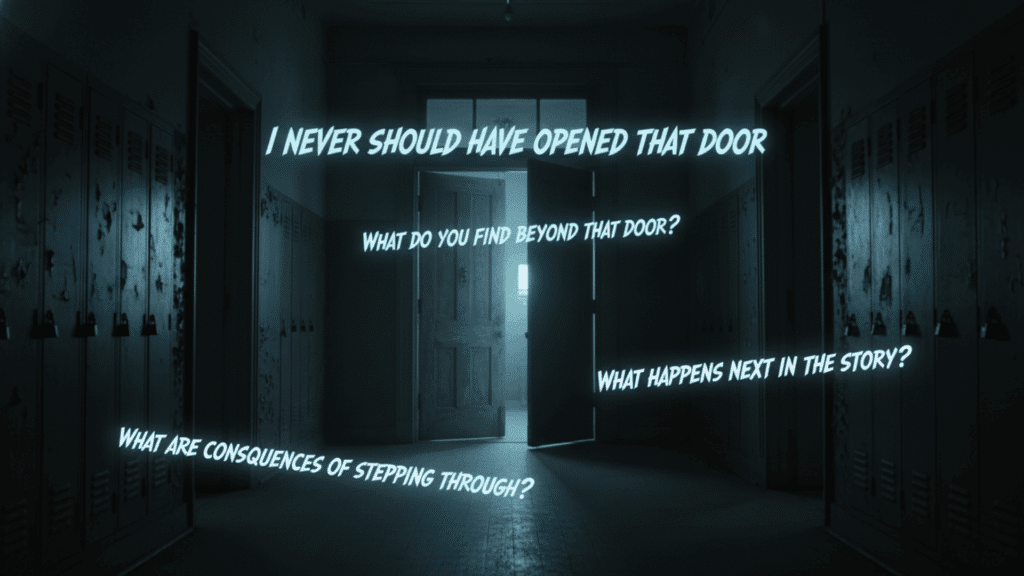
These narrative prompts help students craft complete stories with characters and plots. They focus on building storytelling skills through a structured beginning, middle, and end.
- Write a story that starts with “I never should have opened that door.”
- Tell a story about finding something valuable that wasn’t yours.
- Write about a character who discovers a hidden talent.
- Create a mystery story set in your school.
- Write about someone who time-travels to fix a mistake.
- Tell a story about two rivals who become friends.
- Write about a character who can hear thoughts.
- Create a story where the main character is a villain.
- Write about someone training for an important competition.
- Tell a story that takes place during a power outage.
- Write about a character who moves to a new town.
- Create a story about solving a neighborhood mystery.
- Write about someone who finds a diary from 100 years ago.
- Tell a story where nature fights back against pollution.
- Write about a character who loses their most prized possession.
- Create a story set in a haunted amusement park.
- Write about someone who accidentally becomes famous.
- Tell a story about a road trip that goes wrong.
- Write about characters stuck in an elevator together.
Descriptive & Observational Prompts
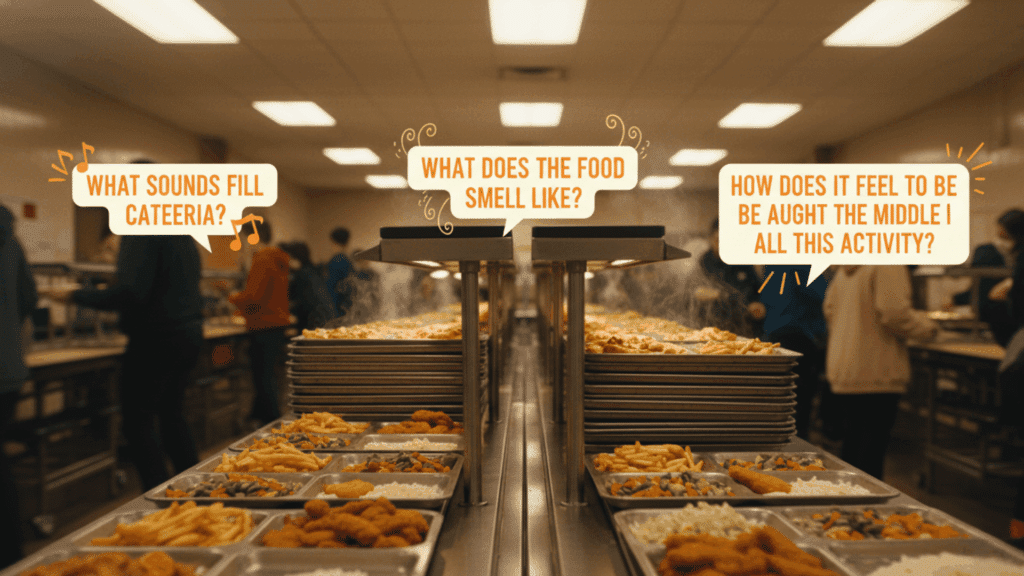
These descriptive prompts help bring scenes to life through vivid details. They teach students to use sensory language and paint clear pictures with words.
- Describe your school cafeteria during lunch rush.
- Write about the sounds you hear in the morning.
- Describe a thunderstorm using all five senses.
- Write about your favorite season and why you love it.
- Describe the busiest place you’ve ever visited.
- Write about what your bedroom says about you.
- Describe the taste of your favorite meal in detail.
- Write about the first snowfall of the year.
- Describe a crowded mall during the holidays.
- Write about watching the sunrise or sunset.
- Describe the feeling of winning or losing a game.
- Write about a forest from the perspective of a hiker.
- Describe the smell of your favorite place.
- Write about the atmosphere at a sporting event.
- Describe a rainy day from your window.
- Write about the textures you feel while walking barefoot outside.
- Describe a busy street corner in your city.
- Write about the colors you see during autumn.
- Describe what silence sounds like to you.
| Feel free to modify these prompts to fit your classroom needs or student interests. You can make them easier or harder depending on skill level. The key is keeping students engaged and writing regularly. |
How to Use Writing Prompts Effectively?
To get the most from writing prompts for middle school, give students time to think before they write.
Let them choose prompts that interest them when possible. Set a timer for 10 to 15 minutes to keep them focused. Encourage free writing without worrying about mistakes at first.
Mix different types of prompts throughout the week so students practice various writing styles. Create time for sharing and peer feedback after writing.
Celebrate effort and creativity over perfect grammar in early drafts.
Final Thoughts
Writing prompts make teaching easier and learning more fun. With these prompts across categories, you now have a full toolkit to inspire every student in your class.
These prompts reduce writing anxiety and help students build confidence one sentence at a time. The creative ones spark imagination. The personal ones encourage reflection.
The persuasive prompts develop critical thinking. Use them as warm-ups, assignments, or journal entries. The key is consistency. When students write regularly, they improve.
So pick a prompt, set that timer, and watch your students’ writing skills grow. Which category will you try first? Start tomorrow and see the difference. Your students will thank you for it.