
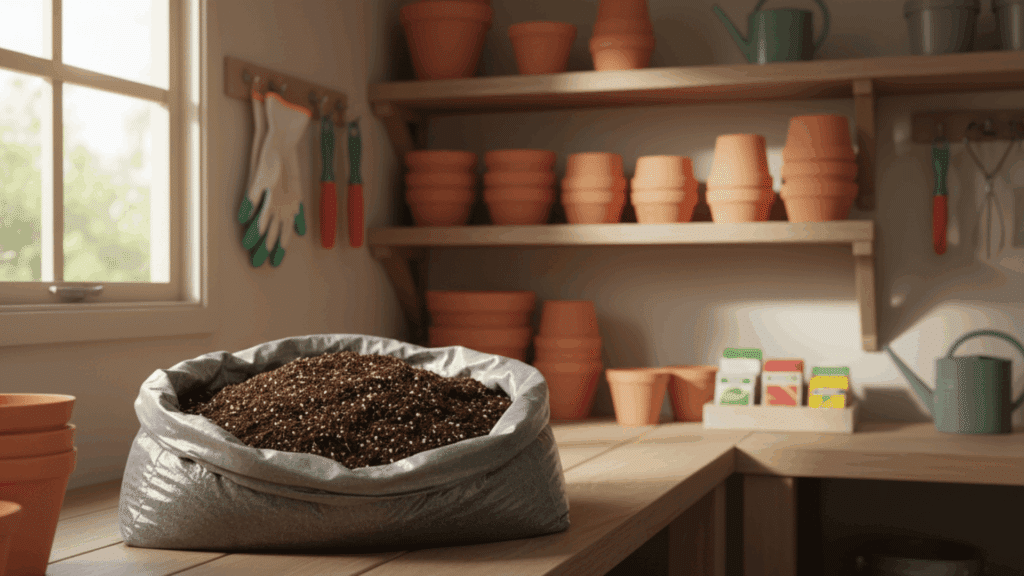
You open your shed and find that half-used bag of potting soil from last season. It looks a bit crusty. Smells kind of weird.
But throwing it away feels wasteful, right? So does potting soil go bad, or can you still use it? The answer isn’t as simple as yes or no.
Some old soil is perfectly fine with a little fix-up. Other bags belong straight in the trash. We’ll also cover the differences between potting soil and garden soil, as well as simple ways to safely revive an old mix.
In this guide, you’ll learn exactly when potting soil expires, how to spot the warning signs, and whether that forgotten bag deserves a second chance or a one-way trip to the compost bin.
What Happens When Potting Soil Goes Bad?
Potting soil doesn’t spoil like food, but it does break down and lose quality over time. Here’s what actually happens.
The organic materials decompose gradually. Peat moss, coconut coir, and compost break into smaller particles. This makes the soil dense and compacted. Air pockets disappear, and water can’t drain properly.
The soil stops doing its job. It either holds too much water or becomes water-repellent. Dried peat moss develops a waxy coating that prevents moisture from entering. Over-saturated soil drowns plant roots.
Biological problems develop next. Mold grows on damp surfaces. Fungus gnats lay eggs in decomposing matter. Harmful bacteria multiply in waterlogged conditions.
Poor performance is not the same as actual danger. Soil that drains badly gives you weak plants. Soil contaminated with disease or pests can kill your plants.
Potting Soil vs Garden Soil: Key Differences
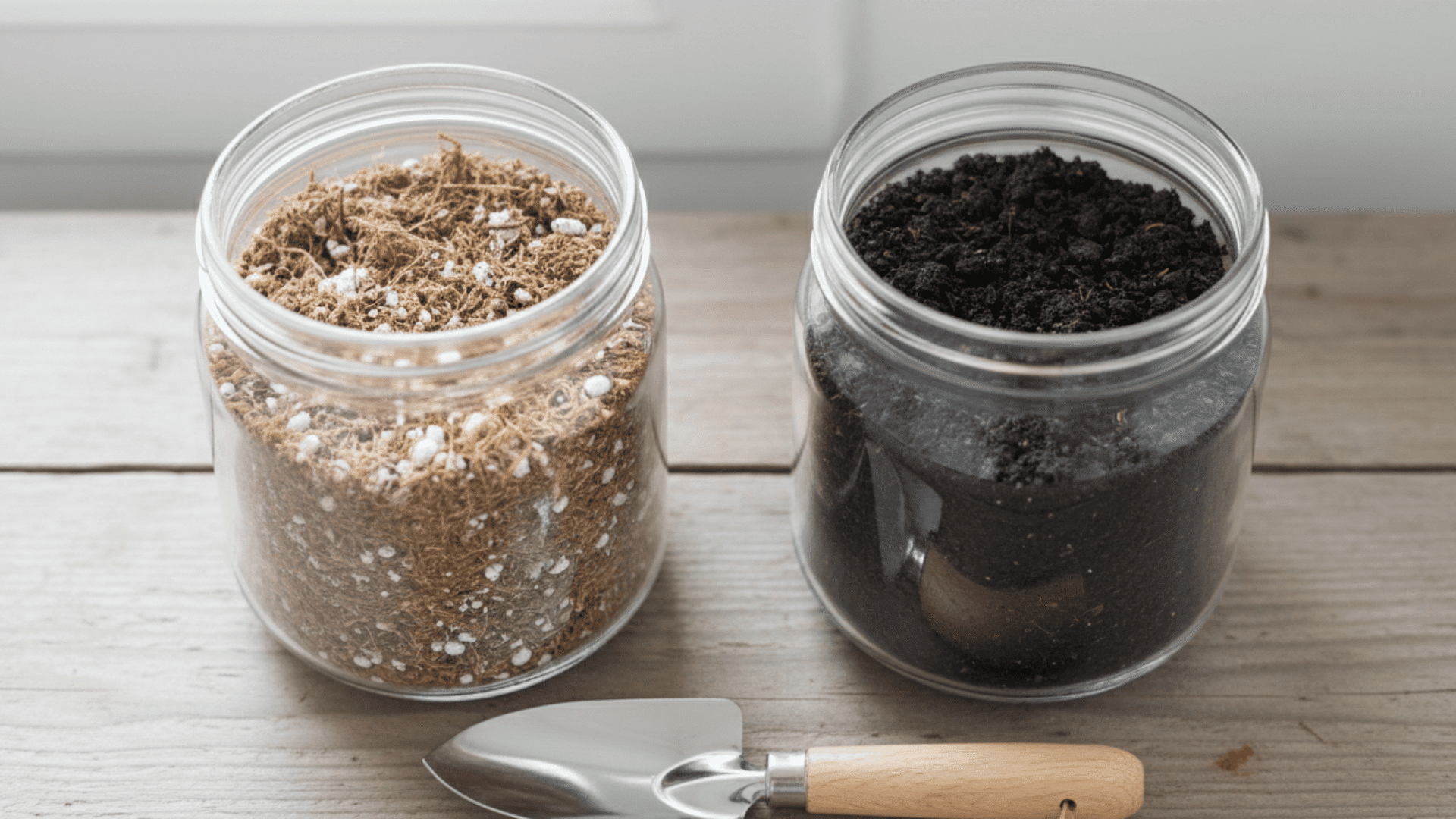
Not all soil works the same way. Before we talk about whether potting soil goes bad, you need to know how it differs from garden soil.
| Aspect | Potting Soil | Garden Soil |
|---|---|---|
| What it is | Lightweight mix made for containers. Contains peat moss, perlite, and vermiculite. | Heavy soil from the ground. Contains clay, sand, silt, and minerals. |
| Drainage | Drains fast to prevent root rot in pots. | Drains slowly. Can become waterlogged in containers. |
| Aeration | Stays loose and airy for root growth. | Gets compacted easily in pots. Blocks air from reaching roots. |
| Organic breakdown | Breaks down moderately over 1-2 years. | Breaks down very slowly. Takes years to change the structure. |
| Container use | Perfect for pots and planters. | Too heavy for containers. Suffocates plant roots. |
| Longevity in pots | Loses quality faster due to light materials. | Stays heavy but performs poorly. Should never be used alone in pots. |
Garden soil might seem like a cheap alternative, but don’t substitute it when reusing potting mix. The weight and poor drainage will harm your container plants more than old potting soil ever could.
How Long Does Potting Soil Lasts
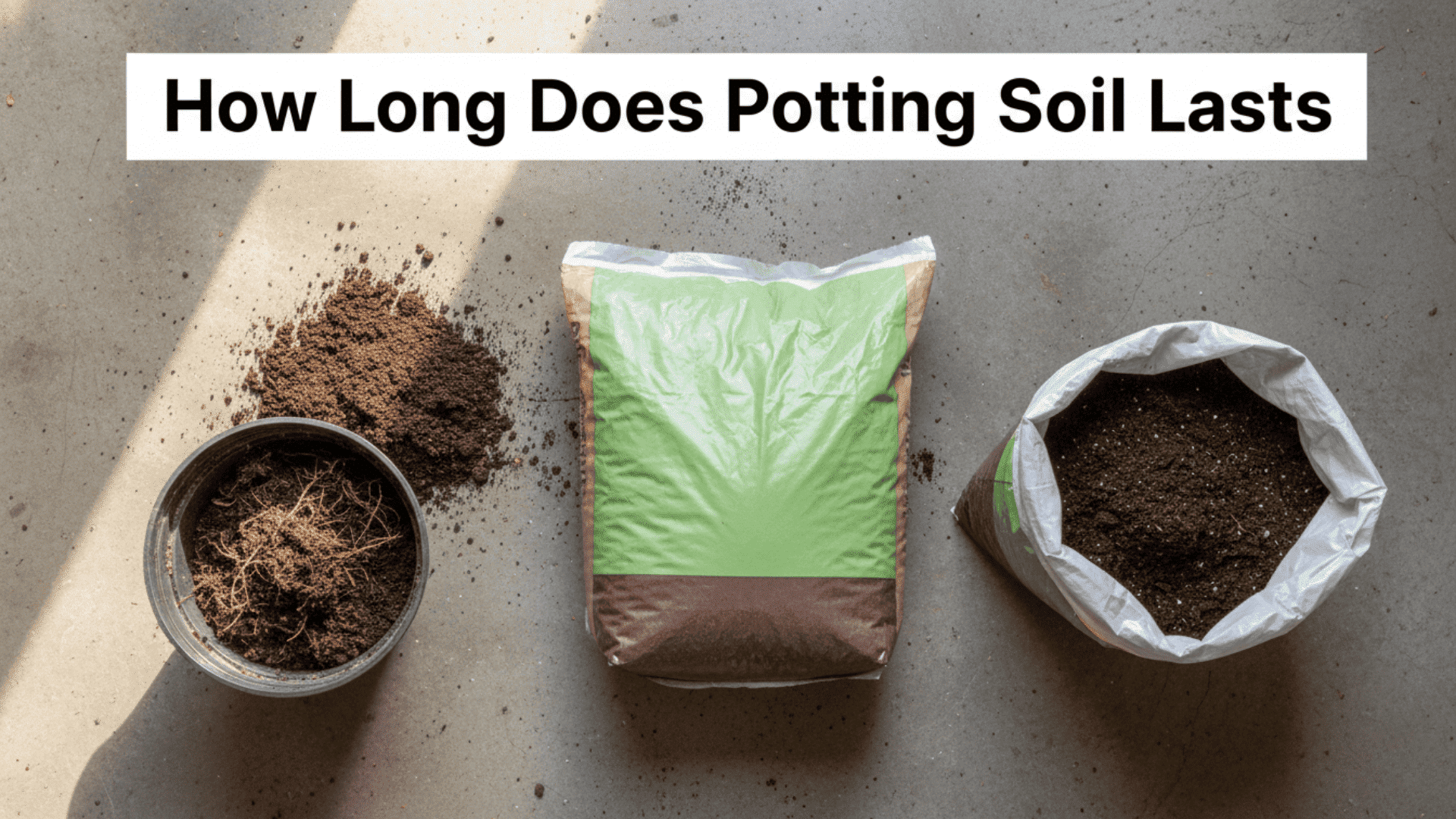
So, does potting soil go bad quickly, or can it last for years? The answer depends on how you store it and whether you’ve opened the bag yet.
Unopened Potting Soil
- Most unopened bags last 1 to 2 years if stored properly.
- Some brands claim up to 5 years, but quality drops after year two.
- Moisture exposure is the biggest enemy. Wet bags breed mold and bacteria fast.
- Heat and sunlight break down organic materials faster. Store bags in cool, dark spots.
- Bags left on concrete or dirt absorb moisture from below. Keep them on shelves or pallets.
- Bag tears let in water and pests. Check for holes before buying or storing.
Opened the Potting Soil
- Once you open a bag, expect the soil to last 6 months to 1 year maximum.
- Oxygen exposure speeds up the breakdown of peat and compost.
- Humidity invites mold growth and fungus gnats into the mix.
- Pests like insects and their eggs can easily find open bags.
- Seal bags tightly with clips or transfer soil to airtight containers.
- Even sealed, opened soil degrades faster than unopened bags.
Previously Used Potting Soil
- Soil from old pots has the shortest lifespan and is the most unpredictable.
- Old roots rot, creating disease-friendly environments.
- Fertilizer salts build up and can burn new plants if not flushed out.
- Past plant health matters. Soil from diseased plants may carry pathogens.
- Used soil can work again if refreshed properly, but it’s never as good as new.
5 Clear Signs Potting Soil Has Gone Bad
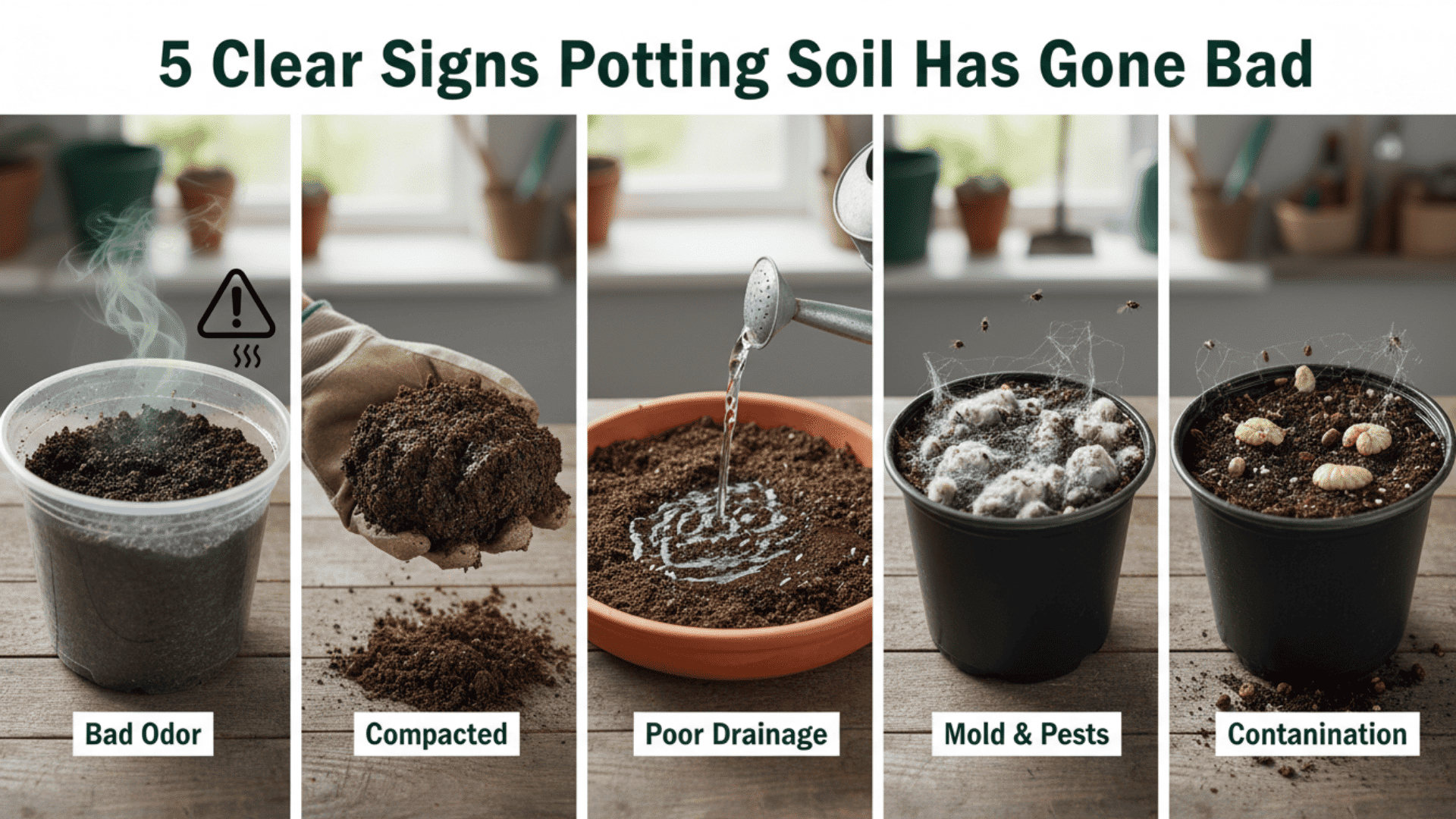
How do you know if your potting soil is still usable? Look for these warning signs that tell you the mix has passed its prime.
1. Strong Sour, Rotten, or Swamp-Like Odor
Fresh potting soil smells earthy and clean. Bad soil smells like rotten eggs or a swamp. This smell means anaerobic bacteria have taken over. These bacteria thrive in the absence of oxygen and produce toxic byproducts.
Your soil’s microbial balance is completely off. Plants growing in this mix will struggle or die.
2. Heavy, Muddy, or Compacted Texture
Good potting soil feels light and fluffy in your hands. Bad soil feels heavy, dense, and muddy. The structure has collapsed completely.
Air pockets that roots need have disappeared. Compacted soil blocks oxygen from reaching plant roots. This leads to root rot and stunted growth.
3. Water Repels or Drains Unevenly
Pour water on healthy potting soil, and it absorbs evenly. Old soil either repels water completely or creates puddles. Dried-out peat moss becomes waxy and water-resistant.
Broken-down organic matter clumps together. Some spots stay bone dry while others turn into mud. Plants can’t get consistent moisture this way.
4. Widespread Mold Growth or Recurring Fungus Gnats
A little white fuzz on the surface isn’t always dangerous. But thick mold covering large areas signals problems. The soil has stayed too wet for too long.
Fungus gnats that keep coming back mean the same thing. These pests lay eggs in damp, decomposing organic matter. Both issues create an unhealthy environment for your plants.
5. Visible Pests, Larvae, Webbing, or Animal Contamination
Check your soil carefully before using it. Look for insects, grubs, or larvae moving around. Spider webs or silk threads mean pests have nested inside. Rodent droppings or urine stains are serious red flags.
These contaminations carry diseases that harm both plants and people. Never use soil with these signs, especially for vegetables or indoor plants.
When Old Potting Soil Can Be Reused
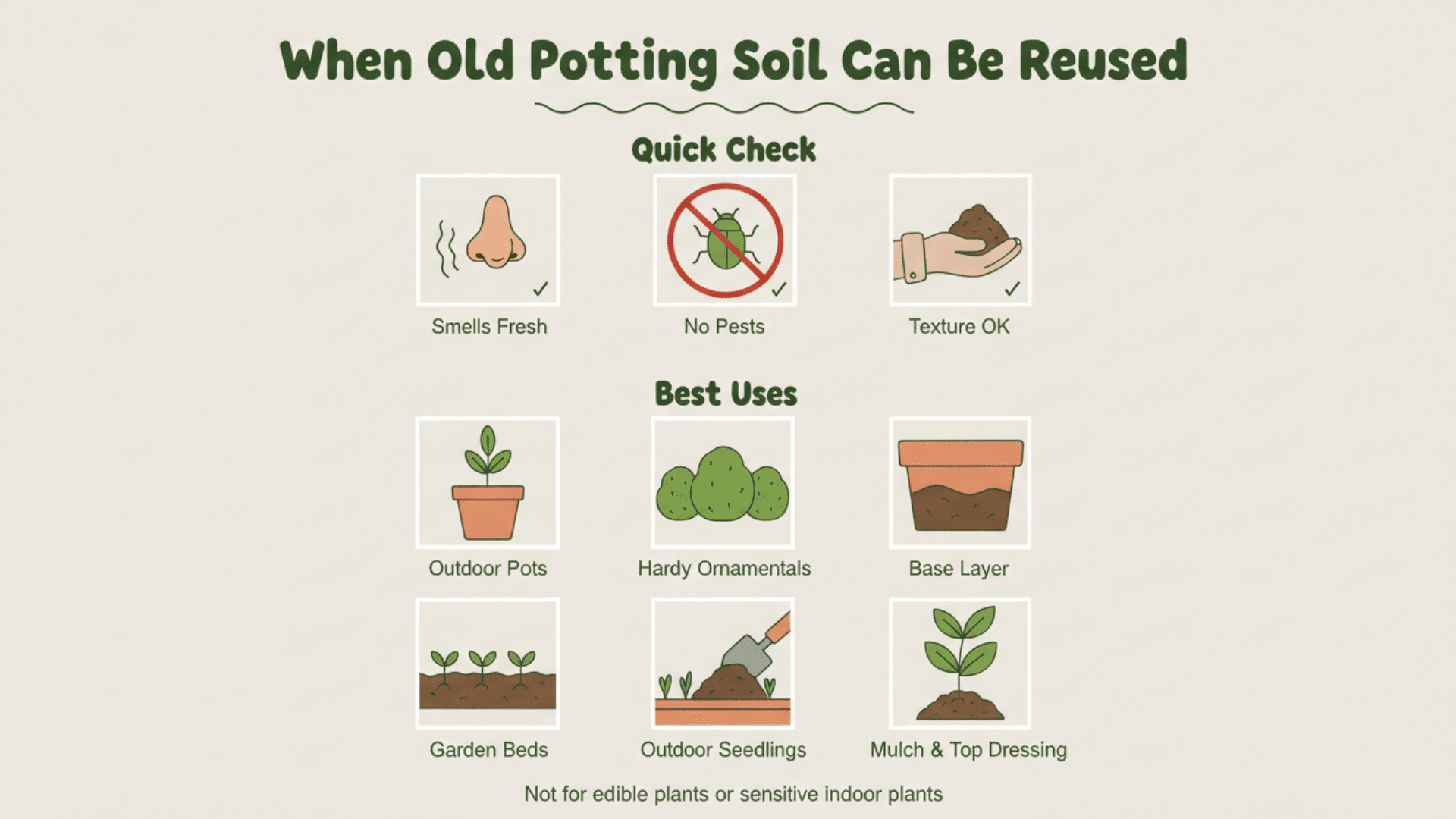
Does potting soil go bad beyond repair? Not always. You can reuse old soil if it passes a few basic tests. First, smell it. Fresh or slightly musty is fine. Sour or rotten means throw it out. Second, check for pests.
No bugs, larvae, or webbing should be visible. Third, feel the texture. Even if it’s compacted, you can fix that with amendments like perlite or compost. Old soil won’t work as well as a fresh mix, but it’s not useless.
Best use cases for reused potting soil:
- Outdoor containers where drainage issues matter less, and rain helps flush salts
- Non-sensitive ornamental plants like hardy perennials or decorative shrubs that tolerate imperfect conditions
- Mixing into garden beds as a soil conditioner to improve structure and add organic matter
- Base layer in large pots topped with fresh soil, where roots will actually grow
- Starting seeds for outdoor transplants if refreshed properly and not used for delicate seedlings
- Mulch or top dressing around established plants to help retain moisture
Never reuse old potting soil for vegetables, herbs you’ll eat, or sensitive indoor plants. The risk isn’t worth it.
When Potting Soil Should Not Be Reused
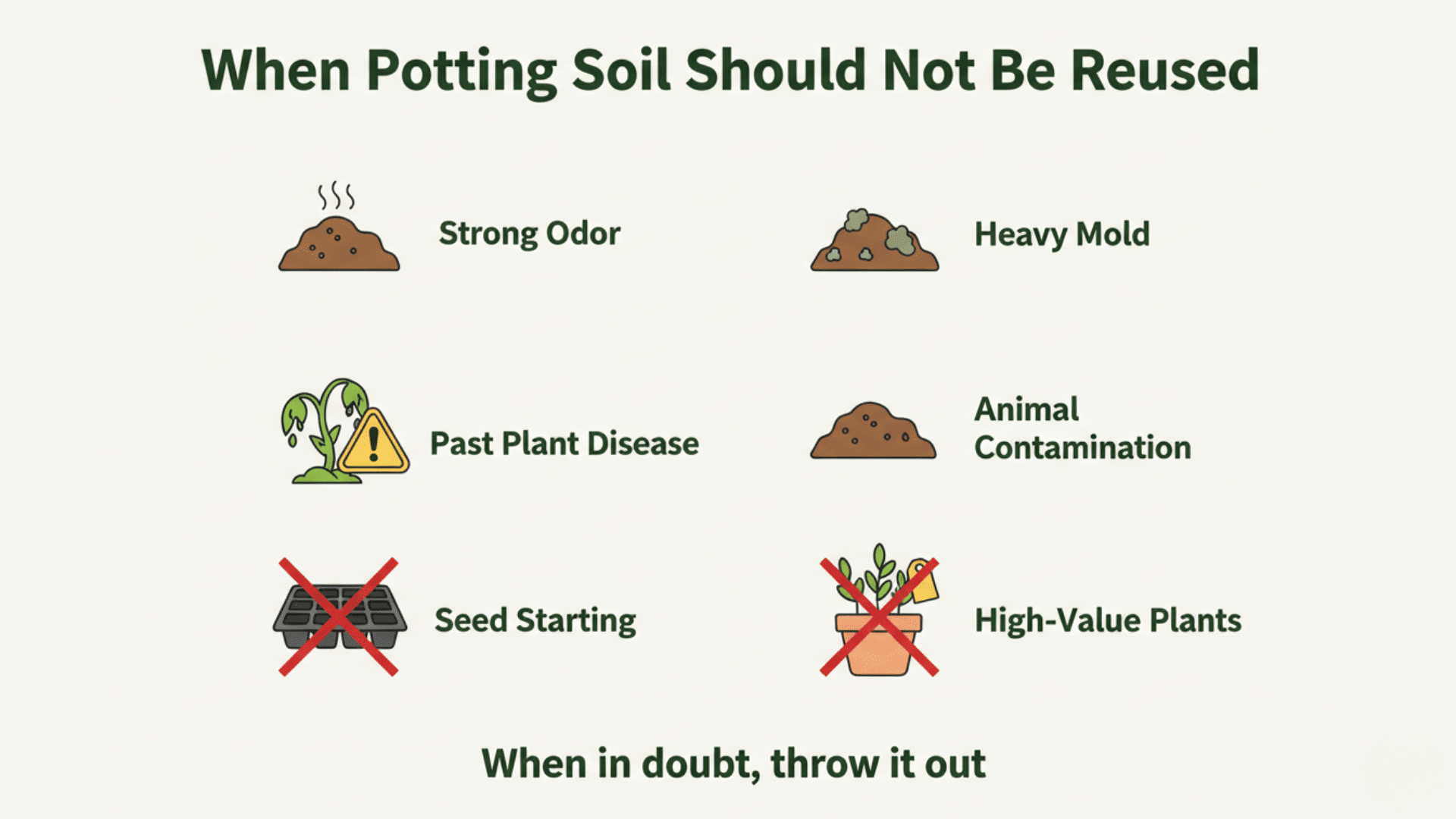
Some soil is too far gone to save. Knowing when to toss old potting soil protects your plants and your health. If any of these conditions exist, skip the reuse and buy a fresh mix instead.
Never reuse potting soil if:
- Strong odor or sludge-like consistency means harmful bacteria have taken over the mix
- Heavy mold throughout indicates deep contamination that amendments can’t fix
- The history of plant diseases like root rot, blight, or wilt can spread to new plants
- Rodent or animal contamination brings serious health risks from droppings or urine
- Seed starting needs sterile conditions that old soil can’t provide
- Indoor edible plants like herbs or vegetables require the cleanest growing medium possible
- High-value or rare plants deserve fresh soil to minimize any risk of failure
When in doubt, throw it out. Fresh potting soil costs less than replacing dead plants.
Pros and Cons of Reusing Potting Soil
Should you reuse old potting soil or start fresh? Both options have their benefits and drawbacks. Here’s what you need to consider.
| Pros of Reusing Potting Soil | Cons of Reusing Potting Soil |
|---|---|
| Cost savings – Avoids new bag purchases, saving money. | Requires time and amendments – Must add perlite, compost, or fertilizer. |
| Reduced waste – Keeps soil out of landfills. | Increased pest risk – Can harbor fungus gnats and insects. |
| Suitable for low-risk planting – Works for hardy outdoor plants. | Not reliable for seedlings – Young plants need fresh, sterile soil. |
| Good for large projects – Major savings when filling many containers. | Unpredictable results – Never know the exact soil condition. |
Reusing potting soil makes sense for some situations, but not all. Consider what you’re planting and where before deciding.
How to Revive Old Potting Soil Safely
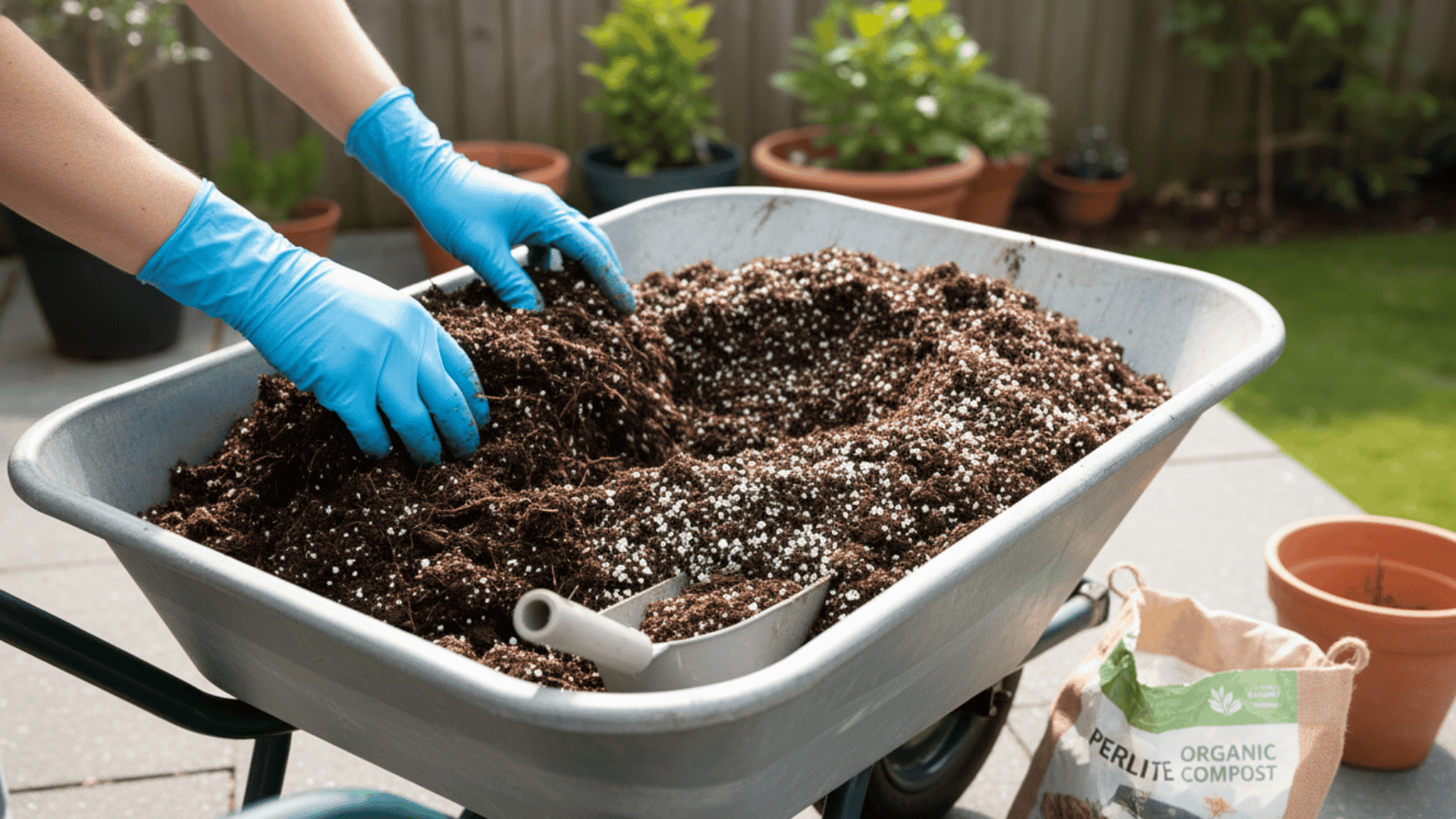
Old potting soil doesn’t have to go to waste. You can bring it back to life with a few simple steps that restore its quality and make it safe for planting again.
1. Remove Old Roots and Debris
Start by sifting through the soil with your hands or a screen. Pull out dead roots, stems, and plant debris. These materials degrade and attract pests such as fungus gnats. Remove any rocks, sticks, or clumps you find. Clean soil is the foundation for successful reuse.
- Spread soil on a tarp for easy inspection
- Break apart clumps to expose hidden debris
- Discard large root masses completely
2. Restore Structure and Drainage
Old potting soil gets dense and loses its fluffiness. Mix in 30% fresh potting soil to lighten the texture. Add perlite or vermiculite to improve drainage. Pine bark fines work well for long-term aeration. Your goal is soil that feels loose and crumbly, not heavy and packed.
- Use 1 part amendment to 3 parts old soil
- Mix thoroughly until the texture feels consistent
- Test drainage by watering a small sample
3. Rebalance Nutrients
Plants have already used up most nutrients in old soil. Add finished compost for slow-release nutrition. Or use controlled-release fertilizer pellets based on what you’re planting. Vegetables need more nutrients than flowers. Match your amendment to your plant type.
- Add 1-2 inches of compost per container
- Follow the fertilizer package instructions carefully
- Mix nutrients evenly throughout the soil
4. Correct Moisture Behavior
Dried-out peat moss becomes water-repellent and won’t absorb moisture. Pre-moisten your refreshed soil before planting. Add water slowly and mix it in by hand. The soil should feel like a wrung-out sponge. This prevents dry pockets that stress plant roots.
- Spray water gradually while mixing
- Let the soil sit for 30 minutes to absorb fully
- Add more water if the soil still looks dusty
5. Manage Pests Before Use
Even clean-looking soil can hide pest eggs or larvae. Spread soil in a thin layer on a tarp in direct sunlight. Let it dry completely for 2-3 days. This kills most insects and their eggs. Keep the soil refreshed and isolated from healthy plants for one week before moving it indoors.
- Sun-dry soil outdoors when possible
- Store treated soil in sealed containers
- Watch for pest activity before final use
Risks Associated with Using Degraded Potting Soil
Using old, spoiled potting soil comes with real consequences. Understanding these risks helps you decide when fresh soil is worth the investment.
- Root rot: Poor drainage in old soil keeps roots too wet, leading to root decay and plant death.
- Nutrient deficiency: Depleted nutrients and salt buildup prevent plants from absorbing what they need to grow.
- Fungus gnat infestations: Old soil harbors eggs and larvae that hatch into swarms of annoying flies in your home.
- Stunted plant growth: Compacted structure limits root development and oxygen flow, resulting in weak, slow-growing plants.
- Respiratory irritation: Breathing dust from dried-out potting soil can irritate your lungs and trigger allergic reactions.
Always wear gloves and wash your hands after handling old soil. These risks multiply when you ignore the warning signs that the potting soil has gone bad.
How to Store Potting Soil Correctly?
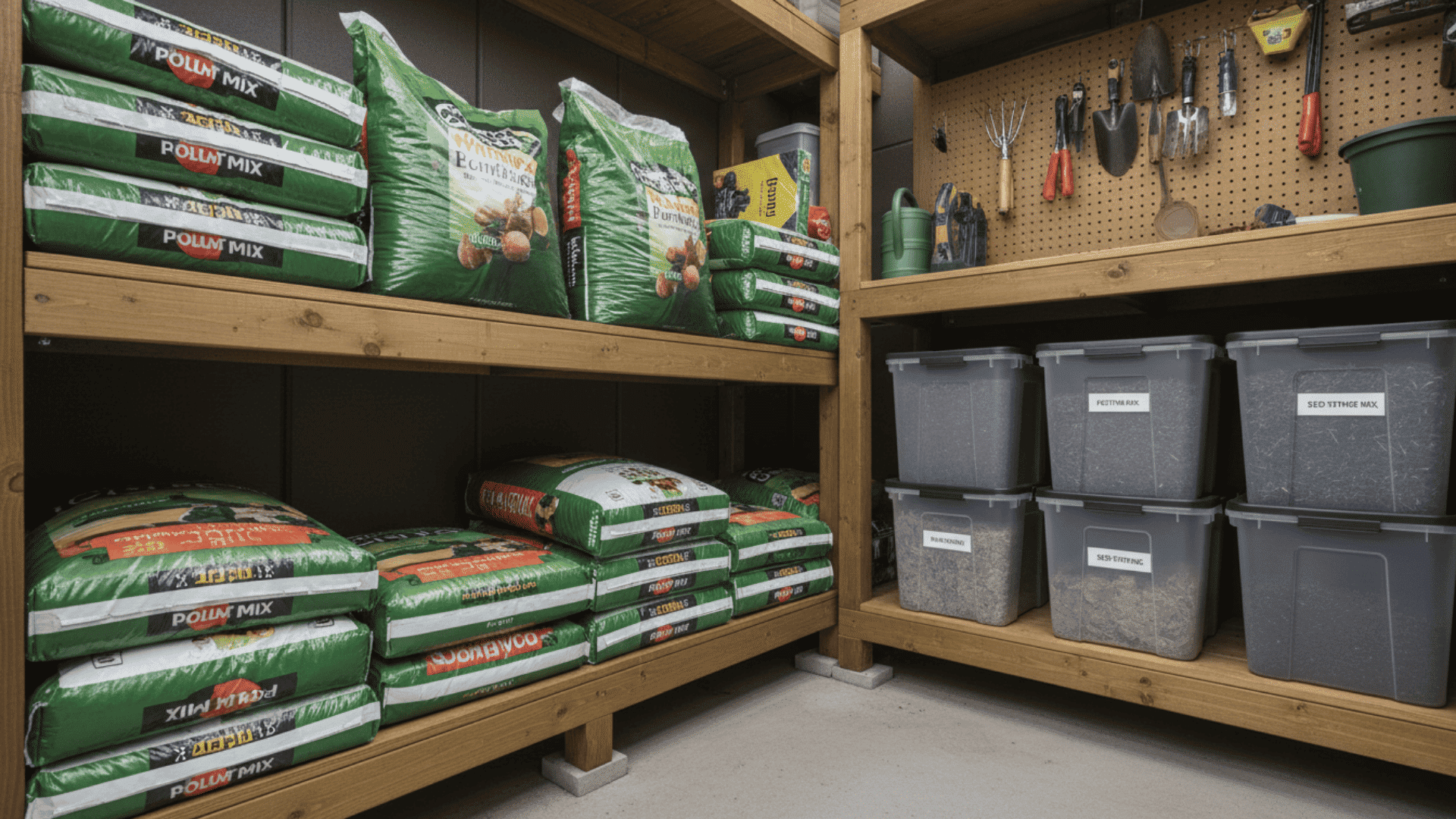
Store potting soil in a dry, shaded spot away from temperature swings and direct sunlight. Keep unopened bags sealed tight and off concrete floors to prevent moisture from seeping in.
Once opened, transfer soil to airtight containers with pest-proof lids and label them with the date. This keeps bugs out and slows down breakdown.
If you spot minor surface mold, scrape it off and dry the soil in sunlight. But if mold covers most of the mix or insects have invaded throughout, toss it completely.
Proper storage can extend your soil’s life by a full year or more.
Final Thoughts
So, does potting soil go bad? Yes, but it’s not always a lost cause. Old soil loses quality over time, but you can often revive it with simple amendments.
The key is knowing what to look for. Bad smells, pests, and heavy mold mean toss it. Compacted texture and dried-out mix can usually be fixed.
Use fresh soil for seedlings, edibles, and indoor plants. Save reused soil for hardy outdoor containers. Store bags properly in cool, dry spots, and they’ll last much longer.
Your plants depend on good soil to thrive, so don’t gamble with a sketchy mix when you’re unsure. Got an old bag in your garage? Check it now using the signs we covered.