

In highly competitive automotive segments, product positioning often determines success as much as engineering or pricing. When multiple vehicles share similar dimensions and price brackets, differentiation must come from clarity of identity. The Tata Punch offers a strong case study in how strategic positioning can reshape a crowded category. Rather than competing directly as a conventional hatchback or a full-fledged compact SUV, the Punch created a new narrative — the micro-SUV.
Its trajectory reveals valuable lessons about how brands can carve out a distinctive space in saturated markets.
Creating a Sub-Segment Instead of Fighting for Share
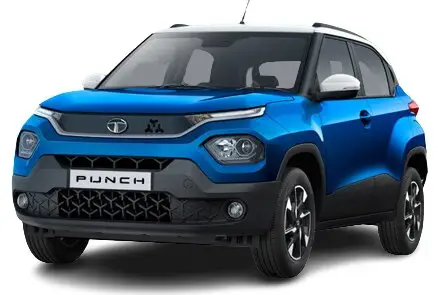
One of the most notable aspects of the Tata Punch’s positioning is that it did not attempt to outcompete traditional hatchbacks purely on price. Nor did it try to rival larger compact SUVs in size or power. Instead, it emphasised SUV-inspired design, higher ground clearance, and structural strength within sub-4-metre proportions.
With a length of 3,876 mm, a width of 1,742 mm, a height of 1,615 mm, and a 2,445 mm wheelbase, the Punch remains firmly within compact dimensions. However, its 193 mm ground clearance distinguishes it from most hatchbacks.
By framing itself as a micro-SUV rather than a premium hatchback, Tata Motors effectively created differentiation where specification overlap might otherwise have blurred boundaries.
Leveraging Safety as a Core Identity
Another critical element in its positioning strategy is safety emphasis. The Punch is highlighted as India’s Safest 5-Star Rated Sub Compact SUV. This positioning moves the discussion beyond styling and ground clearance into structural integrity.
It incorporates:
- 6 Airbags
- Safety Dome Body Shell
- Electronic Stability Program (ESP)
- Hill Hold Assist and Hill Descent Control
In a segment traditionally driven by price sensitivity, safety-based positioning elevated the Punch beyond a value proposition. It became associated with structural assurance — a powerful differentiator in competitive markets.
Visual Identity That Signals Strength
Product positioning is often reinforced through design cues. The Punch integrates SUV-style features such as:
- 3D Front Grille with Bull Guard Bumper
- Trail Guard Rear Skid Plate
- TrailCrest R16 Alloy Wheels
- Infinity Glow LED Connected Tail Lamps
These elements visually separate it from conventional hatchbacks. In competitive segments, appearance plays a decisive role in shortlisting decisions.
The Punch demonstrates how styling can redefine perception even when platform constraints remain similar.
Powertrain Versatility Without Segment Escalation
The Punch offers multiple powertrain options:
- 1.2L Revotron petrol engine producing 87.8 PS and 115 Nm torque
- 1.2L Turbocharged engine delivering 120 PS and 170 Nm torque
- 1.2L iCNG engine producing 73.4 PS and 103 Nm torque
The inclusion of India’s first CNG AMT SUV adds further distinction.
Rather than escalating into higher segments for performance differentiation, Punch diversified within its size bracket. This reinforced its versatility while retaining micro-SUV classification.
Technology Supporting the Narrative
Positioning also extends to feature integration. The Punch includes:
- Ultra View 26.03 cm HD Infotainment with Wireless Android Auto and Apple CarPlay
- Ultra View 17.78 cm Digital Cluster
- Voice-Assisted Electric Sunroof
These features elevate the ownership experience without moving the vehicle into a higher price class.
The Role of Research in Competitive Segments
In crowded categories, buyers often compare multiple vehicles before making a decision. Platforms such as ACKO Drive allow consumers to evaluate dimensions, ground clearance, safety features, and variant differences before booking online. In such comparisons, the Punch’s micro-SUV positioning becomes clearer.
By defining itself distinctly rather than blending into hatchback comparisons, it secures visibility in digital research environments.
Conclusion
The Tata Punch illustrates how effective product positioning can redefine competitive dynamics. By emphasising SUV identity, structural safety, and versatile powertrain options within compact dimensions, it created differentiation in a saturated market.
Its success demonstrates that in competitive segments, clarity of narrative matters as much as engineering. Rather than competing solely on price or performance, the Punch positioned itself around confidence, safety, and SUV character — reshaping expectations within its class.