
You open a door dozens of times a day. You never stop to think about the hinge. But the second it squeaks, sags, or stops working right, it becomes impossible to ignore.
Most people focus on the door itself. The finish, the handle, the style. The hinge comes last. But get it wrong, and the whole thing falls apart sooner than expected.
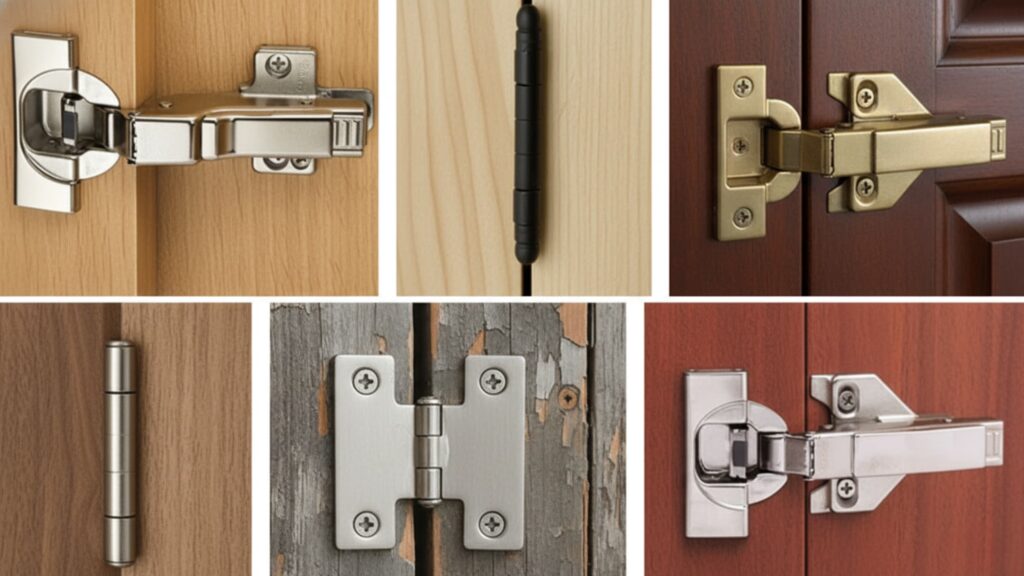
Here is something worth knowing: there are more than 24 types of door hinges. Each one is built for a specific use. Pick the right one, and it lasts for years without a second thought.
This guide covers every major type of door hinge, what each does, and which one best fits your door.
What Is a Door Hinge and How Does It Work?
A door hinge is a mechanical device that connects a door to its frame and lets it swing open and closed. It has two flat metal plates called leaves, joined at a hollow tube called the knuckle.
A pin runs through the knuckle to hold both leaves together and act as the rotation point. This simple three-part setup lets every door in your home or office move back and forth without coming off the wall.
The Main Parts of a Door Hinge
Every hinge consists of the same three core parts. Knowing what each one does helps you spot wear, understand sizing, and choose the right type for the job.
| Part | What It Is | What It Does |
|---|---|---|
| Leaf | The flat metal plate on each side of the hinge | Attaches to the door on one side and the frame on the other |
| Knuckle | The hollow tube formed where the two leaves meet | Acts as the rotating joint that allows the door to move |
| Pin | The metal rod that slides through the knuckle | Holds the two leaves together and serves as the central rotation point |
Types of Door Hinges
Door hinges are not one-size-fits-all. The type you need depends on how heavy the door is, how often it gets used, and what it needs to do.
1. Butt Hinges
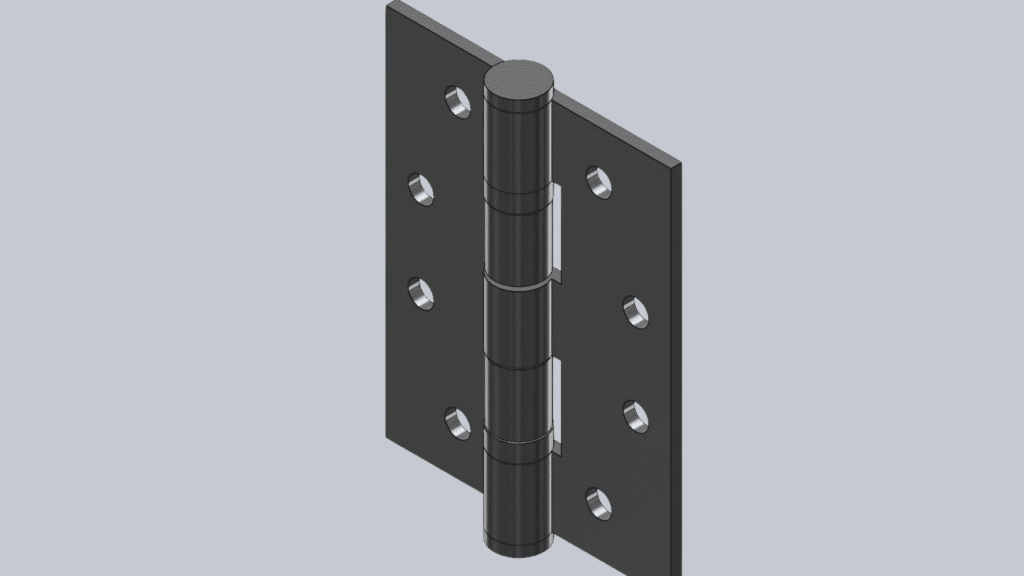
Butt hinges are the most common door hinge type found in homes across the US. They sit between the door edge and the frame, usually set into a shallow cut so both leaves close flat.
This simple, dependable design has been the standard choice for residential doors for decades.
Features:
- Two rectangular metal leaves joined by a central pin
- Set into a mortised recess in the door and frame for a flat fit
- Available with fixed pins or removable (loose) pins
- Come in plain bearing, ball bearing, spring, and rising variants
Best for: Standard interior and lightweight exterior residential doors
| Pros | Cons |
|---|---|
| Low cost and easy to replace | Standard lifespan of only 5 to 7 years on busy doors |
| Works with most door sizes and weights | An exposed pin can be a security risk on outward-facing doors |
| Available in many finishes and materials | Needs regular checks on high-use doors |
| Widely available at any hardware store | Can sag over time without periodic tightening |
2. Ball Bearing Hinges
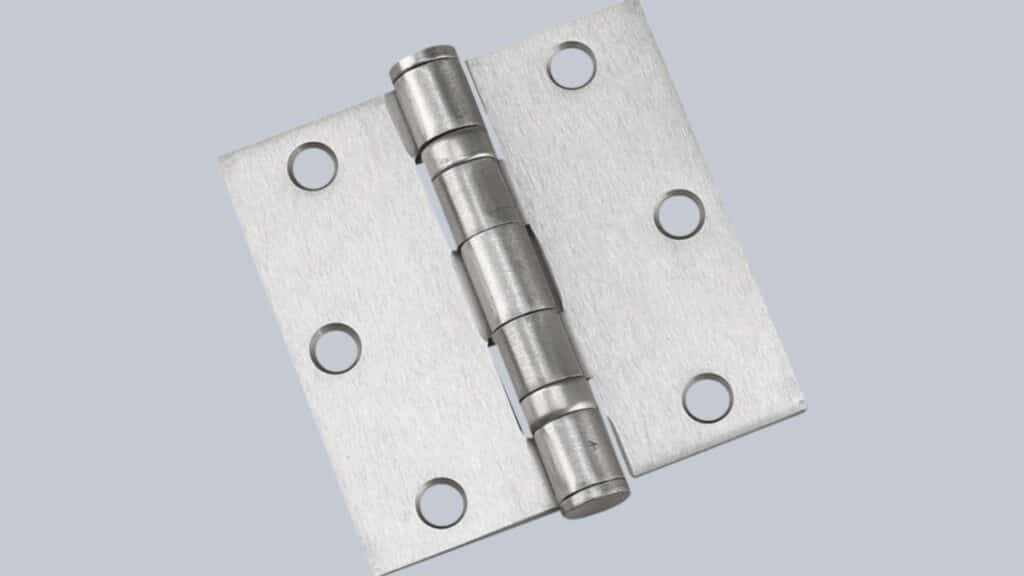
Ball bearing hinges carry the same basic shape as butt hinges but add small bearings inside the knuckle. Those bearings reduce friction every time the door opens or closes. The result is a smoother action that holds up far better under regular, repeated use.
Features:
- Ball bearings sit inside the knuckle to cut friction
- Available in 2, 3, and 5 knuckle designs
- Come in steel, stainless steel, brass, and bronze
- Can be screwed on or welded in place
Best for: High-traffic interior doors, heavy residential doors, and commercial entry doors
| Pros | Cons |
|---|---|
| Smoother operation than plain bearing hinges | Higher cost than standard butt hinges |
| Longer lifespan under frequent use | Slight overkill for light, rarely-used interior doors |
| Requires less maintenance over time | Heavier than plain bearing options |
| Handles heavier doors well | Fewer decorative finish choices |
3. Spring-Loaded Hinges
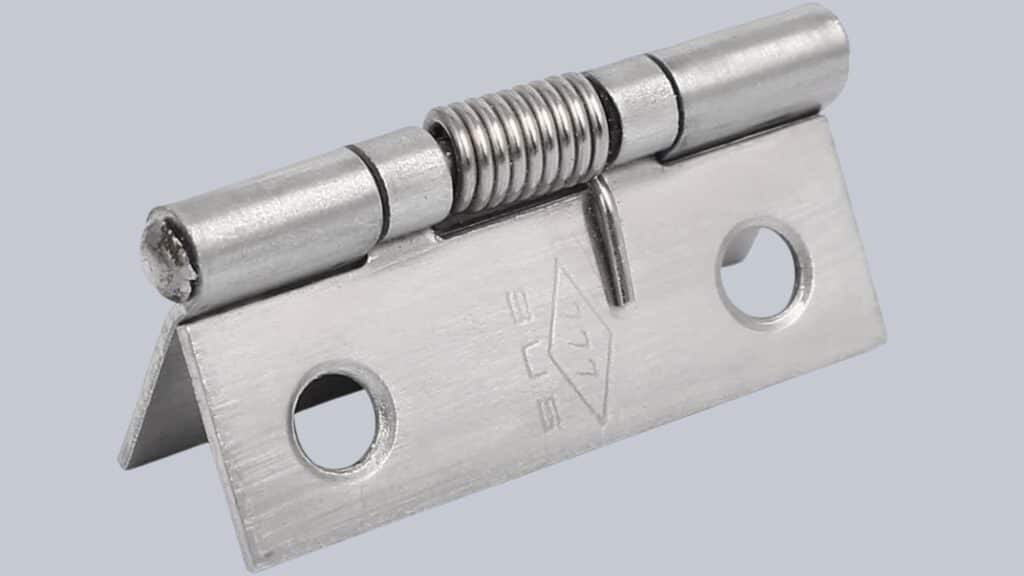
Spring-loaded hinges are built for one specific purpose: pulling a door closed after it has been opened. A spring wraps around the pin, creating tension. The moment you let go, the door swings back to the closed position on its own, every time.
Features:
- The internal spring on the pin creates an automatic closing action
- Closing tension is adjustable to control speed
- Available in single-action and double-action styles
- Sized to match standard butt hinges for easy swapping
Best for: Screen doors, patio doors, fire doors, and doors that must stay shut at all times
| Pros | Cons |
|---|---|
| Keeps doors closed without a latch | Spring can weaken and wear out over time |
| Closing speed is adjustable | Not suitable for very heavy doors |
| Useful for child safety at home | Can slam shut if tension is set too high |
| Low cost and easy to install | Not ideal for formal interior spaces |
4. Rising Butt Hinges
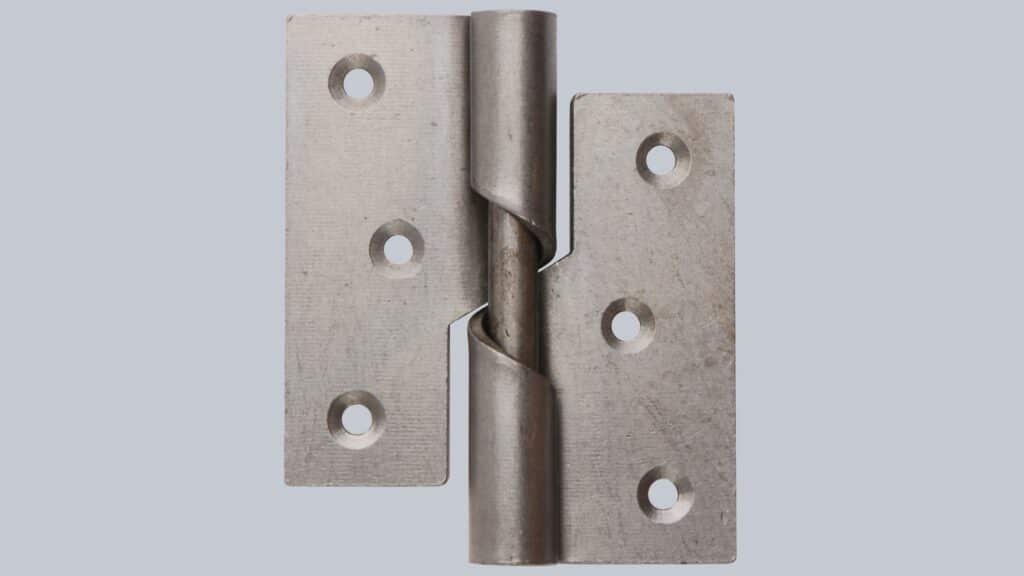
Rising butt hinges solve a very specific, everyday problem. As the door opens, the hinge lifts the door about half an inch off the ground. That small lift stops the door from dragging or catching on thick carpet, a raised threshold, or uneven flooring.
Features:
- Raises the door approximately half an inch as it opens
- Looks identical to a standard butt hinge when the door is closed
- Available in left-hand and right-hand versions only
- Comes in brass-plated and steel finishes
Best for: Rooms with thick carpet, raised thresholds, or uneven floor levels
| Pros | Cons |
|---|---|
| Fixes floor clearance without cutting the door | Sold in left or right hand only, not universal |
| Looks like a regular hinge when closed | Not suited for heavy or frequently used doors |
| Low-cost fix for a common problem | Limited finish options |
| No extra hardware required | The correct hand must be selected before buying |
5. Concealed Hinges (Hidden Hinges)
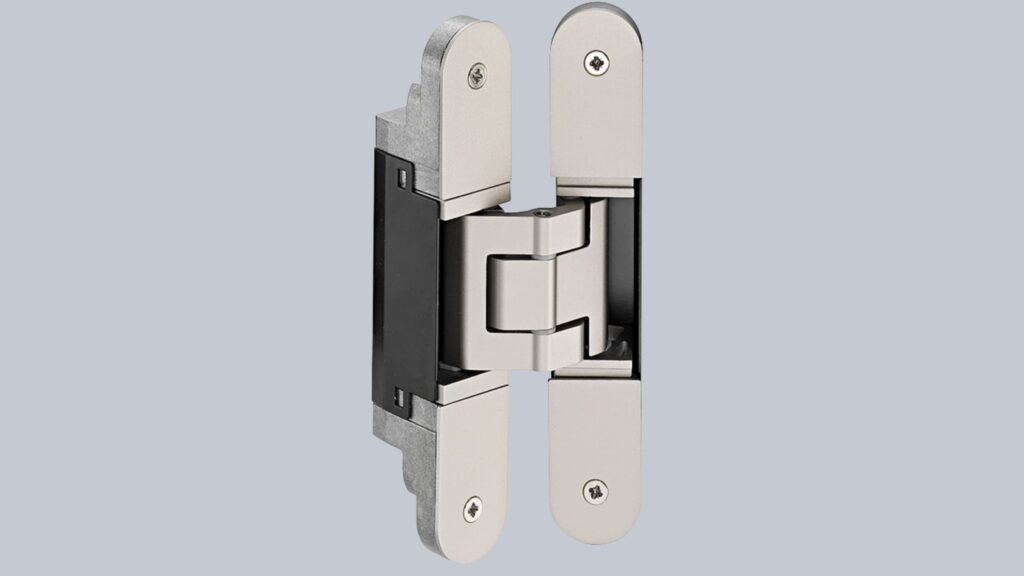
Concealed hinges are made to stay out of sight completely. When the door is shut, there is nothing visible on the surface. The entire mechanism sits inside a slot cut into the door and frame, keeping the look of the door clean from both sides.
Features:
- Fully hidden when the door is in the closed position
- Adjustable in three directions: horizontal, vertical, and depth
- Fire-rated options are available for commercial use
- Self-closing mechanisms are available on select models
Best for: Modern kitchen cabinets, interior doors with a clean finish, and high-security commercial doors
| Pros | Cons |
|---|---|
| Completely clean, uninterrupted door appearance | Higher cost than surface-mounted hinges |
| Cannot be tampered with from the outside | Requires precise cutting and installation |
| Self-closing versions reduce the need for latches | Takes longer to fit than standard hinges |
| Over 100 years of proven use in furniture and doors | Not suited for rustic or traditional door designs |
6. Pivot Hinges
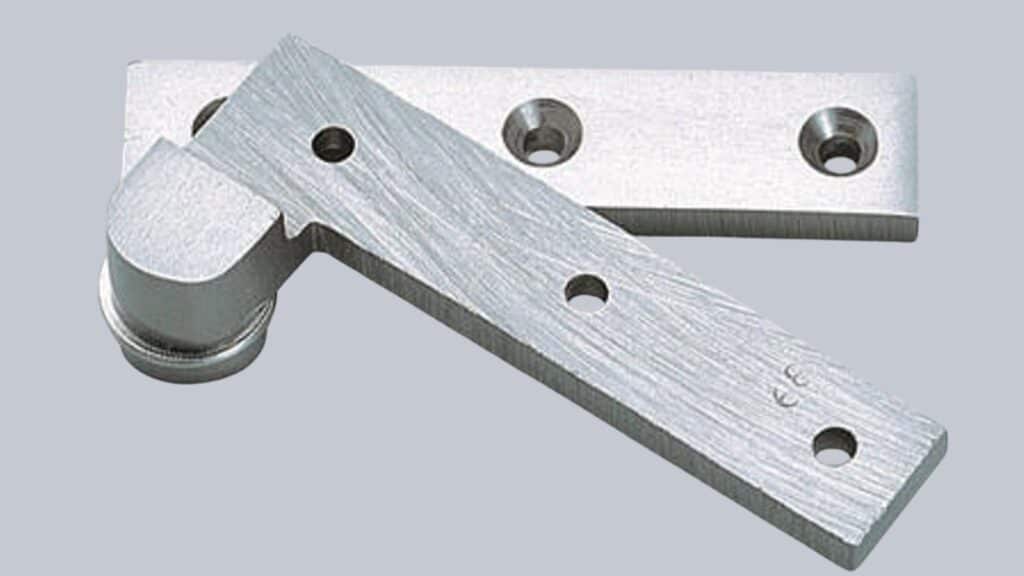
Pivot hinges work differently from every other type on this list. Instead of attaching to the side of a door, they mount at the very top and bottom, letting the door rotate from a central point. This setup is designed for large, heavy doors that standard side-mounted hinges cannot reliably support.
Features:
- Mounted at the top and bottom of the door, not the side
- Available in single-action (one way) and double-action (both ways)
- Distributes the door weight more evenly across the frame
- Available in floor-mounted and jamb-mounted styles
Best for: Heavy commercial entries, oversized interior panels, restaurant kitchen doors, and large cabinet doors
| Pros | Cons |
|---|---|
| Carries heavier doors far better than side hinges | More complex to install than butt hinges |
| Provides a clean, modern look | Higher upfront cost |
| Can allow full 360-degree rotation on double-action types | Requires careful floor or frame preparation |
| Reduces long-term strain on the door frame | Not practical for standard lightweight residential doors |
7. Continuous Hinges (Piano Hinges)
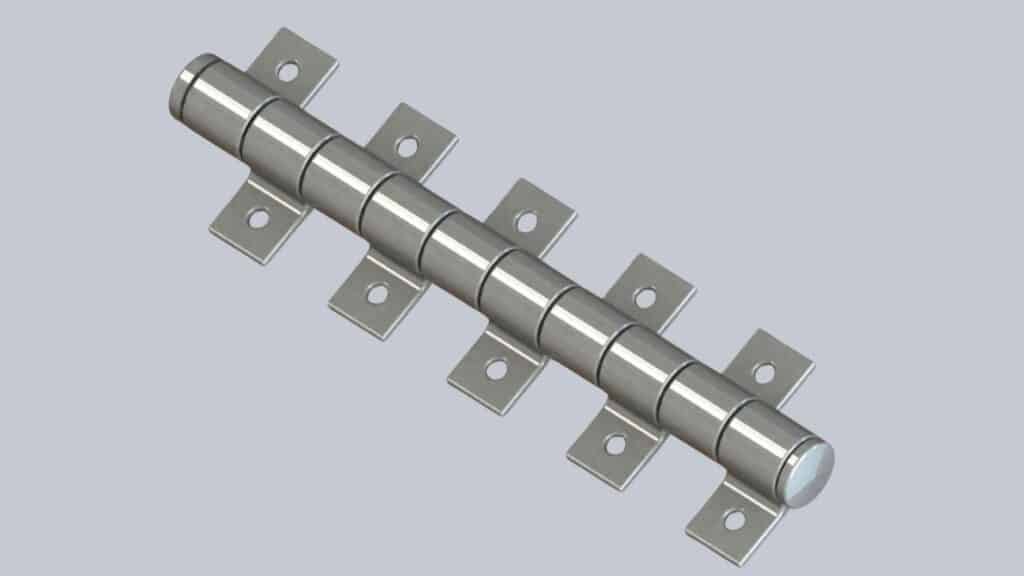
Continuous hinges run from the top of the door all the way to the bottom. Because the load is spread across the entire door height, no single point carries the full weight of the door.
They were originally named after the piano lid hinge, but today they are among the most dependable choices for commercial and high-traffic spaces.
Features:
- Run the full height of the door for even weight distribution
- Available in geared aluminum (indoor and outdoor) and pin-and-barrel steel types
- Geared versions rated for over 25 million open and close cycles
- Fire-rated options available for commercial applications
Best for: High-traffic commercial doors in schools, hospitals, retail stores, and government buildings
| Pros | Cons |
|---|---|
| Extremely long service life with near-zero maintenance | Higher upfront cost than butt hinges |
| Spreads weight evenly, preventing sag over time | Heavier and bulkier than standard hinges |
| Resistant to rust and corrosion (geared aluminum type) | More than necessary for standard residential use |
| Can handle doors weighing hundreds of pounds | Requires careful alignment during fitting |
8. Strap and T Hinges
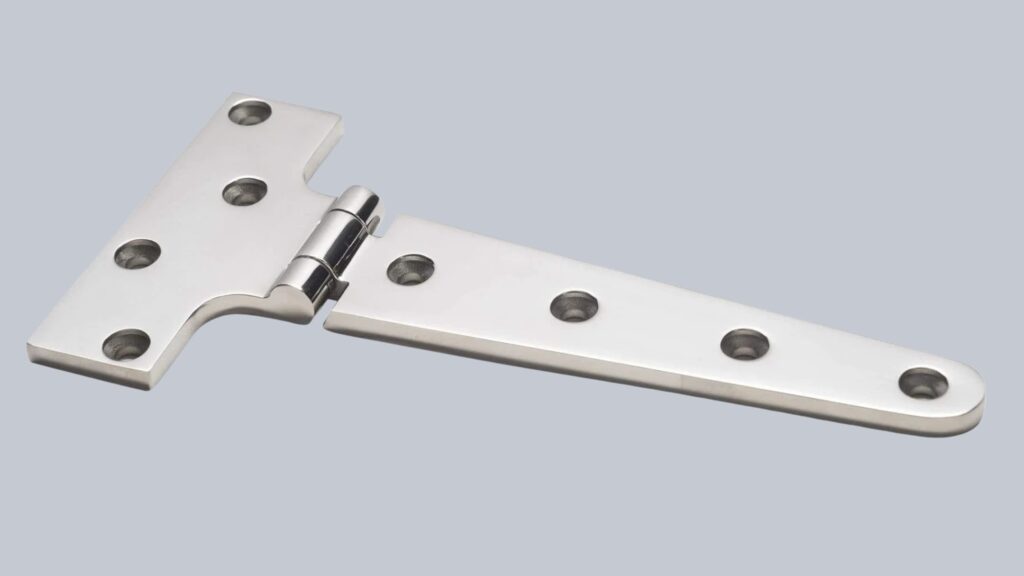
Strap and T hinges have a long, flat arm that stretches across the face of the door. That wide arm spreads the door’s weight over a larger area than a standard butt hinge.
They carry a strong visual character and are often chosen as much for their look as for the support they provide.
Features:
- Long strap extends across the door face for wider weight distribution
- The hinge has one short leaf on the frame and one long strap across the door
- Available in steel, brass, and galvanized steel for outdoor use
- Often sold in matching sets with screws included
Best for: Garden gates, barn doors, sheds, and period-style or rustic interior doors
| Pros | Cons |
|---|---|
| Spreads weight well across wide or heavy doors | Sits on the surface, fully visible on the door face |
| Adds a traditional, character-rich look | Not suited for modern or minimal interior designs |
| Available in rust-resistant finishes for outdoor use | Not ideal for high-security applications |
| Easy to fit on surface-mounted doors | Limited adjustability once installed |
9. Offset Hinges (Swing Clear Hinges)
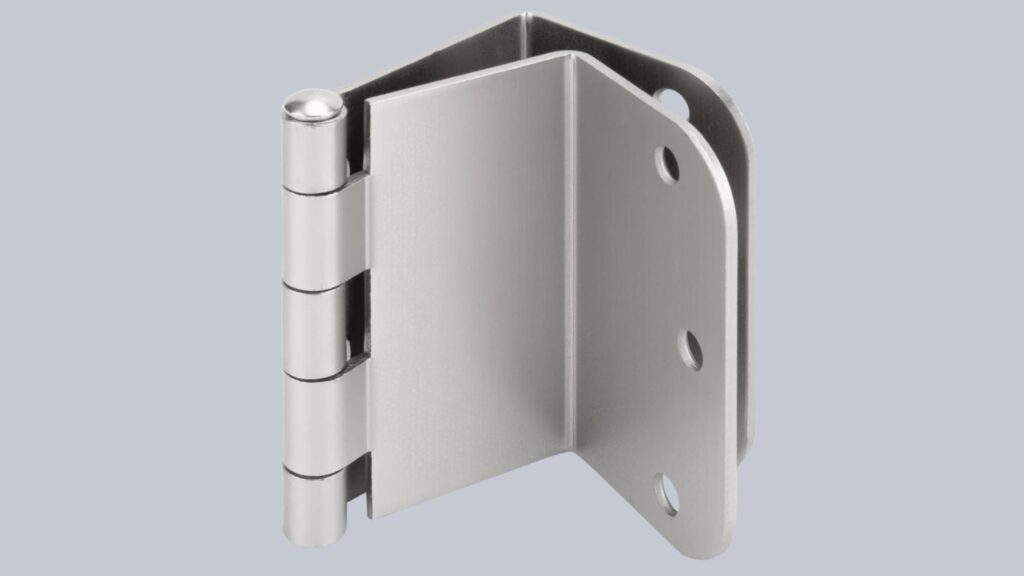
Offset hinges move the door’s pivot point away from the frame when the door opens fully. That shift adds up to 2 extra inches of clear opening.
It sounds like a small gain, but for someone using a wheelchair or a walker, those 2 inches can make the difference between fitting through or not.
Features:
- Shifts the pivot point outward to widen the door opening
- Adds up to 2 inches of clearance when the door is fully open
- Compatible with standard door frames without major modification
- Available in several finishes to match existing hardware
Best for: ADA-compliant spaces, accessible home entries, and any doorway used by people with mobility needs
| Pros | Cons |
|---|---|
| Widens doorways without structural renovation | Slightly more visible than standard hinges |
| Works with existing standard frames | Limited weight capacity |
| Helps spaces meet ADA accessibility requirements | Not available in as many finish options |
| Can replace existing hinges without cutting or patching | Not commonly used in formal interior settings |
10. Flush Hinges
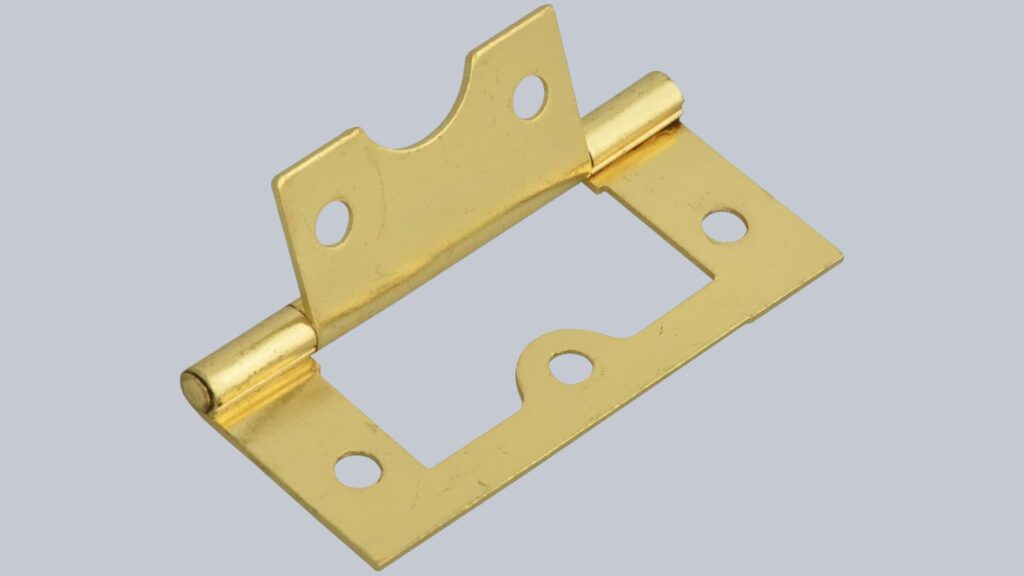
Flush hinges are one of the thinnest and most compact hinge types available. One leaf sits inside the other when closed, keeping the total profile very flat. They are simple to fit because they do not require any cutting or recessing into the door or frame.
Features:
- One leaf nests inside the other for a flat, low-profile fit
- No mortise or recess needed for installation
- Available in sizes from 13mm up to 100mm
- Typically made from lightweight steel or brass
Best for: Cabinet doors, small furniture pieces, and lightweight interior doors where a clean fit matters
| Pros | Cons |
|---|---|
| Very easy to install with no special cutting required | Not suitable for heavy or frequently used doors |
| Compact size works well in tight spaces | Lower load capacity than butt hinges |
| Low cost and widely available | Can bend or deform under too much weight |
| Good option for DIY cabinet and furniture projects | Limited to lighter-duty use only |
11. Security Hinges
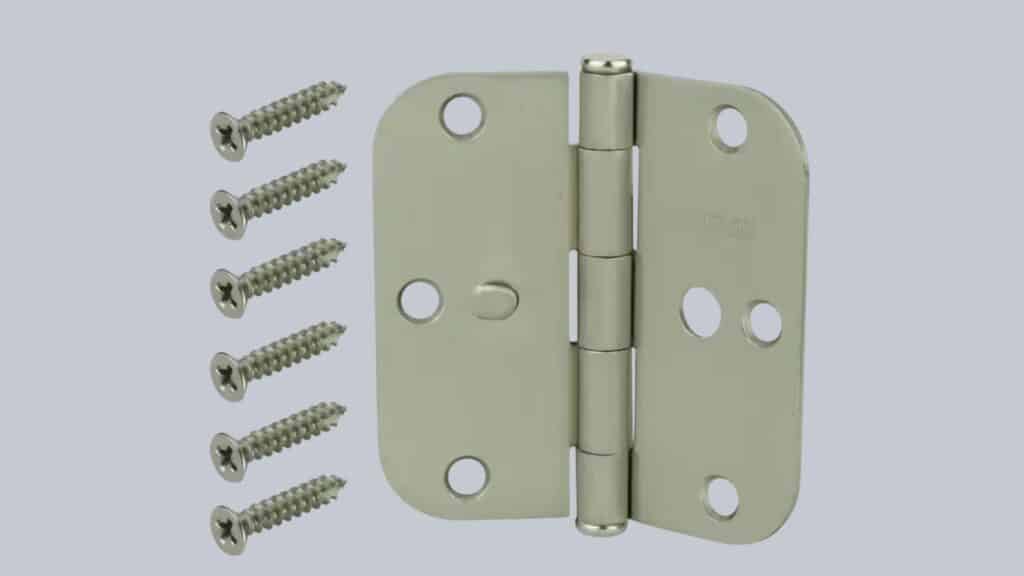
Security hinges are built for doors that open outward and face a higher risk of forced entry. On a standard outward-opening door, the hinge pin is exposed on the outside and can be attacked.
Security hinges are specifically designed so that even if the knuckle joint is forced apart, the door stays locked in the frame.
Features:
- Security dogbolt: a pin on one leaf locks into a recess on the other when closed
- Non-removable pin (NRP) design prevents tampering with the pin from the outside
- Anti-ligature tips with chamfered edges for hospital and care facility use
- Fire-rated options available for commercial and institutional doors
Best for: Outward-opening exterior doors, commercial entries, hospitals, schools, and high-security buildings
| Pros | Cons |
|---|---|
| The door stays in the frame even if the hinge is forced | Higher cost than standard butt hinges |
| The pin cannot be removed or accessed from the outside | Professional installation recommended for best results |
| Fire-rated and anti-ligature versions available | Heavier than standard hinges |
| Adds a meaningful layer of physical security | More limited range of decorative finishes |
Door Hinge Sizes
Getting the size right before you buy saves a lot of back-and-forth. A hinge that is too small for the door will wear out fast, and one that is too large will look out of place and may not fit properly.
- 2 inch: Best for small cabinet doors and lightweight furniture pieces.
- 2.5 inch: Suited to light interior cabinet doors and small closet doors.
- 3 inch: Standard for lightweight interior doors in residential homes.
- 3.5 inch: The most widely used size for standard interior doors in US homes.
- 4 inch: Suited for heavier interior doors and most standard exterior doors.
- 4.5 inch: Used on heavy exterior doors and doors with frequent daily use.
- 5 inch and above: Reserved for extra-heavy commercial doors, gates, and oversized panels.
Door Hinge Materials
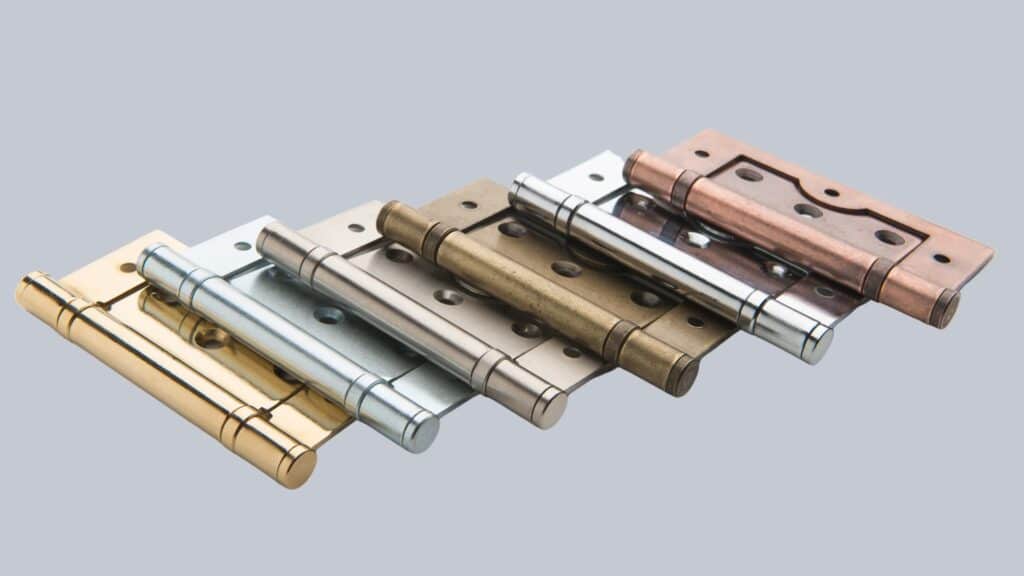
The material a hinge is made from affects how long it lasts and where it can safely be used. Using an indoor-grade material on an exterior door, for example, is a short path to rust and early replacement.
| Material | Best For | Strength | Rust Resistance | Cost |
|---|---|---|---|---|
| Steel | Interior doors for standard residential use | High | Low without a protective coating | Low |
| Stainless Steel | Exterior doors, coastal areas, and wet rooms | Very High | Excellent | Medium to High |
| Brass | Period properties and traditional interiors | Medium | Good | Medium |
| Bronze | Architectural and high-end decorative use | High | Good | High |
| Anodized Aluminum | Geared continuous hinges and commercial doors | Medium | Excellent | Medium |
How Many Hinges Does a Door Need?
Using the right number of hinges keeps a door balanced and reduces the strain placed on each individual hinge over time. Too few hinges and the door will start to sag, pull away from the frame, or put too much pressure on the screws.
- Doors up to 60 inches tall: 2 hinges are enough for most standard interior use.
- Doors between 60 and 90 inches tall: 3 hinges are recommended to keep the door level and reduce stress.
- Doors over 90 inches tall: A minimum of 4 hinges is needed to support the added height and weight.
- Heavy doors in solid wood or steel: Always add at least one hinge beyond the standard count for the door height.
- High-traffic commercial doors: Use continuous hinges or fit 4 to 6 hinges, depending on door weight and daily use volume.
How to Choose the Right Door Hinge?
Start with four basics: door weight, frequency of use, location, and the look you want. Light interior doors work well with plain butt hinges.
Heavy or frequently used doors need ball bearings or continuous hinges for lasting performance. Exterior and wet-area doors require corrosion-resistant materials, such as stainless steel.
If a clean, minimal look matters, go with concealed hinges. If the door opens outward in a high-risk area, a security hinge is the better call.
Match those four factors to the right type, and the right choice becomes clear.
Key Takeaways
Choosing the right door hinge does not have to be complicated.
Think about the door’s weight, how often it gets used, and where it sits in your home or building. A light bedroom door needs something very different from a heavy front entry or a busy commercial hallway.
The types of door hinges covered in this guide give you what you need to make a smart, lasting choice.
You do not have to be a professional to get this right. Match the hinge to the job, and the door will take care of the rest.
Have a specific door project you are working on? Drop your questions in the comments below. We would love to help you figure it out.