
You do everything right. You skip the coffee after 6 PM. You get into bed on time. But sleep still takes forever to come.
Here is something most people never think about. The color of the light you had on before bed might be keeping you awake.
Light does not just affect how bright a room feels. It directly signals your brain whether it is time to sleep or time to stay alert. And some colors send the wrong message entirely.
This blog breaks down which colors of light help you sleep, which ones work against you, and how to fix it starting tonight.
How Light Controls Your Sleep?
Your body runs on a 24-hour internal clock called the circadian rhythm. This clock uses light as its main signal. When light enters your eyes, it tells your brain whether to stay awake or prepare for sleep.
Darkness triggers the pineal gland to release melatonin, the hormone that makes you feel drowsy. But not all light is equal. Different colors carry different wavelengths.
Shorter wavelengths, like those in blue light, are highly stimulating to the brain. Longer wavelengths, like those in red light, are far less disruptive.
This is why the color of your evening light either works with your body or against it.
Best Color Light for Sleep at Night

Most people know that darkness is best for sleep. But when you do need light, the color you choose makes all the difference.
1. Red Light
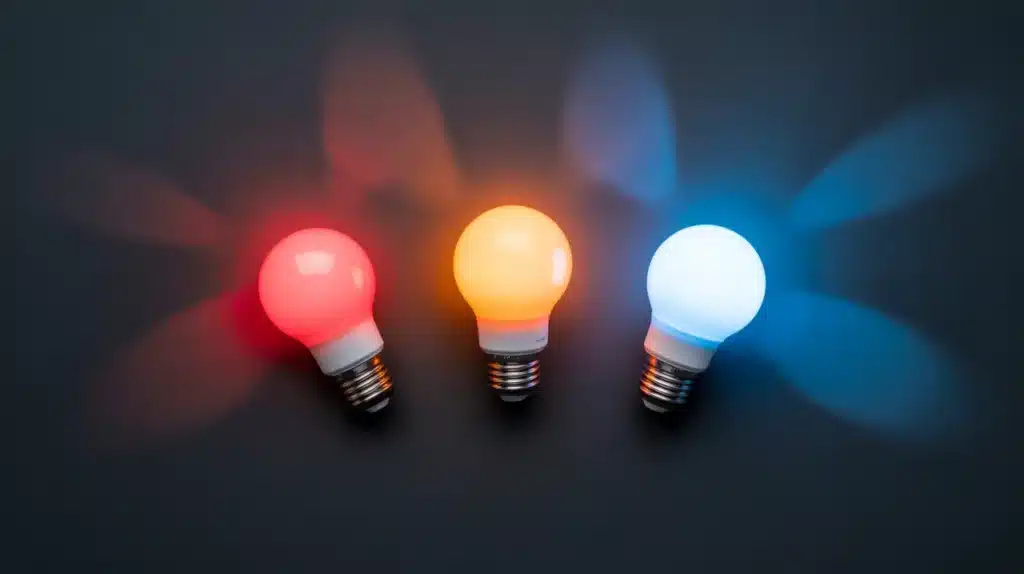
Red light sits at the far end of the visible light spectrum, with wavelengths between 620 and 750 nanometers. It does not suppress melatonin production.
A 2012 study on elite female athletes found that 30 minutes of red light improved sleep quality and melatonin levels after 14 days. Use it as a dim bedside lamp for 1 to 2 hours before bed.
2. Amber and Orange Light
Amber light falls between 1600K and 2700K on the color temperature scale. It blocks blue wavelengths while still giving enough light to read or move around comfortably.
Research shows that wearing amber-tinted glasses for two hours before bed helps people gain around 30 extra minutes of sleep. It works well in living rooms and hallways as the evening goes on.
3. Warm Yellow Light
Warm yellow light is the most familiar option and one of the easiest to switch to. The CDC notes that it has little effect on the body’s internal clock.
It does not carry the direct evidence that red light does, but it is far safer than blue or cool white light at night. A good choice for general bedroom use.
Worst Color Light for Sleep
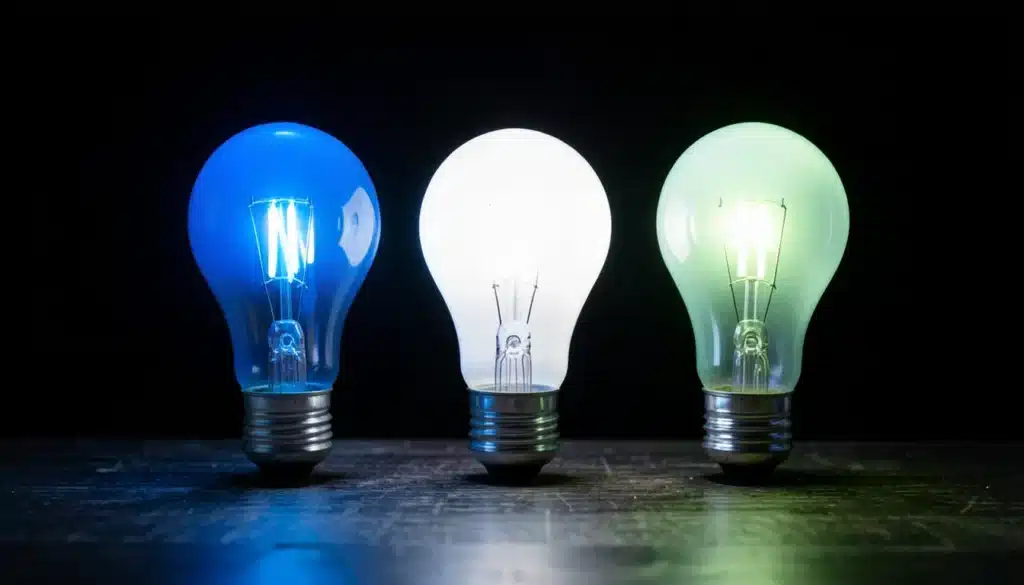
Just as some light colors support sleep, others actively work against it. Knowing which ones to cut from your evening routine is just as important as knowing which to keep.
1. Blue Light
Blue light wavelengths range from 450 to 480 nanometers, and the eye’s receptors are most sensitive to this range.
It signals the brain that it is still daytime, blocks melatonin, and raises both alertness and heart rate. Even 40 minutes of blue light before bed increases mental alertness.
Phones, laptops, televisions, and most overhead LED lights are common sources.
2. Cool White Light
Cool white light sits above 4000K on the Kelvin scale and leans strongly toward blue wavelengths. Most standard household LED bulbs fall into this range.
Using them in the bedroom in the evening sends the same alertness signal as a screen. Switching to bulbs rated below 3000K is a simple fix.
3. Green Light
Green light falls between 495 and 570 nanometers. It is less disruptive than blue light but still reduces melatonin levels to some extent. Many people overlook it because it does not feel harsh.
It is worth keeping in mind when choosing bulbs for any space you use in the evening.
Light Color for Sleep by Age Group
Light affects people differently. Age plays a bigger role in this than most people expect.
- Adults: Red or amber light works best in the 1 to 2 hours before sleep, along with warm white bulbs at 2700K to 3000K for general bedroom lighting.
- Children and Toddlers: Children are more sensitive to light than adults, so soft, warm yellow or pink nightlights are the safest choice, and blue or cool white nightlights should be avoided entirely.
- Shift Workers and Night Owls: Use bright light at the start of your waking hours to anchor your internal clock, then switch to warm amber or red light for the 2 to 3 hours before your sleep window, no matter what the clock reads.
How to Find the Best Color Light for Your Sleep

Not every person responds to light the same way. Finding what works for you takes a little observation and one small change at a time.
1. Look at Your Current Setup
Walk through your home about two hours before bed. Note which lights are on and what color they give off. This one walk tells you more than you think. Most people are surprised by how many cool white lights they have on without realizing it.
2. Notice How You Feel at Bedtime
Do you feel wide awake even when your body is tired? That is a strong sign your evening light is still sending a wake-up signal to your brain. The light, not your body, is likely the issue. Pay attention to this feeling for two or three nights before making any changes.
3. Make One Change First
Start with the bulb closest to where you spend most of your evening. Swap it to a warm amber or red option. One small shift is enough to feel a real difference within a few days. Changing everything at once makes it harder to know what actually helped.
4. Track Your Response
Give it 3 to 5 nights. Do you fall asleep faster? Does winding down feel easier? Your body responds quickly to light changes, so you will notice the difference soon enough. Keep it simple and just check in with how you feel each morning.
5. Adjust Based on What You Notice
If amber feels right, try moving toward red. If red feels too strong, stay with amber. The best color light for your sleep is the one that helps your body settle, not the one with the most research behind it. Trust what your own sleep tells you.
Light Mistakes That Are Ruining Your Sleep
Making light changes is simple. But a few common missteps can cancel out the effort before it has a chance to work.
| Mistake | What to Do Instead |
|---|---|
| Using bright red or amber light | Keep nighttime lights dim. Brightness disrupts sleep as much as color does |
| Changing the lamp but leaving the TV on | Dim or switch off the TV at least an hour before bed |
| Switching to warm light right at bedtime | Start the shift 2 to 3 hours before you plan to sleep |
| Relying only on night mode | Pair it with less screen time. The color shift alone is not enough |
| Ignoring overhead lights | Switch them off in the evening and use a floor or table lamp instead |
| Buying colored party bulbs | Look for bulbs specifically labeled low blue light or sleep-friendly |
Smart Bulbs for Sleep
Changing your light color manually every evening is easy to forget. Smart bulbs take that step off your plate entirely by doing it on a schedule you set once.
- Philips Hue: Lets you schedule a gradual shift from cool white to warm amber automatically at any time you choose each evening.
- LIFX: Offers a dedicated sleep mode that dims and warms the light over a set period, making the transition to bedtime feel natural.
- Govee Smart Bulbs: A more affordable option that still supports warm color settings and can be controlled through a phone app or voice assistant.
- Scheduled Routines: Most smart bulb apps let you set a daily routine so your lights shift to sleep-friendly colors without you having to think about it.
- Gradual Dimming: Many smart bulbs can dim over 30 to 60 minutes before your target bedtime, mirroring a natural sunset and supporting melatonin release.
How to Use Colors of Lights to Sleep Better?
Start shifting to warm light 2 to 3 hours before bed. Use red or amber in the bedroom, warm yellow in the living room, and low-output amber in hallways and bathrooms.
Keep the Kelvin rating of all evening bulbs below 2700K. Dim everything to about 30 to 50 percent brightness in the final hour before sleep.
If you use devices in the evening, shift screen tones to a warmer setting as well. The more consistently you follow this light routine, the faster your body will learn to read warm light as a clear sign that sleep is close.
Conclusion
The color of your evening light matters more than most people realize.
Red and amber are the safest choices before bed. They do not block melatonin or trick your brain into staying alert. Warm yellow is a solid backup if those feel too strong.
Blue light and cool white lights are the ones to cut. They send a clear daytime signal to your brain, even at 10 PM.
This is one of the easiest sleep fixes you can make. You do not need a full bedroom overhaul. One bulb swap can start the change.
Have you tried changing your light at night? Comment down below and tell us what worked for you.