
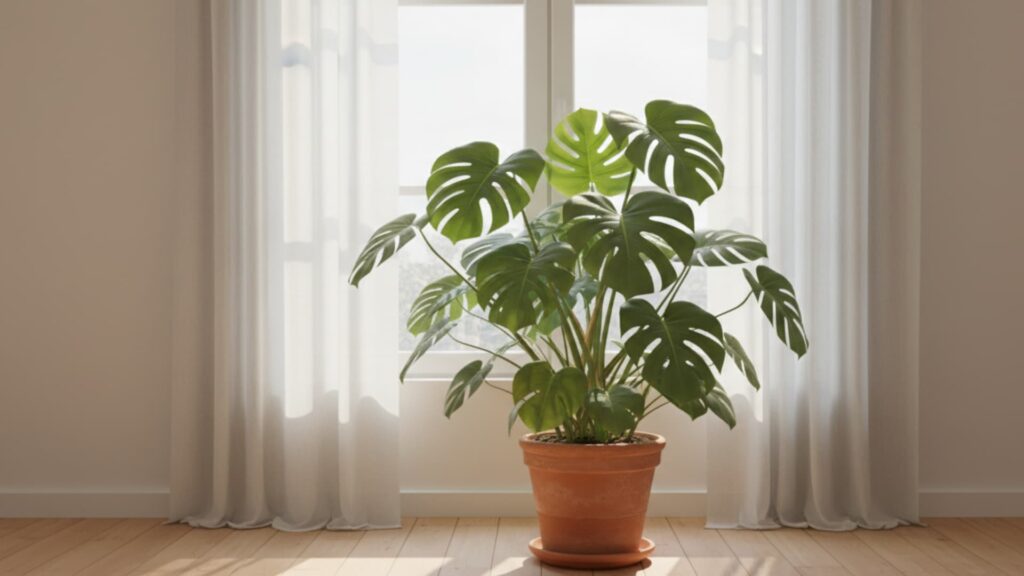
Three new leaves this week. Not one hole in any of them. Sound familiar?
Monstera plant care looks simple on paper. Bright light, water when dry, done. But then the leaves stay solid, the stems start leaning, or the whole plant turns yellow overnight.
The truth is, monsteras are easy to keep alive but tricky to actually keep happy. There is a real difference between the two.
This guide covers light, water, soil, fenestration, pests, propagation, and seasonal changes. Everything in one place, no fluff.
By the end, you will know exactly what your monstera needs and why it behaves the way it does.
What Is a Monstera Plant?
Monstera deliciosa, also called the Swiss Cheese Plant or Fruit Salad Plant, is a tropical plant native to the rainforests of Central and South America.
It belongs to the Aroid family (Araceae) and is one of the few aroids that can produce edible fruit, though this rarely happens indoors. In the wild, it uses aerial roots to climb trees and can grow over 60 feet tall.
Indoors, it usually reaches 6 to 9 feet. Its large, glossy leaves develop natural splits and holes, called fenestrations, as the plant matures and gets the right conditions.
Popular Types of Monstera Plants
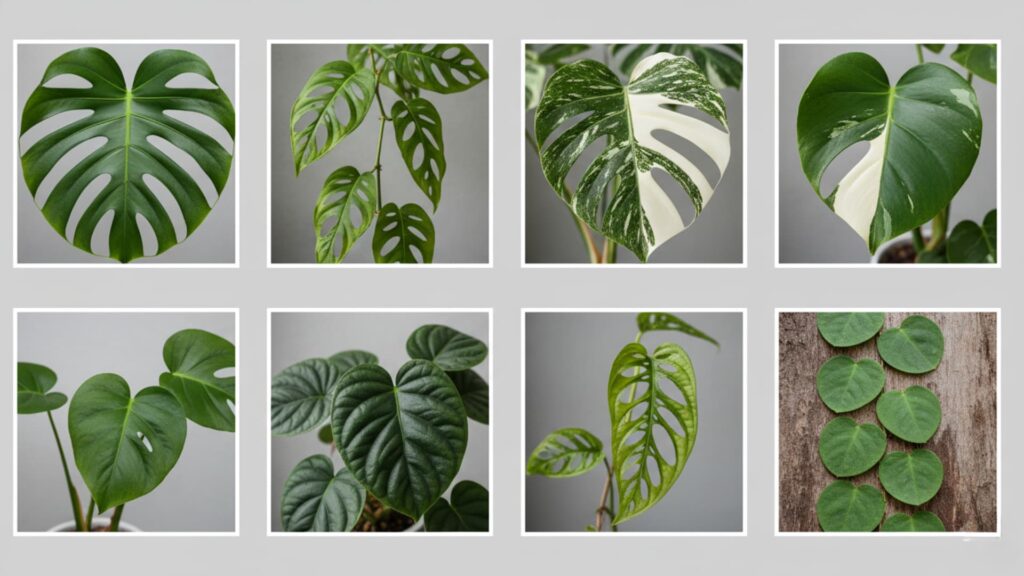
The Monstera family has over 50 varieties. Each one looks different, grows at its own pace, and fits a different kind of space inside your home.
- Monstera Deliciosa: The most common type, known for its large, fenestrated leaves that develop splits and holes as the plant matures.
- Monstera Adansonii: A smaller, trailing variety with heart-shaped, hole-filled leaves, well-suited for hanging planters and shelves.
- Monstera Thai Constellation: A variegated type with cream-speckled leaves, produced through tissue culture and slower-growing than the deliciosa.
- Monstera Albo Variegata: Features bold white patches on its leaves and is one of the most sought-after types among collectors.
- Monstera Peru (Karstenianum): Has thick, puckered leaves with no splits or holes, giving it a completely different look from other monsteras.
- Monstera Obliqua: Extremely rare, with leaves that are mostly holes and very little leaf surface. Often confused with Adansonii.
- Monstera Dubia: A shingling plant with small, flat leaves that press tightly against surfaces as it grows upward.
Monstera Care by Season
Monstera care does not stay the same throughout the year. The plant naturally slows down in winter and picks back up in spring, so your routine should shift right along with it.
| Season | What to Change |
|---|---|
| Spring | Increase watering frequency, start monthly fertilizing, best time to repot |
| Summer | Water more often as the soil dries faster, check for pests, and keep away from harsh afternoon sun |
| Fall | Begin reducing fertilizer, water slightly less as growth starts to slow |
| Winter | Minimal watering, stop fertilizing completely, keep away from cold drafts and heating vents |
Monstera Plant Care: The Full Breakdown
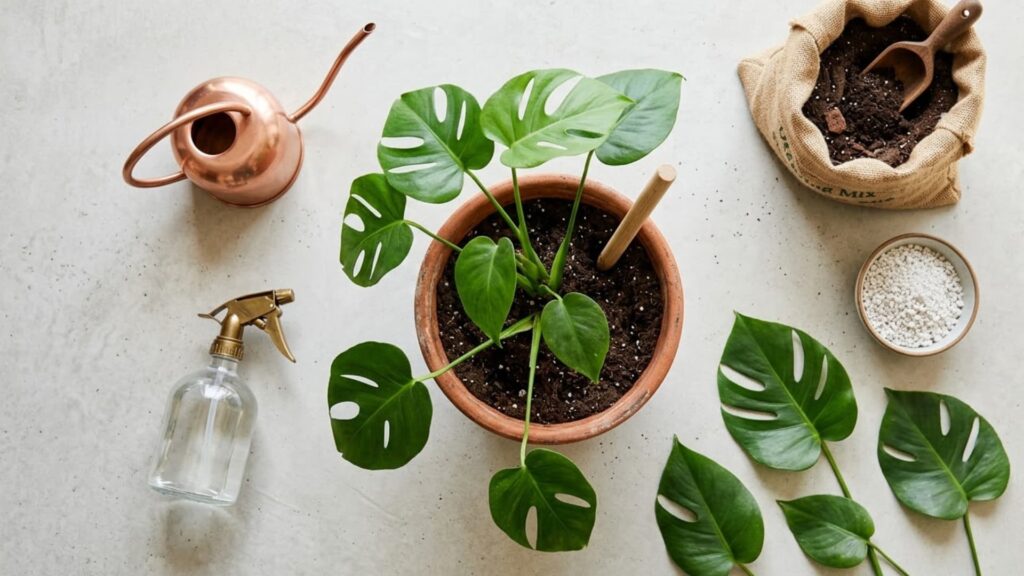
Getting the basics right makes a bigger difference than any product or shortcut. Here is what each care factor actually means for your plant and why it matters.
1. Light Requirements
Monsteras need bright, indirect light to grow well and produce fenestrated leaves. A spot near an east or west-facing window is ideal.
Direct afternoon sun will scorch the leaf edges, so use a sheer curtain if needed. Rotate the plant every 2 to 3 weeks to keep growth balanced on all sides.
2. Watering
Water only when the top 1 to 2 inches of soil feel dry to the touch. In most homes, that means roughly once a week during summer and every 10 to 14 days in winter.
There is no fixed schedule that works for every home. Always check the soil before adding water rather than watering on autopilot.
3. Soil Mix
Monstera needs soil that drains quickly and stays airy. A reliable mix is peat moss or coco coir combined with perlite and orchid bark.
Dense, heavy potting soil holds too much moisture, which leads to root rot and fewer leaf splits over time. Loose, breathable soil lets the roots move freely and absorb water without sitting in it.
4. Temperature
Keep your monstera in temperatures between 65 and 80 degrees Fahrenheit (18 to 27 degrees Celsius). Never let the temperature drop below 60 degrees Fahrenheit.
Cold air from drafts, open windows, or vents can stress the plant, even if the damage is not immediately visible.
5. Humidity
Monsteras prefer moderate to high humidity levels. You can boost humidity by placing a humidifier nearby, setting the pot on a pebble tray filled with water, or misting the leaves a few times per week.
Consistent dry air over time results in brown, crispy edges along the leaves.
6. Fertilizing
Feed your monstera once a month during spring and summer with a balanced liquid fertilizer. Stop fertilizing in fall and winter when the plant enters a rest phase.
Always apply fertilizer to moist soil. Fertilizing dry soil can burn the roots and cause brown leaf tips due to salt buildup.
Repotting a Monstera: When and How
Monstera do not need to be moved often. Repotting too frequently stresses the plant and can slow down fenestration, which is the opposite of what most people want. Wait until you see clear signs before reaching for a new pot.
| Sign It Needs Repotting | What to Do |
|---|---|
| Roots growing out of drainage holes | Move to a pot 2 inches larger |
| Water runs straight through the soil without absorbing | Refresh the entire soil mix |
| Plant tips over from top-heavy growth | Repot into a wider, heavier container |
| Noticeably slower growth despite good care | Check if roots are completely bound |
Spring is the best time to repot because the plant is about to enter its active growing phase. Use a fresh, well-draining soil mix, water thoroughly after repotting, and place the plant in indirect light for a few days while it settles in.
How to Support Your Monstera?
Monstera are natural climbers. In the wild, they grow up the trunks of trees using their aerial roots. Without vertical support indoors, they sprawl sideways, become too heavy, and may eventually tip over.
- Moss Pole: Encourages upward growth, leads to larger leaves, and speeds up fenestration by mimicking how the plant grows in nature.
- Bamboo Stakes: A group of four one-inch bamboo poles inserted deep into the pot provides strong, stable support for large, heavy plants.
- Coco Coir Pole: Holds moisture well and provides aerial roots with a surface to grip as the plant climbs higher.
- Trellis: A solid option if you want the plant to spread across a wall or along a shelf in a controlled direction.
- Soft Plant Ties or Velcro Tape: Use these to guide stems toward the support. Do not tie too tightly. Leave room for the stems to grow thicker.
Pro Tip: Set up the support structure during repotting. It is the easiest time to insert a pole all the way to the bottom of the pot without damaging the roots.
How to Propagate a Monstera Plant
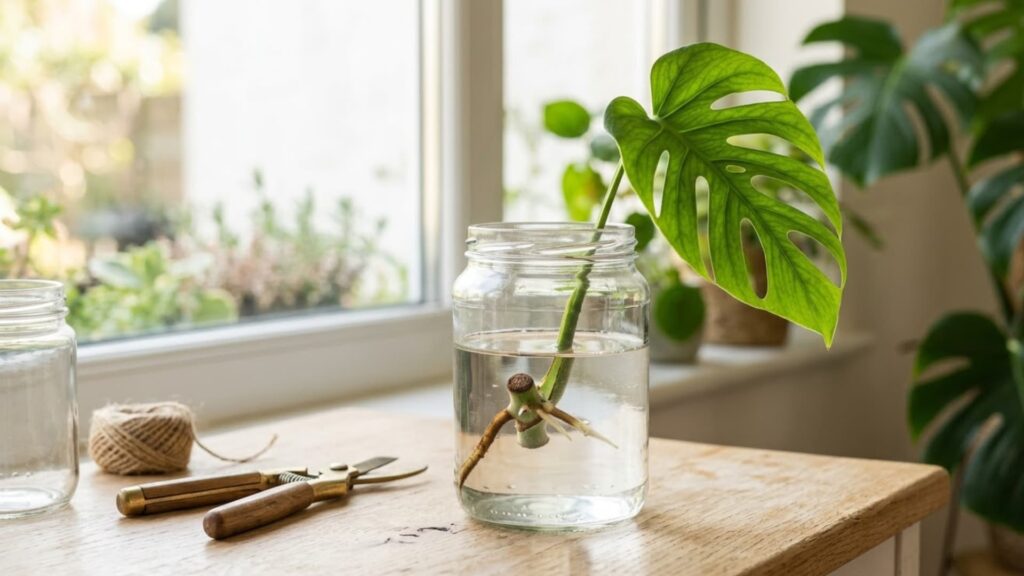
Monstera are one of the easier houseplants to propagate at home. You do not need special equipment or years of experience to successfully grow a new plant from a cutting.
1. Water Propagation (Best for Beginners)
Cut just below a node, making sure the cutting has at least one leaf and one aerial root attached. Place it in a clear glass of water in a warm, bright spot away from direct sunlight.
Change the water once a week to keep it fresh. Roots usually appear within 2 to 8 weeks, and you can pot the cutting once roots are at least an inch long.
2. Soil Propagation
Use the same cutting method, but plant directly into moist, well-draining soil instead of water. Keep the soil consistently moist but not soggy until the roots take hold.
Roots that form in soil tend to be stronger and adjust more easily when the plant eventually grows larger.
3. Air Layering (For Advanced Growers)
Wrap a node still attached to the parent plant in damp sphagnum moss. Cover the moss with plastic wrap and secure both ends. Roots grow into the moss before you make any cut.
This method works best for large plants or high-value variegated sections where you cannot risk the cutting failing.
Monstera Plant Problems and How to Fix Them
The leaves are usually the first place your monstera will show that something is wrong. Once you learn what each sign means, fixing the problem becomes much more straightforward.
| Problem | Most Likely Cause | Fix |
|---|---|---|
| Yellow leaves | Overwatering or not enough light | Let the soil dry more, move to a brighter spot |
| Brown crispy edges | Underwatering, dry air, or salt build-up | Water more consistently, flush soil monthly |
| Black stems | Overwatering or root rot starting | Cut watering immediately, inspect roots, and repot if needed |
| Curling or wilting leaves | Underwatering or very low humidity | Water thoroughly, increase humidity |
| No leaf splits are forming | Not enough light or no vertical support | Move closer to a window, add a moss pole |
| Water droplets on leaf edges | Guttation, a natural process | No fix needed, reduce watering slightly if it happens every time |
Guttation, where tiny water droplets appear at the leaf edges after watering, is completely normal and harmless. The plant is simply releasing extra moisture through its leaf tips. If it happens consistently after every watering, you may be adding slightly more water than the plant needs at once.
Monstera Pests and How to Deal With Them
Monstera are generally pest-resistant plants. That said, dry indoor air and dusty leaves can attract common houseplant pests, especially in the winter months when humidity drops.
- Spider Mites: Tiny dots on leaf surfaces with fine webbing underneath. Spray thoroughly with neem oil once a week until all signs are gone.
- Mealybugs: White, cotton-like clusters on stems and where leaves meet the stem. Remove with a cotton swab dipped in rubbing alcohol, then follow up with a neem oil spray.
- Scale Insects: Small, brown, shell-like bumps along the stems. Scrape them off gently with a soft tool, then treat the area with insecticidal soap.
- Fungus Gnats: Tiny flies hovering near the soil. Let the soil dry out more between waterings and use sticky yellow traps to catch the adults.
- Prevention: Wipe leaves with a damp cloth every two to three weeks. Regular cleaning removes dust and helps you spot pests early before they have a chance to spread to other plants.
Is Monstera Toxic to Pets and Children?
Yes, Monstera is mildly toxic to cats, dogs, and small children if they chew or swallow any part of the plant.
It contains calcium oxalate crystals, which cause mouth irritation, drooling, and sometimes vomiting. It is not usually life-threatening, but it is painful and uncomfortable for pets and toddlers.
Keep the plant on a high shelf or in a room that animals and young children cannot freely access.
The Bottom Line
Monstera plant care is not complicated once you understand what the plant naturally needs.
It comes from a tropical rainforest. It wants light, airflow, and room to grow upward. Give it those things, and it rewards you with big, bold, split leaves.
Yellow leaves, solid leaves, leaning stems. All of it makes sense now. Every problem has a fix, and most fixes are simple changes you can make today.
The biggest mistake is overcomplicating it. Check the soil before watering. Find the brightest indirect spot. Add a support pole. That is most of what this plant needs.
Try one new tip this week. What is your biggest monstera challenge so far? Drop it in the comments below.
Frequently Asked Questions
How to Keep a Monstera Happy?
Give it bright indirect light, water only when the top inch of soil is dry, and add a moss pole for support. Those three things alone will keep most monsteras growing well.
Where Is the Best Place to Put a Monstera Plant?
Near an east or west-facing window is the sweet spot. It gets good light through the day without the harsh afternoon sun that scorches the leaves.
Should You Cut the Brown Off Monstera?
Yes. Use clean, sharp scissors and trim just along the brown edge, leaving a thin sliver of the brown border so you do not cut into healthy tissue.
How Often Should I Water My Monstera?
Check the soil instead of counting days. Water when the top 1 to 2 inches feel dry, which usually works out to once a week in summer and every 10 to 14 days in winter.