

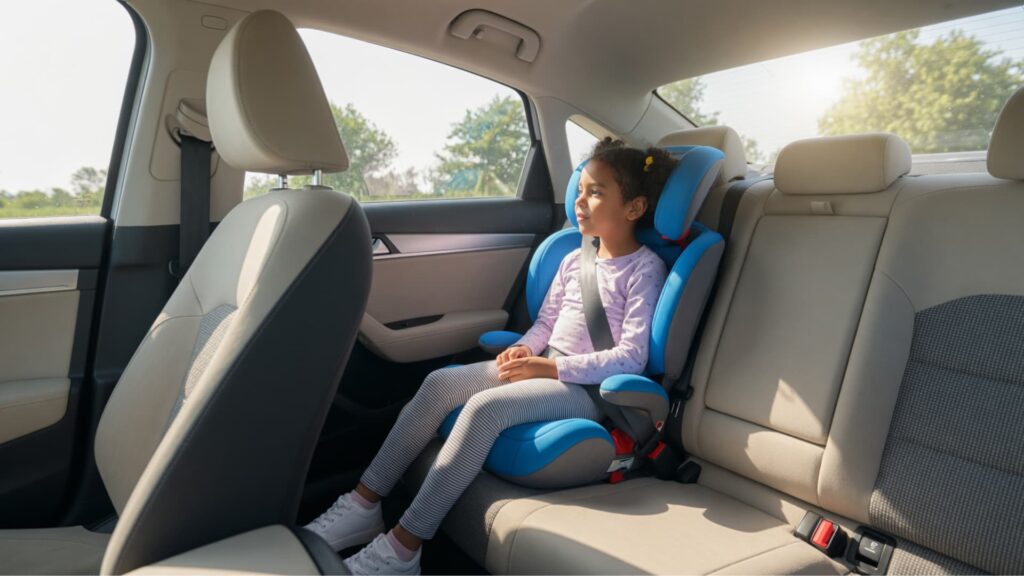
Last year, a study found that 3 out of 4 car seats are installed or used incorrectly. Most parents do not even know. For booster seats, the numbers are just as concerning.
Children aged 4 to 8 are at a stage where a regular seat belt does not fit their body right. The lap belt rides up across the stomach. The shoulder belt crosses the neck.
That is where injuries happen in a crash. Booster seat requirements exist to fix that.
This guide covers what they are, how they differ by state, which type to pick, and how to use and install one the right way. Every car ride counts.
What Is a Booster Seat?
A booster seat is a child safety seat that raises a child up so the vehicle’s lap-and-shoulder belt fits correctly across the body.
It positions the lap belt across the upper thighs and the shoulder belt across the chest, not the stomach or neck. It has no harness of its own. The vehicle’s seat belt does the restraining instead.
Children use a booster after outgrowing a forward-facing car seat with a harness, and they stay in one until the seat belt fits correctly on its own.
Why Booster Seat Requirements Matter?
It is easy to assume a seat belt is enough once a child looks big enough for one. But the data behind booster seat requirements tells a different story.
- Booster seats reduce serious injury risk by 45% for children ages 4 to 8 compared to seat belts alone, according to NHTSA.
- Car crashes remain the leading cause of death for children ages 1 to 13 in the USA.
- Children in states with stronger booster seat laws are over 4 times more likely to be in the correct seat.
- Those states also show a child crash death rate about 20% lower than states with weaker rules.
- Research from the Colorado State Patrol shows a nationwide misuse rate of 78% for car seat restraints.
- State laws are the legal minimum. They do not always reflect the safest standard for your child’s size.
Federal Booster Seat Requirements
Before looking at what each state requires, it helps to understand the federal baseline that safety experts recommend. This is where booster seat requirements start, and where every parent should begin.
| Requirement | Guideline |
|---|---|
| Minimum age for booster | 4 years old, after outgrowing the forward-facing harness seat |
| Minimum weight | 40 pounds |
| Minimum height | 44 inches |
| When to stop using a booster | When the child reaches 4 feet 9 inches, and the seat belt fits correctly |
| Typical age range | 4 to 12 years old |
| Back seat rule | All children under 13 should ride in the back seat (AAP) |
Source: NHTSA and American Academy of Pediatrics (AAP)
Types of Booster Seats
Not all booster seats are built the same. The right choice depends on your child’s size, your vehicle setup, and how often you move the seat between cars.
1. High-Back Booster Seat
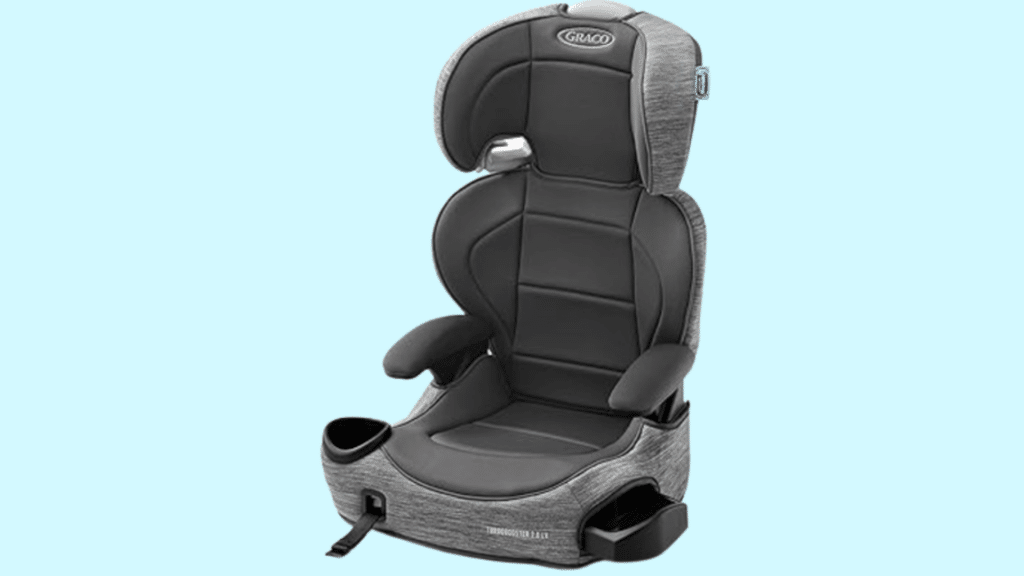
A high-back booster has a cushioned base and a built-in back panel that supports the child’s head and neck. It works in vehicles with or without headrests and generally gives better seat belt placement for smaller children.
The back is usually height-adjustable, and most models include a shoulder belt guide to keep the belt in the right position.
2. Backless Booster Seat
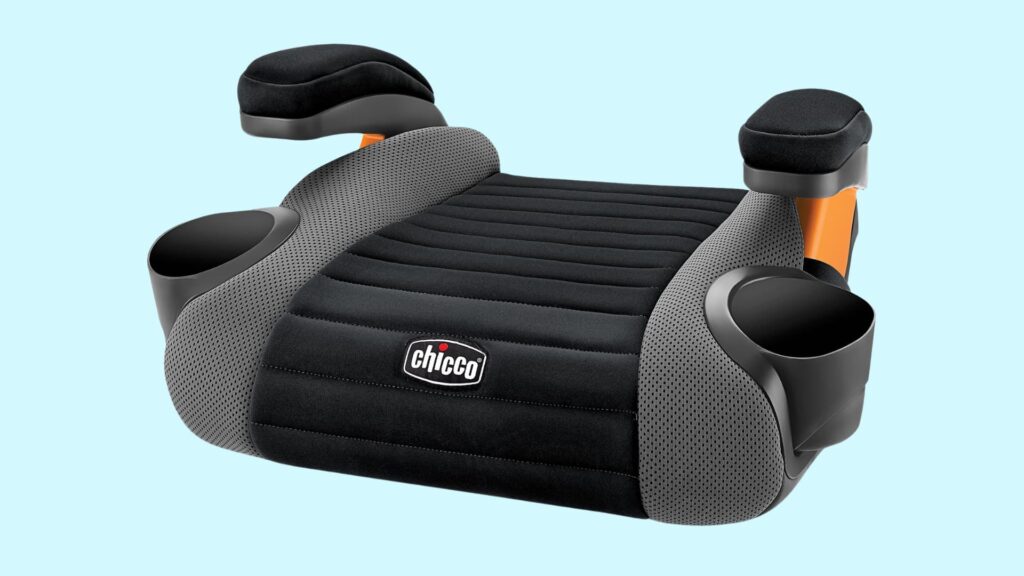
A backless booster has a cushioned base but no back panel. It raises the child so the seat belt lands in the right place and is much lighter and easier to move between vehicles.
It can only be used in a car that already has a headrest or a high seat back that supports the child’s head at least up to the top of the child’s ears.
3. Combination Seat (Harness to Booster)
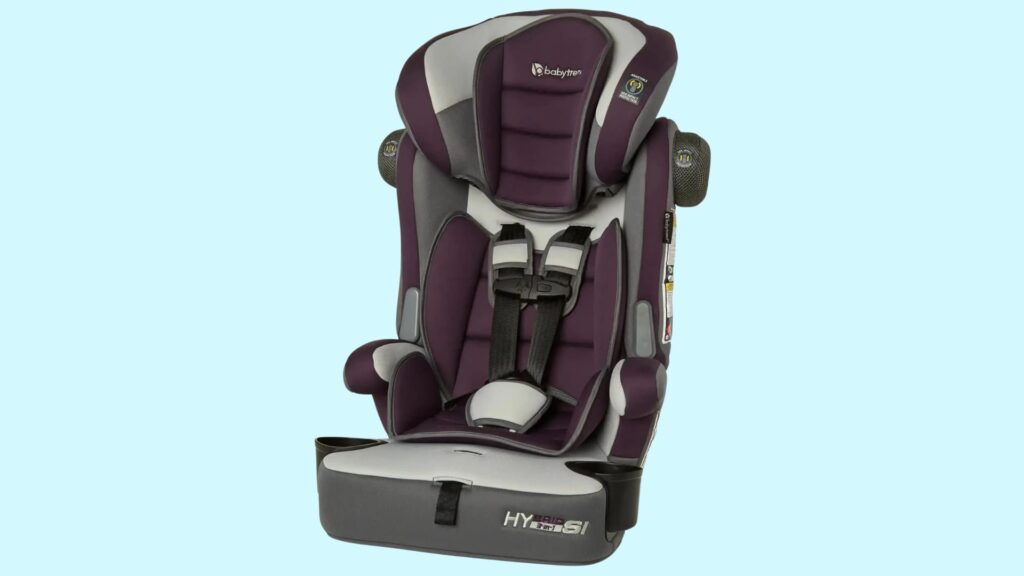
A combination seat starts as a forward-facing car seat with a 5-point harness. Once the child grows out of the harness limits, the harness is removed, and the seat converts into a belt-positioning booster.
When in use, the harness functions as a car seat. When the vehicle’s seat belt is used, it functions as a booster.
4. All-in-One Convertible Car Seat
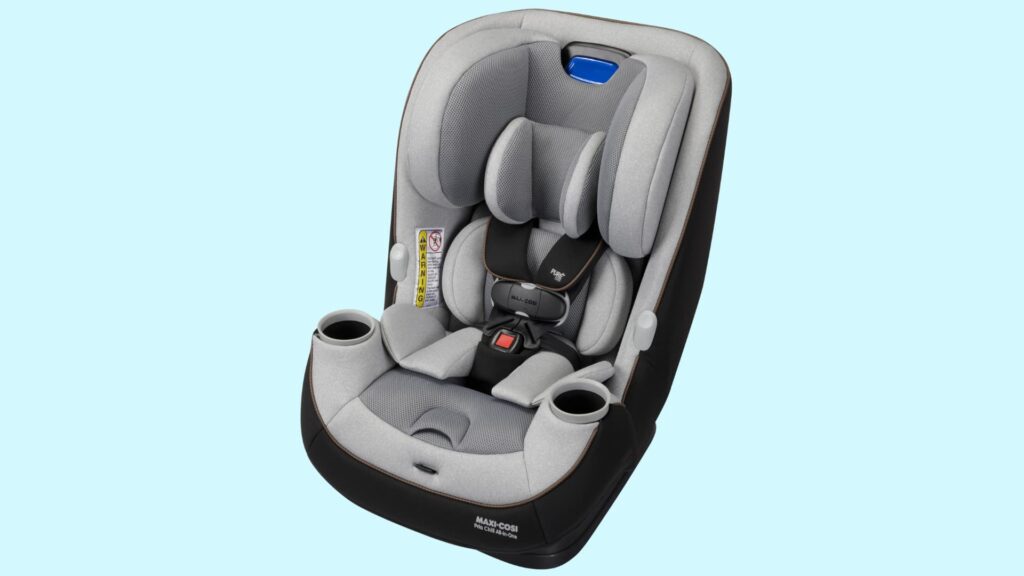
An all-in-one seat takes a child from birth through the booster stage in a single product. It converts from rear-facing with a harness to forward-facing, then to a booster.
Because it has been used for many years, always check the expiration date printed on the underside of the seat before continued use.
When Should a Child Move to a Booster Seat?
Switching to a booster too early is one of the most common mistakes parents make. Size and readiness matter more than a specific birthday or milestone.
Physical Signs Your Child Is Ready
- The child’s shoulders are at or above the highest harness slot on the forward-facing seat
- The child has reached the top height or weight limit listed in the car seat manual
- The child’s head is at or above the top of the car seat shell
- The car seat manufacturer’s instructions always take priority over age alone
Why Maturity Matters as Much as Size
- The child must sit correctly for the full trip without slouching, leaning, or fiddling with the belt
- If the child slides the shoulder belt behind their arm or constantly touches the buckle, they are not ready
- Children under age 5 or 6 are generally safer in a 5-point harness, even if they meet the 40-pound weight minimum
- If the child still fits in their harnessed seat, that is their safest option right now
How to Use a Booster Seat Correctly
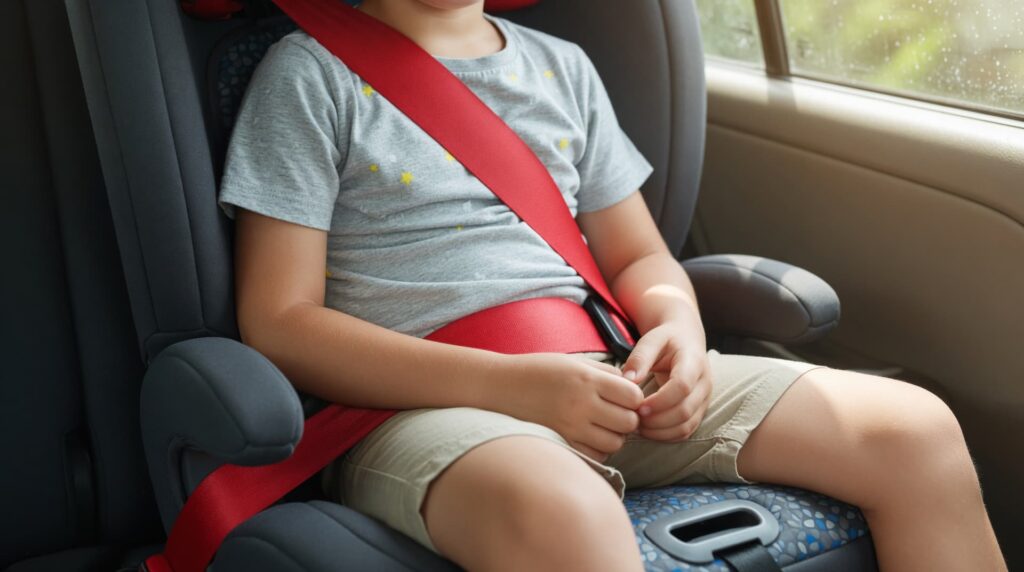
Placing the booster in the car is only half the job. How your child sits in it on every single trip is just as important as the seat working correctly in a crash.
Step-by-Step: Using a Booster Seat
- Place the booster seat flat on the vehicle’s back seat, making sure it sits stable and does not rock.
- Seat your child all the way back so their back and bottom are fully against the seat.
- Pull the lap-and-shoulder belt across the child’s body and click the buckle in firmly.
- Use the shoulder belt guide or clip if the seat includes one, to keep the belt in the right position.
- Check that the belt lies flat, straight, and is not twisted anywhere along the body.
How the Seat Belt Must Fit
The lap belt must lie low across the upper thighs, not the stomach. The shoulder belt must cross the center of the chest and shoulder, not the neck or face.
If the belt does not land in both of these positions, the child still needs a booster seat regardless of their age.
How to Install a Booster Seat?
Unlike harnessed car seats, most boosters do not need to be physically bolted into the vehicle. But that does not mean placement can be careless. Here is what to do for each type.
High-Back Booster Seat: Installation Steps
- Read the seat manual and the child restraint section of the vehicle owner’s manual.
- Place the booster flat on the back seat of the vehicle.
- Seat the child, pull the lap-and-shoulder belt across the body, and buckle it.
- Use the built-in shoulder belt guide to route the belt correctly across the chest.
- Adjust the back height so it supports the child’s head properly.
- If the seat has LATCH anchors, check the manual to see whether and how to use them.
Backless Booster Seat: Installation Steps
- Confirm the vehicle seat has a headrest or seat back that supports up to the top of the child’s ears.
- Place the backless booster flat on the vehicle’s back seat.
- Seat the child, buckle the lap-and-shoulder belt, and check its position.
- Use the lap belt guide, if included, to hold the belt in the correct position.
LATCH System vs. Seat Belt: Which One to Use
- LATCH lower anchors, when permitted by the seat manual, help stop the booster from sliding when no child is in it.
- The seat belt and LATCH are equally safe when used correctly.
- Never use both LATCH and the seat belt together unless the manual explicitly says to do so.
- Always check the instruction manual first. Not every booster supports LATCH use.
Key Installation Tips Every Parent Should Know
- Always secure the booster with the seat belt, even when empty. A loose booster becomes dangerous in a crash.
- If the vehicle has no headrest in the back seat, always use a high-back booster, not a backless one.
- A child may fit the seat belt correctly in one vehicle but still need a booster seat in another.
- If unsure about correct installation, visit a certified car seat inspection station. Many fire stations and hospitals offer this service free of charge.
High-Back vs. Backless Booster Seat: Which One Is Right?
Both types are legal in all 50 states when used correctly. But they are not right for every vehicle or every child. This comparison makes the choice straightforward.
| Factor | High-Back | Backless |
|---|---|---|
| Head and neck support | Yes | No |
| Works without a headrest | Yes | No |
| Best for smaller children | Yes | Less ideal |
| Portability | Less portable | Easier to move |
| Works in vehicles with high seat backs | Yes | Yes |
| Better for long trips | Yes | Fine for shorter trips |
Booster Seat Requirements by State
Federal guidelines give a clear recommendation, but each state writes its own rules. Some go further than the minimum. Others leave parents making decisions that safety data says are simply too early.
States With Stronger Laws
- Hawaii requires boosters up to age 10
- California requires boosters until age 8 or 4 feet 9 inches. A proposed bill (AB 435) could raise this to age 10 or 13 by 2027.
- Colorado updated its law in January 2025: children must weigh at least 40 pounds and stay in a booster until age 9
- Delaware, Louisiana, Maine, Michigan, and Washington have laws that closely follow AAP recommendations
- States with stronger laws show child crash death rates about 20% lower than states with weaker rules
States With Basic Requirements
- Alabama and Florida allow children to leave a booster at age 6
- Nevada sets the exit age at 6, but carries fines between $100 and $500
- Montana raised its minimum booster age from 6 to 8 following an October 2025 update
Driving Across State Lines: What to Follow
- Follow the strictest applicable law when driving through more than one state
- State laws are updated regularly, so always check current rules before a long road trip
- Laws were last reviewed by state highway safety offices as recently as June 2025
How to Check for Booster Seat Recalls and Expiry Dates?
Register your seat with the manufacturer right after buying it so they can reach you directly if a recall comes up.
You can also check the NHTSA website or the CPSC website for current recalls at any time, or download NHTSA’s free SaferCar app to get alerts on your phone.
As for expiry dates, most booster seats have a lifespan of 6 to 10 years from the date of manufacture. The date is usually printed on a label on the underside or back of the seat.
Never use a seat that is past its date, has been in a crash, or has missing parts.
Closing Remarks
Choosing the right booster seat is one of the most practical steps a parent can take to ensure their child’s safety on the road. It is not about following the law and moving on.
It is about making sure the seat belt actually fits every single time your child gets in a car. The type of seat matters.
How you install it matters. Knowing your state’s booster seat requirements matters more than most parents realise.
Use the 5-step fit test before making any changes, register your seat right away, and never skip the booster just because your child reached a certain age.
Got questions or tips to add? Comment down below.