
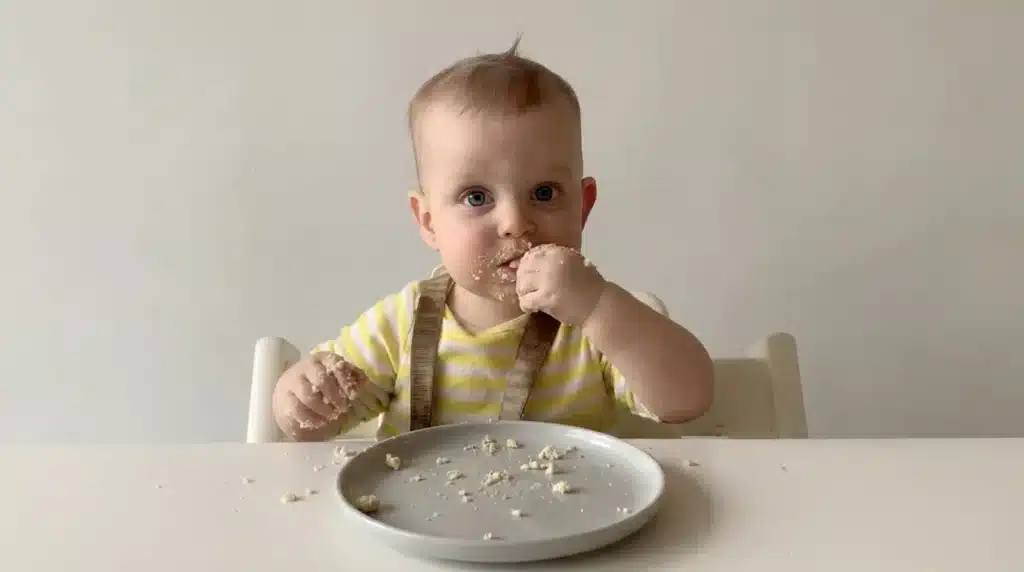
Your baby just grabbed a piece of toast right off your plate. You panicked. They looked completely thrilled. That one little moment is basically baby led weaning in action.
When solid food time comes around, most parents spend hours Googling what is safe, what is not, and whether their baby will choke. The worry is very real. But feeding your baby does not have to be complicated.
Weaning foods for babies are all much easier than they seem.
To help you get started with complete confidence, this guide covers the best first foods to offer, how to cut and prepare them safely, what to avoid, and a real meal plan.
What Is Baby Led Weaning?
Baby led weaning (BLW) is a feeding approach where babies feed themselves soft, finger-sized pieces of food right from the start. There is no spoon, no puree, and no parent guiding food into the mouth.
The baby picks up the food, brings it to their own mouth, and decides how much they want. The method gained wide attention after UK author Gill Rapley co-wrote a book on the topic in 2008.
One thing worth clearing up: “weaning” here does not mean stopping breast milk or formula. It simply means adding solid food alongside milk feeds, which remain the main source of nutrition until 12 months.
When Can You Start Baby Led Weaning?
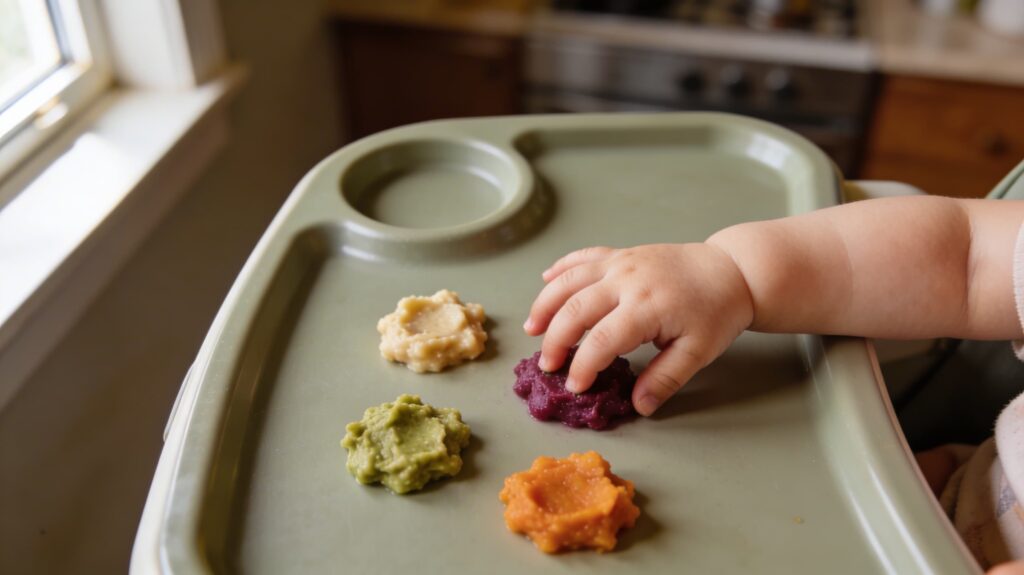
Age alone is not the whole story. Most health organizations recommend around 6 months as the right starting point, but your baby also needs to show clear physical signs of readiness before any baby led weaning foods are offered.
| Age | What You Should Know |
|---|---|
| Before 4 months | Too early. The gut and airway are not ready for any solid food. |
| 4 to 5 months | Still early for most babies. Watch for readiness signs first. |
| Around 6 months | The recommended starting point, per the AAP and WHO. |
| After 6 months | Fine to start if readiness signs are clearly present. |
| 12 months | Cow’s milk can replace breast milk or formula as the main drink. |
Signs Your Baby Is Ready for Baby Led Weaning Foods
Age alone is not enough. Your baby needs to show a few clear physical signs before you start with any baby led weaning first foods. Look for these:
- Sits up on their own. Can hold their head steady and upright in a highchair without any support.
- Shows interest in food. Watches you eat, reaches toward your plate, or opens their mouth when food is near.
- Has lost the tongue-thrust reflex. Does not automatically push food out of the mouth with their tongue.
- Can bring objects to their mouth. Picks things up and moves them toward their mouth independently.
- Has doubled their birth weight. A physical readiness marker that most babies reach around 6 months.
How to Prepare Baby Led Weaning Foods Safely?
Getting the food right comes down to two things: size and texture. Both matter a great deal in the early weeks of starting solids. This table breaks it down simply.
| Prep Factor | What to Do | Why It Matters |
|---|---|---|
| Size | Cut into pinky-finger-length strips (about 3.5 to 4 inches long) | Baby holds the food in their fist; the top part is what they bite |
| Texture | Food must squish flat between two fingers | If fingers can press it flat, baby’s gums can too |
| Cooking method | Steam, roast, or boil until soft throughout | Raw hard vegetables are a real choking risk |
| Salt | None at all | Baby kidneys cannot process salt the way adult kidneys can |
| Temperature | Warm or at room temperature | Very hot food can burn a baby’s mouth |
9 Best Baby Led Weaning First Foods
Not all foods work well at the start. The best baby led weaning first foods are soft, easy to hold, and full of the nutrients your baby needs most in the first months of solid feeding.
1. Sweet Potato

Sweet potato is one of the most reliable foods to start with. It is soft after cooking, cuts into easy-to-grip batons, and has a natural sweetness most babies take to quickly. It is also rich in vitamin A and fiber, both of which support healthy development.
How to prepare:
- Peel and cut into long, thick strips.
- Roast at 200°C for 20 to 25 minutes or steam until fully soft.
- Press one strip between two fingers. It should squish flat easily.
- Skip the salt. A small pinch of cinnamon adds gentle flavor without any risk.
2. Broccoli
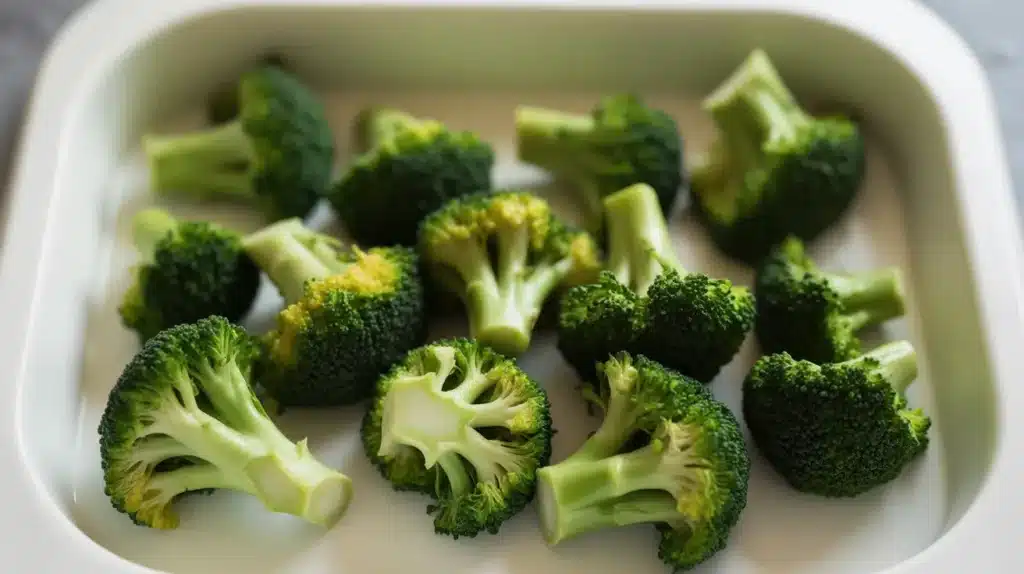
Broccoli florets are practically built for baby led weaning. The stem acts as a natural handle, so your baby can hold onto it and work at the top part. It is also a solid source of vitamin C and folate.
How to prepare:
- Steam broccoli florets for 5 to 7 minutes until soft but not mushy.
- Leave the stem fully intact. It acts as a natural handle for small hands.
- Let it cool to a warm temperature before placing it on the tray.
- No seasoning needed at this stage.
3. Banana
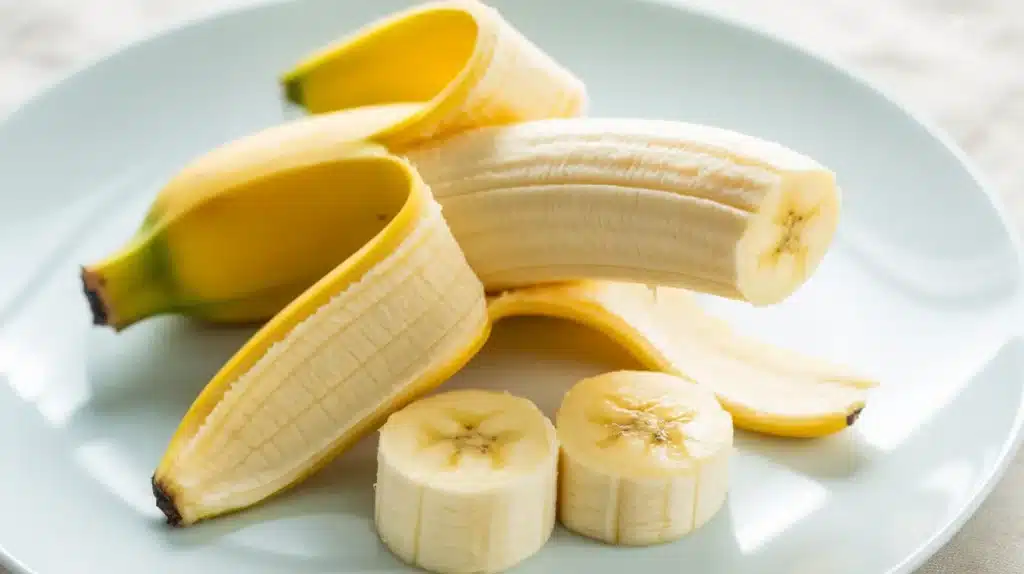
Banana is soft, needs no cooking, and is easy for babies to gum. The natural sweetness makes it a reliable early food, and the quick energy from its natural sugars gives babies fuel during mealtimes.
How to prepare:
- Choose a ripe banana only. Unripe ones are too firm and starchy.
- Peel two-thirds of the way down and leave the skin on the bottom third.
- Cut into thirds so each piece is easy to grip.
- Serve straight away. Banana browns quickly once peeled.
4. Avocado
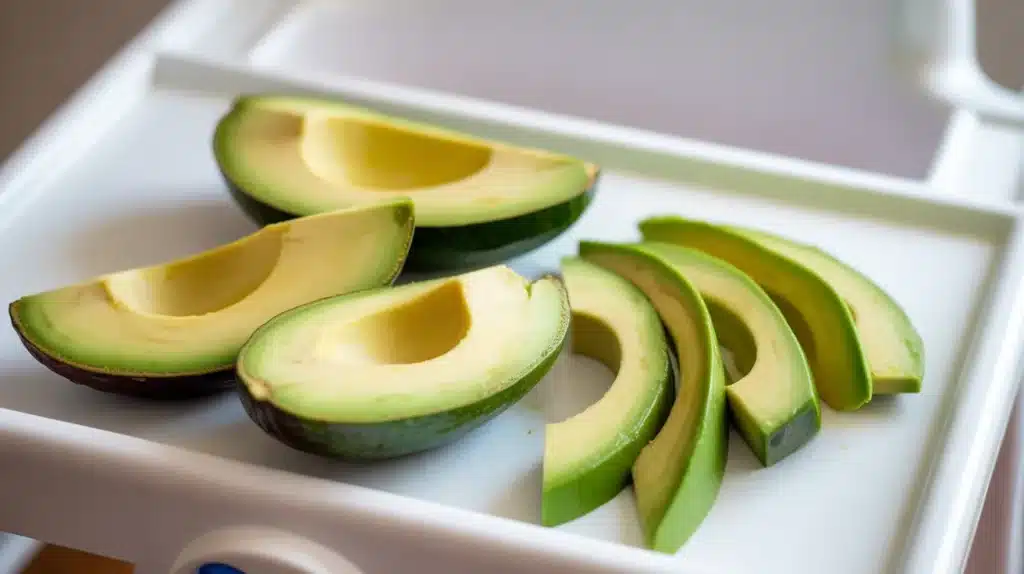
Avocado is high in healthy fats, which support brain development in the first year. It is creamy, naturally soft, and one of the few foods that needs almost no prep at all.
How to prepare:
- Use only ripe avocado. Press the skin gently. It should give slightly.
- Cut into thick wedges or long strips.
- Leave the skin on one side of each strip to give baby something to grip.
- Serve right away. Avocado oxidizes and browns very quickly once cut.
5. Scrambled Eggs
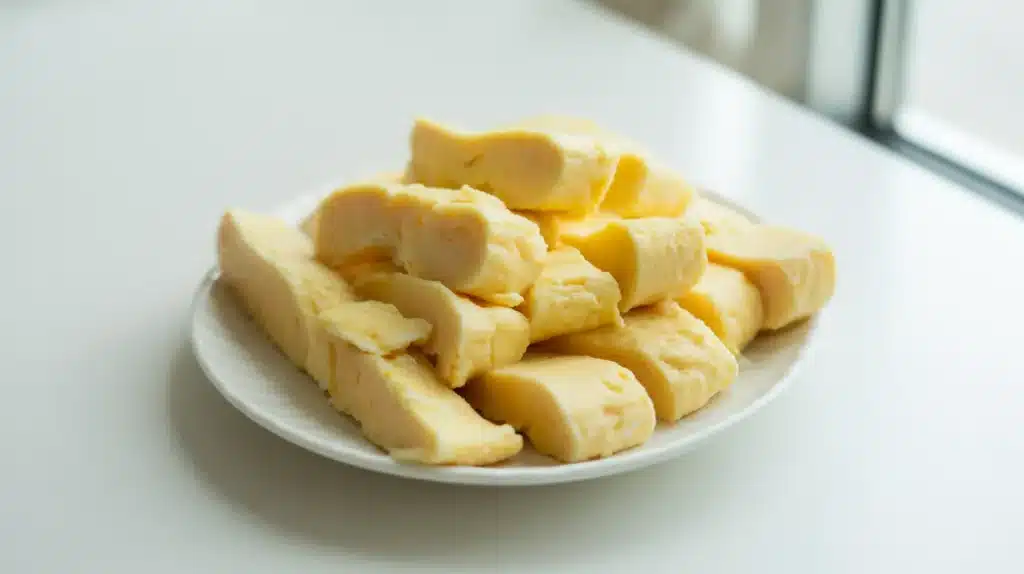
Eggs are one of the most nutrient-dense foods you can offer a baby. They are rich in protein, choline, iron, and zinc. The yolk, in particular, is packed with fat and key nutrients that support early brain growth.
How to prepare:
- Crack eggs into a bowl and whisk well. Add no salt, butter, or milk.
- Cook on low heat, stirring gently until just set.
- Slice into soft strips that baby can pick up with their whole fist.
- As an alternative, serve a hard-boiled egg yolk cut in half lengthways.
6. Salmon
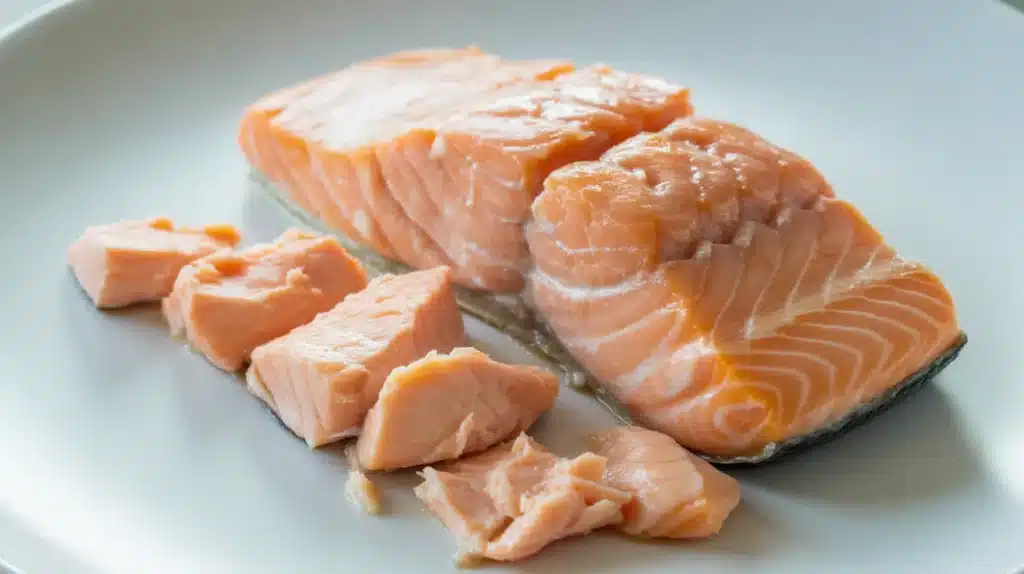
Salmon is an excellent source of omega-3 fats, which support brain and eye development. It is naturally soft when cooked and breaks into large, manageable flakes that are easy for baby to pick up.
How to prepare:
- Bake or poach the salmon until fully cooked through with no pink remaining.
- Let it cool, then check the entire piece carefully for bones before serving.
- Flake into large, soft pieces. Avoid small flakes as they are harder for baby to pick up.
- No salt or added seasoning. The natural flavor of salmon is more than enough.
7. Chicken (Dark Meat)
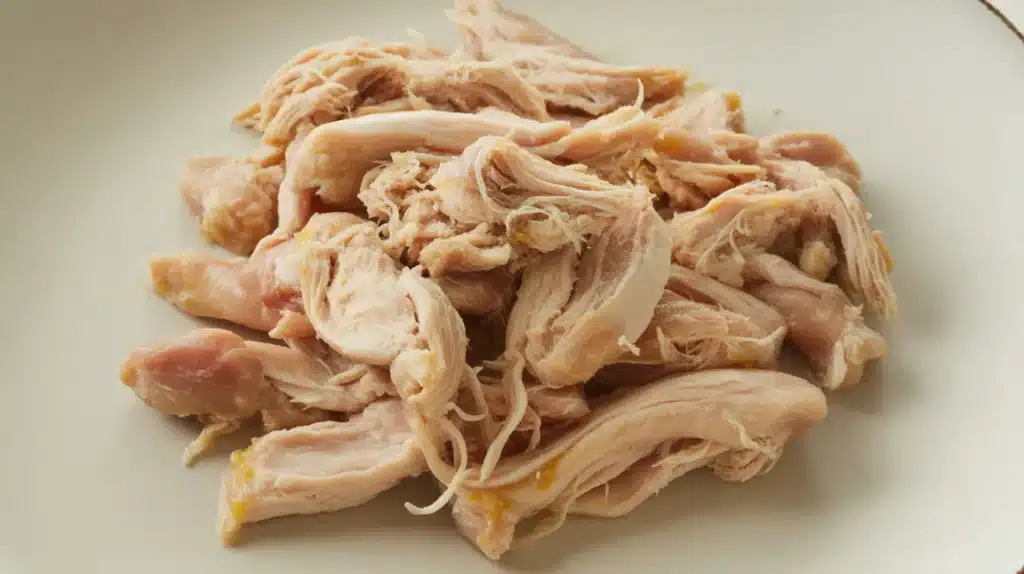
Dark meat from chicken thighs or drumsticks is much softer than breast meat. This makes it a much better fit for baby led weaning. It is also a strong source of iron and zinc, both of which babies need more of from around 6 months as birth stores start to drop.
How to prepare:
- Use chicken thighs or drumsticks. They stay much softer than breast meat when cooked.
- Slow cook, braise, or bake with the skin on to keep the meat moist throughout.
- Remove the skin before serving and pull the meat into soft shreds.
- Keep seasoning very mild. No salt at all.
8. Soft Cooked Pear
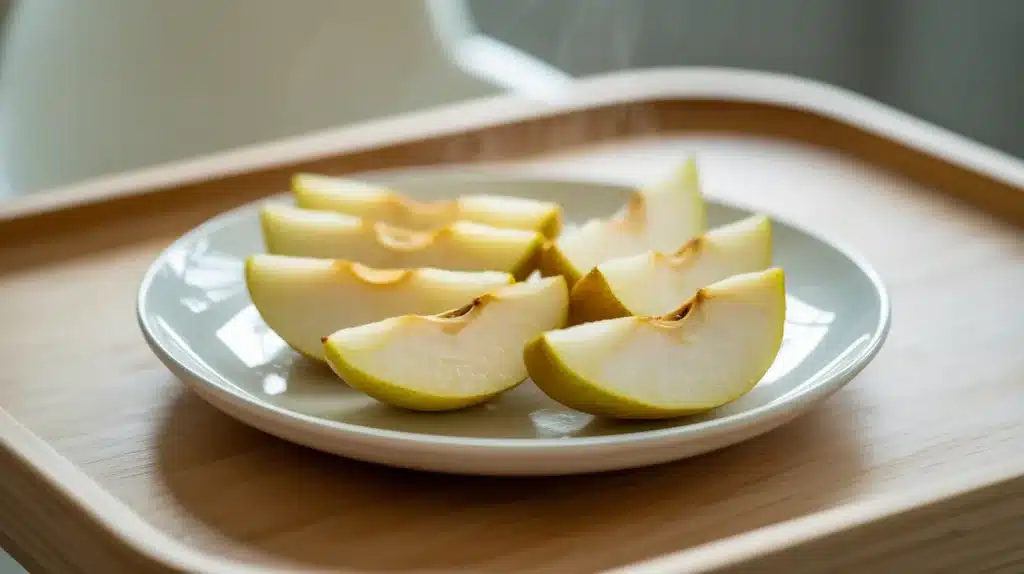
Pear is gentle on the stomach and a natural source of fiber. When ripe or lightly steamed, it has exactly the right texture for babies who are just getting started with solid food.
How to prepare:
- For younger babies, steam pear wedges until completely soft all the way through.
- For older babies (9 months plus), a very ripe raw pear cut into strips works well.
- Always remove the skin before serving. It can be tough for young babies to manage.
- Check the texture using the two-finger test before placing it on the tray.
9. Oatmeal
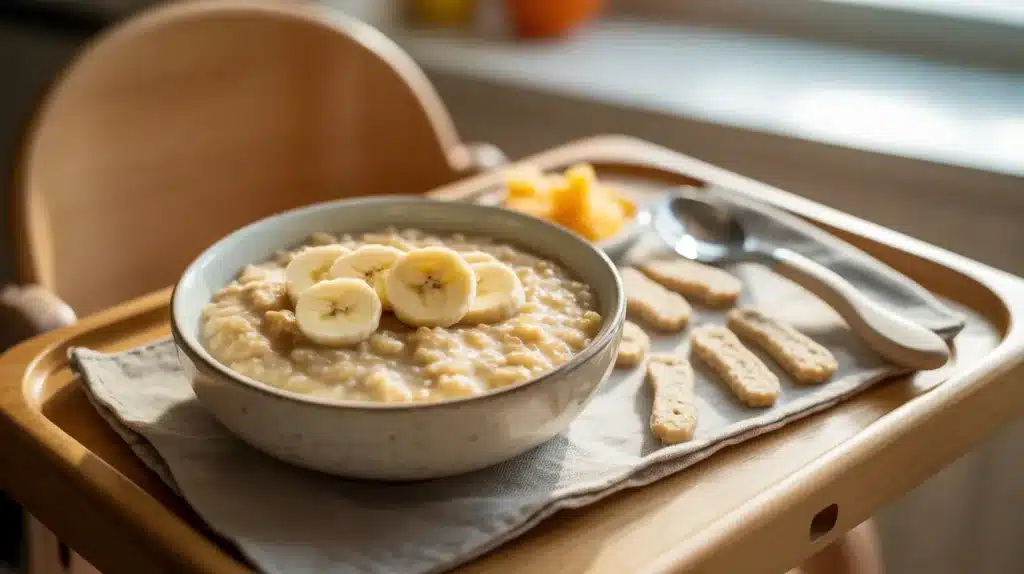
Oatmeal is a filling, iron-fortified grain that works well from the very first week of solids. It pairs easily with mashed fruit and can be shaped into soft finger-sized pieces for older babies to pick up.
How to prepare:
- Cook oats with water or breast milk until thick, smooth, and fully soft.
- For younger babies, serve on a preloaded spoon.
- For older babies, press the oatmeal into soft finger-sized strips on a tray.
- Mix in mashed banana or a very thin spread of peanut butter for added nutrition.
Baby Led Weaning Foods by Age
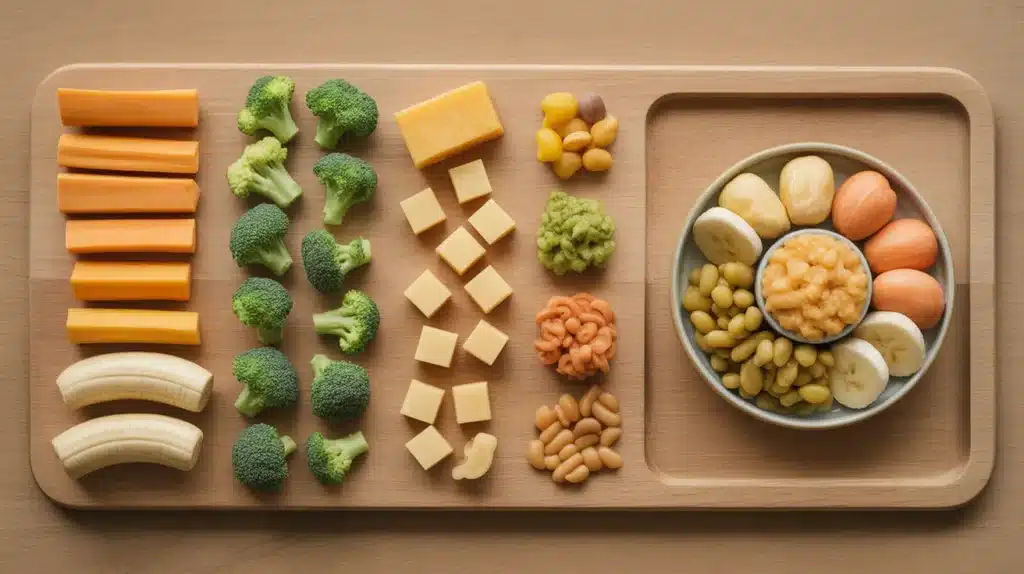
Baby led weaning foods do not stay the same from month to month. What works well at 6 months looks quite different by the time your baby reaches their first birthday. Here is how feeding changes as they grow.
6 to 8 Months
This is the starting stage. Babies at this age use their whole fist to hold food, so large strips and soft pieces are what work best.
Iron-rich foods like meat, fish, and eggs should be a priority from day one, as birth stores of iron start running low around 6 months.
Ripe fruit strips and steamed vegetables fill out the plate well. Keep flavors mild and textures consistently soft throughout this stage.
9 to 11 Months
Around 9 months, most babies develop a pincer grip, which means they can begin picking up smaller pieces of food. Soft diced food, small cubes of mild cheese, and well-cooked beans all become good options at this stage.
Textures can become slightly more varied, and you can begin offering lightly seasoned family meals, as long as you hold back the salt. This is also a great time to increase variety and introduce new flavor combinations.
12 Months and Beyond
By 12 months, your baby can eat most of what the rest of the family eats. Skip added salt, avoid whole honey, and cut food into small bite-sized pieces.
Cow’s milk can now replace breast milk or formula as the main drink if you choose. Small soft meatballs, cooked rice, pasta in various shapes, and eggs prepared different ways all work well at this stage.
Meals can start to look a lot more like proper family food.
Foods to Avoid During Baby Led Weaning
Some foods are not safe for babies under 12 months, no matter how they are prepared. This list covers what to keep off the plate entirely and why each one matters.
Always avoid under 12 months:
- Honey. Carries a real risk of infant botulism, a serious illness in babies under one year.
- Cow’s milk as a main drink. Fine in cooking or on cereal, but not as a milk feed before 12 months.
- Added salt. Baby kidneys are not built to process salt the way adult kidneys are.
- Added sugar. Not needed and sets up an early preference for sweet foods that is hard to change later.
Choking hazards to avoid:
- Whole grapes and cherry tomatoes. Always cut into quarters before serving.
- Whole blueberries. Press each one flat before offering to your baby.
- Raw hard vegetables. Raw carrot, raw apple, and raw celery are all too firm for young babies.
- Whole nuts. A significant choking risk for all children under 5 years old.
- Popcorn. Hard to manage and easy for babies to inhale.
- Large spoonfuls of nut butter. Too thick and sticky. Always thin it out with water first, or mix into food.
- Hot dogs and processed meat sticks. High in salt and a choking risk due to their shape and firm texture.
How to Introduce Allergens During Baby Led Weaning
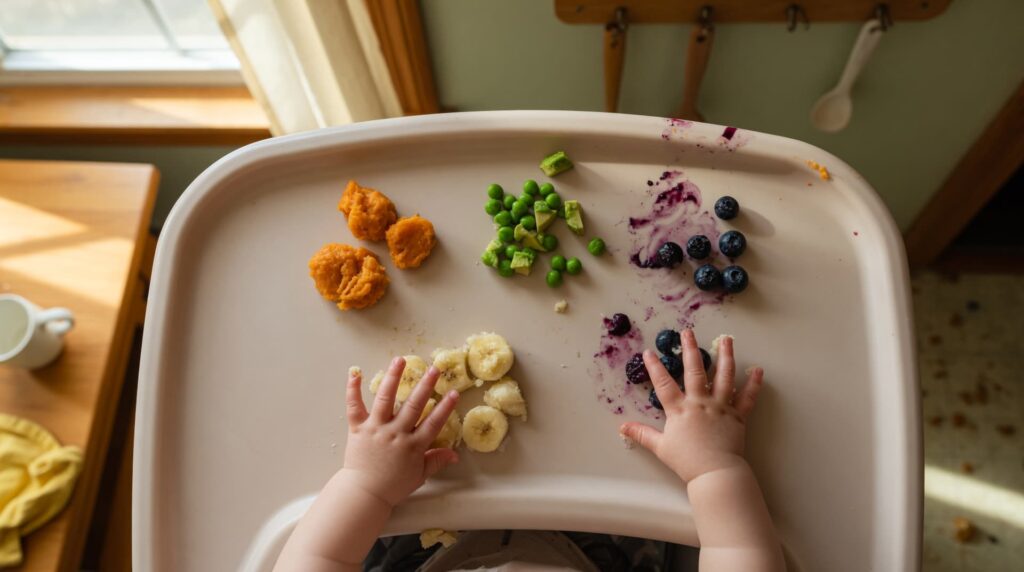
Current guidance from pediatric dietitians, including those at the American Academy of Pediatrics, supports introducing the top allergens early rather than delaying them.
The nine main allergens are peanuts, tree nuts, eggs, cow’s milk products, wheat, soy, fish, shellfish, and sesame. Introduce one new allergen at a time and wait two to three days before adding another.
Always offer a new allergen at the start of a meal when you can watch closely. Do not introduce a new one when your baby is unwell.
Signs of a reaction include hives, facial swelling, vomiting, or breathing difficulty. Get medical help immediately if any of these appear.
Gagging vs. Choking: What Every Parent Should Know
The sound of a baby gagging at the table is one of the most alarming things a new parent will hear. But gagging and choking are not the same thing, and knowing the difference matters a great deal.
| Feature | Gagging | Choking |
|---|---|---|
| Sound | Loud: coughing, sputtering, sometimes crying | Silent or very faint |
| Color | Face may go red briefly | Face may turn blue or pale |
| What the baby does | Clears the food on their own | Cannot clear the blockage |
| What you should do | Stay calm. Watch closely. Do not put fingers in the mouth. | Act immediately. Call emergency services. Begin infant first aid. |
| Is it normal? | Yes. It is a safety reflex and a normal part of learning to eat. | No. It is a medical emergency. |
One important note: Learn infant first aid before you start solids. It is one of the most practical steps any parent can take before placing baby led weaning foods on the tray for the first time.
Sample One-Day Baby Led Weaning Meal Plan (6 to 8 Months)
At this stage, food is about learning and exposure, not replacing milk feeds. Breast milk or formula is still the main source of nutrition your baby needs.
That said, a sample day might look like this: soft scrambled egg strips with steamed pear wedges and a few squished blueberries for breakfast; broccoli florets with shredded slow-cooked chicken thigh and a strip of avocado for lunch; roasted sweet potato batons with flaked salmon (bones removed) and a few soft cooked peas for dinner.
Keep portions small. If your baby tries one bite and stops, that is completely fine. At this age, every bite counts as progress.
Final Thoughts
Baby led weaning foods do not need to feel like a long list of rules. Start soft. Keep it simple. Let your baby hold the food, taste it, and decide how much they want.
The best thing you can do is show up at mealtimes, offer a range of foods, and trust the process. Iron-rich foods early on, safe sizing, and staying close during meals. These three things will take you far.
Every baby moves at their own pace. Some grab everything on day one. Others just stare at broccoli for weeks. Both are completely normal.
Tried a food your baby loved or hated? Drop it in the comments below.