

Kids get restless. Attention drifts. You need something fast that actually works.
Classroom games fix this in minutes. They reset focus, build friendships, and sneak in learning without feeling like work. But picking the wrong game wastes time and creates chaos.
The right game matches your time, space, and what your students need right now. A 3-minute brain break is different from a 20-minute review session. A calm game for shy learners looks nothing like a high-energy relay for wiggly third graders.
This guide gives you ready-to-use classroom games sorted by purpose: icebreakers, movement breaks, academic review, and teamwork.
You’ll also get a simple checklist that helps you choose the perfect game in seconds. No prep required for most. Just pick one and go.
How to Pick the Right Classroom Game?
Choosing the right game saves time and keeps your class engaged. Think about what you need right now: a quick brain break, a way to review content, or help build community. Then match it to your time, space, and student needs. The table below enables you to decide fast.
| Factor | Options to Consider |
|---|---|
| Time | 3 minutes (quick transition), 10 minutes (mid-lesson reset), whole period (extended activity) |
| Energy Level | Calm (focus and quiet), Medium (light movement), High (active and loud) |
| Goal | Community building, Focus reset, Content review, Social-emotional learning, Teamwork |
| Space & Noise | Desks only, Open area needed, Hallway friendly, Library voice OK |
| Materials | No prep, Minimal prep (basic supplies), Print and play |
| Inclusion | Options for shy students, ELL-friendly, Sensory-friendly, Mobility accommodations |
Icebreakers and Community Builders for Kids
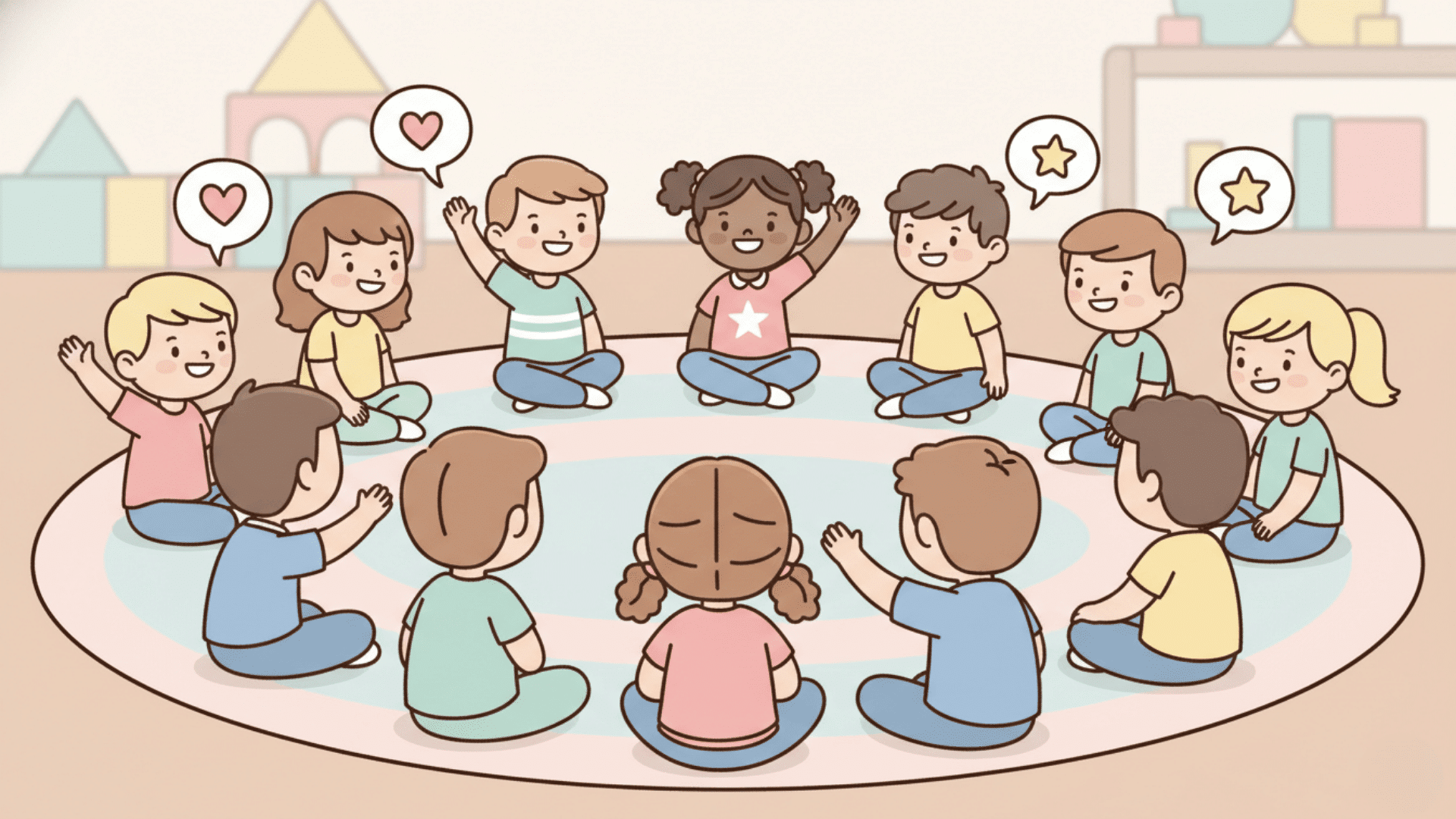
Building trust and connection early sets the tone for the whole year. These games help students learn names, share interests, and feel safe in your classroom.
1. Two Truths and a Tall Tale
Students share three statements about themselves: two true, one false. Classmates guess which one is the tall tale.
How to Play:
- Each student writes down two actual facts and one made-up statement
- Students take turns sharing all three statements with the class
- Classmates vote on which statement they think is false
2. Find Someone Who Bingo
Create bingo cards with traits or favorites like “has a pet cat” or “loves pizza.” Students walk around finding classmates who match each square.
How to Play:
- Hand out bingo cards with different student traits in each square
- Students move around the room asking classmates questions to find matches
- First student to complete a row or full card wins
3. Mystery Object Share
Pull a random item from a bag and tell a short story based on a teacher’s prompt. This sparks creativity and listening skills.
How to Play:
- Fill a bag with safe classroom objects like erasers, pencils, or toys
- Each student pulls one item without looking
- Student creates a 30-second story connecting the object to the prompt
4. Would You Rather Corners
Pose a “would you rather” question and assign each choice to a corner. Students move to their choice and explain why.
How to Play:
- The teacher asks a question like “Would you rather fly or be invisible?”
- Assign each answer to a different corner of the room
- Students move to their corner and share their reasoning with nearby classmates
5. Compliment Circle Pass
Pass a token around the circle. When you receive it, give a specific compliment to someone in the group.
How to Play:
- Sit in a circle and choose a small object to pass
- A student holding the object gives a genuine compliment to another student
- Pass continues until everyone has given and received compliments
6. Common Ground Sprint
Partner up and race to find three things you have in common in under two minutes. This works great for mixed groups.
How to Play:
- Set a timer for two minutes
- Pairs talk quickly to find three shared interests, experiences, or favorites
- Teams share one discovery with the whole class
7. Name and Motion Echo
Each student says their name with a unique gesture. The whole class repeats both the name and the motion.
How to Play:
- First student says their name while doing a simple movement
- The entire class repeats the name and copies the gesture
- Continue around the circle until everyone has shared
8. Classroom Scavenger Hunt
Create a list of safe, room-based items or clues. Students work alone or in pairs to find everything on the list.
How to Play:
- Write a list of 10 items or clues hidden around your classroom
- Give students 5 minutes to find as many as possible
- Review answers together and award points for correct finds
9. Secret Handshake Lab
Partners create and teach each other a unique handshake with at least three moves. Then demonstrate for others.
How to Play:
- Pair students up randomly or by choice
- Give 3 minutes to create a handshake with snaps, claps, or waves
- Each pair performs their handshake for the class
10. Human Timeline
Line up in order based on a category like birthday month, height, or shoe size. No talking allowed for extra challenge.
How to Play:
- Call out a category students will line up by
- Students move and organize themselves without speaking
- Check the line to see if everyone is in the correct order
11. Snapshot Introductions
Each student gets 30 seconds to share a hobby, goal, or fun fact. Keep it fast so everyone gets a turn.
How to Play:
- Set a timer for 30 seconds per student
- Student shares one hobby, one goal, and one fun fact quickly
- Class can ask one follow-up question if time allows
12. Question Ball Toss
Toss a ball with questions written all over it. Catch it and answer the question under your thumb.
How to Play:
- Write questions on a beach ball with a marker
- Toss the ball to a student
- Student answers the question closest to their right thumb, then tosses to someone else
13. Team Flag Mini Build
Small groups design a paper flag and motto that represent their team’s values. Share and display around the room.
How to Play:
- Give each group paper, markers, and 5 minutes
- Groups create a flag design and sa hort team motto
- Teams present their flags and explain the meaning behind their choices
Movement and Brain Break Games for Kids

Short movement breaks help students refocus and burn off extra energy. These games fit into tight schedules and get everyone moving fast.
14. Silent Line Up Challenge
Students line up in order based on a rule like alphabetical first name or birthday without speaking. Great for focus and Teamwork.
How to Play:
- Announce the rule that students must line up by
- Students organize themselves using only gestures and signals
- Check the final lineup to see if they got it right
15. Freeze Dance
Play music for 30 seconds. When the music stops, students freeze in place. Anyone who moves sits out until the next round.
How to Play:
- Play upbeat music and let students dance freely
- Stop the music suddenly
- Students must freeze immediately and hold their position until the music starts again
16. Mirror Moves
One student leads with slow movements. Their partner mirrors every move as closely as possible. Switch roles after one minute.
How to Play:
- Pair students facing each other
- The leader does slow movements like raising arms or turning the head
- Partner copies every move at the same time
17. Four Corners Fitness
Assign a different movement to each corner, like jumping jacks, lunges, arm circles, or high knees. Rotate through corners.
How to Play:
- Label each corner with a movement using signs or verbal cues
- Students pick a corner and do that movement for 20 seconds
- Rotate to the next corner when time is up
18. Would You Rather Walk and Talk
Pose a question,n and students walk to one side of the room for each answer. Chat briefly with nearby students about their choice.
How to Play:
- Ask “ “Would you rather” question with two clear choices
- Assign each answer to opposite sides of the room
- Students walk to their side and discuss why they chose that option
19. Desk Chair Yoga Flow
Lead simple seated stretches like neck rolls, shoulder shrugs, and seated twists. Perfect for long work blocks.
How to Play:
- Students stay seated at their desks
- The teacher demonstrates 5 simple stretches slowly
- Class follows along, holding each stretch for 10 seconds
20. Quick Draw Relay
Teams race to the board. One student runs up, draws part of a prompt, tags the next teammate, and repeats.
How to Play:
- Divide the class into teams and line them up
- Call out a drawing prompt like “draw a house.”
- First student runs up, draws one part, runs back, and tags the next person
21. Simon Says Remix
Use classroom content cues instead of regular directions. For example, “Simon says touch something with an adjective on it.”
How to Play:
- Play traditional Simon Says rules
- Replace commands with academic content like “touch something blue” or “point to a noun.”
- Students who move without “Simon says, ” sit down
22. Pass the Clap
Start a clap and pass it around the circle. Each student claps once when it reaches them. Speed it up for more challenge.
How to Play:
- Sit or stand in a circle
- One student claps and makes eye contact with the next person
- Continue passing the clap around the circle without breaking rhythm
23. Breath and Count Reset
Lead students through box breathing: breathe in for 4, hold for 4, out for 4, hold for 4. Repeat three times.
How to Play:
- Students sit comfortably with feet flat on the floor
- Teacher counts aloud: inhale for 4, hold for 4, exhale for 4, hold for 4
- Repeat the cycle 3 to 5 times for a full reset
24. Paper Airplane Pause
Students quickly fold a paper airplane, fly it once, then clean up immediately. It’s a 2-minute energy release.
How to Play:
- Give each student one piece of scrap paper
- Set a timer for 1 minute to fold a plane
- Students fly once, then collect all aircraft within 30 seconds
25. Red Light Green Light Review
Students move forward on correct answers and freeze on incorrect ones. First to the finish line wins.
How to Play:
- Line students up at one end of the room
- Ask a review question, and if they answer correctly, they take one step forward
- The first student to reach the teacher wins
26. Statue Story
One student poses as a character, historical figure, or concept. Others guess who or what they represent.
How to Play:
- Call on a student to strike a frozen pose related to your lesson
- Classmates raise their hands and guess what the pose represents
- The student holds the pose until someone guesses correctly
Academic Review Games for Kids
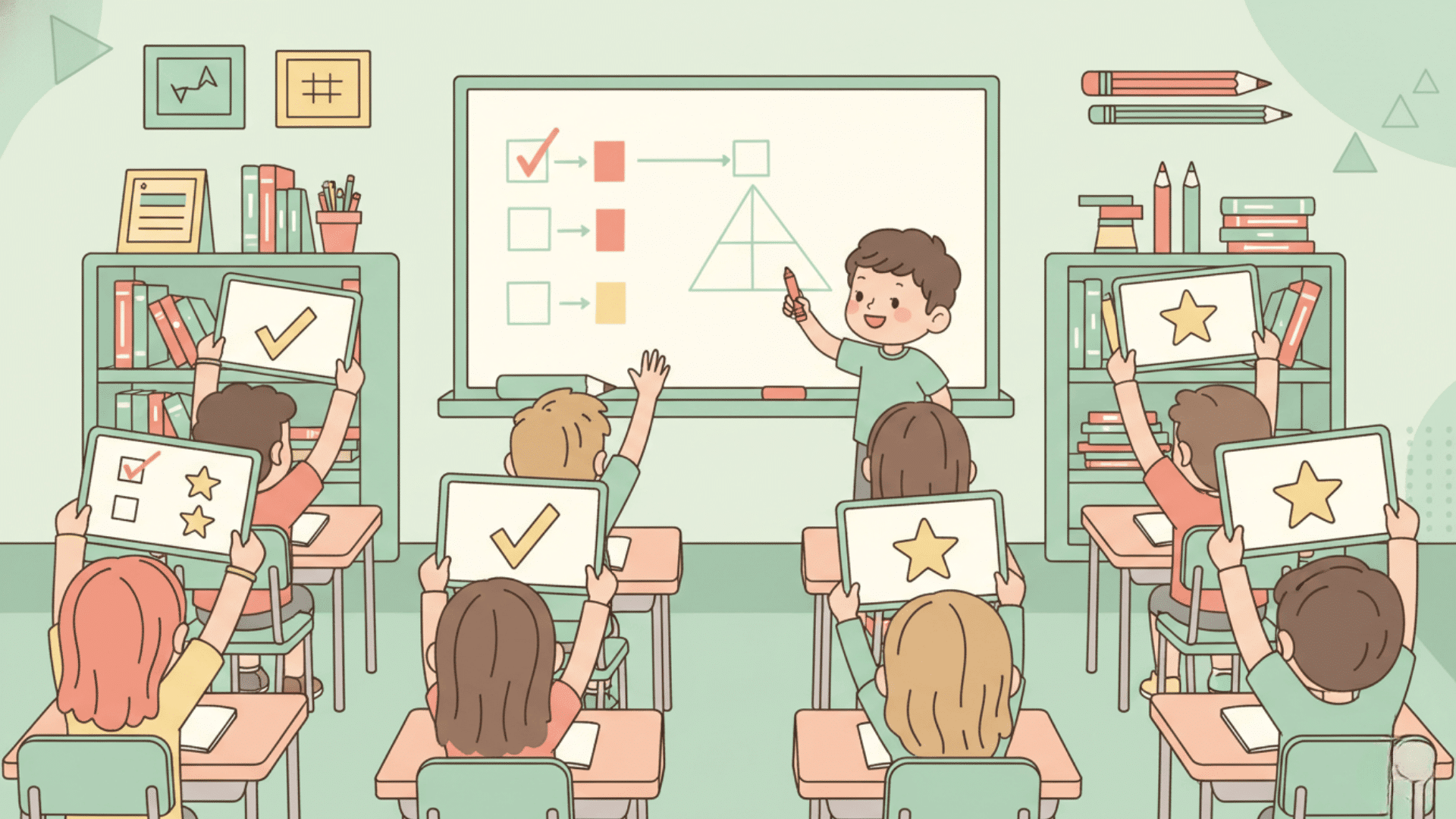
These games turn review time into active learning. Students stay focused while reinforcing content they have already learned.
27. Whiteboard Splash
Every student writes an answer on their whiteboard. On the count of three, everyone holds up their board at the same time.
How to Play:
- Give each student a small whiteboard or paper
- Ask a review question
- Students write their answer and reveal boards together on your signal
28. Vocabulary Pictionary
One student draws a vocabulary word on the board while their team guesses, no letters, numbers, or talking allowed.
How to Play:
- Choose a student to come to the board
- Show them a vocabulary word privately
- Student draws clues while teammates shout guesses within a time limit
29. Hot Seat Definitions
One student sits facing away from the board. Teammates give clues to help them guess the word displayed behind them.
How to Play:
- Write a vocabulary word on the board
- SThe studentin the hot seat faces away and cannot see it
- Classmates give verbal clues without saying the word itself
30. Correct the Teacher
Read a sentence or solve a problem with intentional mistakes. Students raise their hands to spot and fix the errors.
How to Play:
- Write a sentence or math problem with 2 to 3 errors on the board
- Read it aloud as if it were correct
- Students identify what’s wrong and explain the correct version
31. Around the World Lightning
Two students stand. Ask a question, and the first to answer correctly moves on to challenge the next student.
How to Play:
- The first student stands behind the second student’s desk
- The teacher asks a quick review question
- Whoever answers first moves on to challenge the next person in line
32. Quiz Quiz Trade
Students pair up, quiz each other with flashcards, then trade cards and find a new partner. Repeat for 5 minutes.
How to Play:
- Give each student one flashcard with a question
- Students find a partner, quiz each other, then swap cards
- Find a new partner and repeat the process
33. Category Countdown
Set a timer for 60 seconds. Students list as many items as they can in a given category, like“types of animals” or “verbs.”
How to Play:
- Announce a category related to your current unit
- Students write or say as many correct items as possible
- Count answers when time runs out, and see who listed the most
34. Sentence Surgery
Display a sentence with grammar or clarity issues. Work together to improve it step by step.
How to Play:
- Write a weak or incorrect sentence on the board
- Ask students to identify problems with grammar, word choice, or structure
- Rewrite the sentence together as a class
35. Math Fact Ladder
Teams answer math problems to climb rungs on a ladder drawn on the board. First team to the top wins.
How to Play:
- Draw a ladder with 10 rungs on the board for each team
- Ask a math fact question.
- The correct answer lets the team move up one rung
36. Story Dice Sprint
Roll dice with icons or prompts. Students write a 5-sentence story using the images that appear.
How to Play:
- Use story dice or draw random images on the board
- Roll 3 dice or select 3 pictures
- Students write a short story that includes all three elements in 3 minutes
37. True or False Dash
Ask a true or false question. Students move to the left side for true and the right side for false.
How to Play:
- Assign one side of the room for true and the other for false
- Read a statement related to your lesson
- Students quickly move to the side they believe is correct
38. Headline Summaries
Challenge students to summarize the lesson in exactly 10 words, as if writing a news headline.
How to Play:
- Review the main idea of the day’s lesson
- Students write a headline summary using exactly 10 words
- Share headlines aloud and vote on the clearest or most creative
39. Secret Word Synonyms
Choose a vocabulary word, butdon’tt say it aloud. Give clues using synonyms and descriptions until students guess the word.
How to Play:
- Think of a target word from your lesson
- Give hints like “this word means almost the same as ‘happy’
- Students raise their hands and guess until someone gets it right
Teamwork, SEL, and Problem-Solving Games for Kids
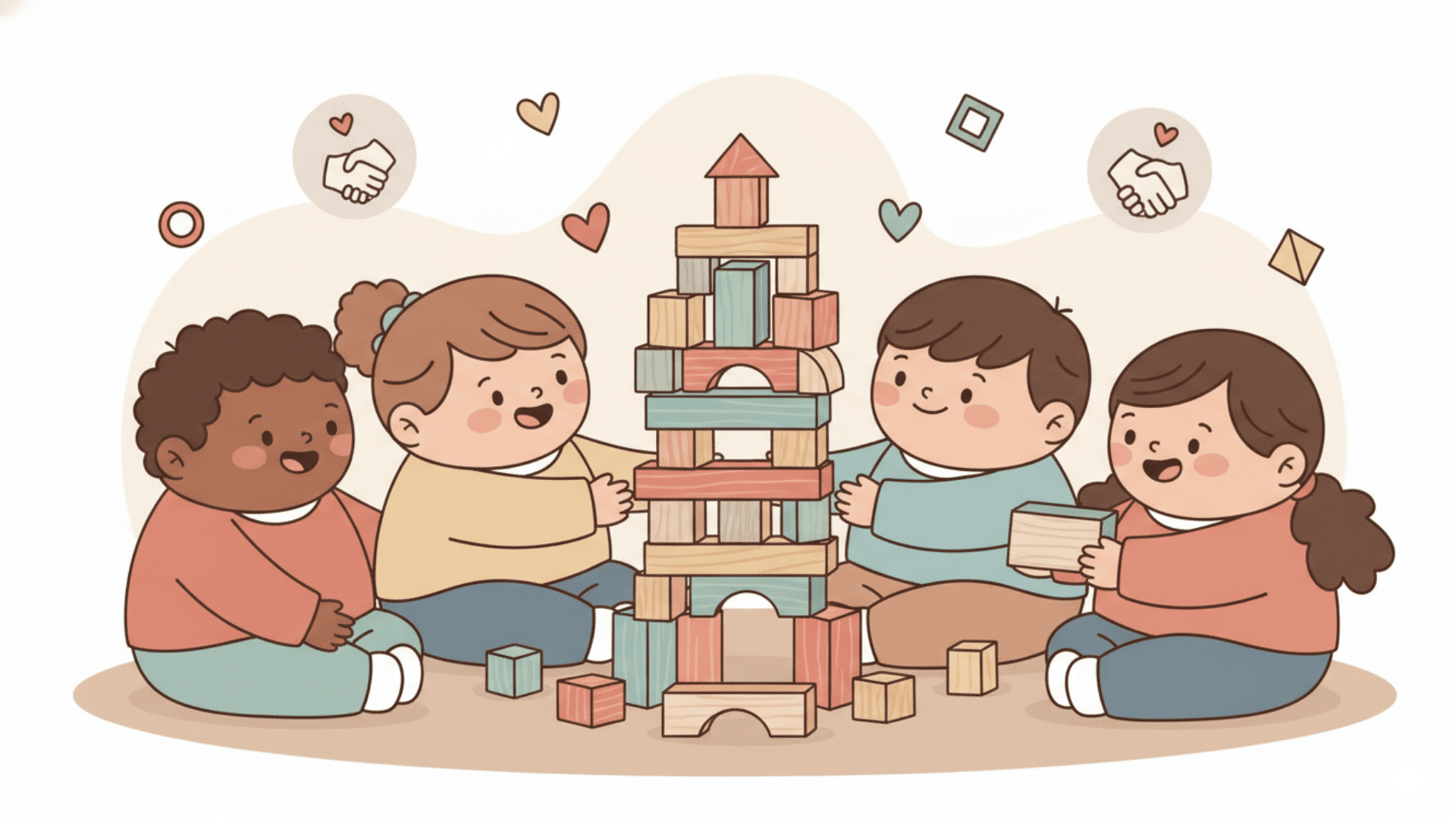
These activities build collaboration, emotional skills, and critical thinking. Students learn to work together and solve problems as a team.
40. Marshmallow Tower Micro Challenge
Teams use limited materials like marshmallows and toothpicks to build the tallest freestanding tower in 5 minutes.
How to Play:
- Give each team 20 toothpicks and 10 marshmallows
- Set a timer for 5 minutes
- The team with the tallest tower that stands on its own wins
41. Paper Bridge Build
Teams build a bridge using only paper and tape that can hold the weight of a small object like a toy car.
How to Play:
- Provide each team with 10 sheets of paper and a roll of tape
- Challenge them to build a bridge between two desks
- Test each bridge by placing a small object on top
42. Back to Back Drawing
One student describes a simple image while their partner draws it without seeing the original. Compare results at the end.
How to Play:
- Pair students and have them sit back-to-back
- Give one student a simple picture to describe
- Partner draws based only on verbal instructions without seeing the image
43. Lost at Sea Ranking
Groups receive a list of items available after a shipwreck. Rank them by importance and justify your choices together.
How to Play:
- Give teams a list of 10 survival items
- Groups discuss and rank items from most to least important
- Each team explains their top 3 choices to the class
44. Kindness Notes Relay
Students write quick, kind notes to classmates and deliver them. This builds community and positive feelings.
How to Play:
- Give each student 3 small paper slips
- Students write kind, specific compliments for 3 different classmates
- Deliver notes by placing them on desks during a music break
45. Emotion Charades
Act out an emotion without speaking. After the guess, discuss one coping tool for handling that feeling.
How to Play:
- Write emotions on slips of paper, like “frustrated” or “excited””
- The student picks one and acts it out silently
- Class guesses the emotion, then discusses how to manage it in healthy ways
46. Listening Triangle
Three students rotate through roles: speaker, listener, and observer. Each role has a specific job to practice active listening.
How to Play:
- Assign roles: one speaks, one listens without interrupting, one observes body language
- Speaker shares for 1 minute
- Rotate roles so everyone practices each position
47. Compliment Hot Potato
Pass an object while music plays. When the music stops, the student holding it gives a compliment to someone in the circle.
How to Play:
- Play music while students pass a soft object around a circle
- Stop the music randomly
- A student holding the object gives a genuine compliment to another classmate
48. Mystery Leader
One student leaves the room. The class picks a leader who starts movements. The class copies the leader while the guesser tries to figure out who leads.
How to Play:
- Send one student out of the room
- Choose a leader who will start movements like clapping or nodding
- Guesser returns and watches to identify the leader
49. Puzzle Swap
Teams work on jigsaw puzzles but must trade one piece at a time with another team. Cooperation and communication are key.
How to Play:
- Give each team a different small puzzle
- Teams can only request one piece at a time from another team
- The first team to complete their puzzle wins
50. Silent Build
Teams build a structure using blocks or cups without talking. They must use only gestures and signals.
How to Play:
- Give each team building materials like blocks or plastic cups
- Set a challenge like “build the tallest tower.”
- Students work together without speaking for 3 minutes
51. Team Trivia Roles
Assign roles like captain, researcher, encourager, and reporter. Each role has a job during trivia review.
How to Play:
- Divide the class into teams of 4
- Assign roles: captain leads discussion, researcher recalls facts, encourager supports teammates, reporter shares the answer
- Rotate roles after each question
52. Perspective Switch Skits
Groups act out the same situation from different viewpoints. This builds empathy and critical thinking skills.
How to Play:
- Give groups a simple scenario like “borrowing a pencil without asking.”
- Each group acts out the scene from a different character’s perspective
- Discuss how the point of view changes the story
Final Thoughts
Classroom games make teaching easier and learning more fun. You don’t need fancy materials or hours of prep time. Most of these games take under 10 minutes and use what you already have in your classroom.
Start with one game this week. Pick something simple like Freeze Dance or Whiteboard Splash.
Watch how your students respond. Then try another. The goal is to find a few favorites that fit your teaching style and your students’ needs.
Your classroom should feel alive, connected, and focused. Games help you get there without adding stress to your day.
Ready to try more teaching strategies? Browse our full collection of classroom management tips and lesson ideas. Drop a comment below and tell us which game you’ll try first.