
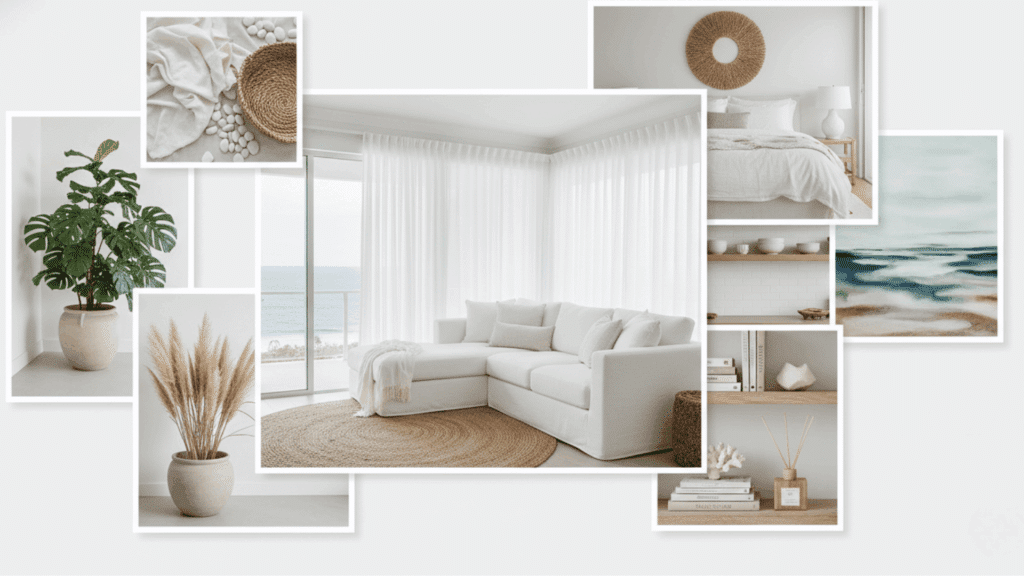
Think coastal design means seashells and anchors? Not anymore.
Real coastal interior design creates calm, breathable spaces using neutral tones and natural materials. No beach required. It works in any home, from city apartments to suburban houses.
But here’s the catch: one wrong choice and your space looks themed instead of timeless.
This guide shows you what modern coastal design actually looks like. You’ll learn the key differences between styles, get practical ideas, and discover how to maintain the look long term.
Let’s create a space that feels relaxed every single day.
What Is Coastal Interior Design?
Coastal interior design brings the calming feel of seaside living into any home, no matter where you live.
This style focuses on creating a relaxed atmosphere through light colors, natural textures, and open spaces. You don’t need an ocean view to enjoy this look.
Modern coastal design uses elements such as soft blues, sandy neutrals, and organic materials like wood and linen. The goal is simple: make your space feel airy, peaceful, and connected to nature.
Think of it as capturing the tranquil mood of a beach house through smart design choices that promote balance and comfort.
Coastal vs Beachy vs Nautical Design
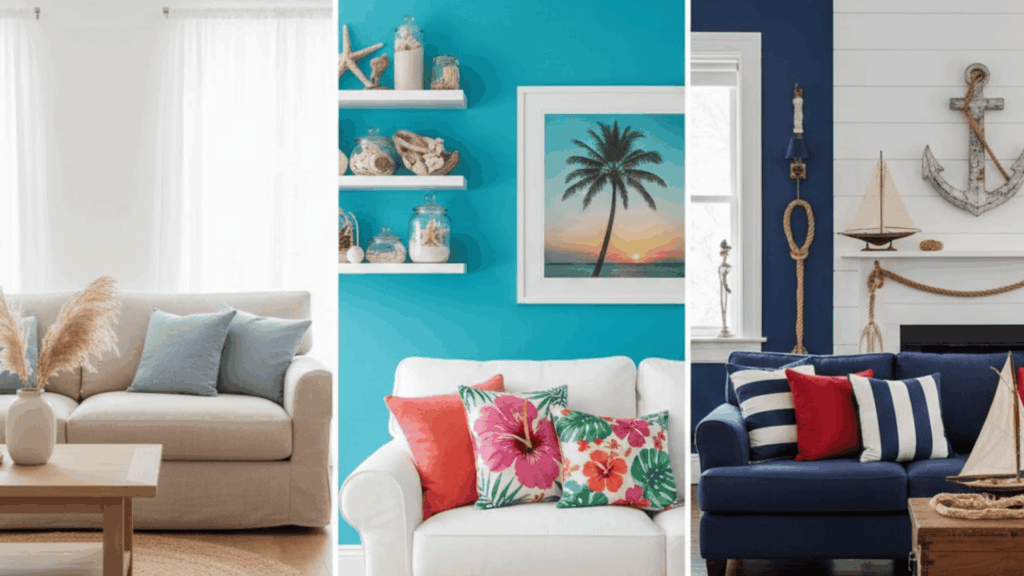
These three styles seem alike. But they create different looks. Here’s what sets them apart:
| Style | Colors | Key Features | Best For |
|---|---|---|---|
| Coastal | Soft neutrals, muted blues | Natural textures, linen, weathered wood | Modern homes, long-term use |
| Beachy | Bright turquoise, coral, yellow | Seashells, tropical prints, bold accents | Vacation homes, casual spaces |
| Nautical | Navy, red, white | Stripes, anchors, rope, maritime symbols | Themed rooms, traditional cottages |
Key Elements of Coastal Interior Design
Coastal interior design relies on five core elements. These pieces work together to create that breezy, relaxed feel.
- Light and Airy Color Foundations: Start with whites, creams, and soft grays as your base colors.
- Natural Materials and Organic Textures: Use wood, rattan, jute, and linen to add warmth and depth.
- Clean-Lined, Comfortable Furniture: Choose simple furniture shapes that prioritize comfort over fuss.
- Balanced Use of Color Inspired by Nature: Add muted blues, greens, and sandy tones in small doses.
- Thoughtful Layering Instead of Heavy Decor: Build interest through textures and light touches, not clutter.
Coastal Interior Design Ideas
Ready to bring coastal style into your space? These 13 ideas will help you create a home that feels fresh and calming.
1. Warm Whites and Soft Neutrals
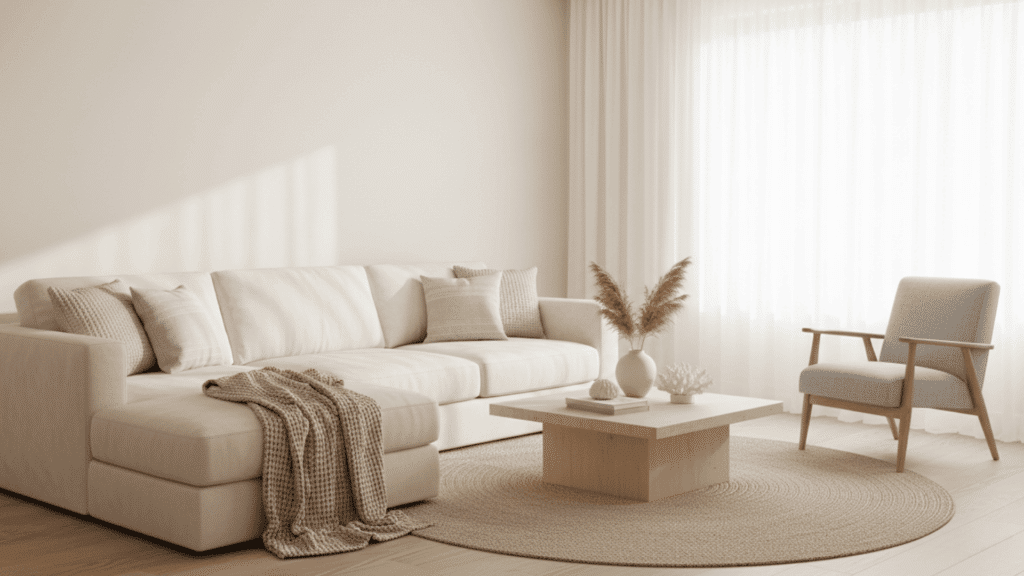
Start with a neutral foundation. Whites and beiges create an open, breathable backdrop. This lets other elements shine without competing. These colors reflect light and make rooms feel twice their actual size.
- Use warm white on walls
- Add cream or beige furniture
- Mix in light gray accents
2. Maximize Natural Light
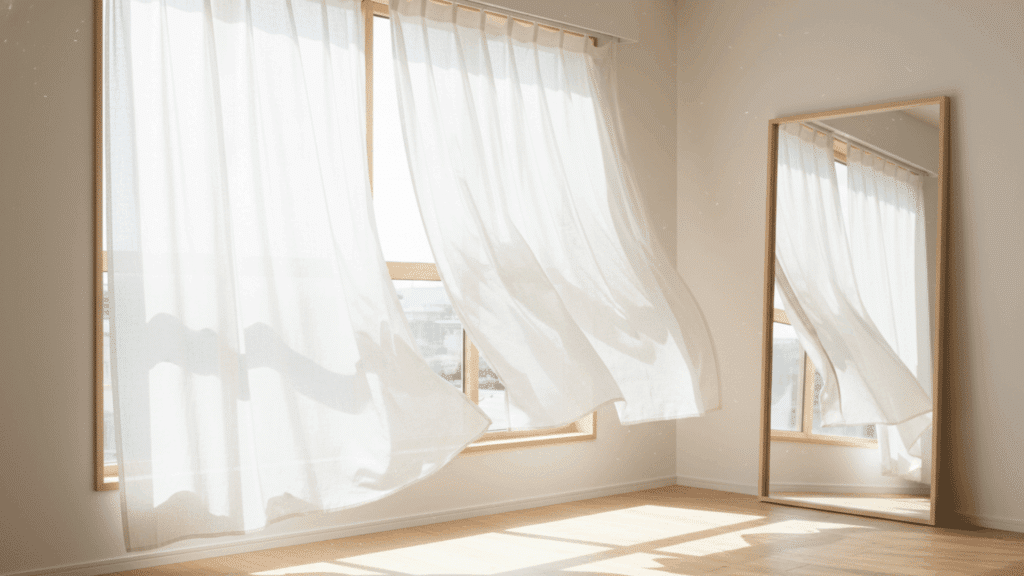
Let sunlight fill your rooms. Natural light makes spaces feel larger and more inviting. Keep window treatments simple and sheer. Morning light sets a peaceful tone for your entire day.
- Use sheer curtains or linen drapes
- Skip heavy blinds
- Place mirrors across from windows
3. Light Wood Finishes
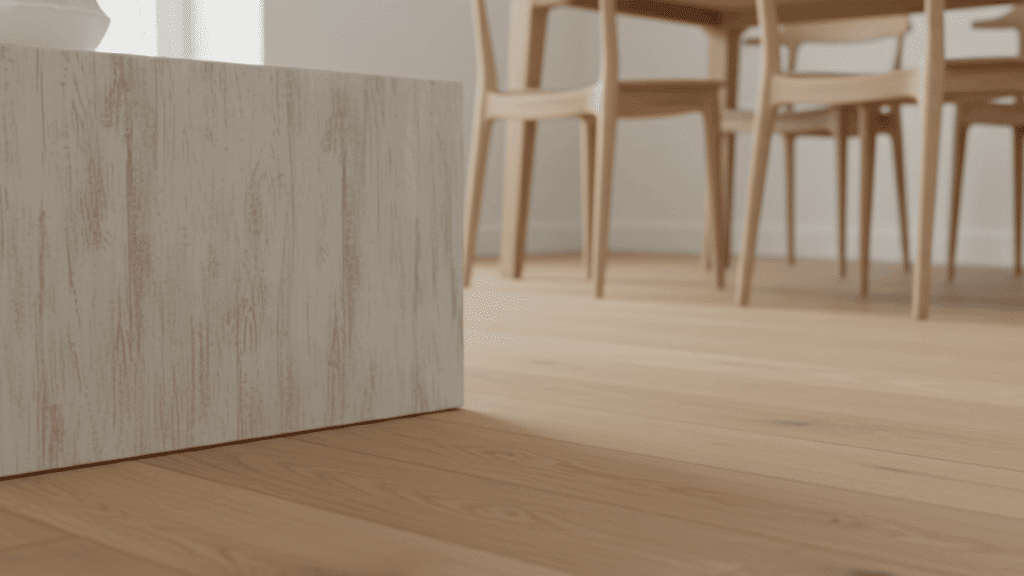
Choose blonde or weathered wood tones. Light wood adds warmth without darkness. It complements the airy coastal feel perfectly. The grain patterns bring natural character to any room.
- Oak or ash flooring
- Driftwood-style furniture
- Whitewashed wood accents
4. Layer Textures, Not Colors
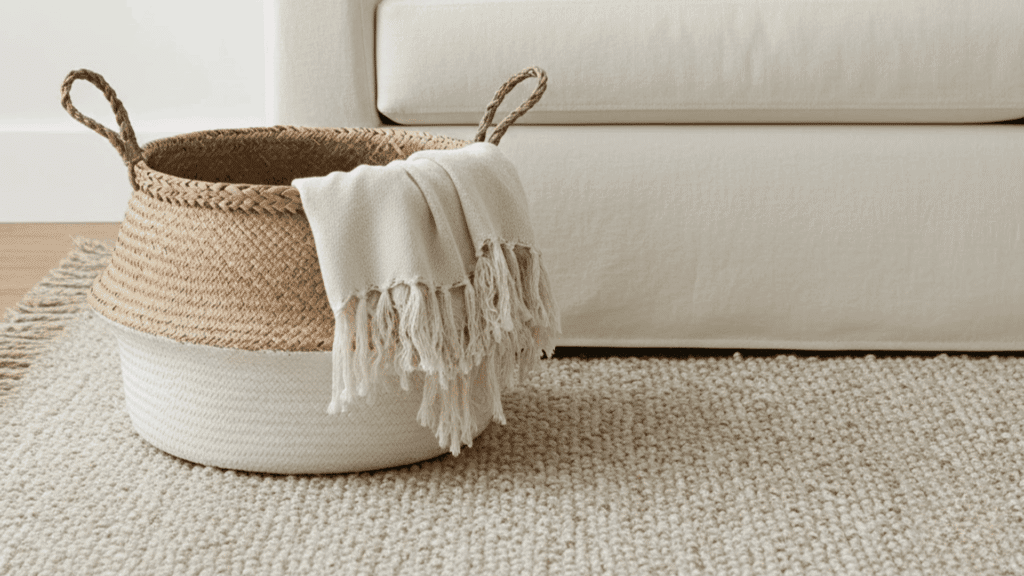
Build depth through texture instead of bright colors. Mix smooth and rough surfaces. This adds visual interest while staying calm. Your eyes rest more easily with varied textures than competing hues.
- Linen throws on sofas
- Jute or sisal rugs
- Woven baskets for storage
5. Clean-Lined Furniture
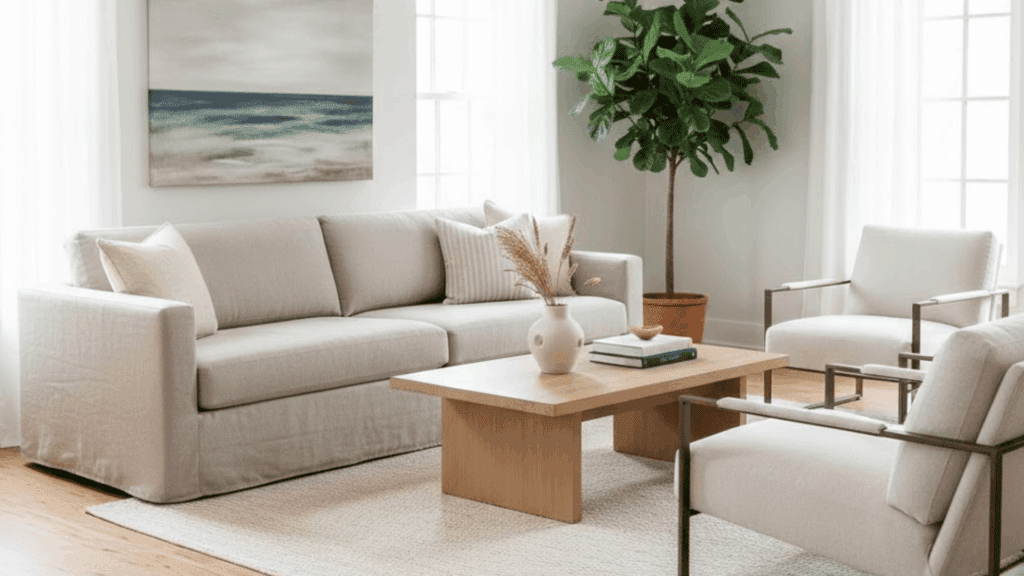
Pick furniture with simple shapes. Avoid ornate details or heavy pieces. Comfort matters more than decoration. Timeless silhouettes never go out of style.
- Low-profile sofas
- Streamlined dining tables
- Slipcovered seating
6. Muted Blue Accents
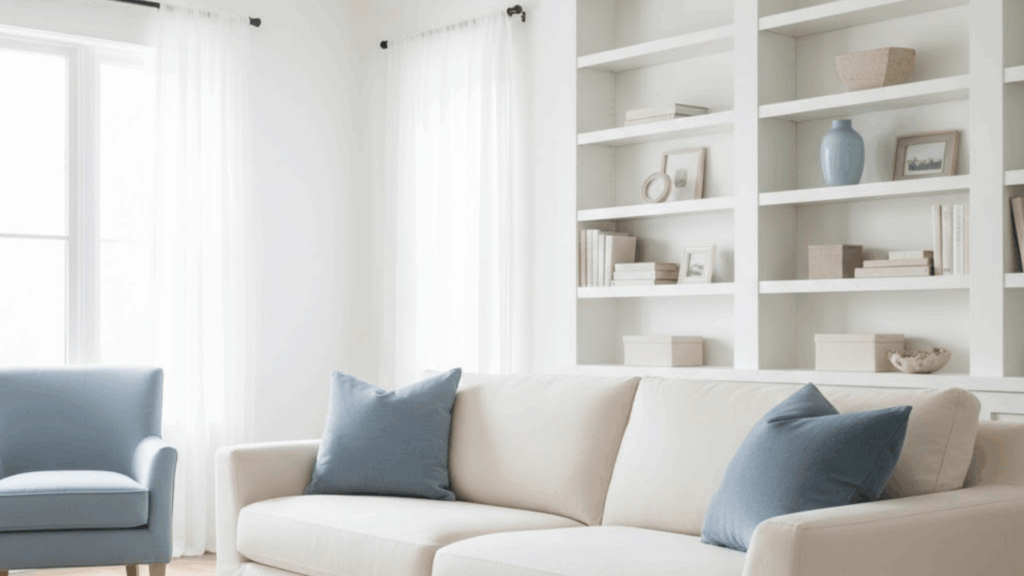
Add blue in soft, dusty tones. Use it sparingly for impact. Too much blue can feel cold. Think of how the ocean looks on a cloudy day.
- Throw pillows in pale blue
- One accent chair
- Ceramic vases or bowls
7. Natural Fiber Rugs and Textiles
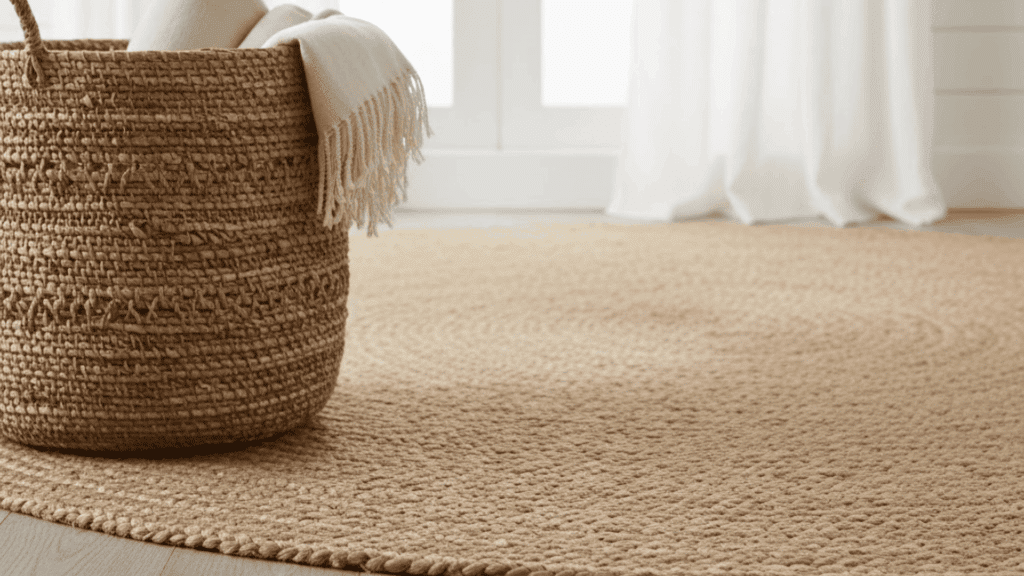
Ground your space with organic materials. Natural fibers feel authentic and relaxed. They also hide wear better than synthetics. These materials age gracefully and develop unique patinas over time.
- Jute or seagrass rugs
- Linen curtains
- Cotton or hemp bedding
8. Coastal Art Without Themes
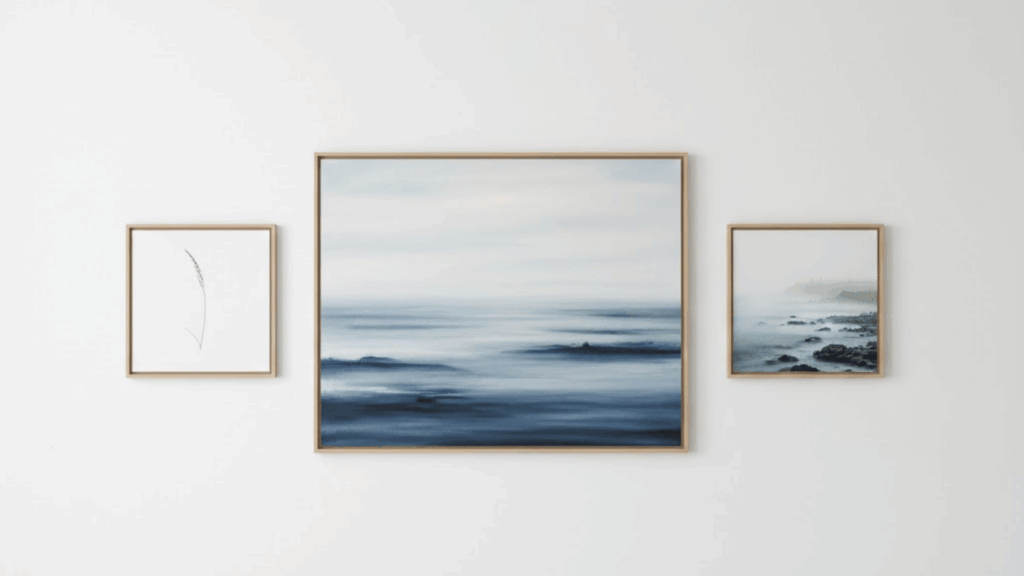
Hang abstract or nature-inspired art. Skip the obvious beach symbols. Subtle references work better for modern homes. Let viewers interpret the coastal connection themselves.
- Abstract ocean paintings
- Landscape photography
- Botanical prints
9. Minimal and Purposeful Decor
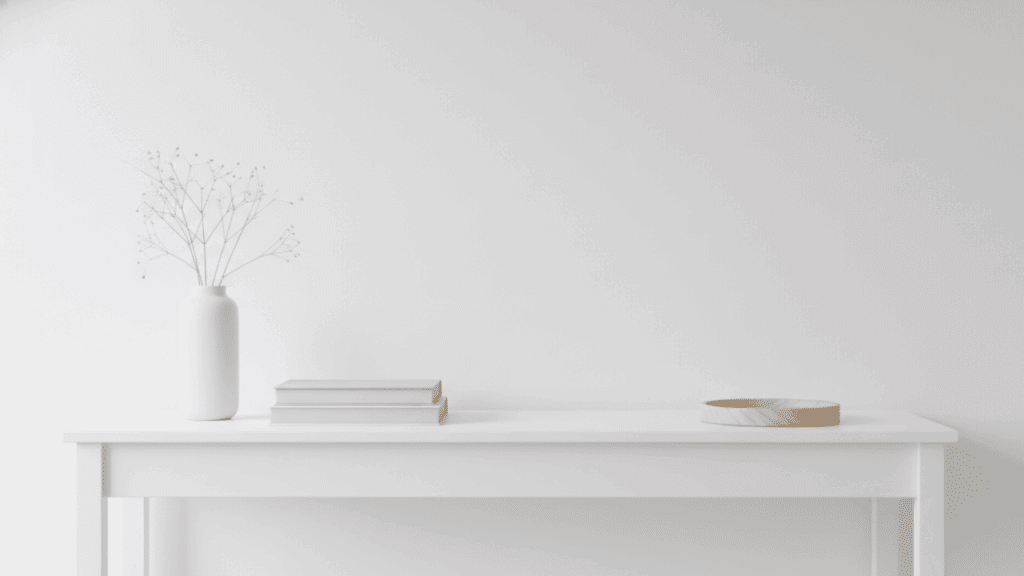
Less is more in coastal design. Each item should have a reason. Clear surfaces create breathing room. Quality always beats quantity in this style.
- Group decor in threes
- Use trays to contain items
- Rotate accessories seasonally
10. Open Living Room Layout
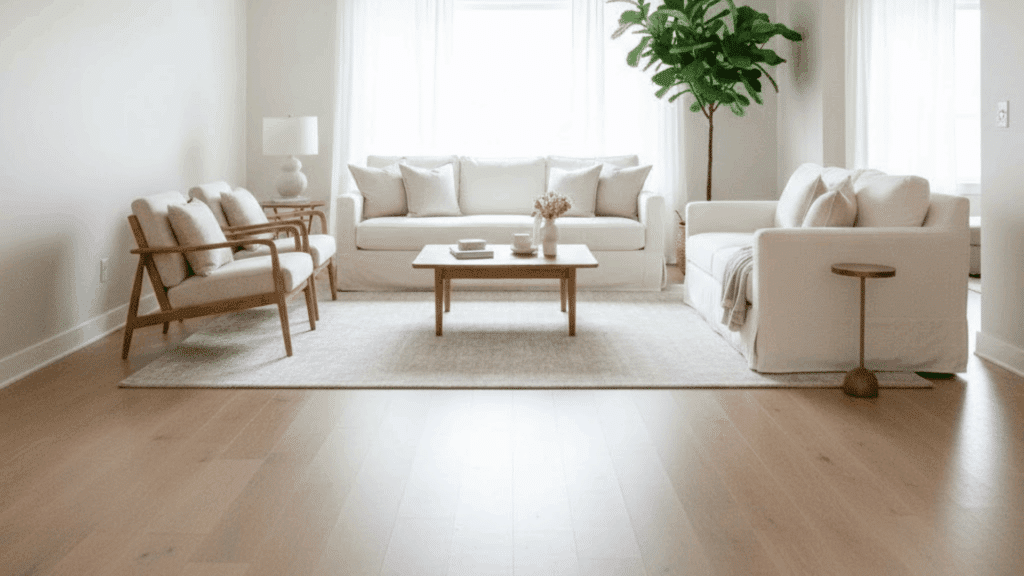
Arrange furniture to encourage flow. Don’t block pathways or windows. Open layouts feel more spacious. Good circulation makes homes feel welcoming.
- Float furniture away from walls
- Create conversation zones
- Leave walkways clear
11. Coastal Kitchen With Contrast
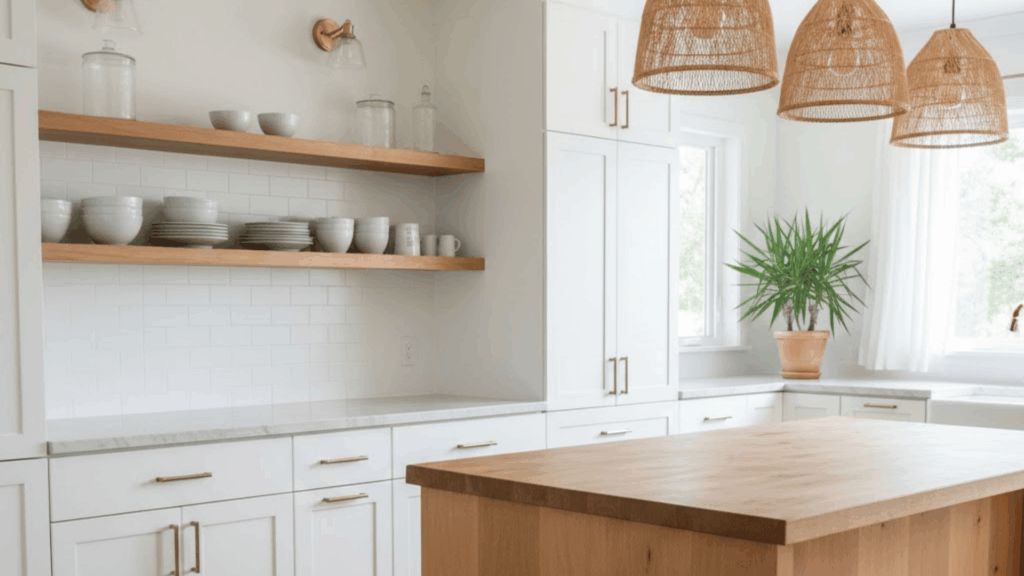
Balance light cabinets with natural counters. Add warmth through wood or stone. Keep hardware simple and understated. The right contrast prevents the space from feeling too sterile.
- White or cream cabinets
- Wood or marble countertops
- Open shelving for display
12. Hotel-Like Coastal Bedrooms
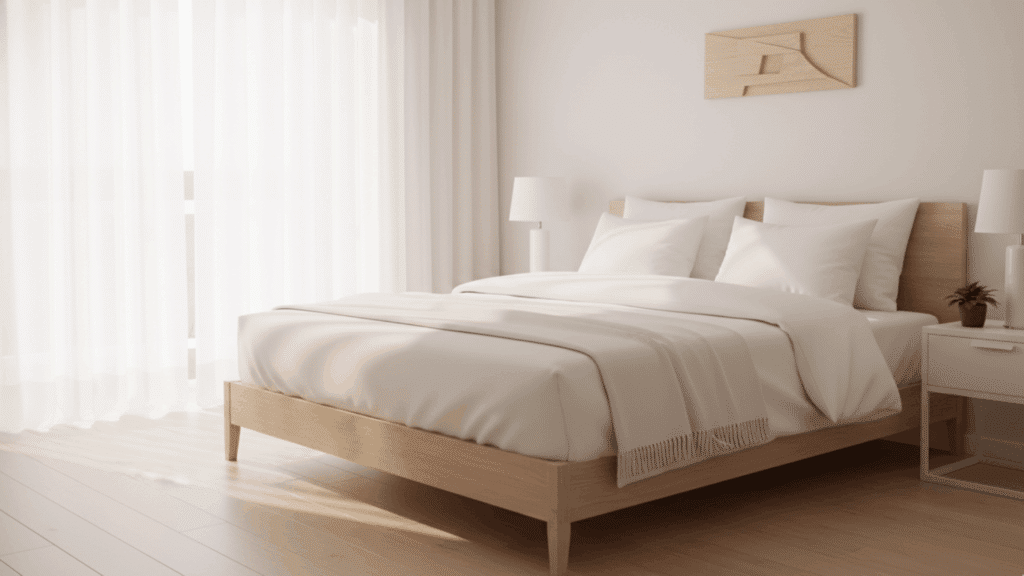
Make bedrooms feel like retreats. Use crisp linens and minimal decor. Focus on comfort and simplicity. You should look forward to bedtime every single night.
- All-white bedding layers
- Nightstands with clean lines
- Soft reading lamps
13. Greenery and Organic Decor
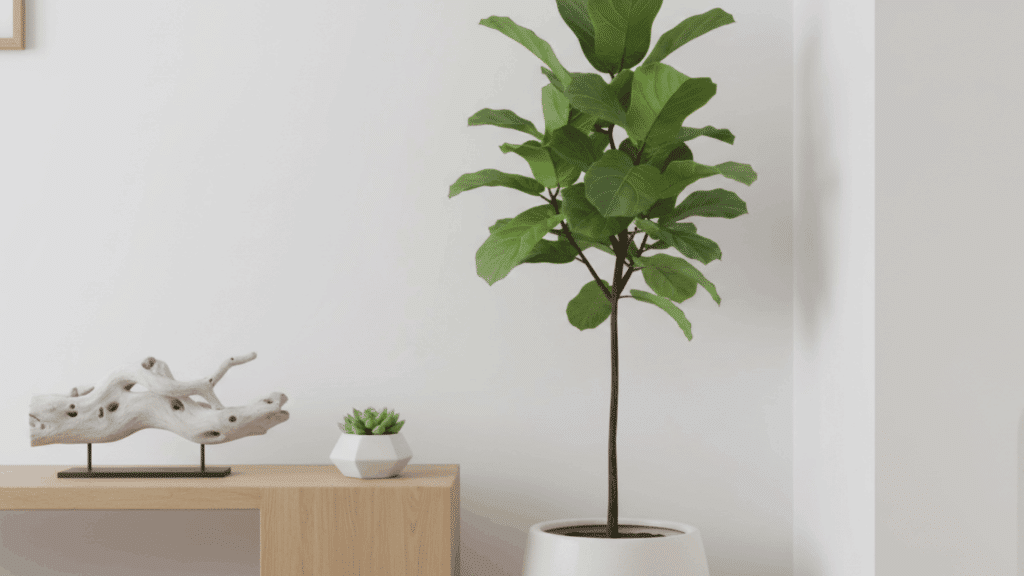
Finish with living plants and natural objects. Greenery adds life without clutter. Choose low-maintenance options. Plants improve air quality while completing the natural look.
- Potted plants in neutral containers
- Driftwood or coral pieces
- Fresh or dried branches
How to Maintain a Coastal Interior Design Long Term?
Coastal style should last for years, not months. Here’s how to keep your space looking fresh without constant updates.
- Choose Durable, Easy-Care Fabrics and Finishes: Pick performance fabrics and stain-resistant finishes that handle daily life.
- Protect Light Surfaces from Fading: Keep furniture out of direct sunlight and use UV-blocking window film.
- Rotate Textiles Seasonally for a Fresh Look: Swap pillows and throws every few months to instantly refresh the room.
- Clean Natural Materials Correctly to Extend Lifespan: Vacuum natural-fiber rugs weekly and spot-clean wood floors with gentle soap.
- Refresh the Space by Editing, Not Replacing Decor: Remove a few items instead of buying new ones to keep things simple.
Is Coastal Interior Design Right for Your Home?
Coastal interior design works in any home, from city apartments to suburban houses. The style adapts easily to small rooms or open floor plans. If you prefer calm, uncluttered spaces, this design fits perfectly.
You can personalize it by mixing in your own collections or family heirlooms. Just stick to the neutral palette and natural materials as your base.
Add personal touches through art, books, or meaningful objects that follow the same relaxed vibe. The key is balance. Keep the overall feel light and airy while letting your personality show through.
Looking Ahead
Coastal interior design gives you a calm, timeless home without requiring a beach view.
The secret is simple: stick to neutral colors, natural materials, and clean lines. Skip the themed decor. Focus on texture over bold colors. Your space will feel open and peaceful year after year.
Start with one room. Paint it warm white. Add a jute rug. Swap heavy curtains for linen ones. Small changes create a big impact.
Ready to change your home? Pick your favorite idea from this guide and try it this weekend. Share your results in the comments below. We’d love to see how you bring coastal style into your space.