
Picking cabinets sounds simple. Then you walk into a showroom and see two styles that look almost identical. One has a solid wood frame on the front. The other does not.
Framed or frameless? That one difference affects your storage space, your kitchen’s look, and what you end up spending.
It also changes how easy the installation will be. Both styles have real strengths and real trade-offs.
This guide clearly breaks down framed vs. frameless cabinets, so you know exactly what you are paying for, what you are getting, and which style is actually worth it for your home.
What Are Framed Cabinets?
Framed cabinets are the traditional American-style cabinets. A solid wood frame, called a face frame, is attached to the front of the cabinet box. This frame surrounds the door and drawer openings.
It adds strength and gives the cabinet a classic, structured look that has been a standard in U.S. homes for decades.
How Framed Cabinets Are Built:
- Cabinet box: Made from engineered wood with side panels that are typically ½ inch thick.
- Face frame: Solid hardwood (birch or oak) about 1 to 1.5 inches wide, fixed to the front of the box.
- Doors and drawers: Mounted directly onto the face frame, not the box itself.
- Hinges: Standard hinges attach to the face frame, making adjustments straightforward.
- Joinery: The frame is secured using pocket screws or staples for a stable, tight connection.
Door Style Options for Framed Cabinets:
| Door Style | What It Looks Like | Best For |
|---|---|---|
| Full Overlay | The door covers nearly the entire face frame | A clean, modern-traditional look |
| Partial Overlay | The door covers part of the frame; some frame stays visible | Classic, budget-friendly kitchens |
| Inset | The door sits flush inside the frame opening | A furniture-style, high-end finish |
What Are Frameless Cabinets?
Frameless cabinets, also called European-style or full-access cabinets, have no face frame. Doors and drawers attach directly to the sides of the cabinet box.
The result is a clean, flat front with very little gap between doors. This style grew out of post-war European design, built around making the most of every inch of space.
How Frameless Cabinets Are Built:
- Cabinet box: Built with ¾-inch-thick side panels to make up for the missing face frame.
- Doors and drawers: Attach directly to the cabinet box sides, not a frame.
- Hinges: Concealed European-style hinges (such as BLUM clip hinges) mount on the inside of the cabinet sides.
- Joinery: Uses dowels, cam locks, or conformant screws for a tight, precise fit.
- Weight: Thicker materials make the cabinet slightly heavier than framed versions.
Door Style Options for Frameless Cabinets:
| Door Style | What It Looks Like | Compatible? |
|---|---|---|
| Full Overlay | The door covers the entire cabinet opening | Yes, the only available option |
| Partial Overlay | Reveals part of a frame | No, not compatible |
| Inset | Sits flush inside an opening | No, not compatible |
Framed vs Frameless Cabinets: Key Differences
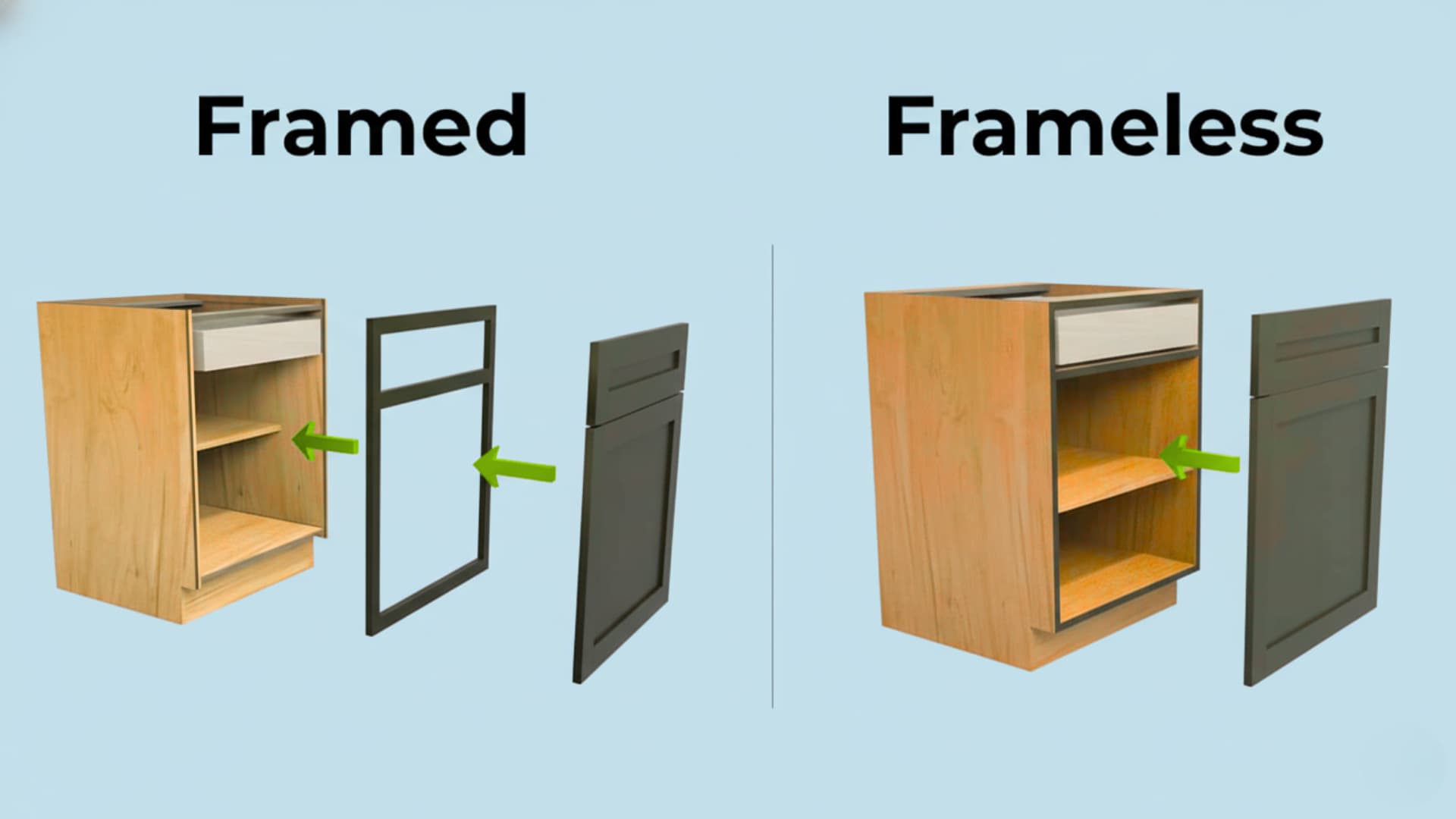
Alt Text: Side-by-side comparison of framed and frameless cabinets, showing cabinet boxes, doors, and structure differences with arrows indicating how each style is constructed.
Now that you know how each style is built, let’s look at how they actually compare. The differences go well beyond just the frame. They affect storage, strength, installation, and everyday use.
1. Construction
Framed: A solid wood face frame is fixed to the front of the cabinet box. The box sides are typically ½ inch thick since the frame carries most of the structural load.
Frameless: No face frame is used here. The cabinet box is built with ¾-inch-thick sides to handle the structural load entirely on its own.
2. Storage Space
Framed: The face frame reduces the opening width by about ⅜ of an inch on each side. This mainly affects drawer size, making it slightly harder to reach items at the back.
Frameless: Offers up to 15% more usable drawer width and full, unobstructed access to the cabinet interior. No center stile means wider openings for bulkier items, too.
3. Durability
Framed: The face frame adds structural support and protects box edges from daily wear. Doors stay aligned longer, making framed cabinets a solid choice for high-traffic kitchens.
Frameless: Also built to last, but the thicker box sides do all the structural work. Over time, edge wear can become more visible because there is no frame to act as a buffer.
4. Installation
Framed: More forgiving during installation. The face frame covers small gaps caused by uneven walls or floors, making it a better fit for DIY projects.
Frameless: Requires very precise measurements and careful leveling. Any alignment error is hard to hide, so professional installation is strongly recommended.
5. Style
Framed: Best suited for traditional, farmhouse, and transitional kitchens. They pair naturally with crown molding, classic hardware, and warm wood finishes.
Frameless: The go-to for modern and contemporary spaces. Tight door-to-door gaps create a clean, continuous look across the full kitchen run.
6. Hinges and Hardware
Framed: Uses standard hinges that attach to the face frame. They are easy to find, inexpensive, and simple to replace when needed.
Frameless: Uses concealed European-style hinges mounted inside the cabinet sides. They cost more but allow better adjustment and keep the front looking clean.
Cost Comparison: Framed vs Frameless Cabinets
Cost is often the deciding factor for buyers. The gap between framed and frameless cabinets is real, but it is not always as wide as most people expect.
| Cost Factor | Framed Cabinets | Frameless Cabinets |
|---|---|---|
| Average Overall Cost | Lower by approx. $1,000 | Higher by approx. $1,000 |
| Material Cost | Standard engineered wood box + solid wood frame | Thicker, higher-quality box materials are required |
| Installation Cost | More affordable, DIY-friendly | A higher professional installation is often needed |
| Entry-Level Price Gap | Lower starting price | About 14% more than entry-level framed |
| High-End Price Gap | Higher at the top end | About 8.5% more than high-end framed |
| Hardware Cost | Standard hinges: widely available, low cost | European hinges, higher cost |
| Long-Term Value | Strong value for traditional homes | Worth the investment for modern kitchens needing storage |
Framed vs. Frameless Cabinets: Which One Is Right?
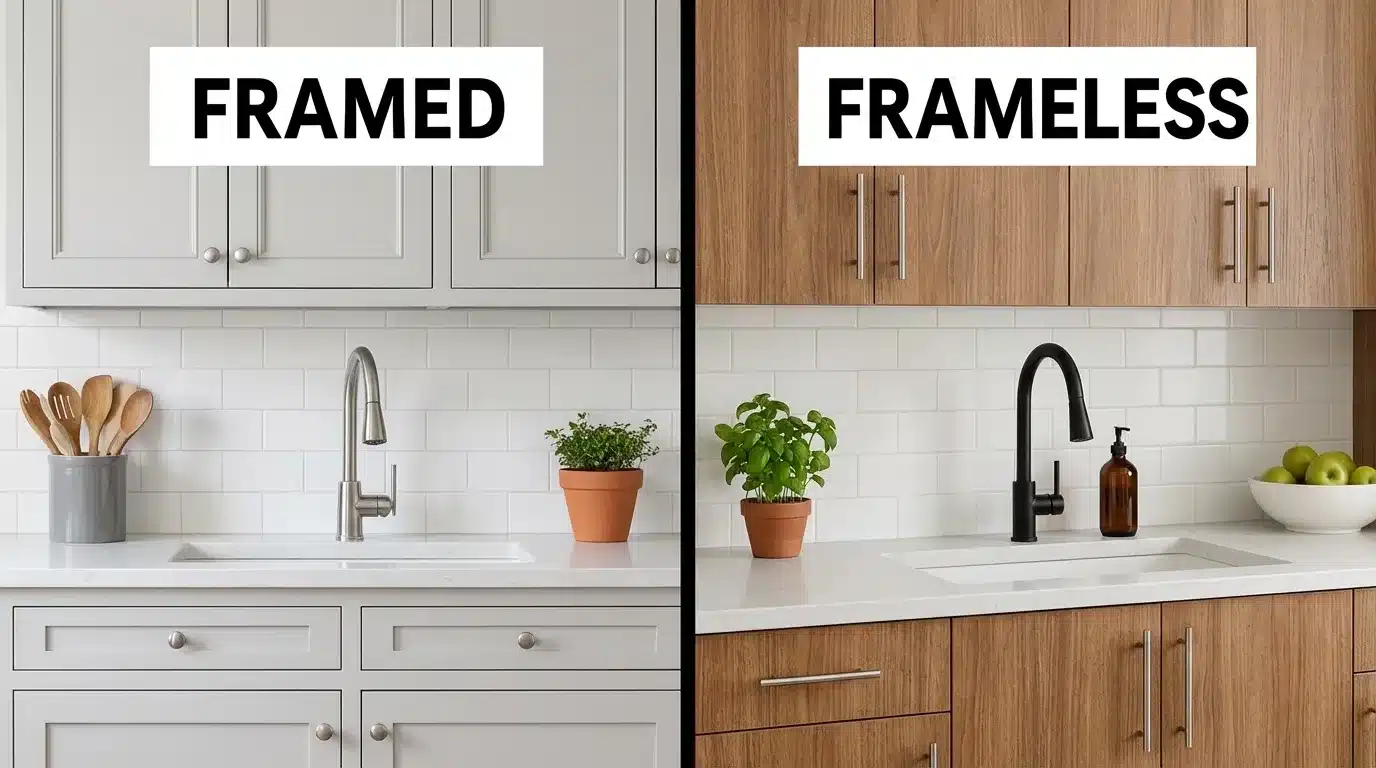
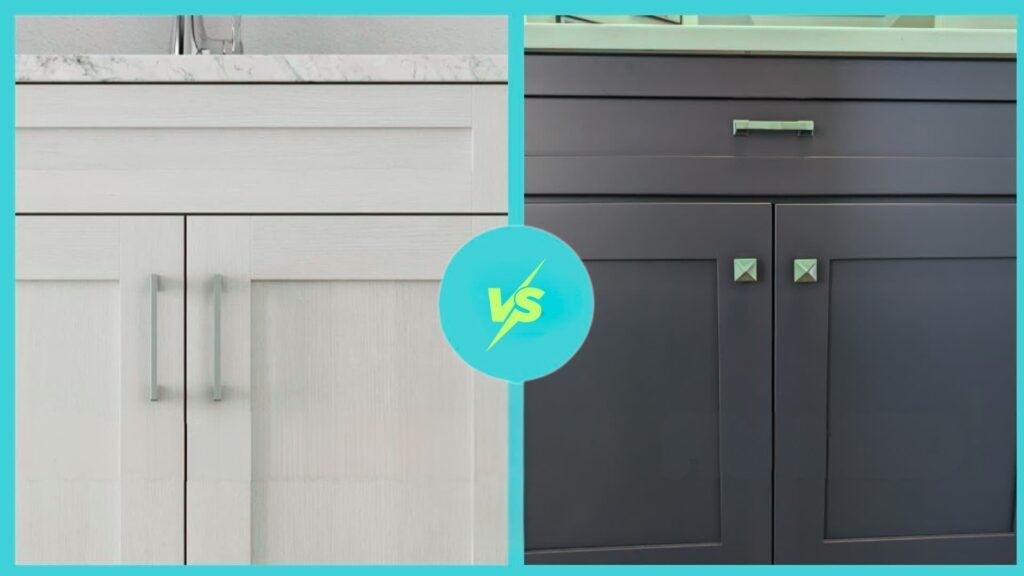
Alt Text: Side-by-side kitchen comparison showing framed cabinets in a light painted finish on the left and frameless wood cabinets on the right, each labeled accordingly above the cabinetry.
There is no universal winner here. The right choice depends on your home, your lifestyle, and what matters most to you.
- Traditional or farmhouse kitchen: Go with framed. They pair naturally with crown molding, classic hardware, and warm wood finishes.
- Modern or contemporary kitchen: Frameless is the better fit. Flat doors and tight gaps create the clean look modern kitchens call for.
- Small kitchen: Frameless cabinets give you more usable storage and make the space feel less crowded overall.
- High-traffic kitchen or homes with young kids: Framed cabinets handle daily wear better and stay aligned longer.
- Tight budget: Framed cabinets cost less upfront and do not require a professional installer.
- DIY installation: Framed cabinets forgive small measurement errors far more than frameless ones do.
- Bathroom use: Frameless works well in small bathrooms that need more storage. Framed suits traditional bathrooms with classic fixtures.
- Resale value: Both styles hold their value well. The key is matching the cabinet style to the home’s overall design.
Can You Switch From Framed to Frameless Cabinets?
Switching from one style to the other is rarely worth the cost. The cabinet box, doors, and hinges would all need full replacement since the two systems are built completely differently.
Just swapping out the doors will not work. If you are thinking about a style change, starting fresh with new cabinets in your preferred style is the most practical and cost-effective path forward.
Final Thoughts
Framed vs. frameless cabinets comes down to three things: your kitchen’s style, your budget, and your storage needs. Framed cabinets suit traditional homes, hold up well to wear, and cost less overall.
Frameless cabinets give you more space and a cleaner look, making them ideal for modern kitchens. Neither is a wrong choice. They just serve different homes and different needs. Think about your kitchen style first.
Then check your budget. After that, the right pick becomes very clear. Which style are you leaning toward? Drop your answer in the comments below.
We would love to hear what you are planning for your kitchen.
Frequently Asked Questions
What Is the Most Popular Cabinet Style Right Now?
Frameless cabinets are leading the market right now, holding around 73% market share in 2024. Shaker-style doors in white, sage green, and two-tone finishes are the top design picks.
What Makes Kitchen Cabinets Look Cheap?
Poor quality materials, visible gaps between doors, and mismatched hardware are the biggest giveaways. Thin box sides and uneven paint or stain finishes also bring down the overall look fast.
Does Canvas Look Better, Framed or Unframed?
A frame adds a polished, finished look that works well in traditional or classic spaces. An unframed canvas suits a modern, minimal room where clean walls are part of the design.
Are Frameless Cabinets Strong?
Yes, when built with quality materials. The thicker ¾-inch box sides make up for the missing face frame and provide solid structural support for daily use.