


Thinking about homeschooling, but have no idea where to start? The paperwork confuses you.
Curriculum choices feel overwhelming. You wonder if your kitchen table can really become a classroom.
Starting homeschooling is simpler than it looks. Most families overthink it.
This post breaks down everything you need to begin with confidence. We cover legal requirements, choosing your teaching style, and setting up a routine that actually works.
You’ll learn how to pick a curriculum without stress, track progress effectively, and help your child succeed outside traditional school.
We also look at costs, social opportunities, and when hiring help makes sense. Let’s get started with the basics.
What Homeschooling Is and How It Works?
Homeschooling is when kids learn at home instead of in a traditional school. Parents, tutors, or online teachers guide the lessons. Some families stick to a strict schedule like regular school.
Others take a more relaxed approach and let kids learn at their own pace. Many use a hybrid model that mixes structure with flexibility.
Learning happens through books, online programs, hands-on projects, and real-world experiences. The format you choose depends on what works best for your family and your child’s needs.
Benefits of Homeschooling
Why do families choose to homeschool? The reasons vary, but certain advantages come up again and again.
- Flexible pacing and personalized learning: Kids can move faster through subjects they understand and take more time on more complex topics.
- Stronger focus on strengths and learning needs: Parents can adjust teaching methods to match how their child learns best.
- More family time and schedule control: Families decide when to study, take breaks, or plan vacations without school calendars.
- Opportunity for deeper interests and life skills: Children have time to explore hobbies, learn practical skills, and follow their curiosity.
- Safer, calmer learning environment (for some families): Homeschooling removes classroom distractions and social pressures that some kids struggle with.
Homeschooling Laws and Requirements in the US
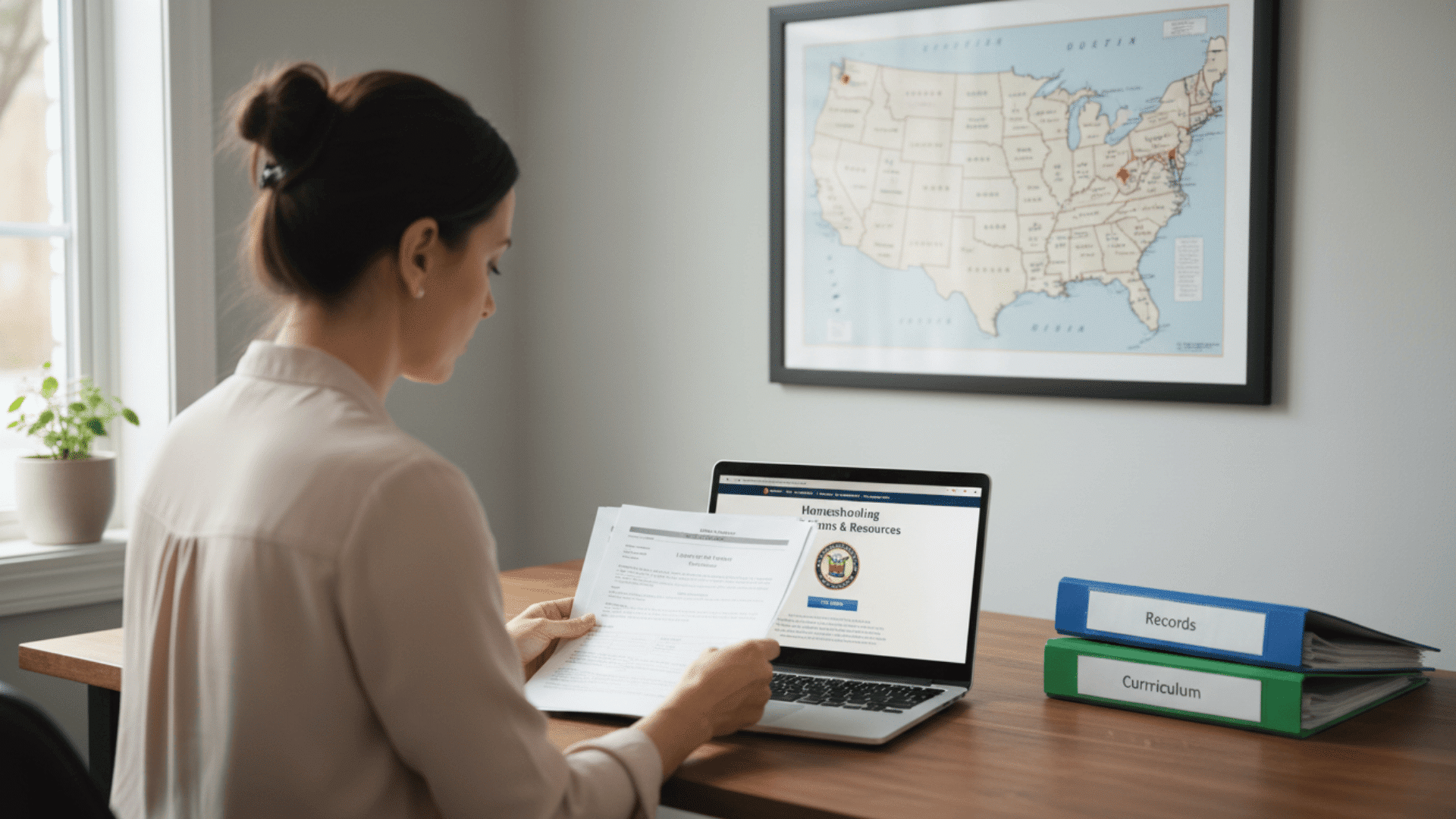
Legal requirements vary widely across the United States. Understanding your state’s rules protects you and keeps your homeschool compliant.
Where Rules Come from and Why State Rules Matter
Each state sets homeschooling laws, not the federal government. This means rules can be very different depending on where you live.
Some states have minimal requirements. Others need detailed paperwork and testing. Always check your state’s education department guidelines before starting.
Standard Requirements: Notice, Attendance, Subjects, Records
Most states ask for a few basic things to keep homeschooling legal and documented:
- Notice of intent – A form telling the state or school district you plan to homeschool. Some states require this annually, while others need it only once when you start.
- Attendance tracking – Proof that your child is learning regularly throughout the year. This might be a simple calendar showing school days or a log of hours spent on lessons.
- Required subjects – Specific topics you must cover each year based on grade level. Typical requirements include reading, writing, math, science, and social studies.
- Academic records – Portfolios of completed work, test results, or progress evaluations. Some states ask for standardized testing at specific grades or assessment by a certified teacher.
The exact requirements depend entirely on your state. Review local laws carefully before you begin.
What to Document from Day One
Start keeping records immediately to protect yourself legally and prove your child is making progress:
- Save all paperwork – Keep copies of every form you submit to schools or state departments. File notice of intent forms, withdrawal letters, and any correspondence in a safe folder.
- Track subjects and hours – Write down what you teach, when you meet, and how long each session lasts. Many families use simple planners or apps for tracking attendance.
- Collect work samples – Store completed assignments, projects, and tests in folders organized by subject. Take photos of hands-on projects or art that cannot fit in a binder.
- Notebooks and activities – List what your child reads, watches, and does each week for learning. Keep a reading log with book titles and record field trips or educational experiences.
Good documentation makes it easier to stay compliant with state laws and show progress over time.
How to Start Homeschooling: Step-by-Step
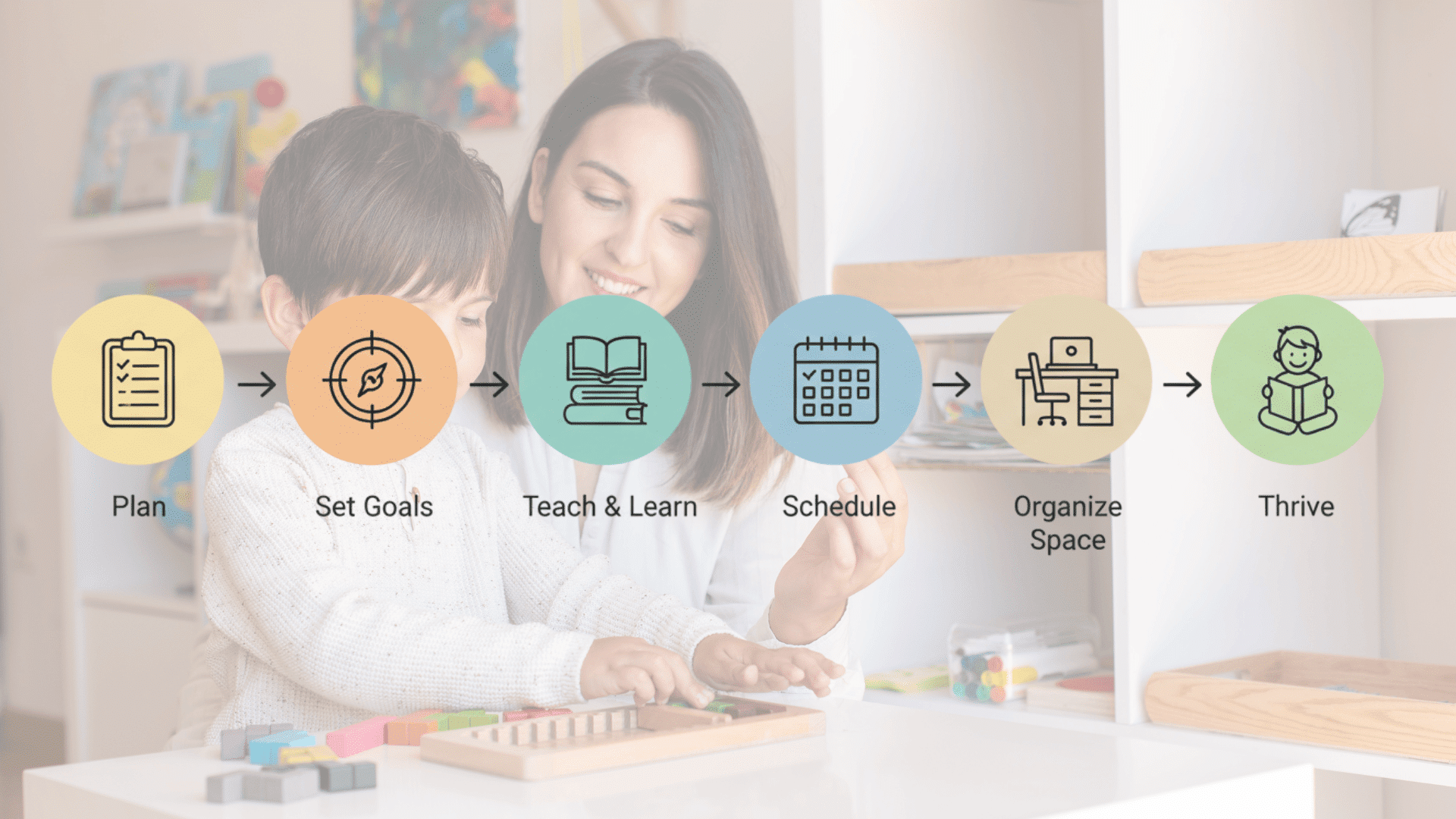
Getting started is the hardest part of homeschooling. These six steps simplify the process and help you begin with confidence.
Step 1: Confirm Your State Requirements and Paperwork
Start by researching your state’s homeschooling laws. Every state has different rules for notification, deadlines, and paperwork.
Some require you to file with the school district, while others ask for state registration. Check if your state offers options like umbrella schools or homeschool charters.
Keep copies of all forms you submit in a safe folder to protect yourself later.
Step 2: Define Your Goals and Priorities
Think about what success looks like for your family this year. Do you want strong academics, more flexibility, or extra support for learning challenges? Write down your top three goals.
This helps you make decisions when choosing curriculum or planning schedules. Your goals will guide everything else you do.
Step 3: Choose Your Homeschool Style
There are many homeschool methods to choose from. Traditional uses textbooks like regular school. Charlotte Mason focuses on living books. Montessori uses hands-on materials.
Unit studies combine subjects around themes. Unschooling follows the child’s interests. Eclectic mixes different approaches. Start simple and try one method for a few weeks. You can always change later.
Step 4: Pick Curriculum and Resources That Match Your Setup
Decide if you want a parent-led or an independent curriculum. Younger kids need more guidance, while older students can work alone. Focus on math and reading first since they form the foundation.
Use solid resources for core subjects and save money with free options for electives. Add hands-on activities, science experiments, and art projects using libraries and community classes.
Step 5: Set a Simple Schedule and Routine
You do not need a full school day. Most homeschoolers finish core subjects in three to four hours. Start with a consistent morning routine and cover math and reading when kids are alert.
Plan your week in blocks instead of rigid daily schedules. Leave room for field trips, appointments, and sick days. Review your plan each weekend and adjust as needed.
Step 6: Prepare Your Learning Space and Materials
You do not need fancy furniture or decorations. A quiet corner with a table, comfortable seating, and storage for supplies works fine. Keep materials organized in bins or baskets by subject.
Store current books where kids can reach them easily. Set up folders or binders for completed work to make record-keeping simple. A little organization at the start saves time all year.
How Do Homeschoolers Socialize and Track Progress?
Two common homeschool concerns are social interaction and tracking learning. Both are easier to manage than most people think.
| Topic | Key Points |
|---|---|
| Social development in homeschooling | Kids interact with people of all ages in real settings. Social skills grow through community events and daily life. Communication improves naturally. |
| Group activities and learning communities | Co-ops offer weekly classes. Sports teams and clubs provide peer time. Library programs create connections. |
| Tracking progress without grades | Watch for skill mastery. Keep work samples in portfolios. Notebooks read. Some states require evaluations or tests. |
| Adjusting instruction | Review learning every few weeks. Change methods if needed. Spend time where needed most. |
Should You Hire a Teacher or Tutor?

Not every parent can teach every subject. Sometimes, bringing in outside help makes homeschooling easier and more effective.
- Situations where outside instruction helps: Consider hiring help for advanced subjects like high school math, foreign languages, or when you need extra time.
- Online teachers vs in-person tutors: Online teachers offer flexibility and lower costs, while in-person tutors provide hands-on support and personal connection.
- Balancing professional help with parent involvement: Use tutors to supplement your teaching, not replace it, and stay involved in what your child learns.
- Cost and scheduling considerations: Online options usually cost less than in-person tutors, and flexible schedules work better for most homeschool families.
How to Be Homeschooled Successfully?
Success in homeschooling comes from building consistent habits. Set a regular routine that fits your family’s rhythm. Stay motivated by setting small goals and celebrating progress.
Take breaks when you need them to avoid burnout. Encourage kids to ask questions and follow their interests. Let them choose topics they want to learn more about.
Self-directed learning grows when kids have the freedom to explore. Stay flexible and adjust methods when something stops working. Consistency matters more than perfection.
The Bottom Line
Starting homeschooling does not require perfection. It requires consistency and a willingness to adapt.
You now know the legal basics, how to choose a curriculum, and ways to structure your days. You understand how to track progress and build social connections.
The hardest part is taking the first step. Pick one thing from this guide and do it today. Check your state laws. Set one simple goal. Choose a teaching style that feels right.
Homeschooling works when you stay flexible and focus on progress over perfection. Your child’s learning matters more than following someone else’s plan.
Ready to start? Share your biggest homeschooling question in the comments below. We’d love to help.