


Feeling queasy again? You thought nausea was a first-trimester thing, but here you are at 32 weeks, fighting waves of sickness.
It catches many women off guard. Your baby is growing fast, your body is preparing for labor, and suddenly, your stomach feels like it did months ago.
Third-trimester nausea is more common than you might think. It happens for different reasons now, less about hormones, more about your baby pressing on everything. The good news is that understanding why it happens makes it easier to handle.
In this guide, we will look at what causes late pregnancy nausea, when to worry, and simple ways to feel better during these final weeks.
What Does “Third Trimester” Mean in Pregnancy?
The third trimester spans from week28 until birth, usually around week 40. This final stage brings big changes as your baby grows rapidly and your body prepares for delivery.
Many women feel different symptoms now compared to the first and second trimesters. Your uterus expands significantly, putting pressure on your stomach and other organs.
Hormones shift again, which can bring back some early pregnancy discomforts. While some women feel great during these last months, others experience new or returning challenges like nausea.
Your body is working hard to support your growing baby and get ready for labor.
Is Third Trimester Nausea Normal?
Yes, third-trimester nausea is completely normal, even though it does not affect as many women as early pregnancy sickness does.
Research shows that between 15 and 23 percent of pregnant women feel queasy during their final months. The nausea can range from mild queasiness after meals to occasional vomiting.
Most cases are manageable and do not signal a serious problem. However, if your nausea becomes severe or stops you from eating and drinking, you should contact your healthcare provider.
How Common Is Nausea in the Third Trimester?
- About one in five women experiences it. Studies show that up to 23 percent of pregnant women report nausea during their third trimester.
- It’s much less common than morning sickness. Early pregnancy nausea affects up to 80 percent of women, making late pregnancy nausea relatively rare.
- Most cases are manageable with simple changes. Adjusting your diet and daily habits often brings relief without needing medical treatment.
Third Trimester Nausea vs Pre-Labor Signs
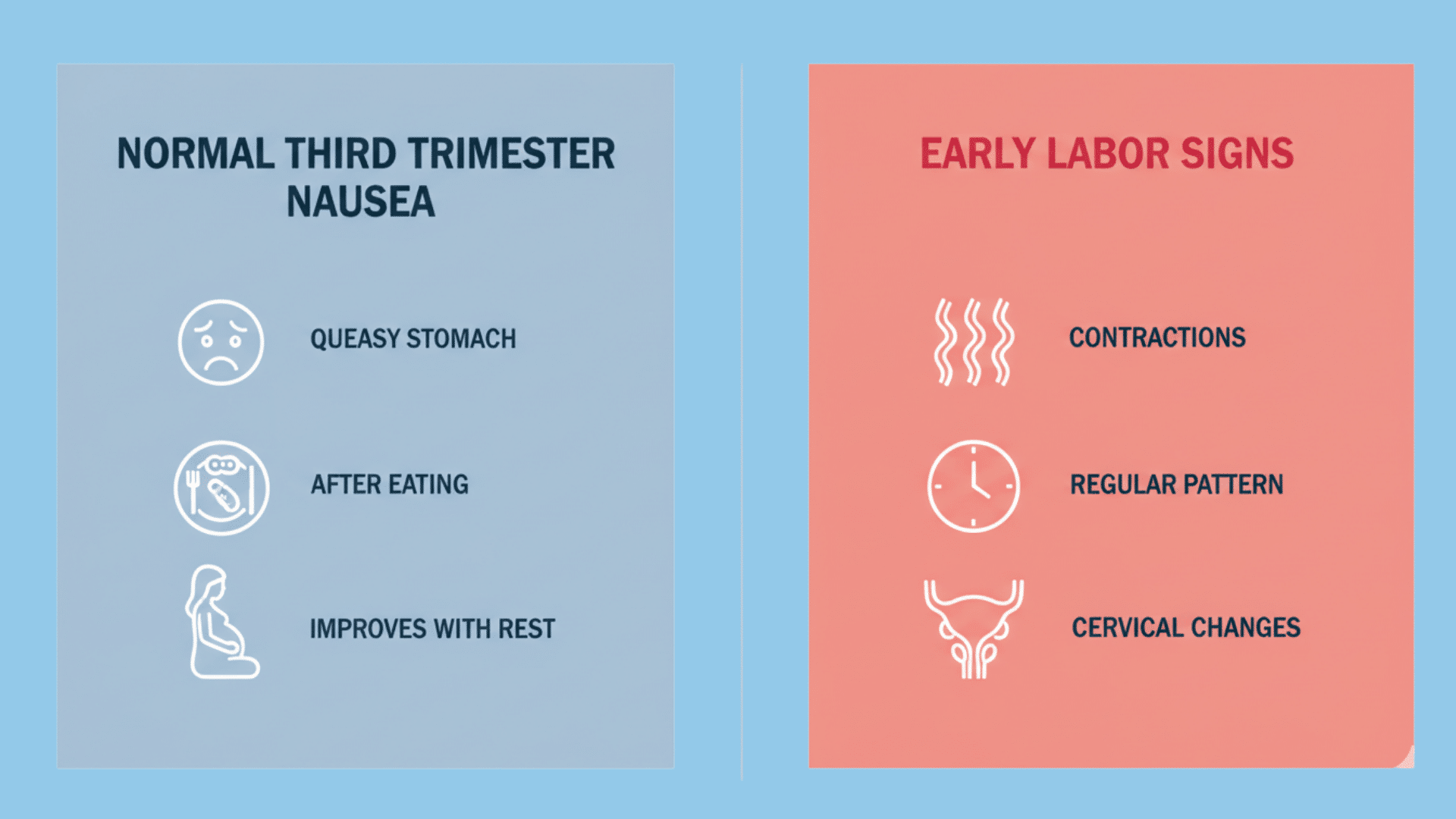
Knowing the difference between regular third trimester nausea and signs that labor might be starting helps you stay calm and prepared. Here is a comparison to help you understand what to watch for.
| Aspect | Regular Third Trimester Nausea | Pre-Labor Signs |
|---|---|---|
| Timing | Can happen anytime during weeks 28 to 40 | Usually occurs in the days or hours before labor begins |
| Nausea Pattern | Comes and goes throughout the day, often after meals | May be constant or accompanied by digestive upset, like diarrhea |
| Other Symptoms | Heartburn, bloating, or fullness after eating | Regular contractions, back pain, bloody show, or water breaking |
| Contractions | No contractions, or only occasional Braxton Hicks | Strong, regular contractions that get closer together and are more intense |
| Back Pain | General discomfort or pressure | Rhythmic lower back pain that comes in waves |
| Energy Level | Varies, often tired but normal | Sudden burst of energy (nesting) or extreme fatigue |
| Cervical Changes | No changes | Mucus plug release, bloody show, or water breaking |
| What to Do | Manage with diet, hydration, and rest | Time contractions and call your healthcare provider |
If you experience nausea along with regular contractions, severe back pain, or any fluid leaking, contact your doctor or midwife right away. These could be signs that labor is starting, especially if you are near your due date.
Main Causes of Third Trimester Nausea
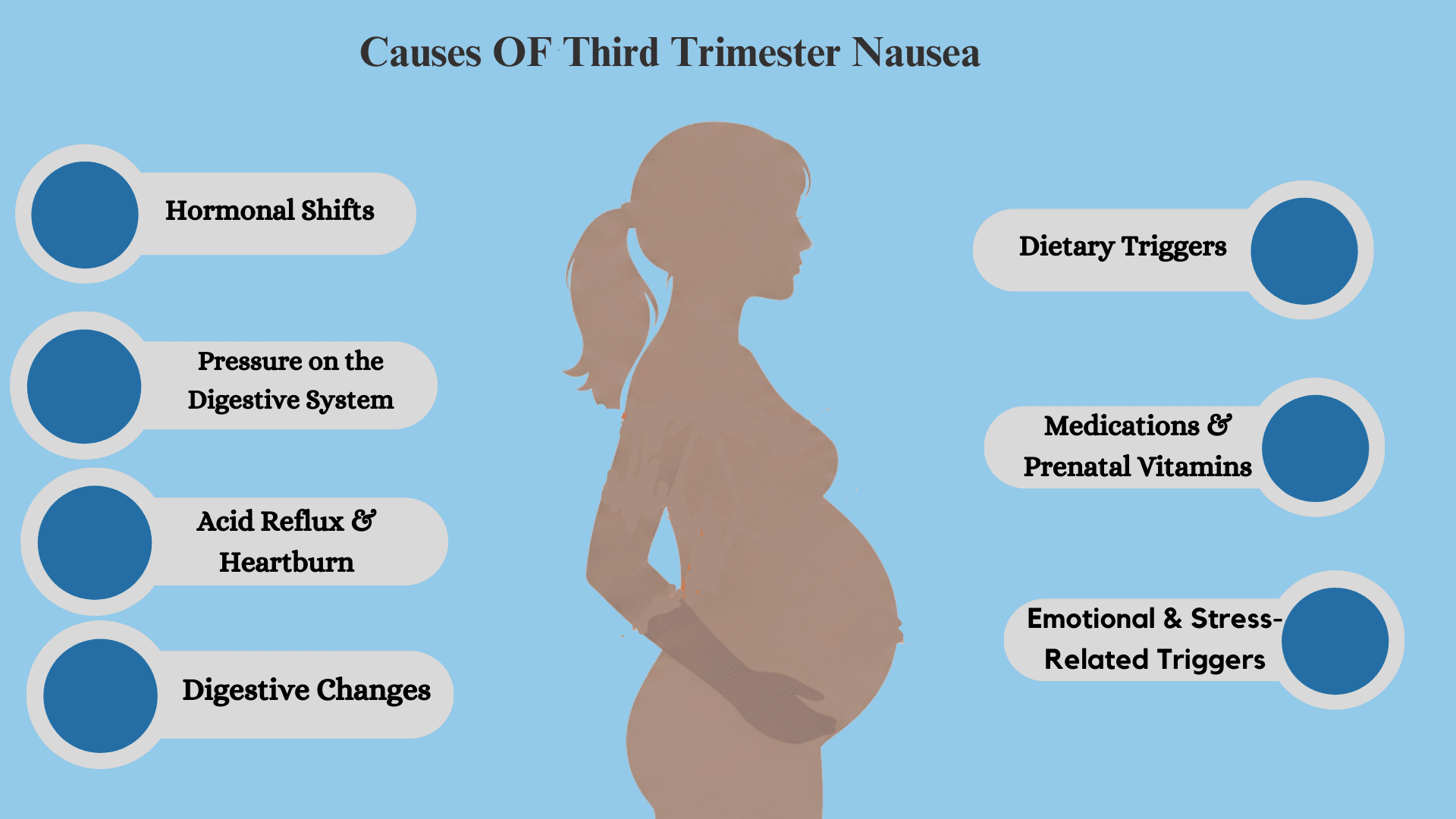
Understanding what triggers your nausea helps you find the right solutions. Here are the most common reasons women feel queasy during their final trimester.
1. Hormonal Shifts
Progesterone levels stay high throughout your third trimester to keep your uterus relaxed for your growing baby. This hormone slows down your entire digestive system, making food move more slowly and causing prolonged fullness that turns into nausea.
2. Pressure on the Digestive System
Your baby gains significant weight in the final trimester, and your expanding uterus pushes upward against your stomach. This compression reduces the space available for food, so even small portions can make you feel stuffed and queasy.
3. Acid Reflux & Heartburn
Acid reflux becomes a major player in third-trimester nausea due to both mechanical pressure and hormonal effects. Your growing uterus pushes stomach contents upward while progesterone relaxes the valve that normally keeps acid down, creating burning and nausea.
4. Digestive Changes (Constipation, Gas, Bloating)
Slower digestion in late pregnancy frequently leads to constipation, uncomfortable gas buildup, and bloating that trigger nausea. When waste moves sluggishly through your intestines, it ferments and creates pressure that makes you feel sick.
5. Dietary Triggers
Foods that were fine earlier in pregnancy might suddenly make you queasy in your third trimester. Spicy dishes, greasy or fried foods, and acidic items like citrus or tomatoes can worsen reflux and trigger immediate nausea.
6. Medications & Prenatal Vitamins
Prenatal vitamins contain high levels of iron that your baby needs, but they can also upset your stomach significantly. Some women feel queasy within 30 to 60 minutes of taking their vitamin, particularly on an empty stomach.
7. Emotional & Stress-Related Triggers
Worry about upcoming labor, financial concerns, or preparing for your new baby can show up as physical symptoms like nausea. When you feel stressed, your body redirects blood flow away from digestion, making existing queasiness worse.
When Nausea Needs Medical Attention?
While third-trimester nausea is usually harmless, certain warning signs mean you should call your doctor right away.
Severe symptoms can sometimes point to complications that need medical attention. Pay close attention to how your body feels and trust your instincts if something seems wrong.
- Severe or Persistent Vomiting: If you cannot keep any food or liquids down for more than 24 hours, you risk dehydration and need medical help.
- Dehydration: Dark yellow urine, feeling dizzy when you stand up, or having a very dry mouth are signs your body needs more fluids immediately.
- Severe Abdominal Pain: Sharp, constant pain in your belly, along with nausea, could signal a serious problem like gallstones or liver issues.
- Headaches and Vision Changes: Sudden severe headaches, blurry vision, or seeing spots alongside nausea may indicate preeclampsia, which is dangerous for you and your baby.
Effective Ways to Alleviate Third Trimester Nausea
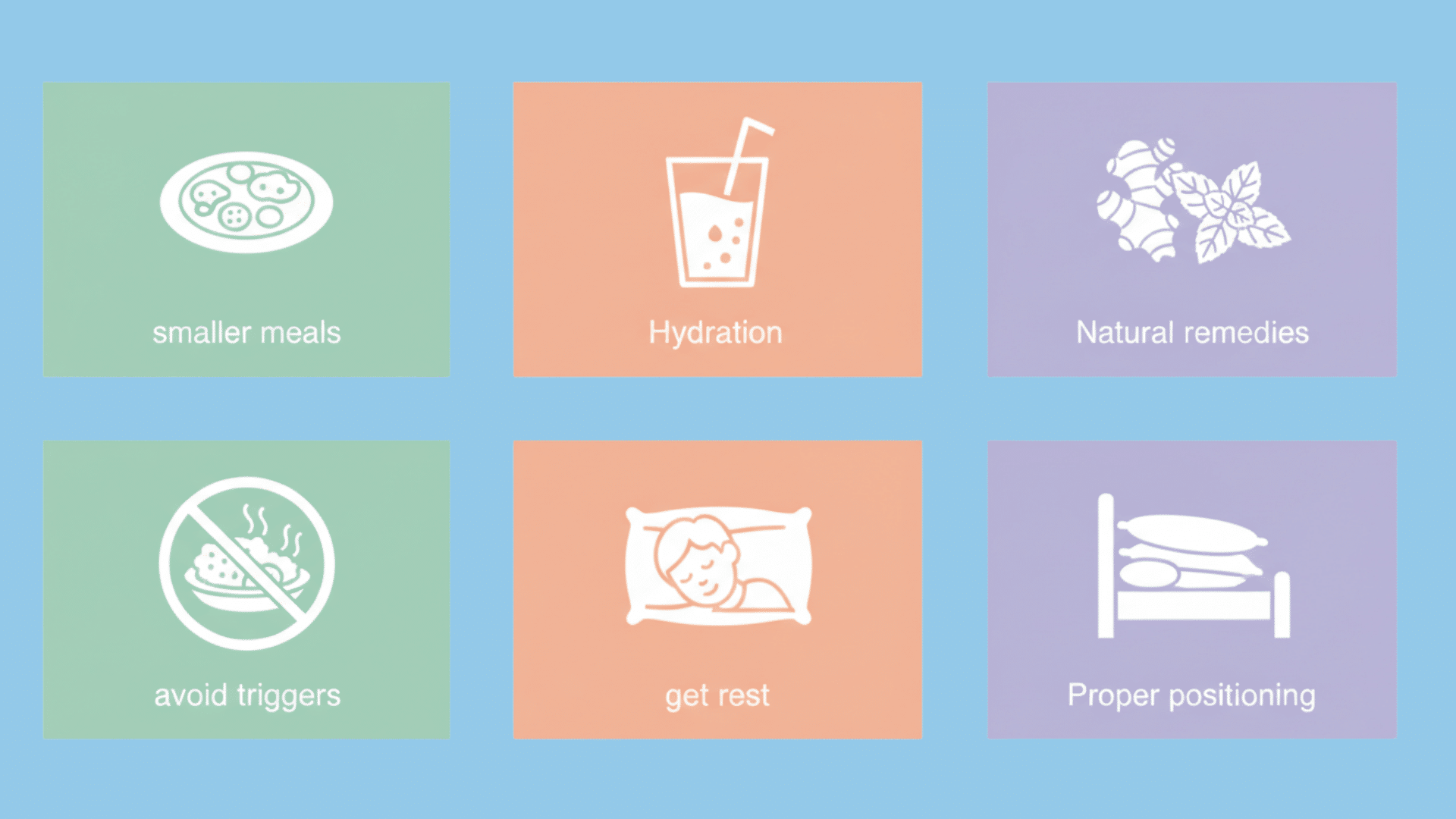
Fortunately, there are several ways to ease nausea in the third trimester. While some methods are purely lifestyle-based, others involve dietary adjustments and natural remedies.
1. Eat Smaller, More Frequent Meals
Eating large meals can make nausea worse. Instead, try eating smaller meals throughout the day. Focus on easy-to-digest foods like crackers, rice, and toast. This will help keep your stomach from becoming too full and reduce pressure on your digestive system.
2. Stay Hydrated
Dehydration can worsen nausea, so it’s important to drink plenty of fluids. Sipping water or clear fluids slowly throughout the day can help keep nausea at bay. You can also try electrolyte drinks to stay hydrated and maintain your balance of minerals.
3. Try Natural Remedies
Several natural remedies have been shown to help alleviate nausea:
- Ginger: Whether in the form of ginger tea, ginger ale, or ginger candies, ginger is known for its anti-nausea properties.
- Peppermint: Peppermint tea or even sucking on peppermint candies can provide relief from nausea and indigestion.
- Acupressure: Some women find relief by applying pressure to the P6 acupressure point on the wrist.
4. Avoid Trigger Foods
Certain foods can trigger nausea, especially when eaten in large quantities. Try to avoid spicy, greasy, and acidic foods that could upset your stomach. Instead, opt for bland, easily digestible options like oatmeal, bananas, and plain rice.
5. Get Plenty of Rest
Fatigue can make nausea worse, so make sure you’re getting plenty of rest. Take naps if needed, and avoid overexerting yourself.
6. Use Positioning to Reduce Nausea
Try propping yourself up with pillows while sleeping to prevent acid reflux. Additionally, avoid lying down immediately after eating to reduce the likelihood of nausea caused by indigestion.
| Important Medical Note: Always consult your healthcare provider before trying new treatments during pregnancy. If nausea is severe, your doctor can prescribe safe medications like vitamin B6 with doxylamine. Never take over-the-counter nausea medications without checking with your provider first. |
When to See a Doctor?
Contact your healthcare provider immediately if you experience severe or persistent vomiting that prevents you from keeping any food or water down for more than 12 hours.
Watch for dehydration signs like dark urine, extreme thirst, dizziness, or a racing heartbeat.
Call your doctor right away if nausea comes with sudden, severe headaches, vision problems like blurriness or seeing spots, upper abdominal pain under your ribs, or rapid swelling in your face and hands.
These symptoms could indicate serious conditions like preeclampsia or HELLP syndrome, which require urgent medical attention to protect both you and your baby.
Trust your instincts; if something feels wrong or different from your normal pregnancy discomfort, it is always better to call and get checked than to wait and worry.
Final Thoughts
Third-trimester nausea can be uncomfortable, but it is usually manageable with the right approach.
Small dietary changes, staying hydrated, and finding positions that reduce pressure on your stomach make a real difference.
Remember that this discomfort is temporary and means your body is working hard to prepare for your baby’s arrival.
Pay attention to warning signs like severe vomiting or sudden headaches, and never hesitate to call your doctor when something feels off.
Have you dealt with third-trimester nausea? What helped you feel better? Share your tips in the comments below to help other expecting mothers.