
The ever-accelerating pace of the 21st century has blurred the line that previously existed, cleanly dividing professional duty from personal renewal.
As remote working becomes ever more mainstream, remaining “on and connected” at all hours of the day and night, a new reality exists in which one’s house is more than simply a dwelling; in fact, it is a shelter, a gym, and, inevitably, a personal wellness spa.
Among many high-end amenities that are presently popular, one that has come to define cutting-edge domestic wellness is undoubtedly the home sauna.
In fact, rather than simply being a nostalgic Scandinavian tradition, even the sauna has undergone a transformation, reflecting instead the trends of contemporary biohacking and preventative healthcare. Thus, today it symbolizes a healthy approach in direct harmony with a lifestyle of peak performance.
The Evolution of Domestic Wellness
In the past, people would travel long distances to visit high-end spas or specialized centers (ECT) to receive various types of thermal therapies.
Today, however, consumers want both convenience and a sense of privacy; most do not have time for long commutes. By placing high-quality thermal saunas directly within the home, consumers can experience the benefits of sauna therapy daily without the hassle of commuting.
People are also more aware of their “environmental medicine,” which explains why residential use of saunas continues to grow.
As we learn more about how the environments around us—including light, air quality, and temperature—influence hormones and nervous systems, we can become more empowered by choosing to install saunas in our homes to create environments in which they (and homeowners) have a positive effect on both their bodies and the environment around them (i.e., trees, flowers, etc.).
By doing this, homeowners are creating an environment intentionally designed to encourage the body’s natural response to heat (thyroid stimulation) and producing the positive physiological impacts of hormesis.
The Science of Hormetic Stress
One of the key elements of the appeal of saunas is the principle of hormesis: the biological process by which a brief dose of a low level of stress will cause an adaptation of the cell to improve its overall vitality. Upon entering a sauna, your body temperature increases to cause a state of hyperthermia.
This stimulus eventually activates the secretion of Heat Shock Proteins (HSPs). These are often referred to as the “bodyguards” of cells, as they repair damaged proteins and make sure that the bodily functions are running at their best.
The activation of the heat shock response due to this heat stress has been repeatedly linked to the prevention of cardiovascular diseases, inflammation, and neurodegenerative diseases. This isn’t merely a stress-relieving mechanism for the modern professional; it is also a path to longevity and brain upkeep.
Infrared vs. Traditional: Choosing Your Technology
When it comes to investing in health through heat, the most common consideration is the delivery of the heat source.
Traditional sauna methods use steam and heated stones to warm the air surrounding people; typical temperatures for a traditional sauna range from 150°F to 190°F; people typically enjoy an intense sweating session with the deep/good inhalation of hot air, clearing the lungs.
In contrast, many new-age sauna users have switched over to infrared heat. Infrared sauna manufacturers such as Sun Home Saunas use infrared wavelengths that can penetrate deep within the human body, whereas traditional saunas are often too hot to be enjoyable for extended periods of time, especially for people who tend to be on the move.
In addition, because of the fast installation of the infrared heating element, there is significantly less wait time before using the infrared sauna than there is when using either a wood-burning or electric heater.

Mental Health and the “Digital Detox”
Although the benefits related to sauna use are very well-known when it comes to health, the psychological aspect seems to be more applicable in today’s environment. We are currently living in an age where our brains are working all the time. The sauna has one of the very few “analog” places left in a “digital” age.
There is also no doubt that the heat of the sauna forces a state of mindful presence. It’s a place where smartphones must be left behind—the heat damage to the device, coupled with the inability to use the touchscreen due to the presence of moisture, makes it an absolute necessity to jettison the phone in a different room.
This forces a necessary 20-minute window of meditation and reflection. There is also the release of dynorphins, the initial pain of which increases the endorphin sensitivity and production of endorphins, allowing users to describe the after-effect of the sauna as “sauna highs.” In an era of deteriorating burnout and increasing rates of anxiety, the necessity of the daily reboot cannot be overstated.
Aesthetics and Integration in Modern Interior Design
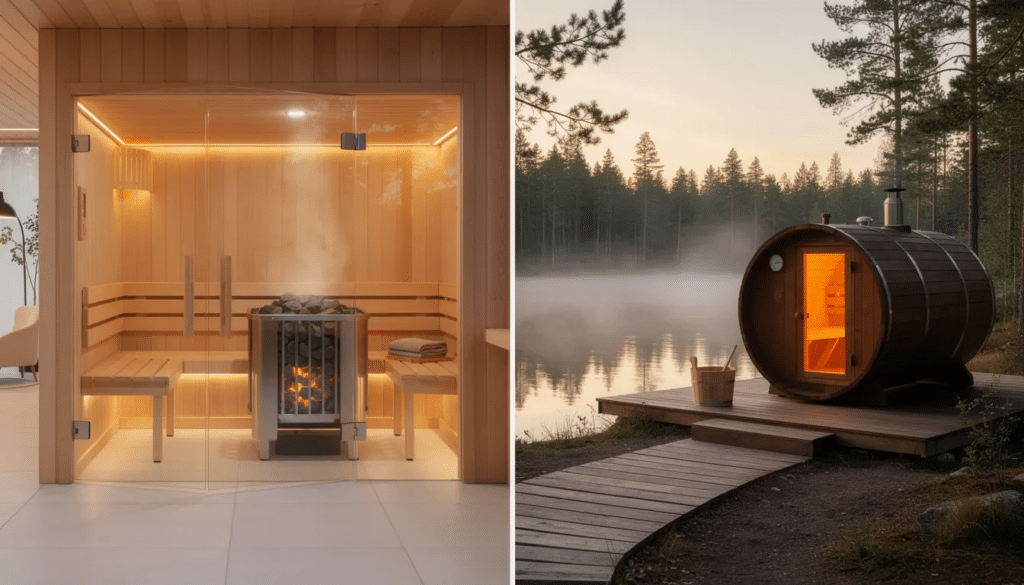
In terms of sauna design, the sauna has moved away from being an ugly, heavy box found in the basement to become a lovely feature within a house.
This sauna has become a pleasant feature within a house by using Canadian Cedar, Hemlock, and glass. In contemporary sauna designs, a focus of interest has been introduced within a house that happens to be undertaking either a minimalist or luxury design program.
The sauna will add to the worth of a house, irrespective of the type of house that is built. The sauna is a symbol of a person in pursuit of a luxurious lifestyle; this is like a person possessing a gourmet kitchen or a home theatre system.
Cardiovascular Health and Athletic Recovery
The sauna is considered the ultimate recovery tool for anyone who is serious about their fitness.
Heat therapy uses the power of heat to increase circulation in your muscles, helping them heal from micro teared muscles by providing them with the nutrients and blood that are necessary to grow back stronger and to eliminate metabolic waste products from your muscles (i.e., lactic acid).
From a cardiovascular standpoint, sitting in a sauna can be referred to as a form of “passive exercise.” As your heart rate increases in response to the increased blood flow to the skin (to cool off), your cardiovascular system gets a workout that parallels moderate-intensity aerobic exercise.
For individuals who have difficulty moving their bodies (e.g., those with disabilities) or for someone who is taking an “active recovery” day, the sauna can be a way to provide cardiovascular benefit without the impact to their joints that would be incurred through running or weight training.
Final Thoughts
As we look ahead in the residential lifestyle of the future, wellness is no longer an appendage but the base requirement. The inclusion of a sauna in the home signals the paradigm shift from the reactive notion of healthcare (sickness management) to proactive wellness (health optimization).
In connecting the old and the new, the home sauna is, therefore, a complex approach to the challenges of the modern world. It is a refuge for the mind, a laboratory for the body, and an eternal feature within the dwelling. In the quest for living in harmony and in optimal style, the sauna, rather than a mere indulgence, is an absolute tool for extended life.