
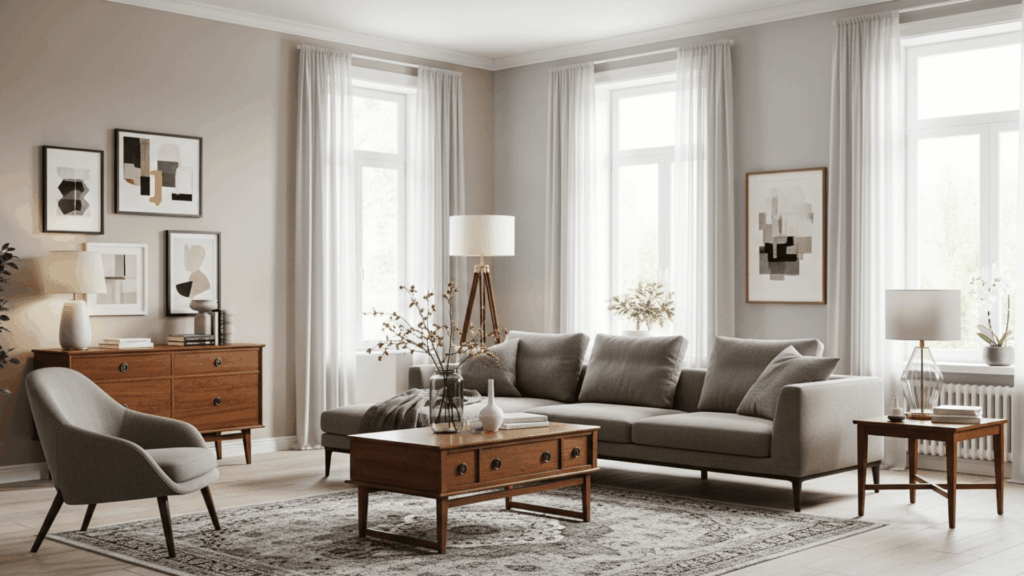
Tired of choosing between the cozy feel of traditional style and the clean look of modern design? Transitional interior design solves this problem by bringing both worlds together.
This approach lets you keep your grandmother’s wooden dresser while adding that sleek lamp you’ve been eyeing. No more feeling stuck between two styles.
In this guide, you’ll learn exactly what makes transitional design work. We’ll cover its key characteristics, compare it to other styles, and share practical room-by-room ideas.
You’ll also get expert tips on where to invest your budget and how to source the right pieces. By the end, you’ll know how to create a balanced, timeless home that reflects your personal taste.
What Is Transitional Interior Design?
Transitional interior design blends traditional and contemporary elements to create a timeless look.
It takes the warmth and classic details from traditional design and combines them with the clean lines of modern style. This balanced approach creates spaces that feel both comfortable and current.
The style gained popularity in the late 1990s as homeowners sought to mix old and new pieces. Today, it remains highly sought after for its flexibility and never feels outdated.
Key Characteristics of Transitional Interior Design
Understanding the core features of transitional interior design helps you create this balanced style in your own home. Here are the defining characteristics that make this design approach so versatile and appealing.
- Neutral Colour Palette: Transitional spaces rely on soft, neutral tones such as creams, beiges, grays, and taupes, creating a calm, sophisticated backdrop for both traditional and modern pieces.
- Balanced Blend of Traditional + Modern Furniture: This style combines classic furniture silhouettes with clean, modern lines to create a look that honors the past while staying current and fresh.
- Symmetry and Proportion: Balanced layouts and proper visual harmony are essential in transitional design, creating spaces that feel organized and naturally pleasing to the eye.
- Texture Layering: Mixing different fabrics like linen, wool, and velvet adds depth and visual interest without overwhelming the clean, neutral foundation of the space.
- Statement Lighting & Subtle Details: Lighting serves as a focal point in transitional rooms, often featuring fixtures that blend traditional shapes with contemporary finishes for added character.
Comparing Transitional Interior Design with Other Popular Styles
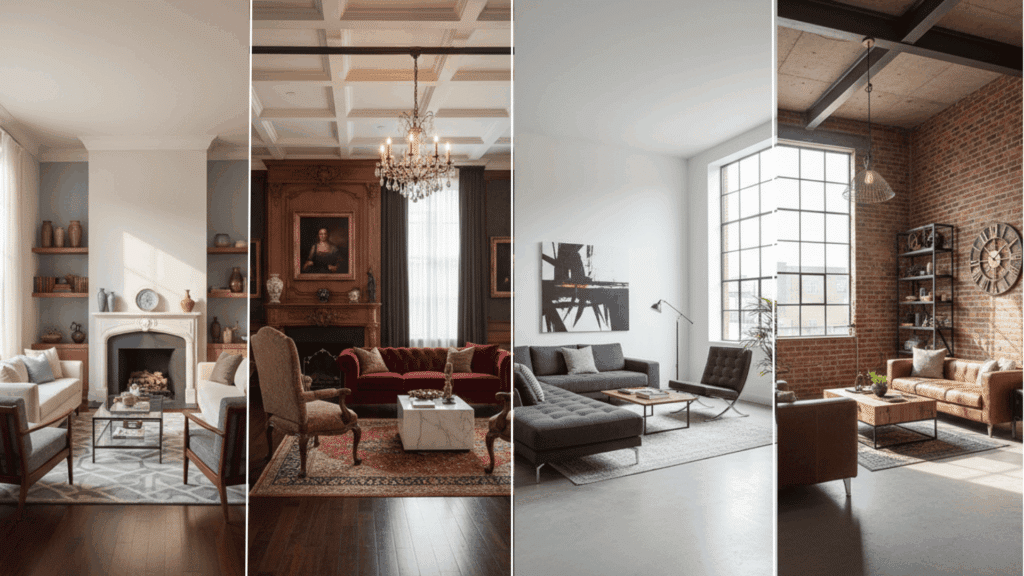
Knowing how transitional interior design differs from other styles helps you identify what works best for your space. Here’s a quick comparison to clarify the key distinctions.
| Design Style | Key Features | How It Differs from Transitional |
|---|---|---|
| Traditional | Ornate details, rich woods, formal arrangements | Less ornate and more streamlined, with cleaner lines and lighter colors |
| Modern/Contemporary | Minimalist, stark contrasts, sleek materials | Softer and warmer with more texture, comfort, and decorative touches |
| Modern Farmhouse | Rustic wood, shiplap, vintage pieces | More polished and refined with fewer rustic or country elements |
| Industrial | Exposed brick, metal, and raw materials | Adds warmth and comfort with upholstered pieces and softer finishes |
8 Ways to Infuse Transitional Design into Your Home
Ready to bring transitional interior design into your space? These practical ideas will help you blend traditional warmth with modern simplicity in every room of your home.
1. Layer Neutral Textures in Your Living Room
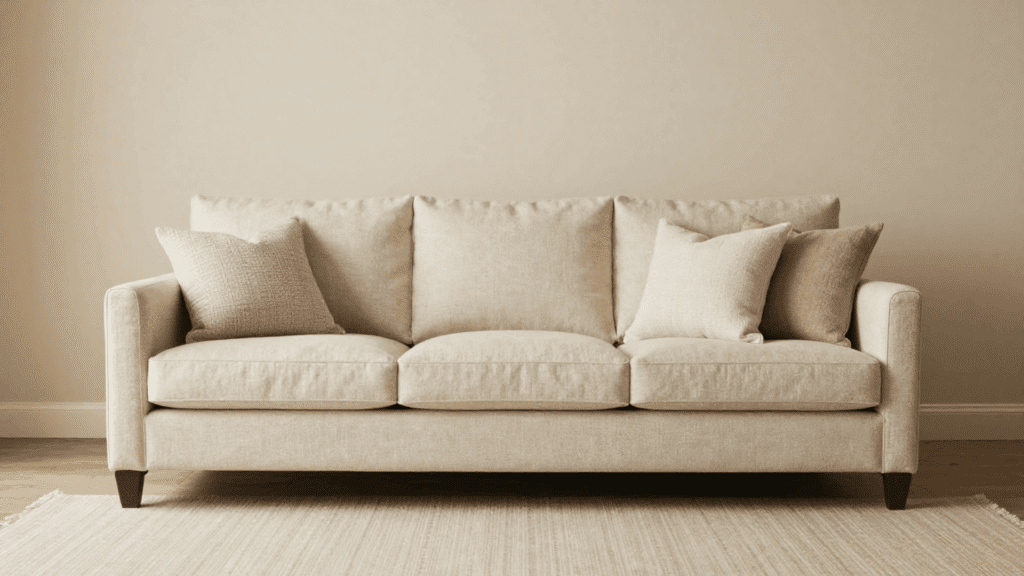
Create depth and comfort in your living room by mixing different textures while keeping the color palette neutral. This approach adds visual interest without creating chaos. The key is to combine soft and structured materials.
How to do it:
- Add an area rug in cream or beige to anchor the seating area
- Place velvet cushions on a linen sofa for contrast
- Hang linen or cotton curtains to soften hard edges
- Mix smooth leather with woven fabrics for variety
2. Add Traditional Wood Elements
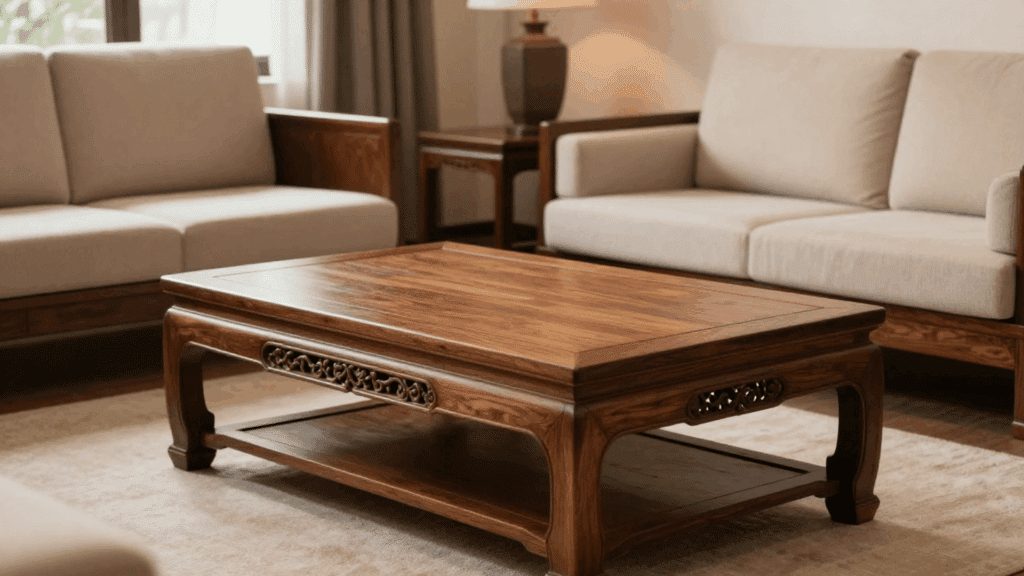
Natural wood furniture brings warmth and classic appeal to modern spaces. Wood pieces bridge old and new design styles. Choose pieces with simple lines to keep the look current.
Wood elements to include:
- A wooden coffee table with clean, simple legs
- Natural wood dining chairs paired with modern table bases
- Wooden side tables with minimal details
- Wood-framed mirrors or picture frames
3. Mix Statement Lighting Fixtures
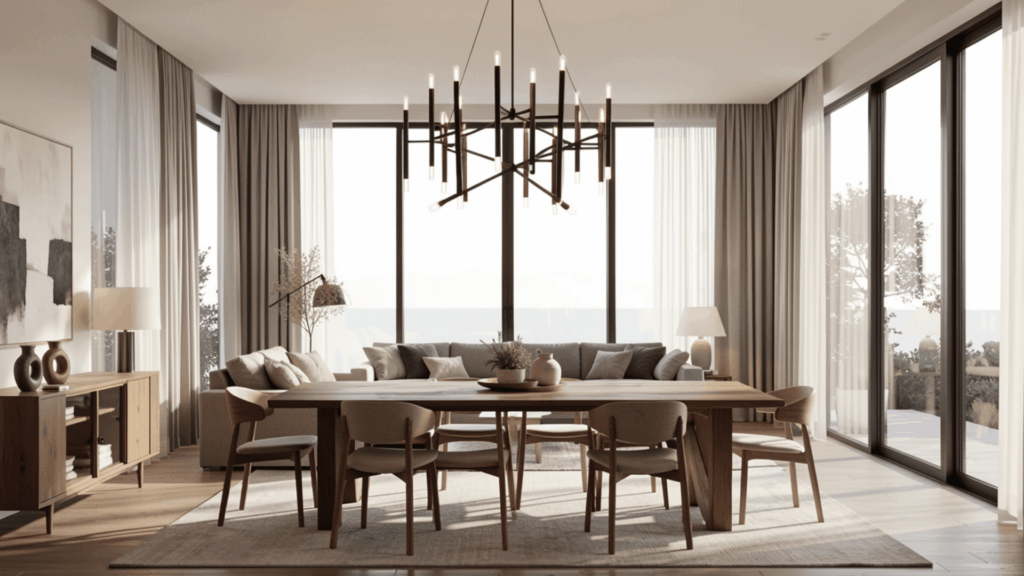
Lighting can define your space and set the transitional tone. Combining different lighting styles creates an interesting focal point. This mix adds character while maintaining balance.
Lighting combinations to try:
- Pair a contemporary chandelier with traditional table lamps
- Use modern pendant lights over a classic dining table
- Add a sleek floor lamp next to a traditional armchair
- Install updated wall sconces with vintage-inspired bulbs
4. Use Minimalist Artwork with Classic Frames
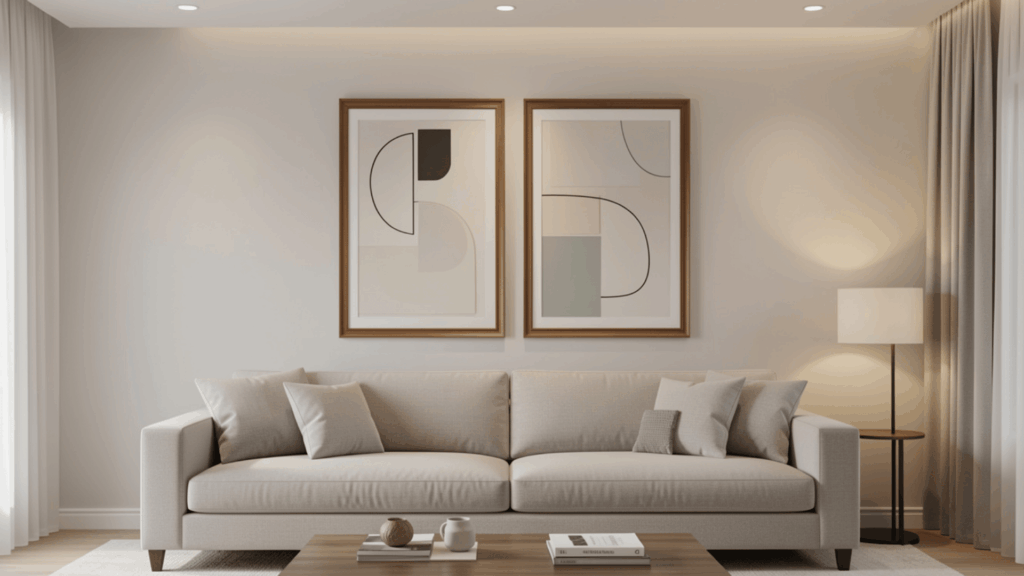
Art choices can tie your entire design together. Simple artwork in traditional frames creates the perfect balance. This approach honors both design styles without picking a side.
Art ideas for transitional spaces:
- Choose abstract prints with neutral colors
- Frame black and white photography in wooden frames
- Display simple line drawings in classic gold or silver frames
- Use oversized single pieces instead of busy gallery walls
5. Create a Relaxing Bedroom
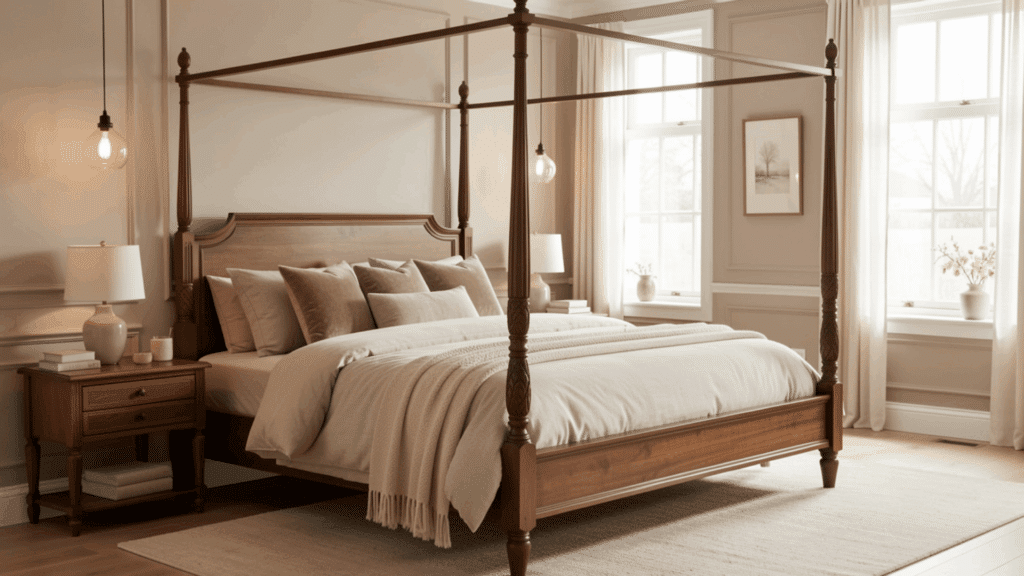
Your bedroom should feel like a calm retreat that blends comfort with style. Mixing traditional furniture with modern bedding creates a soothing space. This combination makes the room feel both familiar and fresh.
Bedroom transitional touches:
- Use a traditional four-poster or upholstered bed frame
- Add modern neutral bedding in whites, grays, or taupes
- Include a classic wooden dresser with simple hardware
- Layer textures with a wool throw and cotton sheets
6. Integrate Glass and Metal in the Kitchen
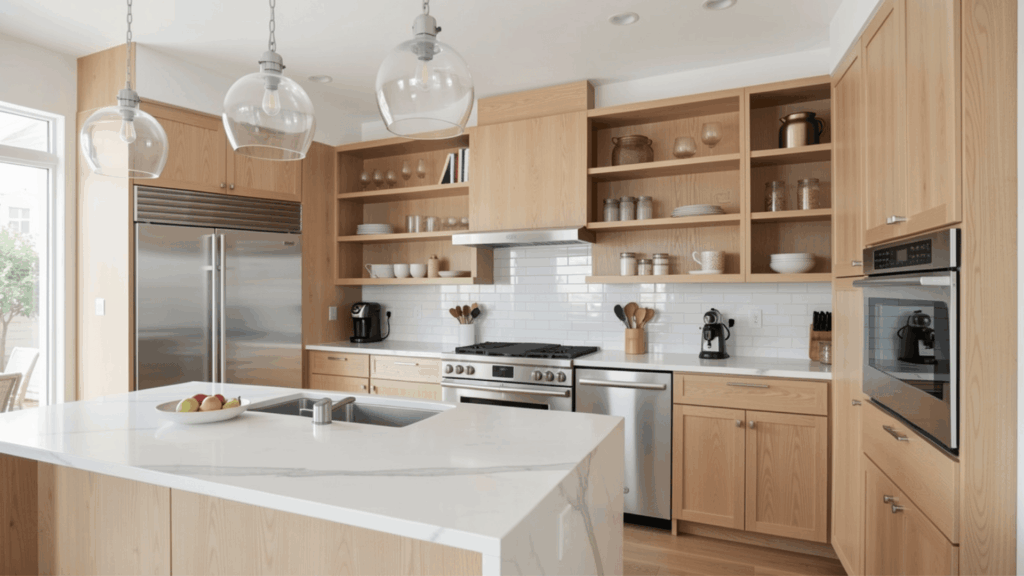
Kitchens benefit from the balance of warm and cool materials. Glass and metal bring modern elements while wood adds traditional warmth. This mix creates a functional and beautiful cooking space.
Kitchen material combinations:
- Install glass pendant lights over the island
- Choose modern stainless steel appliances
- Keep wooden or painted cabinetry for warmth
- Add metal bar stools with upholstered seats
7. Update Your Bathroom
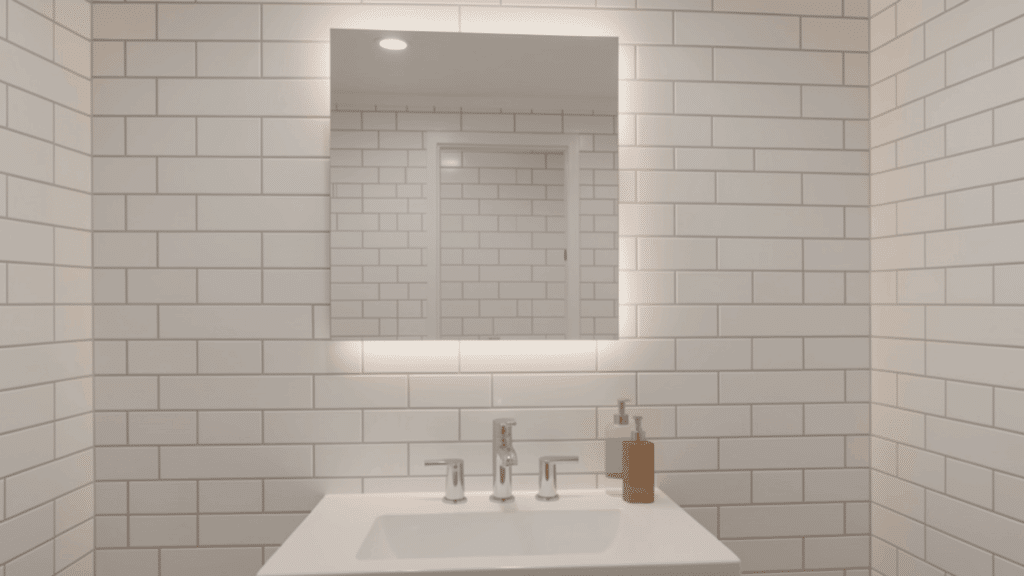
Bathrooms are perfect spaces to practice transitional design. Classic tiles paired with modern fixtures create a timeless look. This combination feels clean and inviting.
Bathroom update ideas:
- Use white subway tiles on walls or in the shower
- Install modern chrome or matte black faucets
- Add a traditional vanity with updated hardware
- Include a frameless mirror for a contemporary touch
8. Add Transitional Wall Art in Entry Spaces
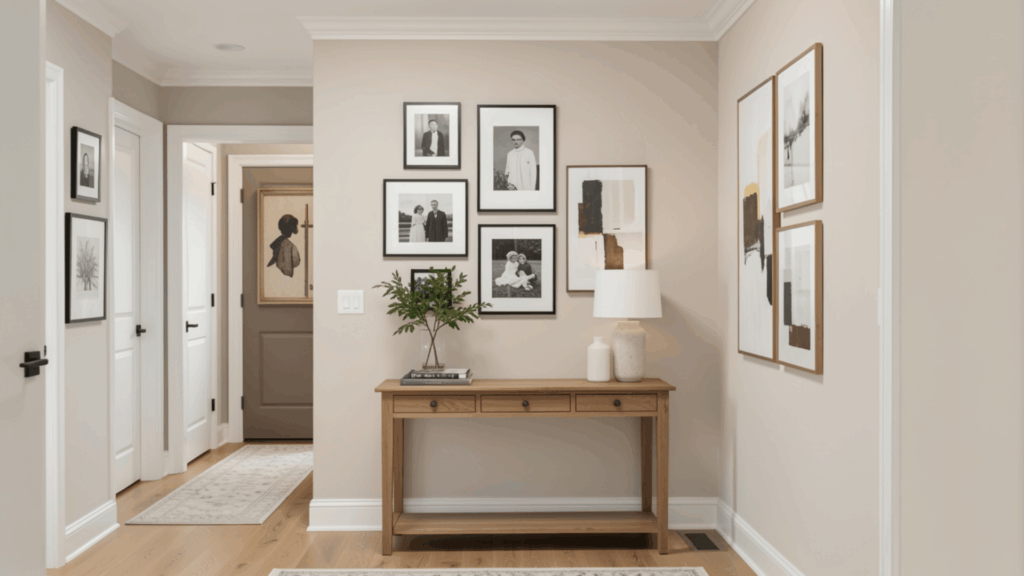
Hallways and entryways set the tone for your entire home. The right wall art creates a welcoming first impression. These spaces are ideal for showcasing the transitional blend.
Entryway art suggestions:
- Hang a large framed mirror with simple detailing
- Display subtle abstract art in neutral tones
- Use a collection of black and white photos
- Add a statement piece that combines both styles
Room-by-Room Transitional Design Ideas
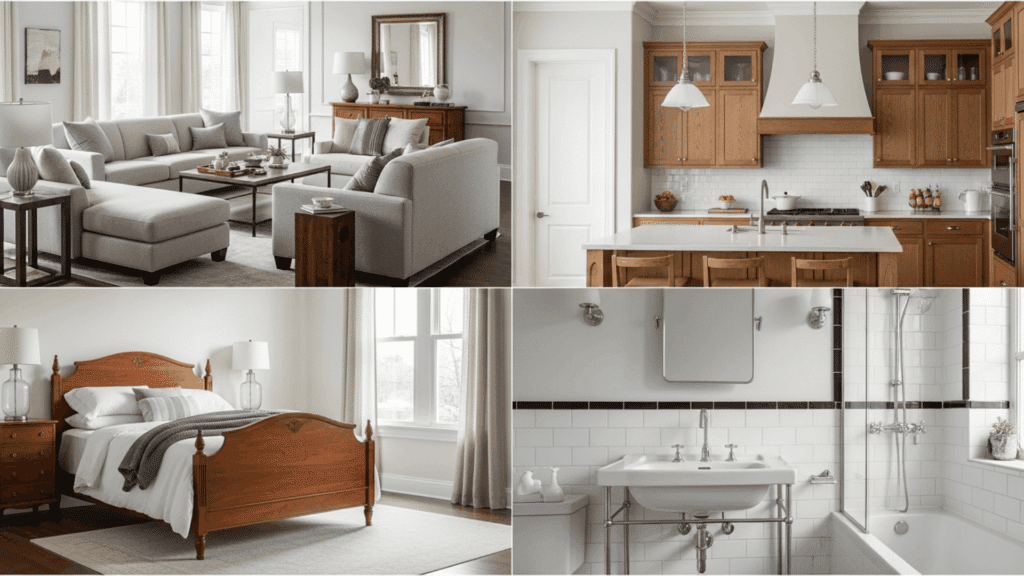
Applying transitional interior design looks different in each room of your home. Here’s how to create this balanced style in your most-used spaces.
1. Living Room Inspiration
Combine a traditional sofa with modern accent chairs to create visual interest. Layer your lighting with a contemporary chandelier, classic table lamps, and natural light.
Add a neutral-toned area rug to anchor the furniture and soften hard flooring.
2. Kitchen Transitional Touches
Choose transitional-style cabinetry in white or soft gray tones for a timeless base. Update the look with modern hardware, such as brushed nickel or matte black handles.
Pair these with contemporary lighting fixtures and stainless steel appliances for the perfect balance.
3. Bedroom Design Tips
Mix bedding textures by layering cotton sheets with a velvet throw or wool blanket. Use a traditional upholstered headboard with modern bedside tables for contrast.
Add accent lighting through contemporary sconces or a classic table lamp with an updated shade.
4. Bathroom Transitional Decor
Install classic white subway tiles or marble patterns on walls and floors. Pair these timeless materials with contemporary fixtures, such as sleek faucets and modern showerheads.
Add a traditional wooden vanity with updated hardware to complete the look.
Expert Tips from Designers to Master Transitional Design
Learning from professionals can help you avoid common mistakes when creating transitional interior design in your home. Here are five expert-approved tips to guide your design process.
- Start with a Neutral Foundation: Begin with neutral wall colors and large furniture pieces before adding decorative elements, creating a flexible base that works with both traditional and modern accents.
- Invest in Quality Key Pieces: Spend your budget on timeless furniture like a good sofa, dining table, or bed frame that will last for years and serve as anchors for your design.
- Mix High and Low Price Points: Combine investment pieces with affordable accessories and decor items to achieve a balanced look without breaking your budget.
- Source from Multiple Retailers: Shop at both traditional furniture stores and modern retailers to find pieces that complement each other and create an authentic transitional style.
- Focus on Lighting as Your Statement: Use lighting fixtures to make bold statements while keeping other elements subtle, creating visual interest without overwhelming the space.
Why Choose Transitional Interior Design?
Transitional interior design offers timeless appeal and works with any architectural style.
It satisfies both classic and modern preferences, making it ideal for couples and families with different tastes. The style’s flexibility means your home stays relevant for years without major updates.
This approach also boosts resale value. The neutral, balanced look attracts more buyers because most people can imagine living in these spaces.
This broad appeal often leads to faster sales and better offers when you decide to move.
Closing Remarks
Transitional interior design gives you the freedom to blend comfort with style. You don’t have to pick sides anymore.
This approach creates homes that feel both inviting and current, spaces that work for everyone in your family. The best part? You can start small with just a few changes and build from there.
Ready to change your space? Begin with one room using the tips we’ve shared. Mix a traditional piece with something modern. Layer neutral textures. Add statement lighting. Take it step by step and see what feels right for you.
What’s your favorite transitional design idea from this guide? Share your thoughts in the comments below, and let us know how you plan to use this style in your home.