


Ever heard someone mention living in a bedroom community and wondered what that actually means? The term sounds odd at first.
Why would an entire town be called a bedroom? It’s not about furniture or sleep schedules. This phrase describes a specific type of residential area where people live but rarely work.
Understanding what makes a place a bedroom community can help you decide if this lifestyle fits your needs.
In this guide, we’ll explain the meaning behind the term, explore how these communities developed, compare them to suburbs and exurbs, and weigh the pros and cons of calling one home.
You’ll also see real examples and get practical tips for choosing the right area.
What is Bedroom Community?
A bedroom community is a residential area where most people live but commute to other places for work.
Think of it as a town full of homes where families sleep and relax, but the jobs are somewhere else. The term “bedroom” is used because these areas primarily serve as places where people rest at the end of their workday.
They eat breakfast, come home for dinner, and spend their nights there. But during business hours, most residents travel to nearby cities or urban centers for employment.
It’s like the town becomes quiet during the day because everyone has left for work. This makes the community primarily a residential space rather than a commercial or business hub.
History of Bedroom Communities
Bedroom communities grew rapidly in the United States after World War II. Soldiers returned home and started families. They wanted affordable housing and safe neighborhoods. Cities became crowded and expensive. People began looking for alternatives outside urban centers.
Key factors that created bedroom communities:
- Automobile ownership increased dramatically in the 1950s and 1960s. More families could afford cars.
- Highway construction connected suburbs to cities. Commuting became faster and easier.
- Affordable housing was available in outlying areas. Young families could buy homes on larger lots.
- Workforce patterns changed as companies stayed in cities. Workers lived far away but traveled daily.
- Desire for space pushed families outward. Parents wanted yards and good schools for their children.
This shift created a new lifestyle pattern. People worked in one place but lived in another. The suburbs became sleeping towns while cities remained job centers. Today, this commuter culture is still common in many parts of the country.
Bedroom Community vs. Other Residential Types

People often confuse bedroom communities with suburbs or other related terms. Here’s how these concepts compare and what sets them apart.
| Term | Distance from City | Economic Activity | Population Density | Key Difference |
|---|---|---|---|---|
| Bedroom Community | Close to moderate | Very low, mostly residential | Moderate | Residents commute out for nearly all jobs |
| Suburb | Close to city limits | Moderate, has local businesses and jobs | Moderate to high | Some local employment exists, mixed residential and commercial |
| Commuter Town | Close to moderate | Very low | Moderate | Essentially the same as a bedroom community, just a different term |
| Exurb | Further from the city | Low to moderate | Low | More rural feel, longer commutes, less dense housing |
Bedroom communities and commuter towns mean the same thing. Suburbs may have more local jobs and shops. Exurbs sit even farther out with more space between homes. All three involve people who work in cities but live elsewhere.
Key Features of Bedroom Communities
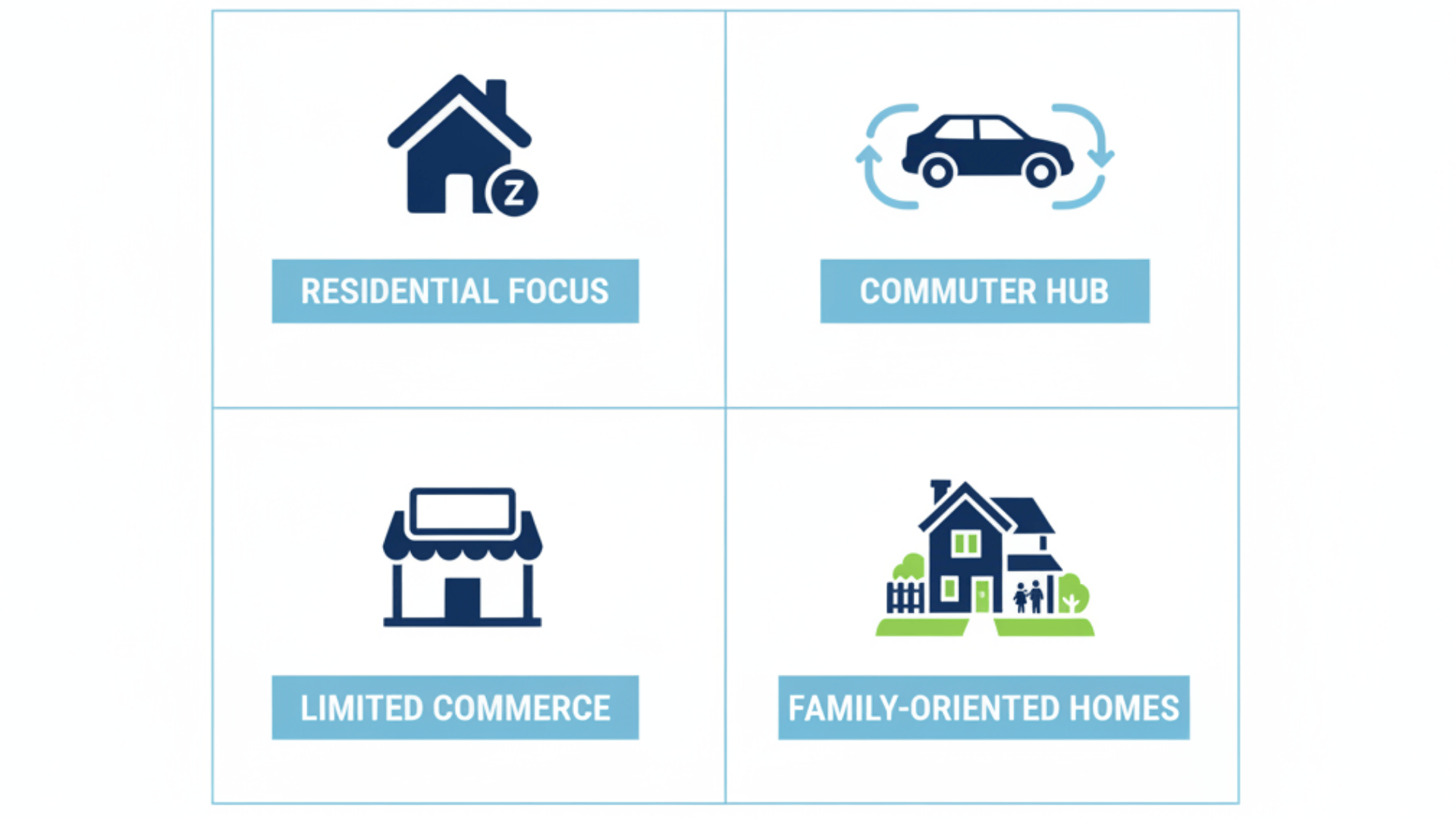
What makes a bedroom community different from other towns? These areas share several common features that set them apart.
1. Primarily Residential Zoning
Bedroom communities focus on homes, not businesses. You will find neighborhoods filled with houses, but very few factories or office buildings. Most commercial spaces are small shops or service businesses.
The zoning laws favor residential development over industrial growth. This keeps the area quiet and family-focused.
2. Commuter-Dependent Workforce
Most residents leave town each morning for work. Rush hour traffic flows outward toward nearby cities. In the evening, the pattern reverses as workers return home.
The community relies on highways and public transit for this daily movement. Local employment opportunities are limited compared to urban areas.
3. Smaller Commercial Activity
During weekdays, these towns feel quiet and empty. Main streets have fewer people walking around than in cities. Restaurants and shops see most of their business on evenings and weekends.
The daytime economy is minimal because workers are elsewhere. Life picks up only when commuters come back home.
4. Family-Oriented Housing
Homes tend to be larger with yards and multiple bedrooms. Single-family houses dominate the landscape instead of apartments.
Neighborhoods attract families with children seeking space and good schools. The housing market emphasizes comfort and room to grow. Parks and recreational facilities often outnumber business districts.
Pros & Cons of Living in a Bedroom Community
Living in a bedroom community comes with clear benefits and challenges. Understanding both sides helps you decide if this lifestyle fits your needs.
| Advantages | Drawbacks |
|---|---|
| Lower housing costs – Homes are more affordable with more space for your money. | Longer commute times – Daily travel eats up time and money on fuel or transit. |
| Peaceful environment – Quiet, safe neighborhoods with less traffic and noise. | Limited local jobs – Few employment options exist nearby. |
| Family-friendly – Good schools, parks, and neighbors with similar lifestyles. | Fewer amenities – Limited restaurants, shops, and entertainment options. |
| Strong community bonds – Smaller populations mean closer relationships with neighbors. | Car dependence – Public transit is often limited, making vehicle ownership necessary. |
Who Chooses to Live in a Bedroom Community?
Bedroom communities attract specific types of people based on their priorities and lifestyle choices. Here’s who typically calls these areas home.
- Families seeking safe neighborhoods and good schools: Parents choose these towns for their children’s safety and quality education options.
- Remote/hybrid workers valuing space and lifestyle: People who work from home part-time or full-time enjoy larger homes at lower prices.
- Professionals willing to commute for job opportunities: Career-focused individuals accept longer travel times in exchange for better housing and community life.
Examples of Bedroom Communities in the U.S.

Bedroom communities exist across the United States near major cities. These towns show how the concept works in real life. Each offers a mix of affordability, space, and access to urban job markets.
Near New York City: Towns such as Westchester County and various New Jersey communities serve as bedroom communities, with residents commuting to Manhattan for work.
Chicago Area: Suburbs and exurbs around Chicago primarily function as residential areas, with workers traveling into the city daily.
| Location | Commute Time to City | Lifestyle Highlight | Local Features |
|---|---|---|---|
| Westchester County, NY | 30-60 minutes by train | Tree-lined streets, historic homes | Top-rated schools, parks, and local shops |
| Summit, NJ | 45 minutes to NYC | Walkable downtown area | Family-oriented, strong community events |
| Naperville, IL | 40-50 minutes to Chicago | Safe neighborhoods, modern amenities | Quality schools, shopping centers |
| Lake Forest, IL | 45-60 minutes to Chicago | Lakefront living, spacious properties | Historic architecture, recreational facilities |
These examples show the typical bedroom community pattern. Residents get more space and lower costs. They trade convenience for a quieter lifestyle. The communities thrive because of their proximity to major employment centers while maintaining residential character.
How to Choose the Right Bedroom Community?
Choosing the right bedroom community requires careful consideration of several factors. Start by checking the commute time and available transit options to your workplace.
Look at local amenities like schools, parks, hospitals, and grocery stores that your family will use regularly. Visit the area to get a feel for the community vibe, safety, and available social activities.
Consider the economic stability of the town, especially if remote work is part of your plan or if you might need local employment later.
Finally, research real estate trends and home values to ensure your investment makes sense long term.
A good bedroom community should balance affordability, convenience, and quality of life without making daily commutes unbearable.
Wrapping It Up
A bedroom community is more than just a place to sleep. It’s a lifestyle choice that prioritizes space, affordability, and family-friendly environments over urban convenience.
These residential areas work well for people who don’t mind commuting to access better housing and quieter neighborhoods.
Before deciding whether a bedroom community fits your life, consider your tolerance for daily commutes, your family’s needs, and your long-term goals.
The right choice depends on what matters most to you. Are you considering a move to a bedroom community? Share your thoughts or questions in the comments below.
We’d love to hear about your experience or help you think through your decision.