

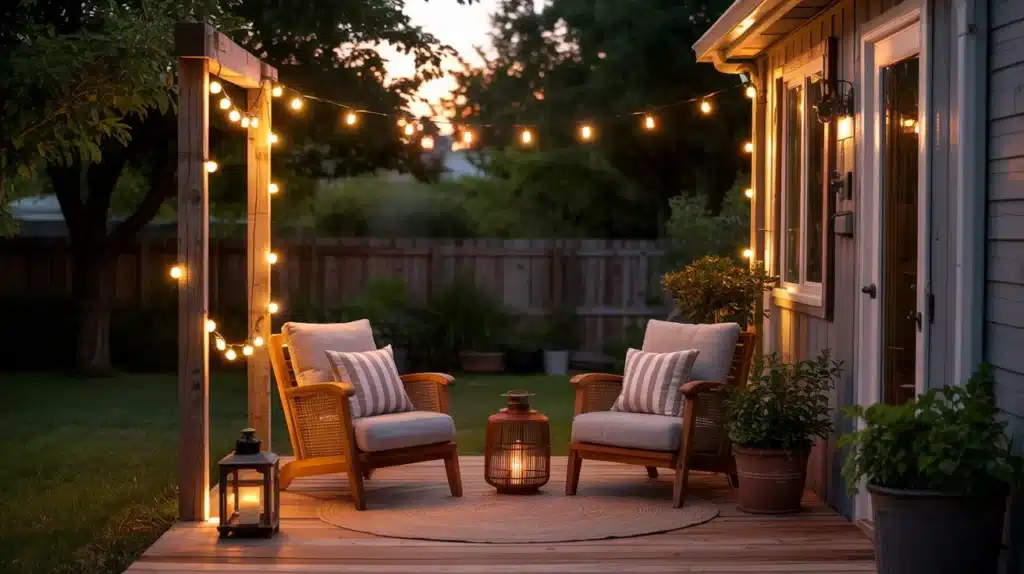
Most people hear “deck” and immediately think “expensive.” A contractor gives you an estimate. A neighbor mentions they spent $14,000. And just like that, the whole idea gets pushed aside.
But here is the truth. A solid, good-looking deck does not have to cost a fortune. Some of the best low-cost deck ideas involve basic materials, a clear plan, and a free weekend.
This post walks you through inexpensive deck ideas that actually work. You will also find a breakdown of the best budget materials, smart money-saving tips, and honest advice on when to build it yourself versus hiring someone.
Let us get into it.
How Much Does a Deck Cost?
A professionally built deck in the USA typically costs between $4,000 and $11,000, depending on size, materials, and labor.
However, a simple DIY deck using pressure-treated lumber can cost as little as $600 to $2,000 in materials, which makes budget-friendly deck building very much within reach for most homeowners.
Best Inexpensive Deck Materials to Consider
Choosing the right material is the first real decision you make with a budget build. Get this right, and everything else becomes easier.
Here are the most affordable decking materials worth considering:
- Pressure-Treated Lumber: The most budget-friendly wood option in the USA, widely available at Home Depot and Lowe’s, and built to last 15 to 25 years with proper care.
- Cedar: Slightly more expensive than pressure-treated wood but naturally resistant to rot and insects, which means lower long-term maintenance costs.
- Budget Composite Decking: Costs more upfront but requires almost no maintenance. Look for factory seconds or clearance boards to bring the price down.
- Reclaimed Wood: Often free or very cheap when sourced from salvage yards, Facebook Marketplace, or Habitat for Humanity ReStores. Always inspect for rot before use.
- Snap-On Deck Tiles: Interlocking tiles that sit on top of any flat surface. No framing or building is required, and they cost $2 to $6 per square foot.
- Pallets: Free or close to it from local warehouses or stores. Best for ground-level builds and short-term setups.
Inexpensive Deck Ideas
You do not need a massive budget to create an outdoor space you actually use. These affordable deck ideas range from full builds to quick upgrades, and each one is practical and proven.
1. Build a Simple Ground-Level Platform Deck
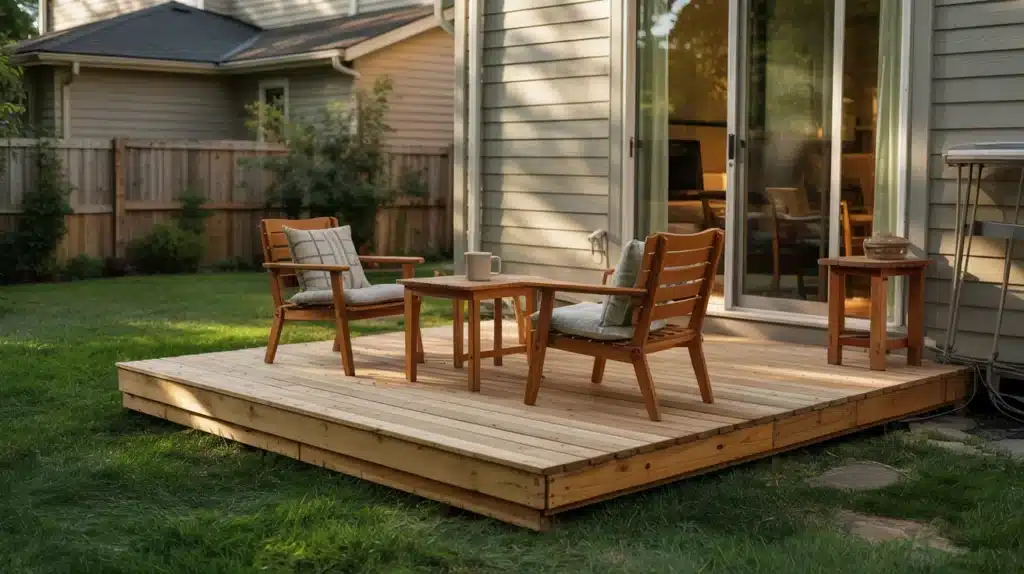
A ground-level platform deck is the most straightforward and affordable deck you can build. It sits close to the ground, usually 6 to 24 inches high, which means no complex framing, no expensive footings, and, in many US cities, no permit required for structures under a certain height.
- Estimated Cost: $600 to $1,200 (DIY, 10×12 ft)
- Best For: Flat backyards, small outdoor spaces, first-time builders
- Pro Tip: Check your local building department before starting. Many areas require permits for decks that are more than 30 inches off the ground or exceed a set square footage.
2. Use Pressure-Treated Lumber
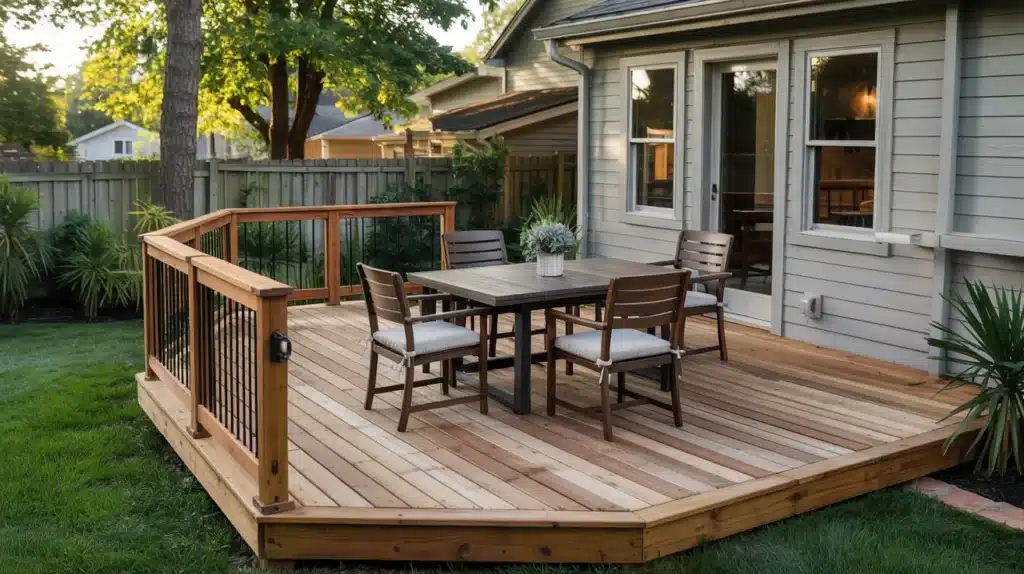
Pressure-treated lumber is the go-to material for anyone building a deck on a budget. It is chemically treated to resist rot, insects, and moisture, which makes it one of the most cost-effective choices available at any major hardware store in the country.
- Average Cost: $1.50 to $3.50 per linear foot
- Lifespan: 15 to 25 years with annual sealing
- Pro Tip: Let pressure-treated boards dry for two to four weeks after purchase before applying stain. Fresh boards hold moisture and will not absorb the finish properly.
3. Try a Floating Deck
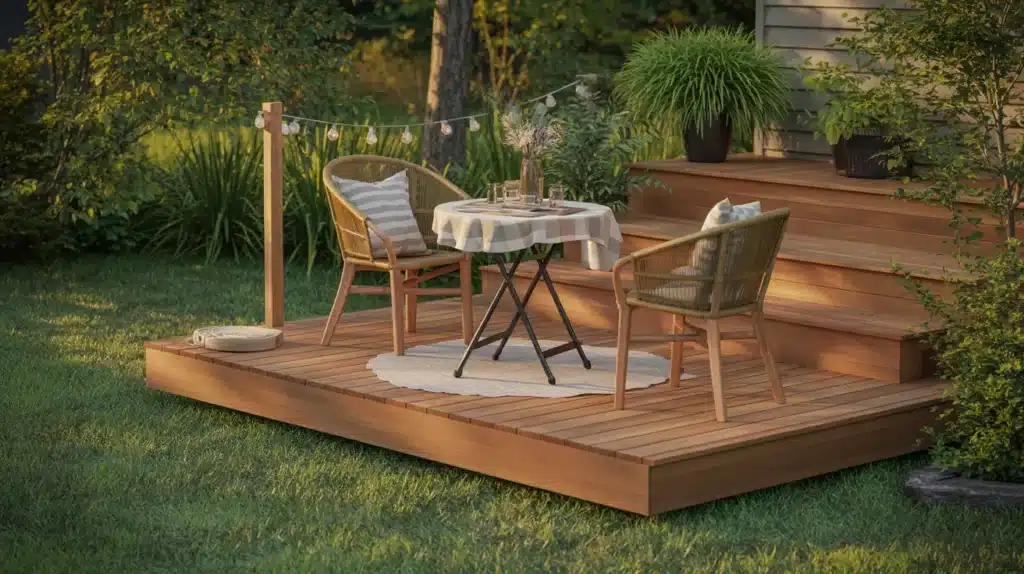
A floating deck is freestanding, meaning it is not attached to your home. That single detail significantly cuts costs by skipping the ledger board connection, reducing structural complexity, and often avoiding the permit process entirely in many states.
- Estimated Cost: $700 to $1,500 (DIY, 12×12 ft)
- Best For: Patios, pool areas, garden spaces
- Pro Tip: Floating decks can be moved if you relocate. That makes them one of the smartest long-term investments in this list.
4. Go Small with a Compact Deck
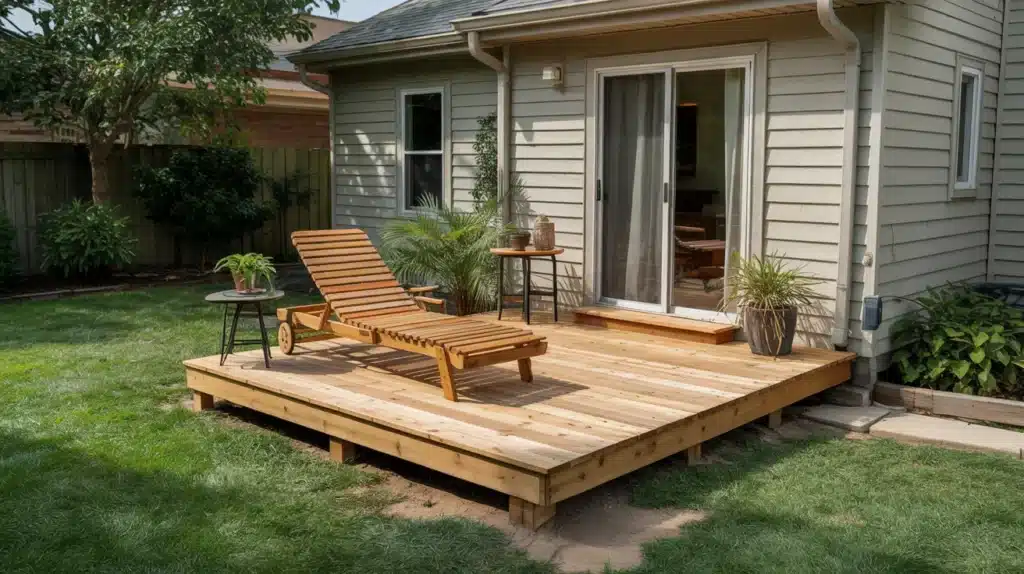
A smaller deck costs less across the board. Less wood, less hardware, less time, and less labor. An 8×10 or 10×10 deck can still function well if you design it with one clear purpose in mind, whether that is a morning coffee spot or an evening seating area.
- Estimated Cost: $500 to $900 (DIY)
- Best For: Small yards, balconies, side yard spaces
- Pro Tip: Use a light-colored stain and keep furniture minimal. Both tricks make a small deck feel bigger than it actually is.
5. Use Reclaimed or Salvaged Wood
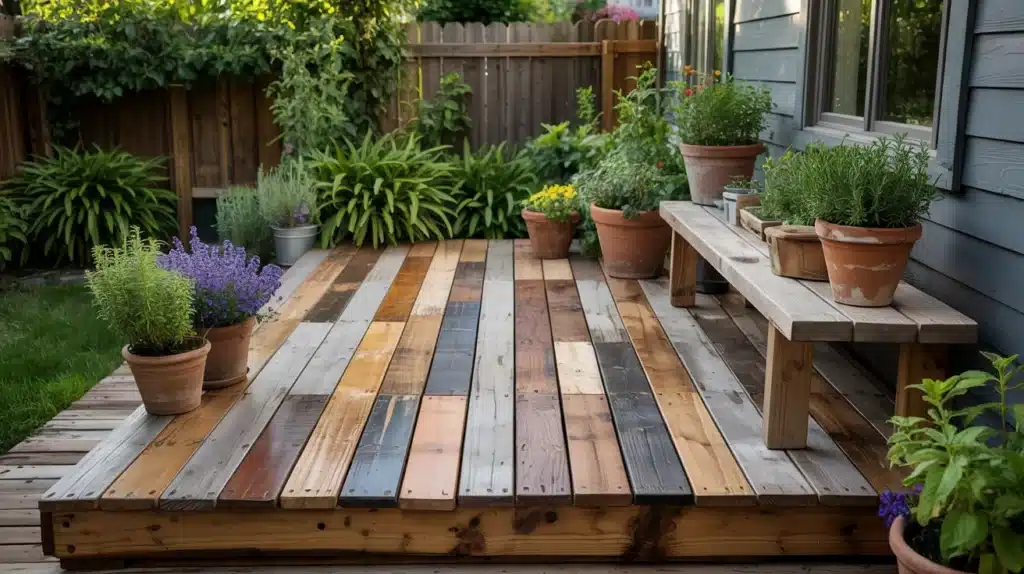
Reclaimed wood can be free or very cheap, and it gives your deck a character that brand-new boards simply cannot match. The key is knowing where to look and what to check before you use anything.
- Where to Find It: Facebook Marketplace, Craigslist, Habitat for Humanity ReStores, local salvage yards
- What to Check: Look for signs of rot, mold, warping, or embedded nails before buying
- Pro Tip: Sand reclaimed wood thoroughly before installation. Older boards can be rough and uneven on the surface.
6. Build a Pallet Deck
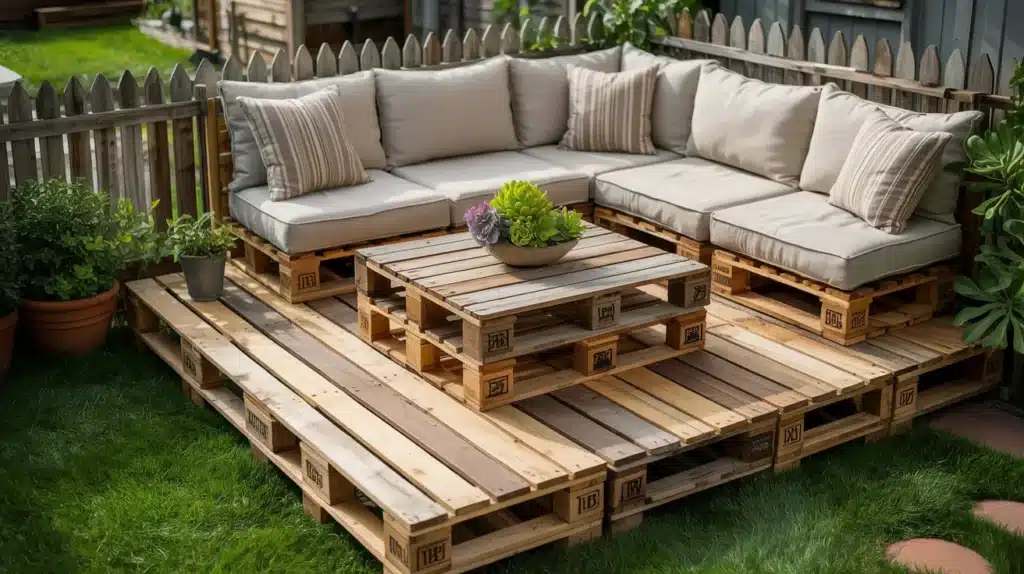
Wooden shipping pallets are often available for free from local warehouses, stores, or factories, making a pallet deck one of the cheapest outdoor builds possible. Laid flat on level ground with a weed barrier underneath, they create a surprisingly functional surface.
- Estimated Cost: $0 to $150 (for ground prep, sealant, and hardware)
- Lifespan: Three to seven years, depending on climate and upkeep
- Pro Tip: Only use pallets marked “HT” (heat-treated). Never use pallets marked “MB.” Those were treated with a chemical that is not safe around people or pets.
7. Opt for a Partial Deck Coverage Design
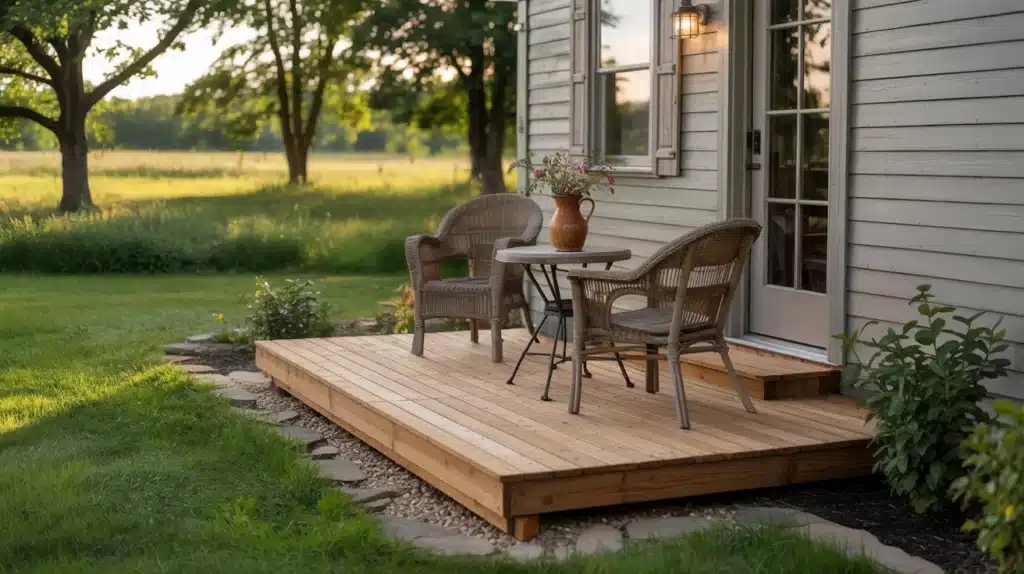
Instead of building a deck that covers a large portion of your yard, build one that covers just the area you actually need. A small deck off the back door leading out to a gravel or grass area gives you the function without the full material cost.
- Estimated Savings: 30 to 50% compared to a full-coverage design
- Best For: Homeowners who want easy outdoor access without a large footprint
- Pro Tip: Pair the deck with a gravel border. Gravel is cheap, low-maintenance, and ties the space together visually.
8. Skip the Stairs to Cut Costs
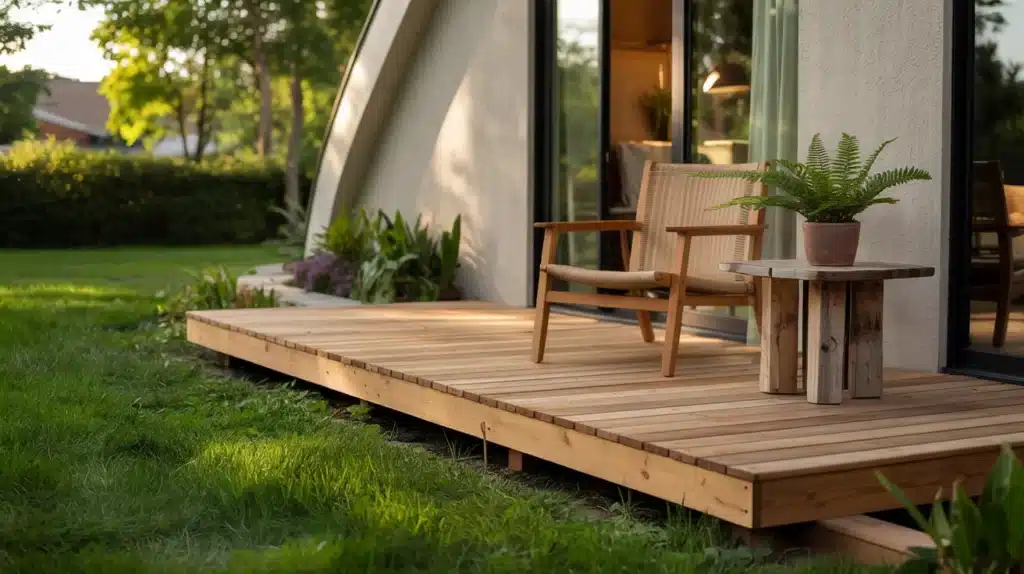
Stairs add materials, time, and labor to any deck build. If your back door and yard sit at a similar level, you can design your deck to meet the ground without needing steps. This one change alone can save you $200 to $600 on a standard build.
- Estimated Savings: $200 to $600
- Best For: Homes where the yard grade and door threshold are close in height
- Pro Tip: If you need some height difference, a single wide step costs far less than a full staircase.
9. Add Deck Tiles Over an Existing Surface
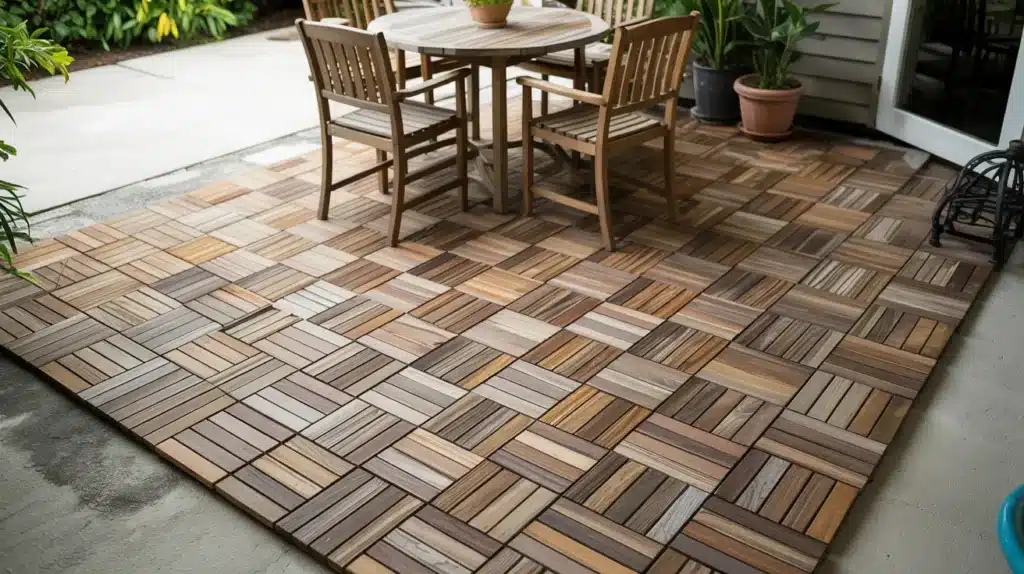
If you already have a concrete patio or flat surface, deck tiles are the fastest and most affordable upgrade you can make. They snap together without tools and sit directly on any flat, solid surface, no framing, no digging, no permits.
- Cost: $2 to $6 per square foot, depending on material
- Best For: Concrete patios, rooftop terraces, balconies
- Where to Buy:Home Depot, Wayfair, Amazon
10. Use Concrete as a Decking Base
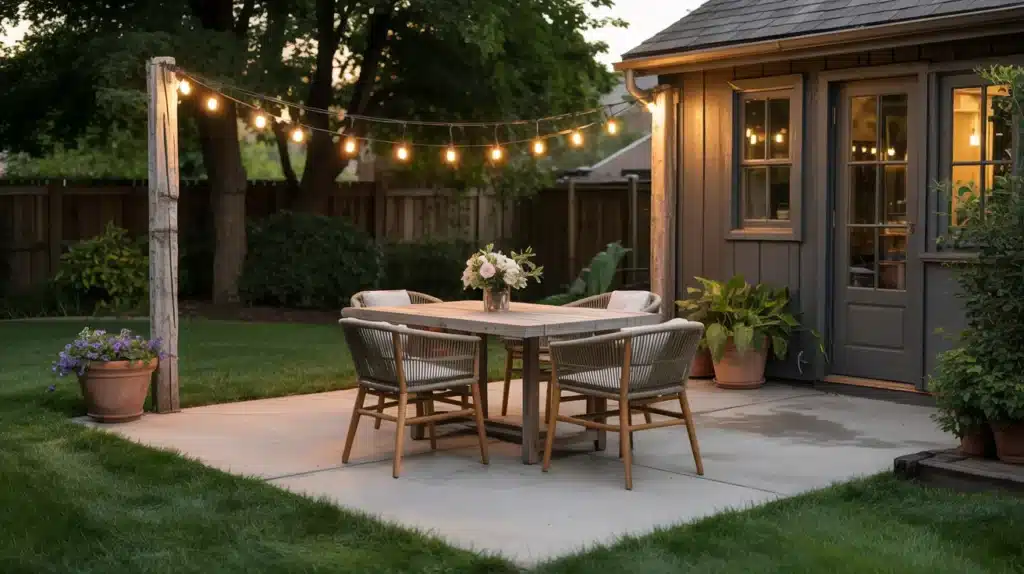
A poured concrete slab finished with a broom texture or a colored stain is one of the cheapest per-square-foot outdoor flooring options. It is durable, low-maintenance, and with the right finish, it looks far better than most people expect.
- Cost: $1 to $3 per square foot (DIY), $4 to $8 per square foot (professional)
- Lifespan: 30 or more years with minimal upkeep
- Pro Tip: Add a non-slip texture to the surface, especially in wet climates. A broom finish is the simplest and most affordable way to do this.
11. Paint or Stain an Old Deck Instead of Replacing It
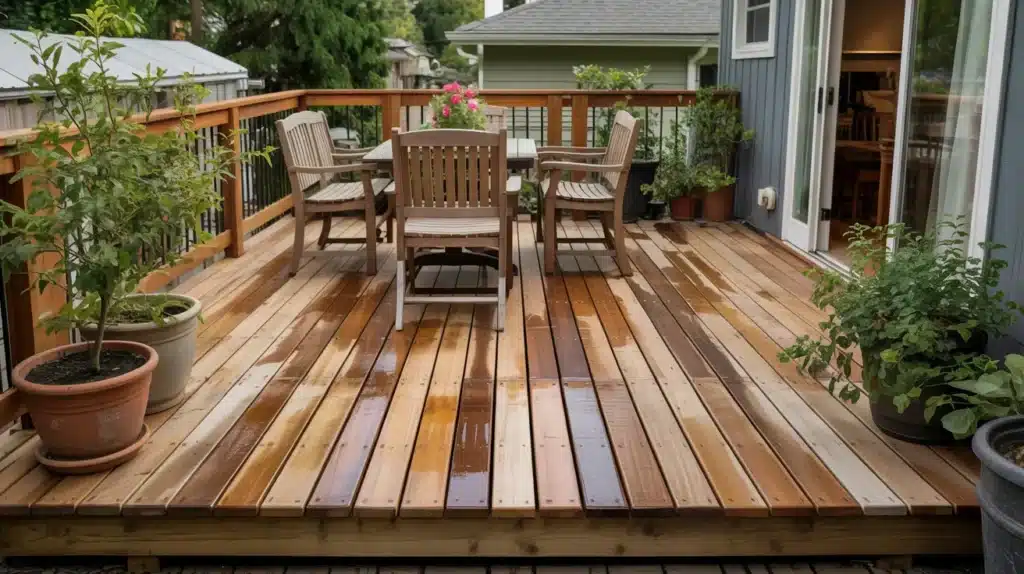
Before you spend thousands tearing out and rebuilding an old deck, consider whether a fresh coat of stain or paint might be all it needs. A single gallon of quality deck stain costs $30 to $60 and can make a worn deck look brand new.
- Cost: $60 to $200 for full materials (stain, cleaner, brushes)
- How Often: Stain every two to three years. Paint lasts three to five years.
- Pro Tip: Clean and sand the surface before applying anything. Skipping prep is the number one reason deck finishes fail early.
12. Build DIY Budget-Friendly Deck Railings
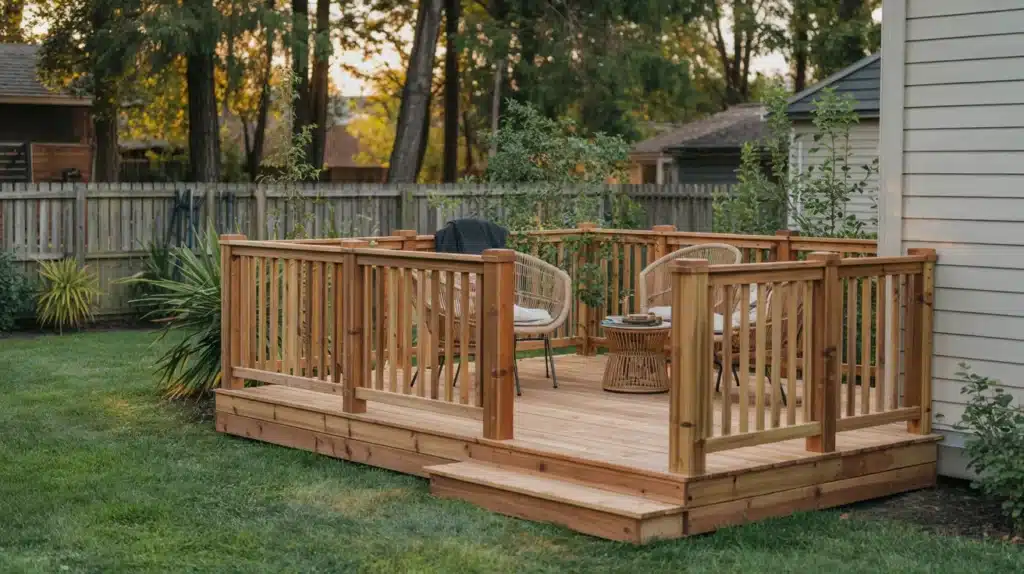
Railings are one of the most expensive parts of any deck build, but only if you go with pre-built or custom systems. Building your own railings from basic lumber cuts the cost dramatically without compromising safety.
- DIY Cost: $10 to $20 per linear foot
- Pre-Built Cost: $50 to $100 per linear foot
- Budget Options: Simple 2×4 horizontal rails, wood balusters from a lumber yard, basic rope railing for a coastal feel
Important: Do not skip railings if your deck is more than 30 inches off the ground. This is a safety and code requirement in most US states.
13. Add String Lights for Affordable Ambiance
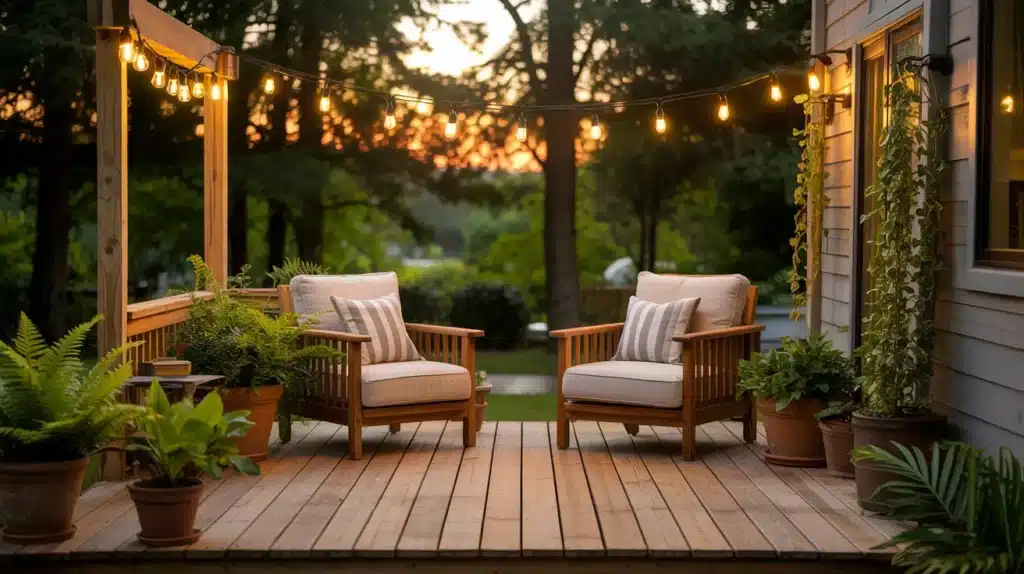
Sometimes the difference between a deck that feels functional and one that feels inviting comes down to lighting. A set of outdoor string lights costs $25 to $60 and completely changes how your space feels after dark.
- Best Options: LED string lights for energy efficiency, solar-powered sets for zero wiring
- Where to Hang: Overhead between posts, along a pergola beam, or draped around railings
- Where to Buy:Amazon, Target, Home Depot
14. Use Budget Outdoor Furniture Creatively
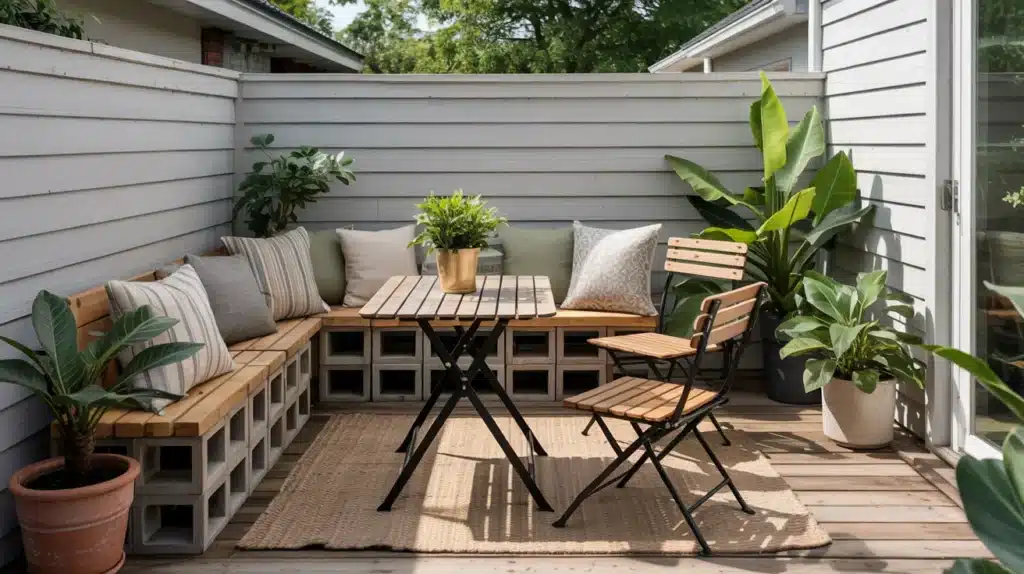
You do not need expensive furniture to make your deck look pulled together. Smart placement of affordable pieces can make even the plainest wood platform feel like a designed space.
- Budget Options: Folding table and chairs set ($80 to $150 total), second-hand pieces from Facebook Marketplace, DIY cinder block benches with outdoor cushions (under $50)
- Best Pick: Furniture with built-in storage works especially well on small decks where space is limited
- Pro Tip: Stick to two or three pieces of furniture maximum on a compact deck. Overcrowding makes any space feel smaller.
15. Add Container Plants Instead of Built-In Planters
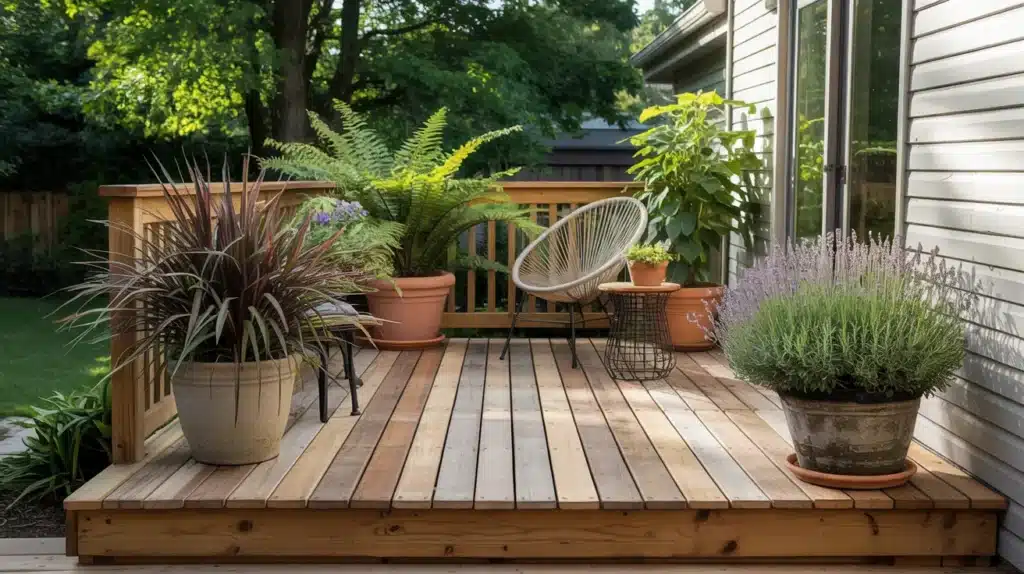
Built-in planter boxes add a lot to the cost of a deck build. Container plants give you the same green, lived-in look for a fraction of the price, and you can move them around whenever you want.
- Cost: $10 to $50 per container, depending on size and plant
- Best Plants for Decks: Lavender, ornamental grasses, ferns, herbs, and dwarf shrubs
- Extra Benefit: You can bring them indoors during winter, which protects both the plants and your deck boards from extra moisture
16. Build a Multi-Level Deck in Phases
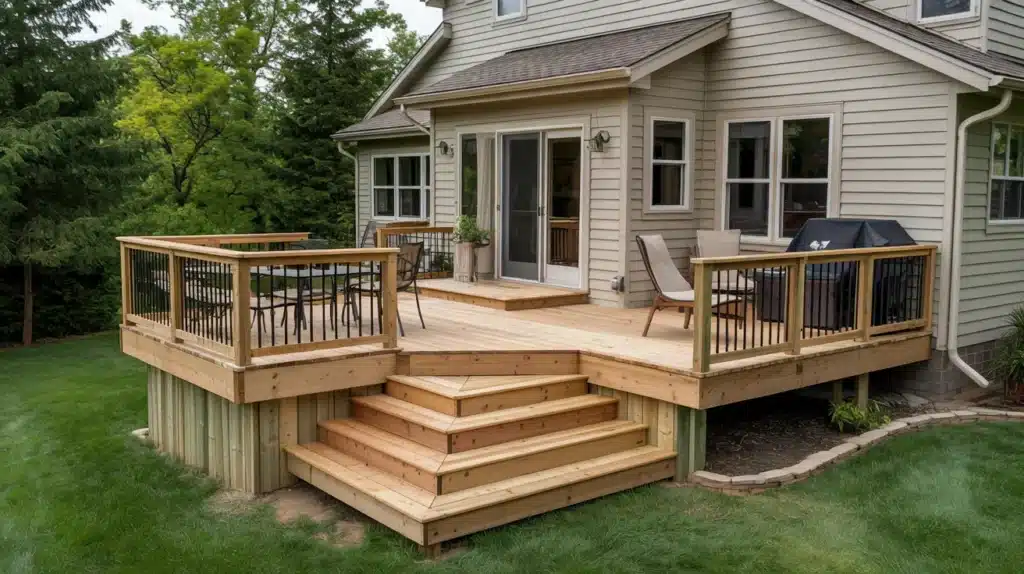
If your dream deck feels out of reach right now, build it in stages. Plan the full design upfront so each phase connects properly, then build one section at a time as your budget allows.
- Phase 1: Build the main platform (Year 1)
- Phase 2: Add a lower-level or side extension (Year 2)
- Phase 3: Add lighting, a pergola, or upgraded railings (Year 3)
- Pro Tip: Map out the full design before breaking ground on Phase 1. Retrofitting a later phase onto a poorly planned base costs far more than planning it right from the start.
17. Use Composite Decking Offcuts or Factory Seconds
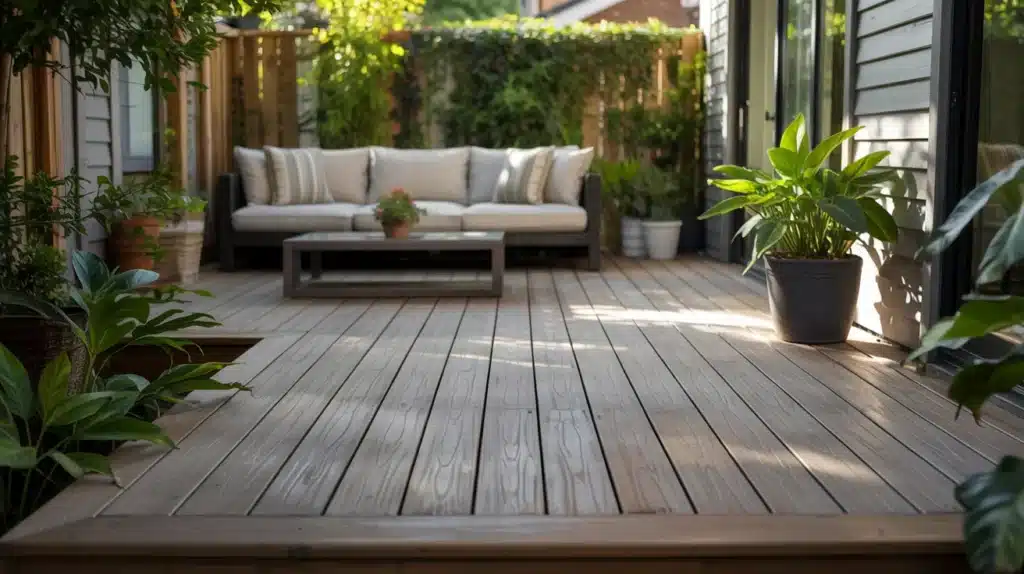
Full-price composite decking is not cheap, but factory seconds and offcuts can be 30 to 60% cheaper. These are boards with minor cosmetic imperfections or leftover lengths that perform exactly the same as first-quality stock.
- Where to Find Them: Local deck suppliers, contractor liquidation sites, Facebook Marketplace, Habitat for Humanity ReStores
- What to Check: Look for consistent lengths, no major warping, and no deep surface cracking
- Best For: Smaller decks where you need fewer boards and can work around varied lengths
Tips to Save Money When Building a Deck
Picking the right materials is just one part of keeping costs low. How you plan, buy, and build matters just as much. Here are the most practical ways to cut your deck-building costs without cutting corners:
- Keep the shape simple: Square and rectangular decks cost significantly less to build than L-shaped or curved designs because they require less cutting and fewer custom materials.
- Buy materials in bulk: Purchasing full packs of lumber often costs less per board than buying individual pieces.
- Time your purchase: Lumber prices drop in late fall and winter when construction activity slows, so buying off-season can save you 10 to 20%.
- Rent tools instead of buying: A miter saw, jig saw, or drill can be rented from Home Depot or Lowe’s for a fraction of the purchase price.
- Handle your own demolition: If you are replacing an old deck, tear it down yourself before any contractor arrives. You pay only for the new build, not the removal.
- Get three quotes: Always compare at least three contractor estimates before committing. Prices vary more than most people expect.
- Skip the pergola for now: A shade structure is one of the biggest cost drivers on a deck project. Add it later once the base build is complete.
DIY vs. Hiring a Contractor: Which Saves More?
Both options have a place depending on your skills, schedule, and the complexity of the build. The right choice comes down to a few honest questions. Here is a straightforward comparison to help you decide:
| Factor | DIY | Hiring a Contractor |
|---|---|---|
| Total Cost | Lower (materials only) | Higher (labor + materials) |
| Time Required | Longer (weekends and evenings) | Faster (completed in days) |
| Skill Level Needed | Basic to moderate carpentry | Not required from you |
| Risk of Errors | Higher without experience | Lower with a licensed pro |
| Permit Handling | You manage it | Usually handled for you |
| Best For | Ground-level builds, small decks, deck refreshes | Elevated decks, attached decks, complex designs |
DIY saves the most money on simple, ground-level builds. For anything elevated, attached to the house, or structurally complex, a licensed contractor reduces the risk of costly mistakes down the line.
Is It Cheaper to Build or Buy a Deck?
Building a deck yourself is almost always cheaper than buying a pre-built or prefabricated deck system.
A DIY ground-level deck using pressure-treated lumber can cost $600 to $2,000 in materials, while prefabricated deck kits and professionally installed modular systems typically start at $3,000 and quickly rise from there.
For most homeowners on a tight budget, building from scratch with standard lumber is the most affordable path forward.
Conclusion
Getting a great outdoor deck on a budget is completely possible. The key is to start with a clear plan, choose the right materials, and keep the design simple.
From ground-level builds and pallet decks to a fresh coat of stain on an old surface, these inexpensive deck ideas show that a small budget does not mean a small result.
Your outdoor space is worth the effort. It is where you relax, spend time with people you care about, and actually enjoy being at home.
Start with one idea that fits your space and your budget right now. You can always build on it later.
Have you tried any of these low-cost deck ideas at home? Drop your experience in the comments below. We would love to see what you built.