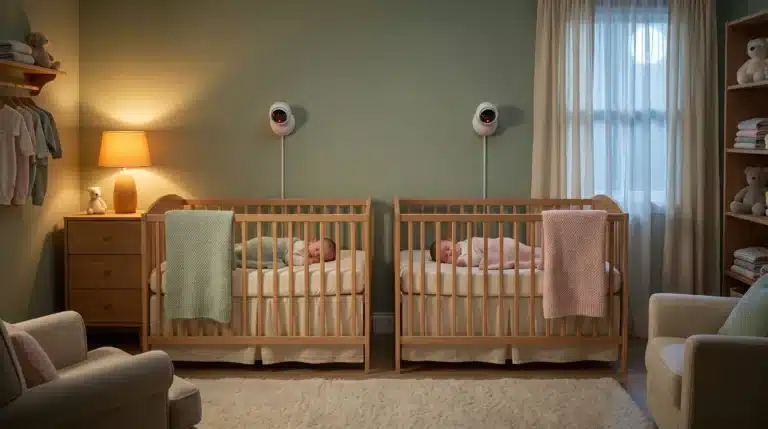

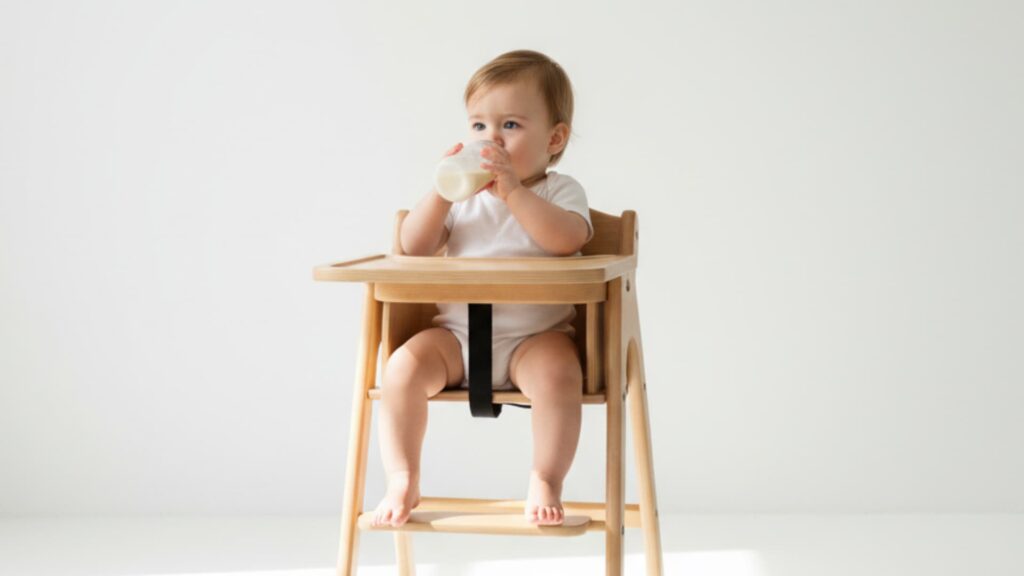
One day you are holding the bottle, and the next, you catch your baby reaching for it with both little hands. That moment catches you off guard in the best way.
But before it happens, the waiting feels very real. When do babies hold their own bottle?
That question comes up for so many parents around the 6-month mark, when feedings feel long and your arms are genuinely tired. The short answer is somewhere between 6 and 10 months.
The longer answer involves tiny muscles, growing coordination, and a baby who will get there when their body says it is ready. This blog walks you through all of it.
When Do Babies Start Holding Their Own Bottle?
Most babies start holding their own bottle somewhere between 6 and 10 months of age.
The average tends to land closer to 8 or 9 months, when fine motor skills and arm strength have had more time to build.
Some babies get there at 6 months, others closer to 12 or even 14 months, and both ends of that range are completely normal. Every baby has their own timeline, and this milestone is no different.
Key Skills Your Baby Develops Before Self-Feeding
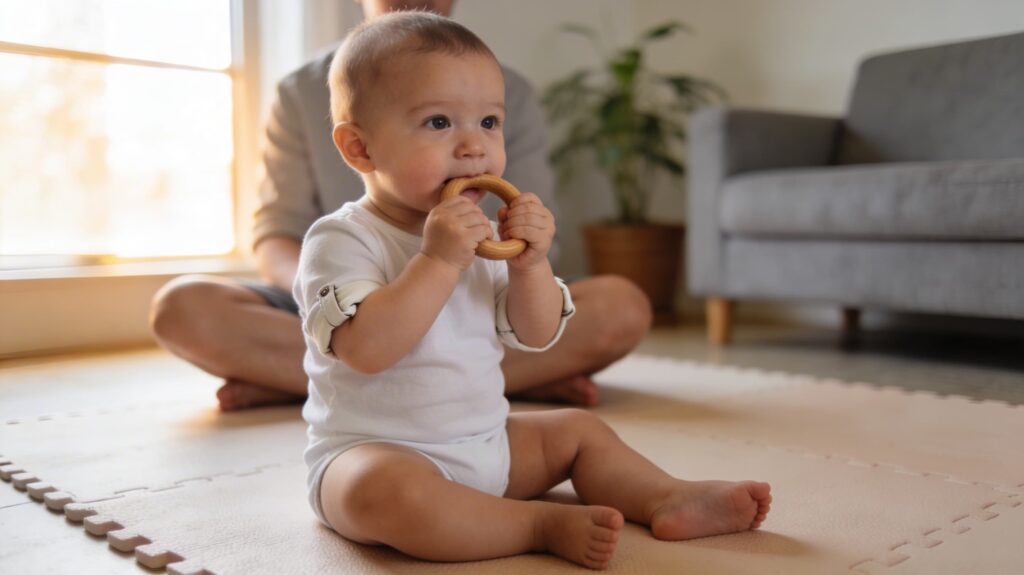
Holding a bottle looks simple from the outside. But for your baby, it is the result of several skills clicking into place at once.
1. Hand-Eye Coordination
Around 3 to 4 months, babies start reaching toward objects and bringing them toward their mouths. This growing connection between what they see and what their hands do is what eventually helps them grab a bottle and guide it exactly where it needs to go.
2. Grasping Skills
Babies are born with a grasping reflex, but that is automatic, not controlled. By 4 to 5 months, they begin gripping objects with real intent.
By 6 months, many can hold something steady with both hands, which is exactly what bottle holding requires.
3. Core and Upper Body Strength
Holding a bottle means lifting it, tilting it, and keeping it there against gravity. That takes real muscle. Daily tummy time builds the shoulder and core strength that makes self-feeding physically possible for your baby over time.
4. Sitting Up Without Support
A baby lying flat should never hold their own bottle. Most babies can sit without support around 6 months. Sitting upright gives them the body control needed to hold the bottle at the right angle and swallow safely during feedings.
Month-by-Month: What to Expect from 3 to 12 Months
No two babies follow the exact same path. But here is a general look at how this milestone tends to build over the first year.
| Age | What Your Baby May Do |
|---|---|
| 3 to 4 months | Rests hands on the bottle while you hold it. Not gripping yet, just touching and feeling. |
| 5 to 6 months | Reaches for the bottle with clear purpose. May grip it briefly with your support. |
| 6 to 7 months | Hand-eye coordination improves. Baby may guide the bottle toward their mouth for short stretches. |
| 7 to 9 months | Holds the bottle more steadily. Can often manage a feeding with much less help from you. |
| 10 to 12 months | Holds and finishes feedings with very little support. Cup introduction becomes a priority. |
| 12 months and beyond | Pediatricians recommend starting to move away from the bottle toward cup drinking at this stage. |
Signs Your Baby Is Ready to Hold Their Own Bottle
Your baby will not give you a heads-up before this happens. But they will give you real signals. Keep an eye out for these cues during feedings and playtime.
- Reaching for the bottle during feedings: Baby stretches both hands toward the bottle while you hold it, showing interest and growing body control at the same time.
- Brings objects to their mouth independently: Baby picks up a toy and brings it to their face without any help, using the same coordination that bottle holding needs.
- Sits up on their own: Baby holds themselves upright without support, giving them the body stability required to self-feed safely.
- Holds objects steadily with both hands: Baby can grip something with both hands and keep it in place, even for just a short period of time.
- Strong, steady head control: Baby holds their head upright without wobbling, which is a basic requirement before any kind of self-feeding can safely begin.
- Shows interest in food and mealtimes: Baby reaches toward your spoon or plate, which often signals they are ready to take more control during their own feeding time too.
How to Encourage Your Baby to Hold Their Bottle
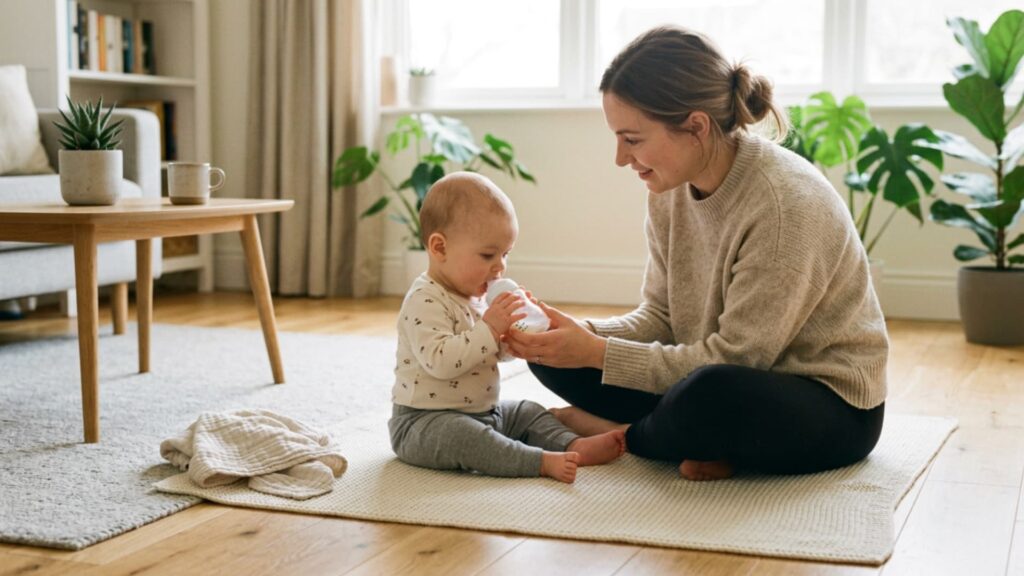
You cannot rush this milestone, but you can set the right conditions for it. These tips help your baby build the skills they need, completely at their own pace.
1. Guide Their Hands During Feedings
Place your baby’s hands around the bottle while you still hold it. This helps them feel the shape, the weight, and what it means to hold it. Do this regularly and they will start connecting the dots on their own.
2. Start with A Lighter Bottle
A bottle that is only a quarter or half full is far easier for small hands to lift. As your baby gets stronger week by week, gradually increase how full the bottle is during practice moments.
3. Let Them Play with An Empty Bottle
No pressure and no mess. An empty bottle works well as a play object outside of feeding time. Let your baby hold, chew, and get familiar with it before they are expected to use it for feeding.
4. Build Grip Strength Through Everyday Play
Rattles, teethers, and stacking rings all strengthen the same hand and finger muscles needed to hold a bottle. A few minutes of regular play with these objects adds up meaningfully over weeks.
5. Do Tummy Time Every Single Day
Tummy time builds the shoulder, arm, and core muscles your baby needs to lift and hold a bottle with control. Even 10 to 15 minutes a day creates a real difference in strength over time.
6. Let Them Watch You Eat and Drink
Babies copy what they see. Hold a cup or bottle up to your own mouth at mealtimes. Your baby will notice and begin trying to do the same with their bottle soon enough.
Choosing the Right Bottle to Help Your Baby
The bottle itself matters more than most parents think. The right shape and weight can make a genuine difference when your baby is just getting started with self-feeding.
Weight and Size of the Bottle
- Lightweight bottles are far easier for small hands to lift and hold through a full feeding session.
- Smaller bottles fit better in both hands, especially in the earlier months when hands are still tiny.
- Heavy or oversized bottles are better left for when you are the one doing the holding.
Bottle Shape and Handle Design
- Bottles with handles on both sides give baby a natural and easy spot to grip without much effort.
- Angled bottles reduce the need for your baby to tilt too far back, making the angle more manageable to control alone.
- Wide-base bottles are more stable on surfaces and harder for little hands to accidentally drop.
- Bottles with a soft or textured outer surface help baby grip without the bottle slipping mid-feeding.
Safety Rules to Follow Even After Your Baby Can Hold the Bottle
Your baby holding the bottle is a real step forward. But it does not mean feeding time becomes hands-off. These rules stay in place no matter how capable they get.
- Always stay in the room: Babies can choke quietly, without any coughing or obvious noise, so your eyes need to stay on them throughout every single feeding.
- Never let baby fall asleep with the bottle: Milk that pools around the teeth during sleep damages enamel and raises the risk of ear infections, a condition often referred to as bottle rot.
- Check the nipple flow speed regularly: When baby holds the bottle at a steep tilt on their own, the flow can become too fast for safe swallowing.
- Check the bottle temperature before each feed: When you hold the bottle, you feel the heat right away. When baby holds it alone, that check becomes easy to forget.
- Remove the bottle when baby signals fullness: Watch for slowing down, turning the head away, or pushing the bottle back. Step in and take it the moment you see those signs.
When to Talk to Your Pediatrician?
If your baby is past 10 to 12 months and is still not reaching for, gripping, or showing any interest in holding objects, it is worth mentioning at your next pediatric visit.
Other things to bring up include not being able to sit without support past 9 months, rarely using both hands together, or not consistently bringing objects to their mouth by 6 to 7 months.
These are not automatic causes for alarm, but they are worth a conversation with your baby’s doctor.
You know your baby better than anyone, and no blog post replaces the advice of a healthcare provider who has your child’s full history in front of them.
What If My Baby Refuses to Hold the Bottle?
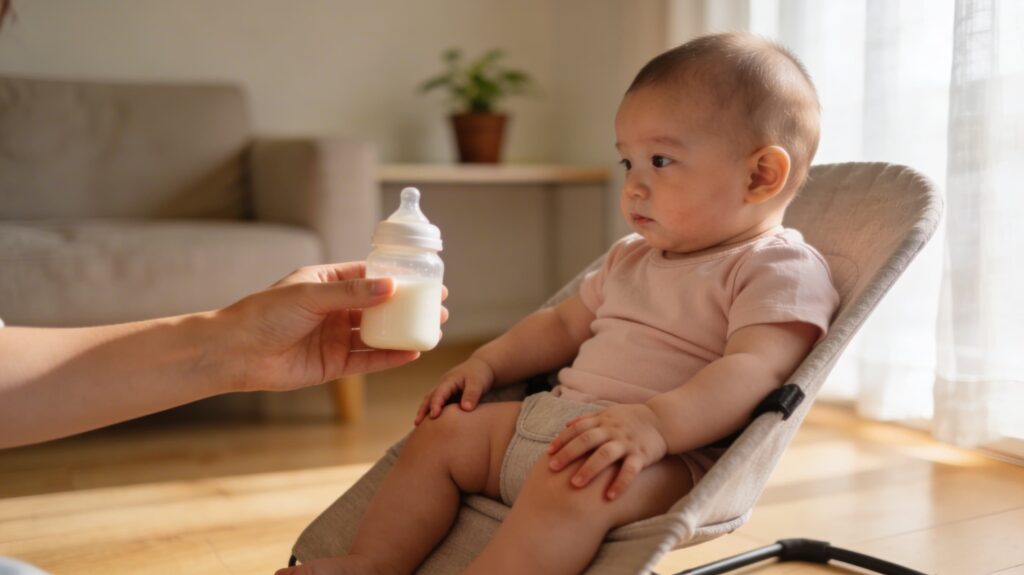
Not every baby is in a rush to go solo at feeding time. Some simply love being held close, and that is a completely valid preference to respect.
- Comfort and closeness are real reasons: Some babies associate feeding with being in your arms, and they are not ready to let that go yet. That is not a developmental delay. That is a preference.
- They may skip this step entirely: Some babies go straight from being parent-fed to holding a sippy cup around 12 months, never holding the bottle independently at all.
- Do not force it: Gentle encouragement is perfectly fine, but if your baby consistently pulls their hands away or shows no interest, follow their lead.
- Check other motor skills first: If your baby is reaching for toys, sitting well, and bringing objects to their mouth, their motor development is likely right on track even without interest in the bottle.
- Try a different bottle shape or size: Sometimes the bottle itself is the issue. A shape that fits more naturally in small hands may spark more interest during feeding time.
What Comes After Bottle Holding?
Once your baby starts holding their own bottle, other self-feeding skills tend to follow in quick steps. Around 8 to 10 months, many babies begin picking up soft finger foods on their own.
By 6 to 12 months, introducing a sippy cup or open cup with water is recommended by most pediatricians. Around 12 months, the focus shifts to moving away from the bottle completely.
By 12 to 18 months, babies begin attempting to use a spoon, which is the next significant step toward fully independent mealtimes.
Wrapping It Up
Watching your baby reach for that bottle on their own is one of those small moments that feels bigger than it looks.
It means their hands are getting stronger, their coordination is building, and they are slowly figuring out how to do things for themselves.
Most babies hold their own bottle between 6 and 10 months, but if yours takes a little longer, that is okay too. Keep feeding time close, keep it supervised, and trust the process.
Every baby gets there in their own time. Did your baby surprise you by holding their bottle early, or did they take the slow road? Drop a comment below and let us know.
Frequently Asked Questions
What Is the 3 6 9 Rule for Babies?
The 3 6 9 rule is a general feeding guide where babies feed every 3 hours at 3 months, start solids at 6 months, and move toward structured mealtimes by 9 months.
When Should You Stop Giving a Baby a Bottle?
Most pediatricians recommend starting to move away from the bottle around 12 months and fully stopping by 18 months to protect developing teeth and support healthy feeding habits.
How Do You Teach a Baby to Hold Their Bottle?
Place their hands around the bottle during feedings so they feel the shape and weight. Start with a lightly filled, lightweight bottle and let them build strength and grip gradually over time.
What Is the Hardest Month for a Baby?
Many parents find the first 6 weeks the most physically and emotionally demanding, with frequent night feeds, unpredictable sleep, and a baby still adjusting to life outside the womb.
What Are the Red Flags for Bottle Feeding?
Watch for choking or gagging during feeds, refusing the bottle consistently, very slow weight gain, excessive gas or spitting up after every feed, and a baby who tires out before finishing a feeding.